
A lot of people start the same way. They stand in the backyard after another Florida rain, look at the patchy grass or worn dirt by the back door, and think, “We need a real outdoor space.”
That could mean a simple concrete pad for a grill and table in Ocala. It could mean a larger entertaining area in Dunnellon, Belleview, or The Villages. For some property owners, it means tying a patio into a wider upgrade that also includes a new sidewalk, driveway replacement, or better traffic flow around a building.
When you search for patio installation near me, the key question is not who can pour something fast. It is who knows how to build a surface that holds up in Central Florida sun, heavy rain, shifting soil, and daily use. The same practical standards that matter on a backyard patio also matter on commercial slabs, ADA walkways, and parking areas.
In Marion County and Citrus County, that is often underestimated. A patio can look finished on day one and still fail early if the grade is wrong, the base is weak, or drainage was treated like an afterthought. Good work shows up later, after the storm, after the summer heat, and after the first few seasons of use.
Envision Your Perfect Outdoor Space
A good patio changes how a property gets used.
For a homeowner, it often starts with something simple. A clean place for morning coffee. A spot for weekend cookouts. A level surface where chairs do not sink into soft ground every time it rains. In places like Summerfield, Silver Springs, and Homosassa, that upgrade can turn an underused backyard into part of the house.
For a commercial property, the thinking is different but the standard is the same. A church may need a patio or adjacent sidewalk that drains properly and stays safe during wet weather. An HOA may want common-area concrete that looks sharp, handles foot traffic, and fits the rest of the site. Retail and property management clients often need concrete work and asphalt maintenance coordinated by one crew that understands both.
What people usually want
Most patio projects fall into one of these buckets:
Simple and functional
A square or rectangular concrete patio that gives the homeowner a durable outdoor surface without driving the budget too high.Decorative but practical
A patio with a cleaner finish, border detail, or stamped look that adds curb appeal while still being easy to maintain.Connected improvements
A patio tied into a walkway, shed slab, driveway replacement, or surrounding hardscape so the whole property works better.
The mistake is thinking the patio itself is the whole project. It is not. Drainage, surrounding grade, transitions to doors and walkways, and future maintenance all affect whether the space stays useful.
A patio should feel easy to live with. If water stands on it, furniture rocks, or the edges start moving, the install was not really finished right.
That is why local experience matters. Central Florida sites are rarely identical. Some yards hold water. Some have sandy sections that drain fast but shift. Others have roots, access issues, or old concrete that has to be removed before anything new can go down.
Comparing Patio Materials and Design for Florida
The best patio material is the one that fits how you use the space, how much maintenance you want, and what your site can support long term. In Florida, appearance matters, but durability matters more.
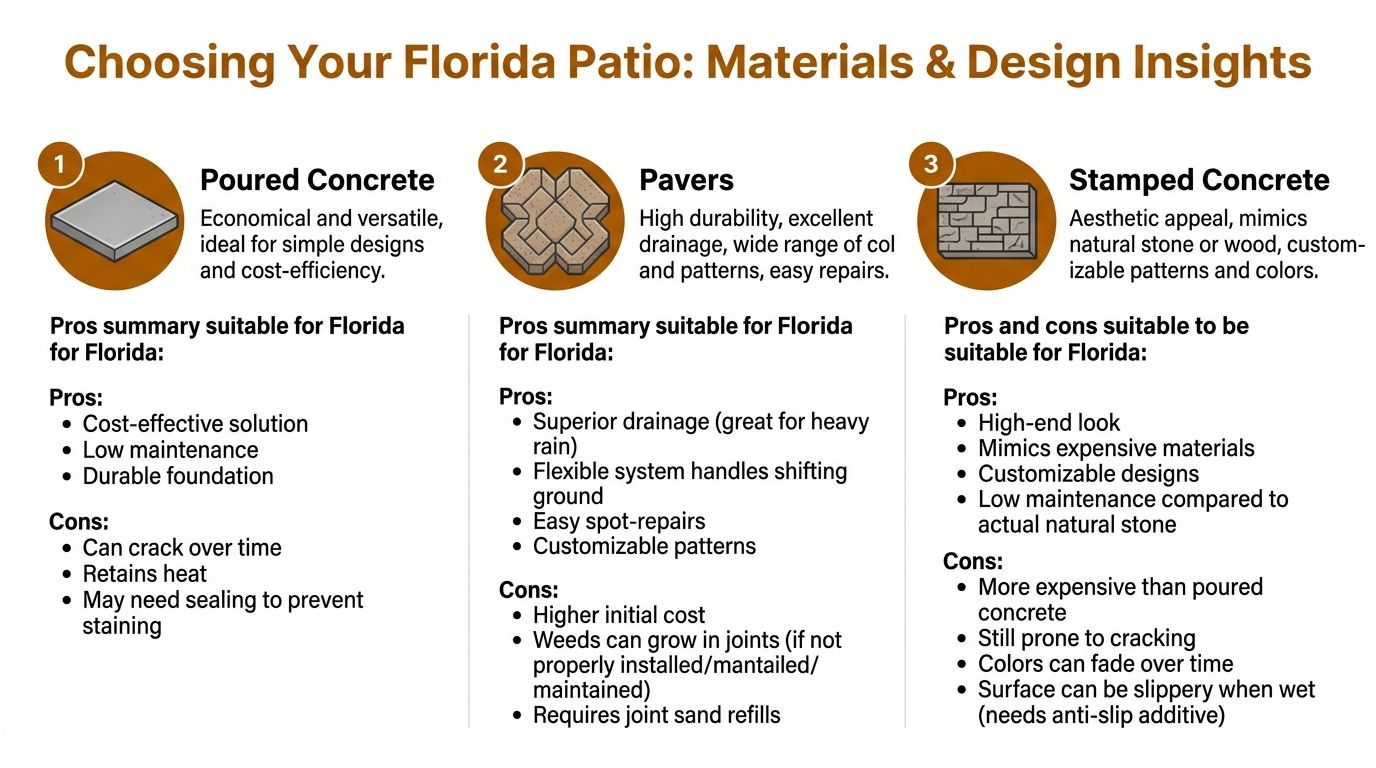
A comparable Florida market shows just how wide the budget range can be. Average patio installation costs range from $968 to $6,777, with concrete averaging $5.87 per square foot, paver patios ranging from $10 to $24 per square foot, and natural stone exceeding $45 per square foot according to patio installation cost data for a comparable Florida market.
Poured concrete
Concrete is the straightforward workhorse.
It is usually the best fit when the goal is a clean, durable patio without the higher material cost of stone or a more labor-intensive paver layout. For many homeowners in Marion and Citrus counties, this is the best value because it gives you a solid finished space with fewer joints and a simpler maintenance routine.
Best fit: backyard seating areas, grill pads, simple entertainment spaces, slab extensions.
Trade-offs:
- Lower upfront cost than pavers or natural stone
- Clean look and flexible finish options
- Can crack if site prep, reinforcement, or joint placement is handled poorly
- Benefits from sealing in Florida humidity
Pavers
Pavers appeal to homeowners who want pattern, texture, and easier spot repairs.
When installed correctly, they handle drainage well and can be a strong option for larger entertainment spaces or designs with curves and borders. They also allow individual sections to be lifted and reset if a repair is ever needed. The catch is that the base work has to be done right. If the base is weak, pavers start telling on the installer fast.
Best fit: custom patio layouts, decorative spaces, high-end backyard upgrades.
Trade-offs:
- More design flexibility
- Easier sectional repair than a monolithic slab
- Higher installed cost
- More joints to maintain over time
Natural stone and stamped finishes
Natural stone gives a premium look. It also carries premium cost.
Stamped concrete often lands in the middle for clients who want more visual interest without stepping all the way into stone pricing. Done well, stamped concrete can give a stronger decorative finish than a plain slab while keeping the structure of a concrete patio.
| Material | Strengths | Watch-outs |
|---|---|---|
| Concrete | Cost-efficient, durable, clean finish | Needs good joints, drainage, and sealing |
| Pavers | Strong design flexibility, repairable by section | Base prep is everything |
| Natural stone | Premium appearance | Highest cost and more demanding install |
What works best in Central Florida
For many local properties, professionally installed concrete gives the best balance of price, strength, and service life.
That is especially true when the design does not need complex patterns and the owner wants a patio that is easy to wash down, easy to furnish, and practical in heat and rain. Pavers are a strong choice when appearance and pattern are a bigger priority. Stone usually makes sense when budget is less restrictive and aesthetics lead the decision.
The Professional Patio Installation Process
Once the layout and material are decided, critical work starts below the surface.
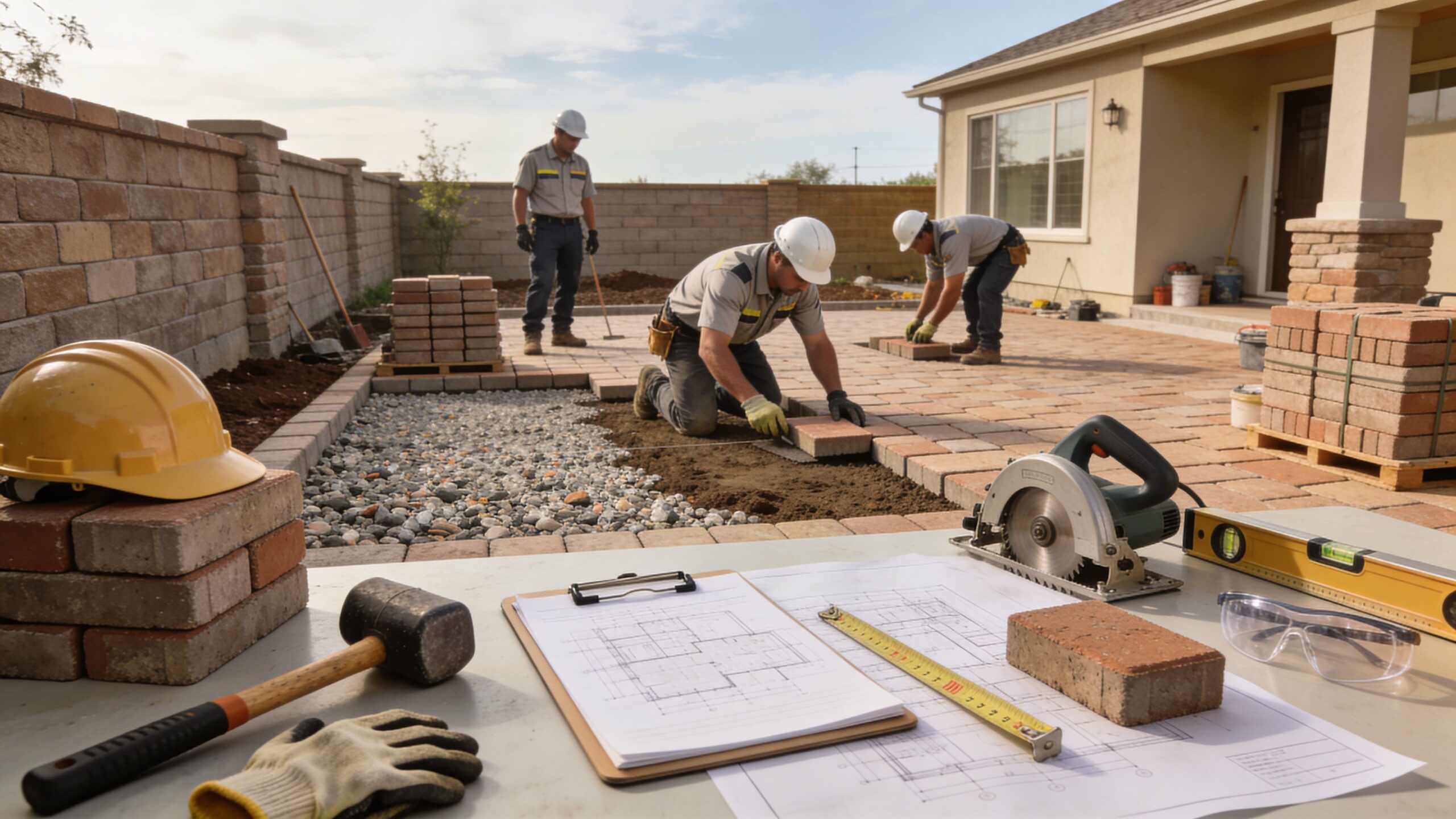
A patio that lasts is built in sequence. Skipping steps is where most failures begin. Surface appearance gets attention, but the hidden work determines whether the slab stays stable, drains correctly, and holds up over time.
Layout excavation and grade
The first job is measuring the space and establishing finished height.
That sounds basic, but it controls everything that follows. Door thresholds, surrounding yard elevation, slope away from the home, and transitions into walkways or drive areas all need to be planned before digging starts.
Professional prep commonly requires excavation to 7 to 8 inches below finished grade and a 1/4-inch-per-foot slope for drainage, with permitting for patios over 200 square feet in many Florida counties taking days to weeks, based on this patio planning and installation guide.
If you want a closer look at what proper subgrade prep involves before a slab goes in, this guide on how to prepare ground for concrete slab gives a useful overview.
Base forms and reinforcement
After excavation, the crew prepares the base and sets the forms.
Many low-bid jobs cut corners at this stage. They rush the compaction, ignore soft spots, or leave the base inconsistent from one side to the other. On a good crew, you will see the site shaped deliberately, not just dug out and filled.
Key pieces usually include:
Base preparation
The subgrade needs to be stable and consistent before any concrete goes down.Form setting
Forms establish the patio’s final shape, edge alignment, and elevation.Reinforcement placement
Rebar or other reinforcement helps the slab perform better under real use and changing conditions.
If the grade is wrong before the pour, the finish crew cannot fix it with a trowel later.
A short video can help homeowners understand why these details matter in the field:
Pour finish and cleanup
The pour itself is only one part of the job.
Concrete has to be placed, leveled, and finished at the right pace for the weather conditions that day. In Central Florida, that means watching heat, sun exposure, and moisture so the surface is not rushed or overworked. After finishing, the site should be left clean, edges neat, and cure time clearly explained to the owner.
The best installs feel organized from start to finish. Homeowners know what day the crew is coming, what happens first, and when the patio will be ready for use. Commercial clients need the same clarity, especially when walkways, entrances, or access routes are affected.
Building Patios Built for Florida Durability
Florida is hard on exterior concrete.
Sun bakes the surface. Rain tests every low spot. Humidity keeps moisture in play long after a storm passes. A patio can still perform well in this climate, but only if it is built for it from the start.
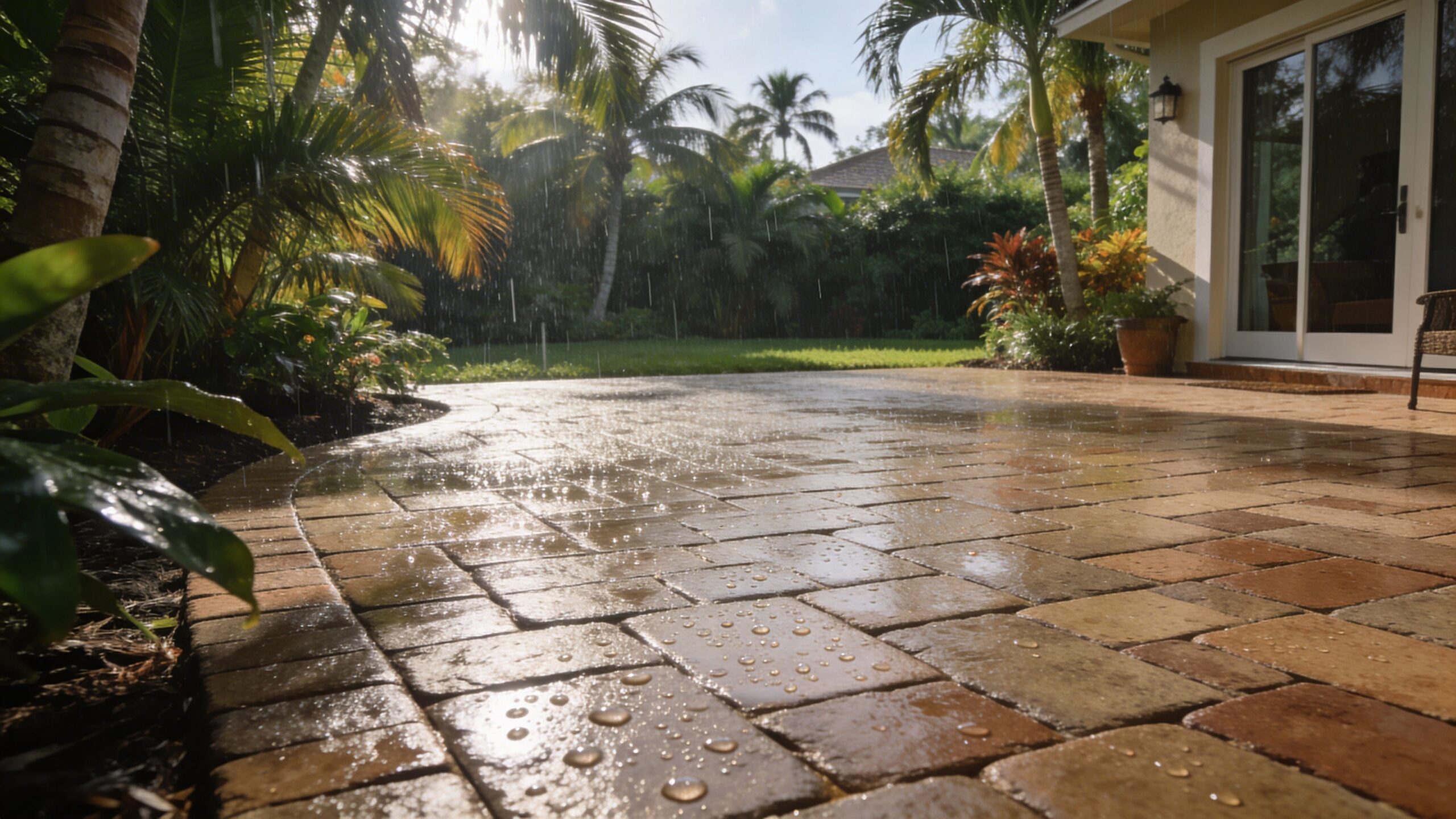
Drainage is the first durability test
Water is usually the primary enemy.
For paver patios, guidance calls for a 1-inch drop per 8 feet away from the house, along with a 6-inch compacted gravel base, according to this paver installation reference from Home Depot. The same principle applies broadly across patio work in Florida. Water needs a path to leave.
When drainage is wrong, you see the symptoms early:
- Standing water after ordinary rain
- Soft edges where the surrounding grade starts washing out
- Movement or settling at corners and transitions
- Staining and surface wear that gets worse each wet season
Joints and sealing matter more than most owners think
Concrete moves. That is normal.
What matters is whether the installer planned for that movement with proper jointing and spacing. If you want a plain-language explanation of that part of the job, this overview of what is a concrete expansion joint is worth reading.
Sealing is the other issue many contractors barely discuss. In Florida, that is a mistake. A patio may look complete after the pour, but durability also depends on how the surface is protected from moisture, staining, and weather exposure over time.
In this climate, a pretty finish is not enough. The patio has to shed water, handle movement, and be protected after installation.
The patios that age well are rarely the ones built fastest. They are the ones where the installer respected the base, the slope, the joints, and the finish.
More Than Patios Complete Concrete and Asphalt Solutions
Patio work is one part of a much bigger picture.
The same contractor who understands grades, drainage, access, reinforcement, and finish quality on a patio should also be able to handle the rest of the paved surfaces around a property. That matters for homeowners who want a consistent look and for commercial clients who need one dependable partner.
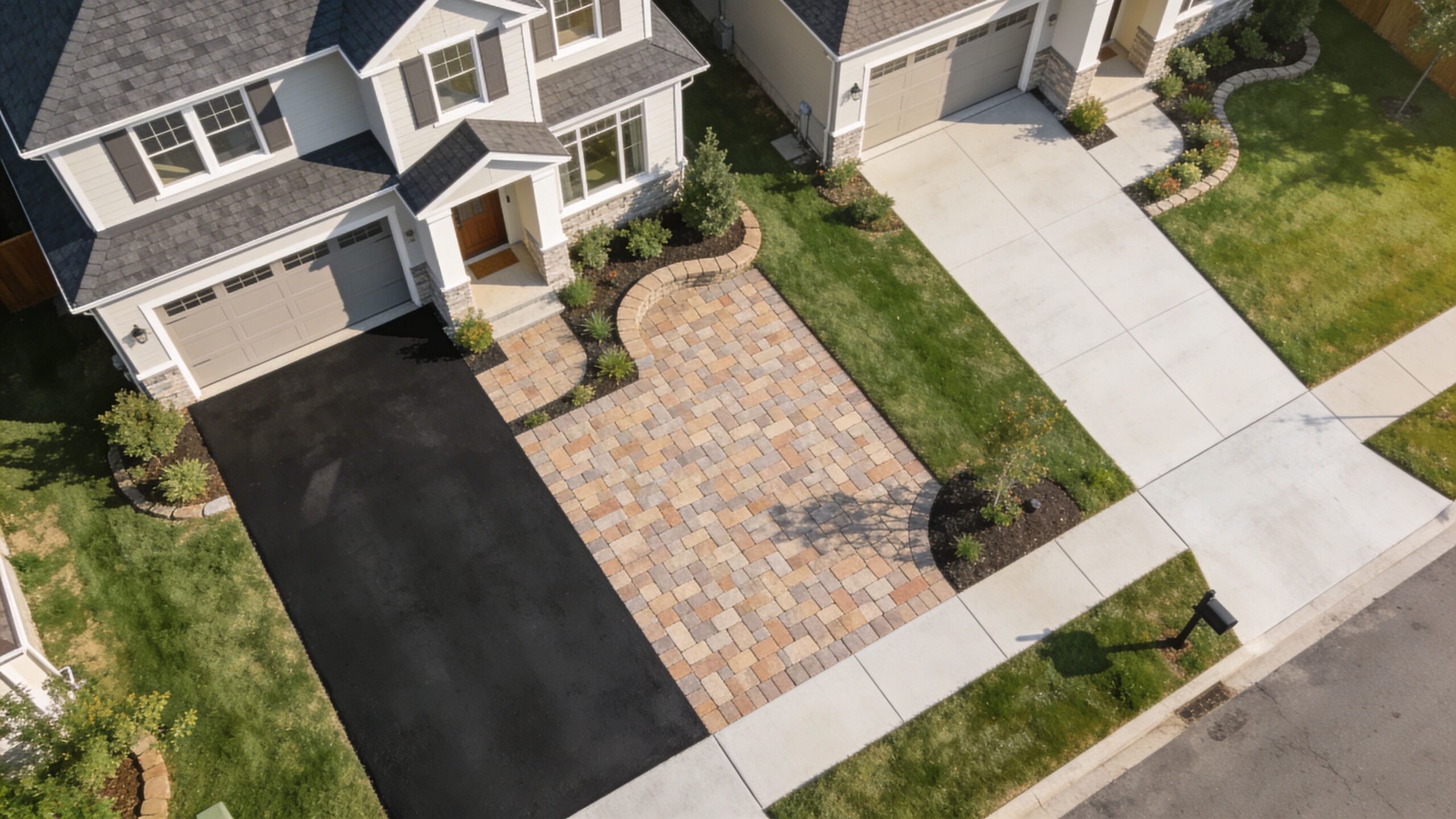
Concrete work beyond the backyard
A full-service concrete contractor should be comfortable with:
Driveway installation and replacement
New driveways, removed and replaced driveways, and layout work that improves vehicle access and curb appeal.Sidewalks and walkways
Residential paths, entry walks, and route connections that need smooth transitions and dependable drainage.Slabs and utility pads
Shed slabs, equipment pads, dumpster pads, and other functional flatwork.Concrete demolition and replacement
Removing broken, settled, or unsafe sections and rebuilding them correctly.
Patio clients often discover related issues once the project is underway, highlighting the importance of addressing broader site needs. A homeowner in Inverness may start with a patio and decide the cracked back walk needs to go too. A property owner in Crystal River may need a new patio area tied into a service walk or dumpster approach.
Commercial properties need both concrete and asphalt expertise
Commercial work is where single-scope contractors often fall short.
A retail plaza, school, church, or HOA usually needs more than one trade handled correctly. The property may need sidewalk replacement near entrances, ADA-compliant route adjustments, parking lot striping, and asphalt seal coating on the same site plan.
For accessible paths, the U.S. Access Board standard includes a 1:48 slope ratio, and professional ADA-aware work can help owners avoid liability while increasing property value by up to 12%, as summarized in this ADA-focused patio and exterior concrete discussion.
Why asphalt services belong in the same conversation
Concrete and asphalt are different materials, but property owners experience them as one system.
A well-kept lot with faded striping still looks neglected. A sound patio tied into a failing drive still feels unfinished. That is why seal coating, parking lot striping, ADA markings, and maintenance scheduling matter just as much as new concrete work for commercial clients in Ocala, Lecanto, Beverly Hills, Hernando, and nearby areas.
Strong contractors do not treat these as unrelated jobs. They see the property the way the owner does. One site. One budget. One standard.
How to Choose Your Contractor and Avoid Pitfalls
The biggest mistake people make is shopping patios by price alone.
A low number on paper does not tell you how much excavation is included, what base prep is planned, whether reinforcement is part of the job, or how drainage will be handled. Two estimates can describe the same patio size and still produce very different results.
Questions worth asking before you hire
Ask direct questions. A good contractor should answer them without getting defensive.
How will you prep the site
Ask about excavation depth, grade, and how the base will be stabilized.What does the estimate include
Clarify demolition, haul-off, forms, reinforcement, finish work, and cleanup.Have you done local work like this before
Local experience matters because site conditions in Central Florida are not generic.What is your plan for drainage
If the answer is vague, keep looking.What happens after the pour
Cure time, jointing, maintenance, and sealing should all be discussed clearly.
One often-missed question is sealing. In high-humidity Florida conditions, unsealed concrete patios can fail 30% to 50% faster, and proper sealing can extend lifespan by 5 to 10 years, according to this discussion of patio sealing in humid climates.
Red flags that show up early
Some warning signs are obvious. Others are subtle.
A suspiciously low bid
Cheap jobs often get cheap prep.No clear schedule
If a contractor cannot explain timing, expect problems once work starts.No mention of sealing or maintenance
That usually means they are focused on getting the pour done, not helping the patio last.No broader paving knowledge
If you are comparing contractors for multiple exterior upgrades, it helps to review how they handle related work such as driveway paving contractor near me.
Good contractors talk comfortably about prep, drainage, joints, and maintenance. Weak ones talk mostly about being the cheapest.
Frequently Asked Questions About Florida Patios
How long does a concrete patio last in Florida
A properly built concrete patio can give many years of service in Florida. The biggest factors are site prep, drainage, reinforcement, joint placement, and whether the surface is maintained and sealed over time.
Is concrete or pavers better for my backyard
That depends on your priorities. Concrete is often the better fit when you want a simpler, cost-conscious patio with a clean finished look. Pavers make sense when design flexibility, pattern, and easier sectional repair matter more.
Do patios in Marion and Citrus counties need permits
Some do. Earlier in the article, local patio planning guidance noted that patios over certain sizes in many Florida counties may involve permitting and approval timelines. A contractor familiar with local requirements can help you avoid delays and rework.
Can cracked or damaged concrete be replaced without redoing everything
Sometimes yes. If the problem is isolated, partial removal and replacement may be possible. If the cracking is tied to drainage failure, base failure, or widespread settlement, replacing only one section may not solve the underlying issue.
Do you offer ADA-compliant concrete and striping work
Yes. That kind of work is especially important for commercial properties, churches, HOAs, schools, and retail centers. Accessible routes, marked spaces, and compliant slope transitions should be handled by crews who understand both concrete layout and pavement markings.
What areas do you serve
Projects are commonly handled across Marion County and Citrus County, including Ocala, Dunnellon, Belleview, Silver Springs, Summerfield, Crystal River, Homosassa, Inverness, Lecanto, Beverly Hills, Hernando, and The Villages.
Do you only install patios
No. Many property owners looking for patio installation near me also need driveways, sidewalks, slabs, concrete replacement, asphalt seal coating, parking lot striping, or ongoing site maintenance. It is often more efficient to work with one company that can handle both concrete and asphalt needs.
Get Your Free On-Site Patio Estimate Today
If you are ready to turn an empty backyard, worn slab, or problem area into a finished outdoor space, the next step is simple. Schedule a free on-site estimate and get a clear recommendation based on your property, your layout, and how you plan to use the space.
Good patio work starts with honest site evaluation. You need a contractor who shows up, answers questions directly, and explains what will hold up in Florida weather. The same goes for driveways, sidewalks, commercial flatwork, seal coating, and striping.
A no-pressure consultation gives you real answers before any work begins. That is how smart projects stay on budget and avoid surprises.
If you need a patio, driveway, sidewalk, slab, seal coating, or parking lot striping project handled by a local team that understands Marion and Citrus County conditions, contact Riverside Sealing & Striping, LLC for a free, no-pressure on-site estimate. They serve homeowners, HOAs, churches, retail centers, and commercial properties across Central Florida with reliable scheduling, durable workmanship, and practical guidance from start to finish.