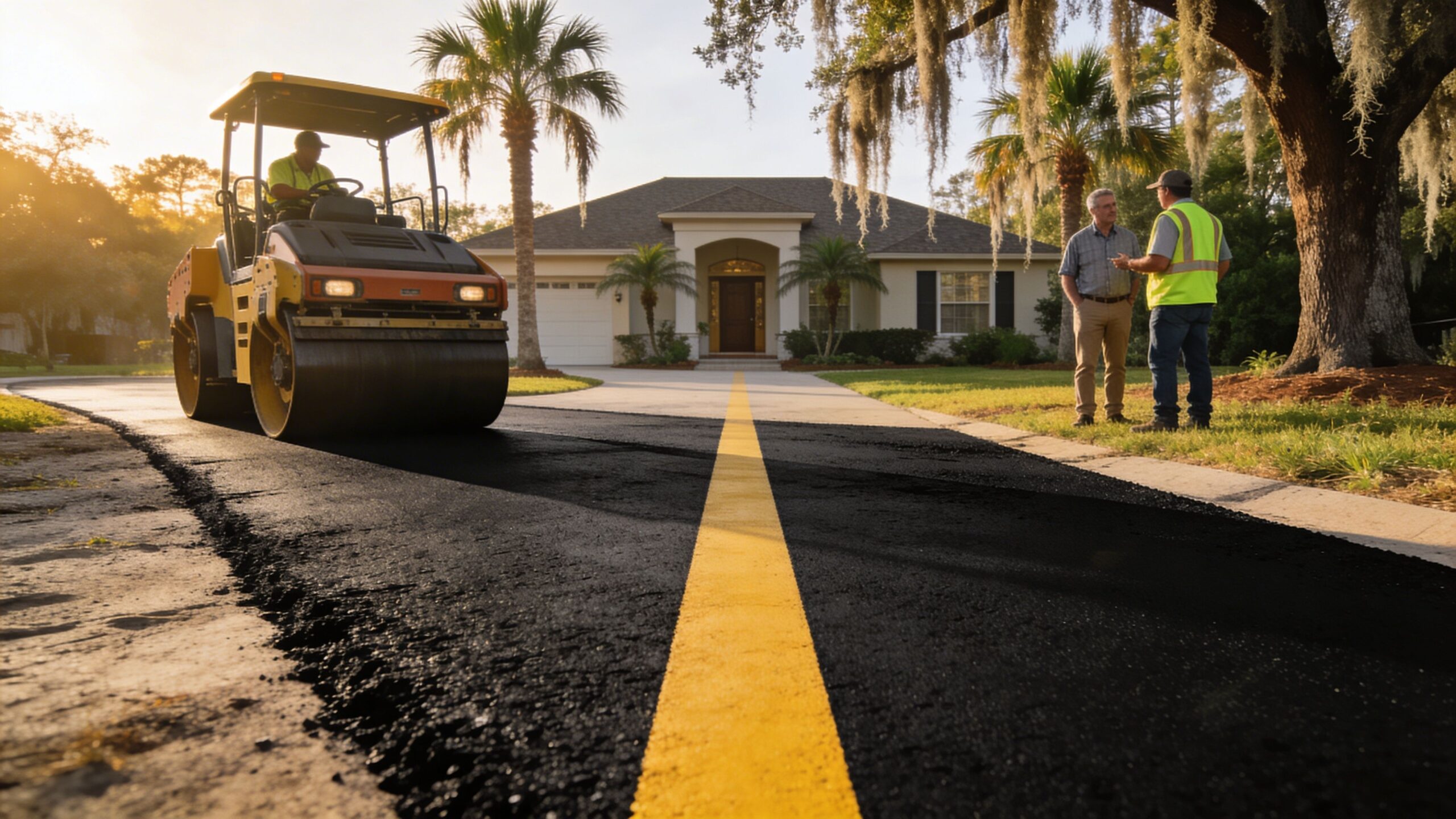
A lot of property owners in Central Florida wait too long to deal with failing pavement.
A driveway in Dunnellon starts with one crack and turns into edge break. A shopping center in Ocala keeps putting off restriping until customers stop parking where they should. A patio in Crystal River settles, holds water, and becomes an eyesore every time it rains. Most of the time, the primary problem is not just the surface. It is choosing the wrong fix, or hiring a contractor who only handles part of the job.
That is where a full-scope approach matters.
If you are searching for asphalt paving ocala fl, you may need more than asphalt work. Some properties need new concrete driveways, sidewalks, slabs, or demolition and replacement. Others need asphalt seal coating, parking lot striping, ADA-compliant markings, or a long-term maintenance plan. The best result usually comes from looking at the whole site, not one isolated symptom.
In Marion County, Citrus County, Ocala, Dunnellon, Belleview, Summerfield, Inverness, Crystal River, Homosassa, Lecanto, Hernando, Silver Springs, Beverly Hills, and The Villages, pavement decisions have to hold up to hard sun, heavy rain, standing water, traffic load, and day-to-day use. The right solution protects value. The wrong one creates repeat repairs.
Your Guide to Pavement Solutions in Marion & Citrus County
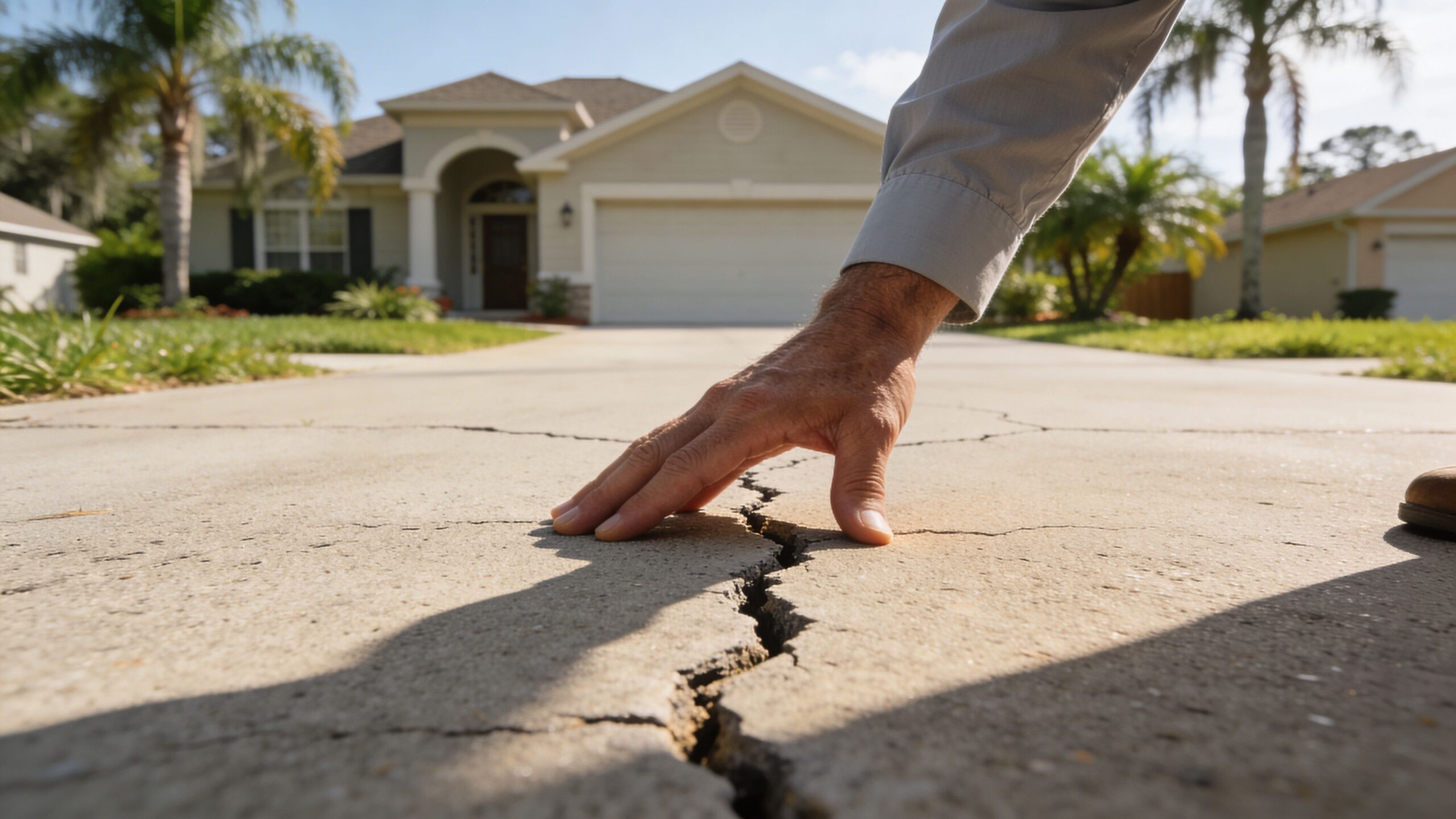
A property owner in Ocala may call about a cracked driveway and expect a quick asphalt quote. After a site visit, the underlying issue is often broader. Water may be running to the wrong edge, the base may be failing near the garage, or the entrance may need concrete while the main drive still makes sense in asphalt.
That is how paving decisions work in Marion and Citrus County. The best return usually comes from choosing the right surface for each part of the property, then maintaining it on schedule.
What property owners usually need to decide first
Start with two questions. Is the existing pavement structurally sound, and what does the site need to do every day?
Those answers shape the scope faster than any price sheet.
- If the surface has base failure, major settlement, or widespread breakup, replacement is usually the better investment.
- If the pavement is still structurally sound, sealcoating, crack repair, or restriping may extend service life at a lower cost.
- If the property handles customers, tenants, or delivery traffic, visibility, ADA markings, drainage, and traffic flow need to be part of the plan.
- If water does not leave the surface properly, both asphalt and concrete will wear out sooner.
In this part of Central Florida, there is no single best material for every job. Asphalt often works well for larger driving areas where cost control and easier future repairs matter. Concrete is often the better choice for sidewalks, aprons, curbs, patios, dumpster pads, and other areas that need edge strength, cleaner lines, or a more rigid surface. Long-term value comes from matching the material to the use, not forcing one option across the whole site.
One property can need both concrete and asphalt work
A lot of paving problems start when each surface is treated as a separate job.
On a commercial site, the parking field may need asphalt maintenance while the sidewalks, curbs, and entrance ramps need concrete replacement. On a home, a new driveway may tie into an existing walkway or patio that needs to match grades and drainage. If those pieces are handled without coordination, the finished project can look patched together and perform even worse.
A better plan reviews the property as one system.
| Property area | Best-fit solution |
|---|---|
| Main driveway entrance | Concrete or asphalt based on traffic, finish, and layout |
| Patio or slab | Concrete for clean edges, function, and finish options |
| Sidewalks and walkways | Concrete with attention to slope and accessibility |
| Parking lot surface protection | Asphalt seal coating |
| Traffic organization | Striping and ADA-compliant markings |
The low bid usually focuses on surface appearance. The better value comes from correct prep, drainage, thickness, and layout before repairs start repeating.
Durable Concrete Installations to Enhance Your Property
Concrete is the right choice when you need structure, clean lines, and a surface that feels permanent.
For homes, that usually means driveways, patios, walkways, and slab work. For commercial sites, it can mean sidewalks, entry pads, dumpster enclosures, curbs, and replacement sections where damaged pavement keeps returning. Done right, concrete improves appearance and function at the same time.
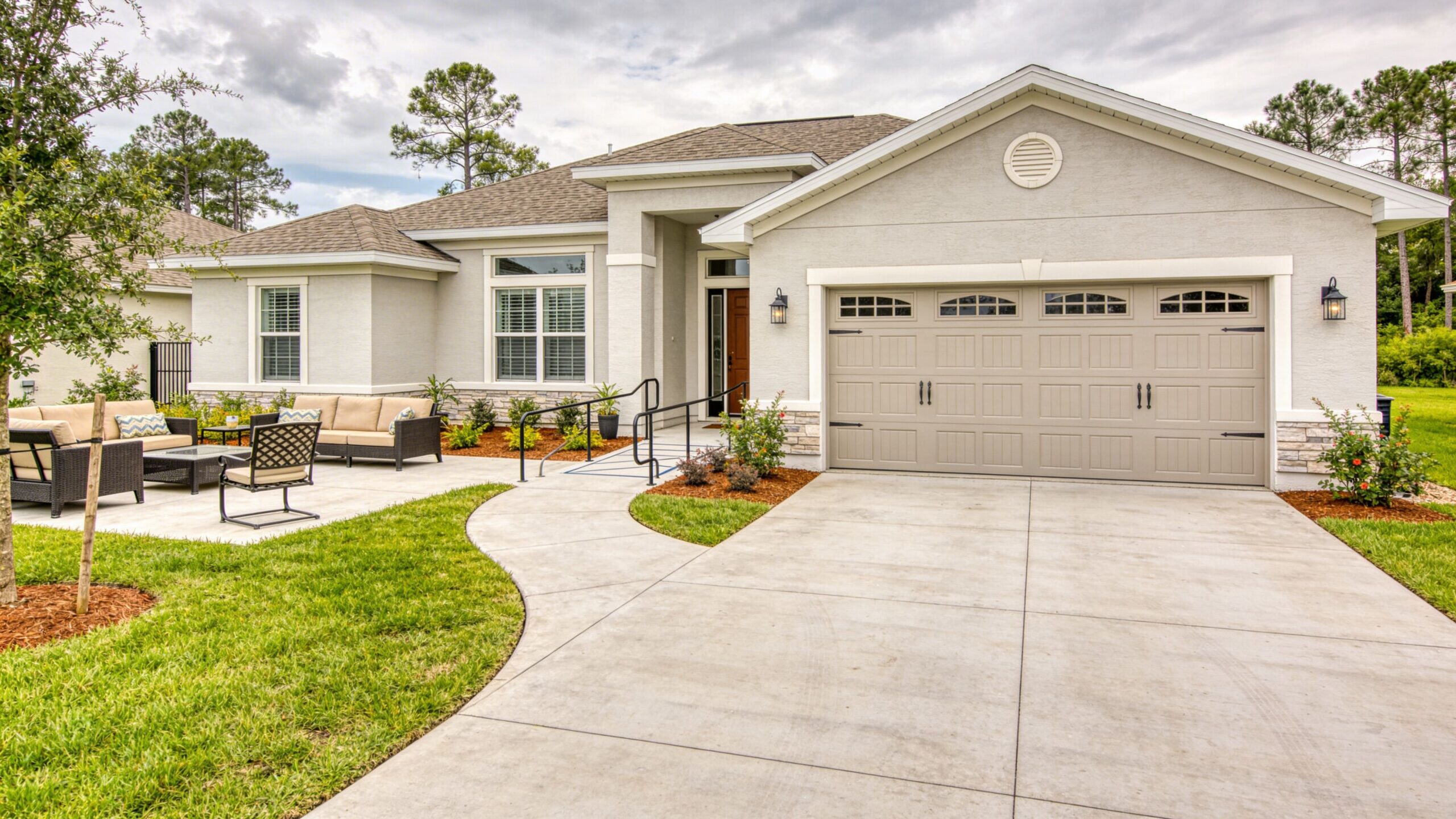
Concrete driveway installation and replacement
A good concrete driveway starts below the slab.
If the subgrade is soft, wet, or uneven, the finish on top will not save it. The best driveway jobs in Marion County and Citrus County come from proper excavation, grading, compaction, edge control, and thoughtful joint placement. That helps reduce random cracking and early settlement.
For homeowners, concrete driveways make sense when you want:
- Defined curb appeal that fits the house instead of looking patched together
- A hard-working surface for daily vehicle traffic
- A cleaner edge against grass, beds, or paver accents
- A practical replacement for broken, uneven, or badly patched existing pavement
Replacement matters as much as new installation. If an old driveway has widespread cracking, movement, or surface failure, full removal and replacement is usually smarter than trying to hide the damage.
Patios and slabs that feel finished
Patios, equipment pads, and utility slabs do not get much attention until they are too small, poorly sloped, or rough underfoot.
A properly built patio creates usable outdoor space. It also solves little daily annoyances. Water should move away from the home. Furniture should sit flat. Edges should look deliberate. The finish should fit the way the area will be used, whether that means a broom finish for grip or a cleaner decorative look.
Concrete slabs also support sheds, outdoor kitchens, seating areas, and service equipment. The key is matching the slab design to the use instead of pouring one generic thickness everywhere.
Here is a practical look at what works and what does not:
| What works | What does not |
|---|---|
| Solid site prep and compaction | Pouring over unstable ground |
| Planned drainage and slope | Flat slabs that trap water |
| Joints placed with purpose | Random cracking from poor control |
| Finish matched to use | Slick finishes in wet walking areas |
A short visual helps show the kind of concrete finish and layout details property owners should expect on a professional job.
Sidewalks, walkways, and accessible routes
Walkways are often treated like small jobs. They should not be.
A sidewalk has to drain correctly, connect cleanly, and feel safe every day. That matters for homes, but it matters even more for churches, schools, retail centers, and HOA common areas. If people use the path regularly, the finish, slope, transitions, and edge conditions need to be right.
On commercial properties, accessible walkways and parking access are not optional details. They are part of a usable site. A professional install should account for route continuity, transitions, and the markings or adjacent striping that support ADA use patterns.
Concrete adds value when it solves a problem permanently. If the goal is only to cover up a bad section fast, the same trouble usually comes back.
Demolition and replacement done the right way
Some slabs should be repaired. Some should come out.
A sound contractor will tell you the difference. If a section has isolated damage and the base is stable, repair may be enough. If the slab has widespread movement, settlement, poor drainage, or repeated failure, demolition and replacement is usually the honest answer.
That is especially true in Central Florida, where moisture movement and soft spots can turn a small cosmetic issue into an ongoing structural one. Property owners in Ocala, Dunnellon, and Inverness usually save more by replacing failed concrete once than by paying for repeated short-term fixes.
Protective Asphalt Maintenance Sealcoating and Striping
Asphalt maintenance is not about making old pavement look black again. It is about slowing down the damage cycle before repair costs jump.
That matters in Central Florida because asphalt takes steady punishment from sun, water, traffic, oil, fuel, and turning tires. Once the surface dries out and opens up, water gets deeper into the pavement structure. Then small failures turn into widespread problems.
Why sealcoating pays for itself
Sealcoating protects the surface layer from oxidation, weather, and day-to-day contamination. On commercial lots, it also keeps the property looking active and maintained. On residential driveways, it gives the pavement a cleaner surface and slows surface wear.
The mistake is applying sealer to pavement that is already beyond maintenance. Sealcoating works best on asphalt that still has structure left. If the lot is badly broken, unstable, or full of failed patches, a coating will not fix the underlying issue.
A practical consideration:
- Good candidate. Surface aging, light cracking, faded color, sound structure
- Borderline candidate. Moderate distress that may need repair first
- Poor candidate. Major movement, deep failure, widespread breakup
Ocala has a notable place in asphalt history. A pioneering hot mix asphalt recycling project there produced an eight-mile road using recycled asphalt pavement, as documented in Auburn University's historical perspective on HMA recycling. That matters because it shows how long this region has been tied to practical, efficiency-focused paving methods.
Property owners who want budget guidance before scheduling work can review this breakdown of https://riversidesealingstriping.com/asphalt-sealcoating-cost-per-square-foot/.
Striping is a safety tool, not just a finishing touch
Fresh striping changes how a parking lot works.
Customers park straighter. Traffic moves more cleanly. Fire lanes and loading zones read clearly. Handicap spaces, access aisles, arrows, curbs, and stop bars become obvious again. On retail sites, churches, schools, and medical offices, those details affect both appearance and liability.
Poor striping creates confusion fast. Common problems include:
- Stalls that are hard to see, especially at night or in rain
- Misaligned traffic flow, which leads to awkward turns and near misses
- Missing ADA markings, which can create compliance issues
- Layout drift over time, where repainting follows old mistakes instead of correcting them
What works best on Florida lots
The best striping work starts before the paint.
A contractor should review traffic pattern, stall count, accessible spaces, entry and exit logic, and any problem areas where vehicles cut corners or stack up. That is especially important for HOAs in places like Summerfield and The Villages, where lots often serve mixed users with different movement patterns throughout the day.
For property managers, the right maintenance sequence usually looks like this:
- Assess the surface condition
- Handle repairs before coating
- Sealcoat when the pavement is a good candidate
- Stripe after the surface is properly prepared
- Refresh markings before visibility becomes a complaint
A parking lot can be structurally acceptable and still perform poorly if the layout is faded, confusing, or out of compliance.
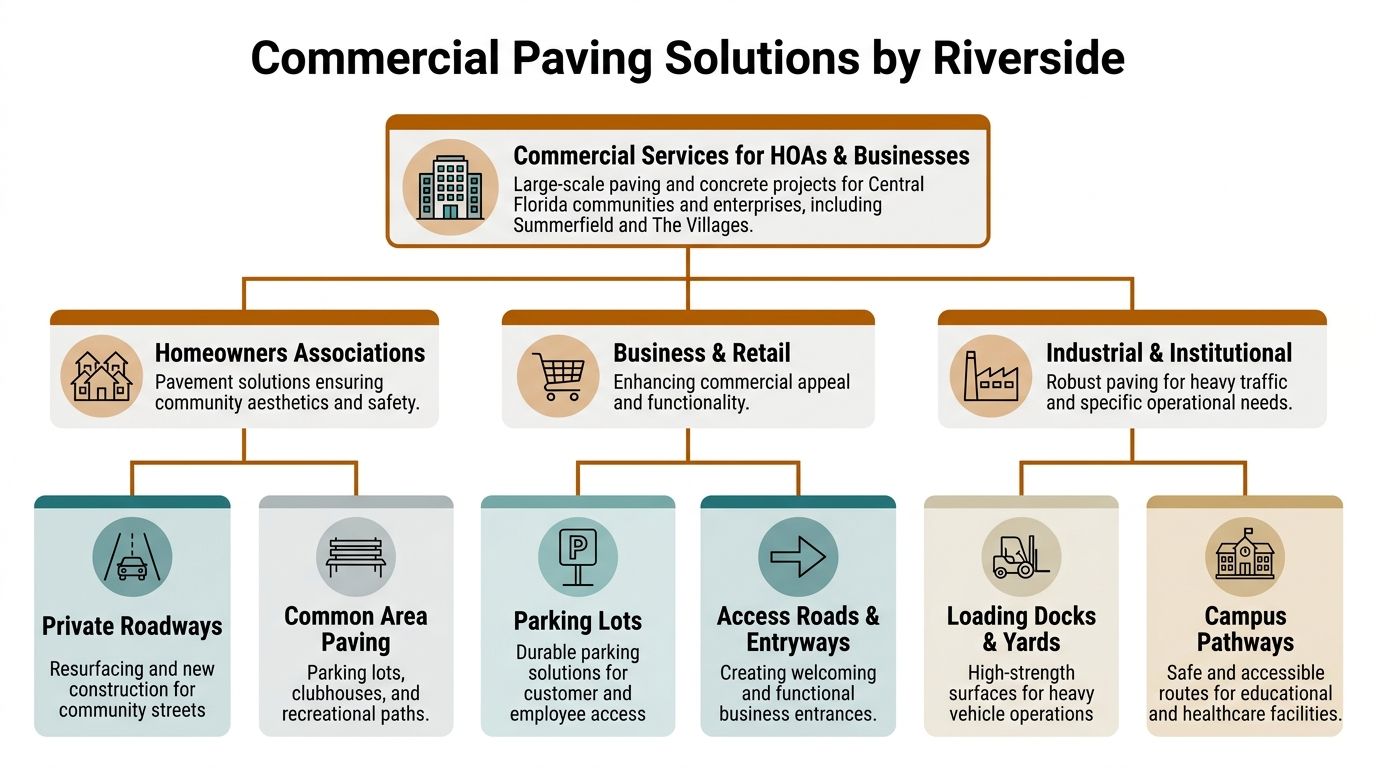
Commercial Services for HOAs and Businesses
Commercial pavement work has different priorities than residential work.
A homeowner usually focuses on appearance, longevity, and daily use. A property manager has to think about traffic flow, tenant experience, scheduling, accessibility, budget timing, and exposure to complaints. An HOA board has to think about community appearance while trying not to disrupt residents more than necessary.
That is why commercial jobs need planning before production.
What commercial clients need
For shopping centers, churches, schools, industrial sites, and managed communities, the core deliverable is not just new pavement or fresh markings. It is predictability.
That means:
- Clear phasing so access is maintained
- Accurate site review before work starts
- Concrete and asphalt coordination when both scopes are involved
- ADA-conscious layout decisions on the front end
- Maintenance planning instead of waiting for emergency repairs
A lot in Ocala with constant turning traffic needs a different approach than a quiet church lot in Homosassa. A private roadway in an HOA has different wear patterns than a school pickup loop in Marion County. Commercial work gets better when the contractor matches the solution to the traffic and use.
Material decisions matter under commercial loads
For durable commercial pavements in Ocala, FDOT specifications use Superpave mixes such as Type SP-9.5 and SP-12.5, with fine layer thickness controls of 3/4 to 1 1/4 inches to prevent cracking and rutting. The same specification notes that proper application can support 15-20 year service life for commercial lots when the pavement is built to suit traffic demands, as outlined in FDOT Section 334 on Superpave asphalt mixes.
That is the kind of detail commercial owners should care about. Thickness is not a sales phrase. It affects performance.
If your lot has loading zones, regular delivery traffic, or high turning stress, a thin cosmetic approach will not hold up the same way a properly designed pavement section will. Property managers comparing options can also review examples of https://riversidesealingstriping.com/florida-asphalt-repair/ to understand where repair fits versus broader maintenance or replacement.
Maintenance programs beat reaction-based budgeting
Commercial properties age more predictably when owners stop treating pavement as a surprise expense.
A maintenance program lets a manager plan around occupancy, school calendars, service access, and board approval cycles. It also helps catch issues while they are still manageable.
Consider how different property types usually prioritize work:
| Property type | Most urgent concern |
|---|---|
| HOA communities | Community appearance and resident access |
| Retail plazas | Customer parking and traffic organization |
| Churches and schools | Safety during peak arrival and departure periods |
| Industrial sites | Durability at heavy-use areas |
| Medical or office properties | Accessible parking and clean navigation |
Commercial paving work succeeds when the contractor protects operations first, then improves the surface. Shutting down access without a plan is how simple jobs turn into tenant complaints.
Pavement Solutions Built for the Central Florida Climate
Central Florida is hard on pavement for a simple reason. The surface rarely gets a break.
Heat bakes asphalt. UV dries out binders. Summer rain works into weak spots. Standing water exploits low areas. Repeated traffic finishes what weather starts. Concrete deals with a different set of stresses, but it still needs proper prep, slope, and placement to avoid trouble.
Why Florida weather punishes weak workmanship
A pavement system only performs as well as its bonding, thickness, and drainage.
For asphalt overlays and resurfacing, bond between layers matters more than many owners realize. In Florida's humid climate, FDOT specifications call for tack coat rates such as 0.09 gal/yd² on milled asphalt to strengthen interlayer bonding, and the same specification notes that poor application can lead to slippage failure and a 50% reduction in tensile strength, according to FDOT asphalt construction specifications.
That is not a minor detail. It is one of the reasons some overlays hold and others start shoving, slipping, or failing early.
Matching the fix to the local condition
What works in a dry climate does not always work in Ocala, Crystal River, or Inverness.
A practical Central Florida approach usually includes:
- Surface prep that is not rushed. Dirt, loose material, and bad edges shorten the life of any coating or overlay.
- Drainage correction before cosmetics. Water wins if the site traps it.
- Concrete slopes and joints placed with intent. That helps the slab move and drain the way it should.
- Maintenance timed before major distress. Once the structure is gone, preservation options narrow fast.
Choosing between concrete and asphalt on the same property
Here, national one-size-fits-all advice falls apart.
Concrete is often the better fit where you need rigid structure, a crisp look, and defined walkways or slab areas. Asphalt is often the better fit where you need broad driving surfaces and a maintenance path that protects the existing investment over time. Many sites in Marion and Citrus counties benefit from both.
Here is the practical trade-off:
| Surface | Strong use case |
|---|---|
| Concrete | Driveways, sidewalks, patios, slabs, access routes |
| Asphalt | Drive lanes, parking areas, sealcoated commercial surfaces |
| Combined approach | Properties that need structural concrete plus maintained parking and circulation |
In Central Florida, the best pavement plan is rarely about one material being better than the other. It is about using each material where it performs best.
Navigating Your Ocala Paving Project From Start to Finish
Most project problems start before any crew arrives.
The owner has one idea of the scope. The contractor has another. Nobody has checked drainage, access, or permit triggers. Then the schedule slips, the budget changes, and the work becomes harder than it needed to be.
A smoother job starts with a clear process.
Step one is a site evaluation
A proper estimate should go beyond measuring square footage.
The contractor should look at existing failure, drainage direction, elevations, edges, traffic pattern, tie-ins, and whether the site calls for concrete, asphalt maintenance, or a combination. Here, practical advice matters most. A homeowner asking for asphalt paving ocala fl may be better served by concrete replacement in some driveway sections or by maintenance instead of full resurfacing.
A sound evaluation should answer:
- Is the surface structurally salvageable
- What prep work is required
- Will water move correctly after completion
- Does the site need ADA-related updates
- Is permitting likely
Permits are where many jobs get delayed
This is one area too many contractors gloss over.
For asphalt paving projects in Ocala, Marion County often requires a building permit for driveways over 400 sq ft or any commercial parking lot, and that process can involve zoning approval and stormwater management plans, according to this permitting overview tied to local paving project requirements. If permitting is handled poorly, projects can be delayed by weeks.
For property owners, that means permit review is not paperwork trivia. It affects start date, inspections, and sometimes scope.
Common permitting trouble spots include:
- Driveway expansions that change runoff
- Parking lot projects with layout changes
- Sites near right-of-way concerns
- Commercial jobs that need accessible route review
- Work started before approvals are confirmed
Property owners looking at local contractor options can compare service scope here: https://riversidesealingstriping.com/driveway-paving-contractor-near-me/
Production goes better when sequencing is planned
The strongest projects break the work into logical stages instead of trying to force everything through at once.
For example:
| Stage | What happens |
|---|---|
| Consultation and site visit | Scope, goals, and existing issues reviewed |
| Estimate and recommendations | Best-fit repair, replacement, or maintenance path |
| Permit coordination if needed | County or municipal requirements addressed |
| Site prep | Removal, grading, compaction, and corrections |
| Installation or maintenance work | Concrete placement, sealcoating, striping, or related scope |
| Final walkthrough | Finish, access, and punch list confirmed |
Commercial sites need one more layer. Work should be phased around tenant access, school hours, church schedules, or peak business periods whenever possible.
What owners should ask before signing
Not every proposal deserves a yes.
Ask direct questions:
- What is the actual cause of the damage
- Are you repairing the symptom or the structure
- How will drainage be handled
- Who is handling permit coordination
- What areas will be inaccessible during the job
- What finish or layout choices affect long-term maintenance
Those questions help separate serious contractors from crews that only plan to show up, spray, pour, and leave.
A good paving project feels organized before it starts. If the scope is vague, the scheduling is fuzzy, and the permit answer is “we’ll figure it out,” expect problems.
Why Marion and Citrus County Chooses Riverside
A driveway in Ocala and a church parking lot in Crystal River can both look straightforward on day one. The ultimate test comes after a full summer of heat, hard rain, standing water, delivery traffic, and daily use. That is where local experience shows up.
A crew can place concrete or coat asphalt. The better question is whether they understand which surface fits the property, how the base should be prepared for local soil and drainage, and when a repair is money well spent versus when replacement saves more over time. Property owners in Marion and Citrus County usually want one company that can answer those questions across both concrete and asphalt, not push one material on every job.
Local roots show up in the work
Ocala has a long road-building history, and local paving standards were shaped by years of attention to aggregates, lime rock, asphalt mixes, and field performance. That mindset still matters. Good pavement work starts below the surface, with grading, compaction, edge support, drainage, and material selection matched to the site.
That is one reason local owners tend to trust contractors with deep roots here. They want judgment built from work done in neighborhoods, retail sites, farms, schools, churches, and HOA communities across this part of Central Florida. A company that has spent decades paving in Marion and Citrus County has already seen what Florida rain does to a weak base and what heavy sun does to neglected asphalt.
What owners are really paying for
Price matters. So does avoiding the cheap job that has to be repaired twice.
Property owners usually choose Riverside for a few practical reasons:
- Straight answers about repair versus replacement
- Experience with both concrete and asphalt on the same property
- Scheduling that respects residents, tenants, customers, and traffic flow
- Recommendations tied to drainage, use, and maintenance cost
- Work built to hold up, not just look fresh at handoff
That last point matters more than many bids admit. A surface can look clean on completion day and still fail early if the subgrade was soft, the slope was wrong, or the material choice did not match the traffic.
Why multi-generation experience still matters
A third- and fourth-generation paving company usually brings pattern recognition that newer crews have not earned yet. They have seen decorative concrete that looked great but was the wrong fit for the use. They have seen asphalt lots that could have been preserved with timely maintenance, and others that were already too far gone for sealcoating to make sense.
That experience protects owners from the wrong scope. It also helps when a property needs more than one solution. A shopping center may need concrete sidewalks, asphalt repairs, fresh striping, and drainage corrections. An HOA may need phased work that keeps residents moving while protecting the budget for the next few years.
Reputation is local. In Marion and Citrus County, that still means something.
The right contractor tells you what will last, what will fail, and what gives you the best return over the life of the pavement.
Frequently Asked Questions About Paving in Central Florida
How long does concrete last in Florida
Concrete can last a long time in Florida when the site is prepared correctly, drainage is handled, and the slab matches the use. Failures usually trace back to bad base prep, poor slope, weak edges, or trying to repair a slab that should have been replaced.
How often should asphalt be seal coated
There is no honest one-size-fits-all schedule. Traffic level, sun exposure, drainage, and current pavement condition all matter. The right time is when the asphalt still has structure and the surface is starting to show oxidation and wear, not after widespread failure has already set in.
Do you offer ADA-compliant striping
Yes. Commercial parking lots often need ADA-compliant spaces, access aisles, markings, and directional layout that supports safe use. This is especially important for churches, retail centers, offices, schools, and HOA common areas.
Can damaged concrete be repaired or does it need replacement
Both are possible, depending on the condition. Small isolated damage may be repairable. Widespread cracking, settlement, drainage trouble, or repeated patch failure usually points to demolition and replacement.
What is the difference between asphalt repair and sealcoating
Repair addresses damaged areas. Sealcoating protects sound asphalt from further surface deterioration. They are not interchangeable. If the pavement has structural failure, sealcoating alone will not solve it.
Do you handle commercial properties in places like The Villages, Ocala, and Inverness
Yes. Commercial work commonly includes parking lot striping, ADA updates, asphalt maintenance, concrete replacement, sidewalks, and common-area improvements for HOAs, retail centers, churches, schools, and managed properties across Marion County, Citrus County, and nearby Central Florida communities.
What areas do you serve
Service commonly extends across Marion County and Citrus County, including Ocala, Dunnellon, Belleview, Silver Springs, Summerfield, Crystal River, Homosassa, Inverness, Lecanto, Beverly Hills, Hernando, and nearby communities.
If you need a contractor who understands both concrete construction and asphalt maintenance, Riverside Sealing & Striping, LLC offers free, no-pressure on-site estimates across Marion County, Citrus County, and surrounding Central Florida areas. From concrete driveway installation and sidewalk replacement to asphalt seal coating, parking lot striping, and ADA-compliant markings, the team provides reliable scheduling, practical recommendations, and long-lasting workmanship for homes, HOAs, churches, retail centers, and commercial properties.