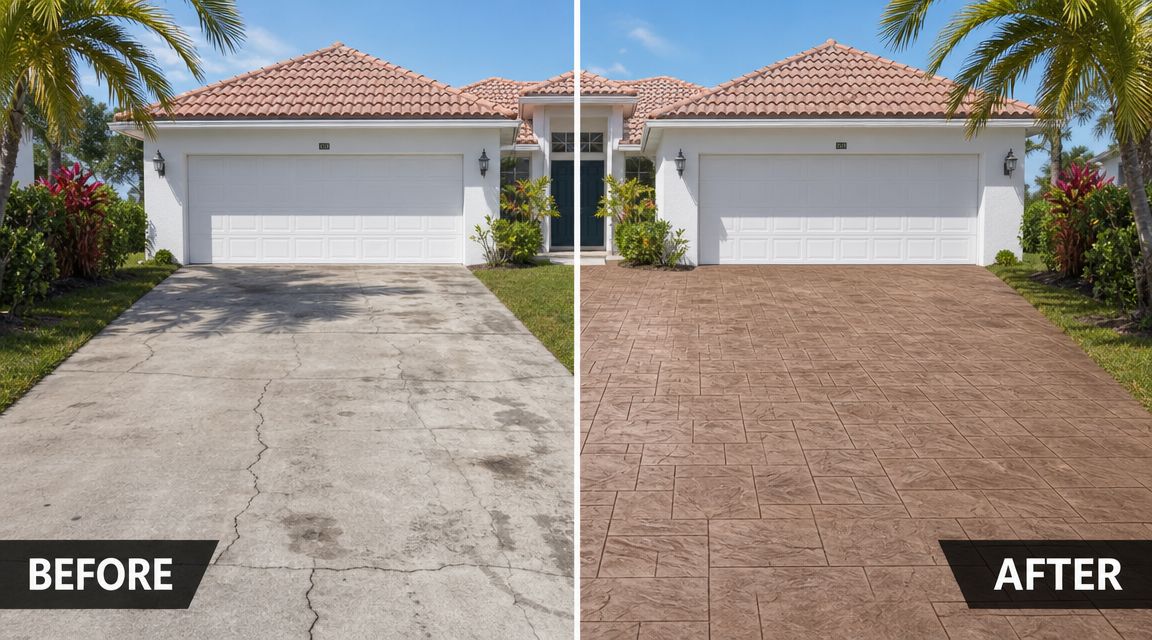
If you're looking at your driveway in Ocala, Dunnellon, Belleview, or Inverness and thinking, “It's ugly, but do I really need to tear the whole thing out?” that's usually the right question. A lot of concrete in Marion County, FL and Citrus County, FL looks worse than it really is. Sun fade, shallow surface wear, old stains, and light cracking can make a sound slab look finished when it still has useful life left.
That's where concrete driveway resurfacing options come in. The right resurfacing system can restore appearance, improve texture, and extend the life of a driveway that's still structurally sound. The wrong system, or the wrong slab, leads to peeling, repeat cracking, and wasted money. In Central Florida, that decision gets more important because heat, UV exposure, humidity, and hard summer rain all test the bond and sealer fast.
As Concrete and Asphalt Experts in Marion and Citrus County, we look at resurfacing as a practical tool, not a magic fix. It works well in the right conditions. It fails early when people use it to hide movement, sinking, or deep slab failure. Here's how to sort through the available options and choose what holds up in places like Summerfield, Silver Springs, Crystal River, Homosassa, Lecanto, Hernando, Beverly Hills, and The Villages.
Table of Contents
- Is Your Driveway a Candidate for Resurfacing
- Comparing Concrete Driveway Resurfacing Options
- The Resurfacing Process From Start to Finish
- Choosing the Best Resurfacing for the Florida Climate
- Why Professional Installation Outperforms DIY Kits
- Frequently Asked Questions About Driveway Resurfacing
- Get a Professional Evaluation for Your Driveway
Is Your Driveway a Candidate for Resurfacing
The first step is simple. Resurfacing is for a sound slab with surface-level problems. It isn't for a driveway that's moving, settling, or breaking apart from the base up.
Industry guidance on driveway resurfacers puts these systems in the thin overlay category, typically around 1/8 inch to 1/4 inch thick, and notes that they're best for cosmetic wear, shallow cracking, discoloration, and scaling, not settlement or deep structural failure. That same guidance also points to the need for proper surface profiling, including ICRI CSP 1 to 2 for microtoppings and thin overlays, before new material is applied, as explained in this overview of concrete driveway resurfacing and surface profile requirements.
What resurfacing can actually fix
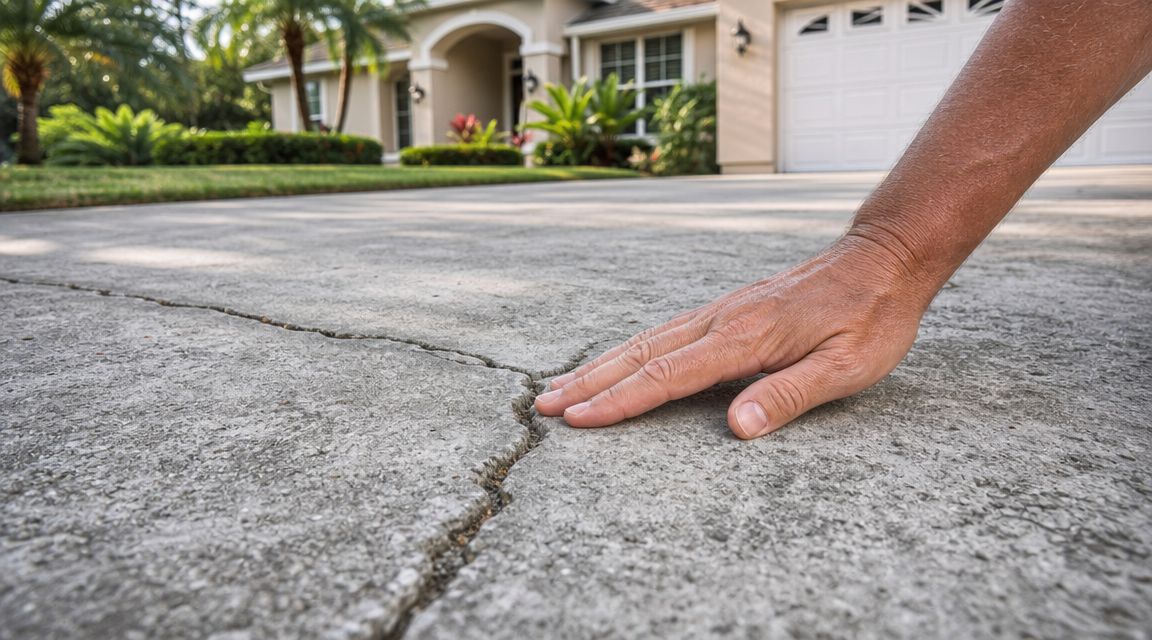
If the slab is level, solid, and not separating, resurfacing can be a good fit for common issues like:
- Faded appearance caused by years of UV exposure
- Light surface scaling or rough top texture
- Shallow hairline cracking that isn't tied to slab movement
- Old stains and discoloration from tires, mulch, rust, or irrigation
- Mild surface flaking that hasn't turned into edge breakdown
A lot of driveways in Marion County and Citrus County fall into that category. The concrete is still there. It just looks tired.
Practical rule: If the slab still feels solid underfoot and the damage is mostly on the surface, resurfacing is worth discussing. If the concrete is shifting or dropping, it's usually not.
One detail homeowners often miss is the condition of the surface skin itself. If you're seeing flaking, pitting, or pop-outs, it helps to understand what concrete spalling looks like and why it happens before deciding on a finish.
Signs you probably need replacement instead
Some driveways should never be resurfaced. Putting a new skin over a failing slab only hides the problem for a short time.
Replacement is usually the better path when you see:
- Sections that have sunk or lifted
- Wide cracks with vertical displacement
- Broken corners and crumbling edges
- Ongoing drainage problems that hold water
- Repeated patching over old movement cracks
- Soft spots in the base or visible slab rocking
In places like Beverly Hills, Homosassa, and Crystal River, moisture and drainage issues can make these structural problems worse over time. In Ocala and Belleview, tree roots and base washout are common reasons one panel starts sitting higher or lower than the next.
If the slab has lost structural integrity, resurfacing won't stop that movement. It will mirror it. That means the new finish cracks where the old slab moves. Homeowners sometimes mistake resurfacing for a shortcut around replacement, but it only works when the underlying concrete gives it something stable to bond to.
Comparing Concrete Driveway Resurfacing Options
There isn't one resurfacing product that fits every driveway. The right choice depends on the slab condition, the finish you want, how much texture you need, and how much Florida weather the surface has to take every day.
On cost, national estimates place basic concrete resurfacing at about $3 to $10 per square foot, with a typical 500-square-foot driveway running roughly $2,000 to $5,000 and an overall average near $2,000 to $2,160, according to Thumbtack's concrete resurfacing cost guide. Decorative or stamped overlays can climb to $7 to $20 per square foot, while full replacement is often cited around $15 per square foot or more in the same source. That spread is why resurfacing remains a practical middle ground when the slab qualifies.
Driveway resurfacing options at a glance
| Option | Cost per sq. ft. | Est. Lifespan | Best For |
|---|---|---|---|
| Thin overlays / microtoppings | $3 to $10 | Varies by prep, sealer, and slab condition | Cosmetic wear, light texture correction, modern uniform finish |
| Stamped and colored overlays | $7 to $20 | Varies by traffic, sealer, and maintenance | Decorative upgrades, curb appeal, patterned surfaces |
| Epoxy / polyaspartic coatings | Qualitatively varies | Depends heavily on moisture control and prep | Homeowners prioritizing a coated look over a cementitious overlay |
| Standard concrete resurfacers | $3 to $10 | Varies by product and installation quality | Budget-minded refresh on a sound slab |
Thin overlays and microtoppings
These are the cleanest-looking option when the slab is basically intact but worn on top. They go on thin and can give older concrete a more uniform surface without making the driveway look overbuilt.
They're a good fit for:
- Surface discoloration
- Minor scaling
- Shallow crack repair after prep
- A plain, updated appearance
The upside is appearance. Thin overlays can make an older driveway in Summerfield or Silver Springs look much newer without the cost and disruption of tearing it out. They also work well when homeowners want a subtle finish instead of decorative patterning.
The downside is that they don't forgive slab movement. If the driveway is uneven or has active displacement, this option will show those problems again. If that sounds like your driveway, review how uneven concrete slabs are typically addressed before you spend money on a thin overlay.
Stamped and colored overlays
Stamped and colored overlays are the decorative side of resurfacing. They can mimic stone, tile, or textured concrete patterns and are popular when curb appeal matters as much as function.
For homeowners in The Villages, Inverness, or upscale neighborhoods around Ocala, these are often the option that changes the look of the property the most. They can also add useful texture, which matters on driveways that get slick during summer storms.
What they do well:
- Upgrade a plain gray driveway
- Add texture for slip resistance
- Hide visual imperfections better than a plain finish
- Coordinate with patios, walkways, or entry paths
What to watch:
- They cost more
- They need disciplined prep and sealing
- Poor workmanship looks obvious fast
A decorative overlay can look excellent on the right slab. On the wrong slab, it turns an existing problem into a more expensive one.
Epoxy and polyaspartic coatings
These get discussed a lot because they look sharp in marketing photos. On some exterior concrete, they can be used successfully. But on driveways, especially in Florida, they need careful judgment.
A coated system can offer a sleek appearance and can include added texture. But driveways see hot tires, full sun, rain, and more moisture exposure than an interior garage floor. That makes product choice and moisture evaluation a bigger deal. If a homeowner in Lecanto or Dunnellon wants this look, the slab has to be assessed properly first.
This option is usually better for homeowners who prioritize the appearance of a coating system and understand that driveway conditions are harsher than patio or garage conditions.
Standard concrete resurfacers
Standard resurfacers are the straightforward repair-first category. They're often used to restore worn concrete without trying to create a premium decorative finish.
They make sense when the goal is simple:
- Refresh the look
- Improve uniformity
- Cover minor surface defects
- Stay in the lower resurfacing cost range
These products can work very well on a sound slab, especially when the finish is kept practical and the prep is done right. They're often the smartest choice for homeowners in Marion County, FL and Citrus County, FL who want value more than a dramatic design upgrade.
Their limitation is visual depth. If you're expecting a luxury decorative result, this isn't usually the category to choose. But if you want a clean, serviceable driveway that looks maintained, standard resurfacing is often enough.
The Resurfacing Process From Start to Finish
Most driveway resurfacing failures don't start at the top. They start underneath the finish because the slab wasn't cleaned, profiled, or repaired correctly.
Prep is where the job succeeds or fails
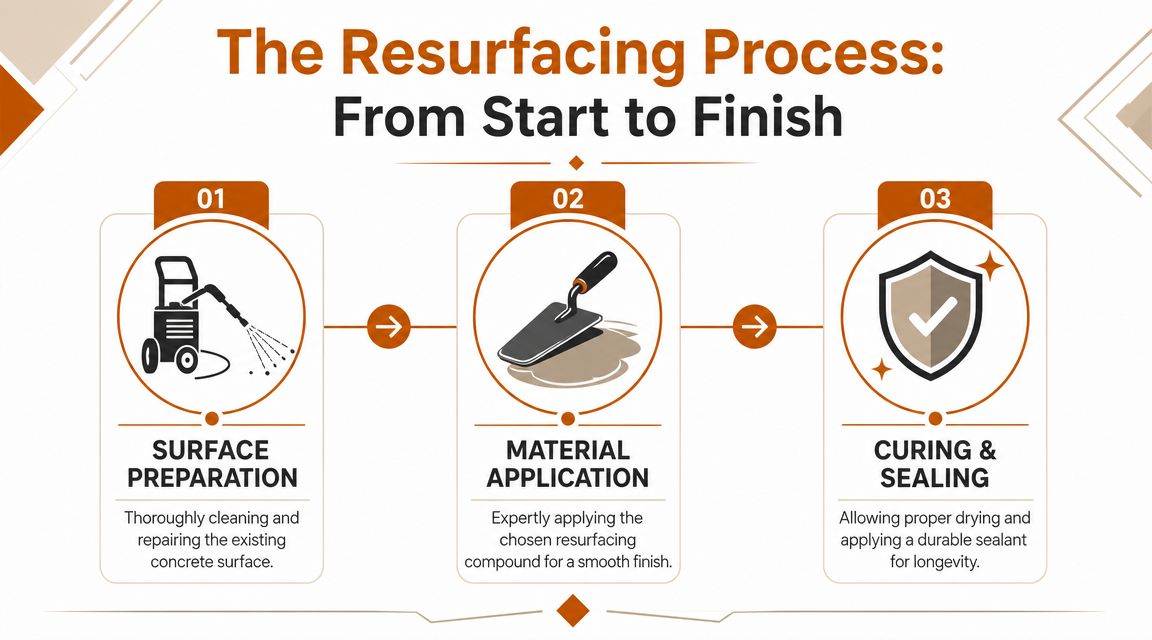
A proper resurfacing job usually starts with deep cleaning. Oil, tire residue, mildew, irrigation stains, and loose material all interfere with bond. In Central Florida, mildew and embedded dirt are common because humidity keeps concrete damp longer than people realize.
Then comes mechanical surface prep. Depending on the condition of the driveway, that can mean grinding or shot blasting to open the concrete and create the texture needed for the new material to grip. Cracks and damaged areas are addressed before resurfacing goes down, not after.
The sequence matters:
- Cleaning and degreasing remove contaminants.
- Mechanical prep creates the surface profile.
- Crack repair stabilizes visible defects.
- Edge work and transitions get checked before material is spread.
Surface prep isn't the boring part of the job. It's the part that determines whether the finish bonds or fails.
A quick visual helps homeowners understand what a full installation typically involves:
Application curing and sealing
Once the slab is ready, the installer applies the chosen resurfacing system. That might be a broom finish, squeegee-applied resurfacer, troweled overlay, spray texture, or decorative stamped system, depending on the job.
After application, curing time matters. So does timing around weather. In places like Crystal River or Homosassa, afternoon rain can ruin scheduling if the crew isn't planning around it. The final protective step is sealing, which helps the new surface handle moisture, staining, and UV exposure better over time.
A driveway that looks good on day one but isn't sealed properly often starts showing wear much sooner than the homeowner expected.
Choosing the Best Resurfacing for the Florida Climate
Central Florida is hard on exterior surfaces. The sun in Summerfield and Belleview bakes exposed concrete. Humidity in Homosassa and Crystal River keeps moisture in play. Hard rain in Marion County, FL and Citrus County, FL tests drainage, traction, and sealer performance all at once.
A major reason resurfacing has improved over time is the move toward polymer-modified overlay systems that bond to existing concrete when the slab is sound. Modern guidance describes these systems as a cosmetic fix, not a structural repair, and notes they can add 10 to 20 years of service life in the right conditions when prep is handled correctly, as outlined in this homeowner guide to polymer-modified driveway resurfacing.
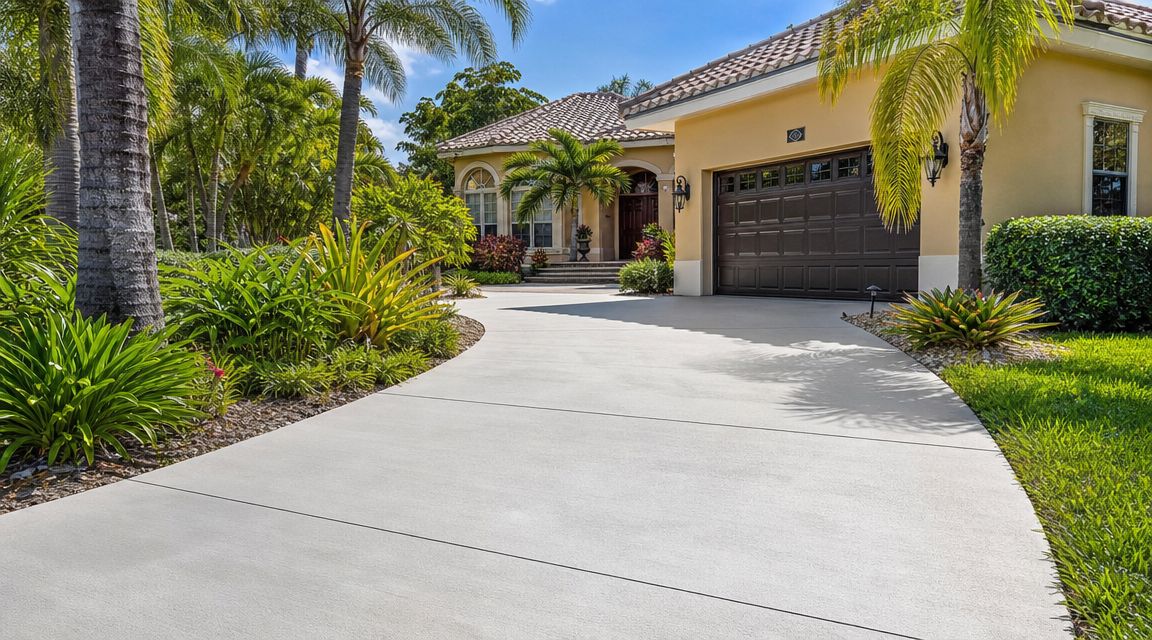
What Central Florida weather does to resurfaced concrete
UV exposure is the first issue. Some finishes fade faster than homeowners expect, especially darker decorative colors on driveways with no shade. Heat also expands the slab and stresses weak bond lines.
Moisture is the second issue. A driveway doesn't need standing floodwater to have moisture problems. Repeated wet-dry cycles, irrigation overspray, and poor drainage along edges can all shorten the life of a finish if the slab wasn't prepared and sealed for those conditions.
Slip resistance matters too. In The Villages, Inverness, and Lecanto, smoother isn't always better. A driveway can look refined and still become slick in a rain event if texture wasn't part of the plan.
What usually works better in Marion and Citrus counties
For most exterior driveways in this region, practical choices tend to outperform flashy ones.
- Polymer-modified cementitious overlays usually make more sense than trying to force a decorative coating onto a moisture-prone slab.
- Textured finishes tend to age better than overly smooth finishes on exposed driveways.
- Sealed systems hold up better than bare overlays left open to water and stains.
- Moderate decorative work often gives a better long-term result than very dark, high-show finishes in full Florida sun.
If your existing slab already has major age or movement issues, it also helps to consider how long a concrete driveway usually lasts and what affects that timeline before choosing a resurfacing system.
Why Professional Installation Outperforms DIY Kits
A homeowner in Ocala buys a resurfacing kit on Friday, rolls it on Saturday, and by the end of the first rainy stretch the edges start peeling near the garage and control joints. I see versions of that job every year. The kit was not always the problem. The slab condition, prep, timing, and product choice usually were.
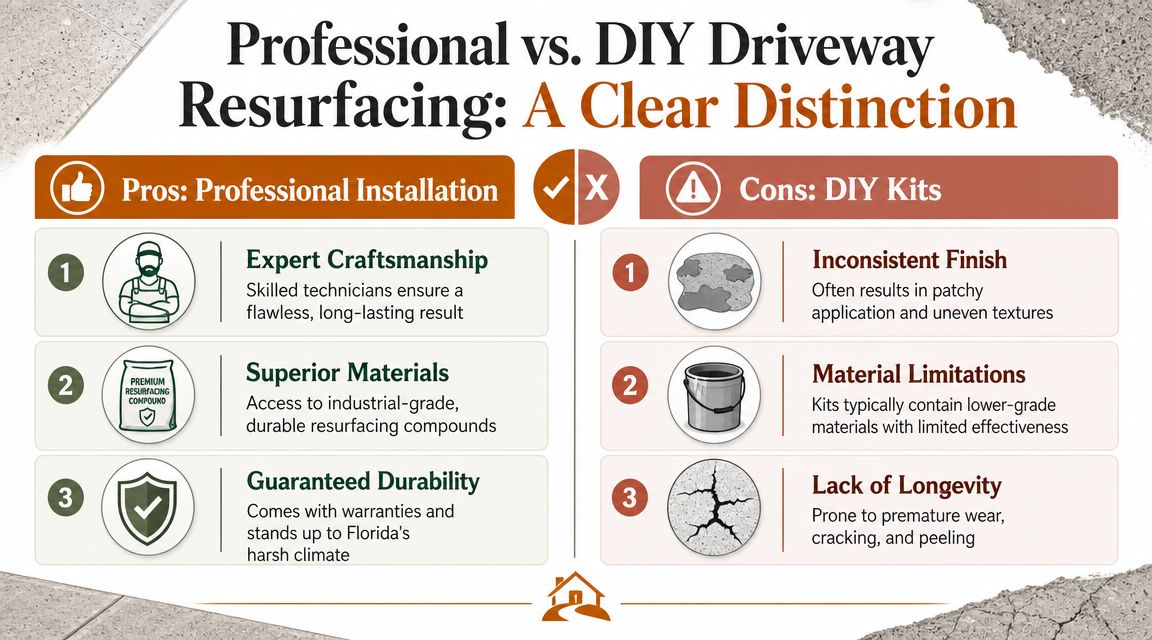
DIY usually fails before the topcoat matters
Industry guidance on driveway resurfacing durability puts the focus in the right place: surface preparation, crack repair, cleaning, and sealing drive the result more than the label on the bag or bucket, as discussed in this driveway resurfacing durability and maintenance overview.
That lines up with what contractors see in the field.
On Central Florida driveways, DIY failures usually come from a few predictable misses:
- Surface contamination left in place, especially oil, fertilizer residue, rust staining, and embedded dirt
- No mechanical profile, so the new material sits on the slab instead of bonding into it
- Cracks patched cosmetically, even though the slab is still moving
- Thin or uneven coverage at edges, joints, and low spots
- No clear sealer plan for UV, rainfall, and tire traffic
Humidity makes this worse. So does the false sense that a slab is ready because it looks clean and dry. In Marion and Citrus counties, concrete can hold moisture below the surface, especially near lawn edges, downspouts, shaded areas, and driveways with irrigation overspray. That is where adhesion problems often start.
What a contractor changes in the result
A professional crew does more than apply resurfacer. They figure out whether resurfacing should be done at all.
That starts with diagnosis. Is the slab stable enough to coat. Are the cracks dormant or active. Is drainage pushing water back across the surface. Will the finish need more texture because this driveway gets hammered by afternoon storms. Those decisions matter more in Florida than the packaging on a DIY kit.
A licensed and insured company with local experience also works around real jobsite conditions. Summer rain windows are short. Surface temperatures climb fast in full sun. Some decorative finishes that look good in a brochure do not hold color well on unshaded driveways in places like The Villages, Beverly Hills, and Dunnellon.
Riverside Sealing & Striping, LLC handles concrete and asphalt work across Marion and Citrus counties, including driveway replacement when resurfacing is not the right answer.
If a driveway needs replacement, the honest recommendation is replacement. Resurfacing only works when the slab underneath can carry the new finish.
Frequently Asked Questions About Driveway Resurfacing
Can resurfacing fix cracks for good
It can improve the appearance of minor surface cracking on a stable slab. It won't permanently stop cracks caused by movement, settling, tree roots, or base failure. If the slab is still moving, the new finish usually reflects that movement.
Is resurfacing better than replacement for every old driveway
No. It's better for the right driveway. If the concrete is structurally sound and the problem is mostly cosmetic, resurfacing can be a practical option. If panels are sinking, heaving, or breaking apart, replacement is usually the better long-term decision.
What finish is usually best for Florida driveways
In many Central Florida neighborhoods, a textured cementitious overlay with proper sealing is a safer exterior choice than a slick-looking finish with little traction. The best fit depends on sun exposure, drainage, shade, and how decorative you want the driveway to be.
Will a resurfaced driveway be slippery when it rains
It can be if the finish is too smooth. Texture should be discussed before application, especially in places like Crystal River, Homosassa, and The Villages where sudden rain can make exterior surfaces slick fast.
Can resurfacing help curb appeal before selling a home
Yes, if the slab qualifies and the finish is chosen carefully. A clean, uniform driveway usually presents much better than stained, patchy concrete. It can improve first impression without the disruption of full demolition.
Get a Professional Evaluation for Your Driveway
The best resurfacing jobs start with an honest answer to one question. Is the slab still worth saving?
If the answer is yes, resurfacing can be a smart way to restore appearance and function without paying for a full tear-out. It's usually a mid-cost option, it gives homeowners several finish choices, and it makes sense when the damage is mostly surface-level. If the answer is no, replacement is the better investment because a new overlay won't fix movement underneath.
That matters a lot in Marion County, FL and Citrus County, FL. Driveways in Ocala, Dunnellon, Belleview, Silver Springs, Summerfield, Inverness, Lecanto, Hernando, Beverly Hills, Crystal River, Homosassa, and The Villages deal with punishing sun, moisture, and traffic. The material choice matters. The slab condition matters more. The prep matters most of all.
Homeowners usually save time and money by getting the driveway evaluated before picking a product. A contractor can tell you whether resurfacing is realistic, which finish fits your property, and whether you're looking at a cosmetic project or a structural one. That's the practical way to approach concrete driveway resurfacing options in Central Florida.
If you need a no-pressure opinion on whether your driveway should be resurfaced, repaired, or replaced, Riverside Sealing & Striping, LLC offers free on-site consultations and estimates for homeowners across Marion County, Citrus County, and surrounding Central Florida areas. As Concrete and Asphalt Experts in Marion and Citrus County, the company handles concrete driveways, slabs, patios, sidewalks, asphalt sealcoating, and parking lot striping with reliable scheduling and licensed, insured service.