
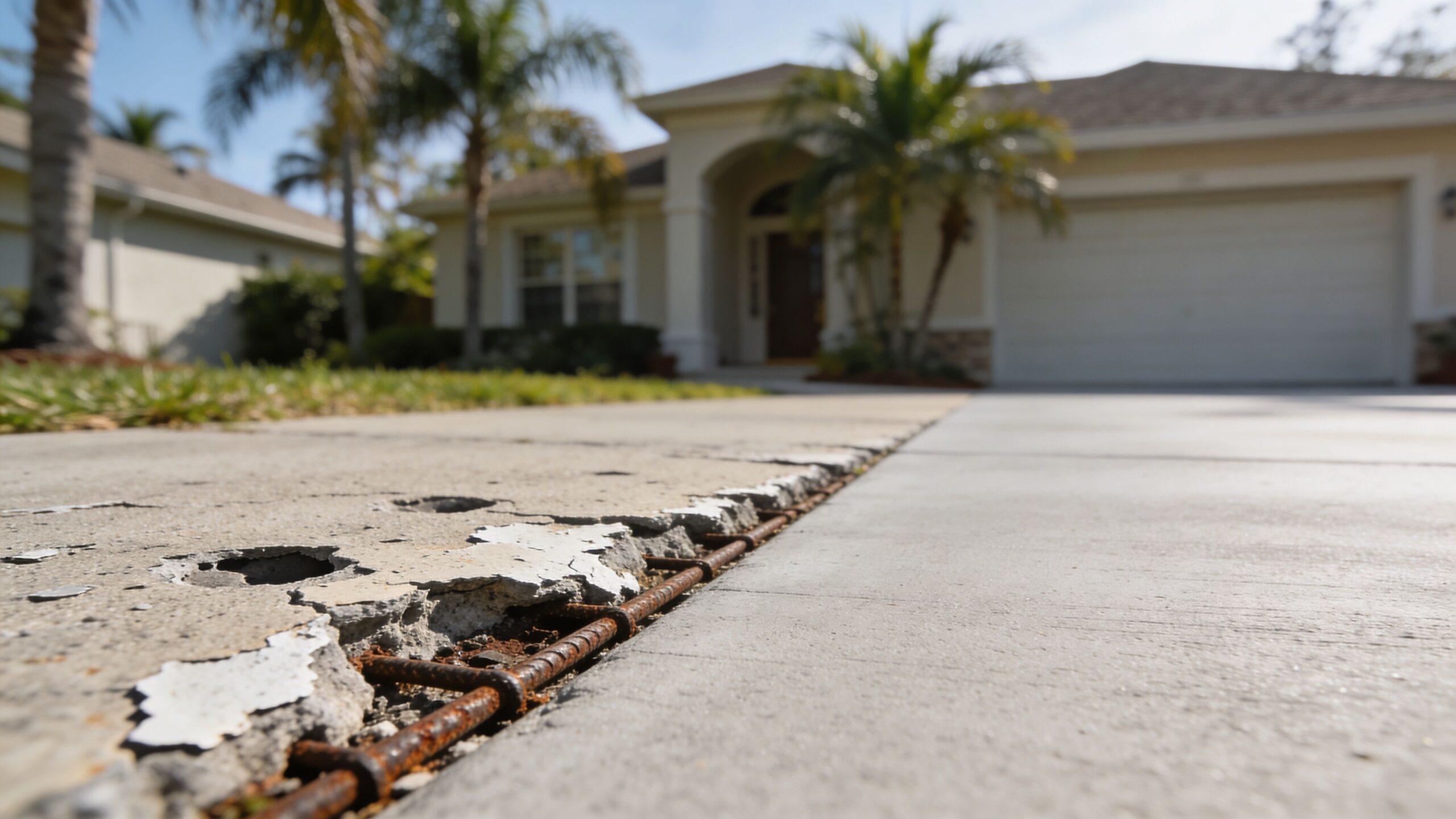
If you're looking at a driveway, patio, sidewalk, or pool deck and seeing little pits, flakes, or chunks missing from the surface, you're probably looking at concrete spalling. In plain terms, spalling is when the top layer of concrete starts breaking away.
Around Central Florida, that often shows up first as rough spots you can feel under your shoes, shallow pop-outs that collect dirt, or edges that seem to keep crumbling a little more after each stretch of rain and heat. Homeowners in Ocala, Dunnellon, Belleview, Summerfield, Crystal River, Homosassa, Inverness, Lecanto, Beverly Hills, Hernando, Silver Springs, and The Villages see this on older driveways, front walks, patios, and entry slabs all the time.
What worries most property owners isn't just how it looks. It's what it means. Sometimes spalling is mostly a surface problem. Other times it's a warning sign that moisture has gotten into the slab and started damaging it from the inside.
That distinction matters in Marion County, FL and Citrus County, FL, where concrete takes a steady beating from humidity, heavy rain, intense sun, and long periods of dampness. Those conditions don't always destroy a slab overnight, but they do speed up the kind of wear that turns a small defect into a bigger repair.
Practical rule: If the damaged area is growing, collecting water, or showing rusty staining, don't assume it's only cosmetic.
Property owners usually ask the same question first: what is concrete spalling, really, and does it mean I need repair or full replacement? The answer depends on what the damage looks like, what caused it, and how far it has spread.
Introduction What Are Those Ugly Pits on My Driveway
Concrete spalling usually starts in a way that's easy to dismiss. You notice a few chips near the garage, a rough patch on the patio, or a shallow crater near the front walk. It doesn't seem urgent, but it also doesn't look right.
The simplest definition is this. Concrete spalling is the chipping, flaking, scaling, or pitting away of the concrete surface. On a driveway, it may look like the top skin is peeling off. On a patio or pool deck, it can show up as scattered pop-outs, sandy wear, or broken spots that keep widening.
In Central Florida, homeowners often confuse spalling with normal surface aging. That's understandable. Concrete here sees sudden rain, standing moisture, hard sun, and temperature swings between wet mornings and hot afternoons. Those conditions don't always create dramatic cracks first. Sometimes the surface starts failing before the slab shows any major split.
Where homeowners usually notice it first
A lot of spalling calls start from the same areas:
- Driveway edges: Water tends to sit there longer, especially if drainage is poor.
- Front walkways: These get regular foot traffic and often show surface wear early.
- Patios and pool decks: Wet conditions make weak surface areas show up faster.
- Garage aprons: Vehicle traffic and runoff put extra stress on the slab.
Spalling isn't the same thing as a single hairline crack, and it isn't the same as a stain. The key difference is loss of material. If concrete is breaking away, that's spalling.
For homeowners in Marion County, FL and Citrus County, FL, the right response is to identify whether it's shallow surface damage or a symptom of something deeper. That's what determines whether a repair holds or fails.
What Concrete Spalling Looks Like Up Close
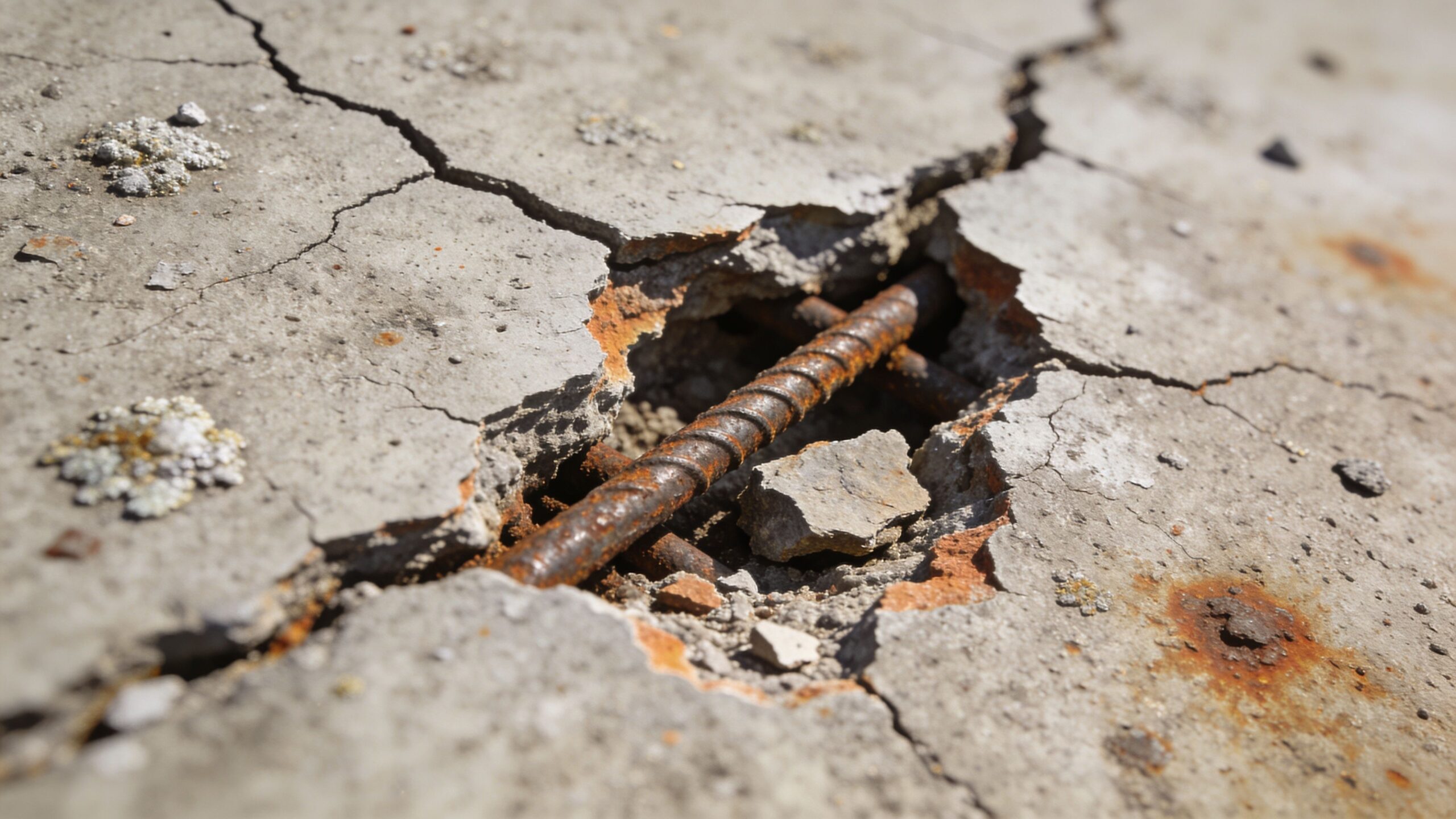
At close range, spalling has a distinct look. The surface doesn't just discolor. It starts to break, chip, or flake away, leaving rough edges, shallow depressions, or larger broken-out areas where the top layer is gone.
Early stage signs
In the beginning, the damage is often subtle. You might see:
- Small pop-outs: Little circular or irregular spots where the surface has broken off.
- Scaling: Thin flakes peeling from the top layer.
- Pitting: Tiny holes that make the slab feel rough and worn.
- Discoloration around damage: Dirt and moisture collect in the open surface.
At this stage, people often assume the issue is cosmetic. Sometimes it is. Sometimes it isn't.
What more serious spalling looks like
As the damage progresses, the slab starts showing clearer warning signs. The broken area gets deeper. The edges sound hollow when tapped. Aggregate becomes visible. In worse cases, the damage reaches the reinforcing steel inside the slab.
That's when spalling stops being just a surface blemish and becomes a structural concern. If rebar is exposed and rusting, the slab has already lost protection over the steel.
A short visual example helps if you're trying to compare what you're seeing at home:
Spalling versus other concrete problems
Property owners in Belleview, Dunnellon, and Inverness often ask whether they're dealing with spalling or just cracked concrete. A few quick distinctions help:
- Cracking: The slab has lines or separations, but the surface may still be intact.
- Staining: The color has changed, but material isn't missing.
- Spalling: The concrete surface is physically breaking away.
- Settlement: One section has dropped or lifted, creating uneven areas.
If the top layer is gone and the area keeps shedding material, you're not looking at a simple stain or harmless weathering.
That visual difference matters because the right fix depends on the actual failure. Surface products don't solve internal slab problems, and patching the wrong issue usually leads to repeat damage.
The Main Causes of Concrete Spalling in Florida
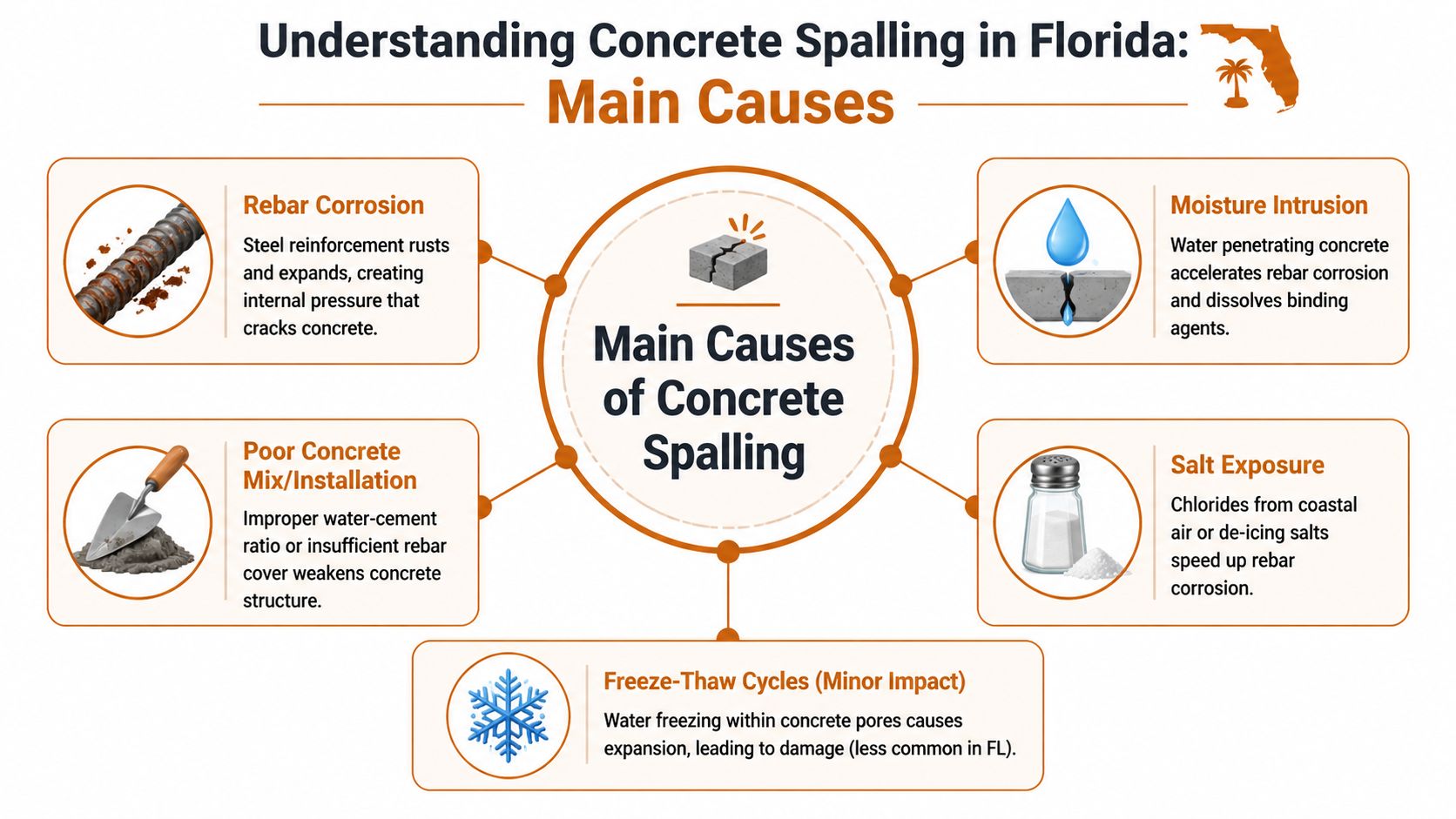
Spalling in Florida usually starts with water getting into concrete where it should not. Once that moisture gets below the surface, heat, traffic, poor drainage, and time do the rest. The chipped area you see on top is often the last stage of a problem that has been building for months or years.
Rebar corrosion often drives the worst spalling
On reinforced slabs, the biggest concern is steel rusting inside the concrete. Rust takes up more space than the original steel, and that expansion creates pressure from within. The slab starts cracking, the surface loses bond, and pieces break loose.
I see this more often on older driveways, pool decks, and walkways where moisture hangs around for long stretches. In Central Florida, that happens plenty. High humidity, sudden afternoon rain, and shaded areas that stay damp can keep concrete wet longer than owners expect.
Moisture intrusion usually starts the chain reaction
Concrete is durable, but it is not waterproof. Water gets in through surface pores, hairline cracks, unsealed edges, and low spots that hold runoff. Once moisture starts cycling in and out, weak areas near the surface begin to fail.
The Florida pattern is different from what many national articles focus on. Freeze-thaw is not usually the main story in Marion and Citrus County. Constant humidity, hard sun, and repeated soaking are the more common combination here. A slab gets saturated during a summer storm, then bakes in direct sun. That repeated stress can shorten the life of a poorly built or poorly drained surface.
Installation problems make spalling show up sooner
A lot of spalling traces back to how the slab was placed and finished in the first place. Common causes include:
- Too much water in the mix: This leaves the concrete weaker and more porous.
- Overfinished surfaces: Finishing mistakes can create a thin top layer that looks good at first but wears out early.
- Shallow concrete cover over steel: Moisture reaches reinforcement faster.
- Poor drainage layout: Water sits on the slab or runs back toward it instead of draining away.
Joint layout matters too. A slab needs room to move as temperatures and moisture levels change. If you want a clearer picture of how that movement is supposed to be controlled, this guide on what a concrete expansion joint does explains it well.
Sun, rain, and salts add to the problem
Florida weather is rough on exterior concrete. Intense UV exposure dries the surface fast. Sudden heavy rain rewets it. That back-and-forth stresses weak concrete and patchy repairs.
Salt can make things worse, especially closer to the Gulf or on properties exposed to chlorides from coastal air, irrigation, or certain cleaning products. Not every slab in Citrus County has a salt problem, but enough do that it is worth checking, especially if the damage is getting deeper instead of staying cosmetic.
If spalling keeps coming back in the same area, the surface is usually not the real problem. The real problem is trapped moisture, poor drainage, corrosion, or a weak original pour.
Repair or Replace A Practical Comparison for Spalling Damage
Once you know what is concrete spalling and why it happens, the next question is simple. Can it be repaired, or is the slab too far gone?
The honest answer is that both options can make sense. A localized spall on an otherwise solid slab may be a good repair candidate. Widespread damage, deep breakouts, movement, or exposed steel over multiple areas often points toward replacement.
When patching makes sense
A spot repair works best when the damage is isolated and the surrounding concrete is still sound. The goal isn't to smear over the top. A proper repair removes loose material, cuts back to solid edges, addresses any contamination, and rebuilds the area with the right repair products.
According to CP Tech's explanation of spalling repair and structural impact, when spalling exposes rebar, delaminated zones can reduce the slab's load-carrying capacity by 20-50%. The same source notes that professional repair involves removing contaminated concrete, cleaning the rebar, and using specialized polymer-modified overlays to restore durability.
That's the dividing line. If the issue is only the surface, patching can work. If the slab has broader internal failure, patching becomes short-term cosmetics.
Concrete Spalling Repair vs Replacement
| Factor | Spot Repair (Patching) | Full Replacement |
|---|---|---|
| Best use | Isolated, limited spalls | Widespread, recurring, or deep damage |
| Speed | Usually faster | Takes longer because demolition and new placement are involved |
| Upfront cost | Lower than replacement | Higher upfront investment |
| Appearance | May blend well, but color match can vary | Most uniform finished look |
| Longevity | Good if the cause is limited and corrected | Better choice when the slab has systemic problems |
| Structural confidence | Depends on surrounding slab condition | Strongest reset when the slab is failing in multiple areas |
Signs replacement is the better call
In Summerfield, The Villages, and Lecanto, these are the situations where replacement usually deserves a serious look:
- Multiple spalled areas: Not one patch, but repeated failure across the slab.
- Deep damage: The break extends well below the surface layer.
- Exposed rusting steel: That's a sign the problem isn't only cosmetic.
- Drainage or settlement issues: A fresh patch won't solve movement or standing water.
- Old mismatched repairs: Repeated patch jobs often mean the slab is at the end of its useful life.
If uneven areas are part of the problem, this article on how uneven concrete slabs are fixed helps explain why surface repair alone may not be enough.
Field judgment: A good patch repairs damage. A bad patch only hides it until the next rainy season.
Why waiting usually costs more
Property owners often delay because the damage doesn't seem urgent. That's understandable, but it can get expensive. When moisture keeps entering the slab, small failures tend to spread. Surface loss leads to more water intrusion, and the repair scope grows.
That matters in Marion County and Citrus County because damp conditions don't give concrete much of a break. A slab that's already compromised won't improve on its own. Early intervention usually keeps your options open. Late intervention often narrows them to replacement.
Spalling Prevention Tips for the Central Florida Climate
Prevention is mostly about controlling moisture. In Central Florida, that's the fight. Heat matters. Sun matters. But long-term water intrusion is what turns a decent slab into a recurring repair problem.
What helps in this climate
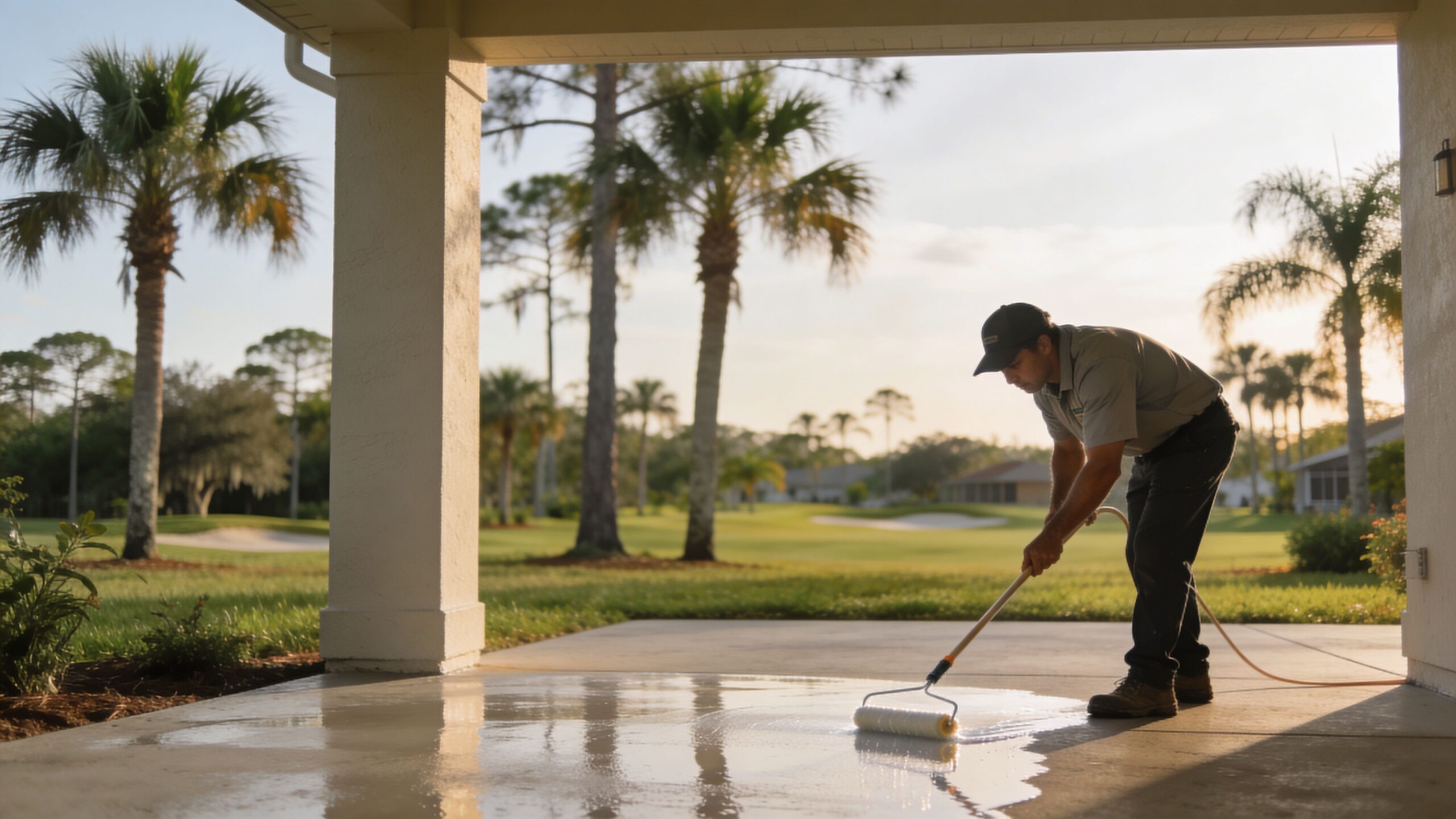
Penetrating sealers are one of the most practical defenses because they help reduce moisture entry without turning the slab into a trapped-vapor problem. Good drainage matters just as much. If rainwater sits against the slab, the concrete stays wet longer and weak points show up faster.
For new work, the mix design and placement standards matter. If you're comparing options for a residential slab, this guide on the best concrete mix for driveways is a good place to start.
A few prevention habits make the biggest difference:
- Keep water moving away: Watch for low spots, clogged drainage paths, and roof runoff dumping near slabs.
- Seal at the right time: Use a professional-grade approach instead of bargain coatings that only dress up the surface.
- Fix small defects early: Minor chips and cracks are entry points for moisture.
- Be careful with cleaners: Harsh chemicals can make a bad surface worse.
When it's beyond a DIY fix
A homeowner can clean a surface and monitor it. That part is reasonable. But some signs mean it needs a professional look:
- The area sounds hollow when tapped
- Rust staining is visible
- Pieces keep breaking off after rain
- Aggregate or steel is exposed
- There are several damaged areas, not just one
If the slab is losing material in more than one place, assume the visible damage is only part of the story.
For homes in Beverly Hills, Hernando, Ocala, and Crystal River, that professional assessment often prevents the wrong repair. That's the value. Not just fixing concrete, but fixing the right problem.
When to Hire a Concrete Pro in Marion and Citrus County
A lot of spalled concrete in Marion and Citrus County starts the same way. A few rough spots on the driveway, a patch near the garage, maybe some chipping along a walkway after a week of rain and heat. Then the surface starts breaking down faster than expected.
That is usually the point to stop watching and get a professional assessment.
In Central Florida, surface damage can move quickly because slabs deal with long humidity swings, hard sun, and sudden downpours that keep weak areas wet. What looks minor in dry weather can open up after another stretch of afternoon storms. On driveways, entry walks, and poolside concrete, the cost of waiting often shows up as a larger repair area, not just a deeper one.
Hire a concrete pro if the damage is active, repeated, or tied to drainage. Those are the jobs where the visible chips are often only part of the problem, especially on older slabs in Ocala, Dunnellon, Inverness, Crystal River, and surrounding areas.
Common signs it's time to call
- The spalled area is spreading from month to month
- A previous patch is loosening, cracking, or popping out
- The slab is also settling, rocking, or holding water
- You can see deep voids, exposed aggregate, or steel
- The damaged area creates a trip hazard or affects parking and entry use
I also recommend bringing in a pro when the damage sits near a garage door, front entry, sidewalk connection, or any place where runoff concentrates. Those spots take more abuse in our climate, and quick cosmetic patching usually does not last if the water issue stays in place.
For property owners in Marion County and Citrus County, the goal is not just to cover the rough spots. The goal is to find out whether the slab can be repaired properly, what caused the failure, and whether replacement makes more financial sense in that location. A good contractor should explain that trade-off clearly.
Frequently Asked Questions About Concrete Spalling
Can I just paint over spalling concrete
No. Paint can hide the damage for a while, but it doesn't solve the cause. If moisture is getting into the slab, a surface coating over failing concrete usually peels, blisters, or traps the problem underneath.
Does one small spalled spot mean the whole driveway is failing
Not necessarily. A single shallow spot can stay localized if the surrounding slab is sound. The issue is whether it grows, repeats in other areas, or shows signs of deeper moisture-related damage.
Is concrete spalling the same as cracking
No. Cracks are separations in the concrete. Spalling means the surface is breaking away. Some slabs have one without the other, and some have both.
How do professionals repair spalled concrete
The proper method depends on severity, but the basic idea is to remove weak concrete, get back to solid material, address any steel or contamination issues, and rebuild the area with repair products suited for that use. Good prep matters more than most homeowners expect.
Is spalling more common on driveways or patios
Both can spall, but driveways tend to show higher stress because they carry vehicle weight and often deal with runoff near garage entries and edges. Patios and pool decks can still develop serious surface damage, especially if water sits on them or the original finish was weak.
If your driveway, patio, sidewalk, or entry slab is starting to pit, flake, or break apart, Riverside Sealing & Striping, LLC offers free, no-pressure consultations for property owners across Marion County, Citrus County, and surrounding Central Florida communities. As Concrete and Asphalt Experts in Marion and Citrus County, the team handles concrete replacement, new slabs, asphalt sealcoating, and parking lot striping with reliable scheduling, licensed and insured service, and practical recommendations that fit the condition of the surface. If you want a clear opinion on whether your concrete should be repaired, sealed, or replaced, schedule a professional evaluation.