
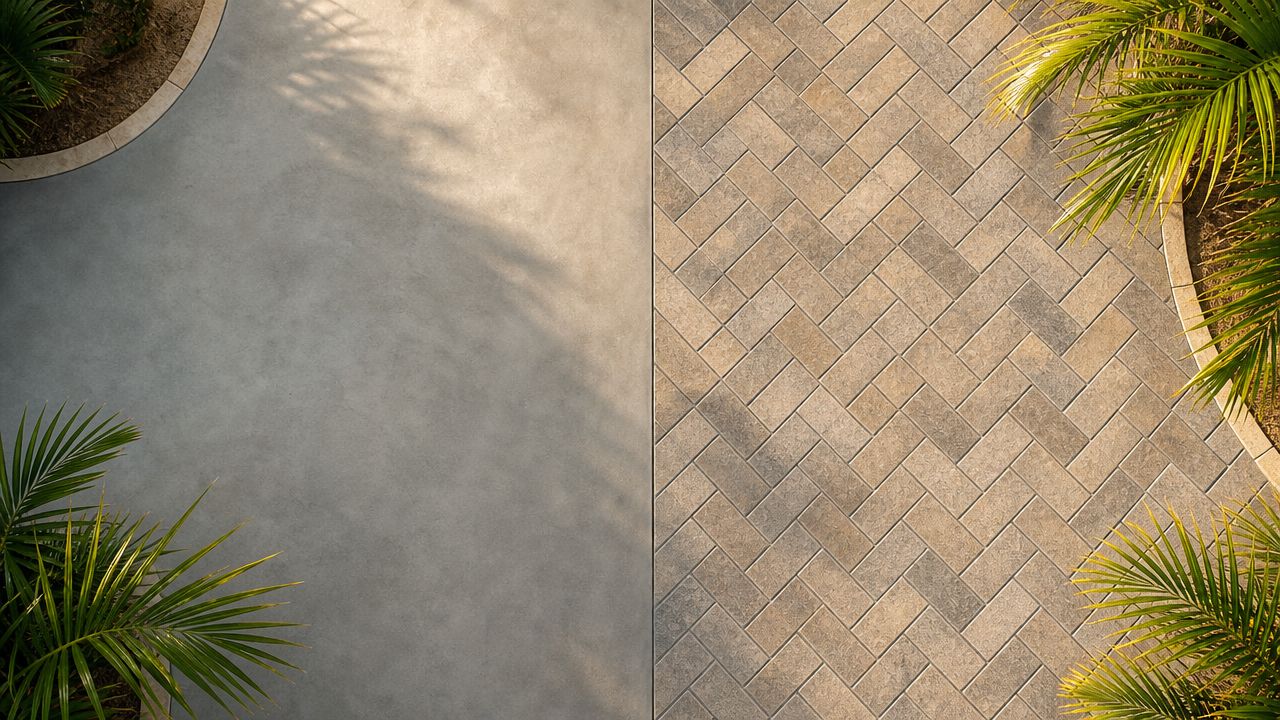
If you're planning a patio in Ocala, Crystal River, Dunnellon, or anywhere across Marion County, FL and Citrus County, FL, you're probably stuck on the same question most homeowners ask first. Should you go with poured concrete or pavers?
That's a smart question in Central Florida, because this isn't just about appearance. Our patios deal with strong sun, heavy rain, sandy soil, and drainage issues that a lot of generic patio articles barely mention. What works on paper doesn't always hold up the same way in Belleview, Summerfield, Homosassa, Lecanto, Inverness, Hernando, Beverly Hills, Silver Springs, or The Villages.
For most homeowners, the decision comes down to upfront cost, long-term repair risk, drainage behavior, and how long you plan to stay in the home. A patio that looks cheaper on day one can become the more frustrating option later if the ground moves, water sits where it shouldn't, or repairs stand out every time you walk into the backyard.
Table of Contents
- Choosing the Perfect Patio in Central Florida
- Cost Comparison Initial Price vs Lifetime Ownership
- Installation Process Timeline and Disruption
- Performance in Central Florida Durability Drainage and Heat
- Aesthetics and Design Flexibility
- Maintenance and Repair Scenarios
- Your Local Experts for Patios in Marion and Citrus County
- Frequently Asked Questions About Patios
Choosing the Perfect Patio in Central Florida
A patio in Central Florida has to do more than look good on the weekend. It has to handle wet summers, blazing afternoon sun, runoff from fast storms, and the kind of soil movement that can turn a small surface problem into a bigger repair later.
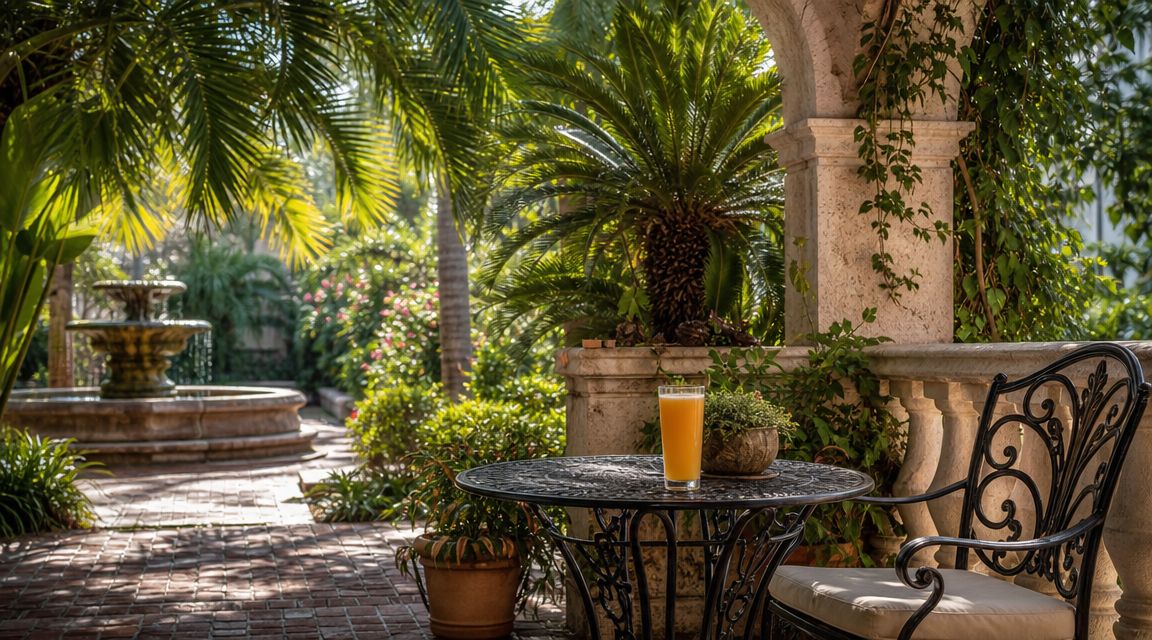
In simple terms, concrete gives you a lower starting price and a clean, solid surface, while pavers give you more flexibility, easier spot repairs, and more design freedom. Neither material is automatically right for every home. A small patio behind a rental in Ocala may call for a different choice than a larger backyard entertaining area in Crystal River or a pool deck in Homosassa.
The mistake I see most often is choosing based on first impression alone. Homeowners compare color samples, look at a few photos, and make the call without thinking about drainage slope, base prep, nearby trees, roof runoff, or how the patio will behave after a few Florida storm seasons.
Practical rule: Pick your patio material based on how your yard handles water and movement, not just how the finished surface looks on install day.
A good decision usually starts with three questions:
- How long are you staying? If this is your long-term home, repairability matters more.
- How sensitive is the budget? Concrete usually wins on initial price.
- How important is custom design? Pavers usually give you more freedom with pattern, border, and layout.
If you're comparing concrete vs pavers for patio projects in Central Florida, think in terms of total ownership, not just the day the crew leaves.
Cost Comparison Initial Price vs Lifetime Ownership
A patio in Ocala or Crystal River can look affordable on install day and get expensive after a few storm seasons. In Central Florida, the question is not just what the patio costs to build. It is what it costs to keep looking good and functioning well in sandy soil, heavy rain, heat, and shifting moisture conditions.
A quick side-by-side view
| Factor | Poured concrete | Pavers |
|---|---|---|
| Upfront price | Usually lower | Usually higher |
| Install speed | Usually faster | Usually slower |
| Repair style | Larger-area repair more common | Localized repair more common |
| Design flexibility | Good | Excellent |
| Drainage and traction | Depends on finish and slope | Often stronger for traction and water movement |
| Best fit | Budget-focused patios | Long-term, design-focused patios |
Here is the cost visual many homeowners find easiest to understand.
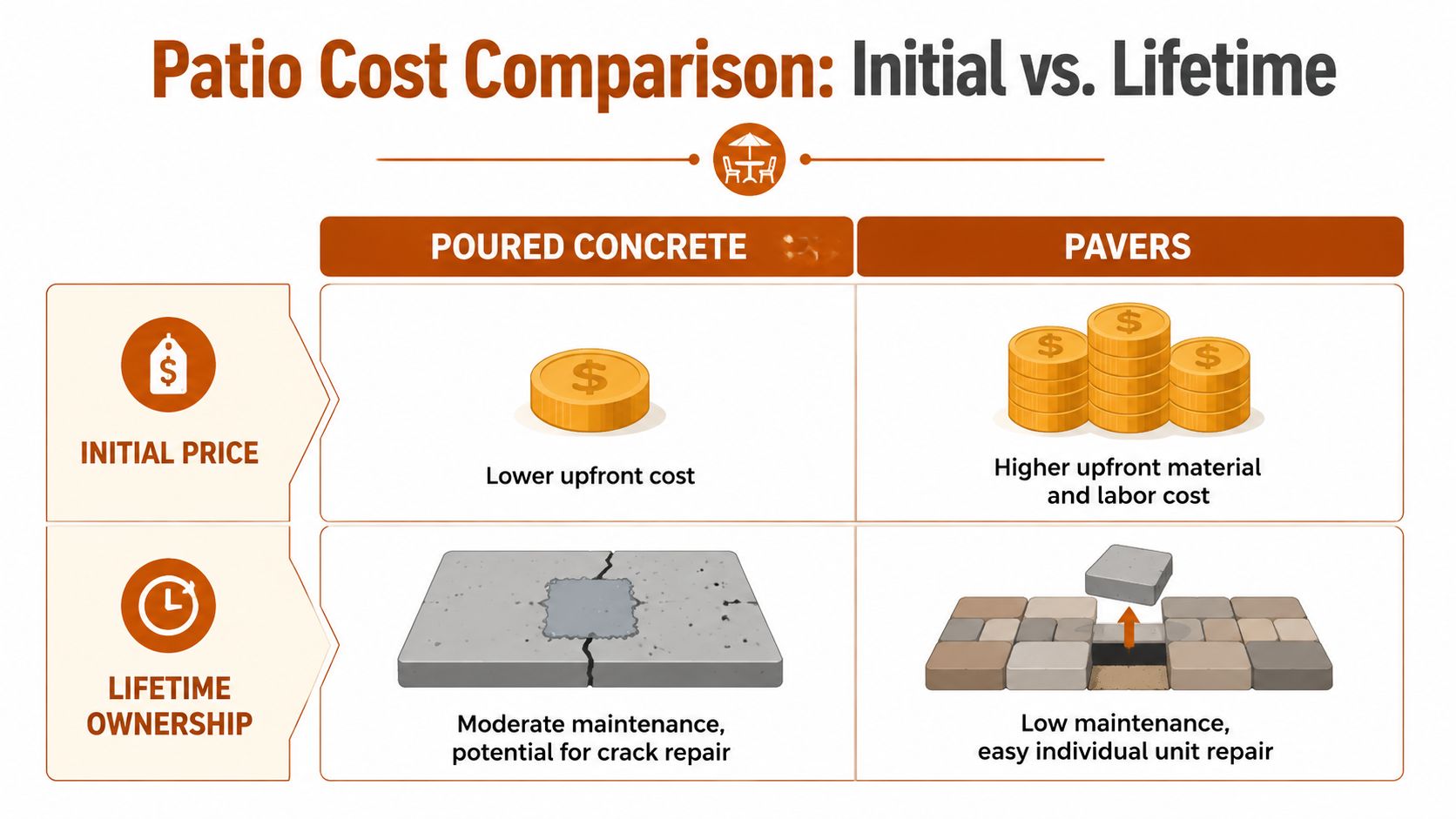
Current market comparisons still show the same general pattern. Poured concrete usually comes in lower at the start, while pavers cost more because of the added material, base work, and labor. One published comparison from Easton Outdoors shows that spread clearly in its pavers vs. concrete pricing breakdown.
That lower entry price is why concrete stays popular for straightforward backyard patios. If the goal is a clean, functional surface without stretching the budget too far, concrete is often the first number that works.
For a closer local look at pricing variables, this guide on how much a concrete patio can cost explains what usually pushes the final number up in Marion and Citrus County.
To make the cost discussion more practical, this video gives a useful overview of patio material trade-offs.
Why lifetime ownership matters more in Central Florida
The first invoice is only part of the cost.
Around here, lifetime ownership usually comes down to three things. How well the patio handles drainage. How it reacts to ground movement. How expensive it is to fix once Florida weather starts exposing weak spots.
Concrete can be the better buy if the site is stable, the base is prepared correctly, water is directed away from the slab, and the homeowner wants the lowest initial price. A basic patio behind a home in Belleview or Summerfield often fits that profile.
Pavers start to make more financial sense when the yard has drainage challenges, minor settlement risk, or a homeowner plans to stay put for years. In Marion and Citrus counties, sandy soil drains fast until it hits compaction issues, buried debris, or concentrated roof runoff. Then you get washout, edge movement, low spots, or settling in isolated areas. With pavers, those areas can often be lifted and reset. With concrete, the repair is more likely to involve patching, grinding, mudjacking, overlay work, or replacing a section that may never match the original slab.
That is the part generic cost charts miss.
A concrete patio can absolutely last and perform well here. I install and recommend concrete plenty of times. But if a slab cracks across the middle, settles at one corner, or starts holding water after years of rain, the repair conversation gets expensive fast, especially if appearance matters. Pavers cost more upfront, but they give you a different kind of insurance because the surface is modular.
Here is the practical way to judge the money side:
- Choose concrete if the budget is tight, the layout is simple, and a lower starting cost matters more than future spot-repair flexibility.
- Choose pavers if you expect drainage stress, want easier sectional repairs, or plan to keep the patio long enough for lifecycle costs to matter more than install price.
- Compare both options based on your yard, not just price per square foot. In Central Florida, slope, runoff, and base prep often decide which patio ends up costing less over time.
Installation Process Timeline and Disruption
Homeowners usually think about the finished patio. What they feel during the project is the installation process. That includes how much of the yard gets opened up, how long access is limited, and when the surface is ready to use.
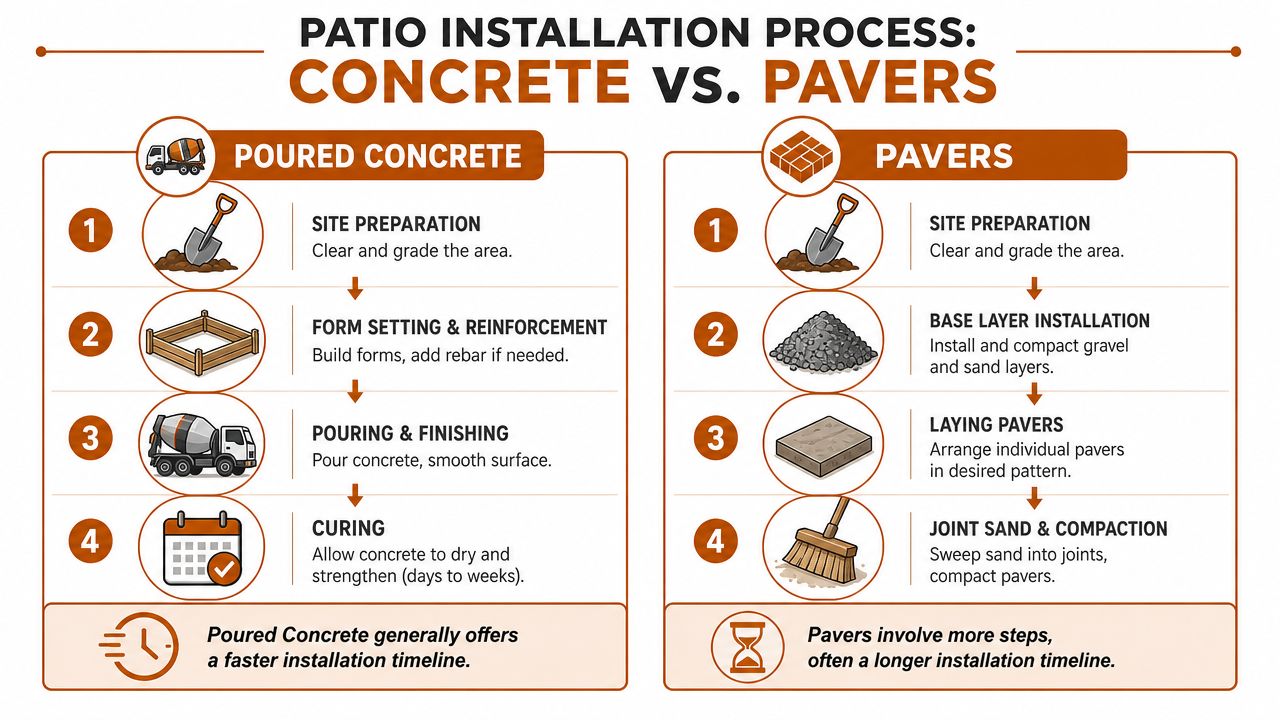
How concrete gets installed
Concrete installation is more direct. The crew clears and grades the area, sets forms, places reinforcement if the project calls for it, pours the slab, and finishes the surface. If you're choosing broom finish, decorative finish, or another texture, that happens during the finishing stage.
The big advantage is speed. In many backyard setups, concrete is the faster route from site prep to finished surface.
The catch is curing. Even after the slab is poured and finished, you still need to respect the cure window before treating it like a fully usable patio. That waiting period matters if you're trying to get the space ready for guests, outdoor furniture, or regular foot traffic.
How paver patios get installed
Pavers take more steps and more hand labor. The area is excavated, the base is built in layers, each layer is compacted, and then the pavers are set and locked together with joint sand.
That extra base work is a major reason paver jobs take longer. It's also one reason pavers perform well when the base is built correctly.
A paver patio is only as good as the base under it. In sandy Florida soil, shortcuts below the surface usually show up later above the surface.
Pavers do have one practical advantage after installation. Once the system is finished and compacted, the patio is generally ready for use without waiting on slab curing the way concrete does.
For a homeowner, the trade-off looks like this:
- Concrete usually means a shorter install sequence but a cure period before normal use.
- Pavers usually mean more labor and more site activity up front, but a ready-to-use surface at completion.
- Both require careful grading and drainage planning if you want the patio to hold up in Central Florida weather.
Performance in Central Florida Durability Drainage and Heat
Local conditions matter most. The same patio material can behave very differently depending on soil movement, storm runoff, and heat exposure.
What Central Florida does to patio surfaces
In Marion County, FL and Citrus County, FL, many properties sit on sandy soils that drain quickly in some spots and shift in others. Add fast summer downpours, long UV exposure, and occasional uneven settlement, and your patio surface is under constant stress.
Concrete is a rigid slab. If the base moves unevenly, the slab doesn't have many ways to absorb that movement. That's why control joints and proper prep matter so much. If you want a better understanding of how slab movement is managed, this explanation of what a concrete expansion joint does is worth reading.
Pavers behave differently because the surface is made of many smaller units over a compacted base. A technical lifecycle comparison explains that pavers generally do better with crack management because movement is distributed through the system, and repairs are usually more localized, according to this paver patio versus concrete overview.
Where pavers usually fit better
For homeowners in Dunnellon, Silver Springs, Crystal River, and Homosassa, water management is often the deciding factor. A patio doesn't need to flood to become annoying. If water lingers after storms, tracks dirt toward the house, or leaves slick spots in common walking areas, the patio starts working against you.
Published comparisons note that textured pavers tend to provide better slip resistance than poured or stamped concrete, and many permeable paver systems allow water to drain through joints rather than pooling on the surface. The same comparison also notes that lighter-colored or permeable pavers typically stay cooler underfoot than concrete in hot climates, based on this discussion of pavers versus concrete performance.
That matters around pool decks, grilling areas, and backyard seating spaces that get full afternoon sun.
If your patio gets hammered by rain and sun in the same week, drainage and surface temperature deserve as much attention as color and pattern.
Concrete can still be the right choice in Central Florida. It works well when the base is stable, drainage is handled correctly, and the owner wants a simpler surface at a lower starting price. But if your property already shows signs of water flow issues, soft edges, or minor settlement, pavers often line up better with the conditions on the ground.
Aesthetics and Design Flexibility
Some homeowners want the patio to disappear into the background and stay clean-looking. Others want it to shape the whole backyard. That's where the design difference between concrete and pavers becomes obvious.
Concrete gives you a cleaner sheet look
Concrete has a more continuous appearance. You get one surface, one field, and a simpler visual line across the patio. For many homes in Ocala, Belleview, or Summerfield, that's exactly the goal.
That doesn't mean concrete has to look plain. You can change the finish, texture, edge shape, and color. A brushed patio has a practical, straightforward look. Decorative options can push the patio in a more custom direction without changing the basic feel of a monolithic slab.
Pavers open up more layout options
Pavers give you more control over pattern and contrast. You can change the laying pattern, mix colors, frame the field with a border, or build the patio so it ties into walkways, fire pit pads, or pool areas without the surface looking like one large sheet.
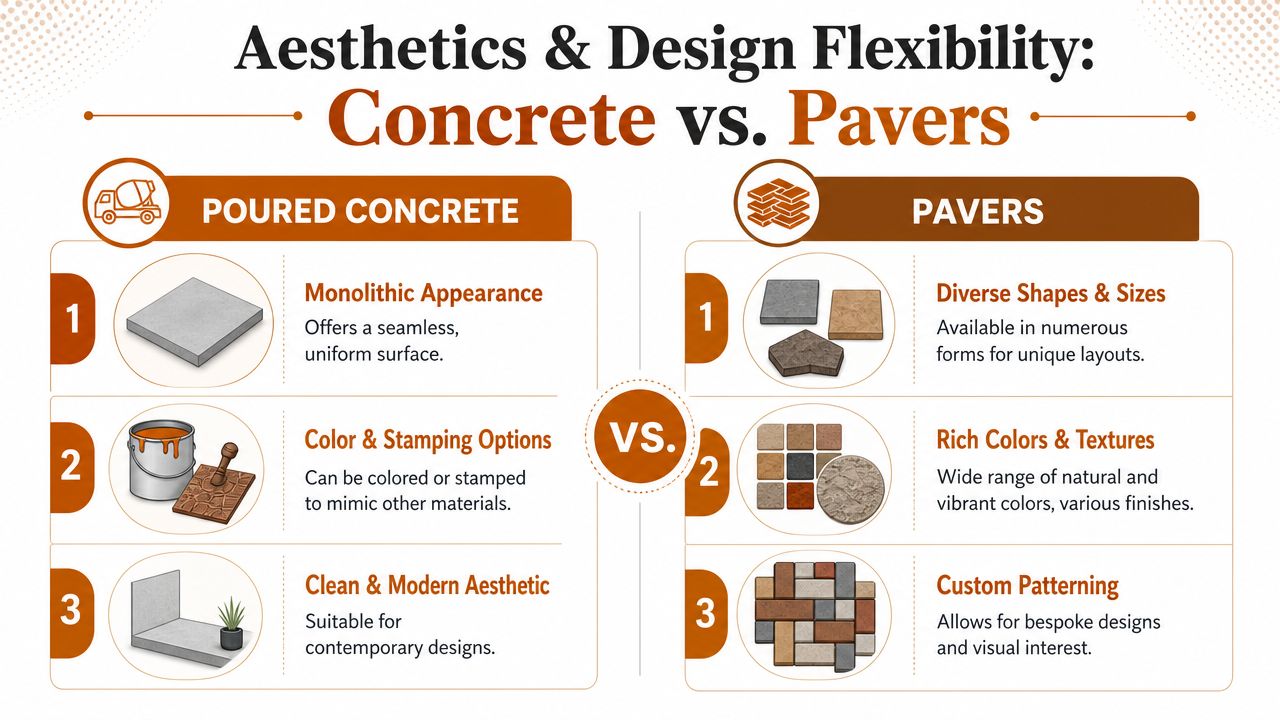
That flexibility is a big reason pavers stay popular in communities like The Villages and Beverly Hills, where homeowners often want a patio to feel more finished and custom instead of purely functional.
If you're weighing layout options and want to see what paver installation can look like on a real project, this page on local paver patio installation gives a clearer sense of the style range.
A simple way to think about the aesthetic difference:
- Choose concrete if you want a clean surface with fewer visual breaks.
- Choose pavers if pattern, borders, and custom detail matter a lot.
- Choose based on the house if you're trying to match an existing architectural style.
A patio should fit the house first. The material that looks best in a showroom sample isn't always the one that looks right once it's installed across your whole backyard.
Maintenance and Repair Scenarios
Most patio owners don't mind routine maintenance. What they really want to avoid is the repair that turns into a bigger project than expected.
What repairs look like in the real world
Take a common Central Florida situation. A roof edge dumps water near one side of the patio during storms, the soil shifts over time, and a section starts moving. With pavers, that often means pulling up the affected area, correcting the base, and resetting the units. The repair stays local.
Now look at the same general problem with a concrete slab. If movement shows up as a visible crack or surface break, the repair usually isn't as subtle. The slab can be patched, resurfaced, or partially replaced depending on the damage, but the fix is often easier to see.
A technical comparison of lifecycle behavior notes that pavers usually outperform monolithic concrete in crack management because the system is modular. It also explains that when damage occurs, an individual paver can often be lifted and replaced, while cracked concrete repairs are typically more invasive and more visible.
Which owner usually prefers which material
Concrete tends to fit homeowners who want straightforward upkeep. Sweep it, wash it, seal it when needed, and keep an eye on staining and surface wear. If the slab stays sound, ownership is simple.
Pavers fit homeowners who are comfortable with occasional joint sand upkeep and the possibility of minor weed control between units, but who want the option to fix one section without redoing the whole patio.
Here's how that usually shakes out in practice:
- Concrete owners usually value simplicity and lower entry cost.
- Paver owners usually value repair flexibility and surface adaptability.
- Properties with movement or drainage concerns often benefit from modular repair options.
One more practical point. Repairs don't just cost money. They also affect how long part of the backyard is torn up, how noticeable the fix is, and whether the new patch blends with the old surface.
Your Local Experts for Patios in Marion and Citrus County
The best patio choice depends on your property, not a generic checklist from a national article. A backyard in Lecanto with runoff issues needs a different recommendation than a compact patio in Inverness built mostly for basic outdoor seating. The same goes for homes in Dunnellon, Hernando, or The Villages where existing grades, downspouts, and soil conditions vary a lot from lot to lot.
As Concrete and Asphalt Experts in Marion and Citrus County, the most useful approach is to look at the yard first, then match the material to the conditions and the owner's goals. That means checking slope, access, drainage path, surrounding hardscape, and how the patio will be used.
A simple decision checklist
If you're still stuck between the two, use this quick filter:
- Budget first: Concrete usually makes more sense when keeping the initial project cost down is the top priority.
- Custom appearance first: Pavers usually make more sense when pattern, borders, and a more specific aesthetic matter most.
- Long-term ownership first: If you're planning to stay put and want easier localized repair options, pavers deserve serious consideration.
- Lower-complexity upkeep first: Concrete often appeals to homeowners who want a simpler surface and don't mind that repairs can be more noticeable if damage happens.
For homeowners who want a local evaluation, Riverside Sealing & Striping, LLC handles concrete work in Central Florida and can assess site prep, drainage, and patio layout conditions as part of a no-pressure estimate. The same property-level thinking matters across their broader work as Concrete and Asphalt Experts in Marion and Citrus County, whether the project involves patios, slabs, driveways, or pavement maintenance.
Good patio results usually start below the surface. Base prep, grading, and water control decide a lot before the finish ever goes down.
Licensed and insured contractors with local experience can help you sort out what will hold up on your lot, not just what photographs well.
Frequently Asked Questions About Patios
Do I need a permit for a patio in Marion or Citrus County
Sometimes, yes.
In Marion and Citrus counties, permit requirements can change based on patio size, location, drainage impact, and whether the work ties into the house or other structures. In this part of Florida, drainage matters more than many homeowners expect. If a new patio redirects heavy summer rain toward the house, pool, or a neighbor's lot, that can create problems fast. Check with the local building department before work starts, or have your contractor confirm it for you.
Which is better around a pool
Pavers usually make more sense around a pool in Central Florida.
They generally provide better traction, joints can help with drainage, and repairs are simpler if a section settles or shifts. That matters on sandy soil and in areas that get frequent downpours. Concrete can still be a good pool-deck surface, especially if budget is the main driver, but it often gets hotter underfoot and repairs tend to stand out more.
Can pavers go over an existing concrete patio
Sometimes they can, but the old slab has to earn it.
If the concrete underneath is badly cracked, holding water, or moving, covering it does not fix the base problem. Added height also matters. I always look at door clearance, drainage direction, and whether the finished surface will trap water against the house. On some Ocala and Crystal River properties, starting over gives a better long-term result than building over a failing slab.
How long can a concrete patio last
A concrete patio can last a long time if the base is solid, drainage is handled correctly, and the slab is maintained.
In Central Florida, lifespan often comes down to site conditions more than the material alone. Heat, rain, tree roots, washout near edges, and shifting sandy subgrade all affect how well a patio holds up. Pavers also last well, and they have an advantage when one area needs repair because individual units can be reset or replaced without tearing out the whole surface.
So which one should you choose
Start with how long you expect to own the home and how your lot handles water.
Concrete usually fits better if keeping the initial price lower is the main goal and you want a simpler surface. Pavers often fit better if you expect years of Florida sun and rain, want easier spot repairs, or have a yard where drainage and minor soil movement are going to be part of ownership.
For homeowners in Marion County and Citrus County, the better patio is the one that matches the property, not the one that wins a generic online comparison.
If you're comparing patio options for your home in Ocala, Dunnellon, Crystal River, Inverness, or nearby, Riverside Sealing & Striping, LLC offers free, no-pressure consultations for concrete projects and site evaluations. If you want help choosing between concrete and pavers based on drainage, soil conditions, budget, and long-term maintenance, their team can take a look and give you a practical recommendation.