
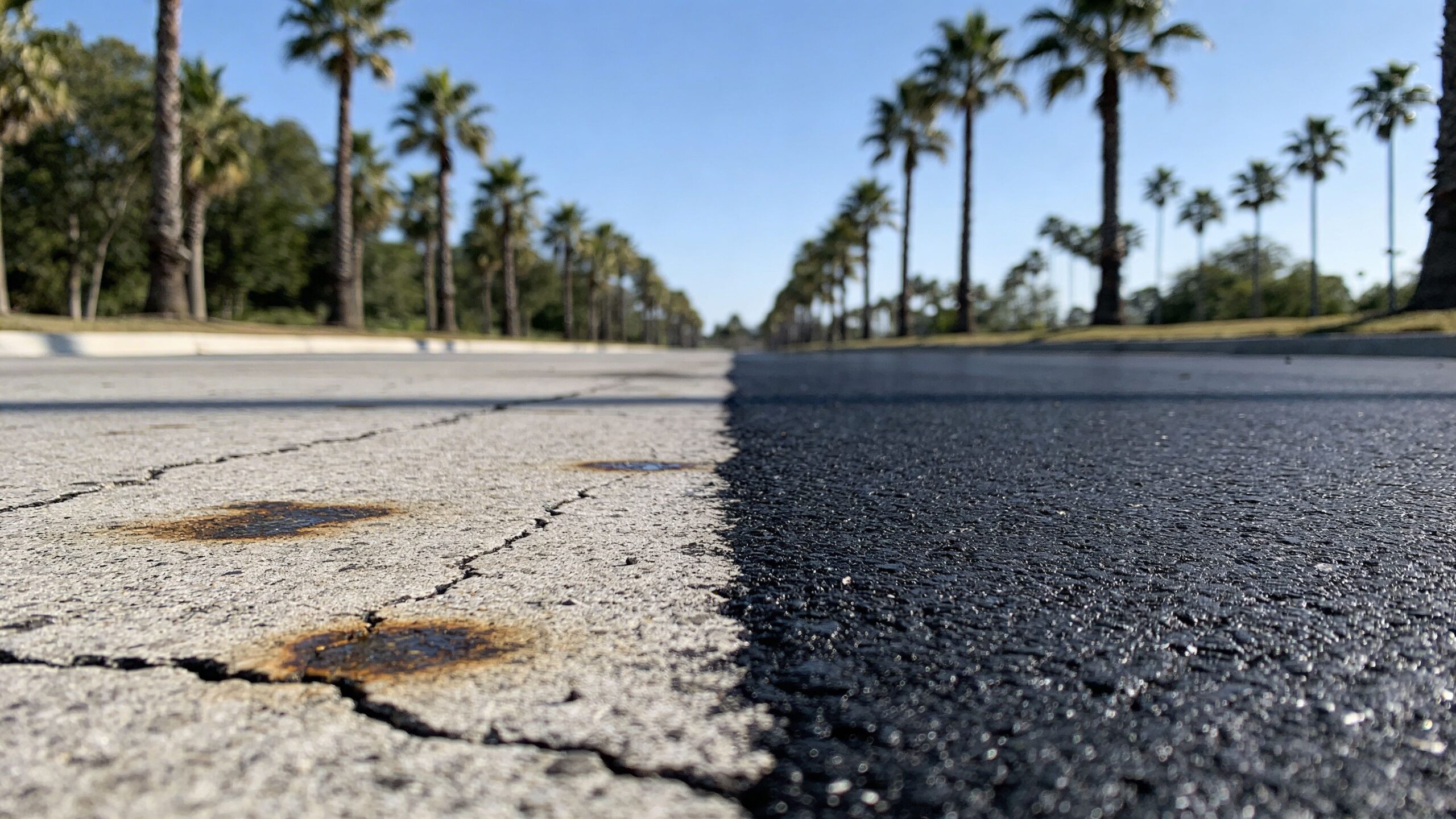
If you’re standing in your driveway in Ocala, Silver Springs, or The Villages looking at asphalt that used to be dark and clean but now looks dull, gray, and tired, you’re asking the right question. Most property owners don’t start thinking about sealcoating until the surface looks worn. By then, the pavement has usually been taking damage for a while.
That’s especially true in Central Florida. Sun, rain, standing water, turning tires, and leaking vehicle fluids all work on asphalt every day. A fresh sealcoat improves appearance, but its primary value is protection. It helps shield the pavement you already paid for so you can delay bigger repairs.
For homeowners, that can mean keeping a driveway in good shape before cracks spread. For shopping centers, churches, HOAs, and apartment properties in Marion County and Citrus County, it means protecting parking lots, keeping the site looking maintained, and staying ahead of repair budgets.
Good site maintenance usually involves more than one surface. Many owners who call about asphalt are also dealing with settled sidewalks, trip hazards, or old concrete pads. If that sounds familiar, it helps to understand your options for fixing uneven concrete slabs at the same time you evaluate asphalt condition.
Protecting Your Pavement in the Sunshine State
In Central Florida, asphalt rarely fails all at once. It fades first. Then it dries out, loses richness, starts showing aggregate, and begins opening up in small places where water can get in.
What property owners usually notice first
A homeowner in Belleview might notice the driveway no longer looks black after a stretch of hot weather. A property manager in Crystal River may see traffic lanes wearing out faster near entrances and tight turns. A church lot in Inverness might still be usable, but the surface starts looking older than the building around it.
Those are early warnings, not just cosmetic issues.
Sealcoating matters because asphalt is a flexible surface with oils and binders that need protection. Once the surface is left exposed too long, wear speeds up. That doesn’t mean every lot needs immediate sealing on a fixed date. It means the surface should be evaluated before visible aging turns into repairs.
Practical rule: Don’t treat sealcoating like paint. Treat it like preventive maintenance for a surface that’s exposed to Florida weather every day.
Why timing matters more in Central Florida
Property owners often search for one universal answer to how often to seal coat asphalt. The better answer is that the schedule depends on use, exposure, and condition. A driveway in Dunnellon isn’t stressed the same way as a retail lot in Ocala or an HOA common area in Homosassa.
That’s why smart maintenance in Marion County and Citrus County starts with the surface in front of you, not a generic national rule.
Why Sealcoating Is Essential for Florida Asphalt
Sealcoating works because it takes the abuse that would otherwise hit the asphalt itself. In Florida, that matters year-round.
Sun and oxidation
Central Florida sunlight is hard on asphalt. As the surface sits exposed, the binder oxidizes and the pavement loses the dark, rich look it had when it was newer. Oxidation is one of the clearest signs that asphalt is aging, often showing up as gray discoloration.
Climate-adjusted maintenance is important because Central Florida’s intense UV exposure and high moisture accelerate bitumen oxidation, which is why sealing based on actual pavement condition is often more cost-effective than following the calendar alone, according to this climate and maintenance overview.
Once oxidation takes hold, the pavement becomes more vulnerable to cracking and wear from traffic.
Water intrusion
Water is another problem, especially during Florida storm season. Asphalt is not meant to stay unprotected while water repeatedly works into its surface. If water gets through cracks or porous areas, it can weaken the pavement system below the surface.
This is why a lot that looks “mostly fine” can still be at risk. The owner sees fading. The base may be seeing moisture.
Oil, fuel, and turning traffic
Parking stalls, drive lanes, loading areas, and entrance lanes often wear differently. Cars drip fluids. Delivery vehicles stress the same travel paths again and again. Tight turns scrub the surface faster than straight travel.
That’s why commercial properties in places like Lecanto, Beverly Hills, and Ocala often need closer monitoring than a quiet residential driveway. The pavement may not fail evenly. One section wears out first.
Sealcoating is a barrier, not a cure-all
Sealcoating helps protect against UV, moisture, and vehicle-related surface wear. It is not a fix for major structural failure. If a lot already has widespread cracking, base issues, or broken edges, repair needs to come first.
Used correctly, sealcoating does three jobs well:
- Shields the surface: It creates a sacrificial layer so sun and weather hit the sealer before the asphalt.
- Slows surface aging: It helps reduce exposure that leads to oxidation and brittleness.
- Improves appearance and maintenance: Darker, sealed pavement looks cleaner and makes striping stand out better.
A well-timed sealcoat is cheaper than letting a sound surface age into a repair project.
For property owners in Marion County and Citrus County, that’s the main point. You’re not just making asphalt look better. You’re buying time and reducing avoidable damage.
Recommended Sealcoating Schedules for Central Florida Properties
The standard starting point is clear. Industry guidance puts asphalt sealcoating at every 2 to 3 years, with low-traffic driveways sometimes stretching to 3 to 4 years, and high-traffic commercial lots often needing every 1 to 2 years. With proper maintenance, that schedule can help extend pavement life to 15 to 30 years, based on the guidance in this sealcoating frequency reference.
That said, Central Florida properties should use those ranges as a starting point, not a blind rule.
Quick reference for common property types
| Property Type | Typical Traffic | Recommended Frequency |
|---|---|---|
| Residential driveway | Low | Every 2 to 3 years |
| Residential driveway with lighter use | Low | Every 3 to 4 years if condition supports it |
| HOA roads and common parking areas | Moderate | Often closer to every 2 to 3 years, based on wear |
| Church, office, or mixed-use parking lot | Moderate to high | Often every 1 to 2 years in heavier-use sections |
| Retail center, apartment lot, warehouse, loading area | High | Every 1 to 2 years |
| Heavily trafficked roadways or loading zones | Very high | About every other year or annually |
Residential driveways in places like The Villages and Summerfield
Most homes fall into the standard 2 to 3 year range. If the driveway has light use, no standing water issues, and still holds up well visually, some owners can push toward 3 to 4 years.
That doesn’t mean waiting automatically. It means thoroughly checking the surface. A driveway with full sun exposure and visible drying may need attention sooner than a better-protected one.
HOA and shared-use properties
HOA entrances, private lanes, and shared parking areas wear differently from single-family driveways. More steering movement, more repeated traffic paths, and more liability concerns usually justify a tighter maintenance mindset.
For these properties, the practical schedule is often tied to how quickly traffic lanes fade and how early cracking starts showing around high-use areas.
Commercial lots in Ocala, Inverness, and Crystal River
Retail, church, school, medical, and apartment properties usually need more frequent service. The busiest lots often fit the 1 to 2 year range, especially where turning movements and daily vehicle load are constant.
Loading zones and heavy-use lanes can demand even more attention than the rest of the lot. Sealing the entire property on one schedule is easy. It’s not always the smartest approach.
Bottom line: The right schedule is based on traffic, exposure, and visible condition. Calendar-only maintenance works, but condition-based maintenance usually works better.
First application after new asphalt
New asphalt shouldn’t be sealed immediately. The first sealcoat should be applied 6 to 12 months after installation so the pavement can cure before that protective layer goes on, as noted in the same sealcoating frequency guidance already referenced above.
That matters for new driveways and new parking areas alike. Sealing too early can create problems instead of preventing them.
Four Signs Your Asphalt Needs Sealing Now
A lot of owners wait until the pavement looks obviously worn out. That’s later than ideal. Asphalt usually tells you what it needs before it gets to that point.
The surface has faded from black to gray
Gray asphalt is one of the most common early signals. That color shift usually means oxidation is advancing and the binder is losing protection.
If the lot in front of your storefront or the driveway at your home in Hernando no longer has a rich, dark appearance, it’s time to take a closer look.
Hairline cracks are starting to spread
Small cracks matter because they rarely stay small in Florida weather. Water gets in, heat opens the crack further, and traffic keeps working the area.
Preventive work is more effective than reactive work. If you want more context on damage that has already moved beyond early wear, this guide on Florida asphalt repair is a useful next step.
Water no longer behaves the same on the surface
One of the simplest field checks is what happens after rain or a hose test. If the pavement is soaking water in quickly, the surface may be too open and dry.
There’s also an important warning on the other side. If water still pools on the surface after 2 years, it may be too soon to reseal, based on the water beading guidance in this discussion of over-sealing risk.
Aggregate is becoming more visible
When the tops of the stones in the mix stand out more clearly, the asphalt surface is wearing down. At that point, the pavement is telling you the protective layer has thinned.
That doesn’t always mean full repair is needed. Often it means the window for timely sealing is closing.
A short visual explanation helps if you want to compare what you’re seeing in person.
Don’t ignore signs of over-sealing
More sealer isn’t always better. Over-sealing can shorten pavement lifespan by 5 to 10 years, and common signs include peeling and cracking from trapped oils, according to the over-application notes in the same source above.
Watch for these red flags:
- Peeling film: The surface looks like layers are lifting instead of wearing naturally.
- Unusual cracking after repeated applications: The top coat may be too thick or applied too often.
- Reduced surface porosity: Water behavior suggests the coating is building up rather than protecting properly.
If a surface still has a healthy protective layer, another coat can do more harm than good.
The Professional Sealcoating Process What to Expect
A good sealcoating job starts long before sealer hits the pavement. Most failures that owners blame on “bad product” come from poor prep, bad timing, or incorrect application thickness.
Surface prep comes first
The pavement has to be cleaned thoroughly. Dirt, loose debris, oil spots, and vegetation at edges all interfere with adhesion. Cracks also need attention before sealcoating starts. If cracks are left open, the finished surface may look better briefly but won’t perform the way it should.
This is one of the biggest differences between a rushed job and a professional one. Prep doesn’t make for flashy photos, but it determines whether the coating bonds evenly.
Proper application thickness matters
Professional application isn’t guesswork. Industry guidance calls for two coats at a rate of 0.1 to 0.5 gallons per square yard, and a third coat is often recommended for high-traffic commercial lots where wear is more aggressive, according to this technical seal coating bulletin.
That range matters because both extremes cause problems:
- Too much material: Peeling, uneven finish, and trapped oils.
- Too little material: Weak protection and short service life.
Curing time is not optional
After application, the sealer needs time to dry and cure before traffic returns. The same technical guidance notes a 24 to 48 hour minimum drying period before traffic exposure.
That’s where scheduling matters. On a residential job, owners need to plan for access. On a commercial site, managers need to phase traffic and keep tenants informed.
Field advice: If a contractor treats prep and cure time like minor details, the finished job usually reflects that.
Striping finishes the job on commercial properties
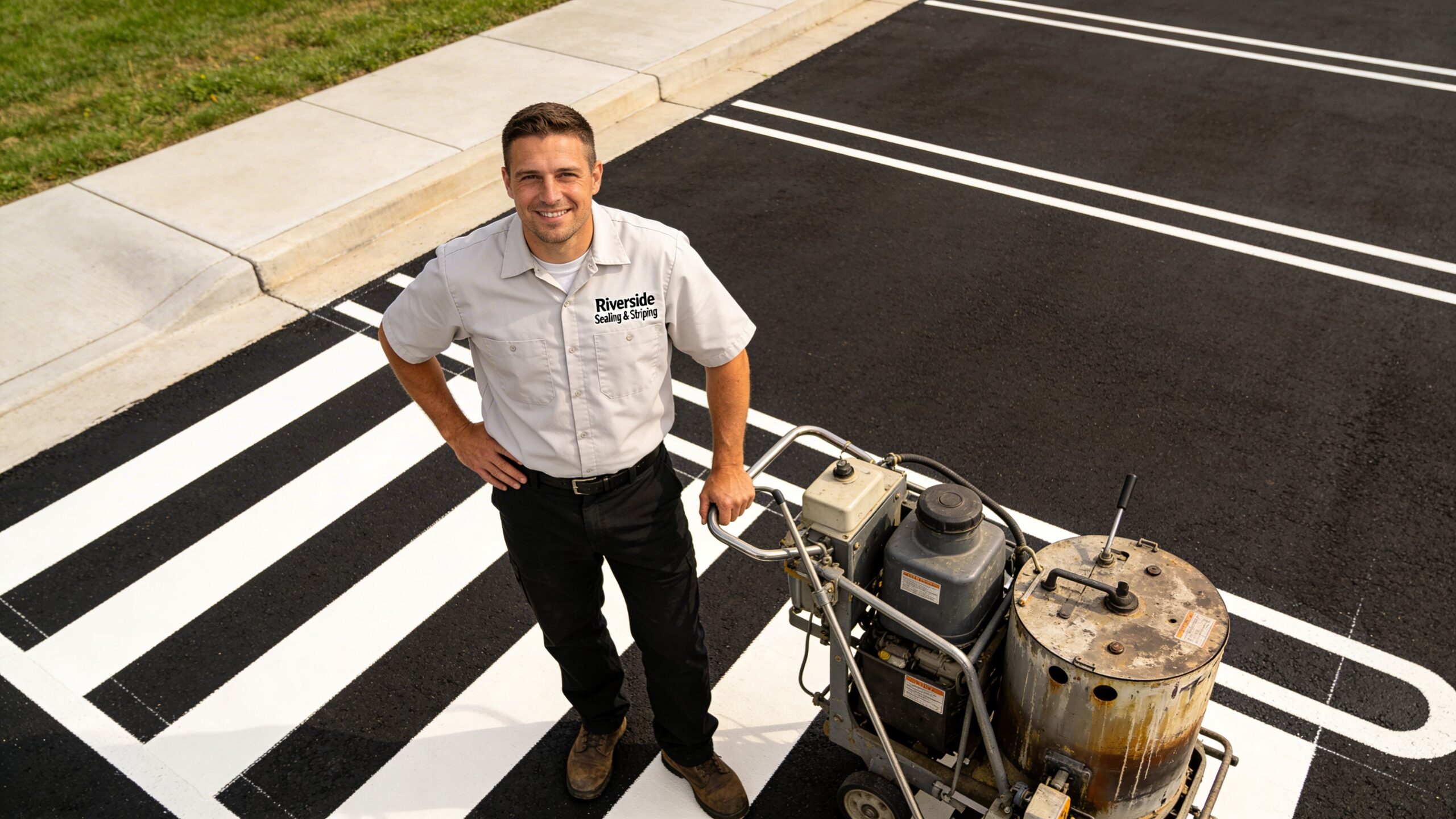
For parking lots, the work isn’t complete when the sealer dries. Fresh striping restores layout clarity, traffic flow, ADA markings, and curb appeal. On retail sites, churches, schools, and HOA properties, that final step affects both appearance and function.
A lot that is sealed well but striped poorly still looks unfinished.
Your Full-Service Pavement and Concrete Partner
Property maintenance in Marion County and Citrus County usually doesn’t stop at asphalt. Many sites have aging concrete at the same time. A shopping center may need sealcoating and fresh striping, but also replacement sidewalks. A homeowner may need a driveway plan that includes both asphalt care and adjacent concrete work.
That’s why it helps to work with a contractor who understands both surfaces.
More than sealcoating
For residential owners in Dunnellon, Belleview, and Ocala, that can mean:
- Concrete driveway installation and replacement
- Concrete patios and slabs
- Sidewalks and walkways, including ADA-focused access improvements
- Concrete demolition and replacement
- Decorative and functional concrete finishes
For commercial properties in Crystal River, Lecanto, Inverness, Homosassa, and surrounding areas, it often includes:
- Asphalt seal coating
- Parking lot striping and layout
- ADA-compliant markings
- Ongoing pavement maintenance planning
Why that matters to owners and managers
A full-service contractor can look at the whole site instead of one trade in isolation. That leads to better scheduling, fewer disruptions, and a cleaner finished result.
For HOAs, schools, churches, retail centers, and industrial properties, that coordination matters. For homeowners, it means one clear plan instead of juggling separate crews for each surface.
Frequently Asked Questions About Sealcoating
How often should asphalt be seal coated in Central Florida
Most properties start with every 2 to 3 years, but lighter-use residential driveways may go longer and busy commercial lots often need shorter intervals. The correct answer depends on traffic, exposure, and surface condition.
When should new asphalt get its first sealcoat
New asphalt should usually wait 6 to 12 months after installation before the first application so it can cure properly. Sealing too soon can create performance problems.
Can you seal coat every year
That usually isn’t a good idea. Over-application can lead to peeling, cracking, and trapped oils. If the existing coat is still doing its job, adding more sealer can shorten pavement life instead of extending it.
How long should sealcoat dry before traffic returns
Professional guidance calls for at least 24 to 48 hours of drying time before traffic exposure. Weather, humidity, and shade can affect how the surface cures in practice.
Is crack repair part of the job
It should be. Sealcoating isn’t a substitute for crack filling or surface prep. If open cracks are ignored, water keeps getting in and the coating won’t solve the underlying problem.
Do you offer ADA-compliant striping and site markings
Yes. Commercial parking lots often need more than a fresh black surface. ADA spaces, access aisles, directional markings, and layout updates are a major part of long-term parking lot maintenance.
Do you only handle asphalt work
No. Many property owners need both asphalt and concrete services. That can include parking lot sealcoating and striping, plus driveways, sidewalks, patios, slabs, and concrete replacement work.
What areas do you serve
Service commonly includes Marion County, Citrus County, and nearby Central Florida communities such as Ocala, Dunnellon, Belleview, Silver Springs, Summerfield, Crystal River, Homosassa, Inverness, Lecanto, Beverly Hills, Hernando, and The Villages.
If you’re comparing budgets, this page on asphalt sealcoating cost per square foot can help frame the conversation before you request a site-specific quote.
If your driveway, parking lot, sidewalk, or concrete surface in Marion County, Citrus County, or the surrounding Central Florida area needs attention, Riverside Sealing & Striping, LLC offers free, no-pressure on-site consultations for asphalt seal coating, parking lot striping, ADA-compliant markings, concrete driveways, patios, slabs, sidewalks, and replacement work. Whether you manage a commercial property in Ocala or own a home in Dunnellon, Crystal River, or Inverness, you can get a clear recommendation, reliable scheduling, and a fast estimate built around long-lasting results.