
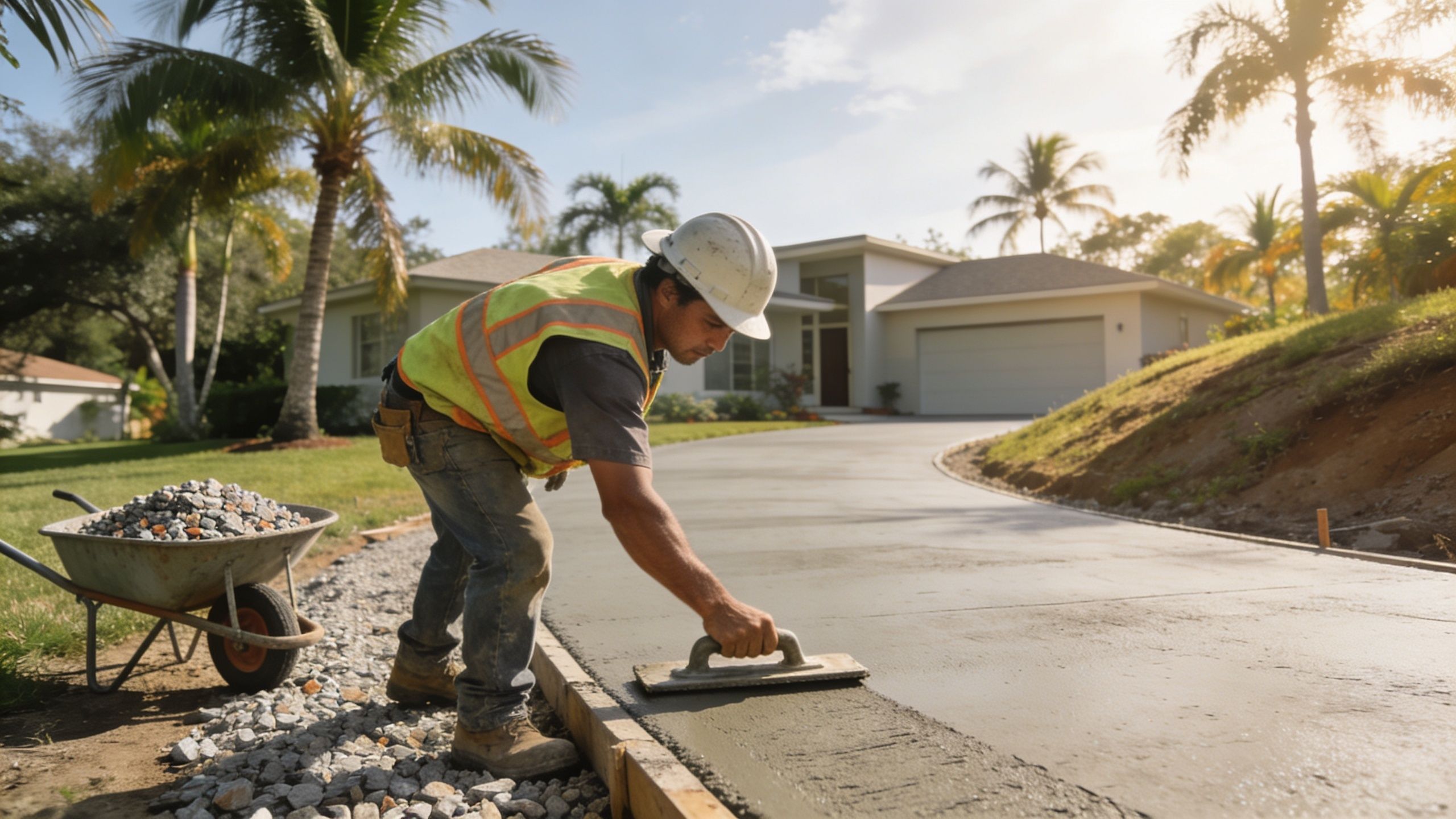
A lot of Central Florida homeowners reach the same point the same way. They back out one morning, glance at the driveway, and realize the problem isn’t just cosmetic anymore. The cracks have spread, one corner has dropped, water sits where it shouldn’t, and every rainstorm seems to make the surface look worse.
That situation shows up all over Ocala, Dunnellon, Belleview, Summerfield, Crystal River, Homosassa, Inverness, Lecanto, Beverly Hills, Hernando, Silver Springs, and The Villages. In Marion County, FL and Citrus County, FL, concrete takes a beating from heat, humidity, heavy rain, and soil movement. A driveway that might hold up differently in another region can fail faster here if the base, drainage, and curing weren’t handled correctly from the start.
If you’re trying to figure out how to replace concrete driveway surfaces the right way, the process is manageable when you know what matters and what doesn’t. The actual work isn’t just tearing out old concrete and pouring new concrete. It’s diagnosing why the old slab failed, fixing the ground underneath it, and building the replacement for Florida conditions instead of generic national assumptions.
Your Guide to a New Concrete Driveway in Central Florida
A failing driveway usually gives plenty of warning before it fully gives up. The trouble is that many homeowners put off the decision because replacement sounds bigger than it is. It is a real construction project, but it’s also a straightforward one when the steps are done in the right order.
In Central Florida, the biggest mistake is thinking the slab itself is the whole job. It isn’t. The visible concrete is only the top layer. What determines whether a new driveway stays flat, drains correctly, and holds up for years is the planning, grading, compaction, reinforcement, and curing behind it.
That matters whether the home is in a newer subdivision near The Villages or on an older property in Ocala or Inverness. Flat lots, sandy soil, and heavy seasonal rain change how water moves around a driveway. If a contractor treats your project like a basic rip-and-replace with no attention to runoff, you can end up with the same failures all over again.
Practical rule: A driveway replacement works when the crew solves the cause of the damage, not just the appearance of it.
For most homeowners, the process comes down to a few practical questions:
- Is it repairable or done for good
- Do permits or HOA approvals apply
- How is the old slab removed
- What has to happen under the new concrete
- How long before you can use it again
- What should the estimate include
Those are the questions that separate a durable driveway from a short-lived one. Concrete and asphalt experts in Marion and Citrus County look at those details every day because they’re what control long-term performance.
When to Repair vs Fully Replace Your Driveway
A driveway can look rough and still have good bones. Another one can have only a few visible cracks and be failing underneath. In Central Florida, that distinction matters because heat, heavy rain, and sandy subgrade can turn a small problem into slab movement faster than many homeowners expect.
Signs that point to repair
Repair makes sense when the concrete is still structurally stable and the problem is limited to the surface. That usually means minor chipping, light flaking, small isolated cracks, or a worn finish without widespread movement. If the slab is staying level, shedding water, and not breaking into separate planes, repair can be a reasonable short-term investment.
That said, Florida driveways need a stricter standard than generic advice found online. Afternoon storms, wet-season saturation, and sprinkler overspray keep weak areas wet. Once water gets into small defects and the base starts washing or shifting, cosmetic repair stops lasting very long.
A repair approach is usually worth considering if you have:
- Hairline or isolated cracks that are not spreading across multiple sections
- Minor surface scaling or pitting without exposed aggregate across large areas
- Small edge chips in limited spots
- One localized low area with no broader pattern of settlement
- Sound concrete underneath when tapped, with no hollow spots or loose sections
If one panel is out of plane but the rest of the driveway is solid, review the causes before choosing a full replacement. This guide on how to fix uneven concrete slabs explains why some movement can be corrected and why some cannot.
Signs that point to full replacement
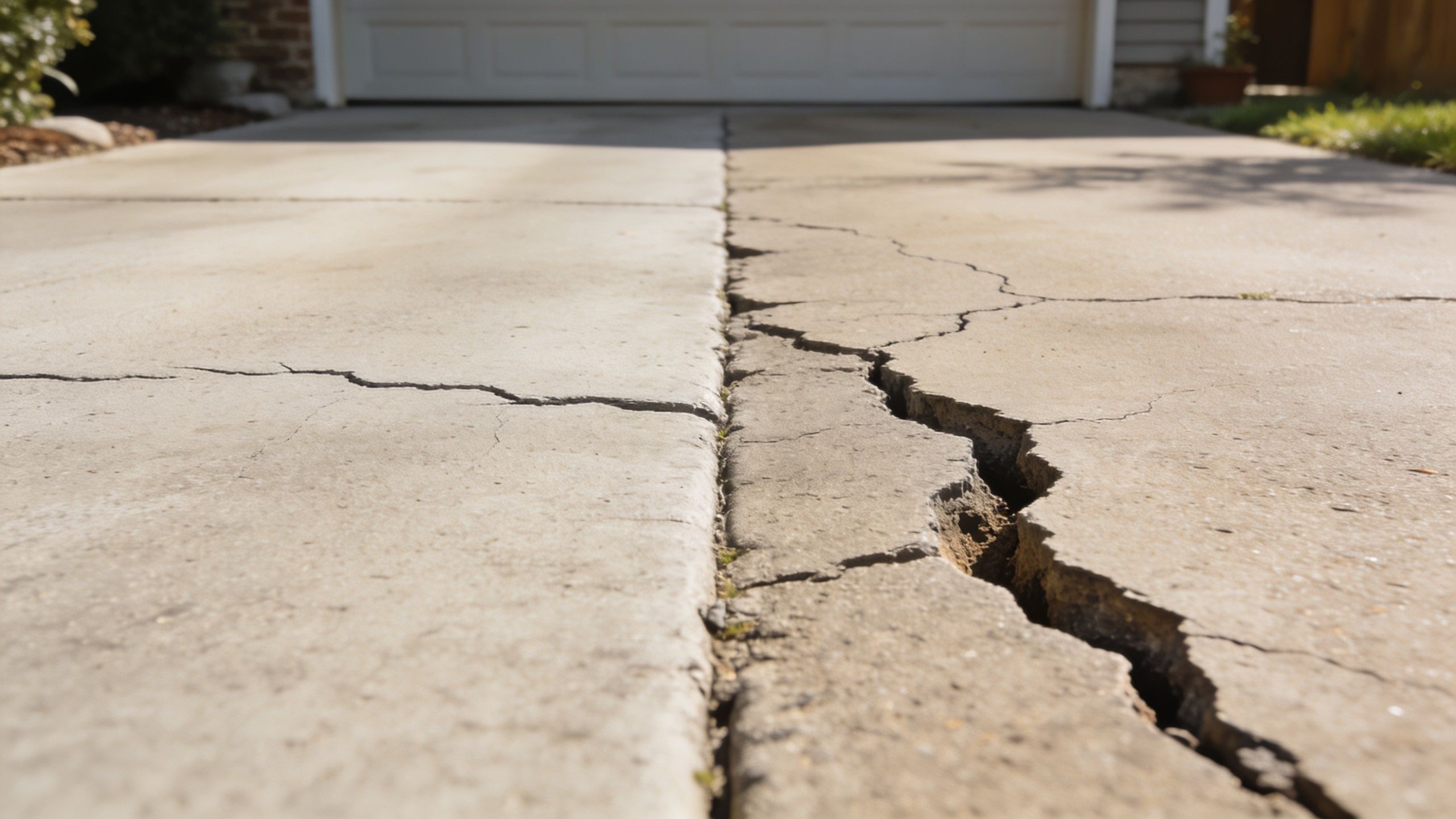
Replacement is the better choice when the slab failure is structural, drainage-related, or tied to base problems. I look for patterns, not just isolated defects. A few repairs scattered across a driveway are normal over time. Repeated cracking, settlement, and standing water usually mean the slab and the support under it are no longer doing their job.
Watch for these conditions:
- Cracks wider than about 1/4 inch, especially when several cracks intersect
- Sections that have sunk or lifted enough to create trip edges or tire impact
- Water pooling after rain or water running toward the garage
- Cracked corners and broken edges along multiple panels
- Previous patches that failed again, which usually points to movement below the surface
- Erosion near the sides of the driveway, where runoff is undermining the slab
In Central Florida, pooling water is one of the clearest warning signs. Concrete can handle weather. What it does not handle well is a bad slope over sandy soil that stays wet and shifts under load. The slab cracks because the support changes.
The Federal Highway Administration notes that proper support beneath concrete pavement is a major factor in long-term performance, especially where moisture affects the base and subgrade. That is why recurring settlement is rarely a surface problem alone, as explained in the FHWA pavement support reference at fhwa.dot.gov.
Here is the practical call: repair the driveway if the slab is basically sound and the defect is isolated. Replace it if the damage repeats, the elevation has changed, or drainage is part of the failure.
If the base is failing, patching only covers the symptoms. It does not stop the slab from moving again.
Planning and Permitting in Marion and Citrus County
A lot of driveway jobs go off track before the first piece of concrete is removed. In Marion and Citrus County, the common problems are permit delays, missed drainage details, and site access issues that only show up once equipment is scheduled.
Start with the county or city requirements for your address, not your neighbor’s project. Permit rules can change based on scope, municipality, and whether the work ties into the public right-of-way. If the new driveway changes runoff, affects the apron, or alters how the slab meets the street, approval may be required before demolition starts.
HOA approval can be just as important. In communities around The Villages, Beverly Hills, and similar neighborhoods, the association may limit finish, color, work hours, or where materials can be staged. Get that approval in writing before the job is on the calendar.
Good planning also means reviewing how the property handles water. In Central Florida, small grading errors create big problems because many lots are flat and the soil drains unevenly. Sandy soil sheds water fast in one area and softens in another. That is one reason experienced contractors spend time checking slope, garage elevation, sidewalk tie-ins, and yard drainage before finalizing the replacement plan. A homeowner who wants to understand that part better can review this guide on how to prepare ground for a concrete slab.
A practical planning checklist
Before demolition is scheduled, confirm these items:
- Permit status. Verify county, city, and right-of-way requirements for the exact address.
- HOA approval. Confirm finish, color, work-hour, and staging rules in writing.
- Equipment access. Make sure skid steers, trailers, and concrete trucks can enter and exit without damaging irrigation, sod, or nearby hardscape.
- Drainage layout. Set the finished slope so water moves away from the house, garage, and walkway connections.
- Debris and staging plan. Decide where broken concrete, base material, and delivery trucks will go on tighter lots.
- Utility and sprinkler locations. Identify cleanouts, irrigation lines, low-voltage wiring, and other buried items before any cutting or demo begins.
Scheduling matters too. Summer rain, high humidity, and heat can disrupt timing in Central Florida, even when the forecast looks manageable. A realistic contractor plans around weather, inspection windows, and concrete delivery timing instead of promising a schedule that leaves no room for delays.
The Demolition and Subgrade Preparation Process
A lot of bad driveway replacements look fine for the first few months. Then the first long summer rain hits, water works under the slab, and the weak spots start to show. In Central Florida, demolition and base prep decide whether the new driveway stays flat or starts settling early.
Demolition is precise because nearby concrete and utilities matter
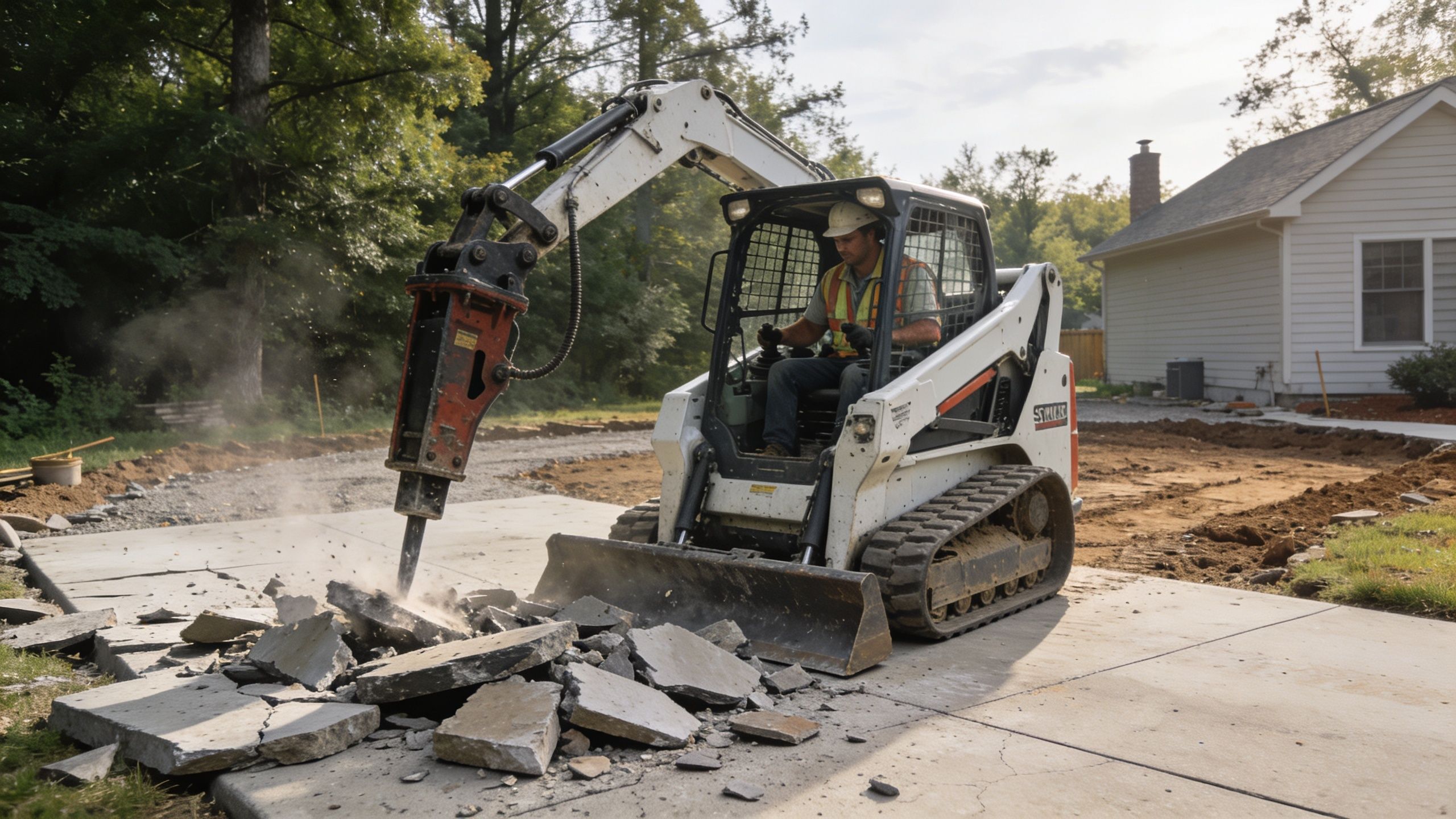
A good crew cuts and removes the slab in a controlled sequence. The goal is to protect the garage floor, sidewalk connections, irrigation lines, cleanouts, and any edge concrete that will remain. On one house, that may mean saw cutting and hand work near the garage. On another, it may mean using a skid steer with a breaker and hauling out large sections fast before afternoon rain turns the work area into mud.
Low bids often hide problems here. Disposal costs money, equipment costs money, and careful demo takes time. If a price for removal seems far below the rest, ask where the contractor plans to save it. In many cases, the answer is labor, cleanup, or proper haul-off.
Subgrade problems show up after the old slab is gone
Once the concrete is removed, the underlying condition of the driveway area is finally visible. At this point, crews find loose sand, buried roots, soft spots that stayed wet under the slab, edge washout, and low areas holding water near the garage. Those issues are common in Marion and Citrus County because sandy soils drain fast in one part of the lot and lose support in another, especially after heavy storms.
That is why base preparation is never just a quick pass with a plate compactor.
The area needs to be graded to the correct elevation and slope, then compacted in a way that matches the actual soil conditions on site. After that, a proper base material is installed and compacted again. If water has been running under the old driveway, the crew should correct that path now. Pouring new concrete over the same weak support usually gives you the same failure pattern again.
Homeowners who want a clearer picture of what proper prep should include can review this guide on how to prepare ground for a concrete slab.
Field note: I have seen driveways crack along the same lines as the old slab within a short time because the replacement was poured over loose, wet, or poorly compacted ground.
The sequence below gives a good visual of what that physical work looks like in practice.
What crews should correct before the pour
A proper prep phase should identify and fix problems such as:
- Soft or pumping soil that shifts under vehicle weight
- Improper slope that sends water toward the garage or front walk
- Washed-out edges where runoff has removed support from the slab perimeter
- Low areas near the garage that keep the concrete wet and increase staining risk
- Poor transitions to sidewalks, aprons, or existing slabs that create trip points or stress cracks
In Florida, heat gets a lot of attention, but water usually does more damage to a driveway base. If the subgrade is weak, too wet, or poorly shaped for runoff, the slab above it has very little margin for error. That is why experienced contractors spend so much time on work the homeowner will never see once the concrete is poured.
Pouring Finishing and Curing Your New Concrete
By the time the concrete truck backs into the driveway, the job has entered the part homeowners notice most and the part crews have the least time to get wrong. In Central Florida, heat, wind, and humidity can change the pace of a pour fast. A slab that is workable at discharge can start tightening up quickly under direct sun.
Forms reinforcement and placing the mix
Forms set the driveway’s shape, thickness, and finished elevation. If the forms are off, the slab is off. That shows up later as low spots, poor drainage, or an edge that breaks down early under tire traffic.
Reinforcement goes in before the pour, and it needs to sit in the slab where it can do some good, not dropped flat on the ground and forgotten. Depending on the design, that may mean rebar or wire mesh. Reinforcement does not stop concrete from cracking, but it helps hold cracks tighter and improves how the slab performs after those cracks form.
If you want a closer look at mix design, slump, and strength options for residential work, this guide on the best concrete mix for driveways gives useful context.
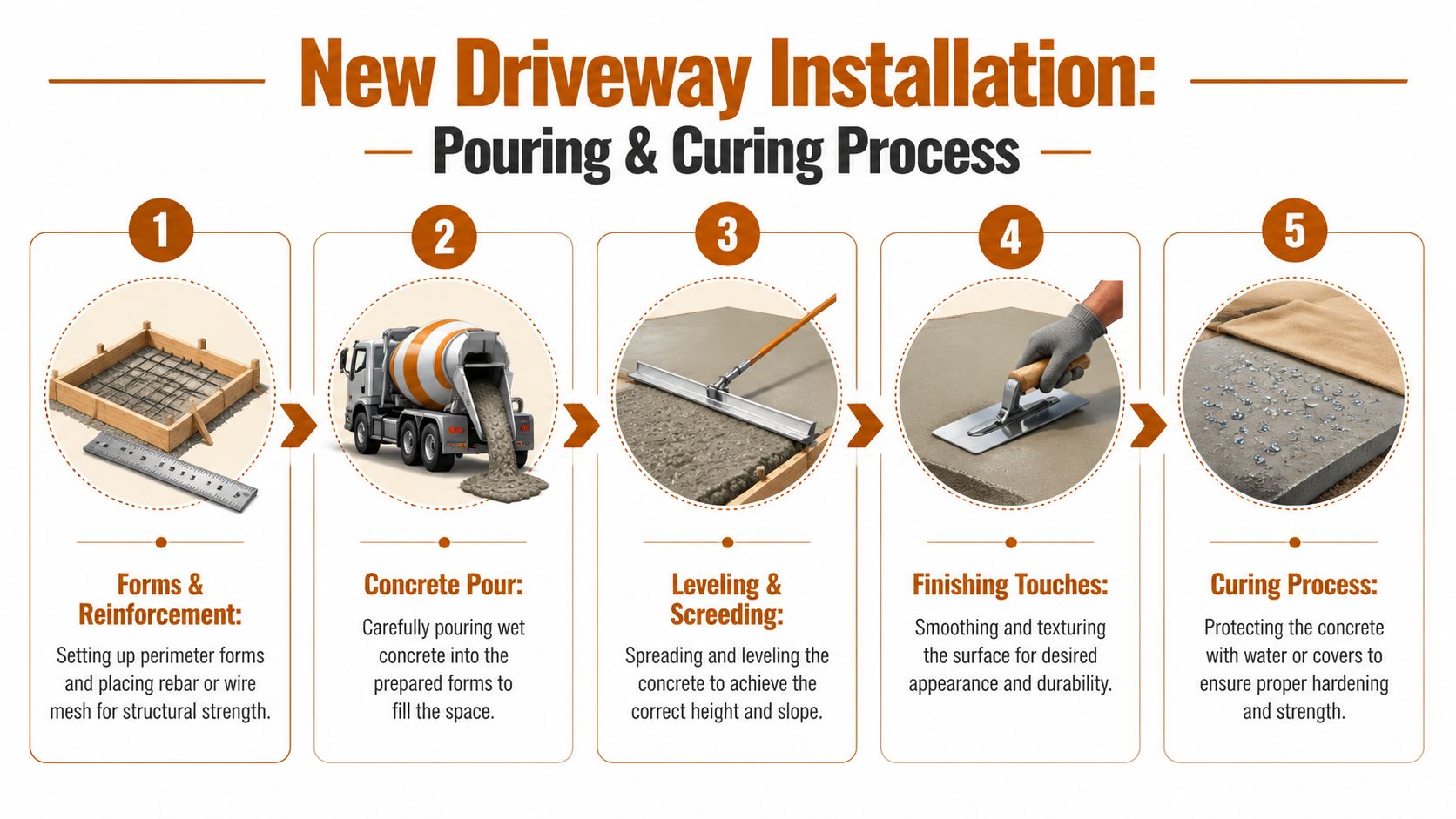
Once the mix is placed, the crew has to work with purpose. Screeding sets the slab to grade and establishes the drainage pattern. In Florida, that slope matters. Even a well-finished driveway will give trouble if water sits near the garage, front walk, or slab edges after a storm.
Bull floating comes next to level ridges and close the surface. Timing matters here. Finish too early while bleed water is still present, and you weaken the top layer. Wait too long in hot weather, and the surface gets harder to work without adding water, which creates its own problems.
Finish choices that work for real driveways
For a residential driveway, a broom finish is usually the right call. It gives tire and foot traction, sheds water better than a slick finish, and holds up well through summer rains and daily use.
Decorative finishes can work, but they need to match the job. A stamped surface may look good on paper, yet on a working driveway it can become more slippery when wet and usually demands tighter finishing control and more maintenance. In neighborhoods with lots of shade, irrigation overspray, or frequent runoff, practical texture usually beats appearance alone.
Control joints need to be laid out with intention. Concrete is going to crack as it shrinks and responds to temperature changes. Good joint placement encourages those cracks to form in cleaner, less visible lines instead of wandering across the middle of the driveway or breaking out at corners.
Curing is where Florida changes the job
Curing is not just waiting for the slab to turn light gray. It is the process that lets the concrete hold moisture long enough to gain strength and resist early surface failure. In Central Florida, that step gets harder because strong sun, warm temperatures, and moving air can pull moisture from the surface too fast.
That is why experienced crews watch weather closely, use curing methods that fit the conditions, and protect fresh concrete from drying out in the first day or two. The National Ready Mixed Concrete Association explains that good curing helps concrete develop strength, improve durability, and reduce surface defects in its guidance on curing in hot weather.
Homeowners usually want one answer on when they can walk or drive on the new slab. The honest answer is that timing depends on the mix, the weather, and how the slab is curing. Foot traffic often comes first. Vehicle traffic should wait until the concrete has gained enough strength to handle the load without scuffing or stressing the surface.
In Florida, rushing that timeline is a common mistake. A driveway can look finished long before it is ready for full use.
Fresh concrete in Florida needs careful moisture control, good timing, and patience.
Understanding Driveway Replacement Costs in Florida
A homeowner in Ocala or Crystal River usually asks the same question first. What is this going to cost me? The honest answer is that driveway replacement pricing in Central Florida depends on more than square footage. Soil conditions, drainage, access, removal work, and finish details all change the number.
Two driveways can look similar from the street and price very differently once the old slab comes out. One may have a stable base and clean access for equipment. The other may need extra excavation, imported base material, drainage correction, or hand work because trucks cannot get close to the pour area.
What the estimate is usually paying for
A proper estimate covers far more than new concrete.
| Cost component | What it covers |
|---|---|
| Demolition and hauling | Saw cutting, breaking out the old slab, loading debris, disposal fees |
| Site prep | Excavation, grading, compaction, base rock, correcting soft or washed-out areas |
| Concrete materials | Concrete mix, reinforcement, forms, joint materials, curing supplies |
| Labor | Forming, placing, finishing, cleanup, crew time on pour day |
| Upgrades | Thicker sections, decorative finishes, stronger reinforcement, widened parking areas |
In Central Florida, base prep often carries more weight than homeowners expect. Sandy soil can drain well, but it also shifts, washes, and hides weak spots under an older driveway. If a contractor prices the job as a simple tear-out and repour without addressing the subgrade, that lower number can become an expensive problem later.
What makes one bid higher than another
Higher pricing is not automatically overcharging. Sometimes it reflects a better plan.
A bid may come in higher because it includes deeper removal, more imported base, better compaction, thicker concrete in load areas, or extra work to manage runoff. Those items matter in Florida, where heavy summer rain can expose every shortcut in grading and drainage. A cheaper bid often leaves those steps vague or assumes the existing base can stay in place.
That is the first thing I look for in an estimate. Specific scope.
Use this quick filter when comparing bids:
- Detailed demolition notes suggest the contractor has looked at the existing slab closely.
- Clear site prep language matters because base correction is often where long-term performance is won or lost.
- Drainage and slope planning is a strong sign the contractor understands Florida conditions.
- One-line lump sum pricing makes it hard to tell what you are buying.
- No mention of compaction or base material usually means the bid is missing a step that affects crack resistance and settlement.
Decorative upgrades also move pricing. Broom finish is usually the most straightforward option. Borders, color, exposed aggregate, or a wider apron add labor and material cost. None of those are wrong choices, but they should be priced as upgrades, not buried in the proposal.
For a driveway that is still structurally sound, resurfacing may cost less up front. If the slab has settlement, widespread cracking, or water-related failure, replacement is usually the better value because it fixes the cause instead of covering it.
Why a Professional Concrete Contractor is Your Best Bet
A driveway looks simple until you replace one. Then the margin for error shows up fast.
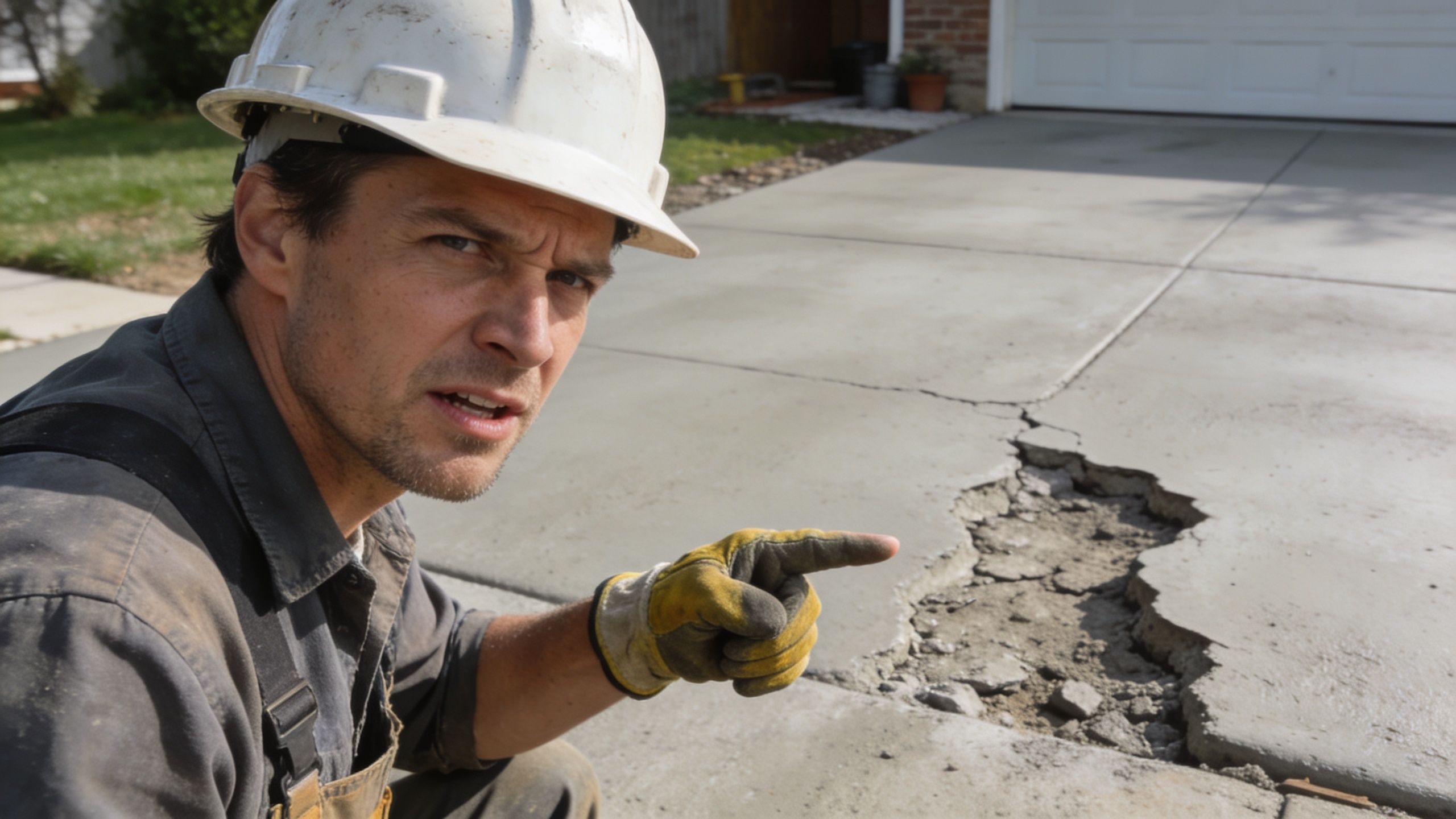
DIY replacement runs into trouble in three places most often. First, homeowners underestimate excavation and base prep. Second, they don’t have the equipment to place and finish concrete efficiently. Third, they treat curing like waiting instead of active management.
Generic guides also miss Florida-specific issues. Most don’t explain how intense heat, humidity, and heavy rain speed up concrete deterioration here, or why local installations may need a thicker base, specialized sealers, and different maintenance planning, as noted in this discussion of Florida climate gaps in driveway guidance.
That local knowledge matters in Marion County and Citrus County because the same slab design doesn’t perform the same way on every property. A driveway in Summerfield with runoff issues is a different job from a driveway in Crystal River with access limitations or a home in Hernando with soft spots under the old slab.
A licensed and insured contractor brings more than labor. They bring process control. That includes equipment, scheduling, crew coordination, cleanup, and the judgment to stop and correct a base or drainage issue before the pour. Riverside Sealing & Striping, LLC is one local option that handles concrete demo and replacement work as part of broader concrete and asphalt services in Central Florida.
The cheapest driveway is the one that doesn’t have to be redone early.
Frequently Asked Questions About Driveway Replacement
How long does a concrete driveway replacement take
A straightforward replacement can move fast once work starts, but Central Florida jobs rarely come down to the pour alone. Demolition, hauling off the old concrete, fixing soft spots in sandy soil, and adjusting drainage often decide the actual schedule. Afternoon rain can also push finishing or curing steps back a day.
Ask for a timeline outlining the entire project, not just the day concrete is placed.
When can I walk or drive on the new driveway
Foot traffic usually comes first. Vehicle traffic takes longer. The right answer depends on the mix, the weather, and how the slab is curing on your property.
In Florida heat, concrete can look ready before it has enough strength for tires. I tell homeowners to follow the contractor’s release timeline for that specific pour, especially during hot weeks when the surface sets fast but the slab still needs time to gain strength.
Can one section be replaced instead of the whole driveway
Sometimes, but partial replacement only makes sense when the damage is isolated and the rest of the driveway is still structurally sound. If the slab has multiple cracks, settlement, edge breakdown, or drainage problems, replacing one panel often turns into a short-term fix.
There is also the appearance issue. New concrete will not match older concrete in color or texture, even with a good finish. On many homes, full replacement costs more upfront but gives a cleaner result and avoids chasing the next failed section.
Are decorative finishes worth it
They can be, if you want more than a basic broom finish. Colored, stamped, or textured concrete can improve curb appeal, but it also adds labor, cost, and maintenance. In Central Florida, decorative work needs careful planning because heat and humidity shorten finishing time, and afternoon storms can ruin the surface if the crew is not ready.
For many homeowners, a clean standard finish with proper joint layout and sealing is the better value.
What should I ask during an estimate
Ask what the contractor expects to find under the old driveway. That tells you how they handle the part of the job homeowners cannot see.
Good questions include how deep they will remove unsuitable material, what base they will install and compact, how they plan for runoff, whether reinforcement is included, who handles permits if needed, and what happens if demolition exposes unstable soil. Ask about cleanup too. A professional answer should be specific to your property, not a canned price with no discussion of drainage or subgrade conditions.
If your driveway in Ocala, Dunnellon, Belleview, Summerfield, Crystal River, Homosassa, Inverness, Lecanto, Beverly Hills, Hernando, Silver Springs, The Villages, or anywhere in Marion County, FL or Citrus County, FL is cracking, settling, or draining poorly, Riverside Sealing & Striping, LLC offers free, no-pressure on-site consultations for concrete replacement and other pavement needs. As concrete and asphalt experts in Marion and Citrus County, the team can evaluate whether your driveway needs repair, resurfacing, or full replacement and provide a clear estimate based on your site conditions.