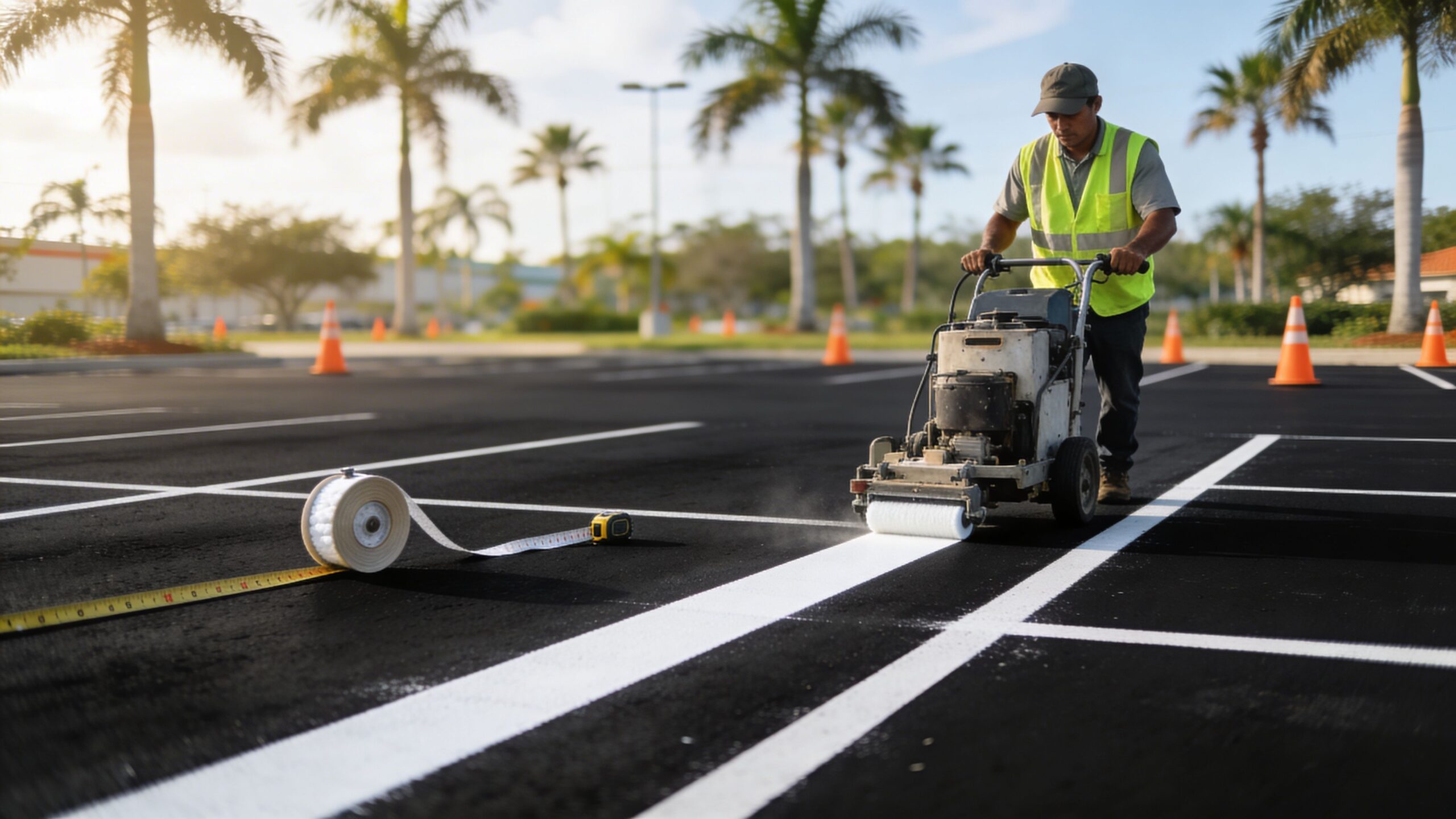
If you're looking at a faded lot in Ocala, Inverness, Crystal River, or anywhere around Marion and Citrus County, you already know the problem. Drivers hesitate, spaces get wasted, ADA markings may be outdated, and the whole property feels less cared for than it should.
A clean striping job fixes more than appearance. It improves traffic flow, sharpens curb appeal, and helps protect you from the headaches that come with confusing or non-compliant markings. In Central Florida, it also has to hold up through heat, humidity, UV, and surprise rain.
Your Guide to a Safer, More Professional Parking Lot
Parking lot striping started as a safety fix. The idea of pavement marking goes back to 1911, when a leaky milk wagon inspired the first painted centerline in Michigan. By 1971, the MUTCD established national standards for the white and yellow lines that organize roads and parking lots today, bringing consistency to traffic flow and safety across places including busy commercial areas in Marion and Citrus County, as noted in this history of pavement marking and parking lot striping.
That same principle applies to every lot now. A church in Dunnellon, a retail center in Ocala, and an HOA in Beverly Hills all need the same thing. Clear direction, safe circulation, and markings that people can read at a glance.
What good striping does
A proper layout helps with more than parking.
- Guides vehicles clearly so drivers don't improvise their own paths.
- Creates safer pedestrian movement around storefronts, offices, schools, and churches.
- Supports ADA access with marked spaces, aisles, and related pavement symbols.
- Improves first impressions for tenants, visitors, and customers.
Practical rule: If drivers have to guess where to park or who has the right of way, the lot needs attention.
In Florida, visibility matters fast. Bright sun can wash out faded markings, and summer storms can make a confusing lot worse. That's why learning how to stripe a parking lot the right way starts long before paint hits pavement.
Planning and Layout The Foundation of a Perfect Job
A property manager usually notices layout problems the same way drivers do. Cars crowd the end spaces, delivery trucks swing wide into opposing lanes, and the accessible route forces people through traffic instead of toward the entrance. By the time paint goes down, those mistakes get expensive to fix.
Start with field measurements, not old stripes
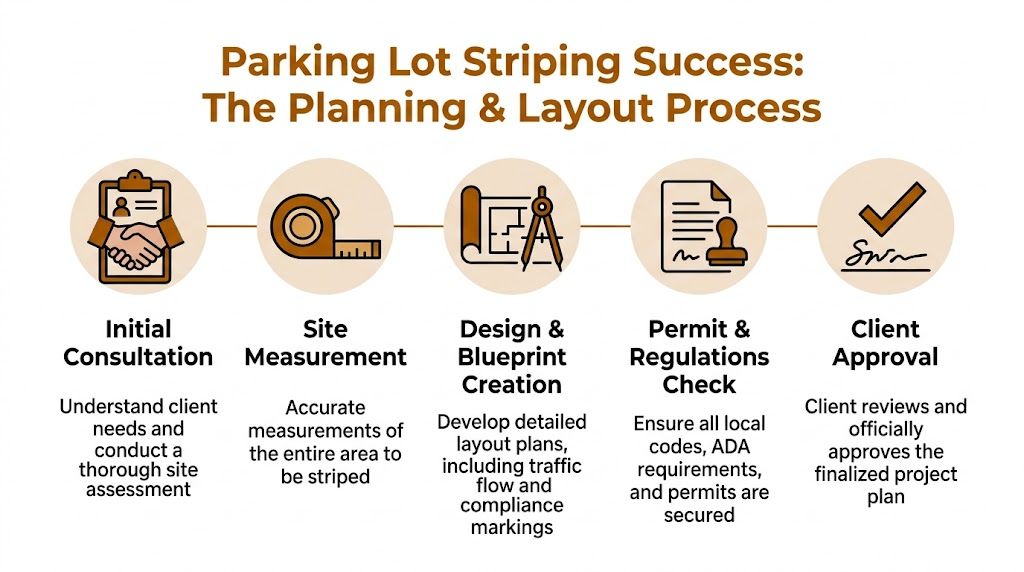
Good layout work starts on the pavement with a measuring wheel, laser measure, and a clear sketch of the site. Verify curb lines, island dimensions, storefront offsets, fire lanes, drive aisles, and the path people take from their cars to the building. In Central Florida, I also look at drainage patterns and low spots early, because standing water and repeated storm runoff can wear markings unevenly and make a clean plan fail faster.
Crews often use these common baseline dimensions as a starting point:
| Element | Common specification |
|---|---|
| Standard stall | 9 ft x 18 ft |
| Two-way aisle | 24 ft |
| One-way aisle | 12 to 15 ft |
| ADA space | 11 ft wide + 5 ft aisle |
| Line width | 4 inches |
Those numbers are a starting point, not a shortcut. Local requirements, site constraints, and ADA access routes still need to be checked before anything is marked.
Build the plan around circulation first
A parking lot has to read clearly the first time someone enters it. That means setting stall angles, aisle widths, stop bars, crosswalks, arrows, loading areas, and no-parking zones in a way that supports real traffic movement instead of squeezing in one more row.
The trade-off is simple. Extra stalls can look good on paper, but if drivers have to back into tight aisles or pedestrians have no protected path to the door, the layout is doing the property no favors. Retail sites often benefit from angled parking and strong directional marking. Churches, schools, medical offices, and HOAs usually need cleaner pedestrian routing and easier peak-period circulation.
ADA planning belongs at the front of the process, not after standard spaces are drawn in. Accessible spaces, access aisles, signage locations, curb ramp alignment, and the route to the entrance all have to work together. Florida properties also need to consider how heavy rain affects those routes. An access aisle that drains poorly or sits in a low spot can create a compliance problem and a safety problem at the same time.
If striping is part of a larger pavement maintenance plan, it helps to compare layout decisions with long-term surface costs. This guide to asphalt sealcoating cost per square foot helps property owners budget the striping work alongside protection for the pavement itself.
Layout mistakes that cause trouble later
The problems I see most often are predictable.
- Using faded existing lines as the template when the old layout already has spacing or compliance issues
- Skipping a scaled drawing and trying to adjust stall count in the field
- Ignoring turning movement for delivery vehicles, trash pickup, or emergency access
- Placing ADA spaces without checking the full accessible route from parking area to entrance
- Overlooking Florida weather exposure in low areas where water, heat, and tire wear shorten line life
Clean striping starts with a plan that fits the property, the code requirements, and the way the lot is used. If the layout is right, the painting goes faster and the finished lot holds up better under Florida sun, humidity, and summer storms.
Choosing Your Tools and Materials for Florida's Climate
A lot can look sharp right after striping and still fail fast in Florida. By the time a Central Florida property has gone through full sun, afternoon rain, standing humidity, and constant tire traffic, weak materials start showing up as fuzzy edges, early wear, and peeling in the turn lanes.
Tool choice affects the result as much as paint choice. For a tiny private area, a roller may be enough to touch up a line. For a working parking lot, a walk-behind striping machine is the baseline if you want straight, uniform lines and consistent film thickness. Hand application leaves too much room for wavering lines, uneven coverage, and overspray, especially once the pavement heats up.
A practical setup includes:
- Striping machine sized for traffic paint
- Measuring wheel or laser measure for accurate spacing
- Chalk line or layout guide system for clean reference marks
- Stencils for ADA symbols, arrows, stop bars, and lettering
- Pressure washer for surface cleaning
- Crack filler and patch materials for repairs in marked areas
Paint selection is where Florida jobs separate quickly. Use a true traffic marking paint, not a general-purpose coating from a maintenance shelf. Parking stalls, fire lanes, directional arrows, and ADA markings all take abuse from turning tires, heat buildup, rain, and routine cleaning. The coating has to bond to the pavement, dry within the weather window available, and hold color under strong UV exposure.
Most owners end up comparing water-based and solvent-based traffic paint. Water-based paint is common and easier to handle, and it can be a good fit when conditions are right. Solvent-based paint is often chosen where faster cure, stronger early performance, or tougher service conditions matter more. The better option depends on the pavement condition, how quickly the lot has to reopen, the amount of traffic, and whether humidity or storms are likely to interfere with drying.
Florida adds jobsite variables that generic striping advice usually skips. Morning moisture can sit on the surface longer than it appears. Asphalt temperature can climb fast even when the air still feels manageable. A forecast with only a small rain chance can still turn into a thunderstorm over the lot by midafternoon. On ADA spaces and access aisles, that matters even more because markings need to stay readable and compliant, not just visible for the first few weeks.
Buy materials for service life, site conditions, and compliance. Cheap paint usually costs more once you factor in early restriping, tenant complaints, and disrupted parking.
Riverside Sealing & Striping, LLC handles this work across Central Florida properties, including parking lot striping, ADA-compliant markings, asphalt seal coating, and concrete work.
Surface Preparation and Asphalt Repair
Fresh paint fails fast on dusty, oily, broken pavement. In Florida, that problem shows up even quicker because heat bakes contaminants into the surface, afternoon storms push moisture into cracks, and humidity slows down dry times after washing or patching.
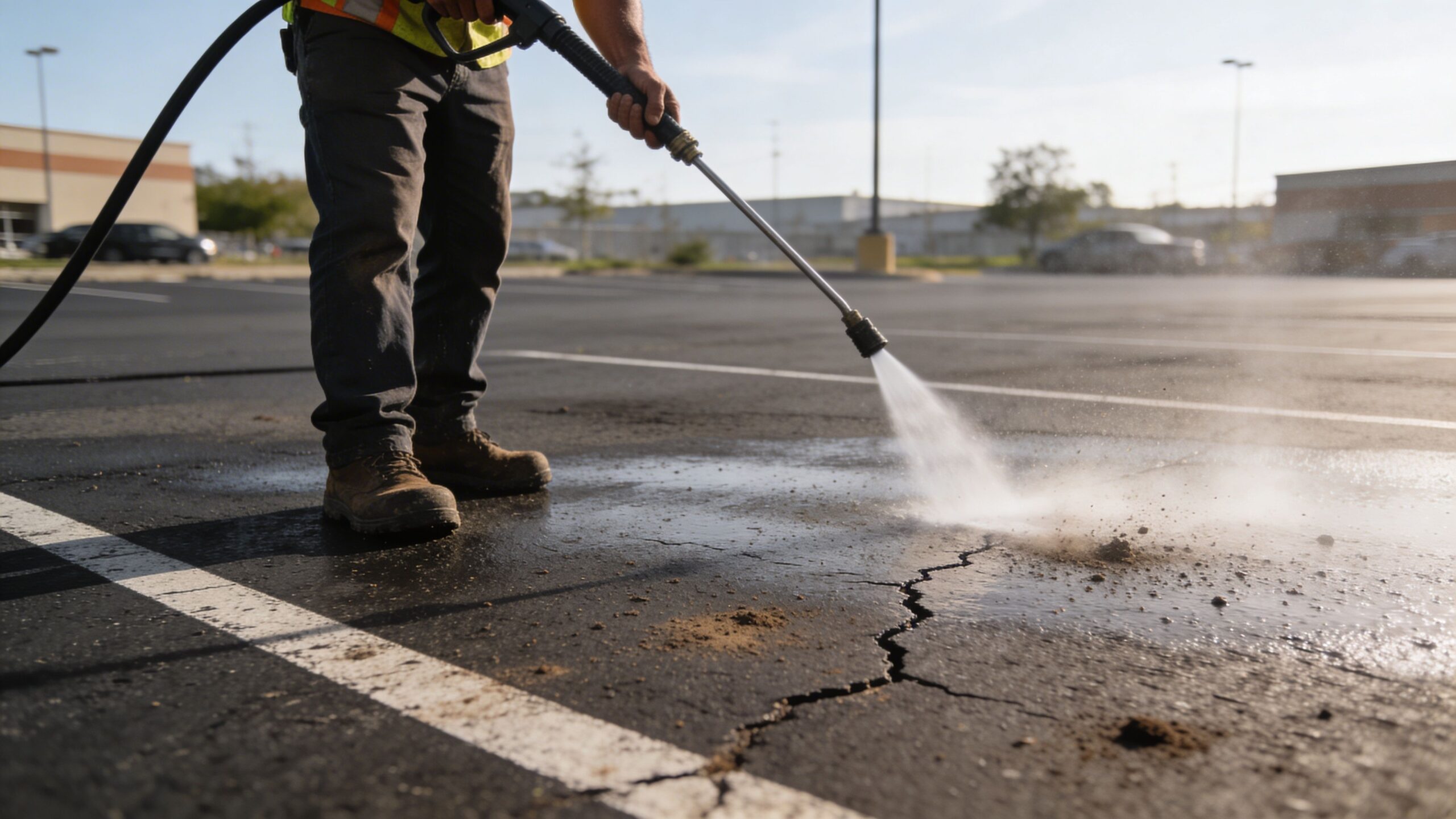
A good prep routine starts with a hard look at the pavement, not the striping machine. Sweep the lot completely. Remove sand, loose aggregate, leaves, and trash. Then clean the areas that usually cause adhesion problems: turning lanes, parking stalls near storefronts, dumpster pads, and anywhere oil or fertilizer has collected. If the lot has been pressure washed, let it dry fully before layout or paint. Dark asphalt can still hold moisture in the pores long after the surface looks dry.
Clean first, repair second
Prep work needs to match the condition of the lot.
- Blow or sweep the full surface so dust does not end up under the paint film.
- Treat oil spots and heavy buildup in high-traffic areas where paint commonly lifts first.
- Fill cracks that cross planned line locations so the stripe does not break apart over an open joint.
- Patch potholes and failed sections before markings go down.
- Confirm repairs are cured and dry before any coating, ADA stencil, or stall line is applied.
That order matters. Striping over an open crack may look acceptable on day one, but tires flex the pavement, water gets back in, and the line starts splitting right down the repair area. On ADA spaces and access aisles, that is more than a cosmetic issue. Faded or broken markings can create compliance problems.
Know when striping is the wrong first step
Some properties need pavement work before they need paint. If the asphalt has alligator cracking, loose edges, standing-water areas, or repeated patch failures, new markings will only highlight the defects. The lot may photograph better for a week or two, but it will not hold up.
That is the point where owners are better served by a targeted plan for Florida asphalt repair before paying for new striping.
One more Florida-specific point. Schedule prep and repair around the weather conditions, not the forecast you hope for. Morning condensation, midday heat, and pop-up thunderstorms can all interfere with cure and bond. A professional crew plans for that window because durable lines start with stable pavement, dry repairs, and a surface clean enough for paint to grab.
Applying Paint for Crisp, Professional Lines
Application is where planning and prep either pay off or fall apart. Good striping looks simple because the operator has already done the hard parts correctly.
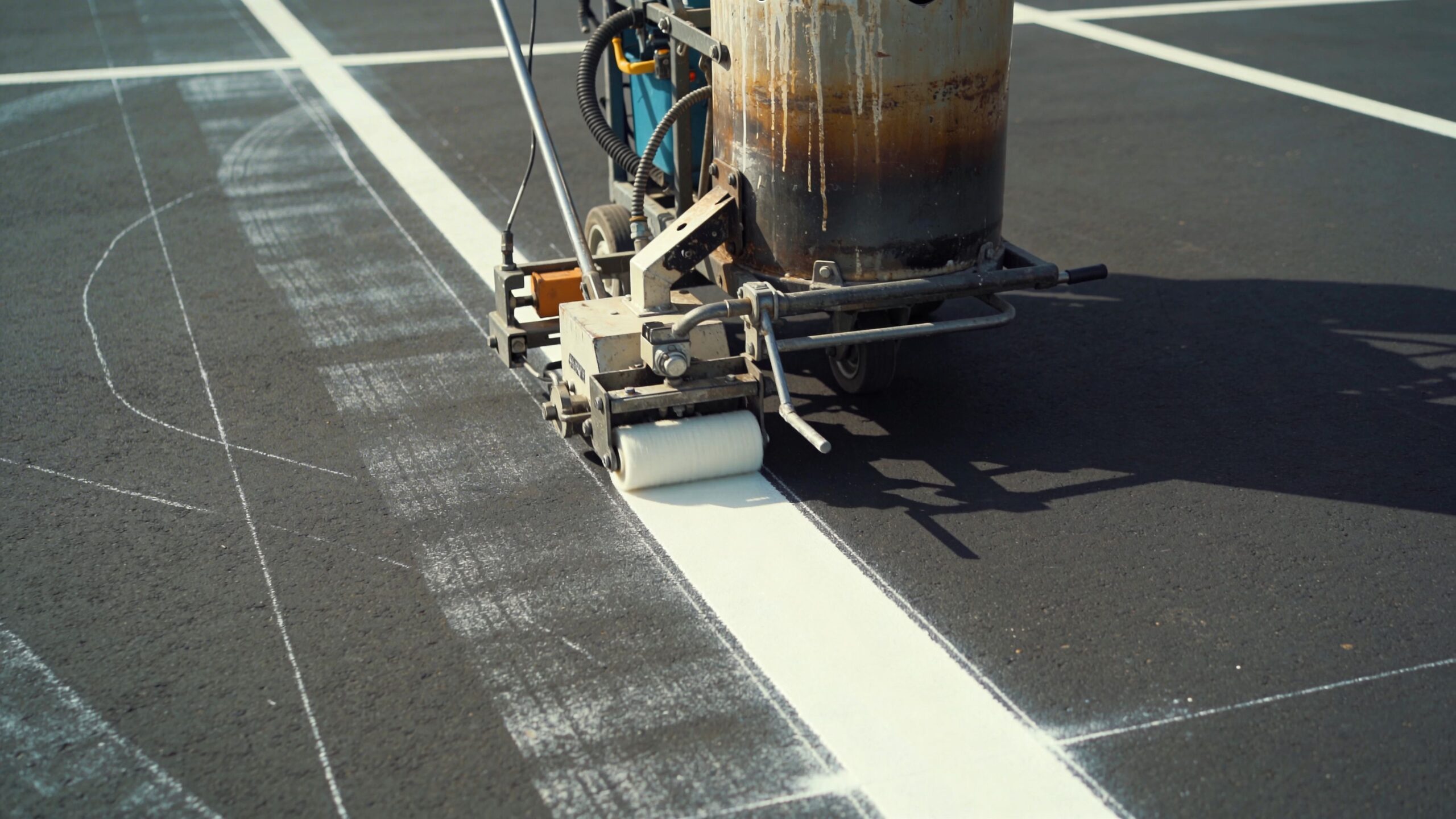
Set the machine before you start the lot
The target is a clean 4-inch line. Test the machine on cardboard first so you can confirm spray width, edge sharpness, and paint flow before touching the pavement.
Verified technical guidance recommends using 0.025 to 0.035 inch spray tips for 4-inch lines and maintaining a 10 to 15 mph walk speed when operating wheel stripers, as outlined in this professional striping equipment and execution guide.
The same source notes that automated layout technology such as the Graco LazerGuide 2000 can reduce layout time by up to 50% on large commercial lots and deliver 99% straight-line accuracy.
Work in a sequence that protects the finish
Most operators get cleaner results when they stripe methodically instead of jumping around the lot.
A practical sequence looks like this:
- Snap or verify guides before spraying
- Stripe stalls first so the field is established
- Add arrows, stop bars, and symbols after the base layout is complete
- Finish aisles and details last to avoid tracking through wet paint
The verified methodology also recommends working right-to-left and top-down to reduce the chance of walking or driving through fresh paint.
A quick visual helps if you want to see machine handling in action.
Common mistakes that ruin the look
Three things cause trouble fast:
- Poor guide setup that leaves lines visibly crooked
- Too much paint flow which creates waviness and buildup
- Overspray in wind around stencils and edge details
Steady pace matters. So does stopping cleanly. Crisp striping is usually the result of discipline, not speed.
Quality Control and Knowing When to Hire a Professional
A parking lot isn't finished when the last line is sprayed. The last part of the job is checking whether the finished work matches the plan.
What to inspect before reopening the lot
Walk the site after the paint has dried enough to keep traffic off the markings safely. Then verify the basics:
- Line straightness
- Consistent stall dimensions
- Readable arrows and symbols
- ADA space layout and aisle markings
- No tracking, smears, or overspray
Many DIY projects lose ground here. The lines may be visible, but if spacing is off or access details are wrong, the lot still has a problem.
The DIY trade-off is real
For property managers, the decision isn't just labor versus no labor. Verified guidance on the DIY versus contractor decision notes that doing it yourself avoids a labor invoice, but it still brings equipment rental, material sourcing, your own time, and no built-in assurance on durability or ADA compliance, as discussed in this DIY or professional striping cost-benefit overview.
That matters more on:
- Retail plazas with steady traffic
- Churches and schools where pedestrian movement is constant
- HOA common areas where appearance and liability both matter
- Commercial sites that need clean scheduling and dependable turnaround
When a pro makes more sense
A professional crew is usually the better call when the lot has multiple access points, needs ADA upgrades, requires layout redesign, or has surface issues that should be repaired before paint.
If it's a few private spaces on a simple layout, DIY may be workable. If it's a business-facing property in Ocala, The Villages, Crystal River, or Inverness, mistakes cost more than they seem at the start.
Why Florida's Climate Demands Expert Pavement Solutions
Florida changes the striping conversation. Advice that works in a mild, dry climate doesn't always survive a Central Florida workday.
Humidity and storms affect adhesion
Standard guidance often misses what local crews deal with regularly. High humidity can compromise paint adhesion, and intense UV exposure rapidly degrades both paint and asphalt binders, making local timing and product choice critical, according to this guide discussing climate-related striping challenges.
That shows up in practical ways:
- Morning humidity can leave the surface less ready than it looks.
- Afternoon storms can interrupt curing.
- Heat stored in asphalt can change how paint behaves during application.
UV doesn't just fade the lot
Florida sun doesn't only bleach white lines. It also wears on the pavement itself. Asphalt oxidizes, dries out, and becomes more vulnerable to cracking. That's why striping and surface protection should be viewed together, especially on commercial properties and HOA roads.
If you're maintaining a lot over time, this collection of parking lot sealcoating resources for Florida properties is useful alongside striping decisions.
In Florida, a good striping plan includes the weather forecast, the pavement condition, and the maintenance schedule. If you ignore one of those, the job gets shorter-lived.
Local judgment beats generic instructions
In Marion County and Citrus County, crews have to watch the day, not just the calendar. A workable application window in Dunnellon or Summerfield can close quickly once humidity rises or rain starts building. That's one reason local experience matters on both asphalt and concrete work.
Your Full-Service Concrete and Asphalt Partner in Central Florida
A well-striped lot helps the property function. The rest of the surface still has to support it.
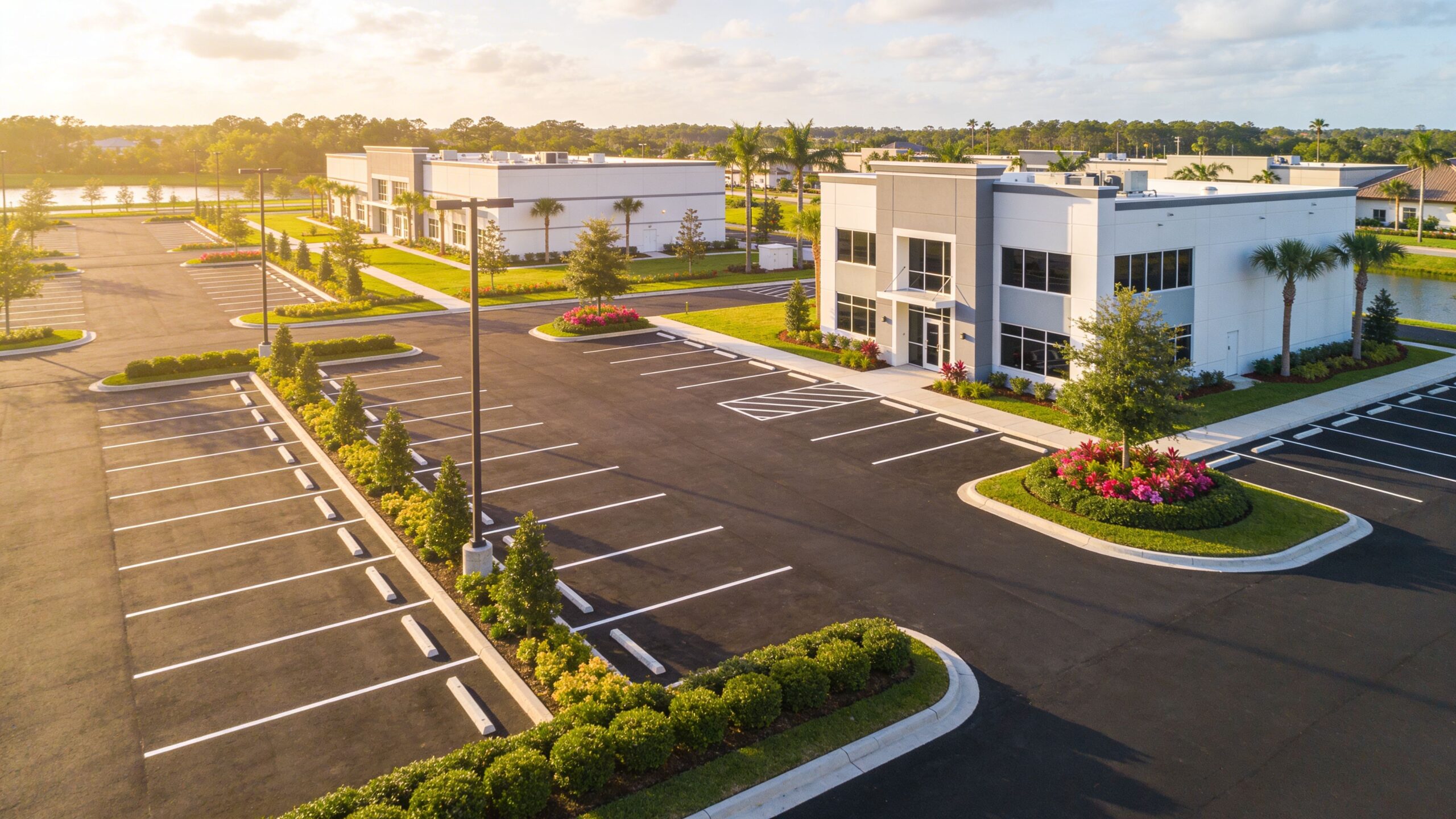
In Marion County, Citrus County, and nearby communities like Ocala, Dunnellon, Crystal River, Homosassa, and Lecanto, owners usually need more than one isolated service. A property may need cracked asphalt repaired, new ADA markings installed, sidewalks replaced, and a driveway or slab poured on the same schedule.
That's why it makes sense to work with a contractor that handles both concrete construction and asphalt maintenance.
Services that often go together
- Concrete driveways and replacements
- Patios, slabs, sidewalks, and walkways
- Concrete demolition and replacement
- Asphalt seal coating and parking lot striping
- ADA-compliant markings and layout updates
- Commercial maintenance planning for HOAs, schools, churches, and retail sites
Owners in places like Silver Springs, Belleview, Hernando, and Beverly Hills usually aren't looking for patchwork coordination. They want durable work, reliable scheduling, and one plan that fits the whole site.
Why Choose Riverside Sealing & Striping
A contractor should make the job simpler, not harder. That starts with showing up when scheduled, communicating clearly, and doing work that holds up in Florida conditions.
Riverside Sealing & Striping is a third- and fourth-generation, family-owned concrete and asphalt maintenance company based in Dunnellon, serving Marion County, Citrus County, and surrounding Central Florida areas. The company handles both residential and commercial work, from concrete driveway replacement and sidewalk installation to asphalt seal coating, ADA parking lot striping, and maintenance planning.
What property owners usually care about most
- Local experience in communities like Ocala, Inverness, Crystal River, and The Villages
- Concrete and asphalt capability under one roof
- Reliable scheduling that helps reduce disruption
- Licensed and insured service
- Free, no-pressure estimates
- Availability from 7am to 7pm
For homeowners, that can mean replacing broken concrete with a durable new surface. For commercial managers, it often means keeping lots safer, more organized, and easier to maintain without juggling multiple contractors.
Frequently Asked Questions
How often should a parking lot be restriped?
A good rule is to repaint before drivers start guessing where spaces begin and end. One industry maintenance overview notes that traffic paint often lasts about 1 to 2 years, and that restriping is usually needed by the time markings are heavily faded, in this parking lot striping history and maintenance overview.
In Central Florida, I would not wait on a calendar alone. Hard sun, standing water, humidity, and regular traffic wear lines unevenly, so lots should be checked routinely, especially before the busy season or after a long stretch of summer storms.
What size should parking lot lines be?
Standard striping guidance commonly uses 4-inch-wide lines. Common layouts also use stalls around 9 feet by 18 feet with a 24-foot two-way drive aisle.
Those numbers are a starting point, not the whole answer. ADA spaces, fire lanes, loading areas, local code, and the way traffic moves through the property all affect the final layout.
Do you offer ADA-compliant striping?
Yes. ADA striping work includes more than painting a wheelchair symbol on the asphalt. Space count, stall width, access aisle width, slope, signage, route to the entrance, and placement all need to work together.
Older properties are where mistakes show up. A lot may have enough spaces, but the accessible route is broken, the aisle is too tight, or the space sits in the wrong part of the lot. It is far less expensive to catch that during layout than after paint is down.
Can you stripe over damaged asphalt?
You can, but the result usually looks temporary because it is temporary. Cracks telegraph through fresh lines, patched edges make striping wander, and potholes create safety problems no paint can fix.
Florida rain makes that trade-off worse. Water gets into weak pavement fast, then heat opens the damage back up. If a line runs across failing asphalt, the paint job starts losing its clean look almost immediately.
What areas do you serve?
Service includes Marion County, Citrus County, and nearby Central Florida communities such as Ocala, Dunnellon, Belleview, Silver Springs, Summerfield, Crystal River, Homosassa, Inverness, Lecanto, Beverly Hills, Hernando, and The Villages.
Do you only handle asphalt work?
No. Riverside Sealing & Striping, LLC handles concrete and asphalt work, including driveway replacement, patios, slabs, sidewalks, walkways, demolition and replacement, asphalt seal coating, parking lot striping, and commercial pavement maintenance.
That helps on mixed-surface properties. If a site needs curb work, a sidewalk repair, and restriping at the same time, the job stays coordinated instead of being split across multiple crews.
Is DIY striping ever worth it?
For a small private lot with a simple layout, sometimes. For a commercial property, DIY work usually runs into trouble at the layout stage, not the painting stage.
Straight lines are the easy part. Proper spacing, ADA counts, stall alignment, traffic flow, dry surface conditions, and paint choice for Florida weather are what separate a quick repaint from markings that hold up and pass inspection.
What matters most for long-lasting striping in Florida?
Three things decide how well striping lasts. Clean pavement, dry conditions, and the right traffic-marking material for the site.
Timing matters more in Florida than many owners expect. If paint goes down with moisture still in the surface or with thunderstorms building, adhesion suffers. The lines may look fine that day and start failing much sooner than they should.