
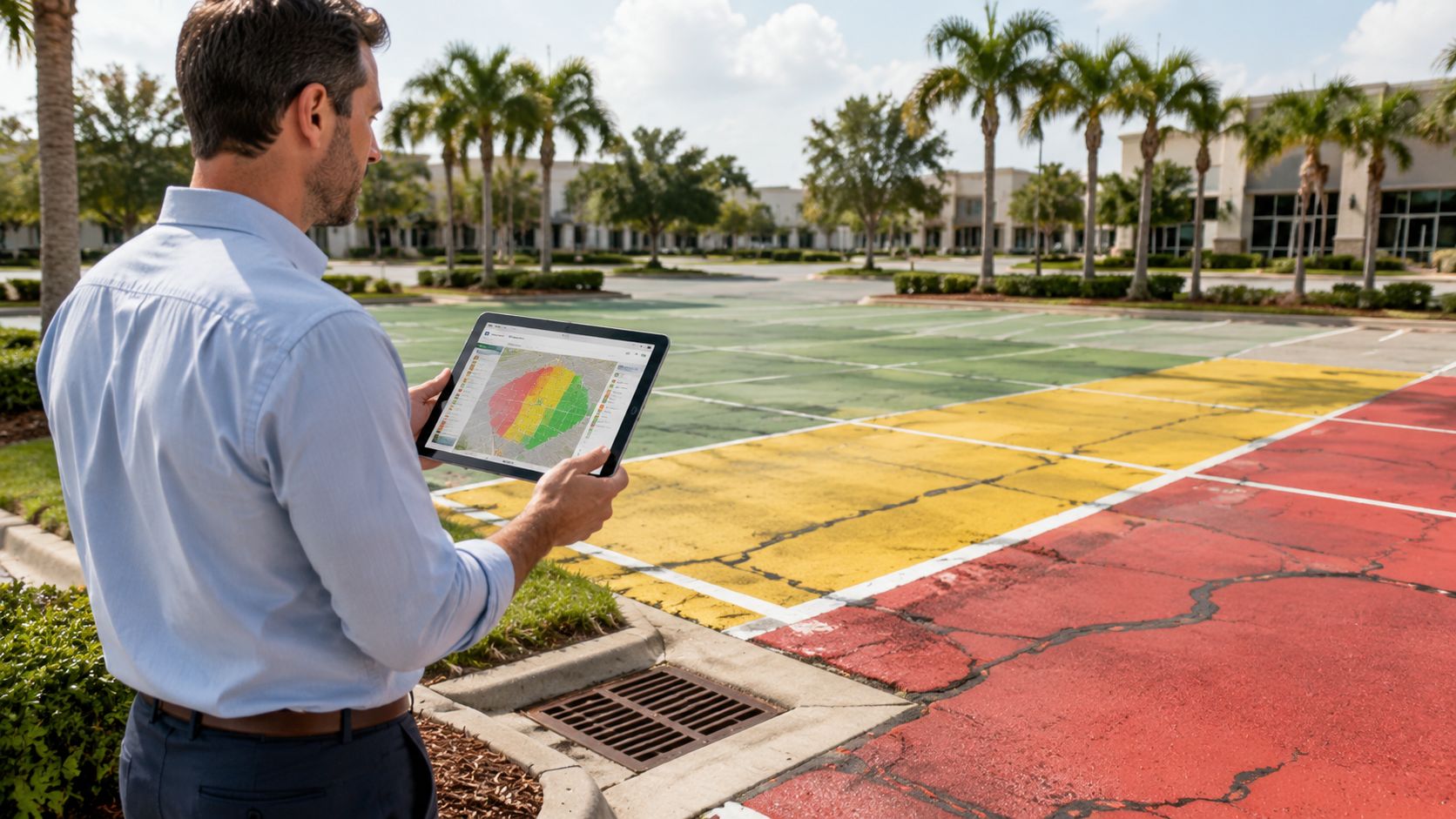
If you manage an HOA, retail center, church campus, or multi-building property in Marion County, FL or Citrus County, FL, you've probably felt this problem already. One year the parking lot looks mostly fine. The next year you're dealing with cracks, puddles, trip hazards, faded striping, and board members asking whether it's time to patch, sealcoat, resurface, or start over.
That's where a Pavement Management System helps. Instead of reacting to the loudest complaint or the worst pothole, you use a repeatable plan to inspect surfaces, rank priorities, and schedule the right work at the right time. For properties in Ocala, Dunnellon, Belleview, Silver Springs, Summerfield, Crystal River, Homosassa, Inverness, Lecanto, Beverly Hills, Hernando, and The Villages, that matters because Central Florida weather can shorten the gap between “minor issue” and “expensive repair.”
This guide translates pavement management from engineering language into practical decisions for Florida property managers. It also reflects the reality that many sites have both asphalt and concrete, so good planning needs to account for parking lots, drive lanes, sidewalks, curbs, dumpster pads, and entry areas together. That's why smart owners look for Concrete and Asphalt Experts in Marion and Citrus County, not a one-trade contractor with a narrow view of the property.
Table of Contents
- What Is a Pavement Management System
- The Essential Components of a Modern PMS
- A Practical 4-Step Guide to Implementing a PMS
- Managing Pavement in Central Florida's Climate
- When to Partner with a Local Pavement Expert
- Frequently Asked Questions About Pavement Management
What Is a Pavement Management System
Think of it like a health check-up
A pavement management system is a structured way to monitor, rate, plan, and maintain paved surfaces before they become budget emergencies. For a property manager, the easiest analogy is a health check-up. You don't wait for a major medical event to start paying attention. You schedule regular evaluations, track changes over time, and act early when the fix is still manageable.
That same logic applies to asphalt parking lots, access drives, concrete sidewalks, and shared community surfaces. A good system answers four practical questions. What do you have, what condition is it in, how fast is it wearing out, and what should you do next?
Pavement management isn't new or experimental. Large-scale use by U.S. transportation agencies goes back to the mid-1960s, with the Washington State Department of Transportation beginning formal pavement condition surveys around 1965, as described in Pavement Interactive's overview of pavement management systems. That history matters because it shows the method has been refined over decades, not invented for a sales brochure.
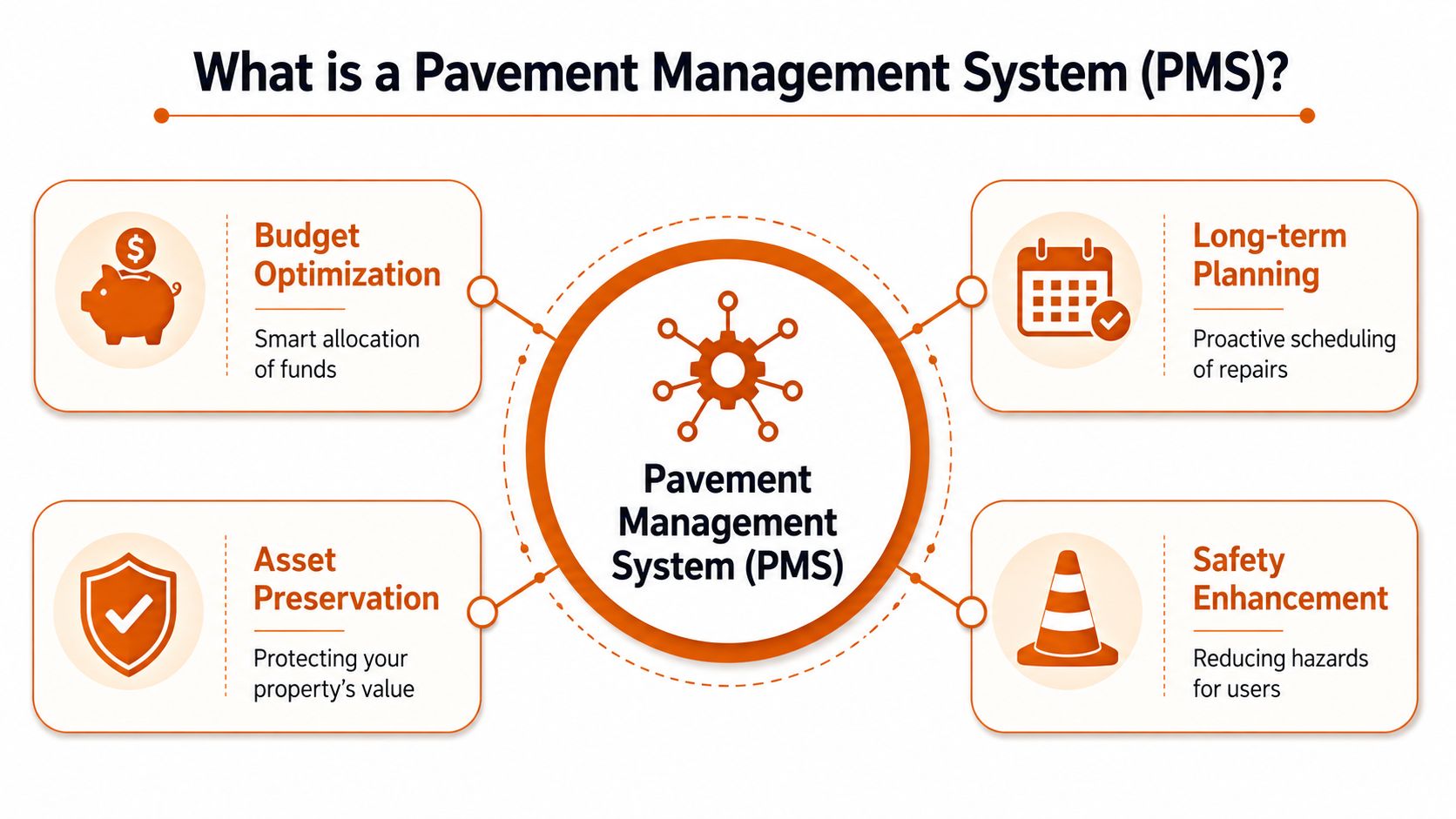
Practical rule: A pavement management system is not a list of repairs. It's a decision method that helps you choose the right repair before damage spreads.
Why PCI matters in daily decisions
The most useful scoring tool in modern pavement planning is the Pavement Condition Index, usually called PCI. It gives a pavement section a score from 0 to 100, which turns scattered observations into a clear priority scale. According to TransMap's explanation of PCI in pavement management, 85 to 100 means good condition and routine maintenance is usually enough, 55 to 84 means fair condition and preventive treatments are appropriate, and 0 to 54 means poor condition and major intervention is typically needed.
For a manager, that score simplifies conversations with boards and owners. Instead of saying, “This area looks rough,” you can say, “This section is fair and still a preservation candidate,” or “This section has dropped into poor condition and shouldn't be delayed.”
A simple way to think about PCI is this:
| PCI range | What it usually means | Typical response |
|---|---|---|
| 85 to 100 | Surface is in good shape | Routine maintenance and monitoring |
| 55 to 84 | Damage is visible but manageable | Preventive work before failure spreads |
| 0 to 54 | Surface is in poor condition | Major repair or reconstruction planning |
That's why a pavement management system helps save money over time. It keeps you from treating every surface the same. A good concrete walkway doesn't need the same attention as a failing asphalt drive lane, and a heavily used entrance near a clubhouse in The Villages doesn't wear the same way as guest parking in Inverness or Lecanto.
The Essential Components of a Modern PMS
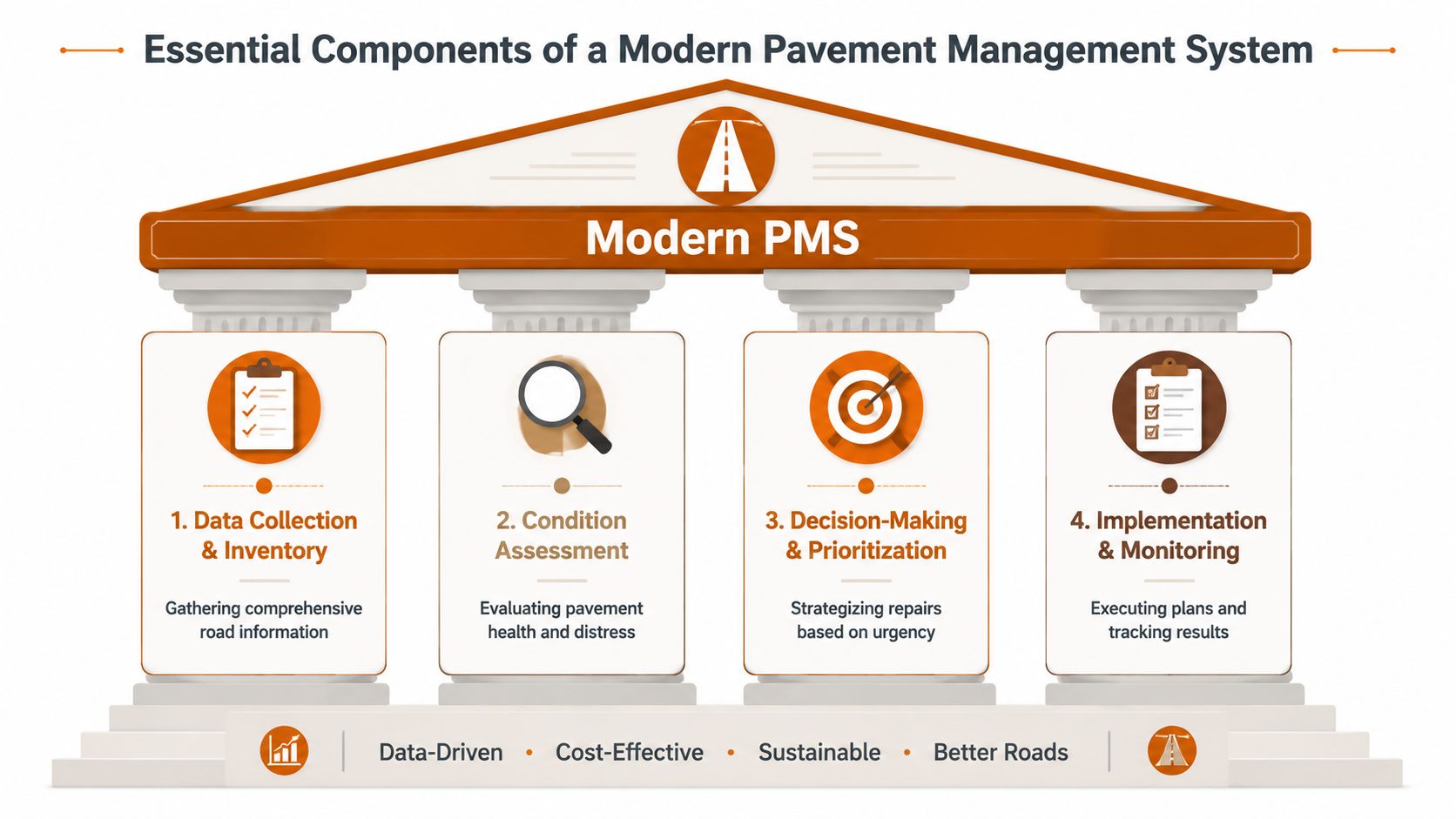
A modern system works best when you stop thinking of it as software and start thinking of it as a process. The software can help, but its primary value comes from the sequence. Good information goes in, informed decisions come out.
Inventory and condition data
The first pillar is inventory. You need a clear record of every paved asset on the property. That includes asphalt parking areas, fire lanes, loading zones, concrete sidewalks, curbs, aprons, dumpster pads, and any specialty surfaces that affect safety or appearance.
If you skip this step, everything after it gets fuzzy. Teams often think they know the site well until they try to list each area, its material type, approximate age, traffic exposure, drainage issues, and past repairs. Then gaps show up fast.
The second pillar is condition assessment. It involves inspecting each area and documenting visible distress. For asphalt, that might include cracking, raveling, potholes, ponding, edge breakdown, or faded markings. For concrete, it might mean spalling, joint failure, settlement, trip points, scaling, or broken panels.
Don't group the whole property into one condition rating. The entrance, main travel lanes, and rear service area often age very differently.
Analysis and work planning
The third pillar is performance analysis. In agency-level systems, this often includes models that forecast deterioration and estimate future condition under different funding choices. Iowa State's pavement management overview explains that pavement management operates at both a network level and a project level, using standardized condition information to guide funding strategy and then turn that into project recommendations and treatment decisions through performance modeling and least-cost planning, as outlined in this Iowa State pavement management reference.
For a property manager, the takeaway is simpler. You're comparing “fix now” versus “fix later,” and you're trying to hold each surface in serviceable condition as long as possible without overspending.
The fourth pillar is work planning. Here, the system becomes useful in real life.
A work plan should separate:
- Immediate safety items like trip hazards, severe potholes, drainage trouble, or failed ADA paths
- Preventive items like crack sealing, patching, cleaning, sealcoating, and striping refreshes
- Capital items like resurfacing, slab replacement, reconstruction, or larger concrete replacement work
A manager in Ocala or Summerfield usually doesn't need a complicated dashboard to start. A reliable inventory, consistent inspections, and a schedule tied to condition are enough to build a strong working system.
A Practical 4-Step Guide to Implementing a PMS
The best pavement management system is the one you'll use. For most HOAs and private properties, that means a process simple enough to maintain but detailed enough to guide budgets, contractor discussions, and board decisions.
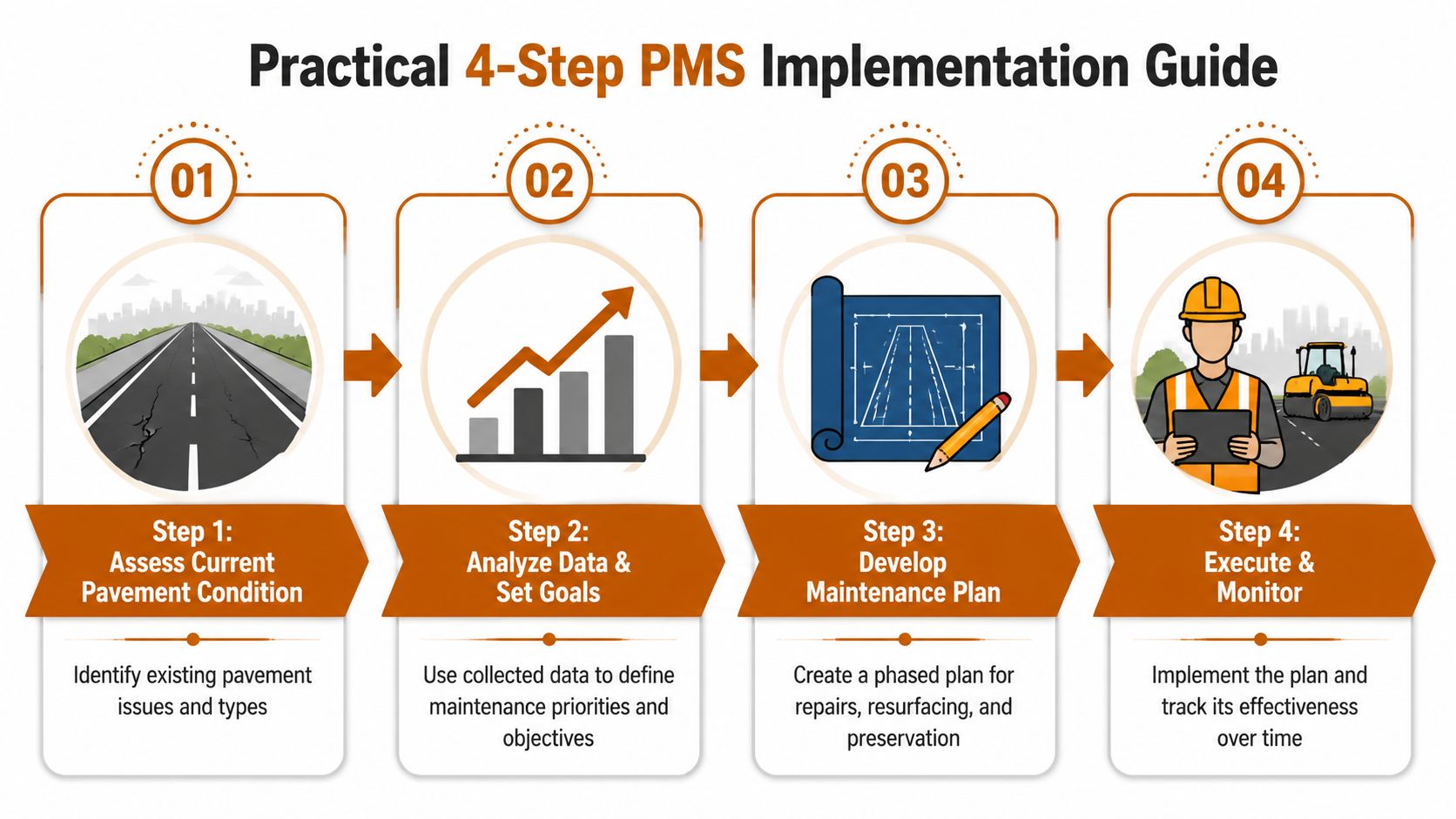
Start with a complete property review, not a complaint-driven walk. Include every asphalt and concrete surface that affects access, safety, drainage, and appearance.
Step 1 and Step 2
- Assess current pavement condition
Walk the site with a map or site plan. Break the property into sections that make sense by use and material. Front entrance, guest parking, resident parking, sidewalks near amenities, dumpster approach, and service drive are usually better categories than “north side” or “back lot.”
Record visible defects, drainage patterns, traffic stress, and previous patching. Take photos from the same spots each time so comparisons stay useful.
- Prioritize by condition, risk, and use
Not every crack is urgent. Not every ugly section is the highest priority either. A pavement management system works when you rank repairs by three things together: condition, safety impact, and how critical the area is to daily use.
A practical priority order often looks like this:
- Safety first: Trip hazards, ADA access issues, potholes, and standing water near entrances move to the top.
- High-use next: Main drive lanes, clubhouse access, retail frontages, and school or church drop-off zones deserve earlier action because failure affects more people.
- Preservation before failure: Fair-condition pavement often gives you the best chance to avoid larger repair work later.
For maintenance planning, routine work matters more than many boards expect. Hillsborough County's pavement management program notes that routine pavement maintenance includes debris removal and patching, while mill and overlay work may require replacing up to two inches of the asphalt surface.
Later, when you compare treatment options, it also helps to review local pricing context for asphalt sealcoating cost per square foot. That won't replace a site-specific proposal, but it can help boards understand why preservation work and larger corrective work land in very different budget categories.
After priorities are set, it helps to see the planning mindset in action:
Step 3 and Step 4
- Build a budget using lifecycle thinking
Lifecycle thinking means you compare options by timing, not just price. A preventive treatment on a fair-condition surface may be easier to fund and easier to schedule than waiting until the same area needs major rehabilitation. The question isn't only “What costs less today?” It's “What keeps the asset functional with fewer surprises?”
Readers often get confused, thinking lifecycle analysis requires advanced software. It doesn't have to. Even a spreadsheet can help you compare current condition, likely treatment path, urgency, and whether a delay raises the chance of heavier work.
A cheap repair becomes expensive when it's done too late.
- Create a multi-year schedule
Turn the findings into a calendar. Group work by urgency, season, contractor mobilization efficiency, and resident or tenant disruption. A property in Belleview or Dunnellon may choose to handle sidewalk hazards first, preservation work next, and major resurfacing in a later budget cycle.
A useful schedule usually includes:
- This year's corrective work
- Near-term preventive maintenance
- Future capital planning
- Annual review dates
- Updated photo and repair records
That last part matters. A pavement management system improves when your work history is accurate. If you don't track what was repaired, when, and where, future decisions become guesses again.
Managing Pavement in Central Florida's Climate
Florida punishes pavement in ways that generic maintenance advice often misses. Heat, ultraviolet exposure, sudden heavy rain, and high seasonal traffic all affect how asphalt and concrete age on private property.

What Florida weather does to pavement
In Marion County, FL and Citrus County, FL, the sun is not a minor factor. Long exposure dries and oxidizes asphalt surfaces, which can make them more brittle over time. Then rain finds the weak points. Water moves into cracks, undermines support, and turns a surface issue into a structural one.
For concrete, water and movement usually show up differently. You may see settlement near poor drainage areas, erosion at slab edges, joint separation, or trip hazards where one section shifts against another. That's why properties with mixed surfaces need both asphalt maintenance and concrete repair planning in the same maintenance conversation.
Florida lifespan expectations also shape planning. The Pavement Group's Florida paving overview notes that properly installed and maintained asphalt in Florida typically lasts 15 to 20 years. For managers in Crystal River, Homosassa, or Silver Springs, that's a useful benchmark for long-range budget timing, especially when site conditions are harsh.
Why local maintenance plans work better
A Central Florida pavement plan should pay close attention to these issues:
- Drainage: Water that sits after a storm often points to more than surface wear. It can signal slope problems, clogged drainage paths, or base trouble.
- Traffic concentration: Entrances, pickup zones, and tight turning areas fail faster than low-use edges.
- Material match: The right treatment for an asphalt parking field is different from the right fix for a settling concrete sidewalk panel.
- Timing: Work has to fit weather windows, tenant activity, and the property's operational rhythm.
For many private sites, a localized maintenance strategy outperforms a generic internet checklist. A shopping center in Ocala, a neighborhood in The Villages, and a church campus in Hernando may all need a pavement management system, but they won't need the same repair sequence.
If your board is comparing long-term upkeep options, it helps to review a service-specific overview of asphalt parking lot maintenance. The details matter because Florida surfaces don't fail from one cause. Sun, rain, traffic, and delayed maintenance often work together.
When to Partner with a Local Pavement Expert
Some parts of a pavement management system are easy to start internally. Others are harder to do well without field experience, especially when the property includes both aging asphalt and concrete.
Tasks that are hard to do in-house
Most managers can identify obvious trouble spots. Fewer can consistently distinguish between cosmetic wear, preservation candidates, drainage-related distress, and surfaces that are close to structural failure. That difference affects budget decisions in a big way.
Professional help is often worth it when you need:
- Reliable condition ratings across multiple site areas
- Treatment matching so the repair fits the distress instead of only covering it
- Scope planning for phased projects and annual budgeting
- Execution quality with the right prep, materials, layout, and traffic control
A contractor also helps when assets overlap. Many Florida properties don't have “just a parking lot.” They have sidewalks, ramps, curbs, dumpster pads, loading areas, and drive aisles that all interact with drainage and site safety. That's why owners benefit from working with Concrete and Asphalt Experts in Marion and Citrus County rather than treating each issue as a separate emergency.
What good partnership looks like
A strong local partner should bring more than equipment. They should bring judgment. That includes honest advice about what can wait, what can't, and what work should be bundled for better value and less disruption.
Look for practical trust signals:
- Licensed and insured: Basic, but essential
- Local Central Florida experience: Climate, soils, and site conditions matter
- Reliable scheduling: Delays can create access headaches for residents and tenants
- High-quality workmanship: Surface appearance matters, but longevity matters more
The best contractor isn't the one who recommends the most work. It's the one who helps you phase the right work.
For boards and managers who want to understand the background of a local provider, reviewing the company's story can be useful. This profile of James Young Paving offers one example of how local paving experience is presented and why regional knowledge matters when you're planning work in places like Inverness, Lecanto, or Beverly Hills.
Frequently Asked Questions About Pavement Management
Can our HOA do its own condition survey
Yes, for a basic first pass. A board member, property manager, or maintenance lead can walk the site, document distress, mark safety issues, and organize the property into sections for future tracking.
That said, the survey needs a consistent scoring method or it won't be useful next year. According to Crafton Tull's discussion of pavement management on a limited budget, manual walking inspections for Pavement Condition Rating can reach 85% accuracy when paired with standardized distress scoring. That makes low-cost visual review a realistic starting point for smaller HOAs and property managers.
What software is used for a PMS
It ranges from simple spreadsheets to specialized asset management platforms. For many private properties, a spreadsheet, site map, photo log, and annual inspection checklist are enough to start.
The mistake is waiting for perfect software before building the habit. If you can track each pavement section, note its condition, record completed work, and flag next actions, you already have the core of a working pavement management system.
How often should a plan be updated
Update the plan every time work is completed, and review the property on a regular cycle. If repair history isn't captured, the system loses value because the next evaluation won't reflect what was done.
For many properties, annual review keeps the plan active. If you're managing larger sites or several associations, more frequent check-ins may help catch drainage changes, failed patches, or developing trip hazards before budget season.
If a repair was done but never recorded, the pavement history is incomplete. Incomplete history leads to poor decisions.
Does a PMS apply to concrete too
Yes. That's a major point property managers often miss. A pavement management system shouldn't stop at asphalt parking lots if the site also has sidewalks, curbs, ramps, aprons, or concrete pads that affect access and liability.
Concrete and asphalt age differently, but they should still be managed together. A property-wide plan works better because users experience the site as one system. They don't separate the cracked sidewalk from the faded lot entrance when they decide whether a place feels safe and well maintained.
What should we fix first if the budget is tight
Start with hazards and failure points that affect safety, drainage, and core access. A trip hazard at a main walkway or a pothole at an entrance generally deserves attention before lower-visibility cosmetic issues.
After that, focus on areas where preventive work can still protect the surface. Once a section drops too far, low-cost treatments stop making sense. That's the value of planning early. You give yourself more repair options and more control over the budget.
If you need help evaluating concrete sidewalks, asphalt parking areas, sealcoating timing, or striping needs across Marion County, FL, Citrus County, FL, and nearby Central Florida communities, Riverside Sealing & Striping, LLC offers free estimates, no-pressure consultations, reliable scheduling, and local expertise as Concrete and Asphalt Experts in Marion and Citrus County. Whether you're managing a home, HOA, church, retail site, or investment property, a professional evaluation can help you turn scattered pavement issues into a practical long-term plan.