
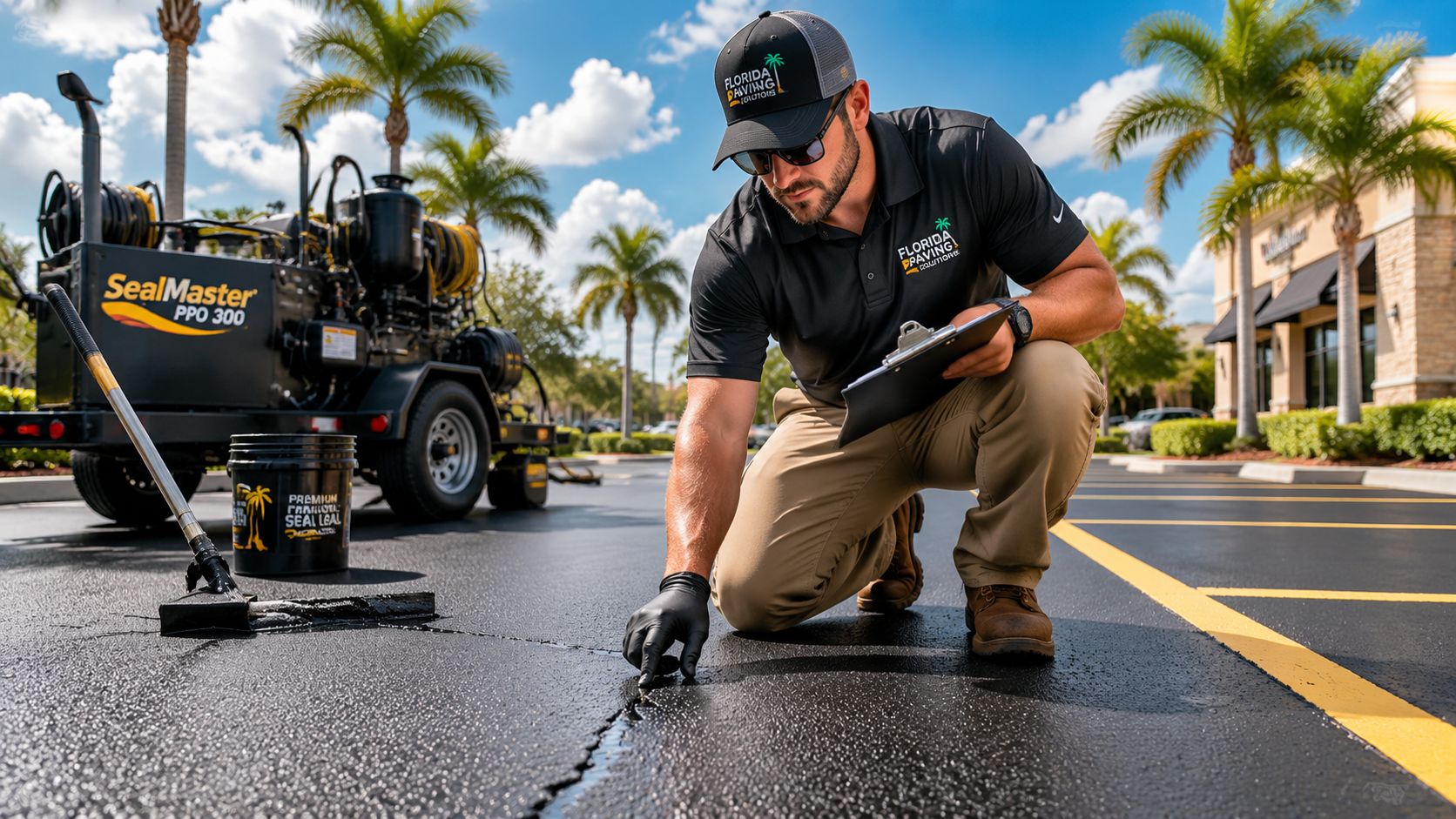
A lot manager in Ocala or Crystal River usually notices the same thing after a hard summer rain. The puddles show every low spot. The faded striping looks worse when the pavement is wet. Cracks that seemed minor a month ago suddenly stand out because water is sitting in them instead of running off.
That's how parking lot problems show themselves across Marion County, FL and Citrus County, FL. The Florida sun dries out the surface, heavy rain finds every weak point, and traffic does the rest. If you manage retail, medical, church, HOA, or mixed-use property in Dunnellon, Inverness, Homosassa, Belleview, or The Villages, asphalt parking lot maintenance isn't cosmetic work. It's how you delay bigger repair bills and keep the property safe and presentable.
From a practical contractor's point of view, the best plan is simple. Inspect often. Fix water entry early. Use sealcoating at the right time, not as a cure-all. And when a problem area keeps failing, decide whether asphalt, concrete, or full reconstruction is the smarter long-term move. That's where full-service thinking matters, especially in Central Florida.
Table of Contents
- Your Central Florida Parking Lot's Worst Enemies Sun and Rain
- Building Your Routine Inspection and Cleaning Program
- A Practical Guide to Asphalt Crack and Pothole Repair
- Protect Your Investment with Sealcoating and Striping
- Your Seasonal Asphalt Maintenance Checklist for Florida
- When to Repair, Resurface, or Replace Your Parking Lot
- Frequently Asked Questions About Parking Lot Maintenance
Your Central Florida Parking Lot's Worst Enemies Sun and Rain
A property manager walks a lot at 3:00 p.m. and it looks serviceable. Then a hard Florida rain hits, and the underlying condition shows up fast. Water sits in shallow dips, runs into open cracks, and collects along soft edges. By that point, the sun has already done its part. The surface has dried out, the binder has started to break down, and the lot that looked acceptable in dry weather is already sliding into repair mode.
That pattern is common across Central Florida. In Summerfield, Silver Springs, and Lecanto, heat and rainfall work together against asphalt. Sun drives oxidation at the surface. Rain uses every weak point the surface gives it. Add traffic, oil drips, and poor drainage, and a manageable maintenance issue turns into base damage, potholes, and premature failure.
What the weather is really doing to your lot
Sun and rain hit different parts of the pavement system.
UV exposure dries the asphalt binder and makes the surface more brittle. You start seeing color fade first, but the bigger problem is loss of flexibility. Once that happens, normal traffic stress opens the door to cracking, raveling, and surface wear.
Rain causes a different kind of trouble. It finds cracks, failed joints, low spots, and unsupported edges. If water keeps getting below the surface, the pavement structure weakens from underneath. That is why a lot can look decent from the driver's seat and still be close to more expensive repairs.
Practical rule: If a pothole is the first sign that gets attention, the cheaper repair window has already passed.
In Beverly Hills and Hernando, we often see the same sequence. Drainage is a little off. A crack stays open through the wet season. Delivery trucks keep turning in the same area. Then the surface starts breaking apart where the stress is highest.
Why some areas fail faster than others
Florida weather does not hit every part of a parking lot equally. Entrances, dumpster pads, loading zones, and tight turn areas usually wear out first because they carry heavier loads and more scrubbing traffic. Those are also the spots where asphalt is not always the best long-term answer.
A full-service maintenance plan has to account for that. Standard parking stalls and drive lanes may make sense in asphalt with timely repairs and surface protection. High-stress areas may justify concrete instead, especially where trucks stop, turn hard, or sit loaded. Property managers save money long term when they stop treating the entire site like one uniform surface.
Why a reactive approach costs more
Small defects do not stay small in this climate. A hairline crack in the dry season can become a water-entry point in the next storm cycle. A minor low spot can hold enough water to shorten the life of the surrounding pavement. Once the base starts losing support, repair options get more invasive and tenant disruption goes up with the bill.
The better approach is straightforward. Fix water-entry points early. Correct drainage problems before they spread. Use asphalt where it performs well, and consider concrete where the traffic pattern keeps beating up the same section year after year.
That is how you protect a parking lot in Central Florida. Not with one repair after another, but with sound decisions across the whole site.
Building Your Routine Inspection and Cleaning Program
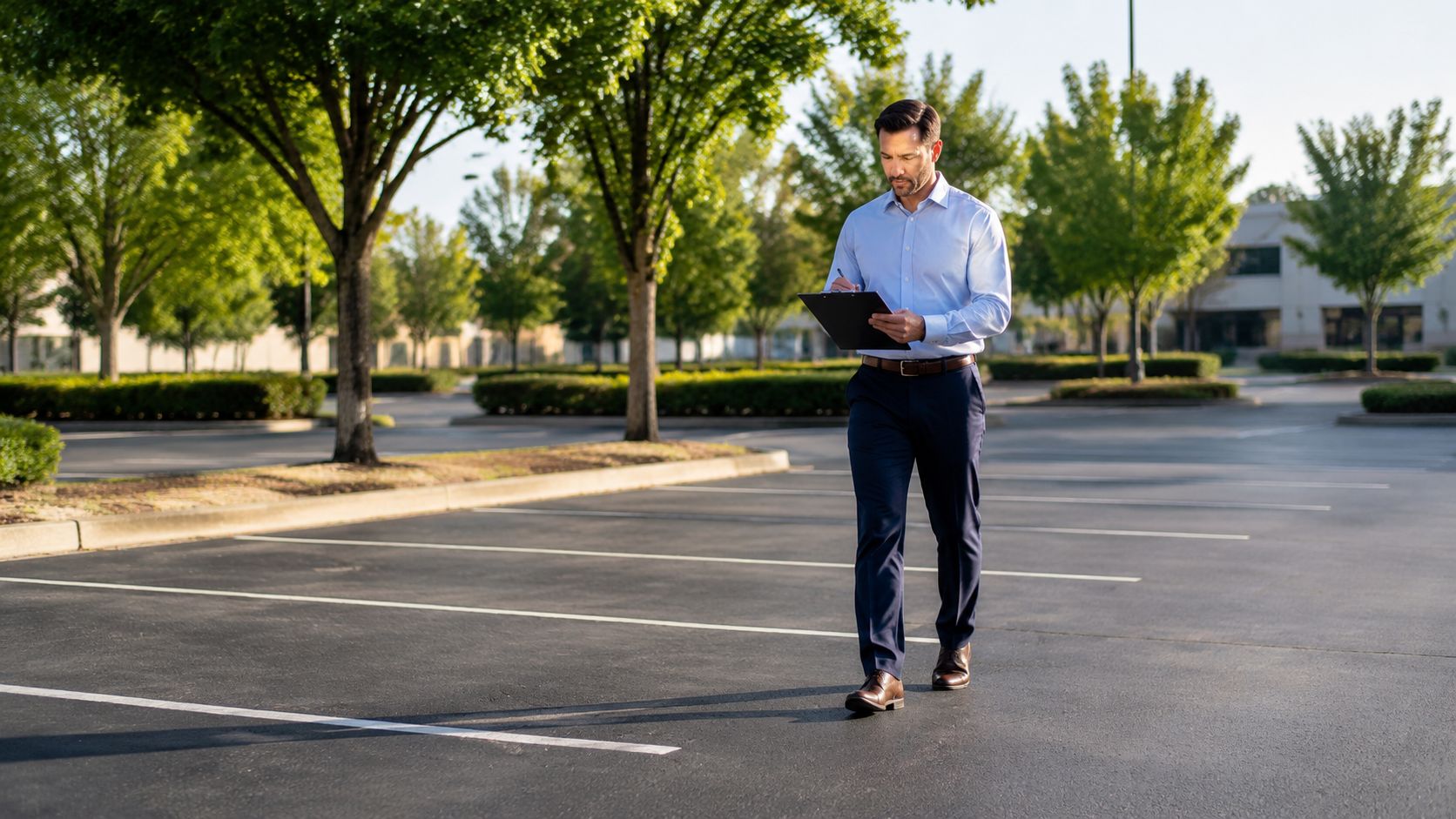
The best maintenance plan usually starts with a clipboard, a phone camera, and a habit. Most lot failures give warning signs before they become budget problems. If you walk the site regularly, especially after major rain, the pavement will tell you what's coming next.
What to look for on every walk-through
Use the same route each time so you can compare conditions from one visit to the next. A quarterly walk is practical for most commercial properties, and it's smart to add an extra inspection after heavy rain.
Focus on these items first:
- Cracks that have changed: New cracks matter, but widening cracks matter more. If water can enter, the clock is already running.
- Low spots and bird baths: Any area that holds water after rain deserves attention. Standing water is a warning sign, not a nuisance.
- Oil and fluid-heavy stalls: Drip zones around storefronts, loading areas, and employee parking can wear differently than the rest of the lot.
- Faded striping and ADA markings: Poor visibility affects traffic flow, appearance, and compliance.
- Edge breakdown: Pavement edges often fail early where support is weak or vehicles cut the corner.
- Surface texture changes: Dry, coarse, or loose-looking areas often show the beginning of raveling.
A practical asphalt maintenance sequence used by industry guidance is to inspect and document pavement condition at least annually, clean and sweep to expose defects, seal cracks as soon as they appear, and apply sealcoat on a recurring cycle only after repairs are complete because sealcoating is preventive, not corrective, as explained in this parking lot maintenance sequence reference.
How cleaning protects the pavement
Property managers sometimes treat sweeping as appearance work. It isn't. Dirt and debris hide the underlying surface. Leaves and sediment collect near curbs and inlets, trap moisture, and slow drainage. Trash and organic buildup can also mask fine cracking until it spreads.
A good cleaning routine helps in three ways:
| Inspection area | What cleaning reveals | Why it matters |
|---|---|---|
| Curbs and edges | Edge cracking, washout, and trapped debris | You can spot weak support before chunks break away |
| Drain inlets | Sediment and blockage | Water needs a clear path off the lot |
| Parking stalls | Oil spots, crack patterns, loose aggregate | Surface wear is easier to map and prioritize |
Walk the lot after a storm and again after it dries. Wet conditions reveal drainage problems. Dry conditions reveal surface texture and color loss.
For centers in Homosassa or Belleview, this is low-cost work with high value. A simple inspection log with photos from the same locations each quarter can help you decide whether the lot needs crack repair, drainage correction, sealcoating, or nothing yet.
A Practical Guide to Asphalt Crack and Pothole Repair
A Florida lot can look serviceable on Monday and turn into a liability after one week of rain and delivery traffic. A hairline crack near a drain becomes a water path. A shallow dip at the drive lane turns into a pothole once tires start breaking the edges.

Cracks and potholes get grouped together, but they call for different decisions. Crack repair is about stopping water entry while the pavement is still stable. Pothole repair is about restoring a failed area and checking whether the base, drainage, or edge support has already given way.
Crack sealing versus pothole patching
In the field, the question is not just what to fill. It is what caused the opening and whether the surrounding pavement still has strength.
| Repair type | Best use | What works | What fails early |
|---|---|---|---|
| Crack sealing | Narrow to moderate cracks in otherwise sound asphalt | Clean the crack, dry it, seal it before water reaches the base | Sealing over dirty, wet, or spreading cracks |
| Pothole patching | Localized holes creating trip, tire, or drainage problems | Cut back to sound edges, remove loose material, repair the base if needed, then patch | Tossing mix into a soft hole without correcting support below |
Timing matters. Early crack repair is cheaper and usually cleaner. Once water gets under the mat, the repair often grows from a sealing job into patching, base work, or a larger cutout.
Potholes need a harder look. If the area stays wet, breaks apart again, or sits near a failed edge, the hole is often a symptom instead of the whole problem.
What a property manager should look for before authorizing repairs
A maintenance crew can flag defects and keep them from becoming a claim issue, but some patterns should push the job to a paving contractor right away:
- Recurring potholes in the same location: Usually tied to trapped water, failed base material, or poor drainage.
- Alligator cracking around the repair area: That points to structural failure, not isolated surface wear.
- Movement under traffic after rain: Pumping or softness means the support below is weak.
- Broken pavement at curbs, dumpster pads, and tight turn areas: Those spots often need more than asphalt. In some cases, concrete is the better long-term answer because it handles concentrated loads and turning stress better.
That last point gets missed all the time. If a delivery lane, dumpster enclosure, cart return, or loading area keeps failing in asphalt, repeating the same asphalt patch is not a maintenance plan. It is a temporary expense. A full-service contractor should tell you when to stay with asphalt and when a concrete section will hold up longer.
Repair methods should match the failure
Good repair work starts with diagnosis. A clean longitudinal crack in the middle of a parking stall is different from a broken edge near a drainage swale. A pothole in a drive lane is different from rutting where trucks stop and pivot.
That is why many managers use a documented parking lot maintenance checklist for inspections and repair planning before approving work. It helps separate simple sealing work from areas that need patching, drainage correction, or a switch to concrete.
Darkening the surface does not restore strength. If the base is weak, the repair has to address the support below the asphalt.
For properties in Dunnellon, Silver Springs, and across Marion and Citrus counties, the practical rule is simple. Seal cracks while the pavement is still stable. Treat potholes as a warning sign to inspect the structure, drainage, and traffic load before authorizing another patch.
Protect Your Investment with Sealcoating and Striping
A Florida parking lot can look decent from the driver's seat and still be drying out fast under the sun. By the time the surface turns gray, rough, and thirsty, oxidation is already working on the binder. Sealcoating is one of the few maintenance steps that protects a lot before that wear turns into bigger repair bills.
What sealcoating does and what it does not do
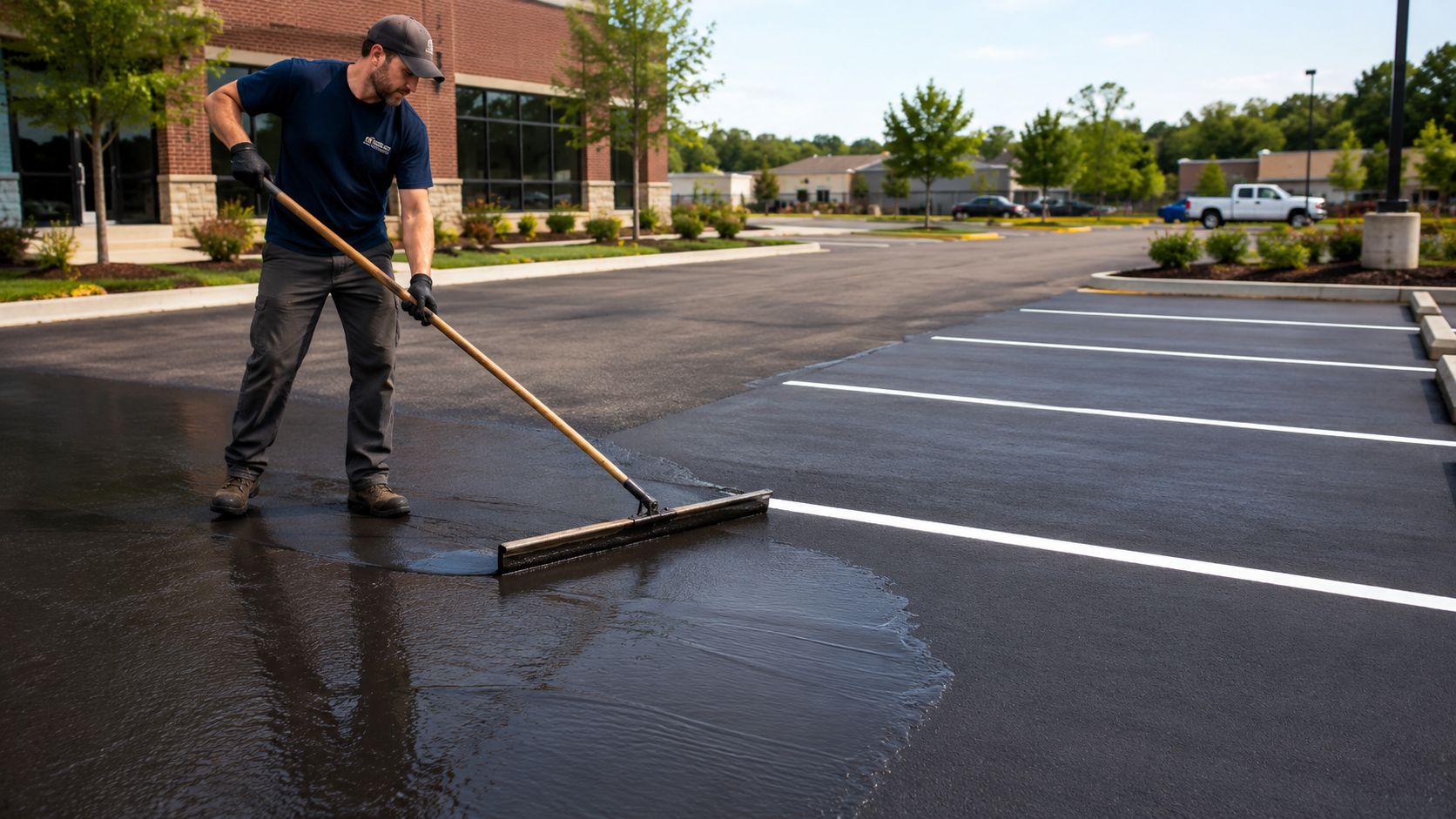
Sealcoating protects the surface layer from sun, water, and fluid drips that wear asphalt down over time. On commercial properties across Central Florida, it also helps slow the dry, brittle surface condition that leads to raveling and early aging. Applied at the right time, it extends the service life of pavement that is still structurally sound.
The timing matters more than the calendar.
If the lot has widespread cracking, movement, pumping, or low areas that hold water, sealcoat should wait until those problems are addressed. A property manager does not get value from covering defects with a fresh black finish. The right order is inspection, repairs, surface prep, then sealcoating.
Use sealcoating for these jobs:
- Protecting sound asphalt: It helps the surface resist oxidation and weathering.
- Reducing wear from spills: Fuel, oil, and other vehicle fluids are hard on pavement.
- Refreshing appearance before restriping: New markings show up cleaner on a properly prepared surface.
Do not expect sealcoating to handle these problems:
- Structural cracking
- Drainage correction
- Base failure
- Wheel-path rutting in heavy-load areas
That last point is where full-site planning matters. If a dumpster pad, loading approach, or tight-turn section keeps breaking down, asphalt may not be the right long-term surface in that spot. A full-service contractor should say so plainly and recommend concrete where concentrated loads or turning stress keep beating up the asphalt.
Why fresh striping matters after the surface is protected
Striping is part of maintenance, not an afterthought. Once the surface is sealed and cured, clear markings restore parking efficiency, improve traffic flow, and make fire lanes, arrows, and accessible spaces easy to read. That matters on busy retail sites, medical offices, industrial properties, and HOA common areas where confusion at the entrance or poor stall definition turns into daily frustration.
For managers reviewing layout updates or repaint timing, this guide on how to stripe a parking lot helps connect line work to the condition of the surface underneath.
Riverside Sealing & Striping, LLC handles asphalt sealcoating and striping, and also installs concrete in areas where asphalt is taking the wrong kind of abuse. That gives property managers a cleaner decision process. Protect the asphalt that is still worth preserving, and switch materials where recurring failures show the load pattern has changed.
If you want to see the process in action, this short video gives a helpful visual reference before scheduling work:
Your Seasonal Asphalt Maintenance Checklist for Florida
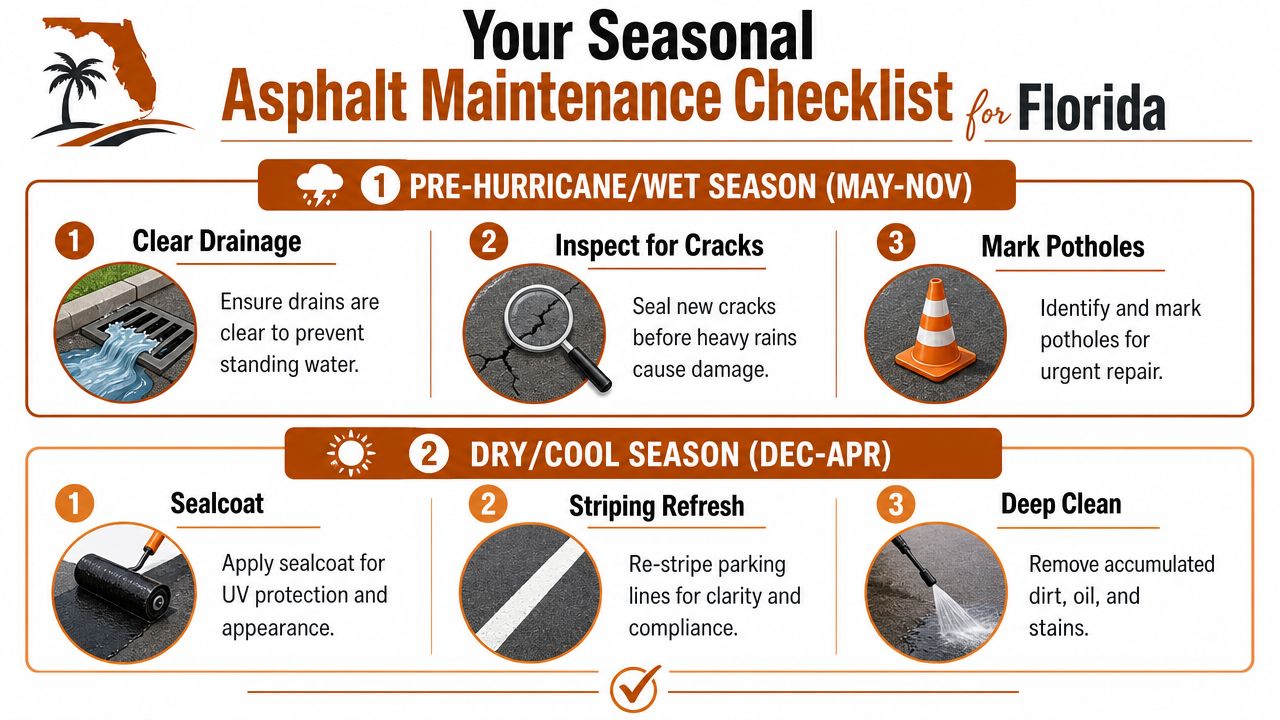
Florida maintenance planning works better when you think in two operating seasons. One is the wet and storm-heavy stretch. The other is the drier, cooler window when it's easier to schedule corrective and protective work.
Wet season preparation
Late spring is the time to walk every drain path before the long run of heavy rain. Parking areas should have at least a 2% slope (about 1/4 inch per foot) for proper drainage, and keeping inlets clear is a critical maintenance step because standing water is a primary cause of pavement failure, as described in Asphalt magazine's guidance on top-performing parking lots.
Before the wet season gets rolling, focus on:
- Clearing inlets and outfalls: Water can't leave the lot if debris blocks the exit.
- Marking low spots: If water stands after a routine rain, note the exact boundaries.
- Closing open cracks: Don't let rainwater use them as an entry point.
- Checking pavement edges: Water and traffic together tend to expose weak shoulders fast.
For managers who want a simple planning tool, this parking lot maintenance checklist can help organize seasonal inspections and repair priorities.
Dry season recovery and planning
Once the heaviest summer weather backs off, it's easier to see what the season did. In Ocala, Inverness, Crystal River, and nearby areas, fall and the drier months are often the right time to line up corrective work and protective treatments.
Use that window to handle the work that benefits from a cleaner, drier surface:
- Review drainage performance: Compare storm photos to dry-condition observations.
- Schedule surface repairs: Fix defects before they widen through another rain cycle.
- Plan sealcoating where the pavement is ready: Not every lot needs it on the same calendar.
- Refresh striping and ADA markings: Visibility matters after the surface work is complete.
- Deep clean traffic and spill zones: A clean surface makes the next inspection more useful.
The best time to discover a drainage problem is during an inspection. The worst time is after a new sealcoat when the same puddle comes back.
That seasonal rhythm works well for retail sites in The Villages, medical offices in Summerfield, and community properties across Marion County, FL and Citrus County, FL.
When to Repair, Resurface, or Replace Your Parking Lot
Every lot reaches a point where maintenance either still makes sense or starts turning into repeated short-term spending. The hard part is recognizing the line before more money goes into cosmetic work on a structural problem.
Signs you are still in maintenance mode
A lot is usually still a maintenance candidate when the surface problems are localized and the structure below appears stable. That includes isolated cracking, minor pothole areas with sound surrounding pavement, surface oxidation, faded markings, and drainage issues that can be corrected without rebuilding major sections.
These situations often respond well to a targeted plan:
- Crack repair plus monitoring when the issue is early and contained
- Localized patching where the failure is limited and the surrounding support is sound
- Drainage correction when the water issue is identified before widespread breakdown
- Sealcoating and restriping after repairs are complete
Signs the lot has moved into structural failure
The tipping point comes when damage is no longer just on top. Symptoms like severe alligator cracking, base failure, or persistent standing water mean a surface treatment won't solve the problem, and an overlay or full removal and replacement is required to address the root cause, as outlined in this explanation of when asphalt maintenance becomes reconstruction.
Watch for these patterns:
| Condition | What it usually means | Likely direction |
|---|---|---|
| Widespread alligator cracking | Structural weakness below the surface | Reconstruction or deeper corrective work |
| Repeated potholes in the same traffic path | Base or drainage failure | Cut-out repair, stabilization, or replacement |
| Persistent standing water | Drainage design or settlement issue | Regrading, correction, overlay, or rebuild |
| Rutting or soft wheel paths | Load-related structural distress | More than surface maintenance |
If you're weighing options, this page on asphalt overlay vs replacement helps frame the decision in practical terms.
Where concrete is the better long-term answer
Given differing site needs, a full-service contractor gives better guidance than an asphalt-only approach. Some sections of a commercial property take more abuse than standard parking stalls. Dumpster pads, loading zones, tight-turn entrance aprons, and certain service areas often perform better in reinforced concrete than in asphalt.
That doesn't mean every lot needs concrete. It means some properties benefit from a mixed-surface strategy. Keep asphalt where flexibility and broad coverage make sense. Use concrete where turning stress, point loading, or repeated impact keep breaking the same area down.
For property managers in Dunnellon, Belleview, Hernando, and surrounding Central Florida communities, that kind of decision often saves more than repeating the same repair in the same location year after year.
Frequently Asked Questions About Parking Lot Maintenance
A property manager usually starts asking sharper questions after the first avoidable repair bill. In Central Florida, that often happens after a rainy stretch exposes drainage trouble, or after summer heat opens cracks faster than expected. Good answers come from the lot's actual condition, how traffic uses it, and whether a problem area should stay asphalt at all.
Here are the questions I hear most often from commercial owners and managers.
| Question | Answer |
|---|---|
| How often should a property manager inspect a parking lot? | Annual documentation is the minimum. Quarterly walk-throughs work better for most commercial sites, plus a check after heavy rain. That schedule catches drainage issues, edge breakdown, and small cracks before they turn into repairs that cost more. |
| Does every lot in Central Florida need sealcoating on the same schedule? | No. Traffic volume, UV exposure, drainage, and the age of the surface all affect timing. A lightly used office lot and a busy retail center should not be treated the same way. Inspect first, then schedule the work based on surface condition. |
| Will sealcoating fix cracks or potholes? | Sealcoating protects the surface after repairs are made. It does not repair failed pavement, open cracks, potholes, or weak base areas. If the lot has active damage, fix that first or the coating will only cover the problem for a short time. |
| When should I stop patching and start thinking about replacement? | Repeated failure in the same area is the clearest sign. If patches keep breaking loose, water keeps collecting, or cracking keeps spreading through traffic lanes, the problem usually goes deeper than the surface. At that point, it makes sense to compare continued repair costs against resurfacing, reconstruction, or a targeted material change. |
| Should some commercial areas be concrete instead of asphalt? | In many properties, yes. Dumpster pads, loading areas, cart return zones, tight-turn aprons, and service entrances often hold up better in concrete because they take concentrated weight and twisting force. The rest of the lot may still perform well in asphalt. That mixed approach is often the smarter long-term plan. |
The best maintenance plan is usually simple. Keep water moving off the pavement. Repair defects early. Re-stripe when markings lose clarity. Use asphalt where it performs well, and use concrete where repeated stress keeps beating asphalt up.
If you manage property in Marion County, FL or Citrus County, FL, that kind of practical review helps you spend money in the right place instead of repeating the same repair cycle.
If you need a practical site review for a commercial property in Ocala, Dunnellon, Crystal River, Homosassa, Inverness, or nearby Central Florida communities, Riverside Sealing & Striping, LLC offers no-pressure evaluations for asphalt sealcoating, striping, and concrete problem areas. As Concrete and Asphalt Experts in Marion and Citrus County, the company can help you decide whether a section needs maintenance, resurfacing, replacement, or a more durable concrete solution.