
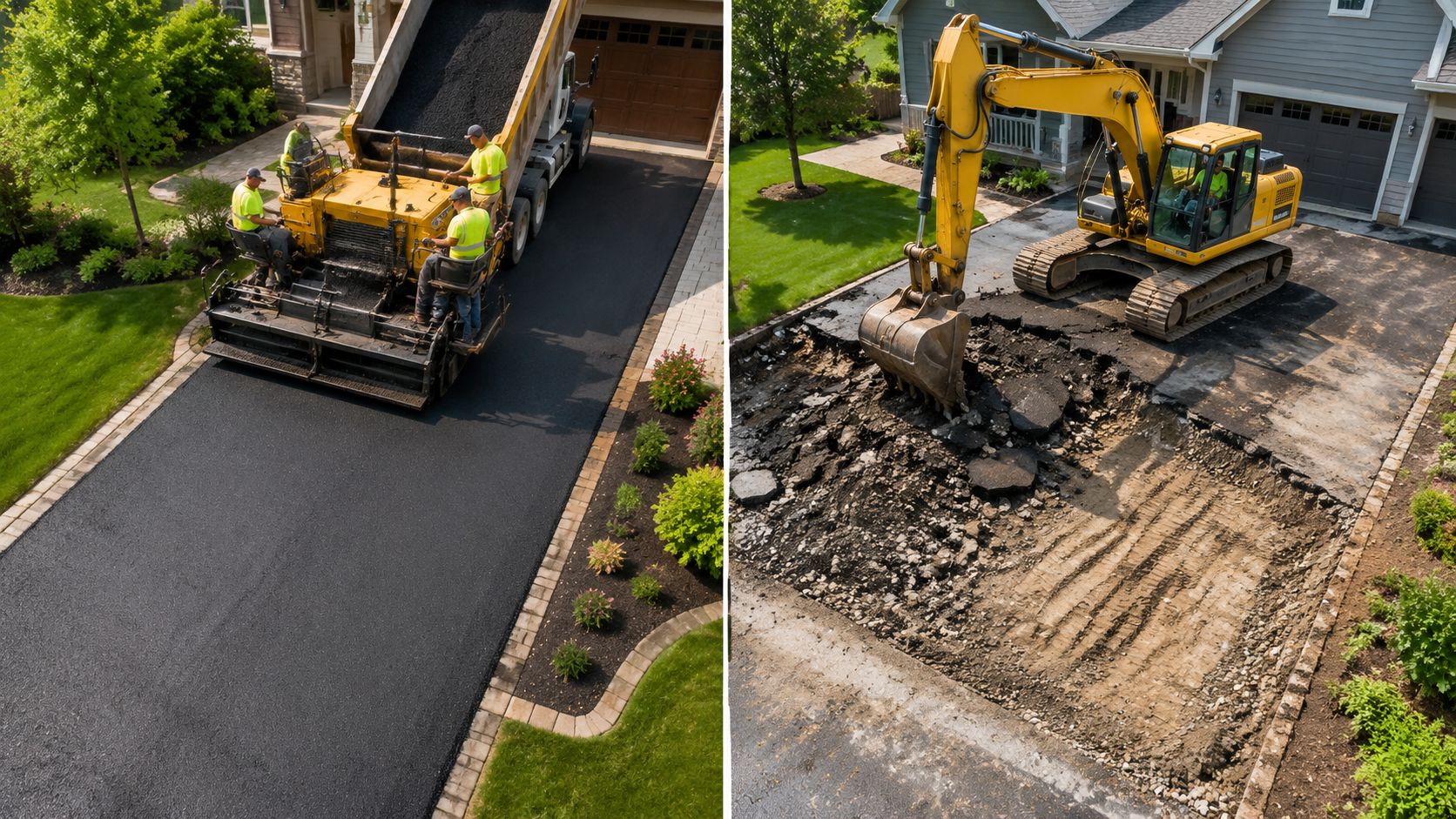
Your asphalt doesn't usually fail all at once. It starts with fading, a few cracks, maybe a puddle that hangs around after a Florida storm. Then one day you're looking at your driveway in Ocala or a parking lot in Crystal River and asking the key question. Is this something a new surface can fix, or is the pavement underneath already done?
That's the heart of Asphalt Overlay vs Replacement. One option is faster and cheaper up front. The other costs more, takes more work, and often saves money over the long run when the structure is failing. The mistake property owners make is treating them like interchangeable choices. They aren't.
For homeowners and commercial managers across Marion County, FL and Citrus County, FL, that distinction matters even more because Central Florida pavement deals with heat, UV exposure, heavy rain, and drainage problems that can turn a “simple resurfacing job” into a short-lived patch. In places like Dunnellon, Belleview, Inverness, and The Villages, the right answer depends on what's happening below the surface, not just what the top layer looks like.
A good decision comes down to three things. Condition, drainage, and long-term value. If the base is sound, an overlay can be smart. If the base is failing, the cheaper fix is often the expensive mistake.
Table of Contents
- Introduction Is Your Asphalt Sending an SOS?
- Understanding the Asphalt Overlay Process
- Exploring Full-Depth Asphalt Replacement
- A Head-to-Head Comparison Overlay vs Replacement
- Red Flags That Demand a Full Replacement
- Special Pavement Considerations in Central Florida
- Partnering With Marion and Citrus County's Pavement Experts
- Frequently Asked Questions
Introduction Is Your Asphalt Sending an SOS?
If your pavement looks tired but still feels solid, an overlay may be enough. If it looks rough because the foundation underneath is breaking down, replacement is the safer call. The problem is that surface appearance can fool you.
A parking lot in Homosassa might have cracking that looks cosmetic until water starts sitting near the entrance. A driveway in Summerfield might seem like a resurfacing candidate until soft spots show up at the wheel path. In both cases, the visible damage is only part of the story.
Here's the simple distinction:
- Asphalt overlay means keeping the existing pavement in place and adding a new asphalt surface over it.
- Full-depth replacement means removing the failed pavement structure and rebuilding it from the base up.
Practical rule: If the problem is only on the surface, an overlay can work well. If the problem starts in the base, replacement is usually the only fix that lasts.
For property owners in Ocala, Silver Springs, Beverly Hills, and surrounding Central Florida communities, the right choice isn't about chasing the lowest proposal. It's about matching the repair to the actual condition of the pavement. That's what protects curb appeal, safety, and your budget.
Understanding the Asphalt Overlay Process
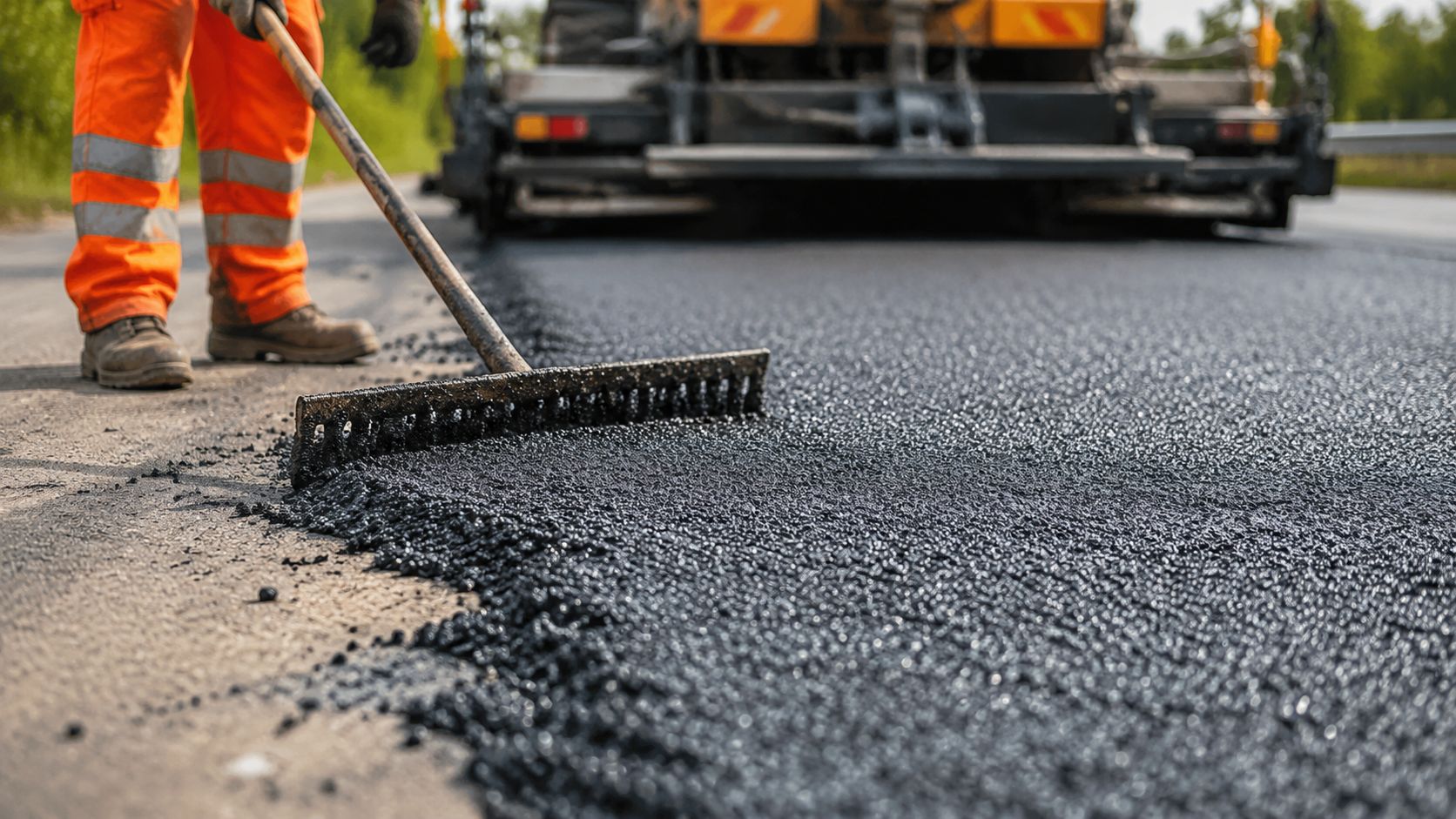
An asphalt overlay adds a new surface over pavement that still has support underneath. For the right lot or driveway, it is a practical way to restore appearance and ride quality without the cost and downtime of tearing everything out.
The key is the condition below the surface. In Ocala and The Villages, I see owners get sold an overlay when the underlying problem is trapped water, a low area that never drains, or a parking layout that no longer meets slope and access requirements. A fresh top can make those issues look better for a short time while the trouble keeps working underneath.
What an overlay is
A proper overlay starts with prep, not paving. The surface gets cleaned, failed spots are cut out if needed, cracks and minor defects are addressed, and a tack coat is applied so the new asphalt bonds to the old pavement instead of separating later.
Then the crew places and compacts a new lift of asphalt over the existing surface. If you want a quick primer on the material itself, hot mix asphalt used for overlays is the standard mix for this kind of work.
On commercial properties, milling often matters just as much as the new asphalt. Removing a controlled amount of the old surface around curbs, gutters, storefronts, and sidewalks helps maintain proper elevations. That is a big deal in Central Florida, where even small height changes can create ponding at entrances, messy transitions at loading areas, or ADA problems at ramps and accessible parking spaces.
Where overlays work and where they fail
An overlay works best when the existing pavement is still structurally sound and the distress is limited to the surface. American Paving's explanation of overlay vs full replacement makes the same point. The new layer improves the wearing surface, but it does not rebuild the base.
That distinction matters more in Florida than many owners realize.
Heavy rain exposes drainage flaws fast. If water sits along the edge of a parking lot in Belleview or runs across an accessible route in Ocala, an overlay alone may preserve the problem or even make it worse if the new surface raises one area without correcting the slope. The same goes for pavement that has started to move from moisture in the base. Once the foundation is soft, the cracks usually come back through the new mat.
A good overlay candidate usually has surface oxidation, minor raveling, light cracking, or wear from age and traffic. The pavement may look tired, but it still carries vehicles without flexing, pumping water, or breaking apart in the wheel paths.
An overlay is a mistake when owners use it to hide failure instead of repair a sound structure.
This walkthrough gives a visual sense of how resurfacing equipment and placement work in the field:
On the right pavement, overlay is a smart money move. On a lot with drainage defects, edge failure, or ADA elevation conflicts, it can become an expensive delay before replacement.
Exploring Full-Depth Asphalt Replacement
Full-depth replacement is reconstruction. The old asphalt comes out, the underlying layers are exposed, and the pavement gets rebuilt so the finished surface has real support underneath it.
What gets removed and rebuilt
This process starts with removal of the existing asphalt surface. Once that material is out of the way, the crew can inspect what matters most, which is the condition of the base, grade, and drainage.
If the foundation is weak, holding moisture, or out of shape, this is the stage where those problems get corrected. The sub-base can be repaired, re-graded, and compacted properly before new asphalt is installed on top. That groundwork is what separates replacement from resurfacing.
On many Central Florida properties, this is also when hidden issues finally become obvious. You may find edge failure, water movement under the pavement, or low areas that were causing ponding long before the cracks showed up.
When reconstruction is the only real fix
Replacement is the right choice when the pavement has deep cracking, widespread breakup, repeated potholes, or base failure. Surface work won't correct those conditions because the distress starts below the top layer.
If the asphalt flexes, pumps water, or feels unstable under traffic, adding a new skin won't turn it into a solid pavement structure.
A full replacement also creates an opportunity to reassess the surface altogether. In some cases, a property owner may decide that certain areas would perform better as concrete, especially around sidewalks, entrances, or high-turn areas where durability and edge stability matter. That's one reason it helps to work with Concrete and Asphalt Experts in Marion and Citrus County, not a contractor who only looks at one material.
For commercial properties in Ocala, Lecanto, and The Villages, replacement often solves more than appearance. It lets you correct drainage, rebuild transitions, and restore a surface that can handle daily use instead of constantly asking for another repair.
A Head-to-Head Comparison Overlay vs Replacement
A property in Ocala can look like an easy overlay job at first glance. Then the summer rains hit, water sits along the storefronts, and the new surface starts reflecting the same cracks because the underlying problem was never on top.
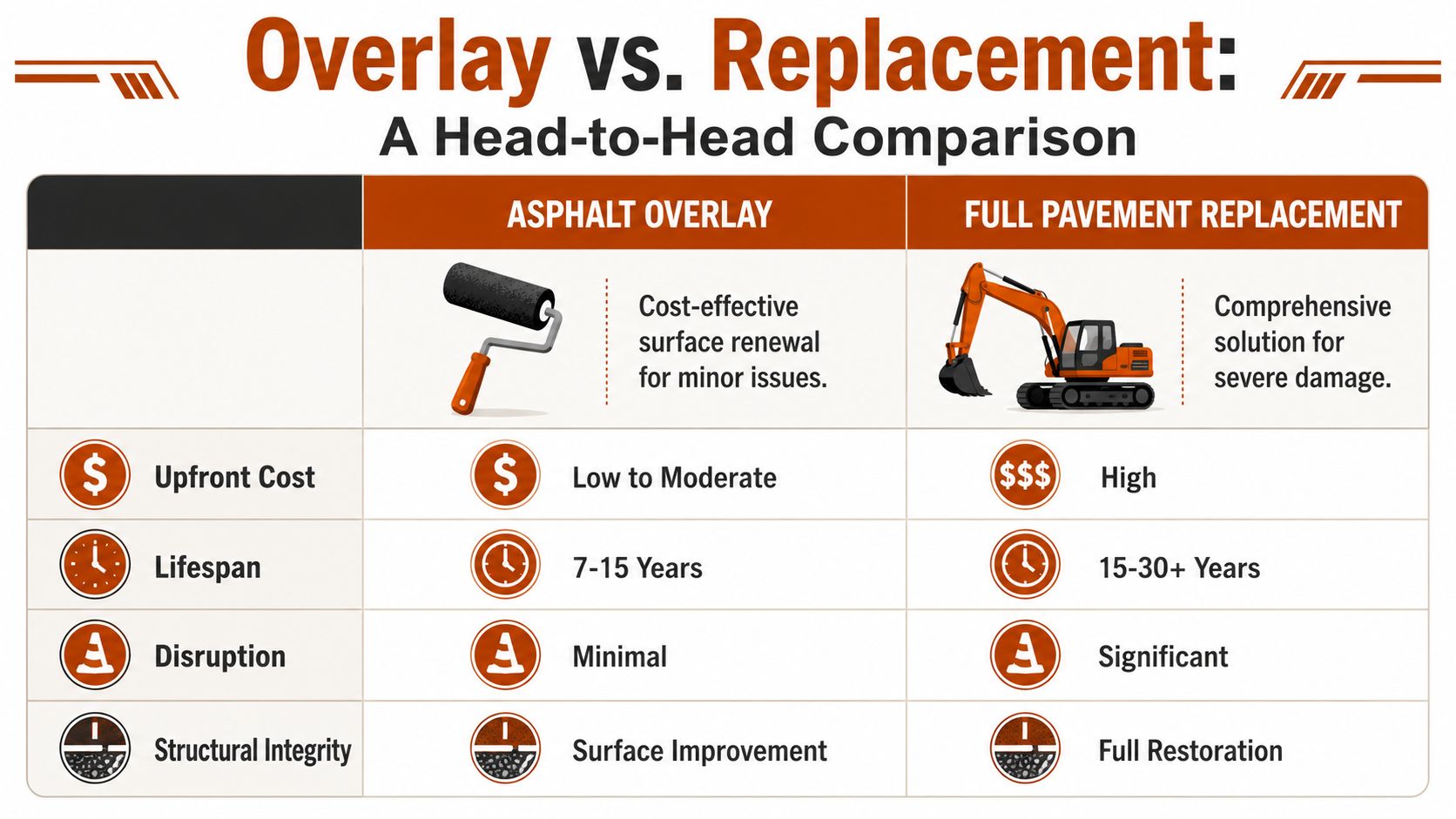
Asphalt Overlay vs. Full Replacement at a Glance
| Factor | Asphalt Overlay | Full Replacement |
|---|---|---|
| Upfront Cost | Lower first invoice and less disruption for a sound pavement | Higher initial cost because failed material is removed and rebuilt |
| Lifespan | Often a shorter service life than reconstruction, especially if drainage or movement is already present | Commonly a longer service life when the base, grade, and asphalt structure are rebuilt correctly. See FHWA pavement guidance |
| Installation Time | Faster in many cases, with less impact on traffic flow | Slower because demolition, grading, base repair, and paving all have to happen |
| Ideal Pavement Condition | Best for surface aging, minor cracking, and pavement that is still structurally sound | Best for structural distress, chronic water problems, base failure, or grade issues affecting drainage and access |
For commercial sites in The Villages, Ocala, and surrounding areas, the decision usually comes down to what is failing. If the issue is surface wear, an overlay can be a smart use of money. If the issue is trapped water, soft spots, or broken grade at entrances and sidewalks, replacement is usually the honest answer.
Florida weather changes the math. Heavy rain exposes weak drainage fast, and high heat puts extra stress on soft areas and patched sections. An overlay can improve appearance and ride quality, but it does not reset the slope, rebuild the base, or automatically fix low spots that hold water near doors, ramps, and parking stalls.
That matters for ADA compliance too.
On a commercial property, even a modest lift from an overlay can affect transitions at curb ramps, walks, and building entrances. If the pavement is already tight on slope or elevation, adding new asphalt may create lip hazards, poor drainage, or cross-slope issues that need to be corrected at the same time. Replacement gives more room to rework those details properly instead of stacking a fresh layer over an existing layout that was already marginal.
Why the cheaper option can cost more
Owners often focus on the first proposal because that number hits the budget today. The better question is how long the fix will hold under your traffic, drainage conditions, and site layout.
Overlay is the right call when the pavement still has strength. Replacement is the better investment when the site is already burning money through repeat repairs, complaints, and water-related failure. If you are already comparing short-term fixes, it helps to review how recurring repairs add up in real asphalt patching cost scenarios.
I tell property owners to judge the pavement by performance, not appearance. A lot can be hidden under a surface that still looks serviceable from the street.
Owner mindset: Match the repair to the failure. Surface wear can take an overlay. Structural problems, drainage defects, and ADA-related grade issues usually need replacement.
Red Flags That Demand a Full Replacement
Some pavements are obvious replacement jobs. Others trick owners because they still have a few solid-looking areas between the failed ones. That's where bad decisions happen.
A practical field checklist
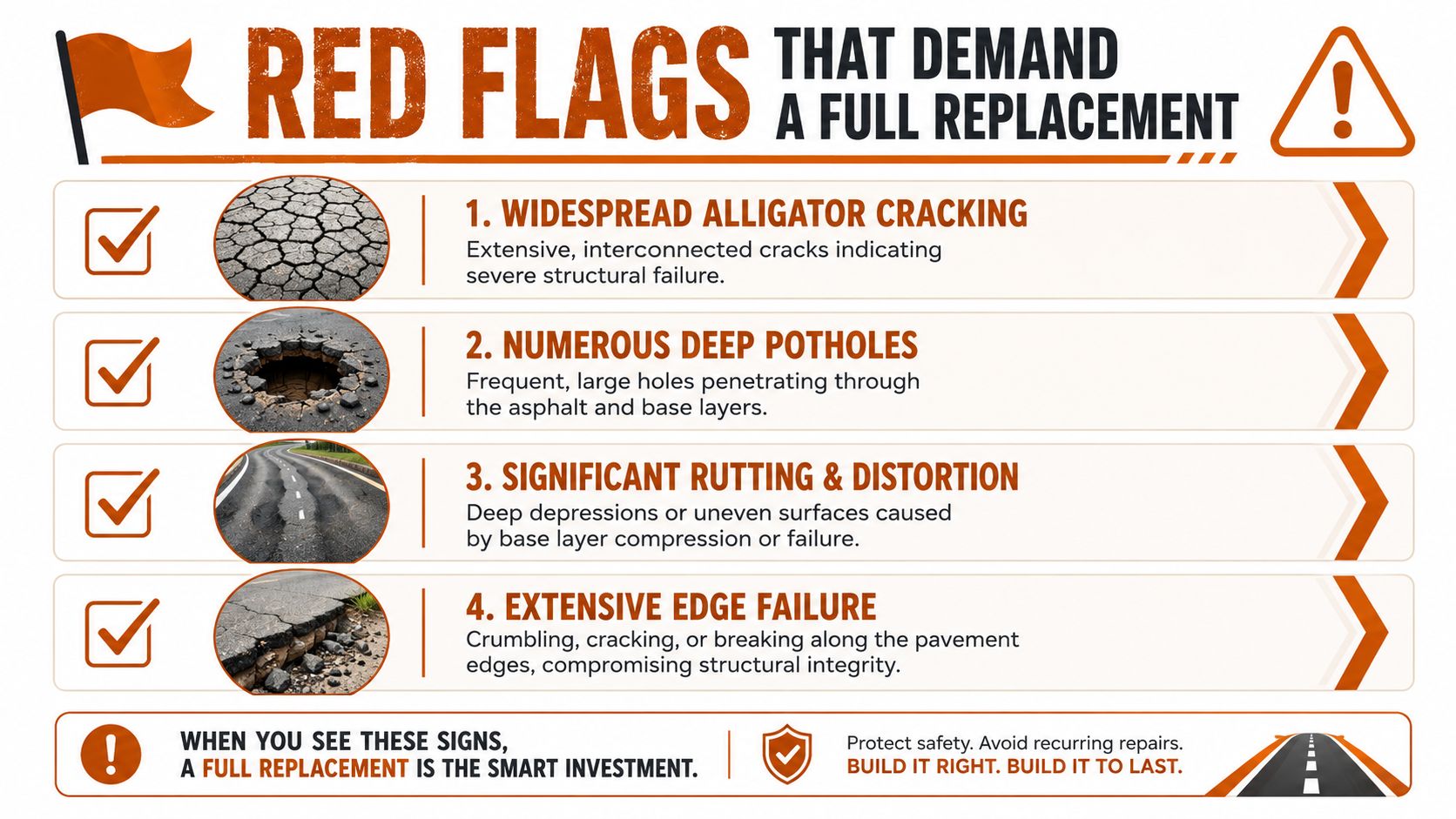
A useful rule from Mondragon Paving's resurfacing vs replacement guide is this: resurfacing is best when less than 25% of the pavement needs repair, the base is solid, and cracks are less than a quarter-inch wide. Replacement is recommended when more than 25% is damaged, the base is failing, or cracks exceed a quarter-inch and extend several inches deep.
Use that threshold with what you can see on site:
- Widespread cracking: If cracking covers large sections instead of isolated spots, the pavement is usually past cosmetic repair.
- Deep, open cracks: Wider cracks that continue below the surface often point to structural movement, not simple aging.
- Potholes that keep returning: Repeated potholes usually mean water and traffic are working on a weak base.
- Soft or spongy areas: If the pavement deflects under weight, the support layers underneath have a problem.
- Standing water after rain: Ponding often signals grading or base issues that a new top layer won't correct.
Why covering bad pavement usually backfires
Overlaying over failed asphalt can create a short honeymoon period. The surface looks dark, smooth, and finished. Then the old trouble starts telegraphing back through.
Reflective cracking is one of the clearest examples. If the existing pavement has structural cracks, the new surface often mirrors that distress after the overlay is in place. The old pattern comes back because the underlying movement never stopped.
For commercial properties in Marion County, FL and Citrus County, FL, edge breakdown and rutting are also warning signs to take seriously. Entrances in Hernando or busy lanes in Beverly Hills may still carry traffic, but if the shape of the pavement is distorted, the structure has already lost integrity.
If more than a quarter of the pavement is compromised, replacement is usually repair with a future. Overlay is often repair with a deadline.
Special Pavement Considerations in Central Florida
A pavement can be structurally good enough for an overlay and still be the wrong candidate. That's the part many generic guides miss.
Drainage and elevation problems property owners miss
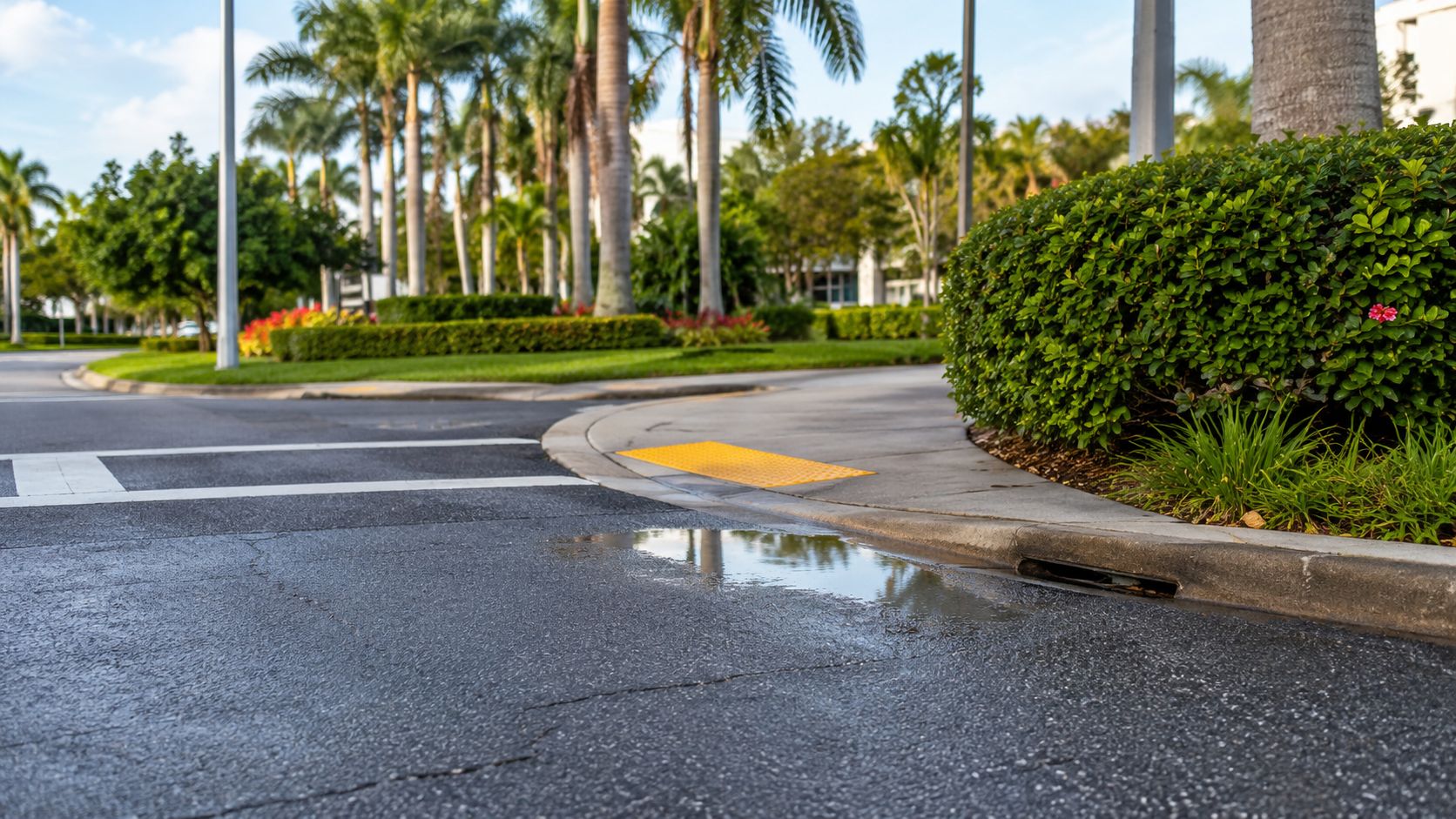
Commercial paving guidance notes that overlays can create problems at curb returns, catch basins, entrances, and transitions if elevations change, according to Empire Parking Lot Services on when a basic asphalt overlay is the best option. A parking lot can be structurally acceptable for resurfacing but still become harder to drain or harder to use safely once the finished height changes.
That matters in Ocala, Homosassa, and Silver Springs where heavy rain can expose bad water flow quickly. Raise the asphalt surface without addressing grades, and you can trap water at a doorway, flatten the slope toward a drain, or create a lip where a sidewalk or accessible route used to transition cleanly.
For owners planning future maintenance, how often to seal coat asphalt is worth understanding too, because preservation works best when the surface starts from the right condition and elevation in the first place.
Why Florida weather changes the decision
Central Florida is hard on pavement. Long sun exposure dries and oxidizes the surface. Frequent rain tests drainage. Heat affects expansion, softening, and wear in traffic areas.
That combination makes small mistakes bigger. A low corner in a lot in Crystal River might hold enough water to accelerate surface breakdown. A raised overlay at a storefront in The Villages can turn into a threshold issue. A driveway in Summerfield may look serviceable until recurring rain starts working into existing cracks and weak spots.
Local judgment matters. Contractors serving Marion County, FL and Citrus County, FL need to evaluate more than the asphalt skin. They need to look at runoff, transitions, sidewalk relationships, and whether the repair will leave the property safer and easier to maintain than it is now.
Partnering With Marion and Citrus County's Pavement Experts
A good pavement recommendation saves money. A bad one just delays the bigger bill.
In Marion and Citrus County, owners need more than a quick surface opinion. A parking lot in Ocala might look like a simple overlay candidate until you check the drains, storefront transitions, and striping layout. A site in The Villages may need more than fresh asphalt because the finished height can affect accessible parking, curb ramps, and walking routes. Those are jobsite decisions, not sales-script decisions.
What a useful pavement evaluation should include
A field evaluation should answer the questions that affect cost, service life, and liability:
- How much of the pavement distress is surface-level versus structural
- Whether the base is stable or showing movement under load
- If the new work will improve drainage or leave water trapped in low areas
- How doors, sidewalks, ramps, and accessible routes will meet the new finished height
- Whether some sections should stay asphalt and others should be rebuilt in concrete
Owners do not just need a price. They need a straight answer on what they are buying in added service life, and whether a lower-cost overlay will hold up or turn into more patching, crack repair, and reconstruction later. As discussed in Kilgore Companies' article on overlay vs full replacement, the right choice depends on underlying condition, not just surface appearance.
Riverside Sealing & Striping, LLC handles asphalt maintenance, concrete work, sealcoating, striping, and related site improvements across Central Florida. That matters on commercial properties where pavement, sidewalks, curbs, and ADA layout all affect each other. A contractor who works on both asphalt and concrete is in a better position to recommend partial replacement, grade correction, or a mixed-scope repair when that fits the site better than a straight overlay.
For owners in Dunnellon, Lecanto, Inverness, and Belleview, the standard should be simple. Expect licensed and insured work, clear scheduling, direct communication, and a recommendation that matches the condition of the pavement. If an overlay makes sense, it should be because the base is sound and the elevations still work. If replacement is the smarter call, you should hear that before the crew unloads equipment.
Frequently Asked Questions
Can an overlay fix alligator cracking?
Usually, no. Alligator cracking often points to structural failure below the surface. If the base is failing, the new top layer won't stop the underlying movement.
Is an overlay a good choice for a residential driveway?
It can be. If the driveway's base is sound and the distress is mostly on the surface, an overlay can be a practical option for homes in Ocala, Summerfield, or Beverly Hills. If the driveway has soft areas, deep cracks, or drainage trouble, replacement is often the better move.
Does a replacement always mean asphalt has to go back down?
No. Some properties are better served with asphalt, and some benefit from concrete in selected areas. Entrances, sidewalks, pads, and certain high-wear sections may be worth evaluating differently depending on use and drainage.
Why do drainage and ADA issues matter so much with overlays?
Because changing surface height changes how water and people move across the property. An overlay can affect curb transitions, catch basins, thresholds, and accessible routes. A pavement can be structurally suitable for resurfacing and still be the wrong candidate because the finished elevations create new problems.
How do I know which option is right for my property?
Start with an on-site evaluation, not a guess based on appearance alone. The decision should come from the condition of the base, the extent of damage, and how the finished surface will handle drainage and transitions in real Central Florida conditions.
If you're weighing Asphalt Overlay vs Replacement for a home or commercial property in Ocala, Dunnellon, Crystal River, Inverness, or nearby areas, Riverside Sealing & Striping, LLC offers free, no-pressure consultations for property owners across Marion and Citrus County. If you need an honest look at whether your pavement needs resurfacing, reconstruction, concrete replacement, sealcoating, or striping, their team can evaluate the site and recommend the option that fits the condition of the property.