
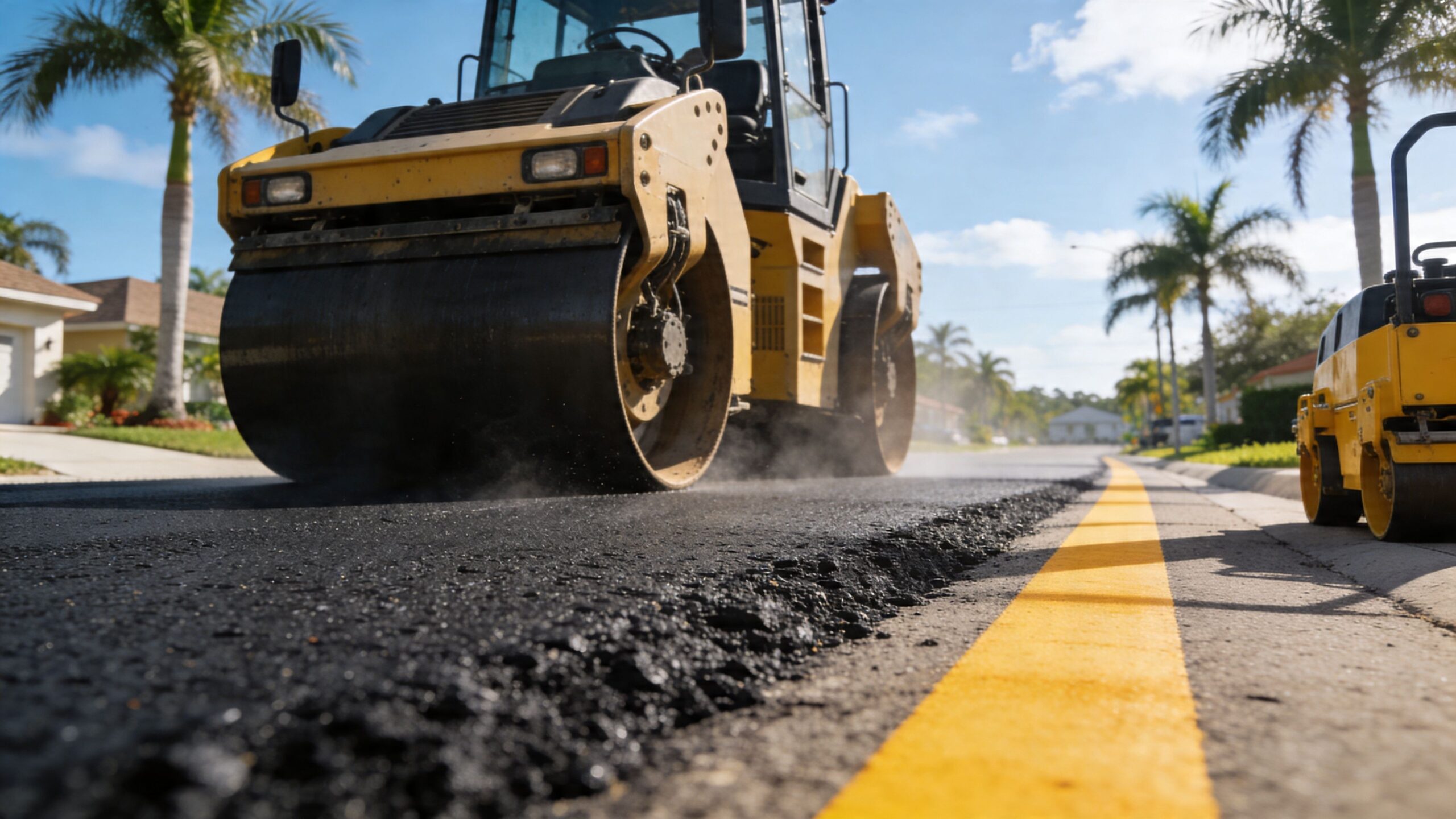
TL;DR: Hot Mix Asphalt (HMA) is the standard paving material for parking lots, drive lanes, and other high-traffic surfaces because it is produced hot, placed dense, and compacted to handle daily vehicle loads. In Central Florida, that only tells part of the story. Long-term performance depends on how well the mix, base, drainage, and maintenance plan match local heat, UV exposure, and heavy summer rain.
A property manager walks a site after an afternoon downpour and sees the early warnings. Water is holding near the storefronts. The driving lane looks polished from traffic. The outside edge is starting to ravel. Nothing has failed yet, but the surface is already headed in the wrong direction.
Across Central Florida, from Ocala to Crystal River, that pattern shows up again and again. Pavement here takes a beating from intense sun, high surface temperatures, sudden storms, and long wet periods that expose weak spots in the base. National advice usually stops at mix temperature and installation day conditions. In Marion and Citrus County, the better question is how that pavement will drain, carry traffic, and hold up after three summers of heat and rain.
That is why hot mix asphalt gets so much attention for commercial lots and heavy-use driveways. It is the right choice for many properties because it can be installed efficiently, opened on a practical schedule, and maintained at a lower cost than full replacement. It is not the right answer for every surface. Some sites need concrete sidewalks, ADA routes, dumpster pads, or a combination of asphalt and concrete to solve the actual problem instead of covering it up.
Good paving decisions start with the full picture. Surface condition matters. Base strength matters. Drainage matters just as much. So does having a maintenance schedule that fits Florida conditions instead of a generic national timeline.
Your Guide to Pavement Solutions in Central Florida
A commercial manager walks a property after a summer storm and sees the same issues over and over. The lot drains slowly. The driving lanes are worn smooth. The handicap symbols are hard to read. At the front entrance, the sidewalk has settled just enough to create a trip point. None of those problems look dramatic by themselves. Together, they tell you the surface is losing ground.
That’s the reality of pavement in Central Florida. Sun bakes the binder. Rain finds weak spots. Traffic stresses every seam, patch, and edge. Homeowners see it on driveways and patios. HOAs see it in common areas. Churches, schools, and retail centers see it in parking lots, curbs, and walkways.
What property owners usually get wrong
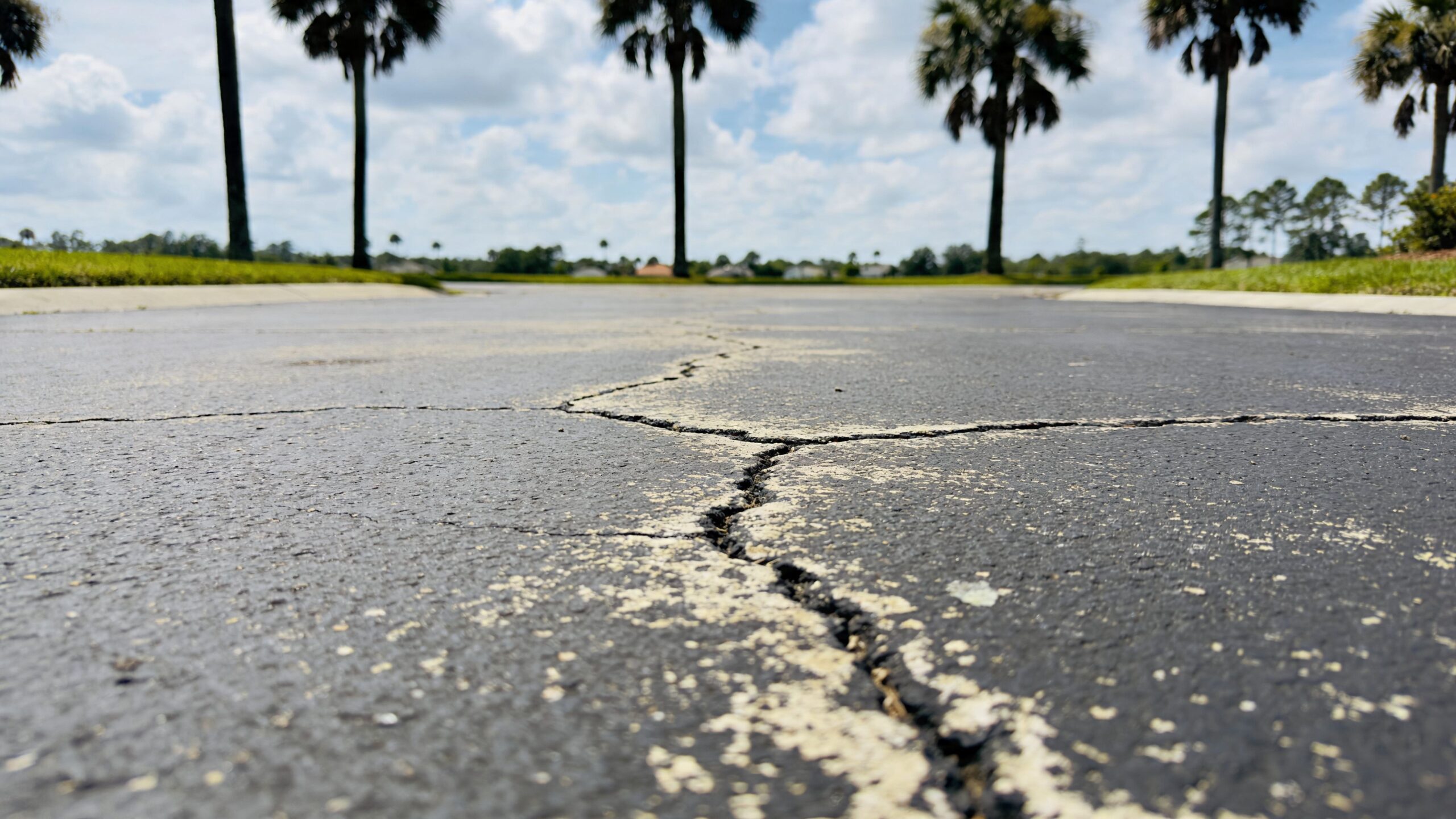
The first mistake is treating every blacktop problem like it needs the same fix. It doesn’t. Some surfaces need fresh HMA. Some only need seal coating and striping. Some asphalt has failed because the base is weak, so cosmetic work won’t hold. And some areas should never have been asphalt in the first place, especially where a site really needs concrete for sidewalks, ADA routes, or slab work.
The second mistake is following generic national advice without adjusting for Florida conditions. A recommendation that makes sense in a milder climate can miss what damages pavement here. In Marion and Citrus counties, durability is tied to drainage, grade, surface protection, and timing of maintenance.
Local rule: In Central Florida, the best paving decision usually isn’t the cheapest installation. It’s the option that fits the traffic, sheds water, and can be maintained properly over time.
Where HMA fits on a Florida property
Hot mix asphalt is a strong answer when you need a smooth, durable paved surface for vehicle traffic. It’s commonly used for parking areas, drive lanes, and driveways that need to look clean, perform reliably, and stay serviceable with routine maintenance.
On the same property, concrete often belongs in other places:
- Driveways needing full replacement: Concrete can be the better fit where appearance, edge stability, or long-term residential value is the priority.
- Walkways and entrances: Sidewalks, ADA paths, and pedestrian zones often call for concrete because it holds grade and finish well.
- Patios and slabs: When the use is static rather than traffic-heavy, concrete often makes more sense than asphalt.
A good pavement plan in Ocala or Crystal River usually isn’t asphalt-only or concrete-only. It’s the right material in the right place.
What Exactly Is Hot Mix Asphalt
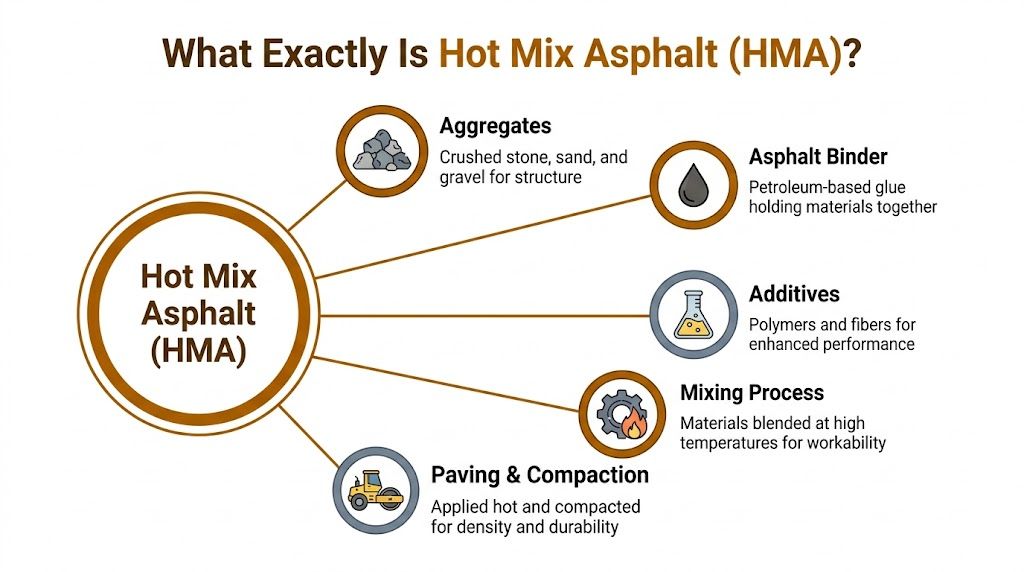
Hot mix asphalt isn’t just “blacktop.” It’s an engineered paving material made from carefully combined stone, sand, and asphalt cement at high temperatures. The heat matters because it allows the binder to coat the aggregate properly and lets the crew place and compact the mix before it cools.
At a practical level, what is hot mix asphalt? It’s the permanent paving mix used when a property needs strength, density, and a finished surface that can handle regular traffic without behaving like a temporary repair.
The recipe that makes HMA work
The structure of HMA comes mostly from aggregate. According to the Transportation Research Board circular on HMA materials and production, hot mix asphalt mixtures are engineered with 94-95% aggregates by weight, combined with 4-6% liquid asphalt cement. That high aggregate content is what gives the pavement its backbone.
It is a tightly packed stone framework glued together by binder. If the stone blend is right and the compaction is done correctly, the surface becomes dense and interlocked rather than loose and fragile.
Why heat is part of the name
HMA is produced by heating aggregates above 300°F, which is one reason it performs so differently from bagged patch products and quick fixes. Heat creates workability. Workability allows proper placement. Proper placement allows compaction. And compaction is what separates a durable paved surface from one that starts unraveling early.
A lot of pavement failures people blame on “bad asphalt” are really installation failures. The mix cooled too much. The base wasn’t prepared correctly. The lift thickness was wrong. The roller work wasn’t there. You can’t fix those issues later with wishful thinking.
What HMA is not
It helps to clear up what HMA isn’t:
- It isn’t cold patch. Cold patch has its place for temporary repairs, but it’s not a substitute for real paving.
- It isn’t just liquid tar spread on a lot. Seal coating protects existing asphalt. It does not create new structural pavement.
- It isn’t one-size-fits-all. Mix design, site prep, drainage, and intended use all affect whether the finished surface performs the way it should.
Good HMA starts long before the truck reaches the site. The finished result depends on the mix, the base, the weather window, and the crew’s compaction discipline.
For a Florida property manager, that’s the key takeaway. HMA is a system, not just a material.
The Unmatched Durability of HMA for Florida Weather
A property in Central Florida can look fine in January and start showing trouble by late summer. The sun hardens the surface. Afternoon storms push water into weak joints and low spots. Traffic works the same wheel paths every day. That cycle is what separates pavement that lasts from pavement that starts costing you early.
Hot mix asphalt holds up well here because it combines flexibility with density. Analysts at Global Market Insights report that HMA remains the dominant asphalt type used across the market, especially on roads and other high-traffic surfaces. That matters for commercial properties because parking lots, drive lanes, and private roads face the same basic demands. They need to carry weight, shed water, and stay serviceable under constant use.
Why HMA lasts in this climate
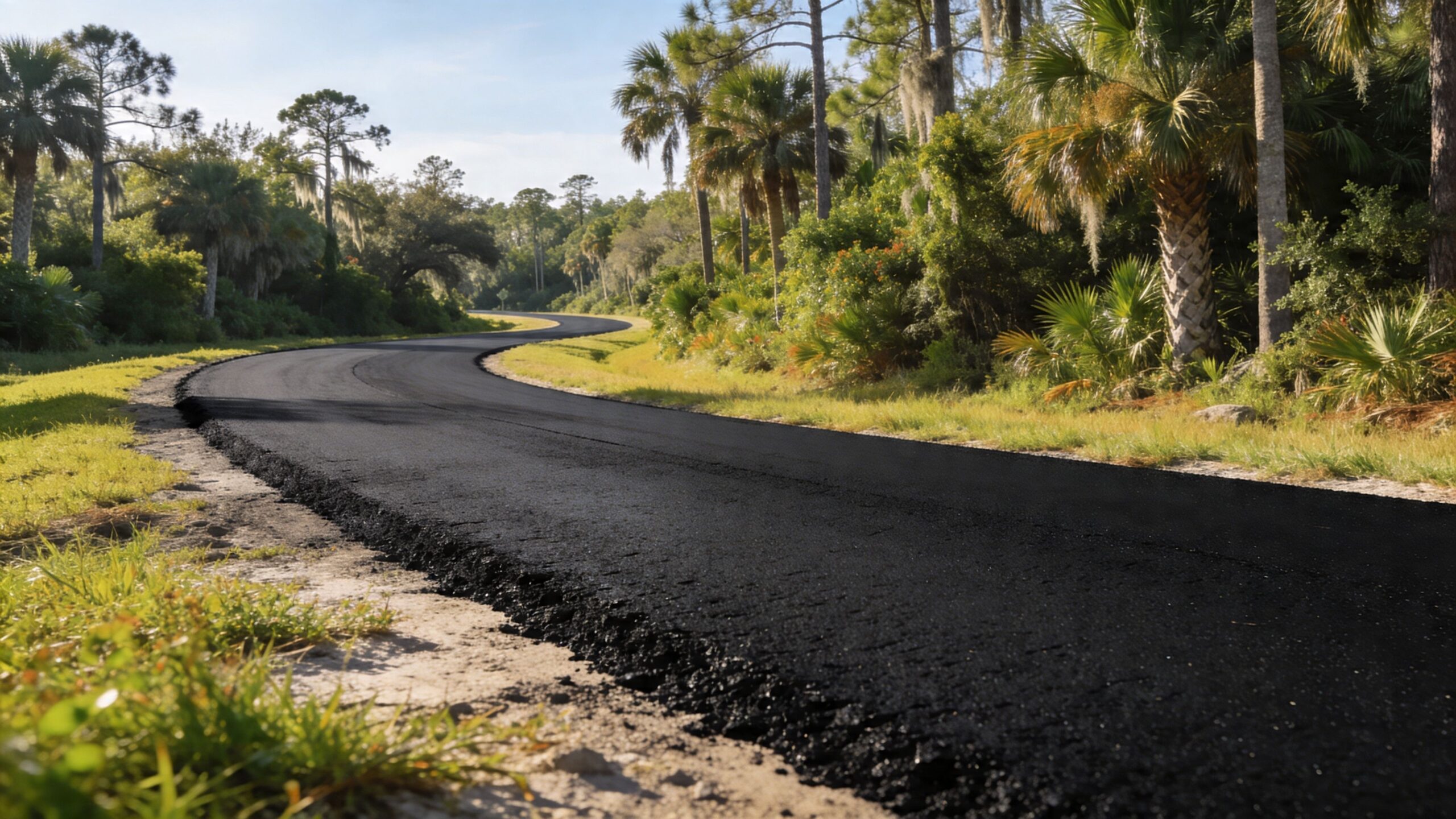
In Florida, durability is not just about whether asphalt can be installed hot enough. It is about how the finished pavement handles months of UV exposure, standing water risks, and daily traffic without losing shape.
A properly built HMA surface gives you several practical advantages:
- Flex under traffic instead of brittle cracking: Asphalt has enough give to handle repeated vehicle loading, especially in drive lanes and turning areas.
- Dense surface that sheds water better: Good compaction helps limit water intrusion, which is one of the fastest ways a lot starts to break down.
- Repairability: Damaged sections can often be patched, milled, or resurfaced without replacing the entire paved area.
- Faster return to service: For many commercial sites, that means less disruption to tenants, customers, and deliveries.
That combination is a big reason many owners choose asphalt over rigid slabs in vehicle areas, while still using concrete where fixed edges, sidewalks, or structural slab performance make more sense. If you are weighing those options, it helps to understand how long a concrete driveway lasts under real-world conditions before deciding which surface belongs where on the property.
Central Florida performance is different from national paving advice
A lot of national asphalt advice focuses on cold-weather paving limits and production temperature. That has its place. The Wolf Paving explanation of hot mix versus warm mix asphalt covers those differences well.
Marion and Citrus County properties have a different problem set. We are usually not fighting freeze-thaw cycles. We are fighting heat buildup, oxidation from constant sun, edge breakdown after hard rain, and drainage failures that show up fast in flat or poorly graded lots. A pavement plan that works in the Midwest can still fail early here if it does not account for stormwater movement and a maintenance schedule that fits Florida weather.
That is the part property managers need to hear. Long-term HMA performance in Ocala, Inverness, Beverly Hills, Crystal River, and surrounding areas depends as much on drainage design, mix selection, thickness, and follow-up maintenance as it does on installation day.
Where durability is won or lost
The first failures usually show up in predictable places:
- Entrances and intersections: Vehicles brake, turn, and accelerate in the same spots.
- Dumpster pads and loading areas: Heavy point loads expose weak base work fast.
- Outer edges: Water and tire drop-off can break unsupported edges apart.
- Low areas: Even a well-paved lot will struggle if water sits on it after every storm.
I tell property owners to judge durability by those stress points, not by how good the lot looks from the street the week after paving. A smooth black finish is easy to notice. The true test is how the surface performs through two or three Florida rainy seasons with traffic on it every day.
On Central Florida properties, asphalt usually fails from water, weak support, or delayed maintenance long before it fails from age alone.
Why this matters for cost over time
HMA gives a clean appearance and a smooth ride, but the bigger advantage is lifecycle control. You can maintain it in stages. Crack sealing, sealcoating on the right schedule, drainage correction, and timely patching usually cost far less than letting small issues turn into base failure.
That is why HMA remains a strong choice for Florida parking lots, private roads, churches, retail centers, HOA streets, and heavy-use driveways. When the pavement is built for local conditions and maintained on schedule, it delivers the kind of service life property managers need.
Comparing Pavement Options HMA vs Concrete and More
A property manager in Ocala or Crystal River usually is not choosing between “good” and “bad” pavement. The primary choice is which material fits each part of the site, how it will hold up under Florida traffic and rain, and what it will cost to maintain over time.
Hot mix asphalt is the best fit for many vehicle surfaces, but not every surface. Concrete, warm mix, and temporary repair products each have a proper use. Problems start when one material gets used everywhere without regard for drainage, turning traffic, appearance standards, or repair access later.
Pavement options for your Florida property
| Pavement Type | Best For | Typical Lifespan (with maintenance) | Key Advantage |
|---|---|---|---|
| Hot Mix Asphalt | Parking lots, drive lanes, heavy-use driveways | Long-term service life depends on installation quality and maintenance | Strong, smooth, repairable surface for vehicle traffic |
| Warm Mix Asphalt | Select paving jobs where lower production temperature may help workability | Depends on mix design, traffic, and installation | Lower-temperature production can improve handling in some conditions |
| Cold Patch or Repair Mix | Temporary pothole or small repair situations | Short-term repair, not a full paving solution | Fast stopgap when immediate access matters |
| Portland Cement Concrete | Driveways, sidewalks, patios, slabs, ADA walkways | Long-term service life depends on subgrade, finish, and jointing | Excellent for pedestrian areas, fixed slabs, and decorative or structural work |
When asphalt wins and when concrete does
For most Central Florida parking lots and drive lanes, HMA gives owners more control. It goes down faster, opens sooner in many cases, and future repairs are usually simpler to phase. That matters on commercial properties that cannot afford long closures.
Concrete makes sense in different places. Sidewalks, dumpster pads in some layouts, patios, curbed areas, and ADA walkways often benefit from a rigid slab. Some owners also prefer the brighter, more formal appearance at entrances or residential drives. If you are comparing a residential replacement, this article on how long a concrete driveway lasts helps frame the decision around service life and upkeep, not just bid price.
The local trade-off is straightforward. National advice often treats the asphalt-versus-concrete decision like a simple material comparison. In Marion and Citrus County, the better question is how the pavement handles summer heat, daily UV exposure, sudden downpours, and the maintenance schedule the property will follow. A material that looks good on paper can become expensive fast if it is harder to repair, slower to replace in sections, or less forgiving when drainage is not perfect.
Warm mix is worth discussing, but not blindly choosing
Warm mix asphalt can be a reasonable option on some projects. Lower production temperatures may help with handling and logistics in the right situation.
Still, the decision should not revolve around production temperature alone. On Central Florida properties, long-term performance comes back to compaction, base support, drainage, traffic pattern, and whether the owner will keep up with crack sealing, patching, and surface protection on schedule. For high-stress commercial areas, standard HMA is still the safer choice in many cases because it has a long track record under repeated traffic loads.
Good pavement planning is rarely about one winner across the whole property. The better approach is to use asphalt where flexibility, repairability, and phased maintenance matter most, use concrete where rigid slabs are the better fit, and treat temporary repairs as temporary. That is how owners protect budgets and avoid paying twice for the same square footage.
Protecting Your Investment Installation and Maintenance
The best-looking pavement job in the county will still fail early if the installation is rushed or the maintenance plan is ignored. That’s true for a church lot in Ocala, a shopping center in Inverness, or a driveway in Homosassa.
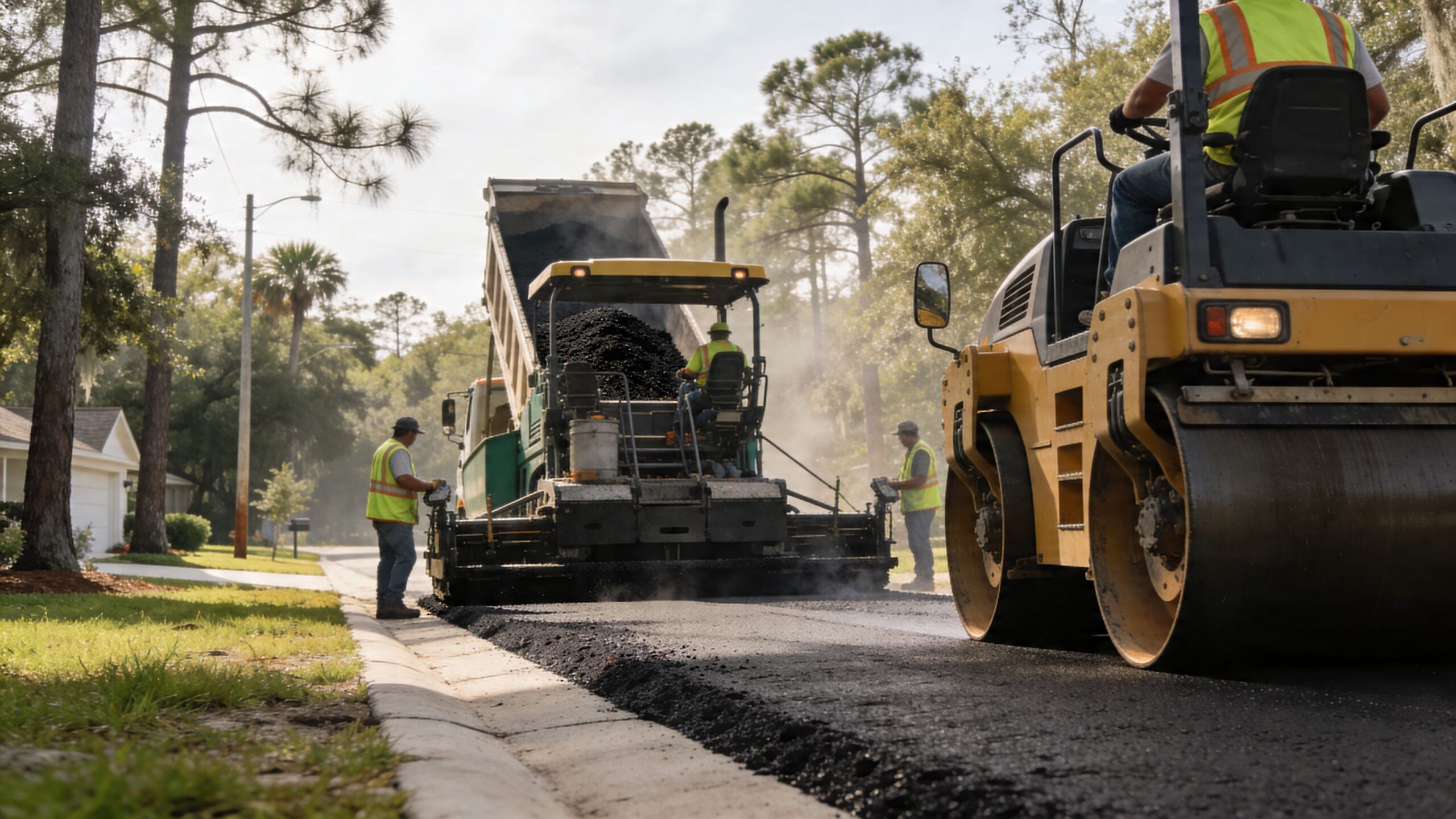
A professional HMA job starts below the surface. The crew has to evaluate the existing base, drainage, edge support, and grade before any paving begins. If those parts are wrong, the finished lot may look smooth on day one and still begin deforming long before it should.
What a proper installation includes
A serious paving process usually includes these steps:
Site preparation
The area is cleared, graded, and shaped so water moves off the surface instead of settling into it.Base evaluation and correction
Soft spots, edge failures, and poor transitions need to be addressed before paving. New asphalt over a weak base is just a prettier failure.Placement with the right equipment
The mix needs to be delivered, placed, and spread while it’s still workable.Compaction
Roller work determines density. Density determines durability.
Maintenance is where cost control happens
Once the surface is in place, Florida conditions start working on it immediately. Sun oxidizes the binder. Rain tests every joint. Vehicle traffic wears wheel paths and turning points. That’s why asphalt maintenance isn’t optional if you want to avoid premature repairs.
Seal coating helps protect the asphalt surface from weather, fluids, and oxidation. Striping restores organization, safety, and visibility. On commercial sites, fresh markings also support ADA parking layout and traffic flow.
If you’re trying to time maintenance correctly, this article on how often to seal coat asphalt is a useful starting point.
Why expert assessment matters before seal coating
Not every asphalt surface should be sealed the same way. The material composition can affect how maintenance products perform. The EPA discussion of HMA facilities and recycled content considerations notes that asphalt composition, especially RAP content, directly affects maintenance, and that surface courses are often limited to 25% RAP, which can influence how sealants bond and perform over time.
That’s one reason experienced evaluation matters. Before seal coating, a contractor should be looking at surface age, oxidation, cracks, repairs, oil spots, and whether the asphalt is a good candidate for sealing at all.
Fresh striping on a failing lot doesn’t solve the problem. Proper maintenance starts with an honest read on the pavement underneath.
For commercial managers, such practices lead to a lot of waste. They pay for cosmetics when the lot needed structural repair, or they delay affordable maintenance until replacement becomes the only option.
Understanding the Cost and Lifespan of HMA
The cost of hot mix asphalt work depends on the site. Size matters. Access matters. Drainage issues matter. So does whether the job is new installation, overlay, repair, or a maintenance package that includes striping and surface protection.
That’s why broad pricing talk can be misleading. A small lot with base failure and water problems may cost more to fix correctly than a larger site with sound structure and straightforward access. The better way to think about HMA is lifecycle cost, not just the initial invoice.
What affects total value
A property owner usually gets the best return when the project is scoped around real conditions instead of surface appearance alone. The variables that drive value include:
- Existing condition: Sound pavement can often be maintained. Failed pavement usually needs heavier work.
- Traffic type: Delivery vehicles, turning movements, and concentrated loading wear surfaces faster than light residential use.
- Water management: Drainage mistakes shorten the useful life of any paved surface.
- Maintenance discipline: A lot that gets timely protection and marking upkeep generally avoids bigger repair bills.
For a practical breakdown of maintenance budgeting, this page on asphalt sealcoating cost per square foot can help frame what to expect from the maintenance side of ownership.
Recycling and ROI matter more than most owners realize
There’s also a sustainability and cost angle many property owners overlook. The LeeBoy discussion of hot mix versus cold mix asphalt notes that asphalt is 100% recyclable, and that using recycled asphalt pavement can support sustainability goals while lowering total cost of ownership.
That doesn’t mean every high-RAP mix is automatically the best choice for every project. It does mean smart material selection can support both stewardship goals and long-term budget control, especially for schools, churches, HOAs, and commercial properties trying to balance appearance with operating costs.
The real payoff
The return on a well-built and properly maintained asphalt surface usually shows up in ways owners feel every week:
- Fewer reactive repairs
- Better curb appeal
- Clearer traffic flow
- Reduced trip and navigation issues
- A site that looks managed instead of neglected
For Florida properties, that’s the difference between chasing pavement problems and controlling them.
Your Hot Mix Asphalt Questions Answered
Is hot mix asphalt the right choice for every driveway or parking area
No. It’s a strong choice for many vehicle surfaces, especially parking lots, drive lanes, and heavy-use driveways. But some projects are better served by concrete, especially sidewalks, patios, slabs, and ADA routes.
How is hot mix asphalt different from seal coating
Hot mix asphalt is the structural paving material. Seal coating is a protective maintenance treatment applied to existing asphalt. Seal coating helps preserve a sound surface, but it doesn’t replace failed pavement.
Does Florida weather change how asphalt should be maintained
Yes. In Central Florida, heat, UV exposure, heavy rain, and humidity all affect pavement condition and maintenance timing. A maintenance plan that works in another state may not fit a property in Marion County or Citrus County.
Can you add striping and ADA markings after asphalt work
Yes. For commercial properties, that’s often part of the same planning process. Parking stalls, directional arrows, fire lanes, and ADA-compliant markings should be laid out clearly so the finished lot is safe, organized, and easy to use.
What if part of my property needs concrete instead of asphalt
That’s common. Many sites need both. A property may need asphalt maintenance in the parking area and concrete replacement at entrances, sidewalks, or walkways. Treating the whole property as one coordinated project usually produces a cleaner, longer-lasting result.
What areas are typically served in Central Florida
Most full-service contractors in this space work across Marion County and Citrus County, including Ocala, Dunnellon, Belleview, Silver Springs, Summerfield, Crystal River, Homosassa, Inverness, Lecanto, Beverly Hills, Hernando, and nearby communities.
What’s the next step if the pavement is faded, cracked, or uneven
Get the site inspected in person. That’s the only reliable way to separate a surface protection job from a repair or replacement job. A good evaluation should look at drainage, base condition, traffic use, striping needs, and whether nearby concrete should be repaired at the same time.
If you need help with asphalt seal coating, parking lot striping, ADA-compliant markings, concrete driveway installation, sidewalks, patios, slabs, or concrete replacement in Marion County or Citrus County, Riverside Sealing & Striping, LLC offers free, no-pressure on-site consultations. From Dunnellon to Ocala, Crystal River, Inverness, and surrounding Central Florida communities, the team handles both concrete and asphalt work with reliable scheduling, clear communication, and long-lasting craftsmanship.