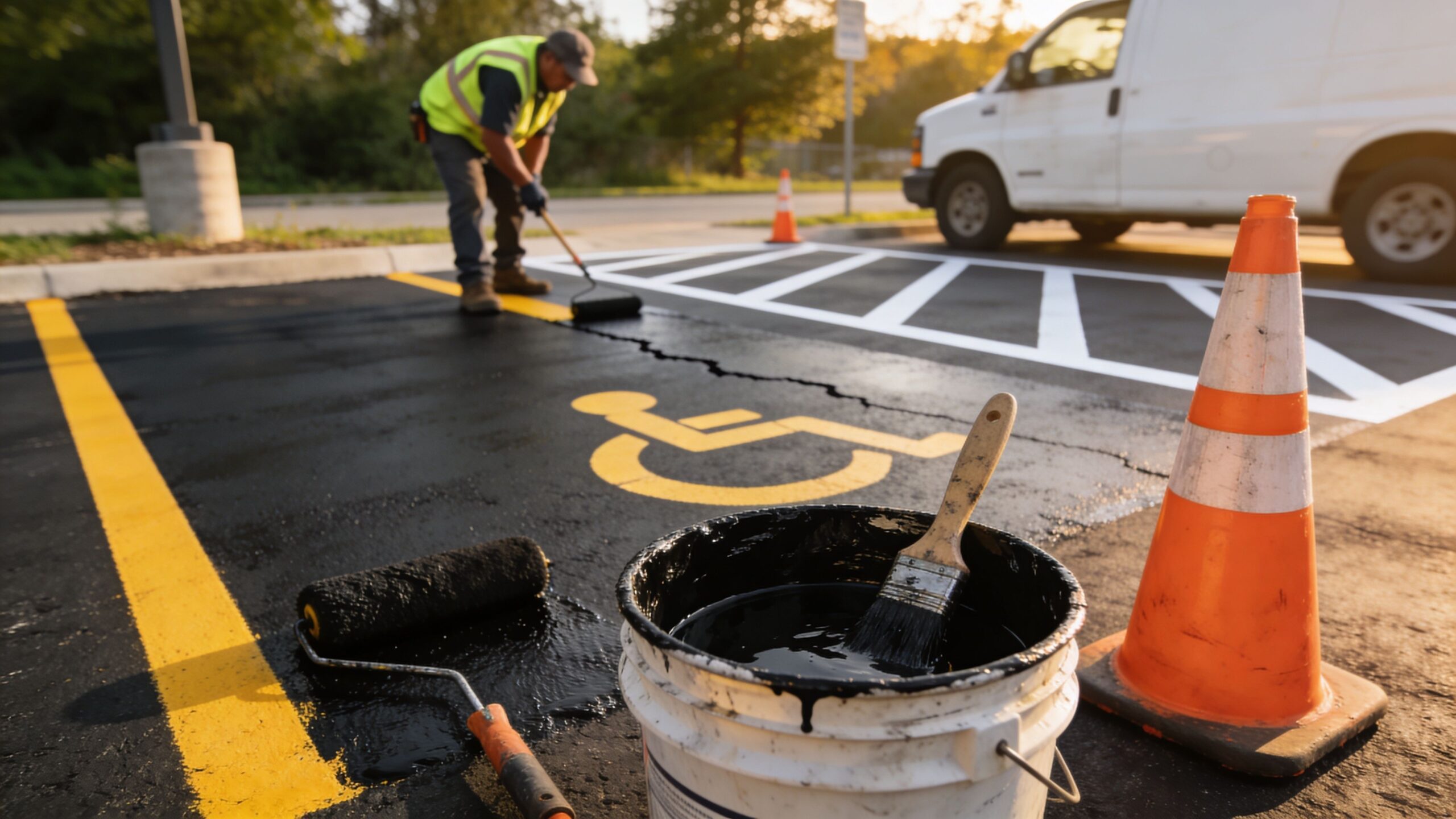
A shopper pulls in after one of those hard Central Florida afternoon storms. Water is still sitting at the low end of the lot. The entrance crack has opened up a little more. The handicap symbols look washed out in the sun. Before anyone reaches the front door, the property has already made an impression.
That is the practical reason to keep a parking lot maintenance checklist. In Marion County and Citrus County, pavement deals with a rough mix of UV exposure, high surface temperatures, heavy rain, storm runoff, traffic wear, and oil drips. Asphalt driving lanes and parking stalls age one way. Concrete sidewalks, curbs, ramps, and pads fail another way. A good plan has to cover both, because tenants and customers do not separate the property into trades. They see one site.
I have seen the same pattern for years across Ocala, Dunnellon, Belleview, Crystal River, Homosassa, Inverness, Lecanto, Beverly Hills, Hernando, Summerfield, Silver Springs, and The Villages. Owners wait on small repairs because the lot is still usable. Then summer heat dries out the asphalt, storm water finds the weak spots, and a simple maintenance job turns into patching, drainage correction, concrete replacement, and restriping at the same time.
Proactive work usually costs less and causes fewer headaches than reactive repairs. It also gives property managers more control over scheduling, especially before peak rain season. If you are planning budgets, this guide on how often to seal coat asphalt in Florida conditions is a good place to start.
The checklist below is built for Florida conditions and real mixed-surface properties, not just a single asphalt service.
1. Asphalt Seal Coating Application
A lot can look serviceable in the morning and show its age by the end of one Florida summer. UV exposure cooks the binder, high surface temperatures dry out the top layer, and afternoon storms take advantage of every weak spot. Once that surface loses flexibility, water, oil, and fuel have an easier path in.
Sealcoating helps slow that process on sound asphalt. It does not rebuild failed pavement, and it should not be sold that way. On mixed-surface properties around Ocala, Inverness, and The Villages, I usually tell owners to view it as scheduled protection for the asphalt areas while concrete sidewalks, curbs, and ramps follow a different maintenance track.
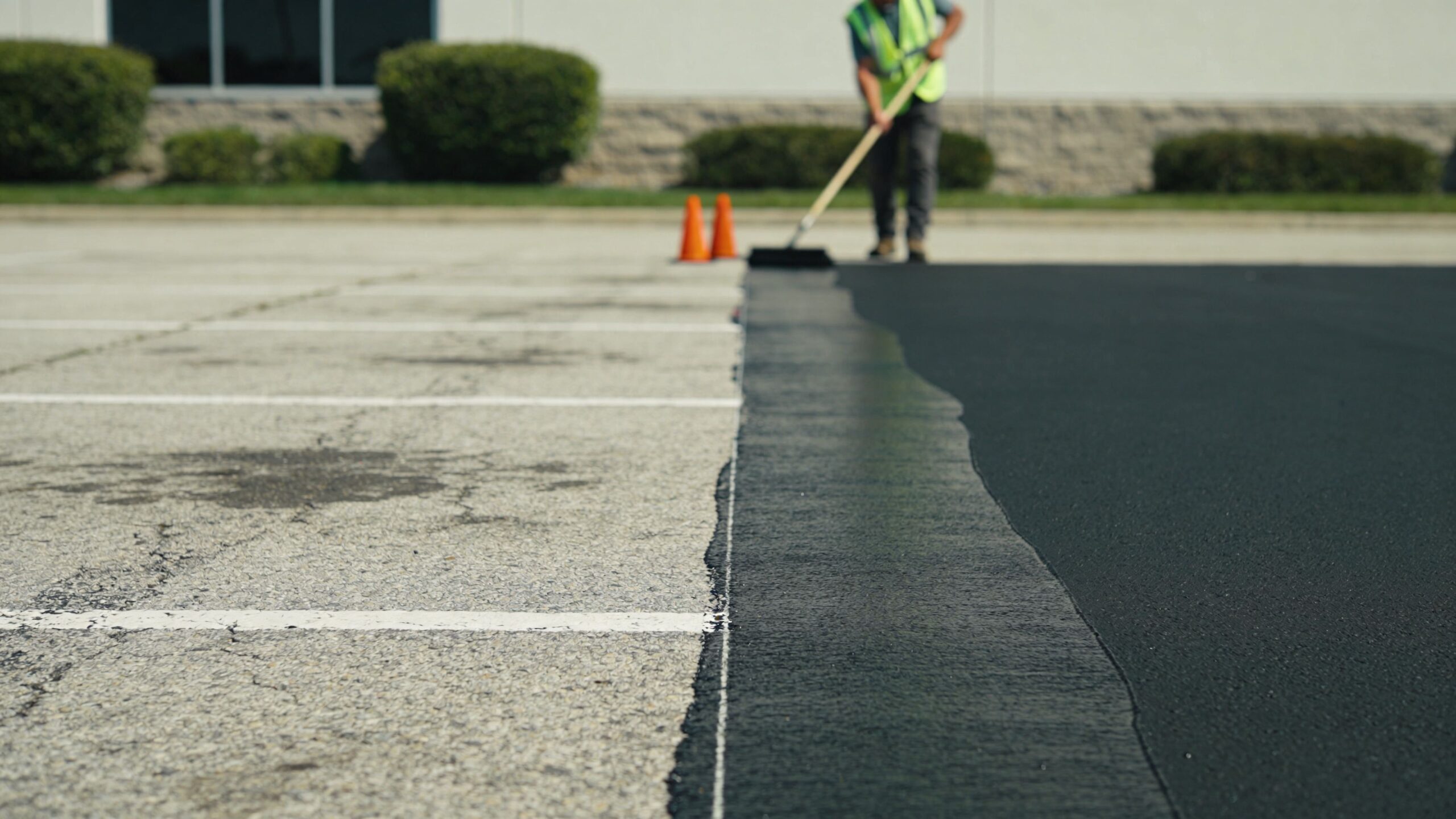
Good results depend more on preparation than on the bucket. Dirt, oxidation, oil spots, and untreated cracks keep the coating from bonding well, so the job starts with cleaning and targeted repairs. If you are seeing surface separation or want to understand the early warning signs before coating, this explanation of what causes asphalt cracking gives useful context.
A few jobsite decisions matter more in Florida than owners expect:
- Coat pavement that is still structurally sound: Sealcoating protects the surface layer. Areas with base failure, alligator cracking, or repeated potholes need repair first.
- Schedule around weather, not just the calendar: Dry conditions and stable temperatures give the material time to cure. Summer pop-up storms can ruin a rushed application.
- Control traffic before the crew arrives: Retail lots, medical offices, churches, and HOAs need a staging plan so vehicles do not track material or force early reopening.
- Match the service to the property: A lightly used office lot and a busy shopping center do not wear the same way. Turning areas and entrances usually need closer attention.
The trade-off is simple. Sealcoating costs money now, but delayed protection usually leads to faster oxidation, more cracking, and earlier patching. For owners working through timing and budget cycles, this guide on how often to seal coat asphalt is a useful place to start.
2. Crack Repair and Filling
A lot owner usually notices the problem after the first hard rain. Water sits in a hairline crack near the entrance, cars roll over it all week, and the surface starts to break loose around the edges. In Central Florida, that cycle speeds up fast because heat opens pavement, afternoon storms feed the crack, and heavy traffic keeps forcing water down into the structure.
Regular walk-throughs catch this before it turns into patching or base repair. I tell owners to check lots on a set schedule and again after major storm periods, especially on asphalt areas that take turning traffic and along concrete joints where water likes to linger.
What to look for on a walk-through
A useful inspection is simple, but it needs to be consistent. Start with entrances, drive lanes, loading areas, curbs, and drain lines. Those spots usually show distress first on office parks in Lecanto, schools in Ocala, and church properties in Dunnellon.
Record the condition in plain terms:
- Crack location: Entrance throat, drive lane, parking stall edge, around curbing, or near drains.
- Crack type: Long linear crack, edge crack, branching crack, or interconnected cracking.
- Crack width and movement: Fine surface opening, widening crack, or a joint that shows movement after rain and heat.
- Surface type: Asphalt crack, concrete joint, or a transition point where the two materials meet.
That last point matters in Florida. A lot with both asphalt and concrete needs a different repair plan than a single-surface lot. Asphalt cracks are often sealed with hot rubberized material if the pavement is still stable. Concrete joints and failed sealant areas need joint cleaning, proper sealant, and a close look at nearby drainage so water is not getting underneath the slab.
Small cracks are still maintenance. Once they widen, collect sand, stay wet, or show broken edges, the repair gets more expensive and the odds of a pothole go up.
Prompt filling keeps water out of the base and slows the breakdown that follows. It also gives property managers a better way to budget because they can handle isolated trouble spots instead of waiting for larger failures. If cracking keeps coming back in the same areas, the cause is often deeper than surface age. This breakdown of why pavement starts cracking covers the common drivers, including water intrusion, ground movement, and deferred repairs.
The trade-off is straightforward. Early crack sealing is a maintenance cost. Waiting often turns that same area into a patch, a drainage correction, or a section replacement.
3. Pothole Repair and Patching
A driver cuts into a parking stall after one of our summer downpours, drops a tire into a hole, and now the property manager has two problems instead of one. There is the trip-and-vehicle risk everyone sees. Then there is the bigger issue underneath it, which is usually water in the base, edge failure, or both.
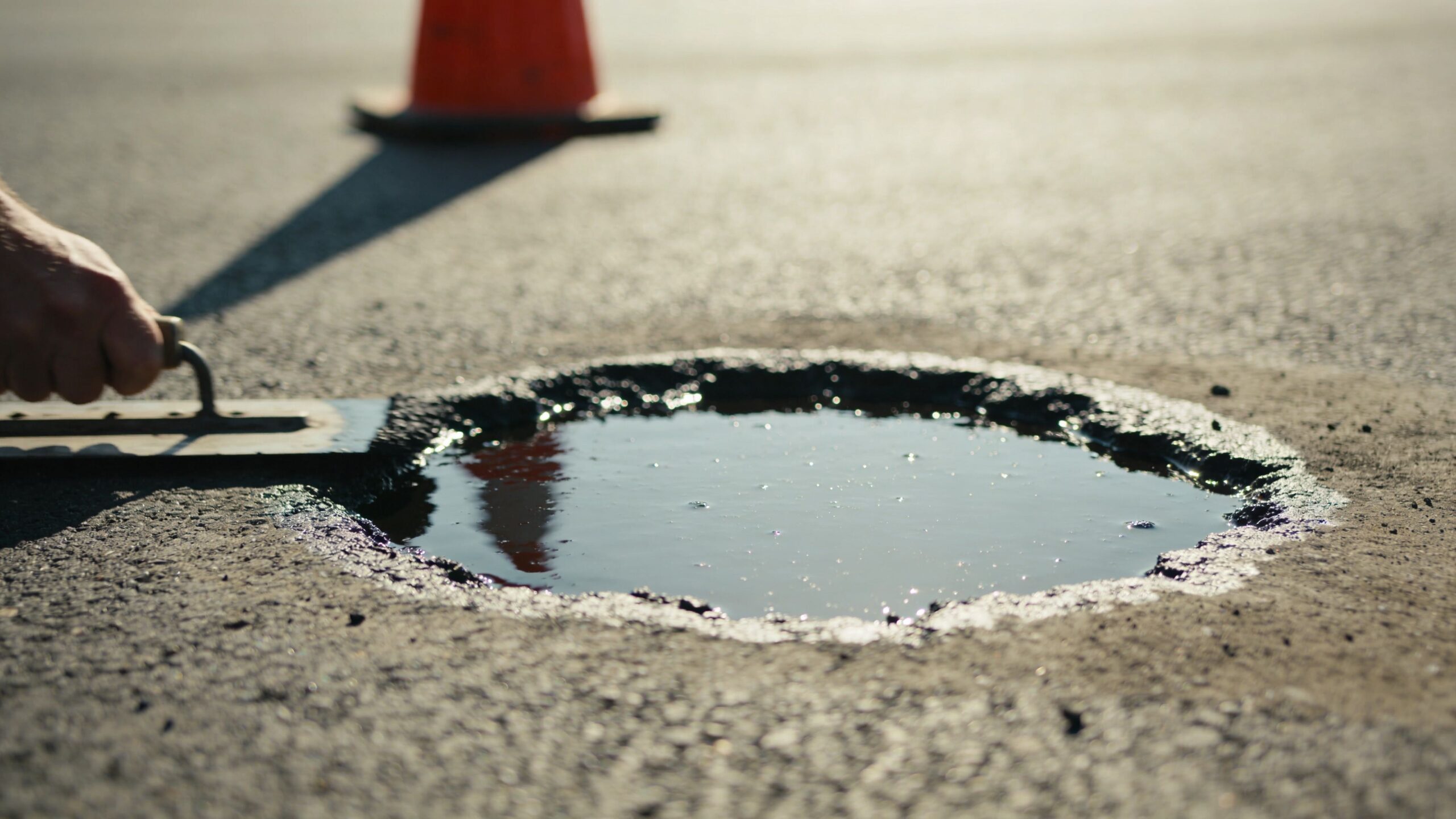
In Central Florida, potholes rarely stay the same size for long. Heat softens asphalt, heavy rain finds weak spots, and turning traffic at entrances, pickup lanes, and dumpster approaches tears loose material even faster. On mixed-surface properties, the repair plan also changes. An asphalt pothole usually needs saw-cutting, clean edges, proper tack, and solid compaction. A failed concrete section or transition between concrete and asphalt may call for partial-depth concrete repair or replacement instead of a simple asphalt patch.
Fast response protects the pavement investment and keeps a small failure from turning into a larger section repair. Waiting costs more because the damaged area usually spreads beyond the visible hole.
Permanent patch versus temporary patch
Temporary cold patch is useful when a site needs a short-term safety fix, especially after a storm or when plant mix is not available yet. For a commercial lot, the long-term repair is different. The crew should remove loose material, cut back to stable edges, check whether the base is still firm, and compact the new material in lifts so it holds under traffic.
I have seen plenty of patches fail for the same reason. Water was still in the hole, the edges were crumbling, or the repair was placed over a soft base. That patch may look acceptable for a few days, but it will shove, unravel, or sink once delivery trucks and turning tires hit it.
A quick field review usually points to the right fix:
- One isolated pothole: A properly installed patch may solve it if the surrounding pavement is still stable.
- Several potholes in the same drive lane: Check drainage, base condition, and traffic load before authorizing more surface patches.
- The same pothole keeps coming back: Look for standing water, failed grading, leaking irrigation, or concentrated loading in one wheel path.
This kind of repair work is easier to understand when you can see the process. Here’s a practical look at how asphalt pothole repair is handled in the field.
4. Professional Striping, Line Marking and Traffic Control Symbols
A lot can still be structurally sound and function badly if the markings are worn out. In Florida, that happens faster than many owners expect. Sun exposure breaks paint down, summer rains dull visibility, and storm cleanup traffic grinds markings off the surface long before the pavement itself is ready for major repair.
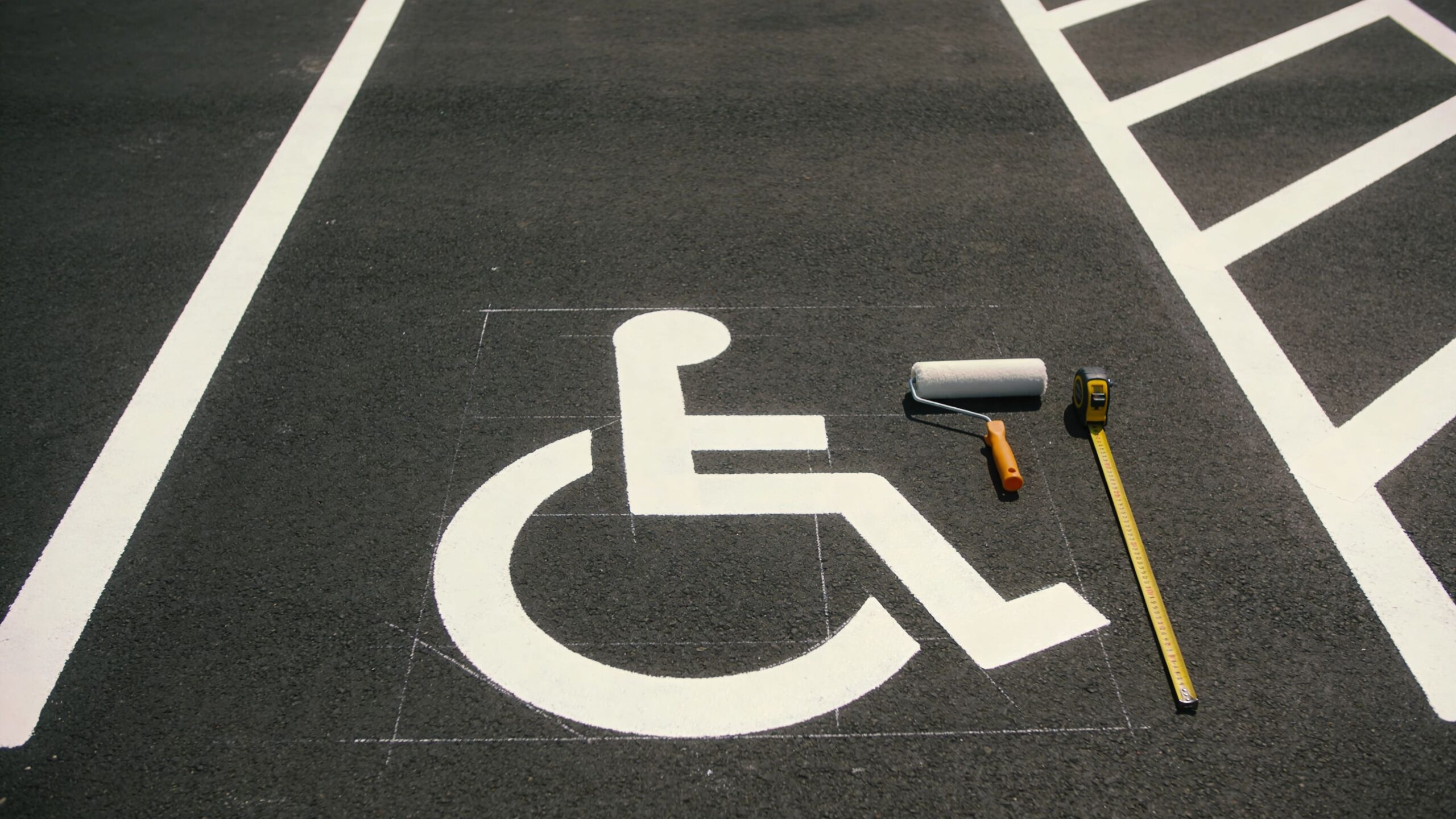
Fresh striping improves how drivers move through the site, how pedestrians cross it, and how many usable spaces the property can safely keep in service. It also affects first impressions. On retail centers, medical offices, churches, and industrial sites, faded lines make the whole property look neglected even when the asphalt or concrete is still in decent shape.
What good striping actually includes
Good striping starts with layout, not paint. A crew should check traffic patterns, stall count, fire access, pedestrian routes, ADA spaces, loading areas, and curb transitions before any lines are sprayed. That matters even more on mixed-surface properties where asphalt parking areas meet concrete walks, ramps, aprons, or curbing. If those pieces do not work together, drivers hesitate, pedestrians cut across drive aisles, and the lot feels disorganized.
For commercial sites, the details that usually matter most are:
- Traffic flow markings: Arrows, stop bars, and lane guidance at entrances, islands, and tight turning points.
- Pedestrian visibility: Crosswalks and walkway connections that stay easy to read in bright sun and after rain.
- ADA layout accuracy: Space widths, access aisles, symbols, and adjacent routes that are positioned correctly before painting starts.
- Fire lane and no-parking zones: Clear markings that support access and reduce day-to-day enforcement problems.
- Consistent layout: Straight stalls and even spacing that make the property look maintained and keep circulation predictable.
I have seen restriping jobs fail for a simple reason. The painter refreshed old lines without checking whether the layout still fit the site. That creates stacked mistakes. Tight stalls stay tight, ADA access can end up wrong, and traffic flow problems get locked in for another year.
In Central Florida, annual review is a smart baseline for many properties. High-traffic sites, lots with poor shade coverage, and entrances that take direct afternoon sun may need touch-ups sooner. Asphalt and concrete both hold markings differently, so the maintenance plan should account for the surface, traffic load, and how exposed the site is to UV, standing water, and storm wear.
5. Surface Cleaning and Pressure Washing
Cleaning sounds basic, but it’s one of the easiest maintenance items to ignore. Then debris piles up along curbs, oil spots spread, drains clog, and no one can clearly see the pavement condition underneath. A dirty lot hides problems.
Weekly sweeping is recommended in high-traffic areas such as entrances and loading zones, and that routine matters because sweeping is tied directly to both appearance and safety. The global parking lot sweeping services market is projected to grow from USD 2,538.9 million to USD 4,500 million by 2035 at a projected CAGR of 5.9%, which reflects how central this simple task has become in property maintenance programs.
Where cleaning pays off fastest
Retail centers in Summerfield and churches in Silver Springs usually see the biggest benefit at entrances, dumpster approaches, drive aisles, and spaces under shade where moisture lingers. On some properties, pressure washing is less about looks and more about reducing slick buildup and exposing areas that need repair.
Routine cleaning also helps before sealcoating or striping because the contractor is working on a properly prepared surface.
A practical cleaning schedule usually includes:
- Weekly attention: High-traffic entrances, loading areas, and obvious debris traps.
- Targeted stain treatment: Oil and fuel spots should be addressed before they spread or interfere with coatings.
- Storm cleanup: Leaves, sediment, and blown debris should come off the lot before they migrate into drainage.
For mixed concrete and asphalt properties, don’t overlook the concrete side. Sidewalks, aprons, curbs, and ADA ramps often hold dirt and algae differently than asphalt, so they need their own cleaning approach. A lot can have good pavement and still look neglected because the concrete edges are dirty.
6. Drainage Inspection and Maintenance
A Florida lot can look fine at 8 a.m. and be holding water by 3 p.m. after one hard summer storm. Once that water sits, the rest of your maintenance plan starts losing ground. Coatings wear faster, patched areas fail sooner, and base problems show up in the same spots again and again.
In Central Florida, drainage problems usually start small. A low spot develops near a drive aisle. Sediment builds up at an inlet. A curb line that was never a problem becomes one after nearby concrete work changes how water moves across the site. Then the rainy season shows every weakness at once.
The main job is simple. Get water off the pavement and away from buildings, ramps, and pedestrian routes. That matters for asphalt and concrete alike. It also affects safety around accessible parking, where ponding near access aisles or curb ramps can create usability problems that often tie back to ADA handicap parking space requirements and access route standards.
The trouble spots property managers miss
Catch basins and grates are only part of the picture. I see more recurring failures caused by grade changes, settled pavement edges, clogged outfalls, and debris packed into low corners where sweepers do not always reach. On older shopping centers and church properties in places like Beverly Hills and Hernando, water also gets trapped where asphalt meets concrete and the transition was never corrected.
A useful drainage check should cover:
- Low areas after storms: Mark spots where water remains long after the rain stops.
- Drain inlets and grates: Remove leaves, trash, and sediment before flow slows down.
- Curb lines and pavement edges: Look for buildup, settlement, or concrete lips that trap runoff.
- Discharge points: Make sure water is leaving the system and not backing up downstream.
- Flow near buildings and walkways: Keep runoff away from entrances, ramps, foundations, and pedestrian paths.
Water always finds the weak spot.
Twice-a-year drainage service is a solid baseline for many commercial properties, but Florida sites with heavy tree litter, poor grading, or stormwater runoff often need more frequent checks during the wet season. The trade-off is straightforward. Routine cleaning and minor grade corrections cost far less than repeated patching in the same wet areas.
On mixed-surface properties, drainage should be reviewed as one connected system. A new sidewalk, curb, apron, or ramp can redirect flow just enough to create ponding on the asphalt side. If nobody checks grades after that work, the lot starts failing in places that look unrelated but are not.
7. ADA Accessibility Compliance and Upgrades
A lot can look freshly maintained and still create access problems. I see this on Central Florida properties after restriping jobs done without checking slopes, ramp condition, sign placement, or the walking route from the space to the door. Fresh blue paint does not fix a heaved sidewalk panel, a missing sign, or a curb ramp that holds water after a summer storm.
Florida adds its own pressure here. Heat fades markings faster, heavy rain exposes low spots around ramps and access aisles, and storm cleanup often leaves debris or temporary obstructions along pedestrian routes. On mixed-surface properties, ADA corrections often involve both asphalt and concrete, which is why this work needs to be reviewed as a system instead of a striping task.
Common ADA trouble spots on retail centers, churches, medical offices, and HOA properties across Marion and Citrus counties include:
- Accessible spaces with the wrong layout: Width, access aisle placement, and van space configuration need to match current requirements.
- Faded or incomplete markings: Symbols, border lines, and no-parking areas need to stay visible in Florida sun and traffic wear.
- Missing or poorly placed signs: Proper signage matters, and height and location matter too.
- Broken curb ramps or sidewalks: Cracked concrete, settlement, and lips at joints can make the route difficult or unsafe.
- Obstructed paths of travel: Wheel stops, overgrown vegetation, utility covers, and uneven transitions often create obstacles.
- Drainage-related failures near accessible routes: Ponding water at ramps or crosswalks can turn a compliant layout into a practical hazard.
The trade-off is simple. A paint-only approach costs less today, but it often leaves the actual deficiency in place and leads to rework. A full correction costs more up front, especially when concrete replacement is involved, but it solves the access issue and usually holds up better through weather, traffic, and inspections.
If you’re reviewing your property, this guide to ADA handicap parking space requirements gives property managers a useful checklist before calling for striping, signage, asphalt repair, or concrete work.
8. Pavement Surface Inspection and Condition Assessment
A Florida parking lot can look fine from the driver’s seat and still be sliding toward expensive repairs. I see it all the time after a long summer. The surface still reads as serviceable, but the top has dried out under UV, small cracks have opened, water has started working into weak spots, and the first hard storm exposes what was already in motion.
That is why condition assessment needs to be documented and repeatable. If you manage an HOA in The Villages, a church in Lecanto, or a retail center in Ocala, a quick walk-through is not enough for budgeting. You need dated photos, measured notes, and a repair priority list that shows what changed since the last inspection.
Good assessments also separate asphalt problems from concrete problems. In Central Florida, asphalt usually shows oxidation, raveling, block cracking, and failures around high-turn areas sooner than owners expect. Concrete holds up differently, but it still develops joint issues, settlement, spalling, and trip hazards, especially where drainage or tree roots are part of the picture. If those surfaces get lumped together in one vague report, the repair plan usually misses the actual cost.
What a useful assessment includes
A useful assessment tracks condition by distress type, location, and urgency. Smaller properties can handle that with a clipboard and consistent photos. Larger sites often benefit from mapping software, drone images, and quantity takeoffs so year-to-year comparisons are easier and budgeting is less reactive.
Strong inspection records usually include:
- Photos from the same vantage points: Consistent comparison from one inspection cycle to the next.
- Measured distress notes: Crack lengths, failed patch areas, pothole size, raveling, edge breakdown, joint movement, and ponding locations.
- Priority ranking: Safety issues first, then short-term repairs, then areas to monitor.
- Surface type notes: Asphalt drive lanes, parking stalls, concrete sidewalks, curbs, ramps, aprons, and dumpster pads should be logged separately.
- Likely cause: Traffic wear, drainage failure, base movement, storm damage, or age-related oxidation.
The trade-off is time up front versus money later. A basic annual review costs less, but it can miss the early signs that separate a sealcoat and crack-fill job from patching or full replacement. A detailed inspection takes more effort, especially on mixed-surface properties, but it gives owners a maintenance plan they can effectively use.
For small properties in Dunnellon or Homosassa, manual inspections are often enough if the process stays consistent. For larger commercial sites, better records usually lead to better timing, and better timing is what keeps Florida heat, rain, and traffic from turning minor surface wear into structural repair.
8-Point Parking Lot Maintenance Comparison
| Service | 🔄 Implementation Complexity | ⚡ Resource Requirements | 📊 Expected Outcomes | Ideal Use Cases | ⭐ Key Advantages / 💡 Quick Tip |
|---|---|---|---|---|---|
| Asphalt Seal Coating Application | Medium, surface prep, weather window, trained crew | Medium, sealant (water/solvent), squeegees, small crew, curing time | Extends pavement life ~2–3 years per application; improved appearance and waterproofing | Preventative maintenance for parking lots, shopping centers, HOAs every 2–3 years | Cost-effective life extension; improves curb appeal. Tip: schedule in dry season and fill >1/4" cracks first. |
| Crack Repair and Filling | Medium, cleaning, routing, correct material selection | Low–Medium, hot/cold sealant, pressure blower, skilled applicator | Prevents water infiltration and potholes; extends life ~3–5 years when regular | Regular inspections; proactive small-crack management for retail, HOA, office parks | Prevents major repairs at low cost. Tip: inspect seasonally and use hot rubberized sealant in FL. |
| Pothole Repair and Patching | High, removal, base assessment, compaction; possible full-depth work | High, heavy equipment, hot-mix or cold-patch, traffic control, skilled crew | Immediate hazard removal; temporary or permanent repairs; stops rapid spread | Emergency repairs, liability mitigation, localized structural failures | Restores safety quickly and prevents claims. Tip: respond within 48–72 hrs and repair base for permanence. |
| Professional Striping, Line Marking & Traffic Symbols | Low–Medium, precise layout and ADA/MUTCD compliance | Low, paint or thermoplastic, stencils, striping machine (thermoplastic needs special gear) | Improves safety, maximizes parking capacity, ensures ADA compliance | Reconfigurations, ADA updates, aesthetic refresh for retail and offices | High visual impact with low cost; improves flow & compliance. Tip: use thermoplastic for high-traffic areas and refresh annually. |
| Surface Cleaning and Pressure Washing | Low, straightforward but requires care to avoid damage | Low, pressure washer (2000–4000 PSI), degreasers, containment measures | Removes algae/oil, improves appearance, prepares surface for other treatments | Pre-sealcoat prep, routine maintenance, event preparation for shopping centers, churches | Low-cost, high visual benefit and slip-hazard reduction. Tip: use lower PSI on old asphalt and allow 24–48 hrs to dry. |
| Drainage Inspection and Maintenance | Medium, inspections and occasional engineering fixes | Medium, cleaning equipment, access to drains, possible contractor services | Prevents standing water and base damage; extends pavement life and aids compliance | Properties with standing water, post-storm issues, sites requiring stormwater compliance | Prevents major deterioration and regulatory issues. Tip: inspect seasonally and clean catch basins annually. |
| ADA Accessibility Compliance & Upgrades | Medium–High, audits, design, and possible retrofit work | Medium, professional audit, signage, striping, ramps/curb work for retrofits | Ensures legal compliance, reduces liability, improves access and reputation | Public-facing properties, renovations, medical facilities, places serving diverse users | Protects against lawsuits and improves inclusivity. Tip: conduct professional ADA audit and document changes. |
| Pavement Surface Inspection & Condition Assessment | Medium, systematic survey, data collection, expert analysis | Medium, inspectors, mapping/photo tools, PCI methodology | Data-driven maintenance planning, early issue detection, optimized budgets | Portfolio management, pre-acquisition assessments, capital planning for multiple properties | Enables prioritized spending and long-term planning. Tip: perform annual PCI-based inspections and document trends. |
Partner with Central Florida's Pavement Experts
Florida Climate Considerations for Your Parking Lot
A parking lot can look fine on Monday and show new failure by Friday after a week of hard sun, afternoon downpours, and heavy traffic. That is a normal pattern in Central Florida, not an exception.
Heat oxidizes asphalt and makes it brittle faster than many owners expect. UV exposure fades striping and dries the surface. Summer storms push water into every open crack, and once water gets below the surface, repair costs rise fast. On properties in Crystal River, Homosassa, and other storm-prone areas, drainage and timing matter just as much as the repair itself.
Concrete has its own weak points in this climate. Sidewalks, curbs, ramps, dumpster pads, and aprons do not need sealcoating, but they do need regular review for cracking, settlement, spalling, and trip hazards. On mixed-surface sites in Ocala, Belleview, Inverness, and Lecanto, asphalt and concrete should be managed as one system. A failing drain, settled curb line, or broken ramp can shorten the life of the pavement around it and create liability long before the lot looks worn out from the street.
Long service life comes from consistent upkeep, not luck. Regular inspections, crack sealing, drainage maintenance, cleaning, striping, and timely concrete repair keep small defects from turning into base failure, safety issues, and expensive replacement work.
When to Call a Professional for Concrete and Asphalt
On-site staff should handle routine walk-throughs and report changes early. That is often how a property catches fresh cracking, faded markings, ponding water, loose wheel stops, or a damaged curb ramp before the problem spreads.
Repair decisions are different. A trained contractor can tell whether a crack is surface-level aging, water-related movement, or a sign the base is starting to fail. That affects whether the right fix is sealcoating, crack filling, patching, restriping, slab replacement, drainage correction, or a phased repair plan tied to the budget.
That judgment matters even more on active commercial sites. Retail centers, churches, medical offices, HOAs, and industrial properties all have different traffic patterns, liability exposure, and scheduling limits. Closing the wrong area at the wrong time creates tenant complaints and repeat mobilization costs.
For owners and managers in Marion County, FL and Citrus County, FL, the better approach is a coordinated plan for the entire site. Riverside Sealing & Striping, LLC handles both asphalt and concrete work because many properties need both. One project may include sealcoating, striping, sidewalk or curb replacement, ADA corrections, and drainage repairs. Coordinating that work keeps the site safer, reduces wasted labor, and helps owners avoid fixing one problem while another nearby area continues to fail.
Frequently Asked Questions
How often should we inspect our parking lot in Central Florida?
Quarterly visual inspections are a solid baseline. Add extra walk-throughs after major storms or unusual standing water. A professional annual review helps catch drainage, pavement, and ADA issues that are easy to miss during routine staff checks.
Is sealcoating worth it in Florida?
Yes, if the asphalt is still in maintainable condition. Sealcoating helps protect the surface from sun, water, and oxidation, but it is not a fix for failed pavement. Cracks and problem areas should be repaired first.
What’s the difference between asphalt and concrete maintenance?
Asphalt usually needs recurring preventive work such as crack filling, sealcoating, and restriping. Concrete often needs less frequent but more structural repair, including replacing broken sidewalks, curbs, ramps, or slabs that create safety and access problems.
Can in-house staff handle parking lot maintenance?
They can handle observation, basic cleaning coordination, and reporting. Sealcoating, striping, ADA corrections, structural concrete work, and most pavement repairs should be handled by a qualified crew with the right materials, equipment, and traffic control plan.
What part of a parking lot should get attention first?
Start with anything that affects safety, drainage, or access. Potholes, trip hazards, blocked drains, missing markings, failed curb ramps, and standing water should move ahead of cosmetic work.
Protect Your Investment with a Free Evaluation
A well-managed parking lot is not one that stays perfect. It is one that gets the right repair at the right time.
That is especially true in Central Florida, where sun, heat, and stormwater wear down both asphalt and concrete faster than many annual budgets are built to handle. A church in Silver Springs, an HOA in Citrus County, a retail center in Ocala, or a medical office in Inverness may have different traffic loads, but the maintenance pattern is similar. Small cracks grow. Drainage problems spread. Faded markings create confusion. Damaged concrete turns into a safety issue.
A site review helps sort those priorities. It shows what needs immediate repair, what can wait, and where asphalt and concrete work should be scheduled together for a better long-term result.
If you manage property in Ocala, Dunnellon, Belleview, Summerfield, Crystal River, Homosassa, Inverness, Lecanto, Beverly Hills, Hernando, The Villages, or nearby Central Florida communities, Riverside Sealing & Striping, LLC offers free, no-pressure evaluations for asphalt and concrete maintenance needs. From sealcoating and parking lot striping to ADA upgrades and concrete replacement, the team helps property owners build practical long-term plans that protect value and keep sites safe.