
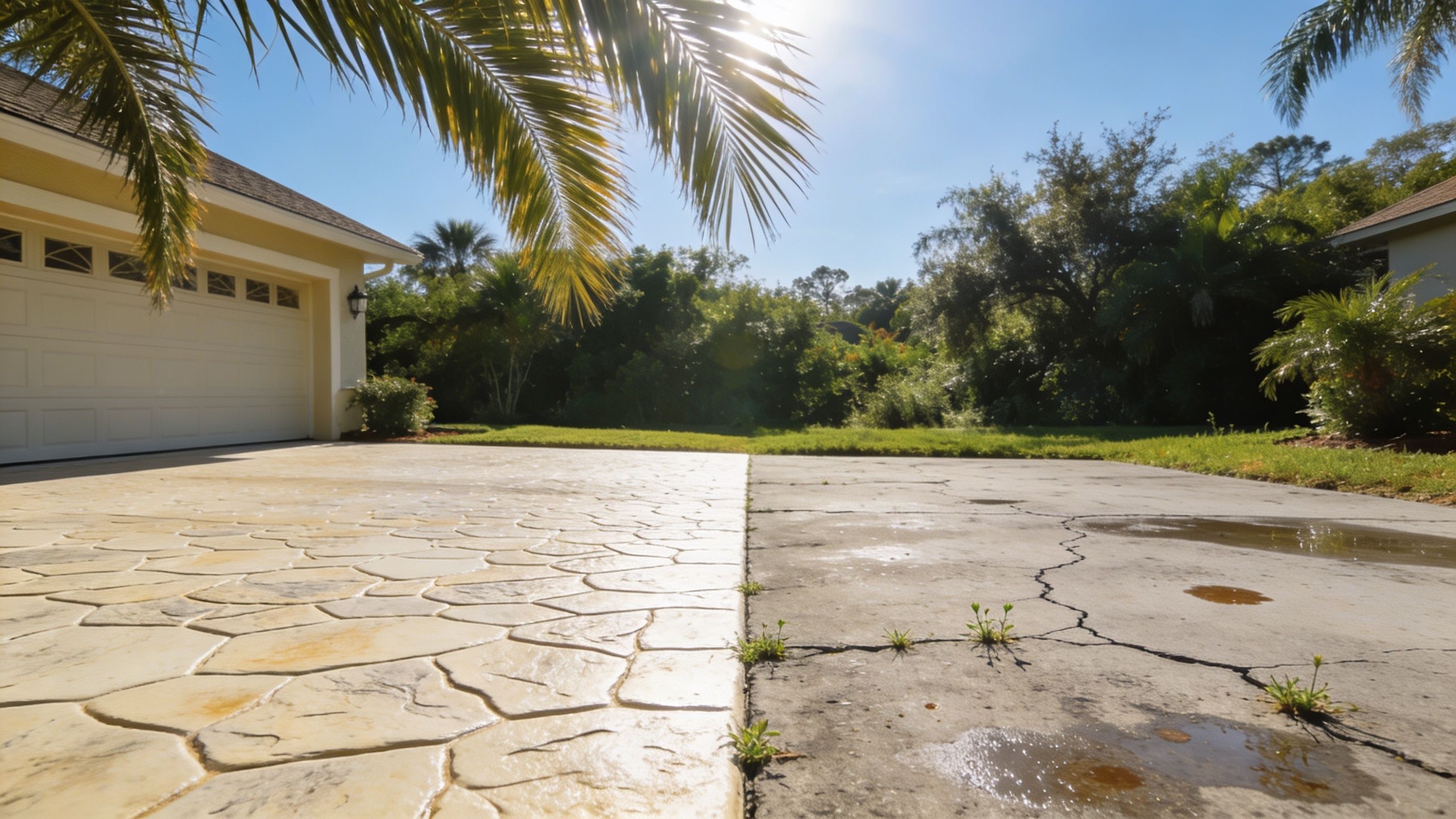
If you're looking at your driveway in Ocala, Dunnellon, Inverness, or Crystal River and thinking it makes the whole front of the house look tired, you're not alone. A lot of homeowners in Marion County, FL and Citrus County, FL get to the same point. The concrete is stained, the surface looks dated, or the old driveway has started showing wear that takes away from the curb appeal of the property.
Stamped concrete usually enters the conversation right there. It has the decorative look people want, and you've probably seen it in neighborhoods around Belleview, Summerfield, The Villages, Lecanto, and Beverly Hills. From the street, it can look like stone, brick, or slate without using those actual materials.
The question isn't whether it looks good. It does. The question is whether a stamped driveway holds up the way you expect in Central Florida, where sandy soil, strong sun, and heavy rain can test any surface. These stamped concrete driveway pros and cons matter a lot more here than they do in a generic article written for everywhere and nowhere.
Is a Stamped Concrete Driveway Your Best Choice in Central Florida?
A common situation goes like this. A homeowner wants a driveway that looks better than plain gray concrete but doesn't want the higher upfront cost of natural stone or a full paver installation. They like the clean, upscale look of decorative concrete and want something that helps the house stand out.
Stamped concrete can absolutely do that.
In parts of Marion County, FL and Citrus County, FL, especially around Ocala, Homosassa, Hernando, and Silver Springs, it fits the type of home where curb appeal matters and the owner wants a stronger visual finish than a standard broom texture. It gives a driveway a more custom appearance without changing to a completely different system.
Early on, it helps to compare driveway materials at a broad level. A homeowner who's still weighing surfaces may want to read this guide on a concrete driveway vs asphalt driveway before deciding on decorative concrete at all.
Here's the short version.
| Driveway option | Best fit | Main strength | Main trade-off |
|---|---|---|---|
| Stamped concrete | Homeowners who want decorative curb appeal | High-end look in a single slab | Cracking can be hard to hide |
| Standard concrete | Homeowners who want function first | Clean, durable, simpler finish | Less visual impact |
| Pavers | Homes with movement concerns or premium budgets | Flexibility and repairability | Higher upfront cost |
| Asphalt | Budget-focused or practical installs | Functional surface | Less decorative appeal |
Practical rule: If appearance is the priority and you're willing to maintain the surface, stamped concrete can make sense. If easy repair is the priority, it usually isn't the first material I'd point to.
What decides the answer in Central Florida isn't just style. It's site conditions, drainage, and whether you're ready for the long-term upkeep that decorative concrete needs.
What Exactly Is a Stamped Concrete Driveway?
A stamped concrete driveway is a poured concrete slab that gets its color and texture while the concrete is still fresh. It is not just paint on top, and it is not the same thing as laying separate units like brick or pavers.
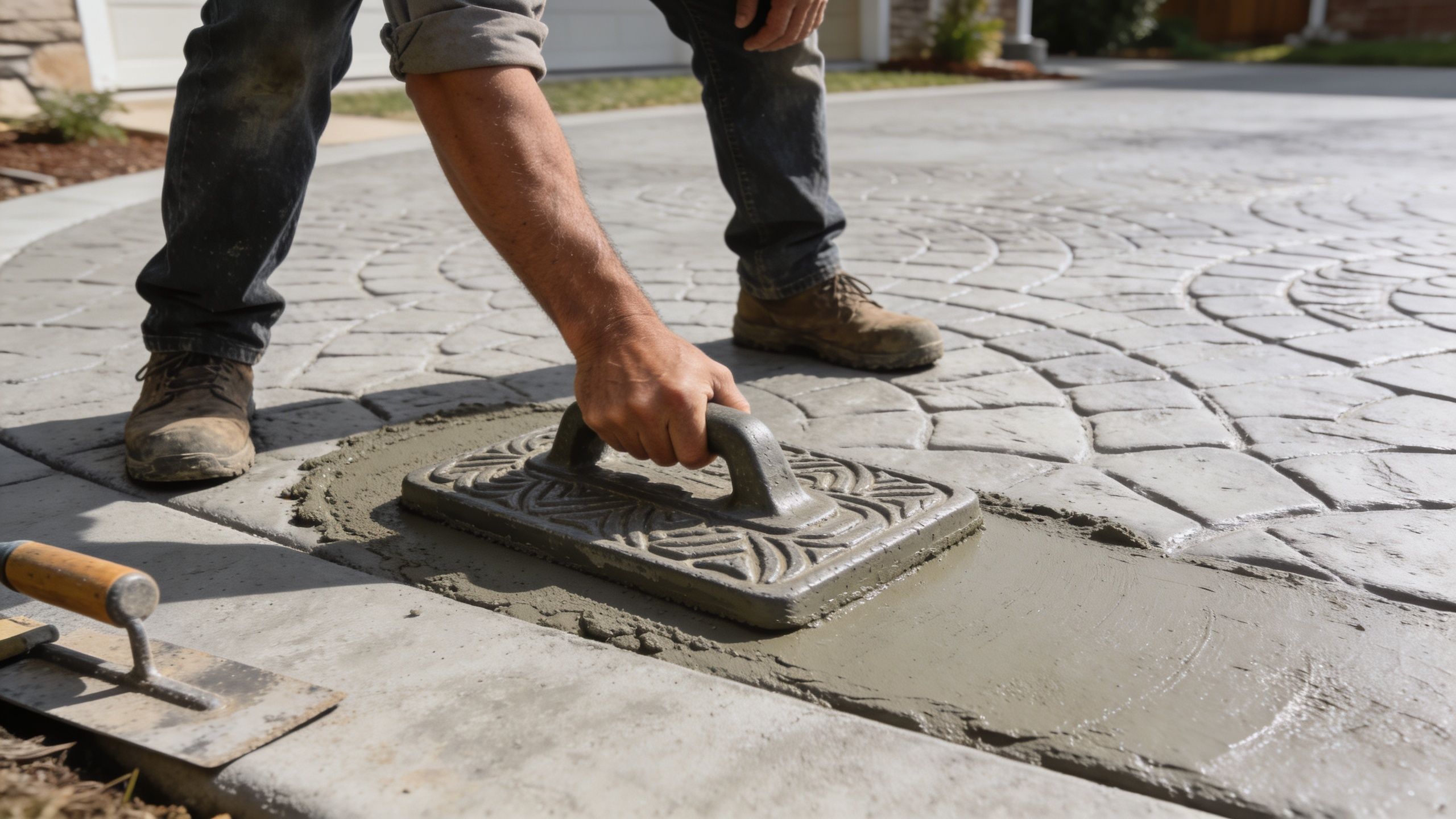
The base gets prepared first. Then the concrete is poured, leveled, and finished. After that, decorative color is added and large stamp mats are pressed into the surface to create the pattern. Once it cures and gets sealed, the slab has the look of a more expensive material while still behaving like concrete.
How the process works
Most homeowners are surprised by how straightforward the install process looks on site.
- Site prep happens first. The crew grades the area, builds forms, and prepares the base.
- The slab is poured. Fresh concrete is placed and leveled to the proper finish stage.
- Color is introduced. Depending on the system, the installer applies color to the surface while the slab is workable.
- The pattern is stamped. Rubber stamp mats create the texture before the concrete sets.
- The surface cures and gets sealed. The sealer protects color and surface wear while giving the driveway its finished appearance.
Patterns homeowners ask for most
In Central Florida neighborhoods, the most common look people want is something that feels cleaner and more upscale than plain concrete without looking too busy.
Popular stamped patterns include:
- Ashlar slate for a structured stone look
- Cobblestone for a more traditional texture
- Flagstone for a natural, irregular appearance
- Brick patterns for a classic style
- Wood plank looks for a more distinctive decorative finish
The important part is this. No matter what pattern gets stamped into the top, the driveway is still one continuous concrete slab. That detail is where many of the long-term stamped concrete driveway pros and cons come from.
The Major Advantages of Choosing Stamped Concrete
Stamped concrete became a major decorative hardscape option because it can mimic slate, flagstone, brick, or cobblestone at about 40–60% less than the materials it mimics, and that cost advantage is often paired with faster installation than a comparable paver project, according to this contractor overview of stamped concrete pros and cons.
That explains why so many homeowners in Belleview, Summerfield, and The Villages look at it seriously.
It gives you strong curb appeal
If the main goal is to make the front of the house look better, stamped concrete does a lot of work quickly. The driveway becomes a design feature instead of just a place to park.
You can coordinate the pattern and color with the house, the walkway, the entry, or a patio. That flexibility is a big reason stamped concrete keeps showing up in decorative residential work across Central Florida.
It delivers decorative value without premium-material pricing
A lot of homeowners like the look of natural stone but don't like what comes with buying and installing actual natural stone. Stamped concrete fills that gap.
Instead of paying for a surface built from many individual pieces, you're getting the appearance of a premium material in a poured system. That can make it easier to allocate budget to other parts of the project, like widening the driveway, improving drainage, or updating a walkway.
A stamped driveway often works best for homeowners who want the look upgrade first and the material prestige second.
It has a clean, continuous surface
Unlike pavers, a stamped slab doesn't have open joints all across the driveway. That means you don't have the same kind of joint maintenance throughout the field of the surface.
For routine care, it's easy to sweep, hose off, and keep looking presentable. Many homeowners also like that the driveway feels solid and unified rather than segmented.
Installation can be more efficient than pavers
On projects where timing matters, poured decorative concrete can move faster than a comparable paver installation. That matters when homeowners don't want a driveway torn up for longer than necessary.
For families in busy residential areas around Ocala or Inverness, less disruption is a real benefit. If the base, forming, and weather cooperate, stamped concrete can be a practical choice for both appearance and scheduling.
The Critical Disadvantages for Florida Homeowners
The part many sales conversations skip is the downside. In Florida, the biggest issue isn't whether stamped concrete looks good on day one. It's how that single slab handles movement over time.
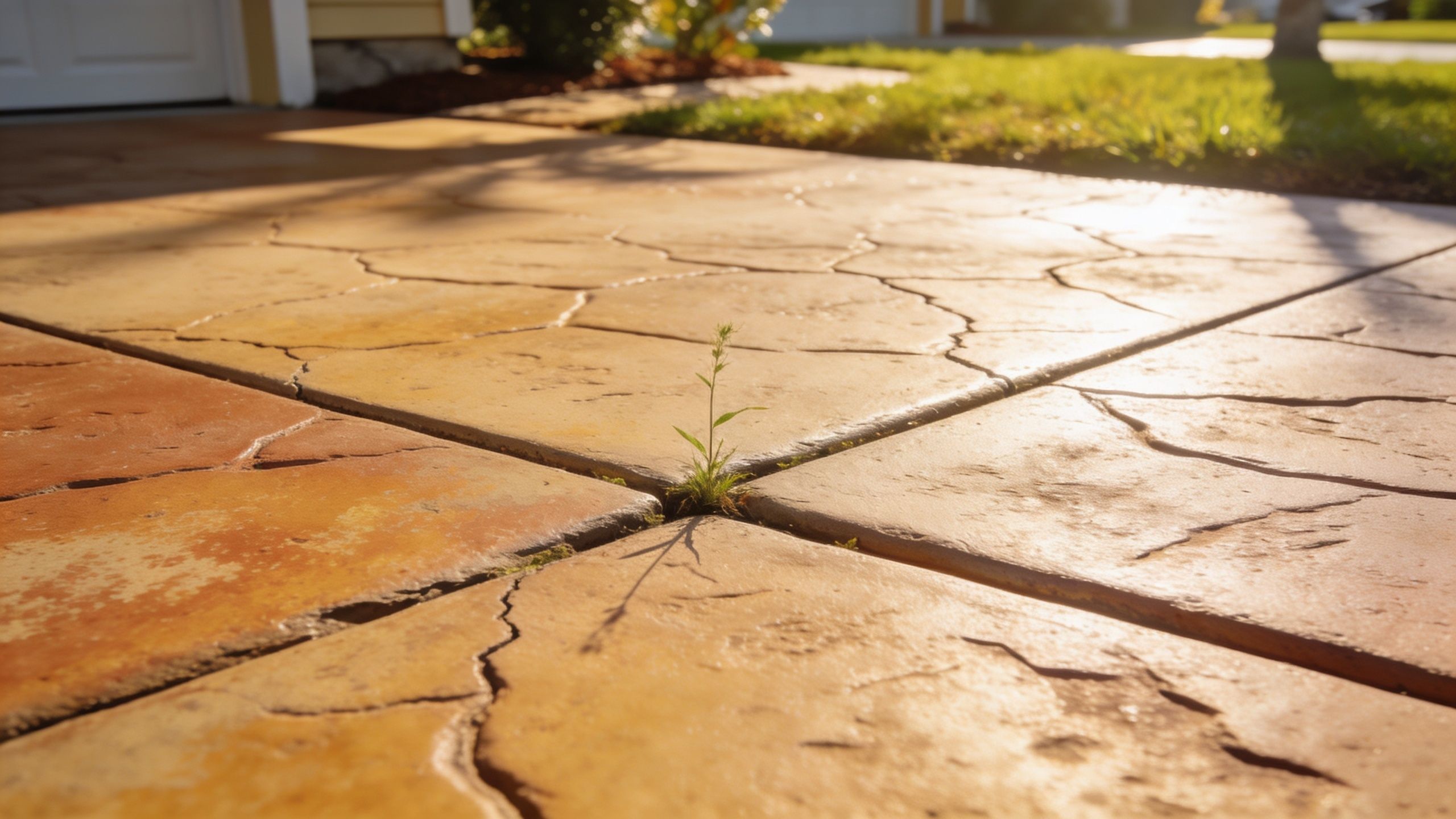
The core drawback of stamped concrete is durability under movement. Because the slab is rigid, even minor soil shifts can create cracks that are difficult to repair without a noticeable patch, and one crack can undermine both function and curb appeal, as explained in this stamped concrete driveway guide.
Cracking is the main long-term risk
This is the first thing I'd want any Florida homeowner to understand. A stamped driveway is still concrete. It doesn't become flexible just because it looks like stone.
In Central Florida, sandy soil, washout around edges, drainage problems, and normal settlement can all work against a slab. Proper joint layout matters a lot, which is why details like a concrete expansion joint are part of good driveway design, but joints reduce random cracking risk. They don't turn a rigid slab into a flexible system.
Repairs usually show
Here, stamped concrete loses ground to pavers.
If one paver section settles, a crew can lift and reset that area. If a stamped slab cracks or a section gets damaged, repairs are harder to disguise because the color, texture, and age of the surrounding slab have to be matched. A patch often looks like a patch.
That matters on decorative work because the appearance is a big part of what you paid for in the first place.
Wet conditions can make the surface slick
Florida gets regular rain, and some driveways stay damp longer because of shade, drainage patterns, or orientation. Sealer protects the slab, but certain sealed finishes can become slippery when wet.
That doesn't mean stamped concrete can't be used safely. It means the sealer choice and texture matter. On sloped entries, near garages, or in areas where water sits, anti-slip additives are not an upgrade item. They're part of doing the job responsibly.
Florida-specific trouble spots
Some driveway conditions deserve extra caution:
- Shaded front yards where moisture lingers after rain
- Low spots where runoff crosses the slab
- Loose or poorly compacted subgrade that allows movement
- Decorative designs with smoother texture that offer less grip underfoot
Stamped Concrete vs Other Driveway Options in Florida
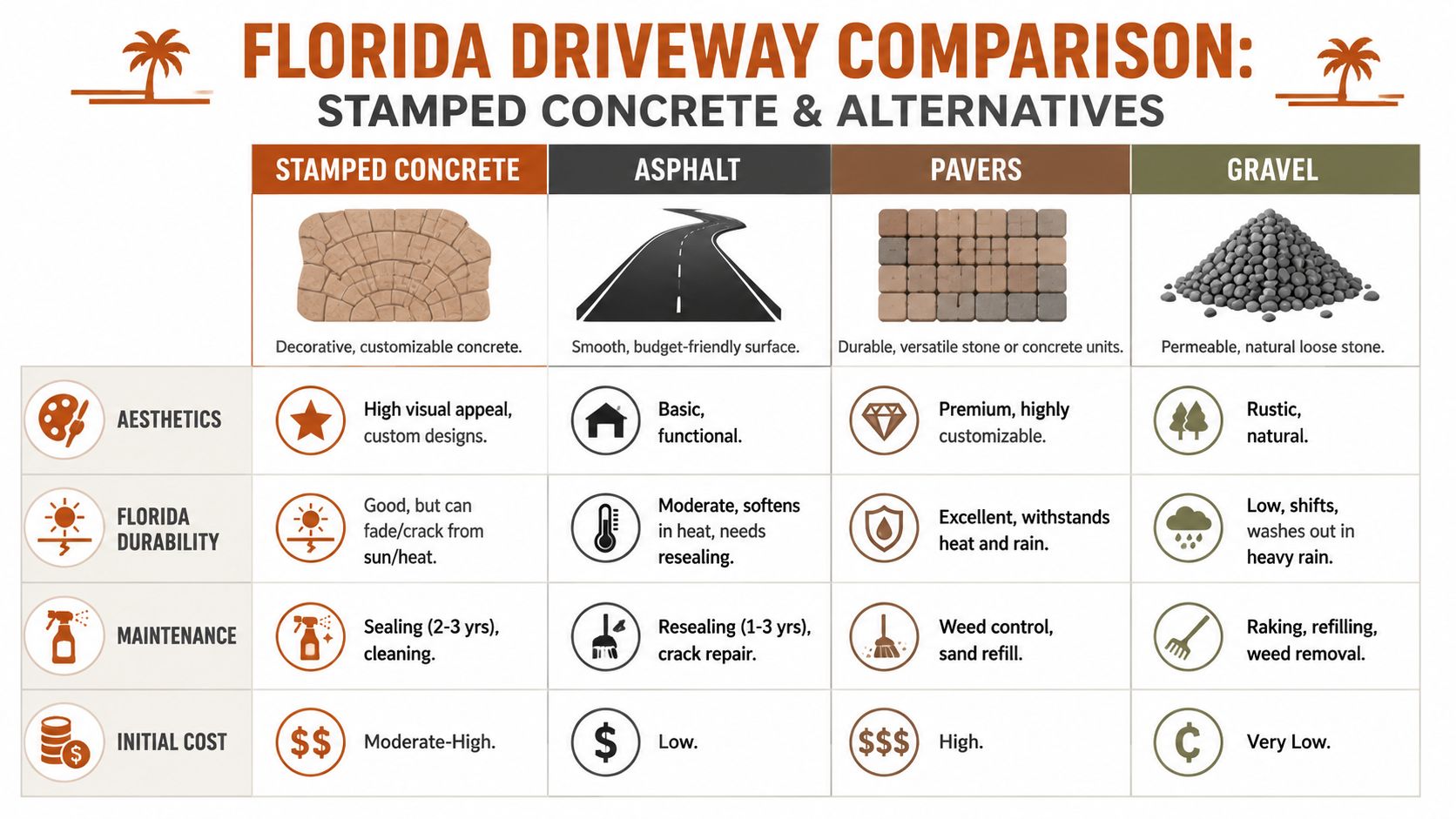
Choosing among driveway materials in Marion County, FL and Citrus County, FL usually comes down to four things. Appearance, movement tolerance, upkeep, and budget. Stamped concrete has a place, but it helps to see it side by side with the alternatives.
Stamped concrete versus pavers
This is the most important comparison for decorative driveways.
Typical poured concrete has a compressive strength of 3,000–4,000 PSI, while interlocking pavers are often 8,000 PSI or greater. That matters because stamped concrete has to resist ground movement through control joints rather than flexibility, which makes it more crack-prone if the base isn't right, according to Belgard's comparison of stamped concrete and pavers.
For homes in Crystal River, Homosassa, or other areas where drainage and movement can be concerns, that difference matters in practical terms.
| Category | Stamped concrete | Interlocking pavers |
|---|---|---|
| Appearance | Decorative, seamless look | Premium modular look |
| Movement tolerance | Lower | Higher |
| Repairs | Harder to blend | Easier to reset locally |
| Upfront cost | Usually lower | Usually higher |
Pavers often win when a property has movement concerns or the owner wants easier long-term repair options. Stamped concrete often wins when the owner wants a decorative surface at a lower initial price than a full paver driveway.
Stamped concrete versus standard concrete
This one is simpler than people think.
A standard concrete driveway and a stamped one share the same basic slab behavior. If the ground moves, both can crack. The difference is the finish.
Standard concrete is more practical and understated. Stamped concrete is the decorative upgrade. If a homeowner in Dunnellon or Silver Springs wants clean function and lower visual complexity, standard concrete may be the better fit. If curb appeal is the main goal, stamped becomes more attractive.
Stamped concrete versus asphalt
This is really a choice between looks and function.
Asphalt gives you a darker, more utilitarian driveway surface. It doesn't offer the decorative effect of stamped concrete, but many owners choose it for straightforward performance. In Florida, asphalt maintenance matters too, especially under strong sun and weather exposure, which is why sealcoating becomes part of the long-term picture.
For homeowners and property owners comparing surfaces visually, this short video gives a useful overview of decorative stamped concrete in the field.
A practical way to choose
If you're deciding between materials, this is the framework I use:
- Choose stamped concrete if you want decorative curb appeal and accept slab-related risks.
- Choose pavers if soil movement and repairability are major concerns.
- Choose standard concrete if you want a simpler look with fewer decorative expectations.
- Choose asphalt if function and a different price profile matter more than upscale appearance.
On a stable site with good drainage, stamped concrete can look excellent. On a problem site, the same driveway can become a decorative crack map.
Understanding Costs Lifespan and Maintenance Needs
A stamped driveway can look great on day one and still become a frustrating expense if the owner only budgets for installation.
In Central Florida, the main cost consideration is ownership over time. Sun breaks down sealer. Heavy rain tests drainage. Sandy soil can allow movement under the slab if the base work was rushed. Those conditions have a direct effect on appearance, repair risk, and service life.
Stamped concrete can hold up for many years, but that depends on installation quality, drainage, traffic, and maintenance. Homeowners who want a clearer picture of long-term performance should read this guide on how long a concrete driveway lasts and what affects lifespan.
Maintenance is part of the price
Stamped concrete needs periodic cleaning and resealing to protect color and reduce surface wear. Concrete Network's stamped concrete maintenance guidance also notes the importance of proper sealing, especially where moisture and surface exposure are constant.
Florida makes that schedule harder on decorative concrete. UV exposure is intense for much of the year. Afternoon storms soak the surface. Irrigation overspray, mildew, and shaded sections can leave one part of the driveway aging differently from another.
I tell homeowners to treat resealing as routine upkeep, not as an occasional cosmetic extra.
What that upkeep usually includes
The work itself is straightforward. Sticking to the schedule is where owners fall behind.
- Cleaning removes dirt, leaf tannins, mildew, and tire marks that flatten the pattern and stain the surface.
- Resealing helps preserve color and slows water intrusion into the slab surface.
- Slip-resistance additives should be considered on sealed driveways, especially near the garage approach or areas that stay wet after rain.
- Crack and joint monitoring matters because small issues are easier to address before water gets deeper into the slab system.
Some homeowners do that work themselves. Others hire a contractor for recurring service. Riverside Sealing & Striping, LLC handles sealing work for decorative concrete, which is the kind of ongoing care stamped surfaces often need in this climate.
Lifespan and value are tied together
Stamped concrete can deliver good value on the right property. The site has to drain well, the base has to be built correctly, and the owner has to keep up with maintenance. If any one of those pieces is weak, the driveway usually shows it.
That is the part many sales conversations skip.
A plain concrete driveway may age more gracefully from a maintenance standpoint because color fade and sealer wear are less of a concern. Pavers often cost more up front, but they can be easier to repair if Florida soil movement becomes a problem. Stamped concrete sits in the middle. It offers stronger curb appeal than plain concrete, but it asks more from the owner over the years.
For Central Florida homeowners, the best cost analysis is not just the initial bid. It is the install price, the resealing cycle, the likelihood of slab movement on that lot, and how much the decorative finish matters to you after five, ten, or fifteen years.
Get a Professional Evaluation for Your Driveway Project
By the time most homeowners reach a final decision, the choice is usually clearer than it looked at the start.
If your top priority is a decorative driveway that adds curb appeal and gives you the look of higher-end materials without using the actual materials, stamped concrete can be a good fit. If your property has questionable drainage, visible settlement, or a history of slab movement, pavers may deserve a harder look.
That difference matters across Central Florida. Conditions in Ocala aren't identical to conditions in Crystal River, and a driveway in The Villages may not have the same site demands as one in Inverness or Lecanto. Soil behavior, runoff patterns, and the condition of the existing driveway all affect what should be installed.
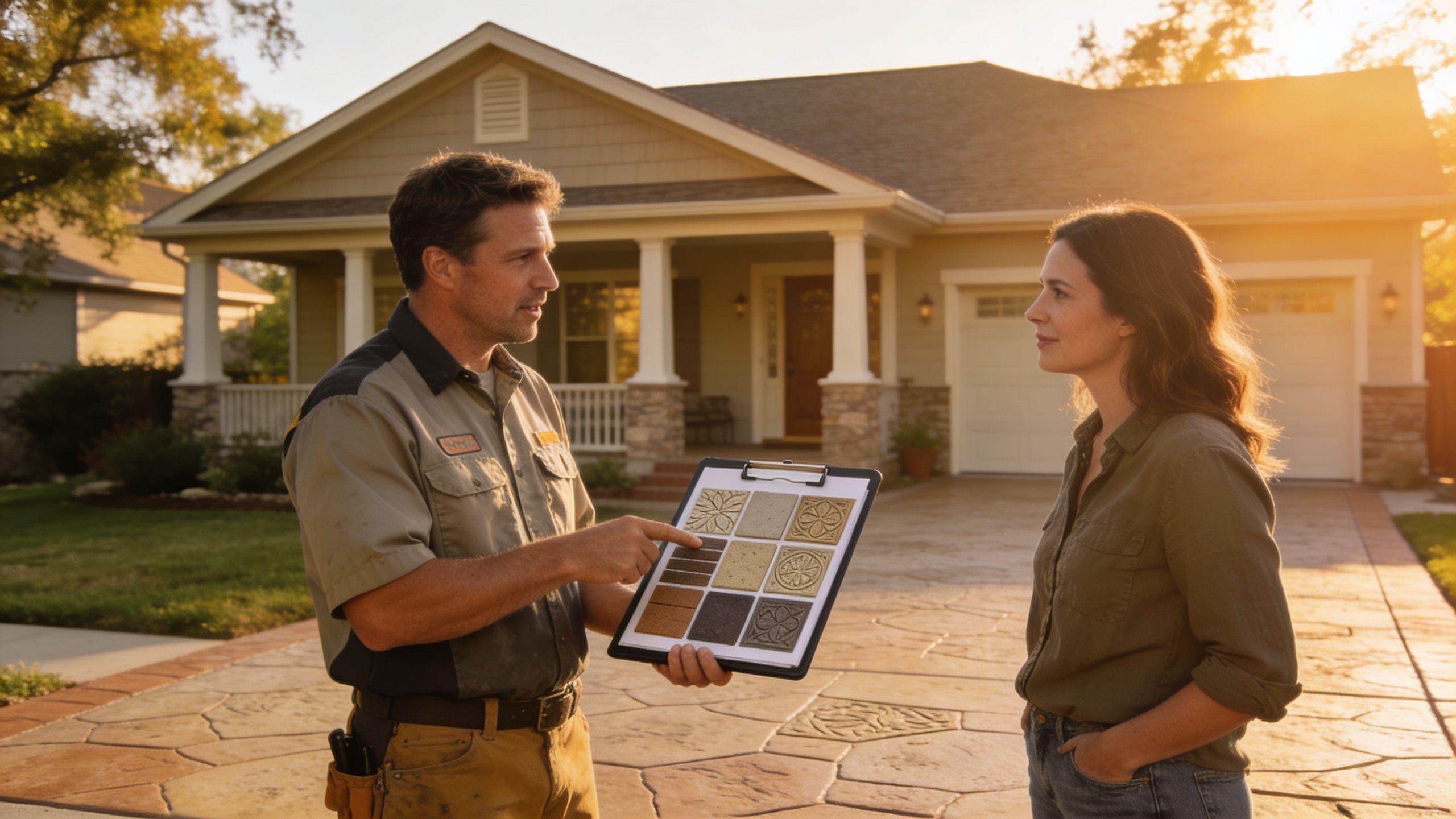
What a good evaluation should cover
A real driveway assessment shouldn't start with pattern samples. It should start with the site.
A contractor should be looking at:
- Base conditions under the proposed slab area
- Drainage flow around the driveway and garage approach
- Slope and water behavior during heavy rain
- Joint planning so the slab has a controlled way to relieve stress
- Surface traction needs based on texture, grade, and exposure to moisture
Field advice: Decorative concrete only works long-term when the structural basics are handled first.
When to bring in a contractor
If you're replacing a failing driveway, changing driveway width, or choosing between stamped concrete, standard concrete, and asphalt, it's worth having a contractor walk the property before you commit to a finish.
As Concrete and Asphalt Experts in Marion and Citrus County, the right role here is not to push one material on every property. It's to explain what fits the site, what maintenance you'll be taking on, and what trade-offs come with each option. Licensed and insured local contractors with Central Florida experience can usually spot red flags before they become expensive decorative problems.
A no-pressure consultation is the best next step if you're still deciding. It gives you a realistic answer based on your lot, not a generic sales pitch.
Frequently Asked Questions about Stamped Concrete
Can you stamp an existing concrete driveway
Usually, no. Traditional stamped concrete is done on fresh concrete during placement. Existing slabs may sometimes be covered with a decorative overlay system, but that's a different process and has its own pros and cons.
How do you keep stamped concrete from being slippery
Use a sealer with a non-slip additive. In Florida conditions, that step is especially important on damp areas, sloped driveways, and surfaces that stay wet during rainy weather.
How long do you need to stay off a new stamped driveway
Follow the installing contractor's instructions. Foot traffic and vehicle traffic don't return at the same time, and cure timing can vary with weather and project conditions.
Is stamped concrete better than pavers in Florida
It depends on your priorities. Stamped concrete usually wins on decorative value relative to initial cost. Pavers usually win on movement tolerance and easier repair.
If you're weighing stamped concrete against standard concrete, pavers, or asphalt, Riverside Sealing & Striping, LLC offers free, no-pressure evaluations for homeowners across Marion County, FL, Citrus County, FL, and surrounding Central Florida areas. If you want a practical opinion based on drainage, soil movement, appearance goals, and maintenance expectations, request an estimate and get a driveway recommendation that fits the property.