
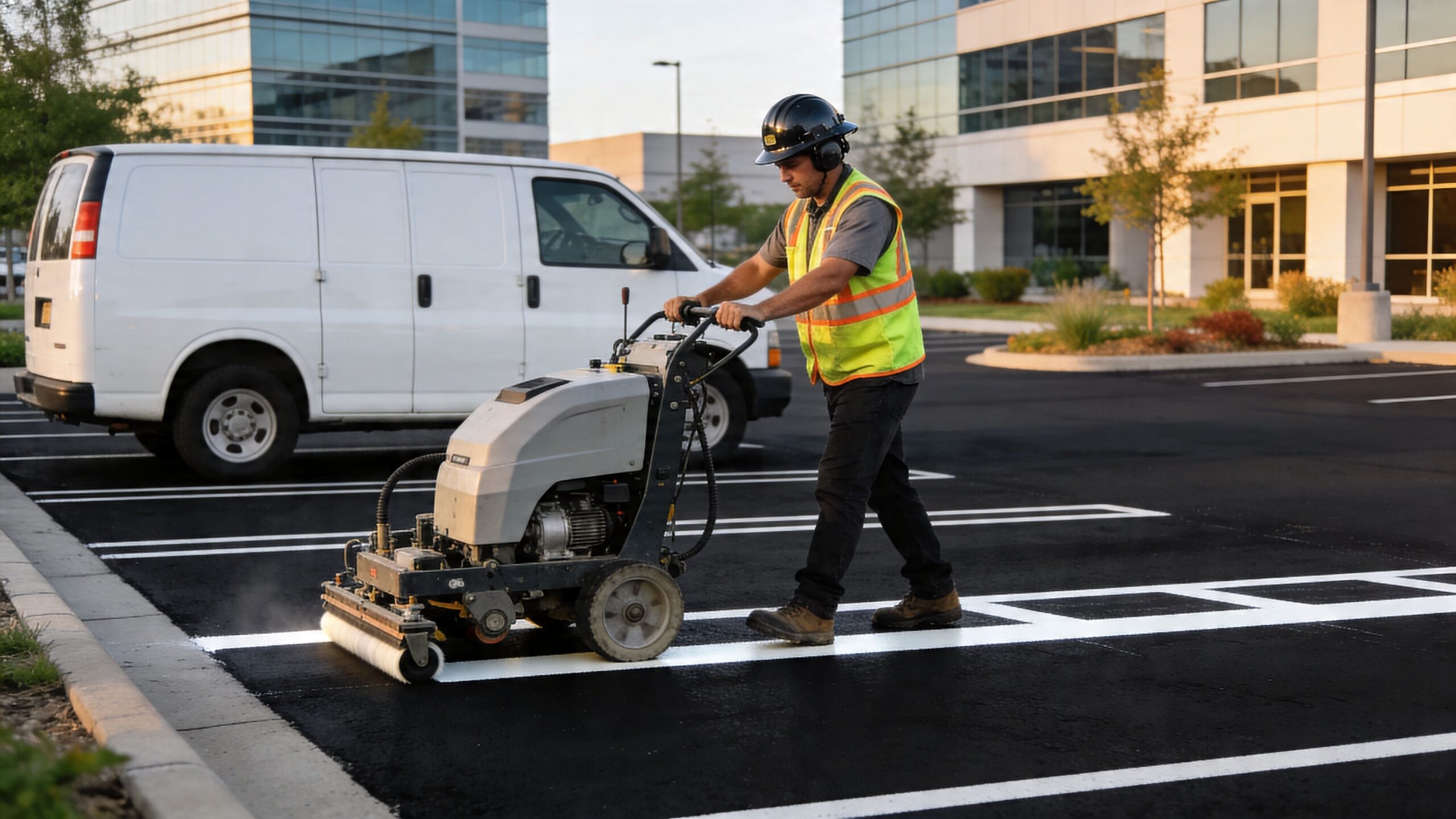
If you're searching for commercial parking lot striping near me, there's a good chance you're looking at a property right now that needs attention. Maybe the lines are faded. Maybe the handicap spaces were painted years ago and no one is fully confident they're still compliant. Maybe the asphalt is weathered, the sidewalks are uneven, and you're tired of calling one company for concrete and another for striping.
That situation is common across Ocala, Crystal River, Inverness, Dunnellon, Belleview, and the surrounding Central Florida area. Property owners and managers don't just need fresh paint. They need a contractor who understands how concrete work, asphalt maintenance, layout, drainage, safety, and long-term upkeep all connect.
That's the true value in treating pavement as an asset, not a patch job.
Your Full-Service Pavement Partner in Marion & Citrus County
A retail center manager in Marion County usually sees the warning signs before tenants say anything. Drivers start parking crooked because stall lines are hard to see. Deliveries drift into fire lanes. The front walk has settled in spots. The lot still functions, but it doesn't look well managed anymore.
That same pattern shows up in Citrus County too. Churches in Homosassa, HOAs in Lecanto, storefronts in Inverness, and mixed-use properties near The Villages all run into the same issue. Surface problems rarely stay in one category. Asphalt fades. Concrete cracks. Markings lose clarity. Safety and appearance slide together.
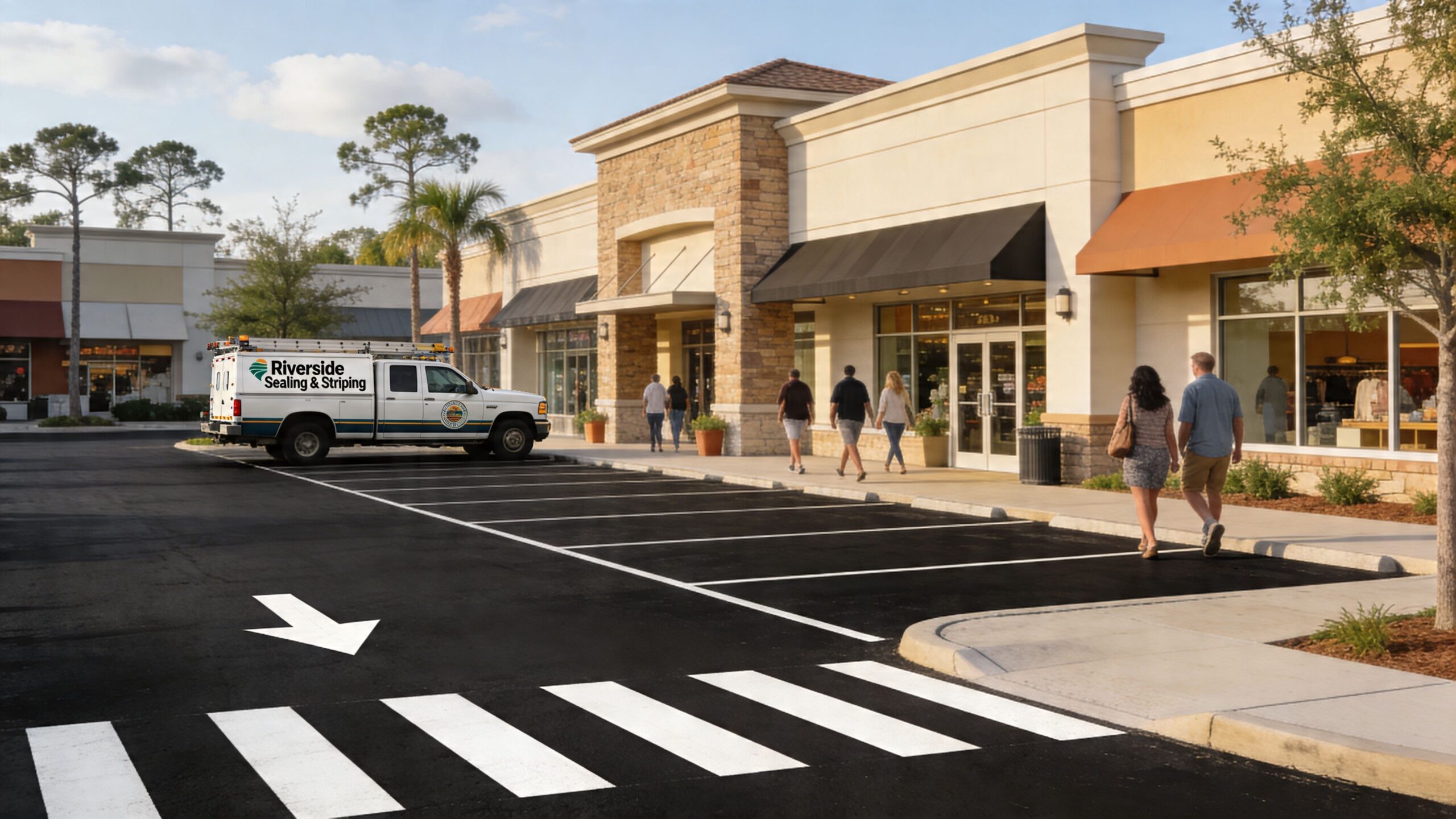
One call instead of multiple contractors
Property owners in Central Florida often waste time coordinating separate trades for work that should be planned together. A sidewalk replacement affects striping layout. A driveway pour changes traffic flow. ADA access has to be considered across both concrete and asphalt surfaces.
A full-service pavement partner handles that as one scope, not several disconnected jobs.
That means help with:
- Concrete driveways and replacements for homes and entry areas
- Patios, slabs, and flatwork for functional outdoor spaces
- Sidewalks and walkways including ADA-focused access routes
- Asphalt sealcoating and surface protection for aging pavement
- Parking lot striping and re-striping for commercial sites
- ADA markings, arrows, fire lanes, and layout updates for safer circulation
Built for the way Central Florida properties actually age
In this market, surfaces don't fail in a neat sequence. Heavy sun, rain, humidity, traffic wear, and deferred maintenance all stack up. The best results come from looking at the whole site.
Practical rule: The cheapest fix on one part of the property often becomes the expensive problem on another part.
For property owners in Silver Springs, Summerfield, Beverly Hills, Hernando, and Dunnellon, that matters. You need work that lasts, scheduling that stays on track, and a crew that can handle both the concrete and asphalt side without making you manage the gap between them.
Durable Concrete Installations Built for Florida
Concrete work isn't just about pouring a slab and walking away. In Florida, the long-term result comes from prep, grading, mix choice, finishing, and knowing how that surface will be used. A residential driveway, an HOA walkway, and a commercial pad don't have the same demands.
Poor concrete work usually looks acceptable at first. Then the edge breaks down, water starts sitting where it shouldn't, and the finish ages unevenly. That's why professional installation matters.
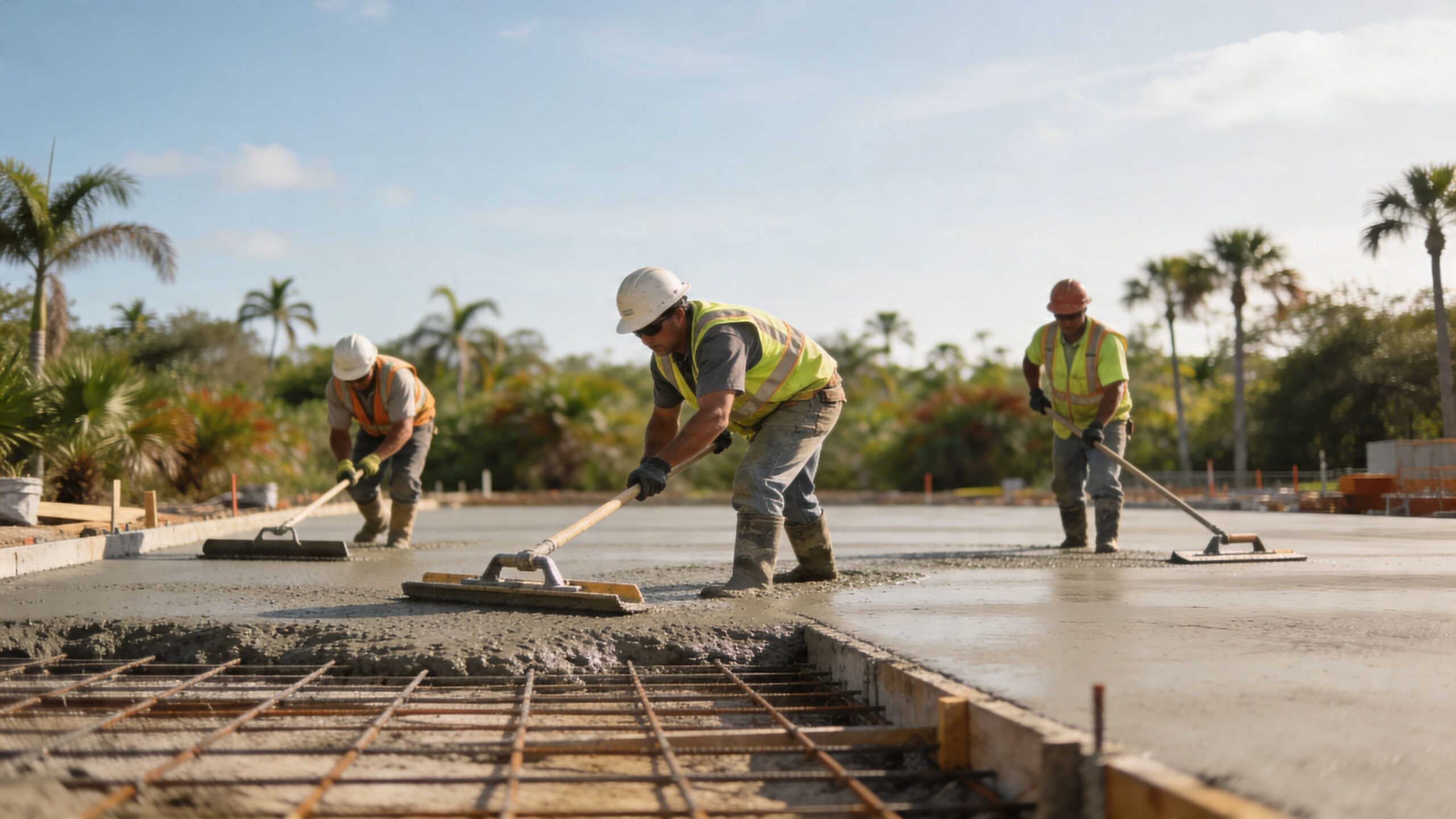
Driveways, patios, slabs, and replacement work
For homeowners in Ocala, Belleview, and Summerfield, a driveway does more than carry vehicles. It shapes curb appeal and first impressions. When it's cracked, broken, or patched too many times, replacement is often the cleaner long-term choice.
Patios and slabs need the same level of discipline. A backyard slab for outdoor living has to drain properly, hold up through weather swings, and finish cleanly enough to still look right years later.
Commercial and mixed-use properties benefit from the same standards. Entry pads, dumpster pads, sidewalks, and utility slabs all work better when the job is laid out with use, drainage, and maintenance in mind.
What good concrete work does better
The value isn't in "new concrete" by itself. It's in reducing future headaches.
| Area | What goes wrong with poor work | What proper installation helps avoid |
|---|---|---|
| Driveways | Cracking, weak edges, uneven settling | Better appearance, stronger daily use |
| Patios and slabs | Standing water, rough finish, surface wear | Cleaner finish and more usable space |
| Sidewalks | Trip points, drainage issues, poor transitions | Safer access and cleaner routing |
| Replacements | Mismatched elevations and rushed tie-ins | Better fit with existing site conditions |
Sidewalks and walkways need more than a broom finish
Commercial sidewalks and access routes have to function safely in all conditions. That's especially true around storefronts, churches, schools, and HOA common areas where foot traffic includes children, seniors, and mobility device users.
ADA-sensitive work isn't something to improvise after the pour. Width, transitions, slope, and how the walkway ties into parking and access aisles all matter.
Concrete should solve movement through a property, not just fill space.
In practical terms, that means demolition and replacement work should be treated as site improvement, not just removal and repour. If the old concrete failed for a reason, the new concrete has to address that reason.
Expert Asphalt Sealcoating and Parking Lot Striping
A lot in Ocala or Crystal River can look serviceable from the driver’s seat and still be costing the owner money. The surface may be drying out, the old layout may be wasting spaces, and faded markings may be forcing tenants, visitors, and delivery drivers to guess their way through the property. That is why sealcoating and striping should be planned together.
For owners searching for commercial parking lot striping near me, the better question is not who can repaint lines fastest. It is who can look at the asphalt, the traffic flow, the access points, and the concrete tie-ins around the lot, then recommend the right scope before money gets spent in the wrong place. That is the advantage of working with one pavement contractor who handles both asphalt and concrete. The striping has to fit the property as it functions.
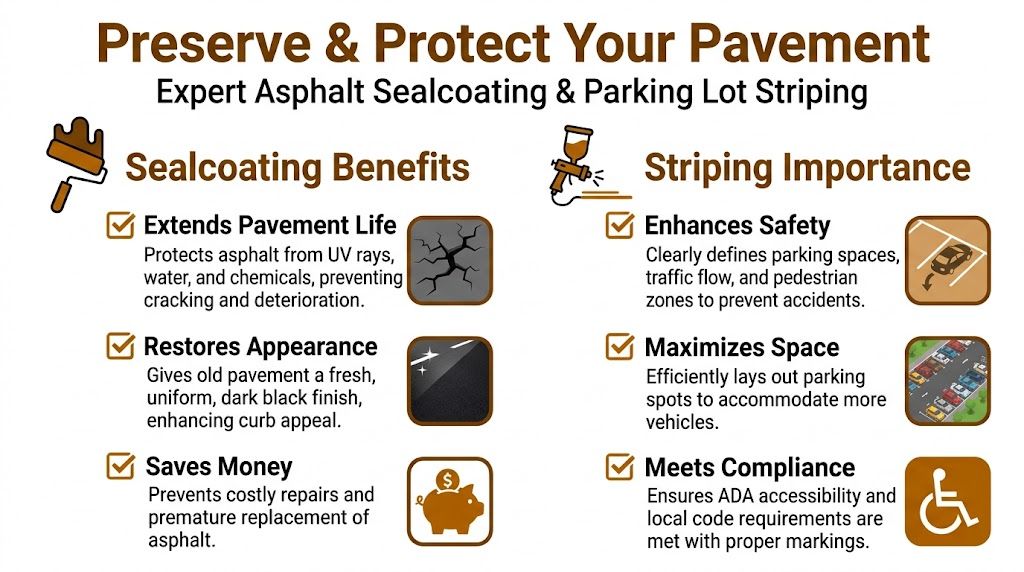
Why sealcoating should come before restriping
Fresh paint on worn-out asphalt rarely holds up the way owners expect. In Central Florida, UV exposure, heavy rain, standing water in low spots, and constant turning traffic all shorten the life of an unprotected surface. Sealcoating helps slow that wear and gives new markings a darker, cleaner background so drivers can read the lot faster.
Timing matters too. If a lot is due for sealcoat, it usually makes more sense to seal first and stripe after cure instead of paying for lines that will be covered or disturbed during maintenance. That approach protects the asphalt and avoids doing the same work twice.
What professional striping actually covers
Parking stalls are only one piece of the job. A usable commercial lot also needs clear circulation, visible pedestrian guidance, and markings that match how the site is used day to day.
Typical striping work includes:
- Standard parking stall lines
- Directional arrows and drive-lane guidance
- Accessible parking spaces and access aisles
- Crosswalks at storefronts, offices, and shared-use areas
- Fire lane and curb markings where required
The primary trade-off is scope. A basic re-stripe on an existing layout is straightforward. A lot that needs traffic pattern corrections, updated accessible spaces, and better pedestrian routing takes more layout time, more field checks, and more care before any paint goes down. That extra planning usually saves money compared with correcting bad striping after tenants start using the lot again.
If you want a practical breakdown of layout, prep, and sequencing, this guide on how to stripe a parking lot is a useful reference.
A short visual helps make the process easier to picture.
What holds up better in the field
Good results usually come from a few consistent decisions:
- Clean the surface before application
- Lay out the lot from actual field conditions, not faded old lines
- Use materials that fit the traffic level and site use
- Schedule the work around weather, cure time, and business access
Problems usually start with shortcuts:
- Painting over dust, debris, or failing asphalt
- Copying an old layout that already had spacing or circulation problems
- Treating striping like a cosmetic touch-up instead of an operating part of the property
- Hiring a contractor who only looks at paint and ignores pavement condition, drainage, and adjacent concrete
Riverside Sealing & Striping, LLC handles asphalt sealcoating, ADA striping, handicap spaces, directional markings, and related pavement work for Central Florida properties. For many owners in Marion and Citrus counties, that single-call approach makes the job simpler because the asphalt surface, the striping layout, and the surrounding concrete work can be planned as one property asset, not as separate fixes.
Reliable Solutions for Commercial Properties and HOAs
Monday morning is when weak planning shows up. The delivery truck is blocking the fire lane, residents are circling for spaces, and the one accessible stall near the entrance does not line up cleanly with the sidewalk route. On commercial sites and HOA properties, striping and concrete work affect daily operations, liability exposure, and how the property is judged by tenants, boards, and visitors.
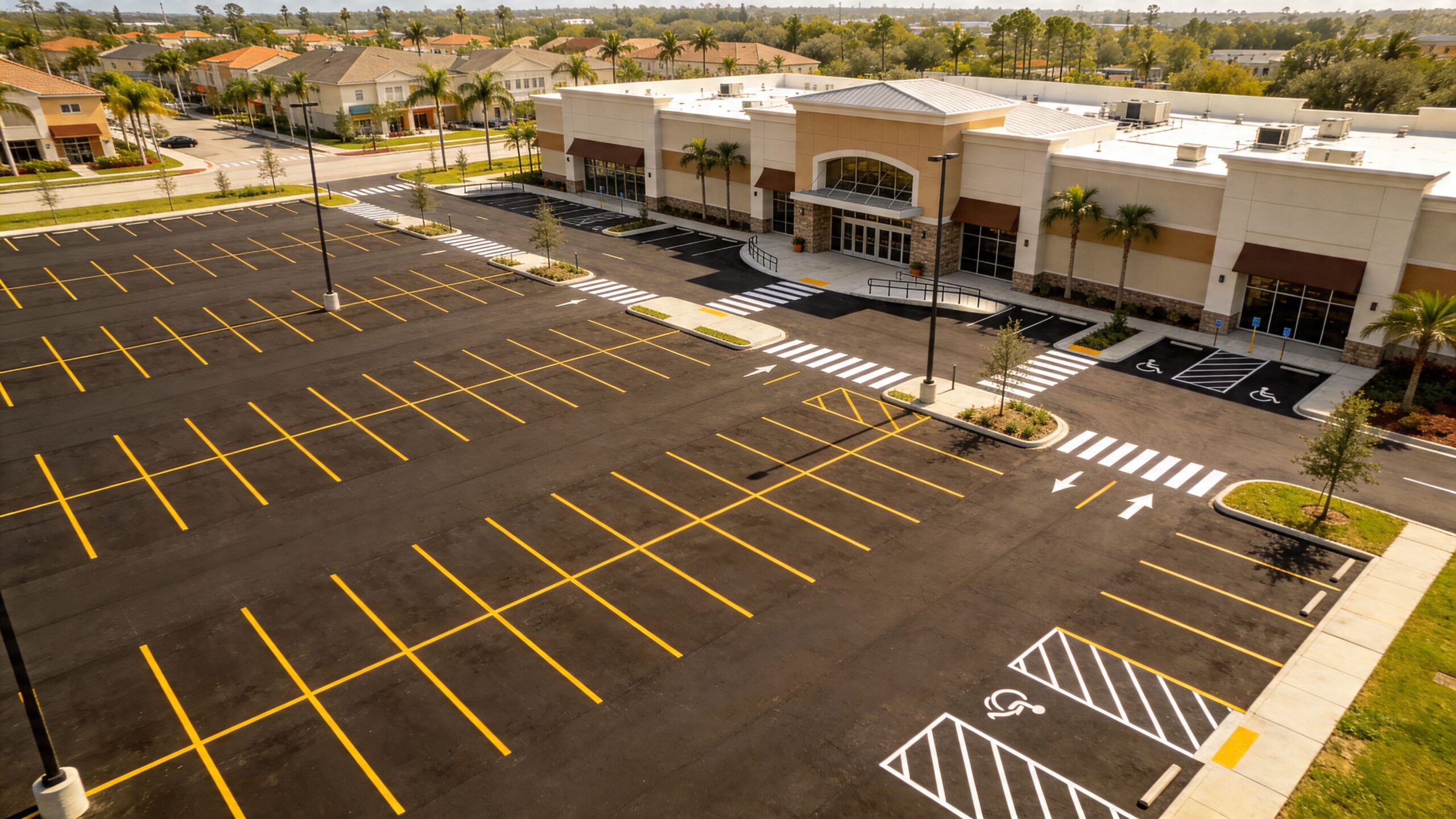
ADA details affect the whole layout
Accessible parking has specific dimensional and slope requirements. Standard accessible spaces require a minimum width of 96 inches with a 60-inch access aisle, van-accessible spaces require an 11-foot space with a 5-foot aisle, and the maximum slope is 2.08% in all directions, based on parking lot line striping ADA requirements.
On a real property, that reaches beyond the painted stall. It affects sign placement, curb ramp alignment, sidewalk transitions, and drainage. A space can look correct from a distance and still create a problem if the slope is off or the route to the entrance breaks down at the concrete.
That is why commercial pavement work should be treated as one asset management job. Asphalt, striping, curbs, sidewalks, and ramps have to work together.
Large properties need a phasing plan that fits how the site runs
Retail centers, churches, schools, medical offices, and HOA common areas rarely have the option to shut down the whole paved area at once. The work has to be sequenced around resident access, customer parking, vendor traffic, trash pickup, and safe pedestrian movement.
A contractor should review a few things before scheduling starts:
- Traffic flow at entry and exit points
- Areas that must stay open during business hours
- Pavement failures that will shorten striping life
- Concrete walks, ramps, and curb transitions tied to accessible routes
- Tenant or resident communication before crews arrive
If the surface is breaking apart, fresh lines will not solve the underlying problem. This overview of Florida asphalt repair considerations explains why layout work should follow proper pavement correction.
A compliant, durable layout starts with field measurements and site use, not faded markings from the last paint cycle.
What commercial owners and HOA boards should expect
Commercial clients should expect more than a repaint. They should expect a field review that catches undersized access aisles, worn trip edges, failed asphalt at turning areas, and concrete issues where pedestrians leave the parking field and enter the walkway system.
That is where a single-call contractor brings real value. Riverside Sealing & Striping, LLC can evaluate both the asphalt surface and the adjacent concrete at the same time, which helps owners in Marion and Citrus counties avoid split-scope decisions that cost more later.
Done right, the lot works better on day one and holds up longer under Florida traffic, rain, heat, and constant use.
Protecting Your Pavement from the Florida Climate
Central Florida is hard on pavement. Heat dries surfaces out. UV exposure fades markings. Rain works into weak areas. Humidity stretches drying windows and can punish rushed scheduling. Traffic finishes the job.
Concrete and asphalt fail differently, but the root problem is often the same. The surface wasn't built or maintained for local conditions.
Why standard choices don't always hold up
On a low-stress area, conventional traffic paint can make sense. On high-traffic sections, busy entrances, crosswalks, and areas used at night, standard paint may not be the strongest long-term choice.
Thermoplastic striping materials can last 3 to 5 years under normal usage conditions, and embedded glass beads can increase reflectivity and night visibility, according to this guide to parking lot striping standards. In Florida, that's valuable because visibility changes fast during storms, evening traffic, and wet conditions.
Matching the material to the site
Not every property needs the same system. A small private lot may be well served by a standard paint application and a consistent maintenance schedule. A busier commercial site may benefit from spending more on high-wear zones so restriping doesn't become a constant cycle.
Here's a practical perspective:
| Site condition | Better fit |
|---|---|
| Moderate traffic and routine refreshes | Water-based latex often fits well |
| Cold weather work or fresh asphalt conditions | Solvent-based options can be a better choice |
| High-traffic areas and key markings | Thermoplastic often makes better long-term sense |
For owners comparing options, this discussion of asphalt sealcoating cost per square foot helps frame maintenance as a budget decision, not just a repair expense.
Materials should be selected for the site you have, not the invoice you wish you had.
When the right product is used in the right place, you get better visibility, longer service life, and less rework.
Why Central Florida Chooses Riverside Sealing and Striping
A contractor can promise quality. What matters is whether they understand the work, show up when they say they will, and plan around the way your property operates.
That matters more in Marion and Citrus County because many jobs aren't simple one-day cosmetic touchups. They're live-site projects with tenants, residents, deliveries, services, worship schedules, school activity, or customer traffic moving around them.
Scheduling matters as much as workmanship
Property managers care about disruption for a reason. Pavement association surveys found that 70% of property managers cite business downtime as their top concern during maintenance projects, and off-hours scheduling after 5 PM or on weekends can cut potential revenue loss by over 90%, according to this discussion of parking lot paving and maintenance scheduling.
That matches what experienced owners already know. Good work isn't only about the finished surface. It's also about how little chaos the job creates while it's happening.
Why a local, family-run approach helps
A third- and fourth-generation company tends to look at pavement differently. The focus is usually less on pushing a single service and more on protecting the property over time.
That matters when you're deciding between:
- A quick re-stripe or a full layout correction
- A patch-and-delay approach or full concrete replacement
- One isolated fix or a maintenance plan that covers both concrete and asphalt
For Central Florida owners, local knowledge is practical, not sentimental. A contractor based in this region sees the same weather, the same drainage problems, the same oxidized asphalt, and the same ADA mistakes over and over. That shortens diagnosis and improves decisions.
The difference is usually in the small things
Reliable contractors tend to stand apart in routine ways:
- They return calls and show up for estimates
- They explain what should be fixed now and what can wait
- They schedule realistically
- They don't treat striping, sealcoating, and concrete as unrelated trades
Those habits save time for homeowners in Dunnellon and Summerfield, and they save headaches for commercial managers in Ocala, Crystal River, Homosassa, and The Villages.
Frequently Asked Questions about Pavement Services
How long does concrete last in Florida
Concrete can last a long time in Florida when it's installed correctly and matched to the site's use. The biggest variables are base preparation, drainage, finishing quality, and how well the slab handles water and traffic. Residential driveways, patios, sidewalks, and commercial flatwork all age better when the installation is done with local weather in mind.
How often should a parking lot be restriped
Annual restriping is commonly recommended because UV exposure, traffic wear, and weather steadily fade markings. On some properties, high-traffic areas may need attention sooner. On others, better material selection and good maintenance can stretch service life.
Do you offer ADA-compliant striping
ADA-compliant striping should include more than painting symbols on the pavement. The layout has to account for space width, access aisles, slope, and how pedestrians move from parking to the accessible route. That's why commercial striping should start with site measurements and layout review, not a repaint of whatever was there before.
Is professional striping really worth it
Yes, especially for commercial property. Faded lines contribute to 20% to 30% of parking lot accidents, while crisp professional striping can boost property values by an estimated 5% to 10% through stronger curb appeal and reduced liability risk, according to this analysis of parking lot striping ROI.
That doesn't mean every property needs a major redesign. It does mean neglected striping has real costs.
What's the difference between basic striping and a more complex layout
A basic job usually covers standard stalls and straightforward repainting. More complex work may include ADA handicap spaces, directional arrows, crosswalks, fire lanes, and custom layout adjustments.
In Florida pricing examples, basic striping for an average-sized lot often runs $300 to $500, while more complex layouts can exceed $1,500, based on Florida parking lot striping cost benchmarks from Angi. The same source notes that pricing can also be considered on a $0.20 to $1 per linear foot basis nationally.
Do you only handle asphalt work
No. Many property owners need concrete and asphalt services at the same time. Driveway replacement, sidewalk installation, slab work, sealcoating, parking lot striping, and ADA-related access improvements often overlap. Handling them together usually leads to a cleaner result and fewer scheduling gaps.
What areas do you serve
Service is available across Marion County, Citrus County, and surrounding Central Florida communities, including Ocala, Dunnellon, Belleview, Silver Springs, Summerfield, Crystal River, Homosassa, Inverness, Lecanto, Beverly Hills, Hernando, and The Villages.
Get Your Free No-Pressure Estimate Today
If your property needs new concrete, replacement flatwork, sealcoating, or commercial parking lot striping, it's worth getting a clear plan before the surface gets worse. A good estimate should tell you what needs attention now, what can wait, and how to phase the work with minimal disruption.
Free, no-pressure on-site consultations are available from 7am to 7pm. If you're in Marion County, Citrus County, or a nearby Central Florida community, now is a good time to get the site evaluated and priced.
For concrete driveways, patios, sidewalks, asphalt sealcoating, ADA markings, and commercial parking lot striping, contact Riverside Sealing & Striping, LLC for a free no-pressure estimate.