
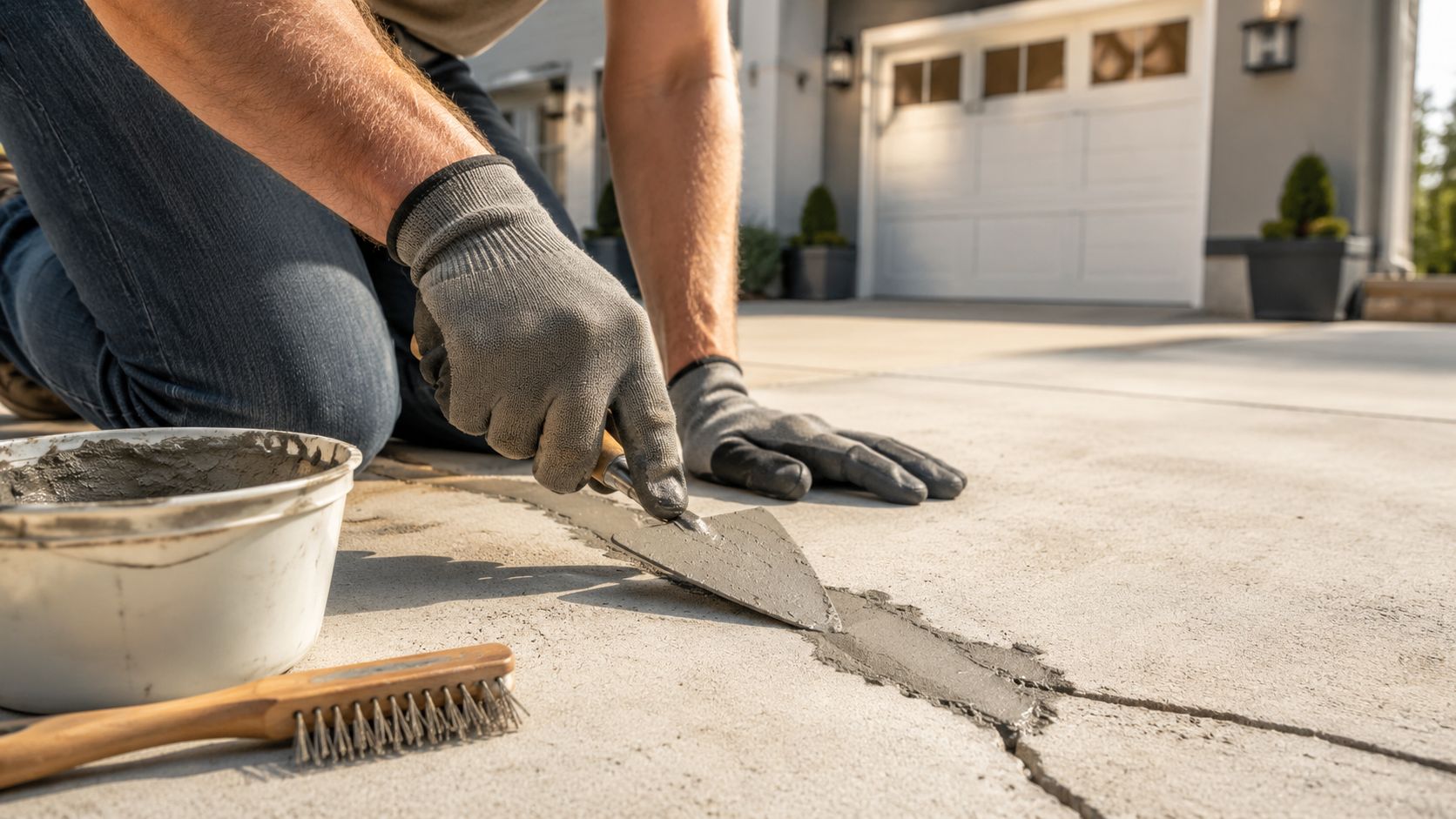
You're probably staring at the same thing I see all the time in Ocala, Crystal River, and the rest of Marion and Citrus County, a driveway with a few ugly cracks, a spalled patch near the garage, or a slab edge that's started to trip the mower. Most homeowners want a quick fix. The trouble is that concrete driveway repair how to only works when the slab is still telling the truth about what's happening underneath it.
A patch can look clean for a while and still fail fast if water has washed out the base or the slab has already moved. That's why a real repair starts with the driveway, the soil under it, and the drainage around it, not with the first bag of mix at the store. In Central Florida, that matters even more because sandy subsoils and stormwater runoff can turn a small defect into a repeat problem.
Table of Contents
- Start with a Driveway Self-Inspection
- Match the Damage to the Right Repair Path
- Repairing Cracks and Spalled Areas Step by Step
- Fixing Uneven Slabs and Drainage Problems
- When Repair Stops Making Sense and Replacement Wins
- Why Central Florida Conditions Change the Playbook
- Permits Safety and Knowing When to Call a Pro
Start with a Driveway Self-Inspection
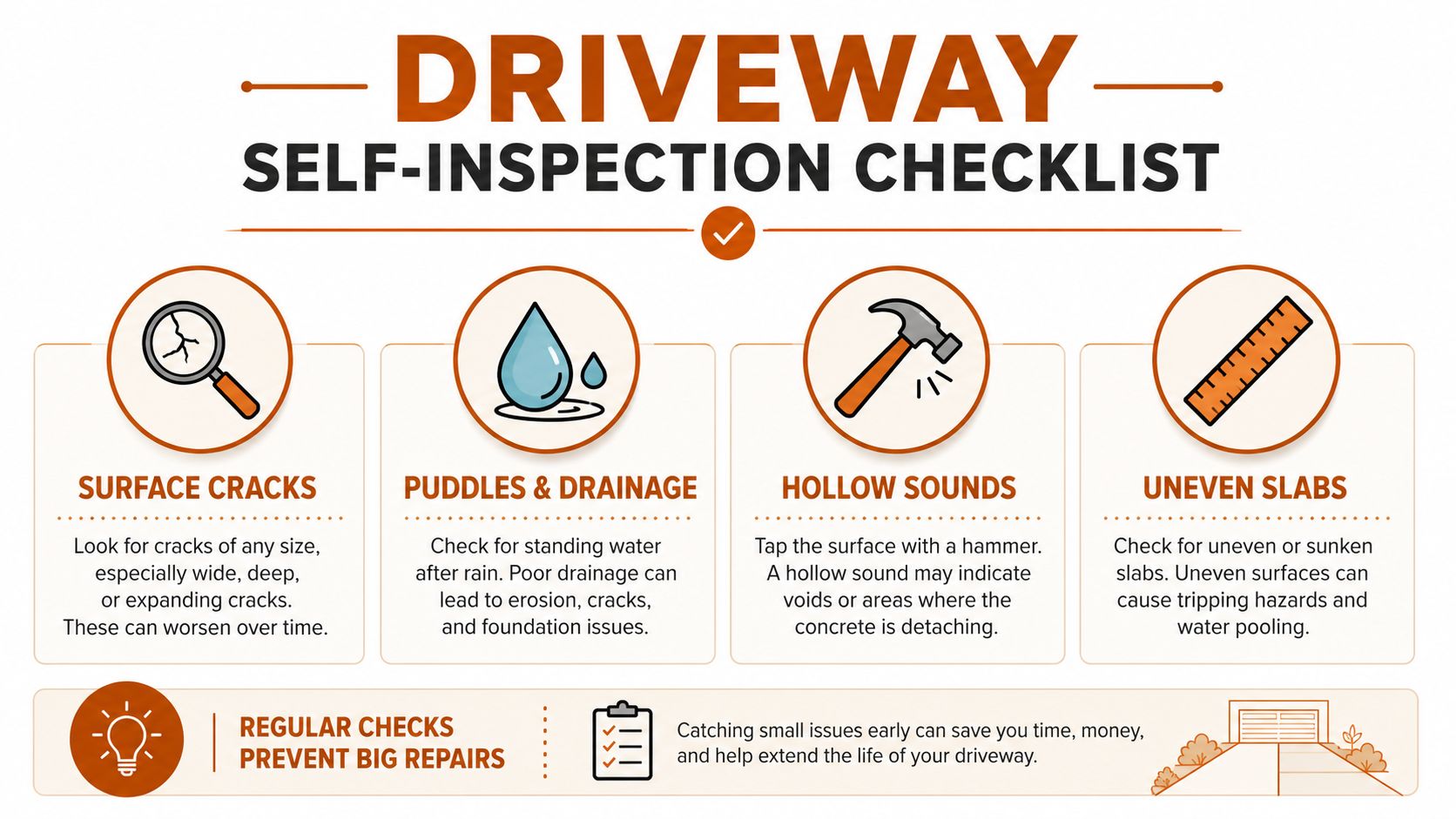
A driveway doesn't need to be torn up just because it looks rough. A 10-minute walk-around usually tells you whether you're dealing with a cosmetic issue, a patchable crack, or a slab problem that needs a different fix. I tell homeowners to start at the garage and work outward, because the highest-stress areas usually show the earliest clues.
What to look for first
Check the control joints, the edges near the garage, and any low spots where rainwater sits after a storm. Mark the crack width, the spots where concrete has flaked away, and any raised lips that catch a shoe or mower wheel. If you hear hollow sounds when you tap around a damaged area, that can point to debonding or voids under the slab, which is a different problem than a surface scar.
Take photos from the same angle before and after a rain. That gives you a record of whether a crack is stable or changing, and it helps later if you decide to get a professional look from a local crew. For homeowners who want a deeper read on why driveways crack in the first place, this local guide is worth a look: why driveway cracks keep coming back.
Practical rule: if one crack is joined by several others, or a slab has dropped toward the street, don't treat it like a simple surface repair.
What the pattern is telling you
A single hairline line in an otherwise flat slab is usually a different story than multiple cracks meeting at a corner. The first can often be handled with sealing or patching, while the second often points to movement in the base or soil. If the slab near the street has settled and water now runs the wrong way, the driveway is telling you the issue isn't just the top layer.
That's the point of the self-inspection. It keeps you from buying the wrong product for the wrong failure. It also gives you a clean list to use when you decide whether to keep it DIY or bring in a contractor with concrete and asphalt experience in Marion County, FL and Citrus County, FL.
Match the Damage to the Right Repair Path
Cracks, spalling, and settling all look bad, but they don't fail the same way. If you match the wrong fix to the wrong damage, you usually get a short-lived repair and a second round of labor. That's where a lot of weekend projects go sideways.
Cracks, from cosmetic to structural
Hairline cracks are usually narrow and stable. They're the kind most homeowners can monitor, seal, or fill without major work. Narrow structural cracks are different, especially when they've opened enough that a filler has room to bond, which is why some repair guides recommend widening narrow structural cracks to at least 1/4 inch before filling them, then cleaning and drying the area before patching, and waiting 28 days before applying a penetrating sealer to cured repairs, with two thin coats and about 4 hours between applications (concrete driveway repair guide).
Wide or moving cracks are the ones to watch carefully. If the line keeps opening, or one side is higher than the other, the slab is moving, and a surface patch won't stop that movement.
Spalling and pop-outs
Spalling is surface loss. You'll see flaking, pitting, or rough patches where the top layer has started to break away. Small spalled zones can often be cleaned and resurfaced if the base concrete is still sound. Deeper pop-outs, especially when they spread, usually need a more deliberate repair because the surface is only part of the problem.
A home-improvement guide on concrete crack repair also uses backer rods in some cracks to create a base for the filler, then keeps the repair flush with the slab and lets it cure before use (Home Depot concrete crack repair guide). That approach makes sense when the damage is isolated and the slab itself isn't actively moving.
Settling and lippage
Uneven slabs are their own category. A minor lip can be ground down if it's creating a trip hazard. A sunken section is a base issue, not a crack issue. In many cases, the right conversation is about lifting the slab or fixing drainage, not stuffing more patch material into the top.
If the concrete moved because the ground moved, the repair has to deal with the ground too.
For homeowners comparing options in Ocala, Dunnellon, Belleview, Silver Springs, Summerfield, Crystal River, Homosassa, Inverness, Lecanto, Beverly Hills, Hernando, and The Villages, that distinction matters more than brand names on the bucket.
Repairing Cracks and Spalled Areas Step by Step
A driveway crack is usually the symptom, not the whole problem. Before any filler goes in, the slab has to be clean, dry, and stable enough to hold the repair. On a job in Ocala or Crystal River, I care just as much about the soil and drainage around the driveway as I do about the crack itself, because moisture under the slab will keep fighting the patch.
Prep that actually matters
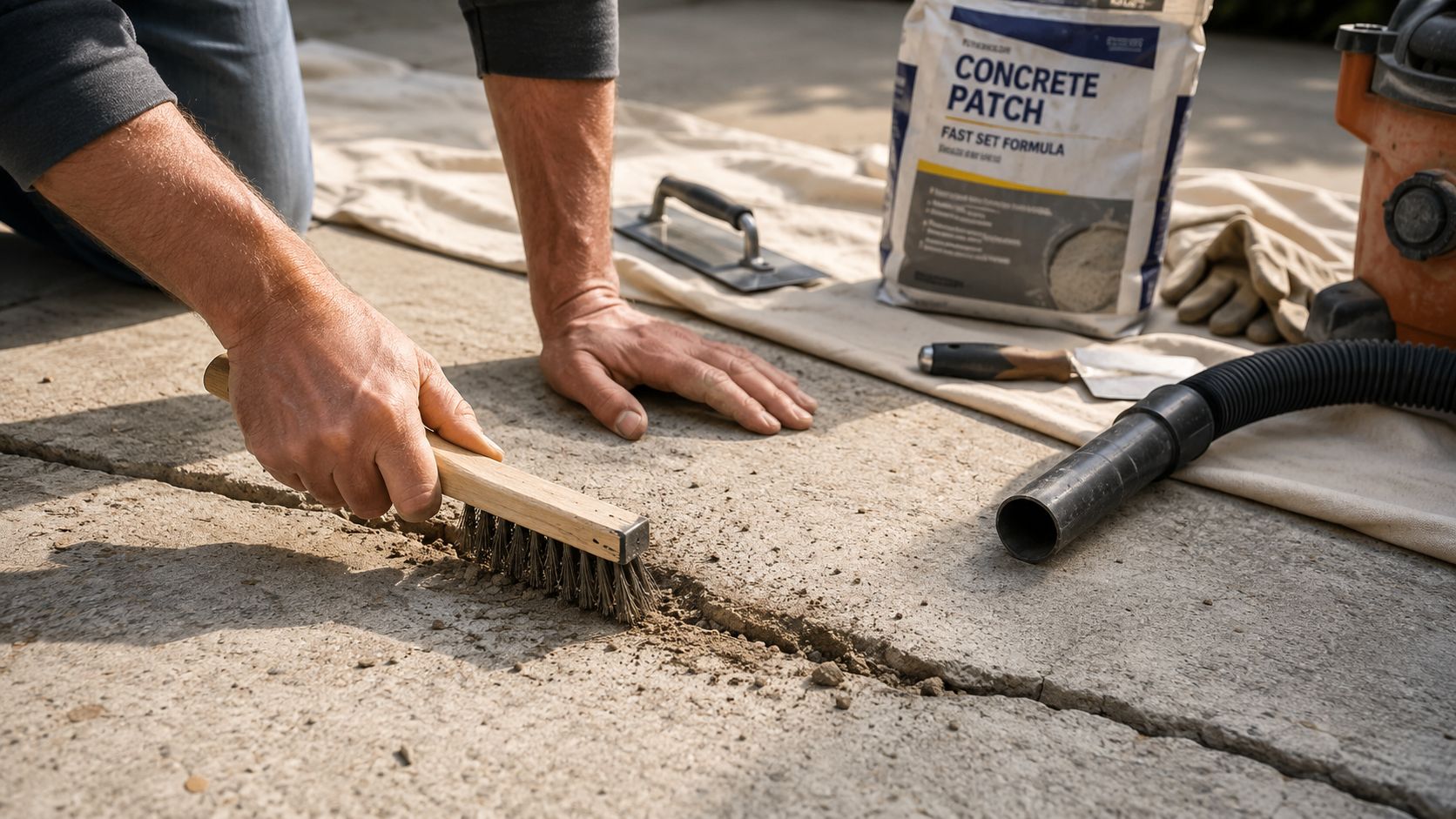
Start by wire-brushing or pressure-washing away loose material, dirt, and anything flaky around the repair zone. If the crack is narrow and structural, open it slightly so the filler has a mechanical key instead of relying on a thin surface bond. That extra prep takes time, but skipping it is the fastest way to waste both material and labor.
Spalled areas need the same kind of honest cleanup. Remove anything hollow, loose, or crumbly around the damaged edge, and stop only when you reach concrete that still sounds solid. If you want a plain explanation of what concrete spalling is, it is the surface breaking away after the top layer has lost its bond.
Bond, pack, and finish
Use a concrete bonding agent where the product calls for it. Crews skip that step when they are rushing, and that is usually when the patch starts to separate at the edges. Then pack in the patching compound or mortar mix, and leave it slightly proud of the slab so it can settle as it cures, which is a common field habit on repairs that need to stay flat after drying (Elite Concrete Tennessee repair steps).
Trowel it flush, clean the edges, and protect the repair while it cures. For driveway patches that have to carry vehicle traffic, some guidance calls for covering the repair, keeping it damp once a day, and leaving cars off until the product has had time to harden, while thin resurfacing materials may accept traffic sooner if they are made for that use (Sanitred driveway repair guidance). Using the wrong cure window is one of the fastest ways to break a good repair.
If the damage stays in one spot and the slab is not moving, a careful patch can hold up well. If the crack keeps coming back in the same place, the slab is usually telling you the problem is below the surface.
Fixing Uneven Slabs and Drainage Problems
Uneven concrete is where many DIY repairs stop being simple. A raised lip can be ground down, but a slab that has sunk usually means the base below it has changed. In Central Florida, that change is often water related, which is why a nice-looking patch over bad drainage doesn't last long.
Small height differences
If the edge is just high enough to catch a wheel or create a trip point, grinding can make the surface safer. That's a finish correction, not a structural cure, but it can be the right move when the slab itself is otherwise sound. Minor unevenness can also be filled in some cases, though the repair has to match the specific surface condition.
Sunken sections need support
When a slab has dropped, the fix is usually about lifting or supporting it. Mudjacking and polyurethane foam injection both aim to fill voids under the slab and bring it back toward grade. The right choice depends on how much movement has happened and whether the base still has enough integrity to hold the correction.
The bigger issue is the cause. If water is running under the slab, the correction can fail again. That's why the slope, runoff, and nearby drainage deserve as much attention as the concrete surface. A driveway that keeps collecting water at the same corner will keep breaking there.
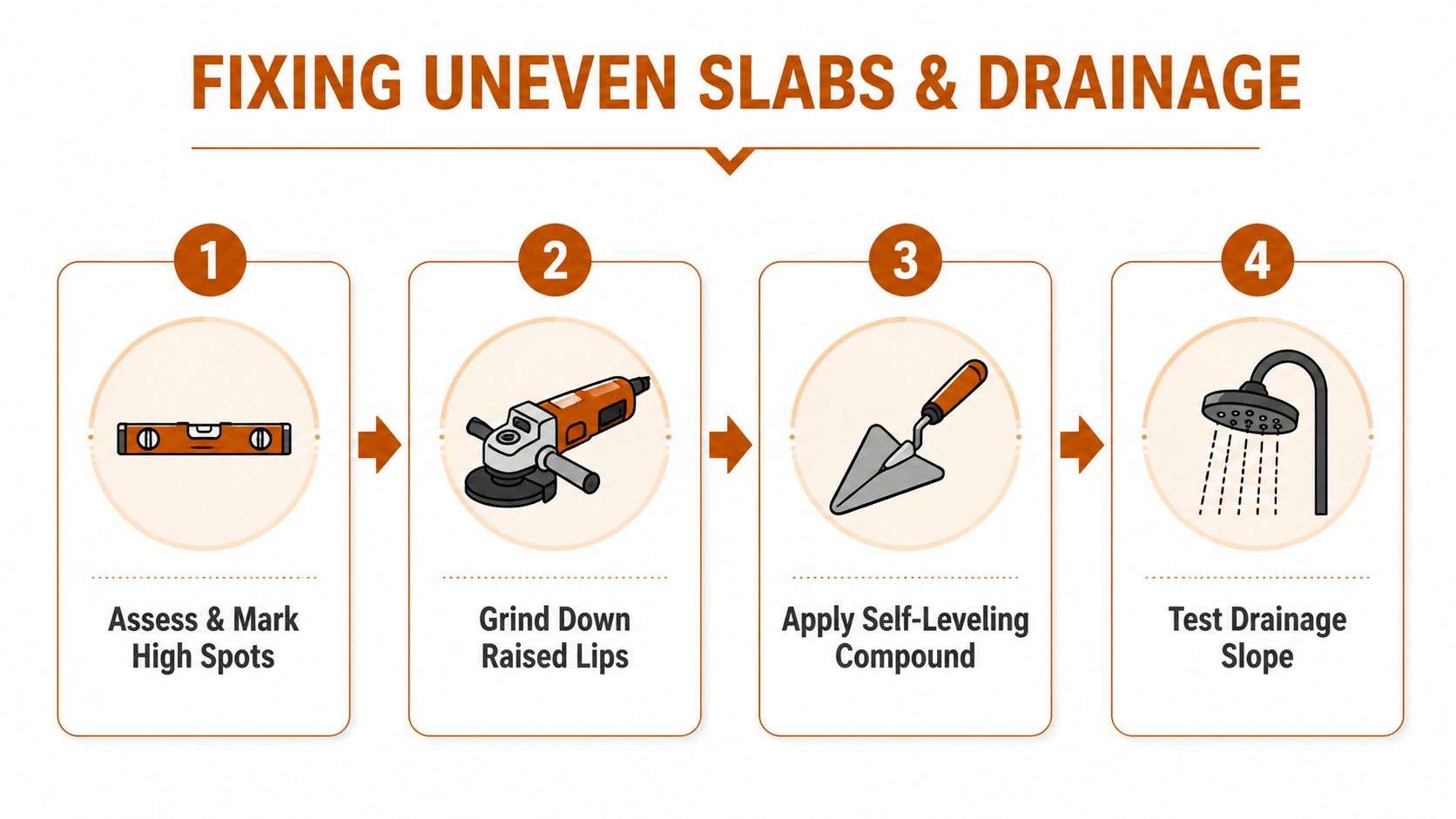
For a local look at leveling work, this guide covers the same kind of slab problems homeowners run into: how to fix uneven concrete slabs.
Drainage is the real repair on some driveways
A slab that keeps settling almost always has water moving under it. That can come from roof runoff, poor grading, or a low point near the driveway edge. If the soil washes out, the next lift or patch just becomes a temporary correction.
Field note: if the driveway slopes the wrong way, fix the slope before you trust the slab.
A good contractor will look at both the concrete and the runoff path. That's the difference between lifting a section once and chasing it every season.
When Repair Stops Making Sense and Replacement Wins
There's a point where another patch only delays the essential work. On a driveway with recurring cracks, sinking edges, or a base that keeps shifting, spending more on surface fixes can make less sense than replacing the slab. Cost matters, but the condition under the concrete matters more.
A simple decision framework
Start with three questions. How much of the driveway is damaged. Is the slab still stable. Is the subsoil underneath holding its shape. If the answer to the last two is no, repair loses value fast.
A resurfacing overlay makes sense when the slab is still sound and the damage is mostly surface wear. Full replacement makes more sense when cracks form a pattern, edges have crumbled, or the slab has dropped enough that the driveway no longer drains correctly. That kind of damage usually points to a deeper base problem, not just a top-layer issue.
Repair, resurface, or replace at a glance
| Damage Pattern | Best-Fit Fix | Typical Cost Range |
|---|---|---|
| Isolated crack or small spall | Patch or seal | Thumbtack reports a national average of about $802 to $2,800 for concrete driveway repair (Thumbtack) |
| Worn surface, stable slab | Resurface | TodaysHomeowner says professional repairs typically run from $175 to $5,400, with an average of $1,890 (TodaysHomeowner) |
| Pattern cracking, major settlement, failed base | Replace | Use a contractor quote, because the scope is no longer a simple repair |
The gap between those cost guides matters because they cover different scopes, from small cosmetic fixes to larger structural jobs that call for resurfacing or partial replacement. A quote that looks high might still be the sensible call if the slab is moving. A quote that looks cheap might only be a patch over a base problem.
What replacement gives you
Replacement gives you a fresh slab, new base conditions, and a chance to correct the drainage that caused the damage. It also removes the patchwork look that builds up after years of spot repairs. When the driveway is beyond isolated damage, a clean reset is usually the stronger long-term choice.
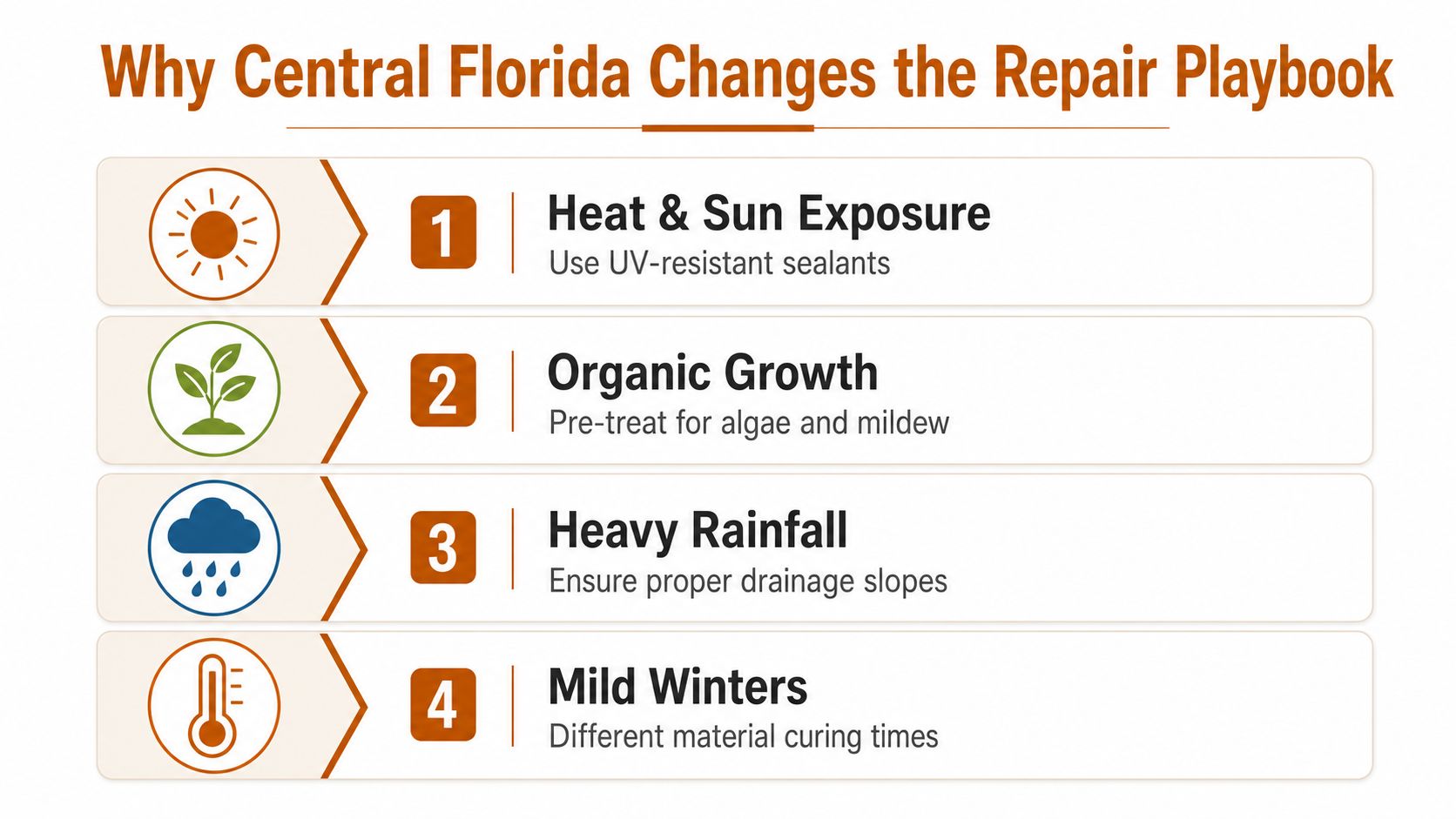
Why Central Florida Conditions Change the Playbook
A driveway in Ocala can look solid on the surface and still fail early because the slab is sitting on sandy fill that shifts after heavy rain. In Crystal River or Inverness, the same repair can hold up in one yard and break apart in another if runoff keeps moving the base material. The crack is often the symptom. The slab and the soil underneath are usually where the actual problem starts.
What actually breaks driveways here
Heavy rain can wash fine material out from under the slab, especially where water concentrates near the garage or the street edge. Once that support starts leaving, the concrete bridges the void until it cracks or drops. Oak and pine roots can also lift corners and make a repair look cleaner than it really is.
Heat works on the repair too. UV does not crack concrete by itself, but it can shorten the life of surface treatments and sealers if they are not chosen and applied correctly. A repair should cure fully before any penetrating sealer goes on, and sealing too early in a hot, wet climate can trap moisture instead of protecting the slab. That is one reason a patch that looks fine on day one can fail after the next stretch of rain.
Why the same repair fails twice
A crack that keeps coming back in the same place usually needs a flexible approach, not another rigid patch. The surface moves a little with heat and moisture changes, and rigid filler cannot always keep up. If a slab is sinking near the street, the likely problem is below the slab, not in the crack line.
That is why local repair work has to account for subgrade conditions, not just what shows up on top. A driveway in Marion County, FL can fail for one reason, while a similar-looking driveway in Citrus County, FL fails for another. The fix has to match the cause.
Permits Safety and Knowing When to Call a Pro
Small repairs are fair DIY territory if the slab is stable and the issue is limited. Once the work moves into lifting, replacement, structural edges, or major drainage correction, it's smarter to bring in a contractor who handles concrete and asphalt work on real properties every week. In places like The Villages, Summerfield, and HOA communities across Citrus County, rules about appearance and materials can also shape what gets approved.
Safety isn't optional on a driveway job
Wear eye and lung protection if you're grinding or cutting concrete. Use hearing protection when equipment is running. And never start digging or breaking over a utility line without a locate. The job can go from minor repair to expensive damage fast.
For homeowners in Marion County, FL and Citrus County, FL, permits and HOA rules can vary with scope, so it's worth checking before you change the driveway surface, footprint, or drainage. If the repair touches the structural edge or the slab has already moved, that's usually the point where a professional evaluation saves time instead of costing it.
Bottom line: recurring cracks, dropped slabs, or drainage that keeps sending water toward the foundation belong in a pro-level conversation.
Riverside Sealing & Striping, LLC handles concrete driveway removal and replacement, along with new concrete driveway installation, patios, slabs, sidewalks, asphalt sealcoating, and parking lot striping across Central Florida. If your driveway in Ocala, Crystal River, Dunnellon, or nearby needs a no-pressure look, ask for a free on-site estimate and a straight answer about whether the slab can be repaired or should be replaced.
A CTA for Riverside Sealing & Striping, LLC.