
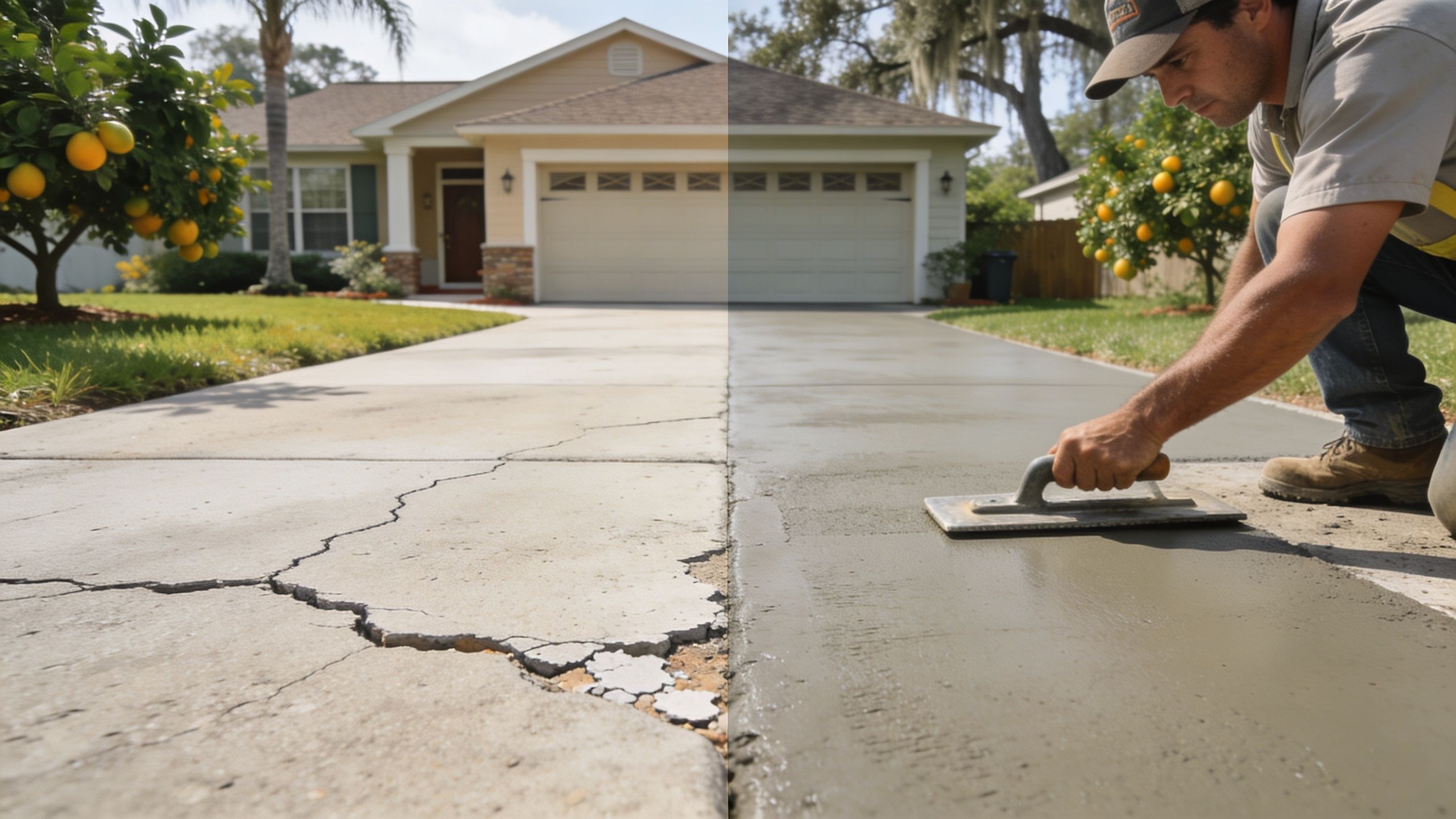
If you're searching for concrete driveway repair near me, there's a good chance you're already looking at a problem that has moved past annoyance and into decision territory. Maybe you’ve got a crack that keeps widening, a corner that’s dropped enough to catch a tire, or a rough patch by the garage that flakes a little more every rainy season.
That’s common across Marion County, FL and Citrus County, FL. In places like Ocala, Dunnellon, Belleview, Summerfield, Crystal River, Homosassa, Inverness, Lecanto, Beverly Hills, Hernando, Silver Springs, and even nearby areas like The Villages, concrete takes a beating from heat, heavy rain, standing water, and shifting ground. Some driveways need a straightforward repair. Others need to be replaced before money gets wasted on patch after patch.
A good contractor should tell you the difference plainly. That starts with knowing what you’re seeing.
How to Tell if Your Driveway Needs Repair
Walk your driveway slowly and look at it like an inspector, not a homeowner who’s used to seeing it every day. Start at the street, then move toward the garage. Check it in morning or late afternoon light when shadows make uneven spots easier to see.
Most damage falls into a few categories. Cracks, spalling, and settlement are the big ones. Each points to a different problem, and the right fix depends on which one you have.
Cracks that are mostly cosmetic and cracks that are not
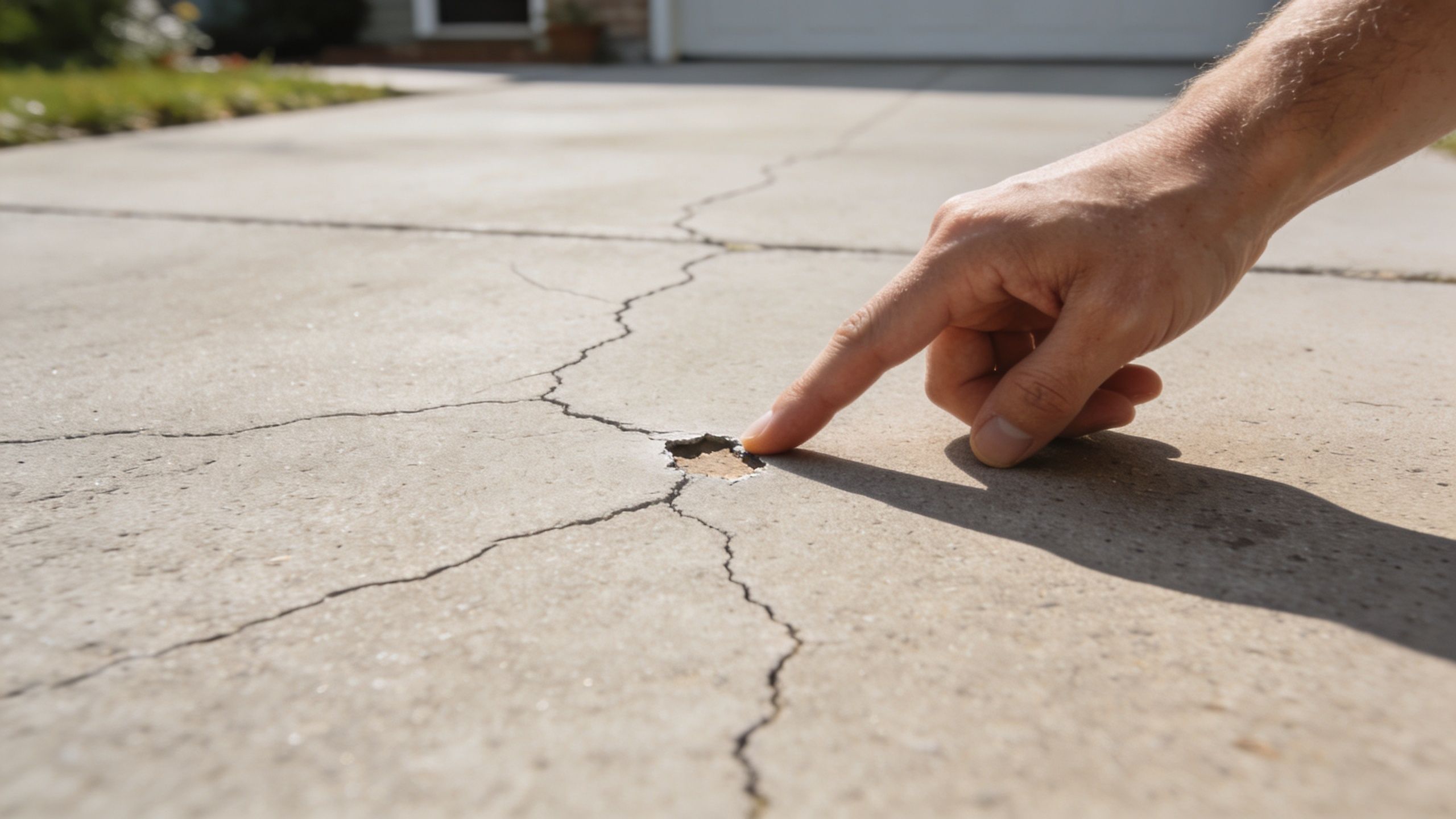
Small surface lines can show up as concrete ages. Those don’t always mean the slab is failing. What matters is whether the crack is widening, separating, or changing height from one side to the other.
When a crack gets into structural territory, the concern changes. Industry guidance notes that proactive repair becomes important when structural cracks widen beyond a quarter-inch or when spalling exceeds 20 to 30% of the surface, because the cost of ignoring it can lead to replacement later, according to Concrete Network’s driveway repair guidance.
Practical rule: If you can clearly fit the edge of a common household key into the crack, it’s time to have a pro look at it.
Spalling, flaking, and rough surface wear
Spalling shows up when the top layer starts peeling, chipping, or scaling away. In Central Florida, that often happens after water gets into weak spots and the surface keeps breaking down under traffic and weather.
Look for these signs:
- Loose top layer: The surface looks dusty, pitted, or thin.
- Exposed aggregate: You can see the stone below because the paste has worn off.
- Growing rough patches: A broom-finish driveway starts feeling jagged underfoot.
If that damage is isolated, repair may work. If it’s spread across large sections, replacement becomes easier to justify.
Sinking slabs and uneven sections
Uneven concrete is usually not just a surface issue. In this part of Florida, water can move soil, wash out support under the slab, or expose poor compaction from the original installation. That’s when one panel settles lower than the one next to it.
Check for:
- Trip edges at joints
- Water pooling in one low area
- A slab that drops near the garage or sidewalk connection
If you want a clearer look at the common causes, this guide on why driveways crack in the first place is a useful reference.
A driveway usually tells you whether it has a surface problem or a support problem. The mistake is treating both with the same repair.
Repair vs Replace The Big Decision for Florida Homeowners
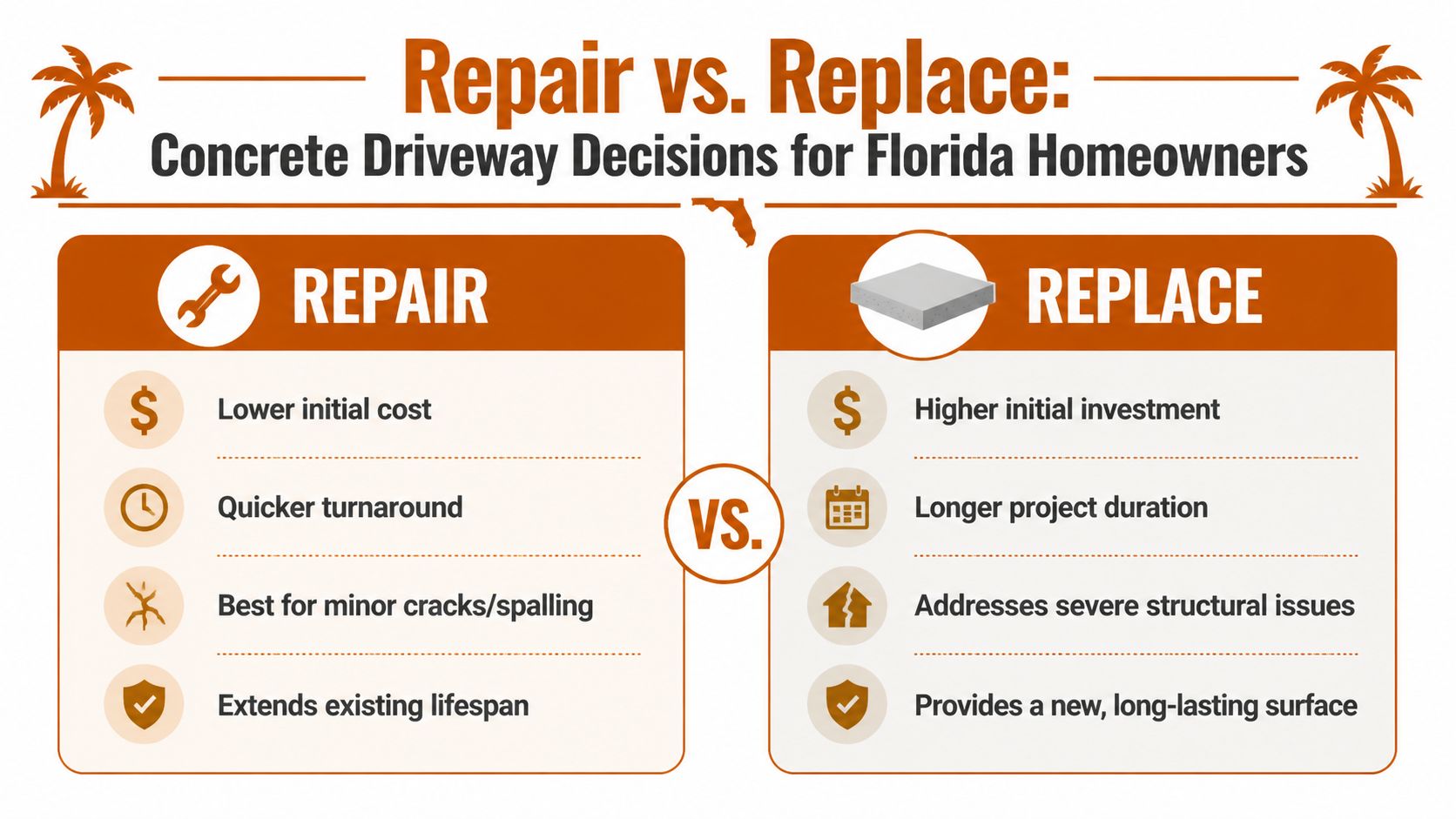
Many homeowners in Marion County and Citrus County get stuck at this point. Repair usually costs less upfront. Replacement usually solves more. The right answer depends on whether the slab is still structurally worth saving.
A patch can make sense. A patch can also become the first of several bills.
When repair makes financial sense
Repair is usually the better choice when the concrete is still largely intact and the damage is limited to a few defined areas. That can include a settled panel, a few problem cracks, or localized surface wear.
Good repair candidates usually have:
- Sound overall slab condition: Most of the driveway is still holding together well.
- Limited damaged areas: The problem isn’t spread across the whole driveway.
- No broad pattern of failure: You don’t see repeated cracking, widespread movement, and surface breakdown all at once.
If that describes your driveway in places like Inverness, Lecanto, or Beverly Hills, repair can buy useful time without tearing everything out.
When replacement is the smarter long-term choice
Replacement becomes the stronger option when the driveway has multiple failure points. If the slab is cracked in several areas, sinking in more than one spot, and losing surface integrity, repair starts acting like triage.
The regret factor is real. A 2025 survey found that 62% of homeowners regretted making partial repairs because recurring cracks came back within three years, with humid climates like Florida making those quick fixes less reliable, according to Keystone Basement Systems.
That lines up with what many contractors see in the field. Homeowners in Summerfield, The Villages, and Ocala often call for a second repair after the first one looked fine for a while but didn’t solve the movement underneath.
If the base is unstable, a neat-looking patch on top doesn’t change the reason the slab failed.
Concrete Driveway Repair vs. Replacement
| Factor | Repair | Full Replacement |
|---|---|---|
| Best use | Minor cracks, isolated spalling, one or two settled sections | Widespread cracking, extensive surface loss, multiple sunken areas |
| Upfront cost | Lower initial cost | Higher initial investment |
| Project time | Faster turnaround | Longer project duration |
| What it solves | Surface defects or targeted slab movement | Structural issues across the whole driveway |
| Long-term outlook | Best when the existing slab is still worth saving | Best when repairs would only delay the inevitable |
A simple decision filter
Ask three questions before spending money:
- Is the problem isolated or repeated across the driveway?
- Is the slab sound, or is the base likely moving underneath it?
- Will this repair solve the cause, or only improve the appearance for now?
If you’re answering “repeated,” “moving,” and “appearance,” replacement usually deserves serious consideration.
Understanding Your Concrete Repair Options
A Dunnellon homeowner might call about "a few cracks," then I get there and find three different problems. One crack is cosmetic. Another is holding water. A third is tied to a panel that has started to settle because the support underneath has washed out. The repair only works when it matches the failure.
Crack repair done properly
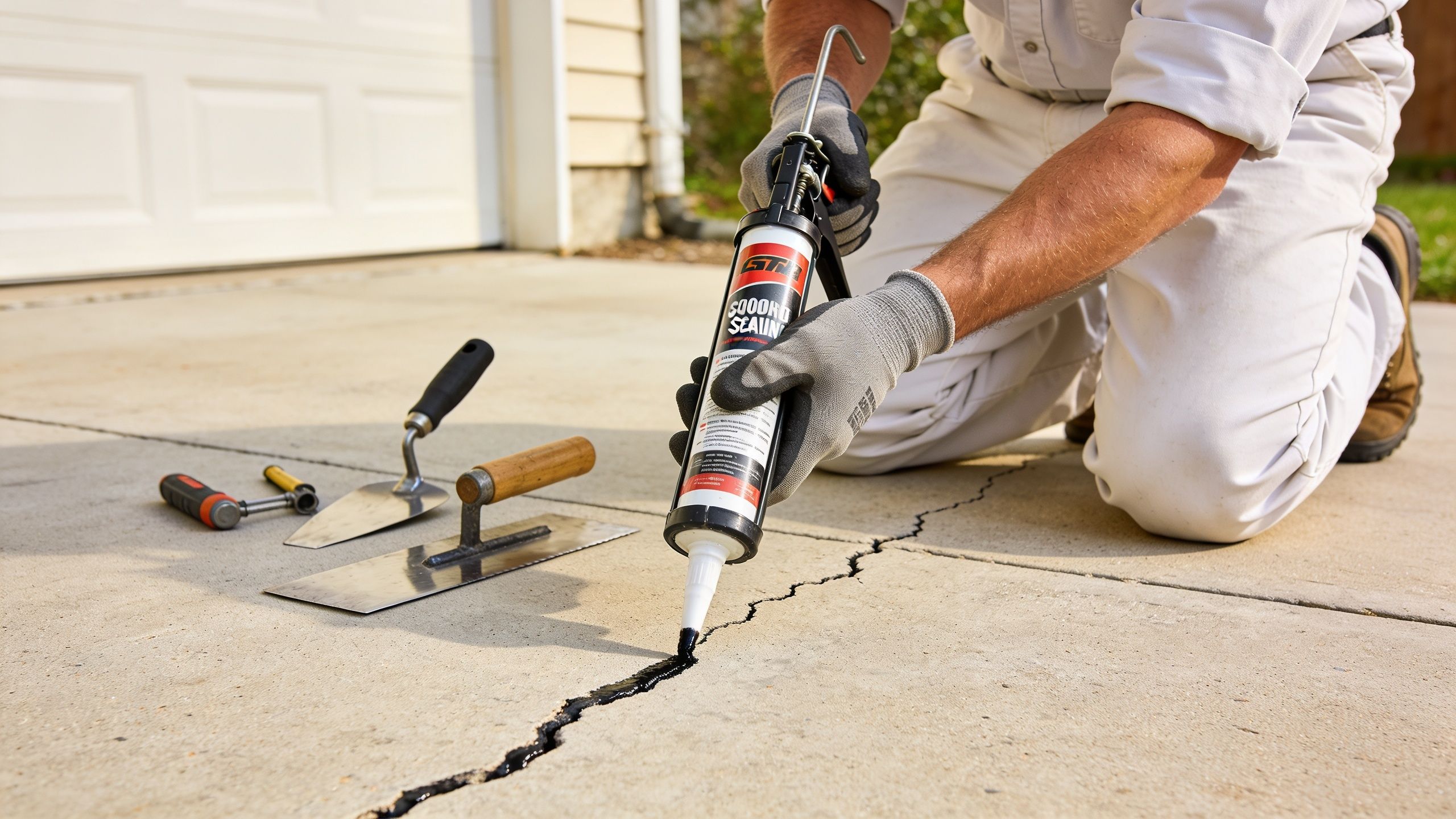
Crack repair makes sense when the slab is still sound and the crack is not part of a larger movement problem. In that case, the goal is to keep water out, stop edge breakdown, and slow further damage.
For cracks wider than 1/4 inch, proper repair starts by shaping the crack into a reverse V-groove, then cleaning out debris with a wire brush, shop vacuum, and pressure washer before placing repair material. That prep work helps the patch bond to the existing concrete, according to this driveway crack repair breakdown.
Cheap crack filling fails for predictable reasons. The crack was dirty. The filler was wrong for the movement. The repair was placed over weak edges that should have been cut back first.
A good crack repair usually includes:
- Opening the crack correctly: So the repair material has something solid to bond to
- Cleaning to fresh concrete: Dust, loose sand, and old sealer weaken adhesion
- Using the right repair product: Flexible sealants and rigid patch materials do different jobs
- Allowing proper cure time: Traffic too soon shortens the life of the repair
Resurfacing for worn or ugly concrete
Resurfacing fits a driveway that is still structurally decent but has broad surface wear, light scaling, discoloration, or many shallow defects that would look patchy if repaired one spot at a time. It is mainly a surface solution.
That distinction matters in Central Florida. Heat, rain, irrigation runoff, and years of sun can leave an older driveway in Ocala, Crystal River, or Silver Springs looking rough even when the slab itself is still serviceable. In that case, resurfacing can buy useful years at a lower cost than replacement.
It will not stop continued sinking. It will not fix major cracking that reflects movement below.
Slab lifting for settled panels
If one section has dropped and created a trip edge or a low spot that holds water, the repair often needs to happen under the slab. Slabjacking lifts sunken concrete by injecting a grout slurry through small ports at 100 to 150 psi, and it can restore 90 to 95% of the original elevation while addressing subgrade voids caused by soil erosion, according to Concrete Network’s repair overview.
This is one of the more practical options for Florida driveways with isolated settlement. Heavy rain, soft spots in the subgrade, and drainage problems can leave a panel unsupported. Lifting can correct the height issue without tearing out sound concrete around it.
For homeowners comparing methods, this guide on how to fix uneven concrete slabs lays out what contractors usually look at before recommending lifting or replacement.
Here’s a quick visual on concrete lifting and leveling methods:
Some repairs improve the surface. Better repairs address why the slab moved or broke in the first place.
Where a local contractor fits in
A contractor who handles concrete repair, removal, and replacement can usually tell the difference between a driveway worth saving and one that will keep costing you money in stages. That matters more than homeowners realize.
Riverside Sealing & Striping, LLC handles damaged concrete driveway removal and replacement along with related site prep and surface work in Central Florida. For homeowners in Marion and Citrus County, that kind of local experience helps when the primary question is not just how to patch the damage, but whether the repair makes financial sense in Florida soil and weather conditions.
What Does Concrete Driveway Repair Cost in Central Florida
Most homeowners want the same thing from an estimate. They want to know whether the number is reasonable and what’s driving it up or down.
For concrete driveway work, the average cost ranges from $4 to $8 per square foot, and for a standard two-car driveway that works out to roughly $1,600 to $4,600, with project size, demolition, site prep, and decorative finishes affecting the final price, according to HomeGuide’s concrete driveway cost data.
What changes the final quote
Two driveways with the same square footage can price very differently. The main reason is that the visible damage rarely tells the whole story.
Common cost drivers include:
- Extent of failure: A few isolated repairs are different from broad structural issues.
- Access and prep: Tight access, existing demolition, and grade correction add labor.
- Repair method: Crack repair, resurfacing, lifting, and full replacement all use different materials and time.
- Finish choices: Plain concrete costs less than decorative work.
In markets around Ocala, Belleview, and Inverness, homeowners also need to think about drainage and subgrade condition. If the ground support is poor, a lower bid can end up being the expensive one if it skips the base work.
Timeline matters too
A repair can be quick or it can stretch depending on the scope. Some lifting work can be completed very fast, while a replacement usually takes longer because demolition, prep, forming, pouring, and curing all need time.
For broad planning, pouring concrete typically takes 1 to 3 days, and replacement may need 1 to 2 extra days for demolition when an old driveway has to come out first, based on this concrete cost and project timeline guide.
A useful estimate doesn’t just give a price. It explains what’s being repaired, what’s being replaced, and what’s being done to keep the problem from coming back.
Choosing a Local Concrete Contractor in Marion and Citrus County
The quality of the repair depends on the contractor as much as the material. Concrete work in Central Florida isn’t just about pouring or patching. It’s about understanding drainage, soil support, traffic patterns, and what the slab has been doing over time.
That’s why local experience matters in Marion County, FL and Citrus County, FL. A contractor working regularly in Dunnellon, Homosassa, Hernando, Crystal River, or Ocala has seen the same mix of heat, rain, and shifting conditions that affect your driveway.
What to check before you hire anyone
Start with the basics, then get more specific.
- Licensed and insured: Don’t skip this. If there’s damage or an on-site accident, paperwork matters.
- Clear scope of work: The estimate should say whether they’re sealing cracks, lifting slabs, replacing sections, or replacing the whole driveway.
- Site prep details: Good contractors talk about base condition, drainage, and removal when needed.
- Scheduling and communication: You should know when they’ll start, how long it should take, and what you can expect during the job.
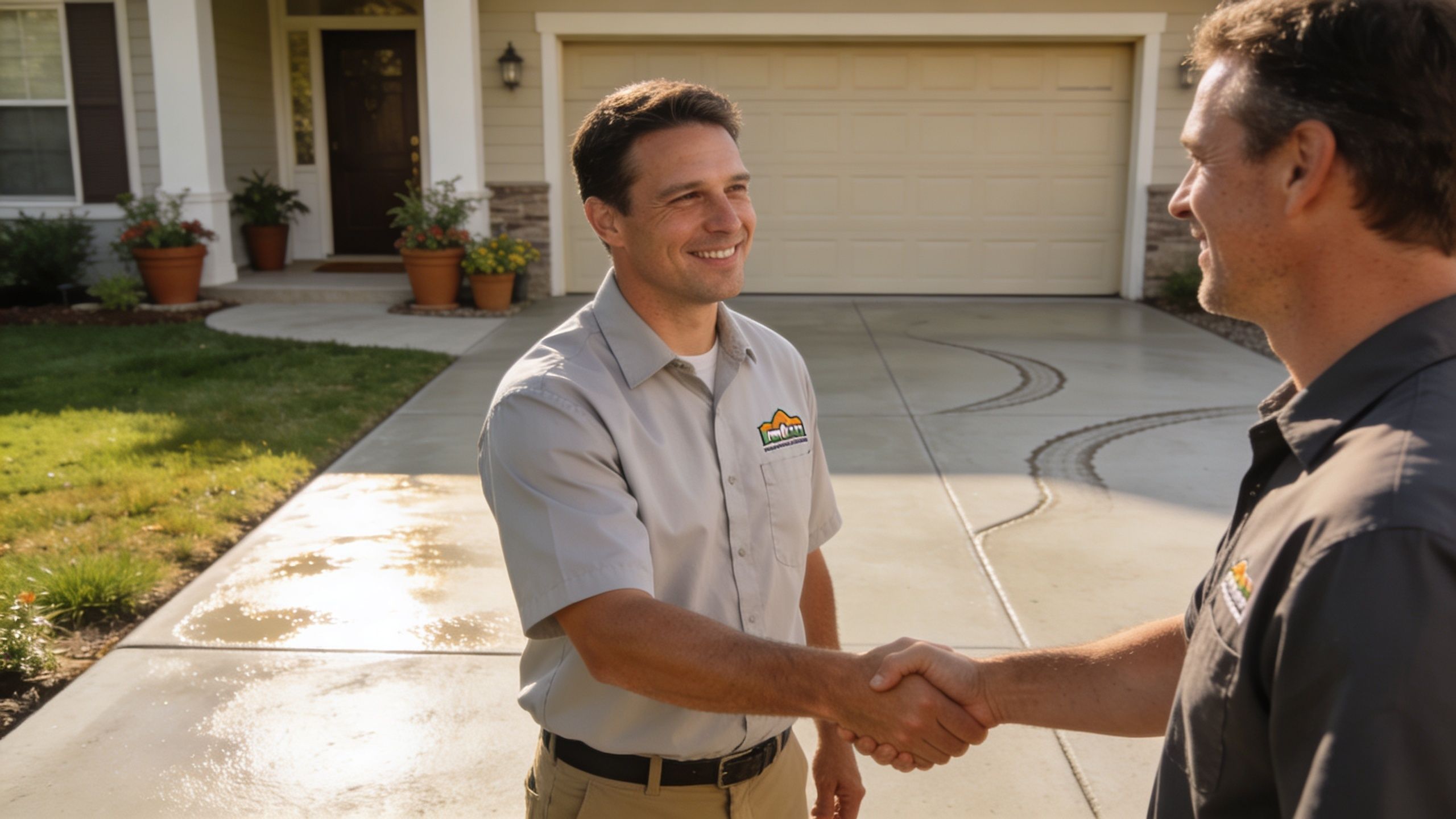
Why local judgment saves money
A contractor from outside the area may treat every cracked driveway the same. That’s how homeowners end up with a cosmetic fix on a structural problem.
A local crew should be able to answer practical questions without dancing around them:
- Is the slab still worth saving?
- Is the issue on top, underneath, or both?
- Will repair hold up here, or is replacement more honest?
- How will water move across the driveway after the work is done?
If you’re talking to contractors in Lecanto, Beverly Hills, Silver Springs, or The Villages, pay attention to who gives direct answers and who only talks about getting the job.
Good driveway advice isn’t about selling the biggest project. It’s about matching the repair to the actual failure.
Frequently Asked Questions About Driveway Repair
Do I need a permit for driveway repair in Marion or Citrus County
It depends on the scope of the work and the local requirements where the property sits. Minor repair may be treated differently than a full driveway replacement or work that affects drainage, sidewalks, or access. The safe move is to ask your contractor what applies to your address and confirm with the local building department if needed.
How long do I need to stay off the driveway after work is done
That depends on the method used. Some repair methods can return a driveway to service much faster than replacement work. A newly poured driveway needs more time because the concrete has to cure before vehicle traffic is allowed.
Can a repaired section match the rest of my driveway perfectly
Usually not perfectly. Concrete ages, weathers, and changes color over time. A skilled repair can blend well and look clean, but a new patch or replaced panel will often be visible, especially on older driveways.
What should happen during an on-site estimate
A proper estimate should include a close inspection of cracks, joint movement, low spots, drainage, and the condition of the slab overall. You should also get a direct recommendation on whether repair is likely to last or whether replacement is the better value.
Is asphalt ever part of the conversation for residential properties
Sometimes, yes. If a homeowner is comparing surface options or planning related site work, it helps to talk with Concrete and Asphalt Experts in Marion and Citrus County who understand both materials. Concrete and asphalt behave differently in Florida weather, and the right choice depends on use, appearance, and maintenance goals.
Your Next Steps for a Lasting Driveway Solution
A damaged driveway usually gets more expensive when it’s ignored. Small cracks turn into water entry points. Low panels turn into trip hazards. Surface wear can hide a deeper support problem.
The practical next step is to get the driveway evaluated with repair and replacement both on the table. That matters whether you're in Dunnellon, Ocala, Belleview, Crystal River, Homosassa, Inverness, or anywhere else across Marion County and Citrus County. An honest assessment should tell you what can be repaired, what shouldn’t be, and what gives you the best long-term value for your property.
If you want a driveway that stays safe, drains correctly, and holds up in Central Florida conditions, don’t guess. Get a professional opinion based on your existing slab.
If you need a straightforward evaluation from Riverside Sealing & Striping, LLC, you can request a free, no-pressure on-site estimate for concrete driveway repair, replacement, and related surface work in Marion County, Citrus County, and surrounding Central Florida areas.