
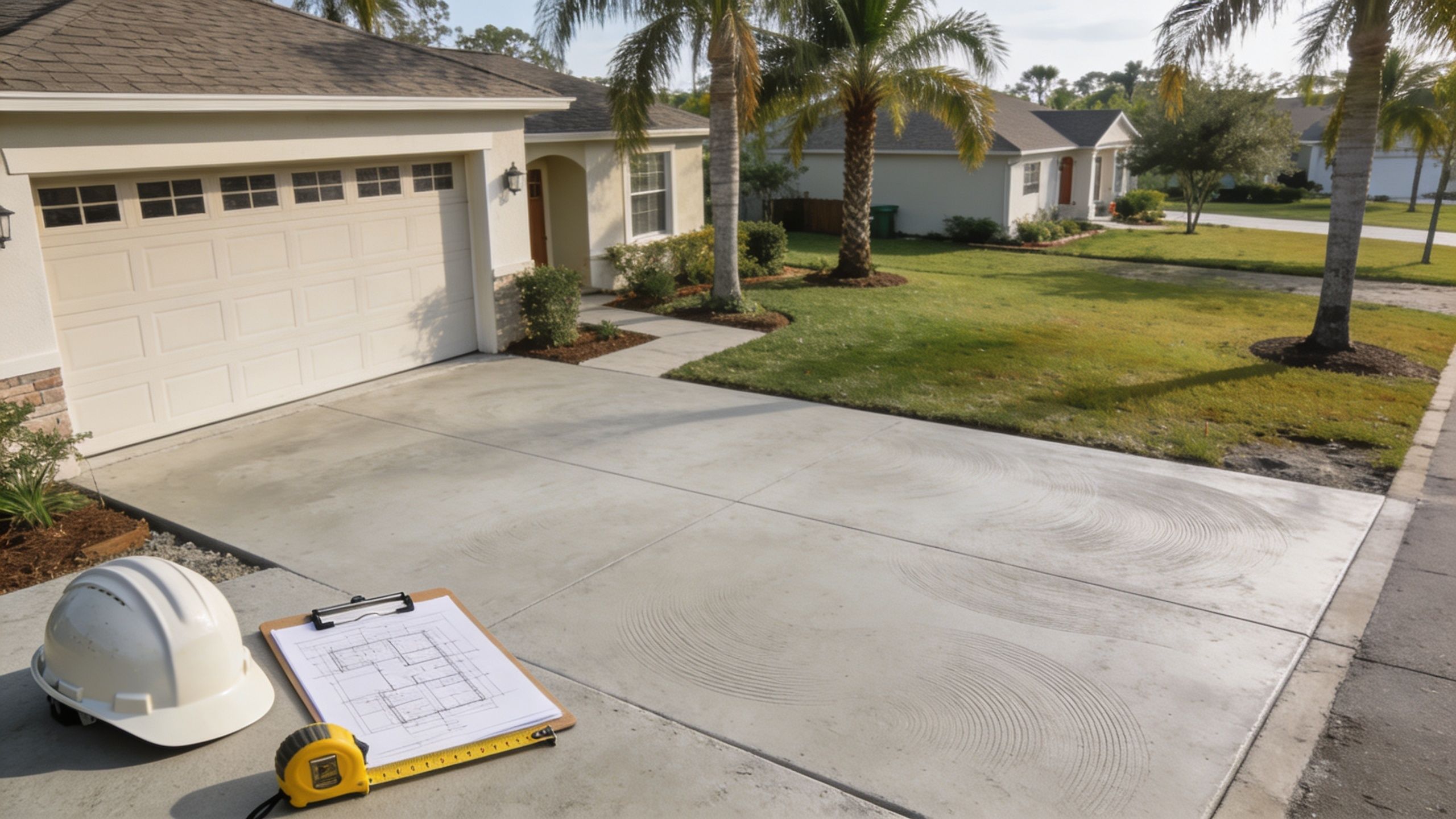
Concrete driveway replacement typically runs $8 to $20 per square foot in 2026, and a full replacement for a standard two-car driveway often lands between $4,600 and $8,600. For many homeowners in Marion County, FL and Citrus County, FL, that is the baseline starting point, but local ground conditions, drainage, access, and slab design often decide where your project ends up inside that range.
Consideration for concrete driveway replacement cost begins when the driveway has gone past the point of patching. The cracks keep opening back up, one side has started to settle, water sits where it shouldn't, or the apron has broken down enough that pulling in feels rough every day. In Ocala, Dunnellon, Crystal River, Inverness, Belleview, Homosassa, Lecanto, Beverly Hills, Hernando, Silver Springs, Summerfield, and The Villages, those problems usually aren't just about age. They're often tied to rain, soil movement, and years of vehicle load on a slab that may not have had the right base underneath it.
National pricing guides help, but they usually don't explain the costs that show up in Central Florida. Sandy soils can wash out. Low spots hold water. Sinkhole-prone terrain changes what good site prep looks like. HOA rules can also affect finish choices and timing.
That's why a cheap number over the phone usually isn't a real number. A driveway replacement is straightforward only when the old slab comes out cleanly, the base is stable, and the new pour doesn't need upgrades. If any of that changes, the quote changes too.
Understanding the Average Concrete Driveway Replacement Cost
A homeowner in Ocala gets one quote over the phone, then the on-site number comes in much higher. That usually happens for a reason. National averages can help with rough planning, but they rarely reflect what happens once a contractor sees sandy subsoil, edge washout, drainage problems, or HOA finish requirements on a Central Florida property.
For budgeting, square footage is still the starting point. A larger driveway uses more concrete, more base material, more labor time, and more removal capacity. But in Marion County and Citrus County, the ground under the slab often has as much influence on price as the size above it.
What those numbers look like in real driveway sizes
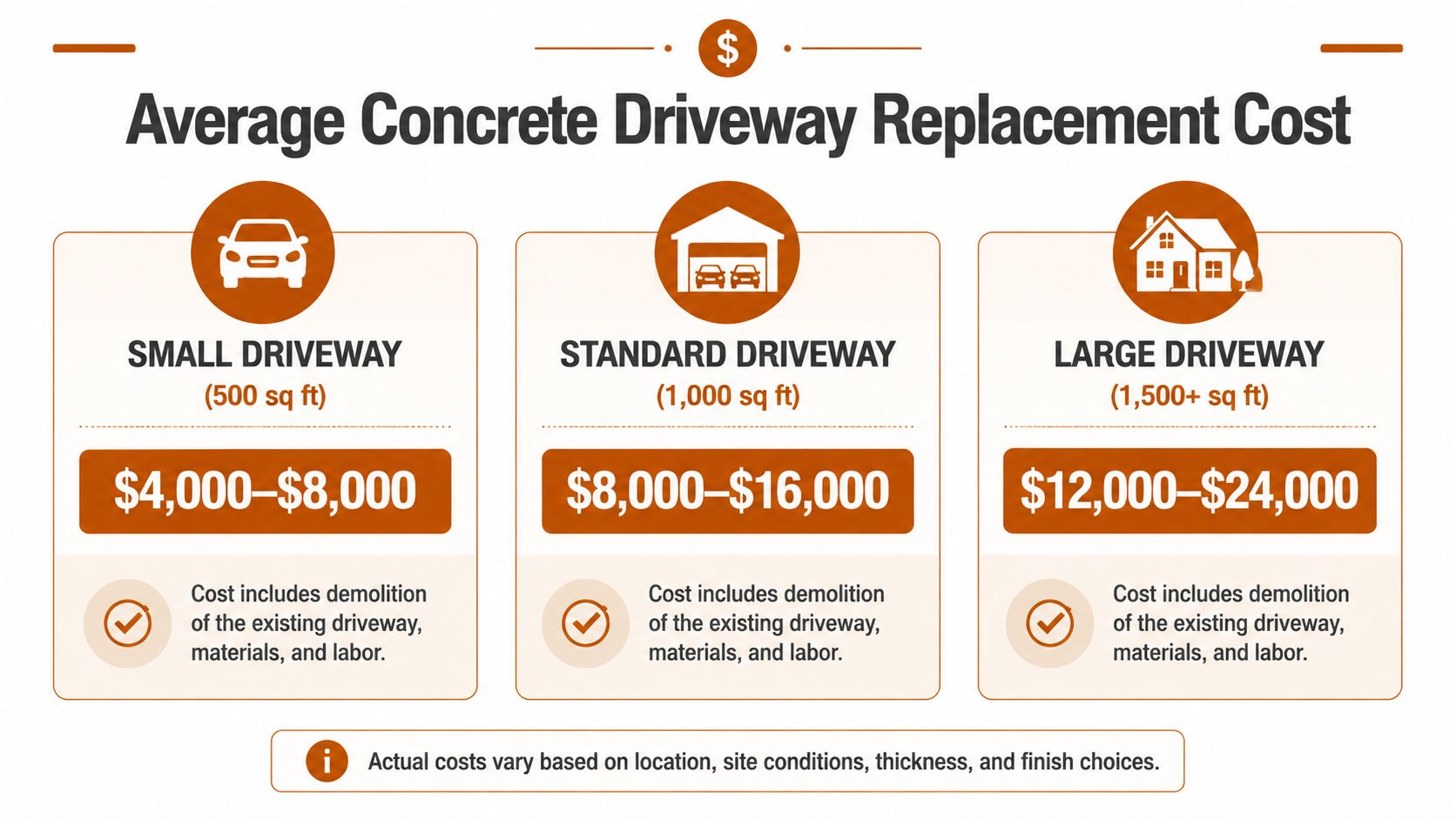
Here's a practical budgeting table for common driveway sizes. Use it as a planning range, not a final quote.
| Driveway Size (Approx.) | Square Footage | Estimated Cost Range |
|---|---|---|
| One-car or compact pad | 500 sq. ft. | $4,000 to $10,000 |
| Standard two-car | 576 sq. ft. | $4,600 to $8,600 |
| Wide two-car or extended | 864 sq. ft. | $6,900 to $13,000 |
| Larger custom layout | 1,000 sq. ft. | $8,000 to $20,000 |
If you're comparing options early, this broader concrete slab cost per square foot guide helps show how replacement pricing differs from a basic slab pour on prepared ground.
A two-car driveway and another two-car driveway can price very differently.
I see that all the time. One slab breaks out clean, the base is solid, and the forms can go right back in. The next one has low edges, soft spots near the garage, water running across the apron, or settlement that points to deeper prep work. Both look similar from the street. The replacement cost is not similar once the actual conditions show up.
Why replacement costs more than a brand-new driveway
Replacement work includes more than the new concrete. The old slab has to be cut, removed, loaded, hauled off, and disposed of. Then the crew has to find out why the original driveway failed.
In Central Florida, that failure is often tied to water and soil movement. Sandy ground can shift. Heavy rain can wash support away from slab edges. In some areas, homeowners also want extra evaluation because of sinkhole concerns or prior settlement on the lot. Those conditions push a project beyond a simple remove-and-replace job.
HOA requirements can add cost too. Some neighborhoods want a specific finish, thickness, edge detail, cure time protection, or approval process before work starts. That does not always change the concrete itself, but it can affect scheduling, paperwork, and labor time.
What a realistic budget should include
A complete replacement quote should usually account for:
- Old driveway removal
- Disposal or haul-off
- Subgrade correction
- Base preparation and compaction
- Forms and placement
- Concrete material and finishing
- Jointing and curing steps
- Any upgrade items such as thicker slabs or reinforcement
Low quotes usually leave something out. In this area, the missing line item is often site prep, drainage correction, or enough base work to keep the new slab from failing for the same reason as the old one.
Key Factors That Drive Your Project's Final Price
Two driveways can look almost identical from the street and still price far apart once the contractor starts accounting for what is under the slab, how the lot drains, and what the neighborhood requires. That gap shows up a lot in Marion and Citrus County, where sandy soil, hard summer rain, and occasional settlement concerns can turn a basic replacement into a more involved job.
Demolition and disposal
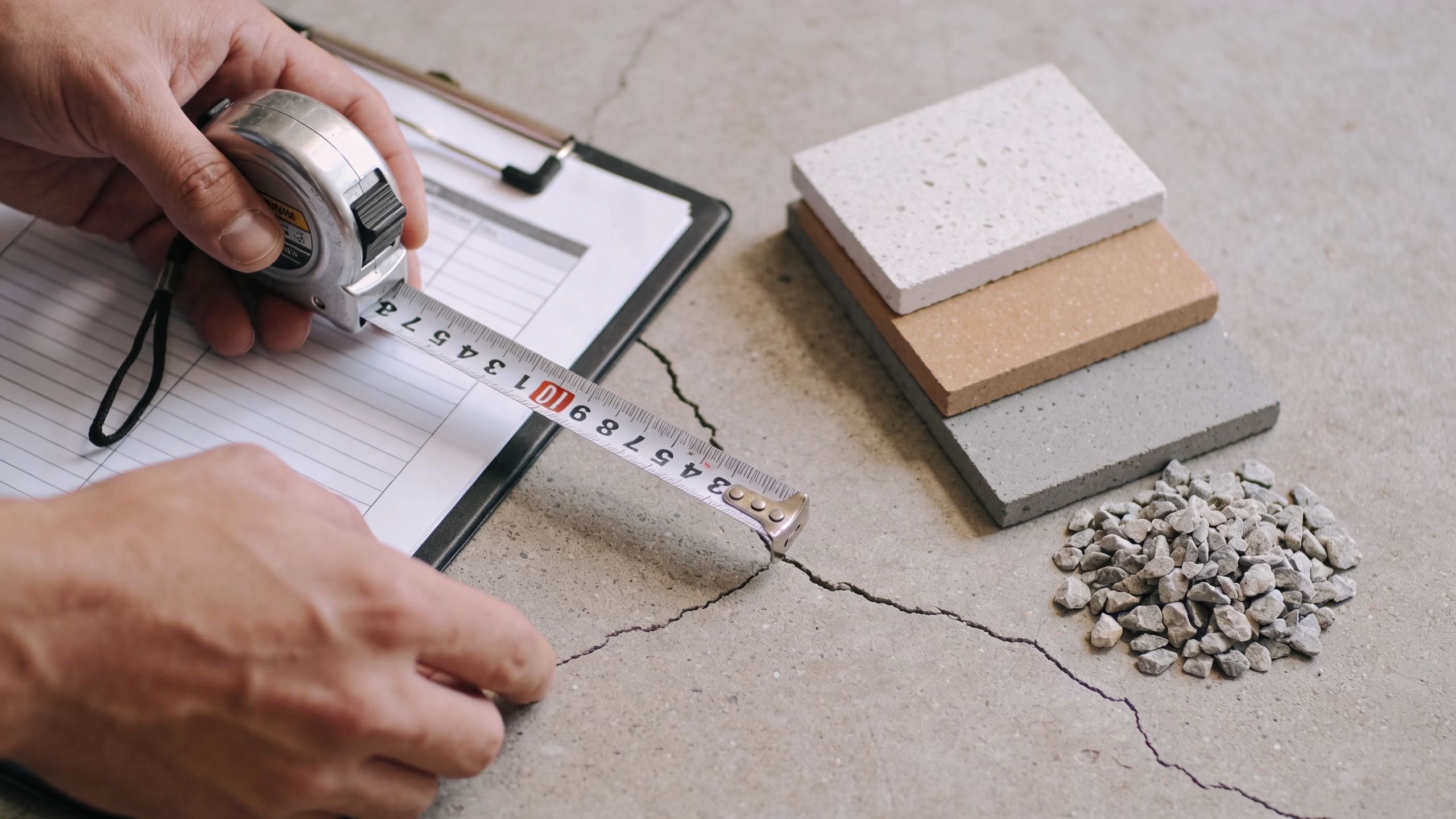
Old concrete has to be cut, broken, loaded, hauled off, and dumped. Concrete Network's driveway cost breakdown notes that demolition and removal often run on a per-square-foot basis, and disposal adds another charge depending on debris volume and local dump fees.
Access changes this part of the price fast. If a crew can back a trailer close to the driveway, removal goes faster. If the house sits on a tight lot, has a decorative wall near the slab, or limits machine access, labor goes up because the crew spends more time handling concrete in smaller loads.
Site prep and grading
This is the line item that gets missed in cheap quotes.
In this part of Central Florida, the actual cost driver is often the condition of the base after tear-out. Sandy subgrade can wash out along the edges. Low areas can stay soft after rain. Fill brought in years ago may never have been compacted well enough to support a new slab for the long term. On some properties, homeowners also ask for extra evaluation because they have seen settlement elsewhere on the lot.
A solid estimate should explain whether the contractor plans to address:
- Soft or low spots under the old driveway
- Poor slope that holds water near the garage
- Eroded edges that need rebuilding
- Added base material, grading, and compaction before concrete placement
Material matters too, but mix design cannot make up for weak ground. Homeowners comparing durability options can review this guide on the best concrete mix for driveways to understand how the concrete itself fits into the bigger performance picture.
Poor prep usually looks fine on pour day. The problem shows up months later as settling, corner cracks, or water working back under the slab.
Thickness and reinforcement
A standard residential driveway may be poured at 4 inches, but that is not the right answer for every home. If the driveway sees delivery trucks, work trailers, RV parking, or repeated turning near the garage, thicker concrete or stronger reinforcement may make sense.
That adds cost in materials and labor. It can also save money over time if the slab is being built for the loads it will carry. In my experience, homeowners get into trouble when they pay for cosmetic upgrades but skip structural upgrades on a driveway that gets used hard.
Finish choices
Finish selection can move the budget more than homeowners expect. A plain broom finish is usually the most economical option. Color, borders, exposed aggregate, or stamped work raise labor time, material cost, and the level of detail needed during placement and finishing.
HOA rules can narrow those choices. Some communities want a certain appearance, edge style, or color range. Others require approval before the pour. That does not always change the concrete spec, but it can affect schedule, crew time, and the risk of rework if the design was not approved first.
Permits, drainage details, and site access
Permits are usually a smaller part of the budget than prep or concrete, but they still belong in the quote. The same goes for drainage details such as tying the new slab height into the garage, sidewalk, or yard without trapping water where it does not belong.
Access can be just as important. A simple suburban lot with clear truck access is easier to price than a property with fencing, mature landscaping, narrow side clearance, or limited staging space. On some homes, protecting irrigation lines, pavers, or nearby hardscape adds labor before the first form is even set.
The best bids spell this out. If a quote looks low, ask what it assumes about removal access, base repair, drainage correction, permit handling, and HOA approval. That answer usually tells you whether the number is realistic.
The Driveway Replacement Process from Start to Finish
A professional driveway replacement follows a sequence. If any step gets rushed, the finished slab may still look good at first, but the weak point usually shows up later.
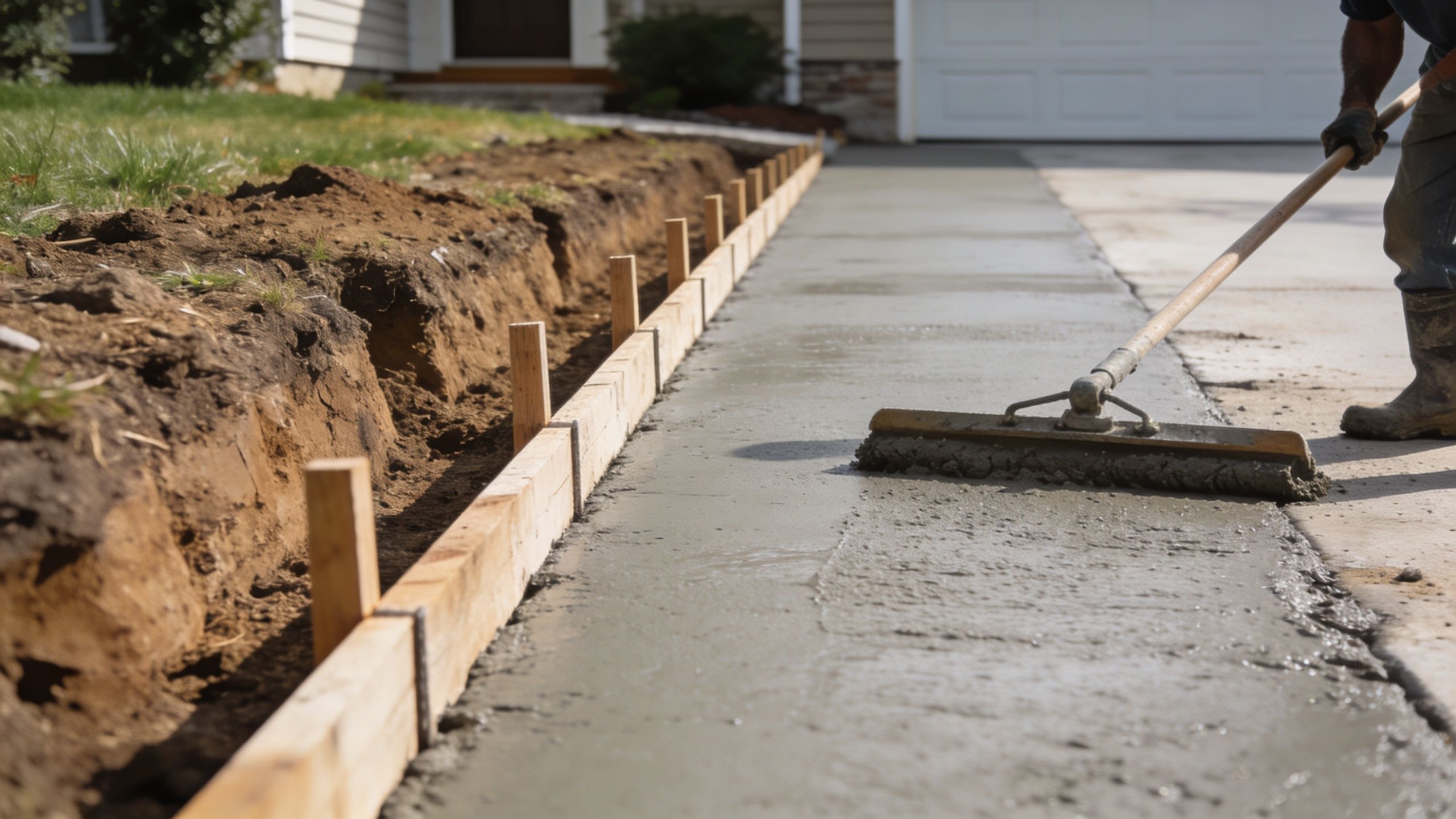
Inspection and layout
The job starts with measurements, slope review, and a close look at why the old slab failed. That includes checking drainage, edge conditions, transitions to the garage or sidewalk, and whether the replacement should keep the same layout or be widened.
Homeowners who want to understand the prep side in more detail can review this guide on how to prepare ground for a concrete slab. Good concrete starts before the truck arrives.
Tear-out and base work
After the crew removes the old driveway, the base gets evaluated in the open. This is the point where hidden trouble shows itself. Soft pockets, washed-out areas, poor compaction, and unstable edges are much easier to spot once the slab is gone.
Then the crew grades, adds base material where needed, compacts it, and sets forms. If the driveway needs reinforcement upgrades, they go in before the pour.
Published 2026 data shows that adding rebar costs $1.50 to $2.00 per square foot and can reduce long-term maintenance costs by 25% to 40% by raising load capacity from 3,000 PSI to over 4,500 PSI, according to Kali Concrete's cost guide. For driveways that see heavier use, that upgrade can make sense.
The concrete itself matters. The support under it matters just as much.
A short visual of finishing work helps homeowners understand what crews are doing during placement:
Pouring, finishing, and curing
Once the concrete is placed, the crew strikes it off, finishes the surface, cuts or forms control joints, and applies the final texture. For most residential driveways in Central Florida, that means a broom finish because it gives better traction and fits the look of most neighborhoods.
Curing is where patience matters. Homeowners often focus on pour day, but the slab still needs time to gain strength. Driving on it too early can undo careful work. A good contractor gives clear instructions about when to walk on it, when to park on it, and how to protect the edges during the early curing period.
Why Central Florida's Climate and Soil Impact Your Cost
Central Florida doesn't treat every driveway the same. The soil and weather in Marion County and Citrus County create conditions that can push a project out of “simple replacement” territory.
According to Cornerstone Concrete's regional cost guide, high-demand areas in Florida's Central counties can run $6 to $15+ per square foot, and the humid climate can necessitate thicker 5-6 inch slabs, especially for heavy vehicles or RVs. That lines up with what homeowners around Ocala, Dunnellon, Homosassa, and Crystal River often run into when the driveway carries more than normal passenger traffic.
Sandy soil and washout risk
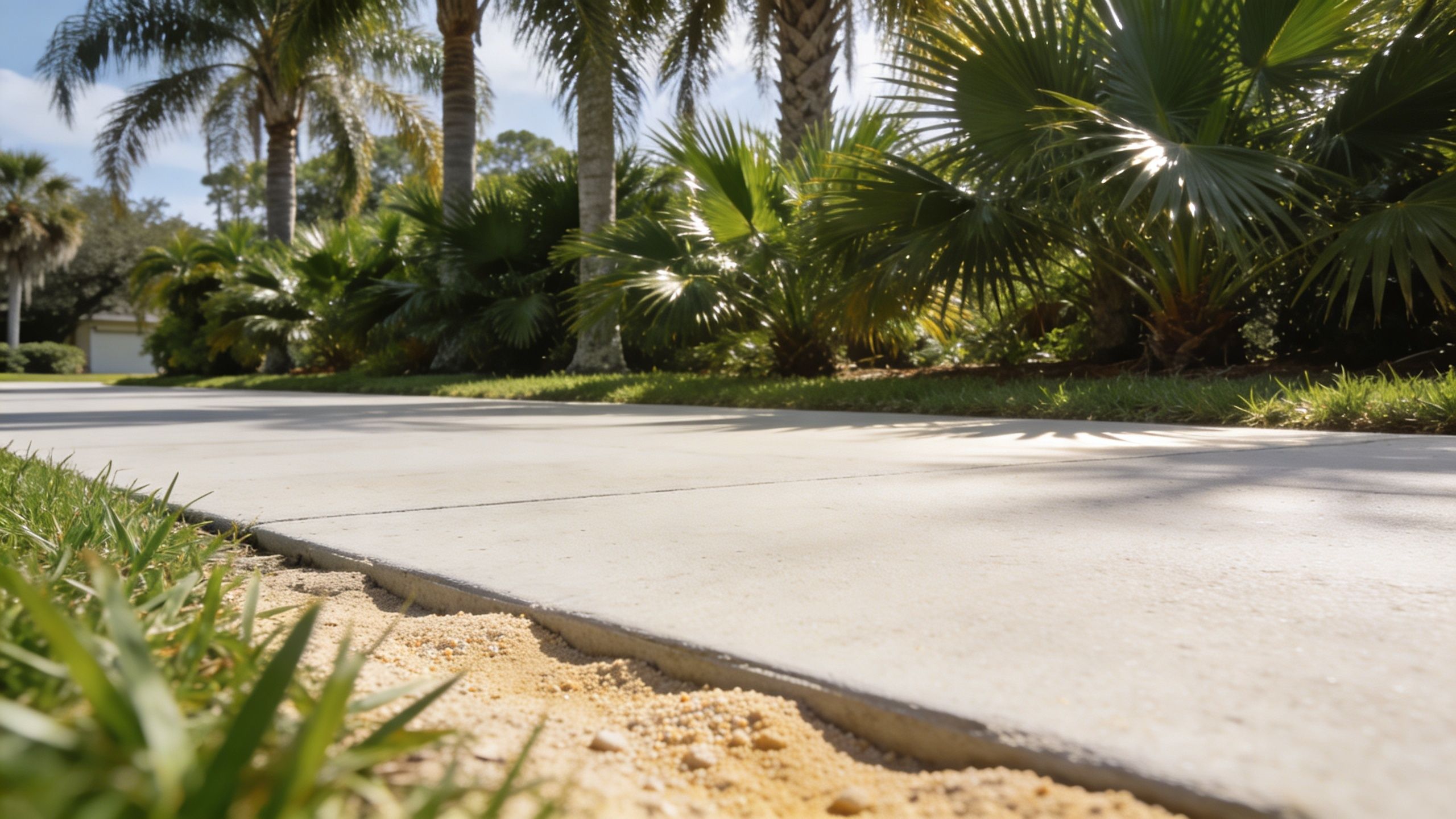
A lot of local lots drain fast at the surface, but that doesn't always mean the ground under the slab is stable. Sandy soil can shift, wash, or lose support near the edges. In lower areas or after repeated heavy rain, the driveway may start settling even if the concrete mix itself was fine.
That's why the replacement plan has to match the site. On one property, basic prep may be enough. On another, the slab needs more base correction before new concrete goes down.
Rain, humidity, and heavy vehicles
Florida weather creates a different wear pattern than colder states. Instead of freeze-thaw stress being the main issue, local driveways deal with long wet periods, heat, and regular UV exposure. Water intrusion at joints and edges is a common driver of deterioration.
Heavy vehicles make that worse. If the driveway supports an RV, boat trailer, work truck, or repeated delivery traffic, the slab design should account for it. A driveway that works fine for sedans may not hold up the same way under heavier wheel loads.
A driveway in Summerfield or Lecanto isn't just a concrete slab. It's a slab, a base, a drainage plan, and a response to the property it sits on.
HOA expectations and neighborhood appearance
In some communities, homeowners also need to think about finish, width, color consistency, or approval timing. That's especially common in HOA-managed areas around The Villages and parts of Belleview and Ocala.
Those requirements may not change the structure of the slab, but they can affect scheduling and design choices. It's better to check those rules early than to find out after the estimate is written.
Your Checklist for Getting Accurate Contractor Bids
The easiest way to overpay is to accept a vague quote. The easiest way to underbuy is to choose the cheapest one without checking what's missing.
A solid driveway estimate should be specific enough that you can compare it line by line. If a contractor can't explain what's included, you don't have a reliable bid yet.
What to ask before you sign
Use this checklist when comparing driveway replacement proposals in Marion County, FL or Citrus County, FL:
- Confirm licensing and insurance: Ask whether the contractor is properly licensed and insured for the work being proposed.
- Ask what demolition includes: Make sure tear-out, haul-off, and disposal are written into the bid.
- Check the base work: Ask how the crew handles soft spots, grading corrections, and compaction if problems show up after removal.
- Clarify slab thickness: Don't assume every bid includes the same depth.
- Ask about reinforcement: Find out whether the quote includes wire mesh, rebar, or no reinforcement at all.
- Review the finish: Plain broom finish, decorative finish, edging details, and transitions should all be clear.
- Find out who handles permits: Don't leave permit responsibility vague.
- Ask about cure-time instructions: A good contractor should tell you what happens after pour day, not just before it.
- Request a written scope: If the proposal is only a one-line price, keep asking questions.
What a low bid often leaves out
Some quotes look attractive because they skip the expensive parts that homeowners can't easily see. Base correction is a common one. Haul-off is another. So is reinforcement.
If one proposal in Inverness, Silver Springs, or Beverly Hills comes in far below the others, ask what that contractor is doing differently. Sometimes the answer is efficiency. Sometimes the answer is that the scope isn't the same job.
Cheap and complete are not the same thing. A lower price only helps if the slab lasts.
What a homeowner should have in writing
Before work starts, the written estimate should identify:
- Square footage or dimensions
- Whether removal is included
- The slab thickness
- Any reinforcement being used
- Finish type
- Permit responsibility
- Cleanup expectations
- Basic warranty terms if offered
That kind of detail protects both sides. It also makes it much easier to compare one bid against another without guessing.
Frequently Asked Questions About Driveway Replacement
Can I repair the driveway instead of replacing it
Sometimes. A surface-level problem like light scaling, minor pitting, or small cosmetic cracks can often be repaired. If the slab is sinking, breaking apart in multiple areas, or cracking because the base has failed, repair usually buys time rather than solving the problem.
According to This Old House's guide to driveway repair and replacement options, resurfacing is typically the lower-cost fix, while slab jacking can make sense for settlement issues. In Marion and Citrus County, the question is not just what the top looks like. The bigger question is whether the soil underneath is still supporting the slab the way it should. Sandy subgrade, washout after heavy rain, and soft spots can turn a cheaper repair into a repeat expense.
If one corner keeps dropping or cracks keep reopening, replacement is often the better long-term spend.
How long does the replacement process usually take
The concrete work itself can move fast. The full job usually takes longer than pour day because scheduling, demolition, base correction, forming, inspections if required, weather delays, and cure time all affect the calendar.
Central Florida rain changes timelines more than homeowners expect. A crew may be ready to pour, then lose a day because the subgrade is too wet or the forecast is wrong. That delay is frustrating, but it is cheaper than placing concrete on a bad base and dealing with early failure later.
A contractor should give you a realistic schedule based on your site, not a blanket promise.
Do I need a permit in Marion County or Citrus County
Sometimes. Permit requirements depend on the property, the municipality, and whether the work affects the sidewalk, apron, or public right-of-way. HOA approval can also matter, especially in subdivisions with rules on width, finish, or how the driveway meets the street.
This catches homeowners off guard. The driveway itself may be simple, but if the county, city, or HOA requires revisions, that can add time and cost before the first truck arrives.
Get a clear answer in writing on who handles permits and approvals.
How long will a new concrete driveway last
A properly built concrete driveway can last for decades, but lifespan in Central Florida depends heavily on installation quality. Base prep, drainage, thickness, reinforcement, joint placement, and traffic load all matter.
I would put more weight on those factors than on any national lifespan estimate. A driveway built for passenger cars on stable ground is one job. A driveway that sees a boat trailer, work truck, or frequent delivery traffic needs a stronger section and better support underneath. In sinkhole-prone or movement-prone areas, even a good slab can struggle if the soil issue is not addressed first.
Is concrete better than asphalt for a residential driveway
It depends on the property and how the driveway is used. Concrete usually costs more upfront, but many homeowners prefer it for appearance, longevity, and less frequent maintenance. Asphalt can be a good fit too, especially for longer rural driveways where budget is tight.
The local conditions matter. In parts of Marion and Citrus County, drainage, tree roots, soil movement, and sun exposure can make one surface more practical than the other. HOA rules can matter too, since some neighborhoods limit finish choices or favor a certain look.
That's why it helps to work with Concrete and Asphalt Experts in Marion and Citrus County who can evaluate the site, the traffic, and the budget before recommending a surface.
If you need a clear, no-pressure estimate for a driveway in Marion County, FL or Citrus County, FL, Riverside Sealing & Striping, LLC offers on-site consultations for homeowners across Dunnellon, Ocala, Crystal River, Inverness, Homosassa, Belleview, Lecanto, Hernando, Summerfield, Silver Springs, Beverly Hills, and nearby Central Florida communities. As Concrete and Asphalt Experts in Marion and Citrus County, they handle concrete driveway replacement, new concrete work, asphalt sealcoating, and parking lot striping with reliable scheduling, licensed and insured service, and practical recommendations based on what your property needs.