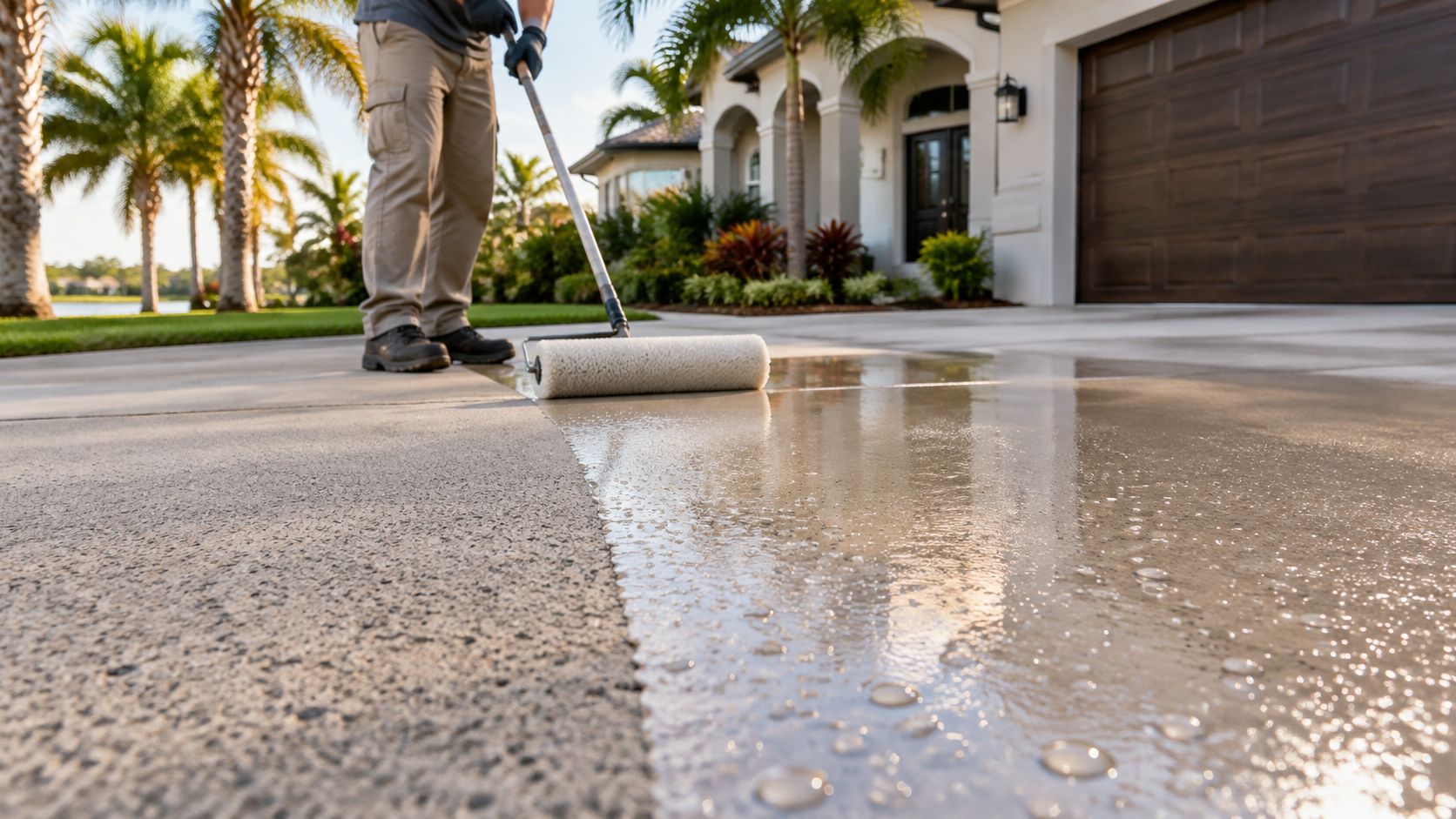
Concrete driveway sealing is a protective treatment that keeps water, oil, fuel, and road salts from soaking into the slab. Think of it as sunscreen for your driveway. It cuts down on damage from repeated exposure, but it won't fix cracks or settlement.
For homeowners in Marion County, FL and Citrus County, FL, heat, UV, and heavy summer rain make that protection especially important. This guide explains what concrete driveway sealing does, which products work best, and when to call a professional.
Table of Contents
- What Concrete Driveway Sealing Actually Does
- Types of Concrete Driveway Sealers Compared
- When to Seal and How Central Florida Weather Shapes Timing
- How Long a Sealed Driveway Should Last
- DIY Sealing or Professional Application
- How to Maintain Concrete Driveway Sealing After Application
- FAQs About Concrete Driveway Sealing in Marion and Citrus County
What Concrete Driveway Sealing Actually Does
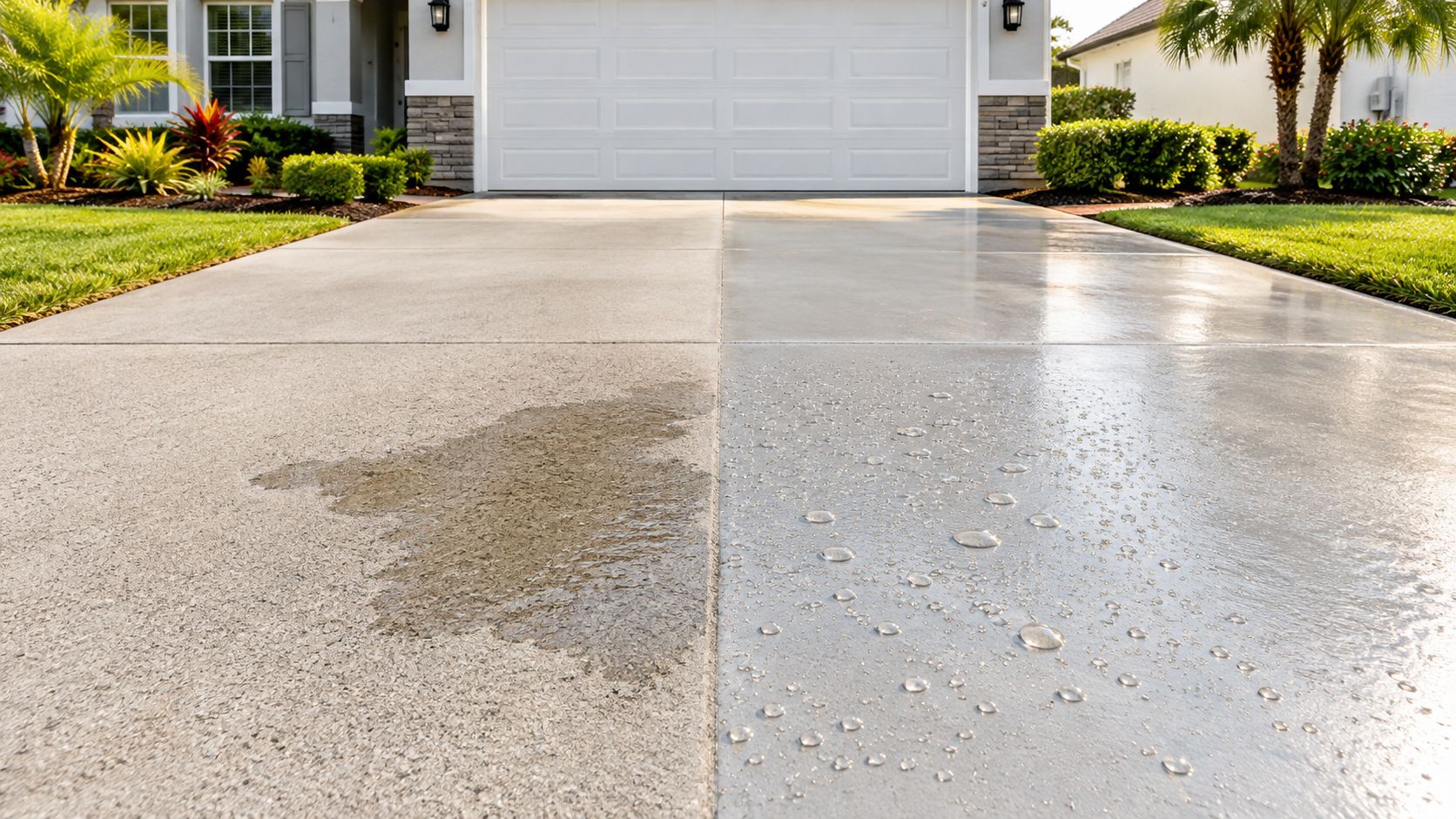
Concrete may look solid, but it is full of tiny pores. Even a fresh pour has microscopic openings, and hairline cracks give water an easy way in.
Every time rain, oil, or fuel seeps through, the damage adds up. Heat and moisture push those gaps wider over time, and eventually the surface starts to stain, flake, and crumble along the edges.
Where Sealer Fits in Protection
- Beads water up instead of letting it soak in
- Blocks oil and fuel stains from settling into the slab
- Slows UV and chemical wear on the top layer
- Won't fix cracks, settlement, or poor drainage
Researchers at the American Concrete Institute have looked at this closely. A 2021 laboratory study found that penetrating sealers cut water intake significantly. For several products, including hydrophobic silanes, two applications at half the recommended dosage performed better than one full application. Sealing slows moisture and chemical entry, but it cannot repair structural damage or replace proper drainage. If you want the details, read the full penetrating sealer study before choosing a product.
Sealer protects a sound driveway. It cannot rescue one that is already failing.
Quick Answer on Whether Driveway Sealing Pays Off
Not every driveway is a good candidate for sealing. This quick reference shows when it makes sense and when a problem needs attention first.
| Driveway Condition | Is Sealing Worth It? | Why It Matters |
|---|---|---|
| Newer slab, no cracks | Yes | Sealer protects a sound surface before stains set in |
| Dull but structurally sound | Yes | Resealing restores water repellency |
| Large cracks or sinking | Repair first | Sealer cannot hold together a failing slab |
| Standing water near edges | Fix drainage first | Trapped water undermines any coating |
Homeowners in Ocala, Dunnellon, and The Villages face intense UV and summer downpours every year, so a sealing plan is worth thinking through. A professional evaluation can confirm whether your slab is ready.
Riverside Sealing & Striping, a family-owned concrete and asphalt team serving Marion and Citrus County, offers free, no-pressure estimates from 7am to 7pm.
Whether you need a driveway assessed or a patio planned, the team handles both concrete and asphalt projects. Getting clear on the process first makes that estimate conversation much more productive.
Types of Concrete Driveway Sealers Compared
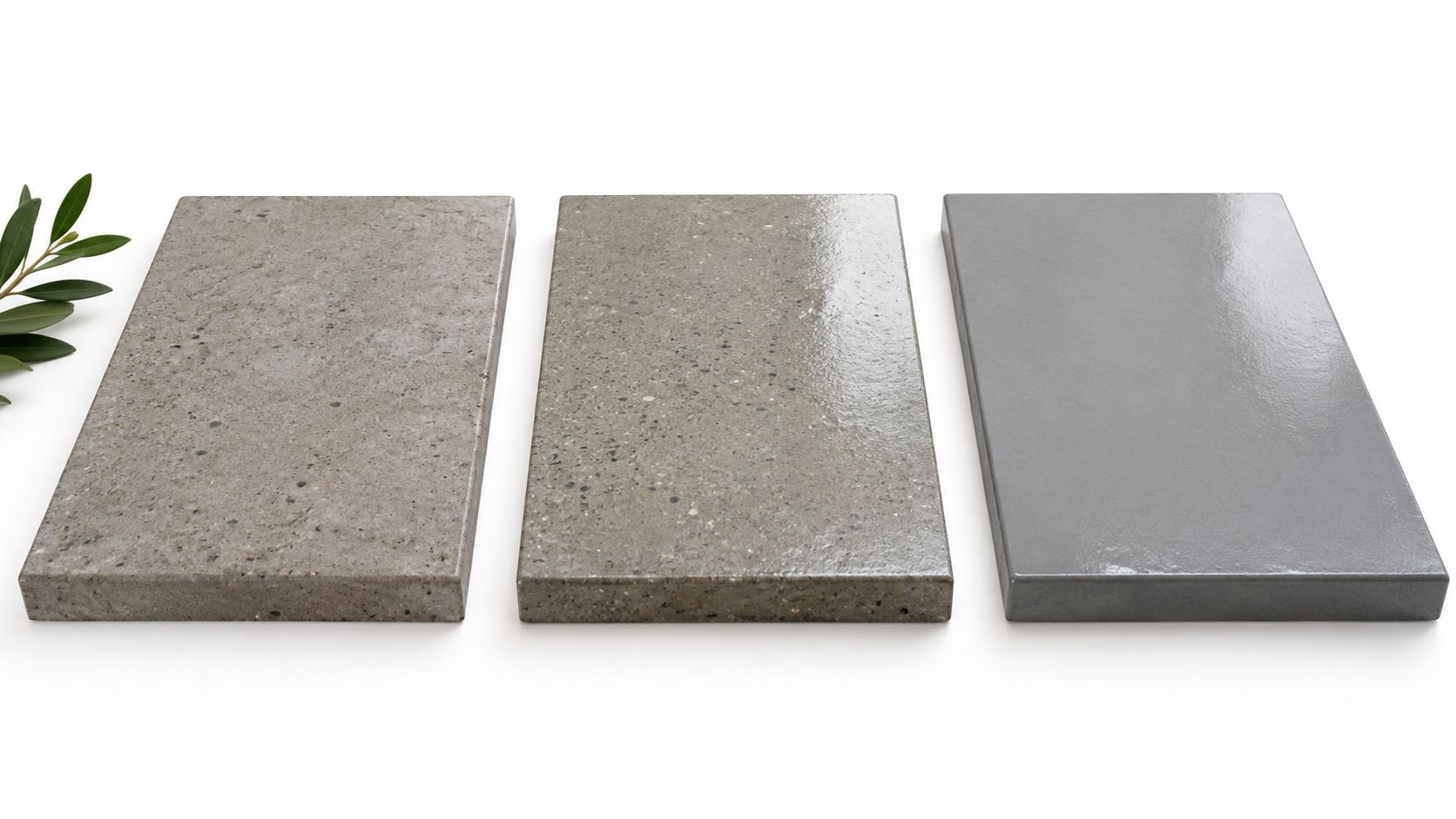
Not every product sold for concrete driveway sealing behaves the same way. Pick the wrong family and you can waste money while your slab stays exposed.
Penetrating Sealers That Soak In
Penetrating sealers, such as silanes and siloxanes, soak into the concrete and bond with the pores from the inside. Nothing sits on top, so the surface keeps its natural look.
Picture a waterproof jacket that the fabric absorbs instead of wearing. Rain beads off, but the material still breathes and looks like itself.
Film-Forming Acrylic Coatings Explained
Acrylic coatings sit on the surface and build a protective film. They add color, hide minor staining, and leave a glossy or satin finish.
Think of a film-forming coat as paint on a wall. It looks sharp on day one, but Florida sun and foot traffic can cause it to yellow, chalk, or peel over time.
Epoxy and Urethane Systems for Heavy Use
Epoxy and urethane systems form a thick, hard shell over the slab. They suit garage floors, workshop bays, and driveways that see oil drips or heavy trucks.
Many epoxies yellow under direct sunlight, so they work best in garages or covered areas. For open driveways, a UV-stable urethane topcoat usually holds its color far better.
Common Concrete Driveway Sealer Types and Their Best Uses
Here is how the three families compare side by side, especially for homes in Marion and Citrus County.
| Sealer Type | How It Works | Appearance | Best Use Case | Florida Consideration |
|---|---|---|---|---|
| Penetrating | Soaks into pores and bonds from within | Natural, unchanged | Newer slabs and minimal look changes | Handles UV and moisture well |
| Film-forming acrylic | Sits on the surface as a protective film | Adds color with a glossy finish | Decorative or faded driveways | Yellows and wears under heavy sun |
| Epoxy or urethane | Forms a thick, hard shell | Glossy or textured | Garages and oil-prone areas | Epoxy yellows; choose a UV-stable topcoat |
For most driveways, penetrating sealers protect without changing the look. Acrylics add color but need more upkeep, while epoxy and urethane handle heavy abuse. Your slab's age and sun exposure will usually point you to the right choice.
Solvent-Based Versus Water-Based Products
Solvent-based products penetrate deeply, but they release strong fumes. Water-based versions clean up with soap and water, which makes them a practical pick for most homeowners.
Lab results back up the value of good penetration. An Iowa State University transportation evaluation ran 91 days of chloride ponding and found one treatment cut chloride content in a lower concrete layer by 43%.
A silane treatment produced a 10% reduction in the same comparison. Several treated specimens also stayed unsaturated after 28 days of water contact, while untreated concrete soaked up water far more readily. Read the full chloride ponding research report.
Matching a Sealer to Your Driveway
Before you choose, check a few basics:
- Slab age: Newer concrete often accepts penetrating sealers well.
- Existing coatings: Old film-forming layers may need removal first.
- Sun exposure: Open, south-facing driveways need UV-stable products.
- Oil stains: Frequent drips point toward urethane or epoxy systems.
Results depend on concrete quality, surface condition, product chemistry, and application conditions.
For driveways in Summerfield, Belleview, or Inverness, a professional can match the right family to your slab's exposure and appearance goals. Contact Riverside Sealing & Striping for a free, no-pressure estimate.
When to Seal and How Central Florida Weather Shapes Timing
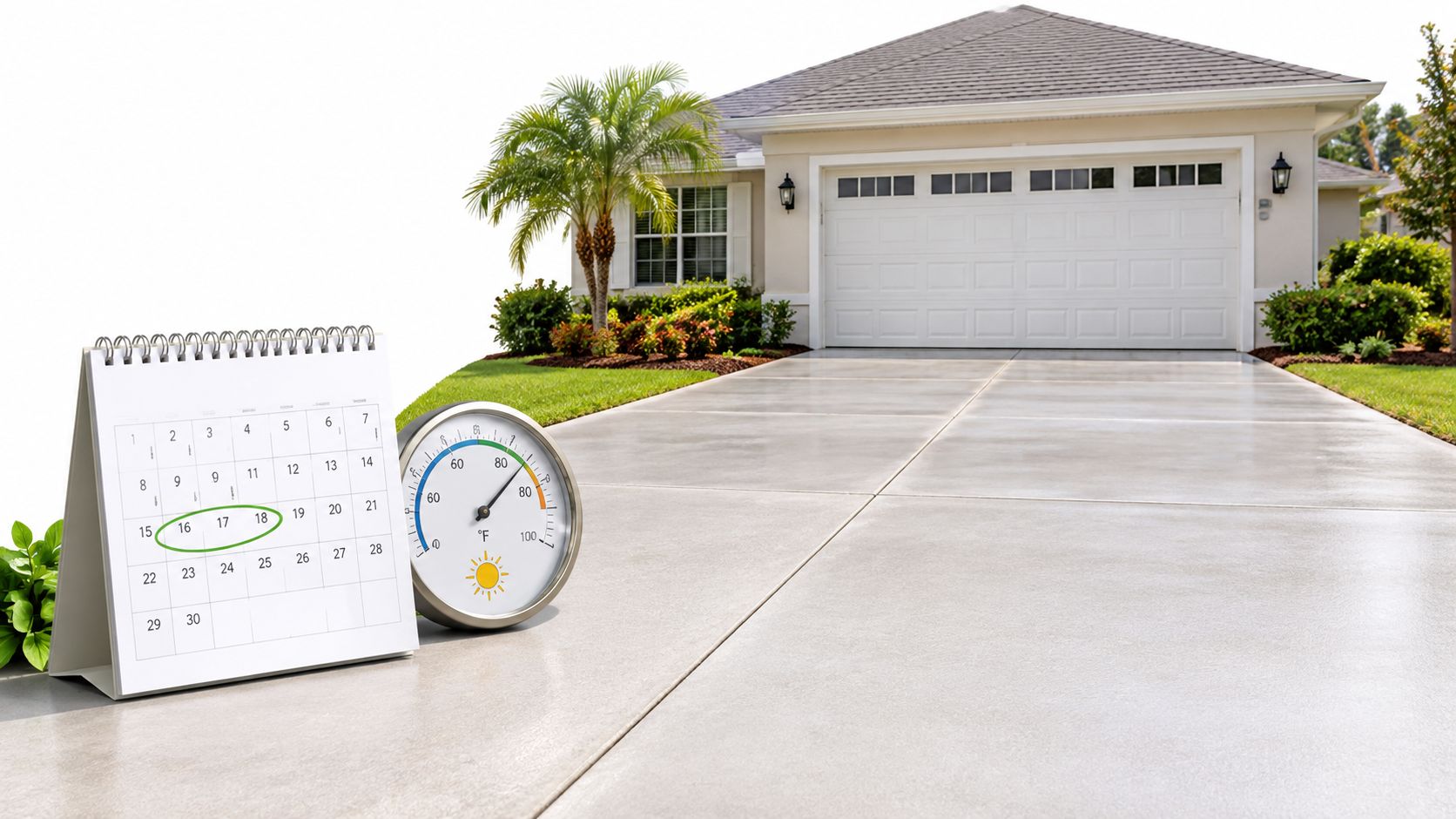
Timing can matter as much as the product you pick. Seal too early or too late, and even a good sealer can peel, fade, or refuse to bond at all.
Sealing Brand-New Concrete
Fresh concrete needs time to cure before any sealer goes on. Most slabs take about 28 days to settle into a stable state, though heat and humidity can stretch that window.
Skipping the wait is a common mistake. Moisture gets trapped underneath, and within a single wet season it can push the coating right off the surface.
Spotting Signs an Existing Driveway Needs Sealing
An older driveway usually tells you when it's due. Keep an eye out for these warning signs:
- Dull, chalky surface that no longer looks rich in color
- Water soaking in instead of beading on top
- Stains that hang on after pressure washing and degreasing
- Light scaling where the top layer flakes away
Water beading is the easiest check. Run a hose over a dry section and watch the drops. If they soak in quickly, the surface has lost its protection.
Testing Whether the Slab Is Dry Enough
Moisture is the sneaky problem here. Tape a square of clear plastic sheeting, about two feet across, flat on the concrete, and leave it for 24 hours.
When you lift it, look closely. Condensation underneath or darkened concrete means the slab still holds water, so give it a few more days and test again.
Problems That Cause Sealer to Fail
Some issues need attention first. Sealing over oil stains locks grease under the film, so the coating never bonds properly. White, powdery efflorescence is mineral salt that works its way up from inside the slab, and it must be removed and the surface fully dried before any coating goes on.
Sealer bonds to clean, dry, sound concrete. Anything else gets sealed in along with the problem.
How Florida Heat and Storms Change the Schedule
Central Florida doesn't follow the seasonal calendar that homeowners up north use. Summers bring intense UV, relentless heat, and afternoon storms that roll in with little warning.
UV is the quiet troublemaker. Over time, sunlight breaks down the binders in film-forming coatings, leaving them yellowed or chalky.
Heat does its own damage. Concrete expands through the day and contracts at night, and that constant movement opens hairline cracks that water finds fast.
Traffic, Chemicals, and Everyday Wear
Driveways in Dunnellon, Crystal River, and Homosassa take a lot of punishment. Family sedans and work trucks run over the same tracks day after day, and that friction wears down the protective film faster than most people expect.
Pool chemicals, fertilizer runoff, and oil drips add to the strain. Humidity and frequent rain also slow drying, so a slab that looks ready may still be damp underneath.
Why Drier Months Are the Safest Window
The drier stretch, late fall through spring, gives sealers the best chance to cure properly. Lower humidity and fewer afternoon storms let the coating set before the next downpour arrives.
Planning around the weather keeps the project on track. Many homeowners in Crystal River and Homosassa find that a spring or fall evaluation fits their schedule best.
Riverside Sealing & Striping is a family-owned team based in Dunnellon, and we're one of the concrete and asphalt specialists serving Marion and Citrus County. We offer free, no-pressure on-site evaluations from 7am to 7pm. If your slab is brand-new, our guide to sealing a new concrete driveway walks through the curing steps in detail.
Scheduling around Central Florida's weather takes a little planning, but it protects your investment for years. A quick evaluation can confirm whether your driveway is ready now or should wait for the next dry window.
How Long a Sealed Driveway Should Last
Most homeowners want a straight answer before they commit to a maintenance schedule. Here it is: the sealer usually needs attention long before the concrete does.
Why Sealer Lifespan Varies
Expect a typical penetrating or film-forming treatment to last somewhere between two and five years. Four factors push that number up or down: product type, application quality, traffic, and sun exposure.
Florida's sun is especially rough on the top layer. Daily heat and afternoon storms wear down the coating faster than most people expect.
Think of sealer like tire tread. The rubber wears away with every mile, but the frame underneath keeps doing its job.
How Long the Concrete Itself Lasts
The slab underneath tells a different story. Concrete pavement often outlasts its surface treatments by many decades, as long as the design, drainage, and maintenance all work together. A durable and long-lasting slab is built for Florida conditions when it is properly installed.
The research is fairly convincing on this point. A U.S. Department of Defense technical review found 30 years or more to be common for Portland cement concrete pavement. One Montana pavement was designed for about 2.5 million loads over 20 years, yet it lasted 31 years and carried roughly 15 million loads. Read the full research on long-lasting concrete pavement.
What Actually Shortens Driveway Life
Early failure usually has little to do with the sealer. Driveways tend to crack or crumble early when the base is unstable, water sits near the slab, or joints are poorly placed.
These are the usual culprits:
- Unstable base: Soft or poorly compacted soil lets the slab shift and crack.
- Pooling water: Standing water along the edges soaks through and undermines the slab.
- Poor joints: Misplaced control joints invite random cracking.
Sealing can't fix any of these. Think of it as one layer in a longer system, not a patch for a foundation problem. Preventative maintenance saves money, but only when the base and drainage are sound.
Our guide on how long a concrete driveway lasts goes deeper into structural timelines if you want the full picture.
Planning Realistic Budgets
Homeowners in Ocala, Silver Springs, and Hernando can work from a simple rhythm. Reseal every few years, inspect the slab carefully each season, and deal with structural issues before they spread across the surface.
Budget for sealing as routine upkeep for long-term savings, not as a cure-all for a failing slab.
DIY Sealing or Professional Application
Concrete driveway sealing is a manageable weekend project for homeowners who have the time, equipment, and patience to do it properly. The real question is whether the result will hold up through Central Florida heat, heavy rain, and constant sun exposure.
Think of sealer as a coat of protection. It can slow moisture penetration, reduce surface wear, and make the driveway easier to clean, but it cannot repair major cracks or damaged concrete.
The Work Behind a Good Result
Preparation decides the outcome. Most homeowners focus on the sealer itself, while the condition of the surface underneath makes an even bigger difference.
- Pressure washing removes dirt, pollen, and loose debris so the sealer can reach the pores.
- Degreasing oil spots breaks down fuel and grease that would otherwise block penetration.
- Crack repair fills small hairline gaps before they widen under Florida heat.
- Drying time gives the slab enough time to release trapped moisture before coating.
- Coverage rate sets how much product goes down per square foot, applied in thin, even coats.
Why Application Mistakes Show Up Fast
Thickness is where many DIY jobs go wrong. Too much sealer leaves a sticky, streaky film, while too little offers little protection.
Uneven application causes lap marks and peeling edges, especially where the last pass overlaps the first. Walk the driveway in consistent strokes and keep a wet edge.
Anyone can cook an egg. Restaurant consistency comes from preparation and technique, and driveway sealing follows the same rule.
DIY Versus Professional Concrete Driveway Sealing
The choice usually comes down to the condition of the driveway, the size of the job, and how much risk you are willing to take on.
| Factor | DIY Sealing | Professional Sealing |
| :— | :— | :— | :— |
| Upfront cost | Lower, mostly materials and rentals | Higher, labor and materials included |
| Equipment | Pressure washer, sprayer, brushes | Commercial-grade gear already on hand |
| Time | Often a full weekend or longer | Usually completed in one visit with fast turnaround |
| Warranty | Usually none | Often includes a workmanship guarantee |
| Risk | Streaks, peeling, and wasted product if rushed | Lower risk when prep and application follow standards |
Choosing a Small DIY Project
A single-car driveway in good condition can be a reasonable weekend project. Keep it simple: one product, clean weather, and plenty of time for drying.
Check the forecast before starting. Central Florida weather can turn quickly, and sealer needs a dry window to cure properly.
When to Bring in a Professional
Larger, stained, or decorative surfaces call for professional hands. Multiple oil stains, faded color, stamped patterns, or heavy wear all demand more preparation, and mistakes are harder to fix.
Want to see what a proper prep phase involves? Read our guide to concrete surface preparation standards.
Hiring a Licensed and Insured Local Team
Homeowners in Belleview, Lecanto, and Beverly Hills should look for a few key criteria before hiring anyone.
- Licensed and insured: Confirm coverage in writing before work begins.
- Local Central Florida experience: A crew that knows humidity, summer storms, and UV handles prep differently.
- Reliable scheduling: Ask for a written timeline and a start date.
- High-quality workmanship: Ask what prep, product, and coverage rate are included.
- Written estimate: Compare line items for prep, product, and coverage rate.
Preparation work decides the result. If your driveway falls outside the single-car, lightly stained category, a free, no-pressure estimate from Riverside Sealing & Striping can help you decide.
Our team is licensed and insured, and we know how Marion and Citrus County driveways hold up under summer heat. Schedule a no-pressure consultation whenever you are ready. Reach out anytime today.
How to Maintain Concrete Driveway Sealing After Application
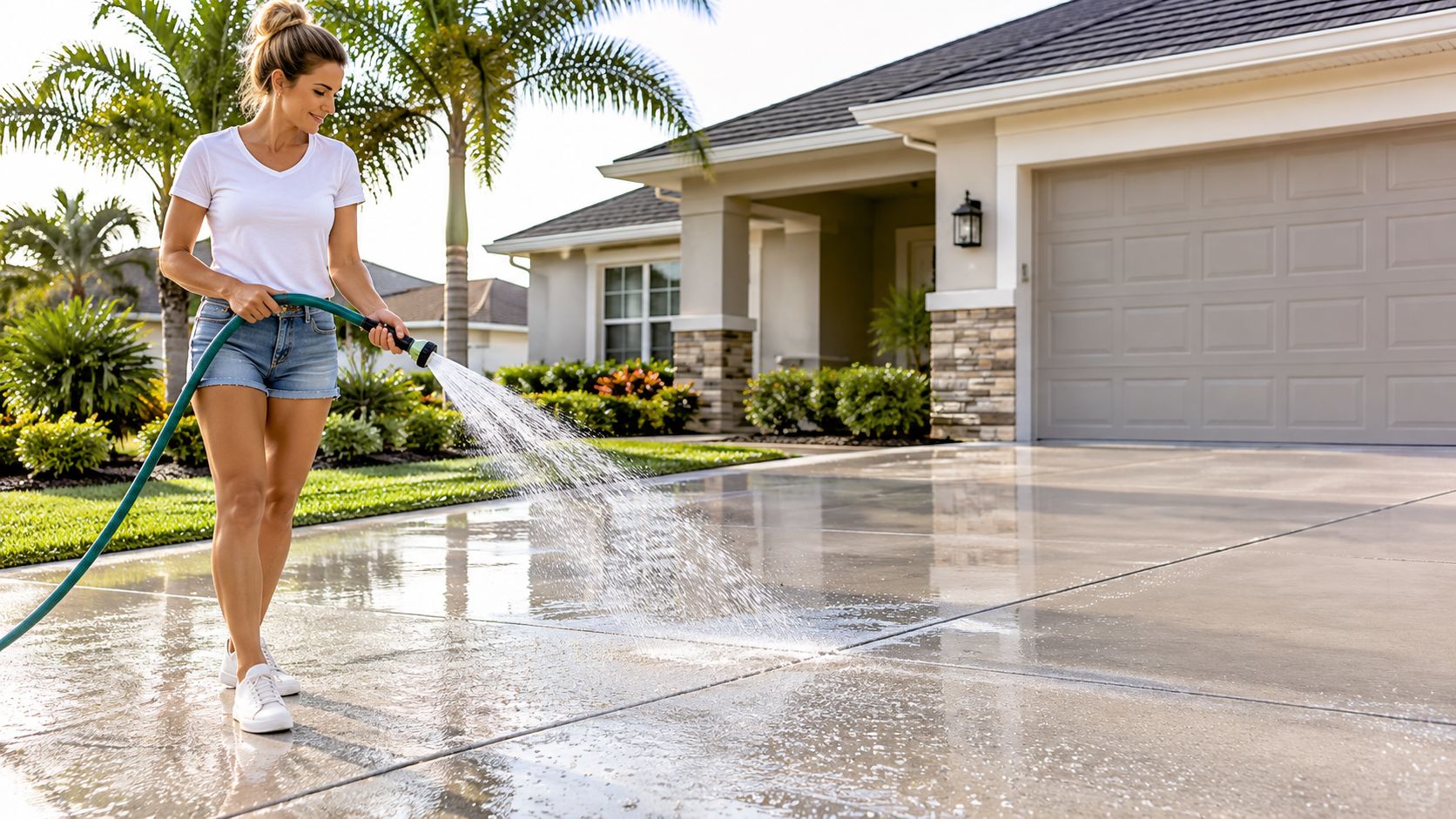
Think of a good sealer as a rain jacket for your driveway. It beads water and holds up for years, but daily grit, chemicals, and Florida heat wear it thin.
A few simple habits go a long way toward protecting that layer. They are also what allow concrete driveway sealing to reach its full two to five year life here in Central Florida.
Building a Simple Care Routine
Maintenance does not need to feel like another project. Most of it is quick housekeeping that keeps little issues from turning expensive.
- Rinse chemicals right away. Wash off fertilizer, pool splashout, and soap before the sun bakes them in.
- Handle spills the same day. Blot oil or fuel, cover it with cat litter, then clean with a degreaser.
- Keep water moving away. Clear gutters, extend downspouts, and adjust sprinklers that hit the same edge every morning.
- Sweep grit off weekly. That loose sand acts like sandpaper under tires on driveways in Ocala, Crystal River, and Inverness.
A fast rinse after lawn day is a perfect example. It prevents those dark fertilizer streaks homeowners end up scrubbing for hours later.
Little cleanups now keep the sealer working strong for seasons to come.
Spotting Wear Before It Spreads
Get in the habit of checking the slab in spring and fall when it is dry. Walk the tire tracks, joints, and shady corners where moisture tends to sit.
- Dull, flat patches where the sheen wore off faster than the surrounding concrete
- Water soaking in instead of beading during a light hose test
- Fine surface cracks catching dirt around joints and saw cuts
- Flaking or peeling along edges, turn areas, and high-traffic spots
Do not seal over active cracks or loose material, though. Patch, clean, and let everything dry completely first or the new coat will not bond.
Knowing When Professional Help Makes Sense
Bring in a pro when cracks keep widening, slabs have settled, or water keeps draining back onto the driveway. Those are base and drainage problems, and another coat alone will not fix them.
Riverside Sealing & Striping serves homes across Marion County, FL and Citrus County, FL, including Dunnellon, Lecanto, Summerfield, and Homosassa. As Concrete and Asphalt Experts in Marion and Citrus County, our licensed and insured team covers inspection, repair, replacement, resealing, asphalt sealcoating, and parking lot striping.
Ask for a free estimate or no-pressure consultation today for straight, dependable advice.
FAQs About Concrete Driveway Sealing in Marion and Citrus County
How Often Should You Seal Your Driveway in Florida?
There is no set schedule that works for every driveway. Start with the manufacturer's maintenance guidance, then pay attention to traffic, sun exposure, and how the surface actually looks.
For most homes in Marion County, FL and Citrus County, FL, that guidance is just a baseline. Do not add another coat every year out of habit.
Before you reseal, check a few things first:
- Product compatibility, especially if you are not sure what was applied before
- Surface condition, including peeling, dark stains that will not wash out, or flaking concrete
- Application requirements, including the right temperature range and a dry window for curing
Can Concrete Driveway Sealing Hide or Fix Cracks?
In short, no. Sealing is not structural repair, and a clear sealer will not make cracks disappear. It works more like a rain jacket than a splint.
The penetrating sealer findings show less water getting in, not stronger concrete. If cracks are spreading, panels have shifted, or water keeps pooling in the same spot, get that looked at before sealing.
Fix the problem first, then protect the solid concrete around it.
Plan for Traction and Vehicle Access
Will sealing make my driveway slippery?
It depends on the product. Many penetrating sealers leave the texture alone, while film-forming finishes can feel slicker when wet.
On a slope in Ocala or Inverness, that difference matters. Ask your contractor about wet traction and whether a compatible traction additive makes sense.
When can I drive on it again?
Go by the vehicle return time on that specific product. Dry to the touch is not the same as ready for a car, and foot traffic often gets the green light sooner.
Before the crew arrives:
- Line up parking somewhere else for the day.
- Get the expected reopening time in writing.
- Ask how Florida humidity or an afternoon shower could push that time back.
For honest advice on concrete driveway sealing, call Riverside Sealing & Striping, LLC, your Concrete and Asphalt Experts in Marion and Citrus County. Request a free, no-pressure on-site consultation to review the condition, prep needs, and a realistic maintenance schedule for your property.