
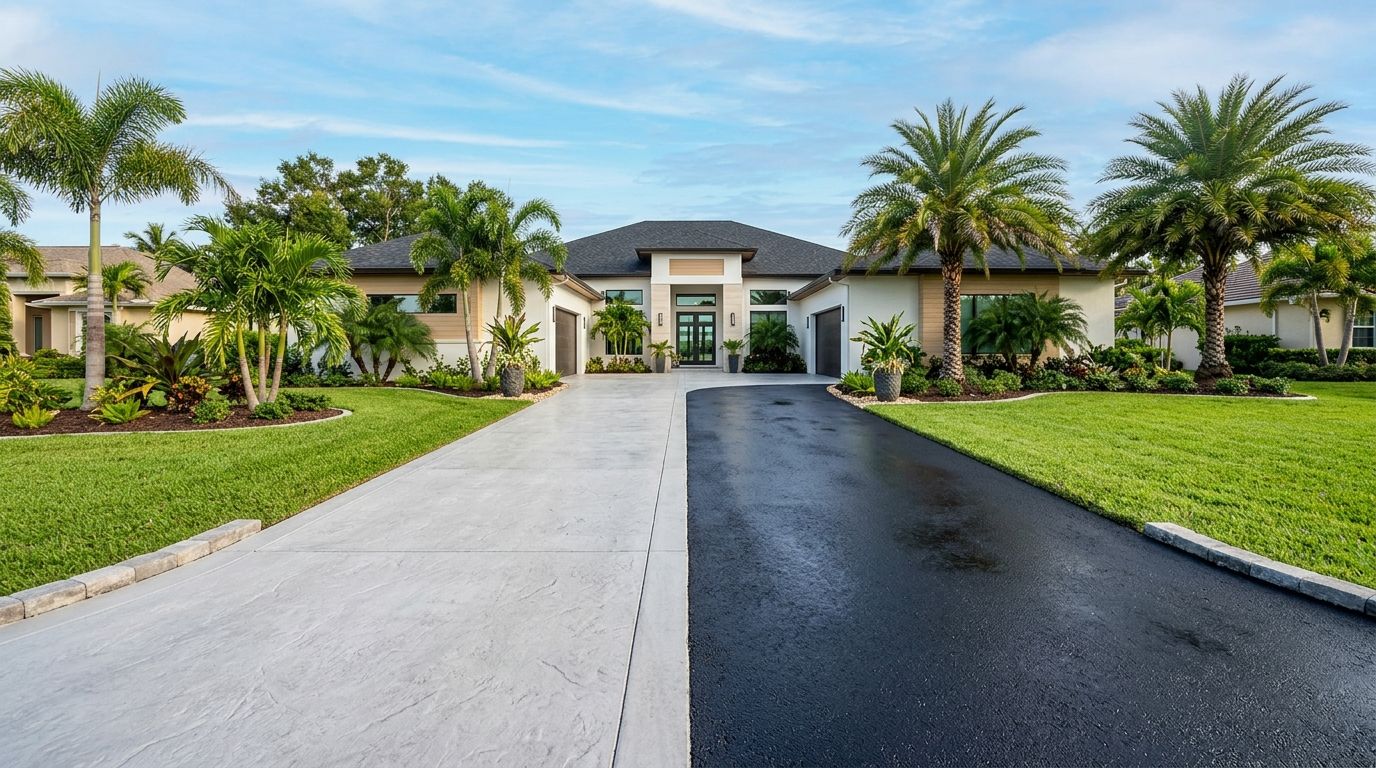
Your driveway is shot. Maybe it's spider-cracked in Ocala, crumbling at the edges in Belleview, or holding water after every hard rain in Homosassa. You know it needs more than a patch. The question is whether you spend less now on asphalt or spend smarter on concrete.
That's where most homeowners get bad advice. They hear, “asphalt is cheaper,” and stop there. That's incomplete. In Central Florida, the better question is what will this driveway cost you over the next 30 years, not what the first invoice says.
That matters in Marion County, FL and Citrus County, FL because our driveways take a beating from heat, UV, summer rain, and shifting ground. What works on paper in a generic national article doesn't always hold up in Ocala, Dunnellon, Crystal River, Inverness, or The Villages. If you want the blunt version, here it is: asphalt usually wins on upfront price, but concrete often wins on long-term value, appearance, and performance in Florida heat.
Table of Contents
- The Driveway Decision for Your Central Florida Home
- Upfront Installation Costs A Detailed Breakdown
- The 30-Year Cost The Real Story of Lifetime Value
- How Florida Weather Impacts Concrete and Asphalt
- Comparing Performance Aesthetics and Daily Use
- Your Decision Guide When to Choose Concrete or Asphalt
- Your Concrete and Asphalt Experts in Marion and Citrus County
- Frequently Asked Questions About Driveway Materials
The Driveway Decision for Your Central Florida Home
A lot of homeowners start this decision the same way. They back out one morning, look down, and realize the driveway has crossed the line from ugly to failing. The cracks are wider. The surface looks tired. Water sits where it shouldn't. If you're in Summerfield, Silver Springs, or Beverly Hills, you've probably seen the same thing on your street.
The mistake is treating this like a simple price shopping exercise. It isn't. A driveway is a long-term exterior surface that has to handle daily vehicle traffic, weather swings, runoff, and the look of your whole front yard. The cheap option on day one can become the expensive option after a few rounds of maintenance.
Contractor's view: For most homes in Central Florida, the right driveway choice comes down to how long you plan to own the property, how much upkeep you're willing to deal with, and how much curb appeal matters to you.
That's why the concrete driveway vs asphalt cost debate needs more than a quick price range. You need to know what each material asks from you over time. In neighborhoods around Lecanto, Hernando, and Crystal River, that long-term view matters because Florida climate punishes neglected surfaces fast.
If you want my opinion up front, here it is. If you're staying in the home and want the better long-term investment, concrete is usually the smarter move. If you need the lowest initial bill or you're paving a larger area where short-term cost matters most, asphalt still has a place.
Upfront Installation Costs A Detailed Breakdown
The first number homeowners care about is the install price. Fair enough. That's the check you have to write now, not ten years from now.
For a standard two-car driveway, asphalt installation typically costs between $2,000 and $7,200, while concrete ranges from $2,400 to $8,600, which means concrete is often 20% to 30% more expensive upfront according to HomeGuide's driveway cost comparison. That's the cleanest snapshot of initial pricing.
A quick side by side view
| Metric | Asphalt Driveway | Concrete Driveway |
|---|---|---|
| Typical cost per square foot | $5 to $12 | $6 to $15 |
| Typical 2-car driveway cost | $2,000 to $7,200 | $2,400 to $8,600 |
| Upfront cost position | Lower | Higher |
At-a-Glance Installation Cost Comparison (2-Car Driveway, Approx. 600 sq. ft.)
If you want a deeper look at replacement budgeting, this guide on cost to replace a concrete driveway is worth reading before you start collecting bids.
Why concrete starts higher
Concrete usually costs more because the install is less forgiving. Base prep has to be right. Forms have to be right. The mix, placement, finish, joints, and cure all matter. If any one of those steps gets rushed, the driveway may look good for a month and disappoint you for years.
Asphalt is simpler on the front end for most residential jobs. That's a big reason homeowners in places like Inverness or The Villages often lean asphalt at first glance. The lower entry price is real.
But there's one local wrinkle people miss. For very small driveways, the usual “asphalt is cheaper” rule can flip because of mobilization fees and minimum charges. I'll get into that in the decision section, because that's where it changes the recommendation.
Don't stop your comparison at install day. Upfront cost is only the first chapter of the driveway story.
The 30-Year Cost The Real Story of Lifetime Value
A lot of homeowners in Ocala, Beverly Hills, and Crystal River get stuck on the install quote. That's how asphalt wins the first conversation and loses the long one.
Over 30 years, the better question is simple. How many times are you going to pay for the same driveway?
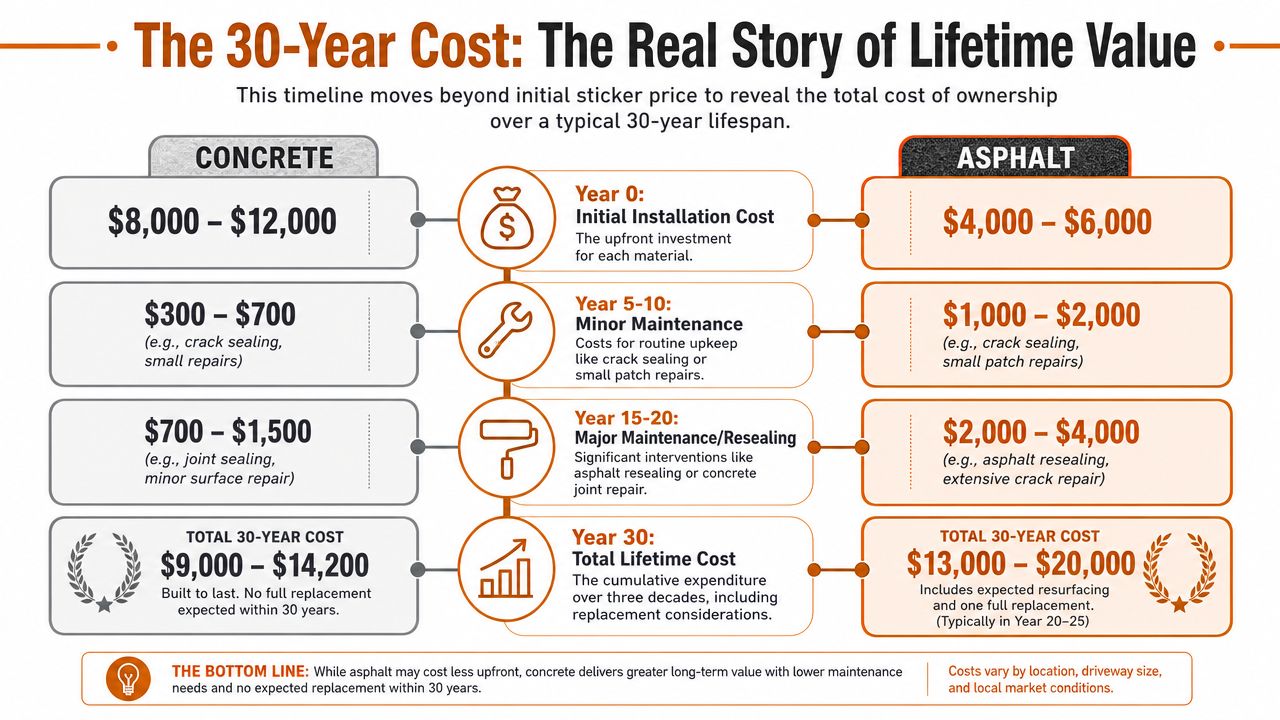
What the ownership timeline looks like
Angi's driveway material guide notes that asphalt usually needs more ongoing maintenance and has a shorter service life than concrete, which is why the cheaper bid often costs more over time for homeowners who stay put for years. See Angi's comparison of asphalt and concrete driveways.
That lines up with what we see across Marion and Citrus County. Concrete usually costs more on day one, then asks for less money and less attention over the life of the driveway. Asphalt starts lower, but the repeat spending changes the math.
Why asphalt often costs more over time
The problem with asphalt is the maintenance cycle. You are not usually writing one giant check. You are paying for crack filling, sealcoating, patching, and, later, resurfacing. In Central Florida, heat, heavy rain, and base movement tend to speed up that cycle.
If you want a realistic handle on one of those repeat expenses, review typical asphalt sealcoating cost per square foot before you decide that asphalt is the budget option.
Concrete has its own repair costs, and bad installation can make it expensive in a hurry. But on a properly built driveway, the ownership pattern is usually steadier. Fewer maintenance events. Longer intervals between major work. Better odds that you are not redoing the surface halfway through your time in the house.
My recommendation: If you expect to own your home for 10 years or more, concrete is usually the better financial choice in this part of Florida.
That advice gets stronger on lots with drainage issues, full sun exposure, or soft subgrade, because those conditions tend to punish asphalt faster. Asphalt still has a place. It works for tighter upfront budgets, shorter ownership timelines, and some rural or longer drive applications where keeping the initial spend down matters more than minimizing 30-year cost.
How Florida Weather Impacts Concrete and Asphalt
A driveway in Ocala or Crystal River takes a beating. Summer sun cooks the surface, afternoon storms dump water fast, and sandy soil can shift enough to expose weak prep work within a few seasons.
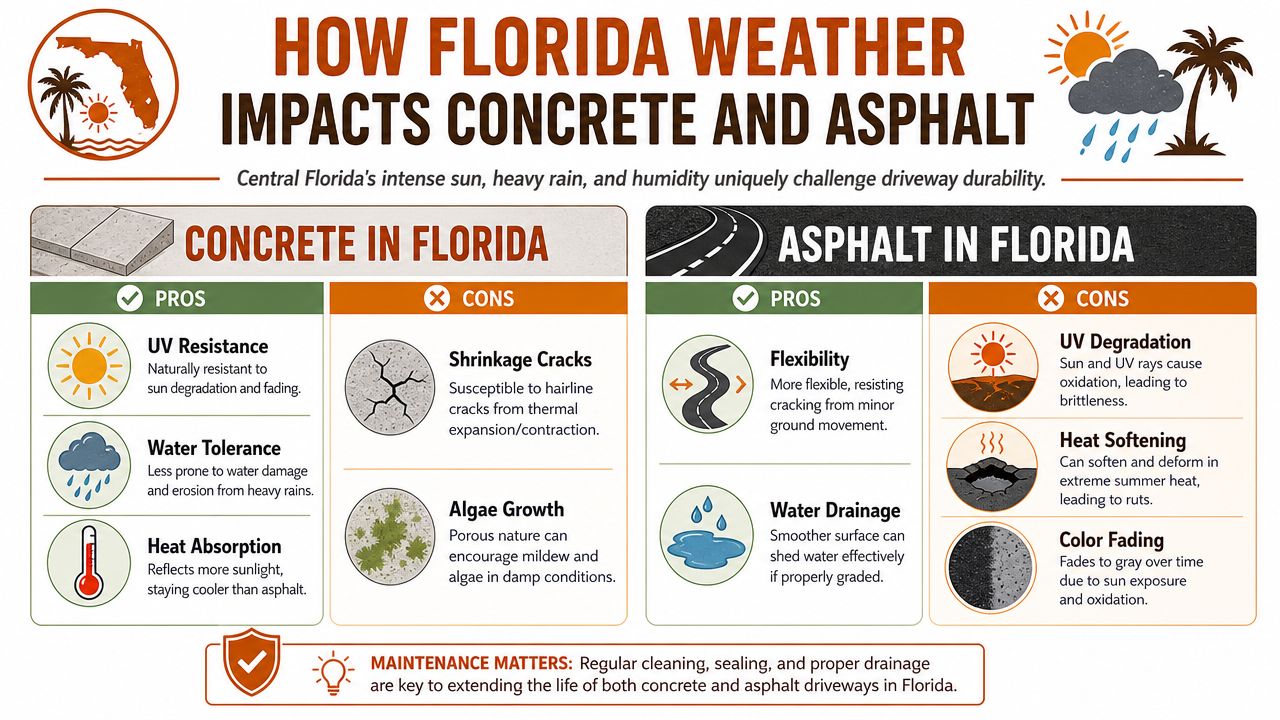
What heat and UV do in Central Florida
Florida heat is harder on asphalt. Asphalt is made with bitumen, a petroleum binder, while concrete is a mix of cement, sand, and aggregate, as explained by the National Asphalt Pavement Association in its asphalt pavement materials overview. That difference matters here because black asphalt absorbs more heat, softens more in prolonged sun, and tends to show aging sooner on full-sun driveways.
Concrete is the better fit for open lots with no shade. It holds its shape better in high temperatures and usually gives you a more stable surface over the long haul.
It also stays brighter and reflects more sunlight. That helps with surface temperature and curb appeal after years of Florida sun.
What rain and ground movement do
Rain is the true test. A hard summer storm will find every shortcut in the base, edges, and drainage plan. If water gets under the driveway and the subgrade was not compacted correctly, both materials can crack, settle, or break at the edges.
Homeowners often overlook the true cost. Weather does not just damage the surface. It speeds up the repair schedule.
Asphalt has one advantage on tricky ground. It flexes more, so it can handle small soil movement a little better than rigid concrete. On a property with mild shifting and a long rural drive, that can make asphalt a reasonable short-term choice. But in Marion and Citrus County, that flexibility usually comes with more upkeep after heavy rain and long heat cycles. If you go that route, follow a clear asphalt driveway maintenance schedule and expect to stay on top of it.
Concrete is less forgiving of poor soil movement, but it rewards good site prep better. Build the base right, control drainage, and concrete usually gives you fewer weather-related maintenance events over the next few decades.
My view: In Central Florida, weather pushes the 30-year math toward concrete on most residential driveways. Asphalt can work, but only if lower upfront cost matters more to you than repeat maintenance and earlier surface wear.
Commercial sites play by different rules because scale changes the budget, repair strategy, and traffic pattern. For a home driveway, Florida weather usually makes long-term durability the smarter way to compare cost.
Comparing Performance Aesthetics and Daily Use
A driveway is not just a line item on an estimate. In Ocala, Dunnellon, or Crystal River, it is the surface you pull onto every day, the place your kids step out of the car, and the first hardscape people see from the street.
Daily living with each surface
If you park heavy vehicles at home, concrete is the better choice. That includes diesel pickups, loaded work vans, boat trailers, and RVs. The National Ready Mixed Concrete Association notes that concrete pavements are commonly used where higher load-carrying strength matters, which is exactly why it holds up better under repeated heavy traffic than asphalt in residential use (NRMCA driveway guidance).
That matters here. In Citrus County, plenty of homeowners have trailers behind the truck on weekends. In Marion County, plenty of driveways see work vehicles during the week. Under that kind of routine use, asphalt is more likely to show ruts, scuffs, and soft spots over time, especially in summer heat. Concrete usually stays flatter and more stable if the base was built right.
Asphalt does have a few practical advantages in daily use. It is quieter under tires. It gives a little more under minor movement. Patch repairs can also blend in better visually than a patched concrete slab, which often stays obvious.
My recommendation is simple. If your driveway works hard, build for that first. Appearance comes second.
Curb appeal and finish options
Concrete gives you more control over the final look. You can keep it basic with a broom finish, or step up to color, exposed aggregate, borders, or stamped patterns. Asphalt gives you one main look. Clean and black when it is new, then flatter and duller as it ages.
For a lot of homes, that difference matters more than people admit. A concrete driveway usually looks more finished next to a newer house, a screened entry, or a well-kept patio. It also reflects more light, which can make the front of the home feel brighter and cleaner.
Decorative concrete costs more. That premium is real, and homeowners should go in with clear eyes. According to Angi's cost guide, stamped concrete driveways often run higher than plain poured concrete, with decorative finishes commonly landing in a much higher price range per square foot than standard installations (Angi stamped concrete driveway cost guide). If you just want a solid driveway that lasts, plain concrete is the better value. If curb appeal matters and you want the driveway to add to the house instead of just serving it, decorative concrete gives you options asphalt cannot match.
There is also the day-to-day cleanliness factor. Concrete tends to show dirt, mildew, tire marks, and rust stains faster, but it also cleans up well. Asphalt hides stains better at first, yet its dark surface fades and weathers in a way that can make an older driveway look tired sooner.
Here is the honest read. Asphalt fits a homeowner who wants simple function and cares most about upfront savings. Concrete fits a homeowner who wants strength, a cleaner finished look, and fewer compromises over the long haul.
Your Decision Guide When to Choose Concrete or Asphalt
Most homeowners don't need more theory. They need a recommendation that fits their property.

Choose concrete if
- You plan to stay put. If this is your long-term home in Ocala, Belleview, or Lecanto, concrete is usually the better investment.
- Your driveway sees heavier vehicles. Pick concrete for trucks, trailers, RVs, and work use.
- You care about appearance. Concrete looks cleaner, brighter, and gives you more design flexibility.
- You want less maintenance hassle. You'll still need proper care, but you won't be on the same reseal cycle that asphalt demands.
- Your project is under 600 square feet. This is the part many articles miss. For smaller jobs, concrete can be cheaper upfront because asphalt paving equipment often comes with mobilization fees and minimums. On a 400 square foot driveway, concrete might cost about $6,000 while asphalt could be closer to $7,000, according to this small-driveway cost comparison.
Choose asphalt if
- Your main goal is the lowest upfront cost on a typical residential job. Asphalt usually wins that first-bill comparison.
- You're paving a larger area where budget pressure is real. That's one reason asphalt remains common on bigger surfaces.
- You prefer simpler spot fixes. Small isolated issues are often easier to address without reworking the whole look.
- Your site has minor movement concerns. Asphalt's flexibility can be an advantage in some conditions.
Here's my straight answer for most homeowners in Citrus County, FL and Marion County, FL. If you want the better long-term residential driveway in Central Florida, choose concrete. If you need the cheaper initial option and understand that maintenance is part of the deal, choose asphalt.
Your Concrete and Asphalt Experts in Marion and Citrus County
A homeowner gets the best advice from a contractor who works with both materials, not one who only sells one solution. That matters because the right answer for a driveway in Dunnellon may not be the right answer for one in Homosassa, Silver Springs, or Hernando.
A solid local contractor should look at drainage, base condition, vehicle use, slope, and how long you plan to own the property before recommending anything. That's the value of working with Concrete and Asphalt Experts in Marion and Citrus County instead of an asphalt-only outfit or a concrete-only crew with a one-track pitch.
For homeowners and property managers in Central Florida, the baseline should be simple:
- Licensed and insured
- Local experience
- Reliable scheduling
- High-quality workmanship
- Clear timelines and no-pressure estimates
That same standard applies whether you need residential concrete work, asphalt sealcoating, or professional parking lot striping for a commercial property.
Frequently Asked Questions About Driveway Materials
Does concrete add more curb appeal than asphalt
Usually, yes. Concrete gives you a brighter, cleaner look and more finish choices. If appearance matters in a front-facing neighborhood setting, concrete has the edge.
Which is easier to repair
Asphalt is usually easier and cheaper for minor repairs. Minor asphalt crack repair costs about $1 to $3 per linear foot, while concrete repairs cost about $3 to $25 per square foot. The trade-off is that concrete usually needs those bigger repairs less often, with an average of 27.5 years before the first major repair according to NerdWallet's driveway repair comparison.
Do HOAs in places like The Villages prefer one material
Some do. Many HOAs care more about appearance, consistency, drainage, and maintenance standards than the material itself. Always check your community rules before signing a contract.
What's better for Florida heat
Concrete. In hot climates, it resists heat deformation better and stays cooler than asphalt.
Is asphalt ever the better choice for a home
Yes. If your budget is tight, the paved area is larger, or you want the lower initial cost and accept the maintenance that comes with it, asphalt can still be the right call.
If you want a no-pressure opinion on your driveway, Riverside Sealing & Striping, LLC serves homeowners and property managers across Ocala, Dunnellon, Crystal River, Inverness, and surrounding areas as Concrete and Asphalt Experts in Marion and Citrus County. They're licensed, insured, family-owned, and experienced in both concrete construction and asphalt maintenance, so you can get a recommendation based on the job, not a sales script. Reach out for a free estimate or consultation if you want clear numbers, realistic scheduling, and a long-term plan that fits your property.