
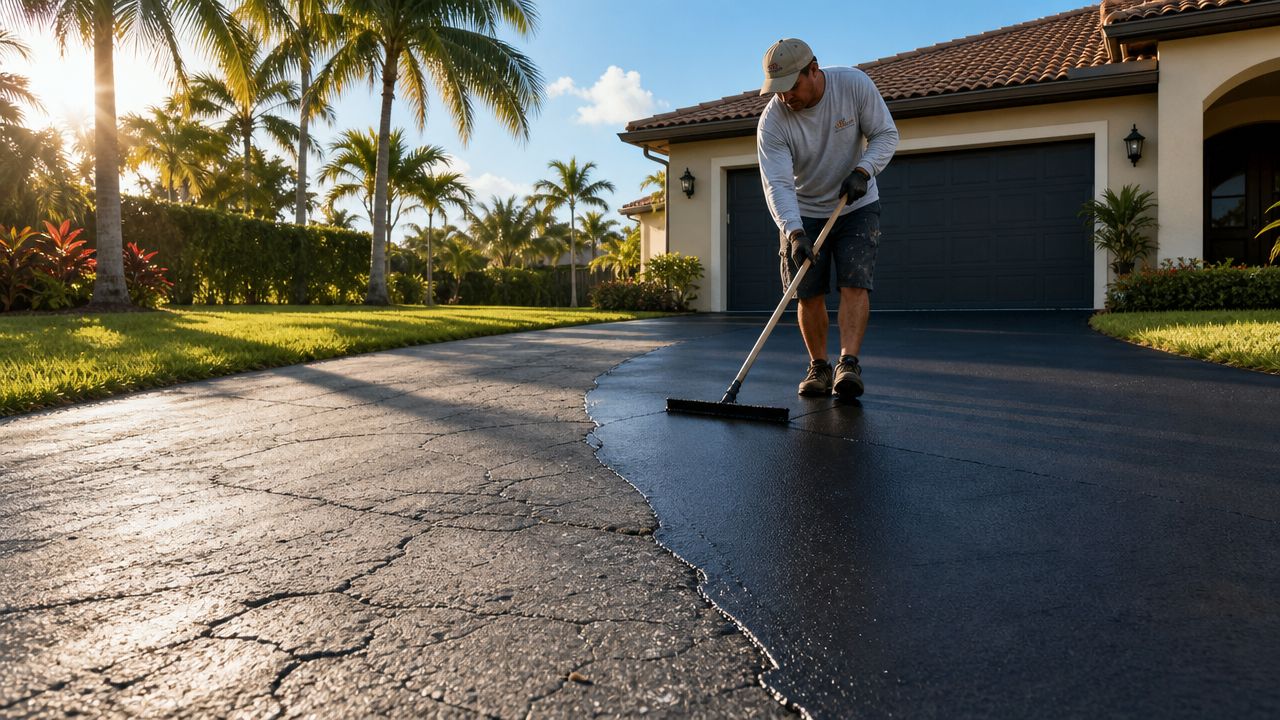
Your driveway looked fine a few seasons ago. Now the surface is turning gray, the edges are starting to crumble, and after a hard Florida rain you may notice water hanging around longer than it should. That's how asphalt starts to lose ground in Central Florida.
If you live in Marion County, FL or Citrus County, FL, you're dealing with a rough combination of heat, UV exposure, heavy rain, and daily vehicle wear. In places like Ocala, Dunnellon, Belleview, Silver Springs, Summerfield, Crystal River, Homosassa, Inverness, Lecanto, Beverly Hills, Hernando, and The Villages, asphalt doesn't fail all at once. It fades first, then dries out, then cracks, then lets water in.
Knowing how to maintain asphalt driveway surfaces the right way saves money because small repairs stay small. This is the practical version. No fluff, no generic cold-climate advice, and no pretending sealcoat fixes everything. As Concrete and Asphalt Experts in Marion and Citrus County, we see both sides of the job all the time. Asphalt needs maintenance, and many properties also need sound concrete edges, walkways, drainage features, or replacement slabs to keep the whole exterior working like it should.
Table of Contents
- Your Asphalt Driveway's First Line of Defense
- The Seasonal Driveway Inspection Checklist
- Essential DIY Maintenance Cleaning and Crack Filling
- The Florida Factor Why Local Climate Demands a Special Approach
- Understanding Sealcoating Your Driveway's Best Defense
- When to Call Concrete and Asphalt Experts in Central Florida
- Frequently Asked Questions About Asphalt Care
Your Asphalt Driveway's First Line of Defense
By late summer in Central Florida, I can usually tell which driveways have been maintained and which ones have been left alone. The neglected ones turn dull first, then brittle. After that, the afternoon rain does the rest, slipping into small openings and working on the base underneath.
Your first line of defense is timing. Asphalt holds up a lot better when you deal with small problems while the surface is still sound, not after the top has dried out, opened up, and started to ravel. Florida heat and UV break down the oils in asphalt faster than many homeowners expect, and heavy rain takes advantage of every weak spot.
That means simple habits matter more than expensive rescue work. Keep debris off the surface. Clean up oil and fuel spots before they soak in. Watch the edges, where water and soft ground usually start the damage. If water is standing on the driveway after a storm, treat that as a warning sign, not a minor nuisance.
There is a real trade-off here. Seal too early or too often, and you spend money without fixing the actual problem. Wait too long, and sealer will not save asphalt that is already breaking apart. Good maintenance protects a driveway that still has solid structure.
The National Asphalt Pavement Association explains that preventive maintenance is meant to slow deterioration, reduce water intrusion, and extend pavement life before major failure sets in, according to NAPA guidance on pavement preservation and maintenance.
That is the mindset to use with a residential driveway in Central Florida. Do the basic upkeep on schedule, stay ahead of moisture, and know when a cosmetic fix has crossed into a repair job.
The Seasonal Driveway Inspection Checklist
You don't need a contractor's eye to catch early trouble. You just need to look at the driveway on purpose, at least a couple times a year, and after weather swings that put the surface under stress.
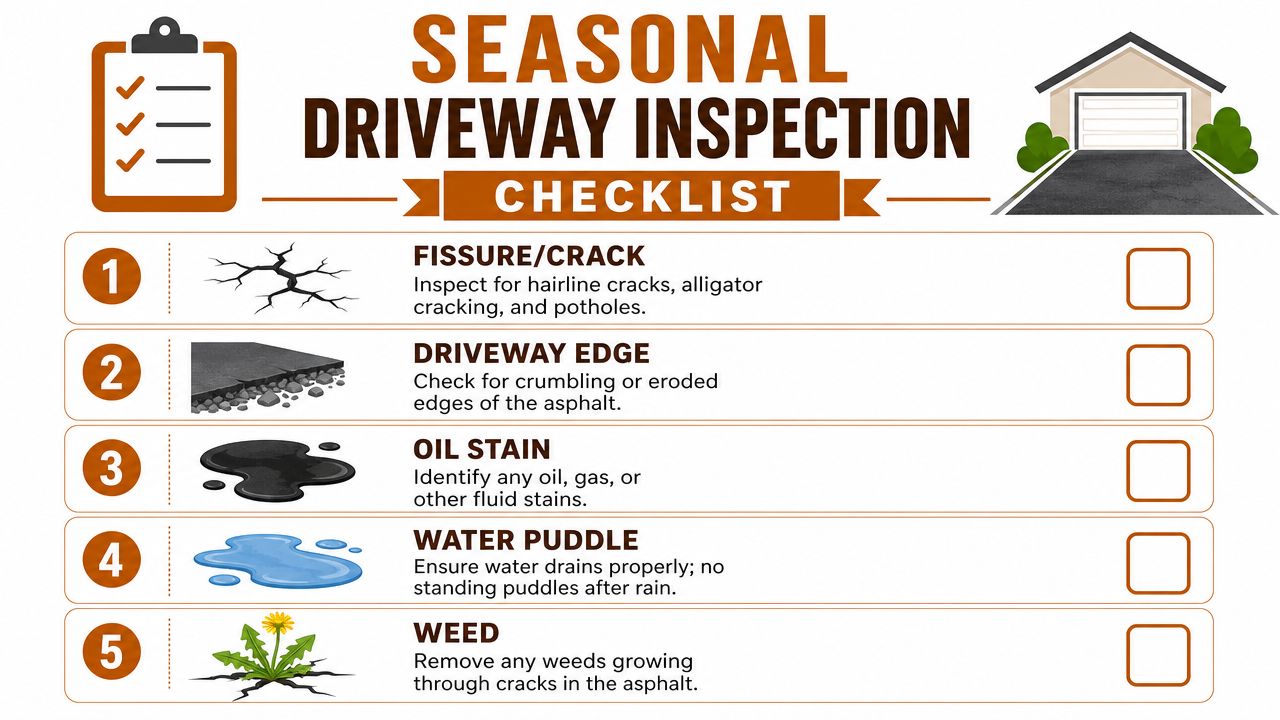
Maintenance guidance recommends inspecting asphalt at least twice per year, especially after winter and summer, and also recommends monthly cleaning to remove debris that can trap moisture or widen cracks, according to professional asphalt maintenance tips from Tommy's Asphalt.
What to check first
Walk the full driveway slowly. Don't just stand in the garage and glance out.
- Look for crack patterns. A thin straight crack is different from a webbed, broken pattern. Hairline cracks often start as maintenance issues. Wide, connected cracking usually points to a deeper problem.
- Check the edges. Driveway edges fail faster than the center, especially where asphalt meets grass, soft shoulder, or bare soil.
- Scan for stains. Oil, fuel, and other automotive fluids don't just look bad. They soften and weaken asphalt over time.
- Watch where water sits. After one of those hard downpours common in Ocala, Inverness, or Crystal River, puddles tell you a lot.
- Pull weeds early. If weeds are growing through cracks, water is getting in too.
What each warning sign usually means
Not every flaw means the driveway is failing. Some defects are manageable if you catch them early.
| Surface condition | What it usually suggests | What to do |
|---|---|---|
| Fading from black to gray | Oxidation and weather exposure | Plan cleaning, crack repair, and protective maintenance |
| Small isolated cracks | Early water entry points | Clean and fill before they spread |
| Repeated puddling | Drainage or settling issue | Monitor closely and get it evaluated if it persists |
| Soft, stained spots | Oil or chemical damage | Clean and assess whether the surface is weakening |
| Broken edges | Lack of support at the sides | Protect edges and keep vehicles off them |
If water stays on the driveway after rain, don't call it normal. Water always wins if you give it time.
In Belleview, Silver Springs, and similar areas where summer rain comes fast and hard, this inspection habit matters more than people think. Most expensive repairs start as neglected small defects. A quick walkaround twice a year is cheap insurance.
Essential DIY Maintenance Cleaning and Crack Filling
Most homeowners can handle the basic upkeep if the driveway is still in decent shape. The key is doing the steps in the right order. A lot of failed DIY work happens because someone tries to seal over dirt, stains, loose material, or open cracks.
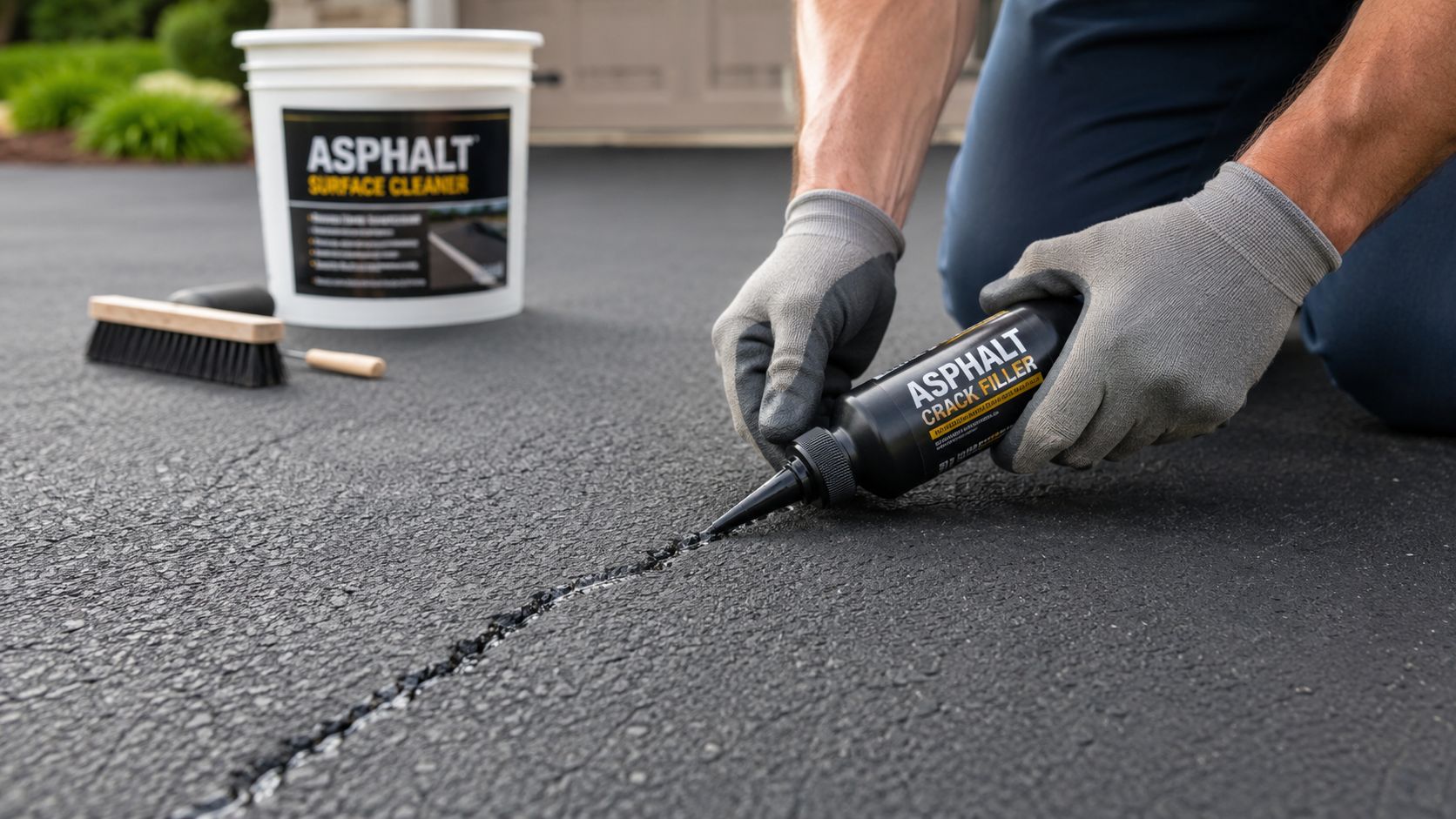
A proper maintenance sequence is to clean the surface thoroughly, remove loose material, treat oil stains, fill cracks, and apply sealcoat only after the surface is clean, dry, and repaired, according to asphalt maintenance steps from Asphalt Kingdom.
Start with cleaning, not sealer
Start with a stiff push broom, a leaf blower, gloves, and a trash bag. Remove leaves, dirt, weeds, and loose debris from the full driveway, especially from crack lines and along edges. If you wash the driveway, don't blast loose material deeper into cracks. The goal is a clean surface, not a soaked one.
For stains, use a proper asphalt-safe degreaser. Let it do the work. Scrubbing and rinsing is better than pretending sealcoat will hide contamination. It won't. Oil and fuel are some of the fastest ways to shorten the life of asphalt because they soak into the surface.
Here's a quick visual on the basic repair process before any coating goes down:
If the driveway has small problem areas but not broad structural failure, homeowners sometimes also look into patching options before full resurfacing. For localized repairs, a contractor offering asphalt patch services near you may be the better move than trying to keep spot-repairing the same failed section.
How to fill cracks without making a mess
Crack filling is the most useful DIY asphalt task because it helps stop water from getting down into the base. That's where real trouble starts.
Use a crack filler made for asphalt, not a random caulk from the garage shelf. Clean out the crack first so the filler can bond to the sides. If there's dust, weeds, or loose gravel still inside, the repair won't last.
A practical sequence looks like this:
- Dry the area fully. Don't fill damp cracks after a Florida shower.
- Remove loose material. A wire brush or similar hand tool helps clear the sides.
- Apply filler carefully. Don't overpour and leave ridges all over the surface.
- Let it cure. Keep traffic off until the material has set.
The crack you fix this month is cheaper than the pothole you'll deal with later.
What doesn't work? Smearing sealer over active cracks. Filling dirty cracks. Ignoring puddling and assuming crack filler alone will solve it. DIY maintenance is effective when the damage is still surface-level. Once cracks keep reopening, the base may already be moving.
The Florida Factor Why Local Climate Demands a Special Approach
Generic driveway advice often comes from places dealing with snow and ice. That isn't our main problem in Central Florida. Here, the pattern is different. Heat beats the surface up from above, and heavy rain works on it from below.
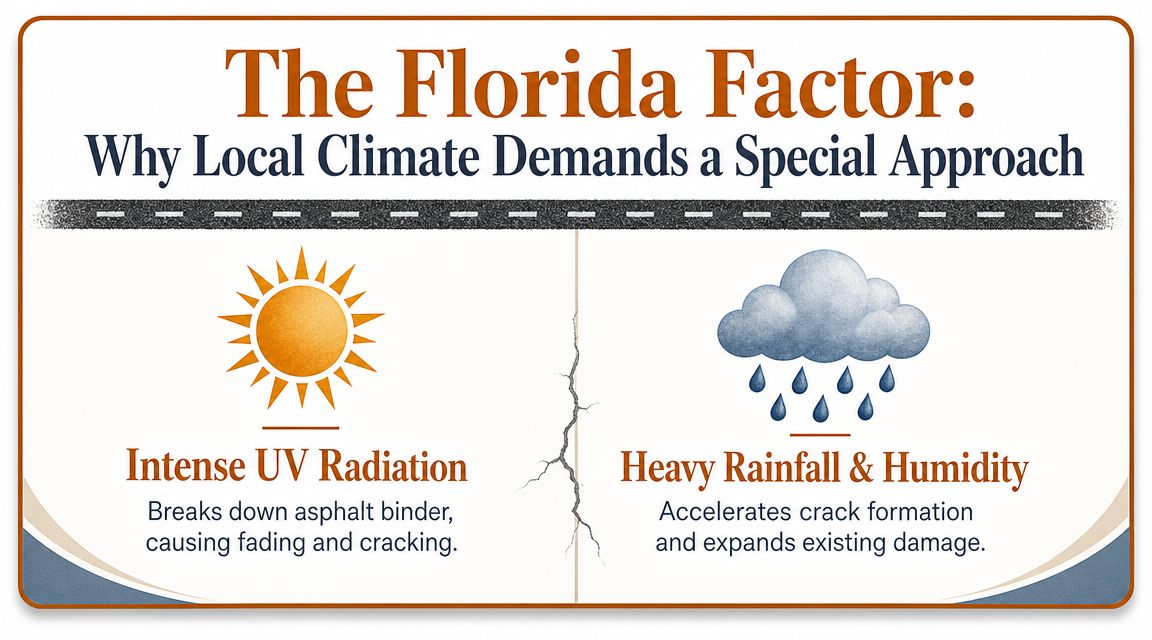
Asphalt maintenance should be adapted to local conditions. In hotter, high-sun markets like Florida, oxidation and softening risk are primary concerns, while freeze-thaw regions deal more with crack growth from ice, according to this Florida-focused asphalt maintenance discussion.
Sun damage is not cosmetic only
In Summerfield, The Villages, and open residential areas with full sun exposure, oxidation is a real issue. Asphalt loses that rich black look and turns dull and gray because the binder is breaking down. Once that happens, the surface gets drier and more brittle.
That fading isn't just appearance. It's a warning sign that the surface is getting less flexible and more likely to crack under traffic and weather.
For homeowners comparing local repair timing, it helps to think in Florida terms, not national averages. A driveway here takes different abuse than one in a freeze-thaw state. If you want to understand how local paving conditions affect repair and maintenance choices, this guide to Florida asphalt paving is useful context.
Rain finds every weak spot
Rain is the second half of the problem. In Dunnellon, Homosassa, and Crystal River, one hard storm can push water into every unsealed crack, weak edge, and low spot. Once water gets underneath, the surface starts losing support.
That's why drainage matters as much as appearance. The driveway can still look decent from the street and already be taking damage underneath.
- Low spots hold water. That keeps the surface wet longer and raises the chance of deeper deterioration.
- Weak edges break down first. Rain runoff and soft shoulders make edge cracking worse.
- Open cracks invite repeat damage. Every storm adds another cycle of water intrusion.
Florida maintenance isn't just about making asphalt look darker. It's about slowing oxidation and keeping rain out of the structure.
Understanding Sealcoating Your Driveway's Best Defense
By late summer in Central Florida, I can usually spot the driveways that have gone too long without protection. The color has gone from black to chalky gray, the surface feels dry, and the first small cracks are starting to hold water after every hard rain. That is the point where sealcoating starts to make financial sense.
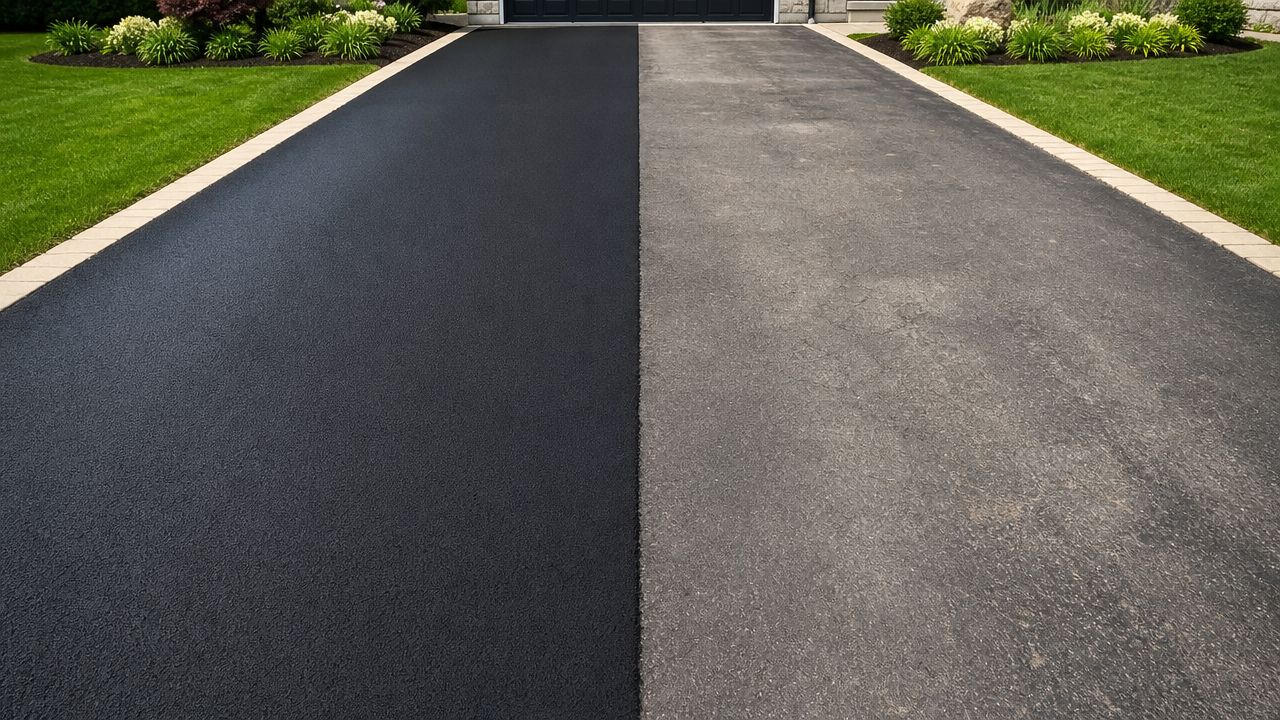
Sealcoating is a maintenance step, not a repair method. Its job is to slow down surface aging by giving the asphalt another layer of protection against Florida sun, heavy rain, and everyday vehicle fluids. On a sound driveway, that can buy you more service life and help delay bigger repair bills.
What sealcoating does
A properly applied sealcoat helps in three practical ways:
- Cuts down UV exposure. Central Florida sun dries out asphalt faster than many homeowners expect.
- Reduces surface water intrusion. It helps water shed off the top instead of soaking into every porous spot.
- Adds some resistance to oil and fuel drips. That matters around parking areas where cars sit in the same place every day.
It also improves appearance, but looks are the side benefit. Its primary value is preserving asphalt that still has good structure underneath.
When it is worth doing
Sealcoating works best on driveways that are weathered but still solid. If the surface has minor cracking, some fading, and no major movement, sealing is usually a smart maintenance expense.
If you are pricing out driveway sealcoating services near you, ask one question first. Is this driveway being preserved, or is it being covered up? That answer matters more than the price per square foot.
A coating will not fix alligator cracking, soft spots, poor drainage, or edges that are breaking away. In those cases, spending money on sealcoat first usually means paying twice.
DIY versus professional application
Homeowner-grade products can help on a small driveway if the surface is clean, dry, and in decent shape. The weak point is usually prep. If dirt, oxidation, loose material, or untreated cracks are left behind, the coating does not bond well and the finish wears out fast under Florida weather.
Professional crews tend to do better for one reason. They know when not to seal. That judgment saves money. A contractor should look at crack type, drainage, edge condition, and how much oxidation the surface has before recommending any coating.
Riverside Sealing & Striping, LLC handles this type of work. The practical value is not hype. It is getting the sequence right: cleaning, crack treatment, dry weather, and application on asphalt that is still worth protecting.
When to Call Concrete and Asphalt Experts in Central Florida
Some driveway issues are maintenance problems. Others are structural problems wearing a maintenance disguise. Knowing the difference keeps you from wasting money.
Problems that are usually beyond DIY
Call a professional when you see any of these conditions:
- Alligator cracking. That broken, webbed pattern usually means the surface has lost support underneath.
- Deep potholes. These often point to water intrusion and base damage, not just surface wear.
- Recurring cracks in the same place. If they reopen after filling, movement below the surface is still happening.
- Persistent drainage issues. If water regularly ponds after storms, the driveway slope or underlying support may need correction.
- Large edge failure. Crumbling edges often spread once vehicles keep loading them.
A driveway in that condition doesn't need another round of wishful DIY products. It needs diagnosis.
Why a full property view matters
Being Concrete and Asphalt Experts in Marion and Citrus County holds significance. Sometimes the underlying issue isn't only the asphalt. It can be runoff from adjacent concrete, poor transitions at the apron, unsupported edges near a sidewalk, or settlement that changes how water moves across the property.
In Marion County, FL and Citrus County, FL, a proper evaluation should look at the full hardscape system. That may lead to a patch, an overlay, drainage correction, edge support, or replacement of damaged concrete around the driveway. For homes in Ocala, Beverly Hills, Lecanto, Hernando, and nearby communities, the right answer is usually the one that fixes the cause, not just the visible symptom.
Licensed and insured local contractors with Central Florida experience are usually the right call when the driveway has gone past routine upkeep. You want clear scheduling, realistic recommendations, and a repair plan that respects your budget instead of pushing the wrong fix.
Frequently Asked Questions About Asphalt Care
How long should I stay off a new asphalt driveway
In Central Florida, heat changes this answer. Keep vehicles off a newly paved driveway for at least 3 days, and give it closer to 5 days during hotter stretches. New asphalt stays softer longer in strong sun, so turning the wheel while stopped or parking a heavy vehicle too soon can leave marks that stay.
Sealcoating also needs patience. As noted earlier, new asphalt should cure before it gets sealed, and the timing needs to fit the weather.
Can I sealcoat a very old cracked driveway
Sometimes, if the driveway still has solid structure underneath.
Sealcoating helps block water and slow surface wear from UV exposure. It does not fix base failure, widespread cracking, soft spots, or sections that move under load. On older driveways around Marion County and Citrus County, I'd rather see a homeowner spend money on the right repair first than pay for coating over damage that will keep spreading.
How often should I clean the driveway
A light monthly cleaning is a good target for most homes. In this part of Florida, wet leaves, sand, pine debris, and storm runoff sit on the surface and hold moisture longer than they should.
Clean spills quickly, especially oil and fuel. Keep edges clear too. Grass and weeds creeping in from the sides can open up weak spots faster than a lot of people expect.
Is professional sealcoating worth it
Usually, yes, if the driveway is still worth preserving.
The coating matters, but the prep work is what decides whether the job holds up through sun, summer rain, and daily traffic. Crack treatment, surface cleaning, dry conditions, and choosing the right time of year all affect the result. A contractor with Central Florida experience should also tell you when sealcoating is the wrong fix and when patching, drainage correction, or another repair makes more sense.
If your driveway in Marion County or Citrus County is fading, cracking, or holding water after storms, Riverside Sealing & Striping, LLC offers free, no-pressure evaluations for asphalt maintenance, sealcoating, and related concrete work across Central Florida.