
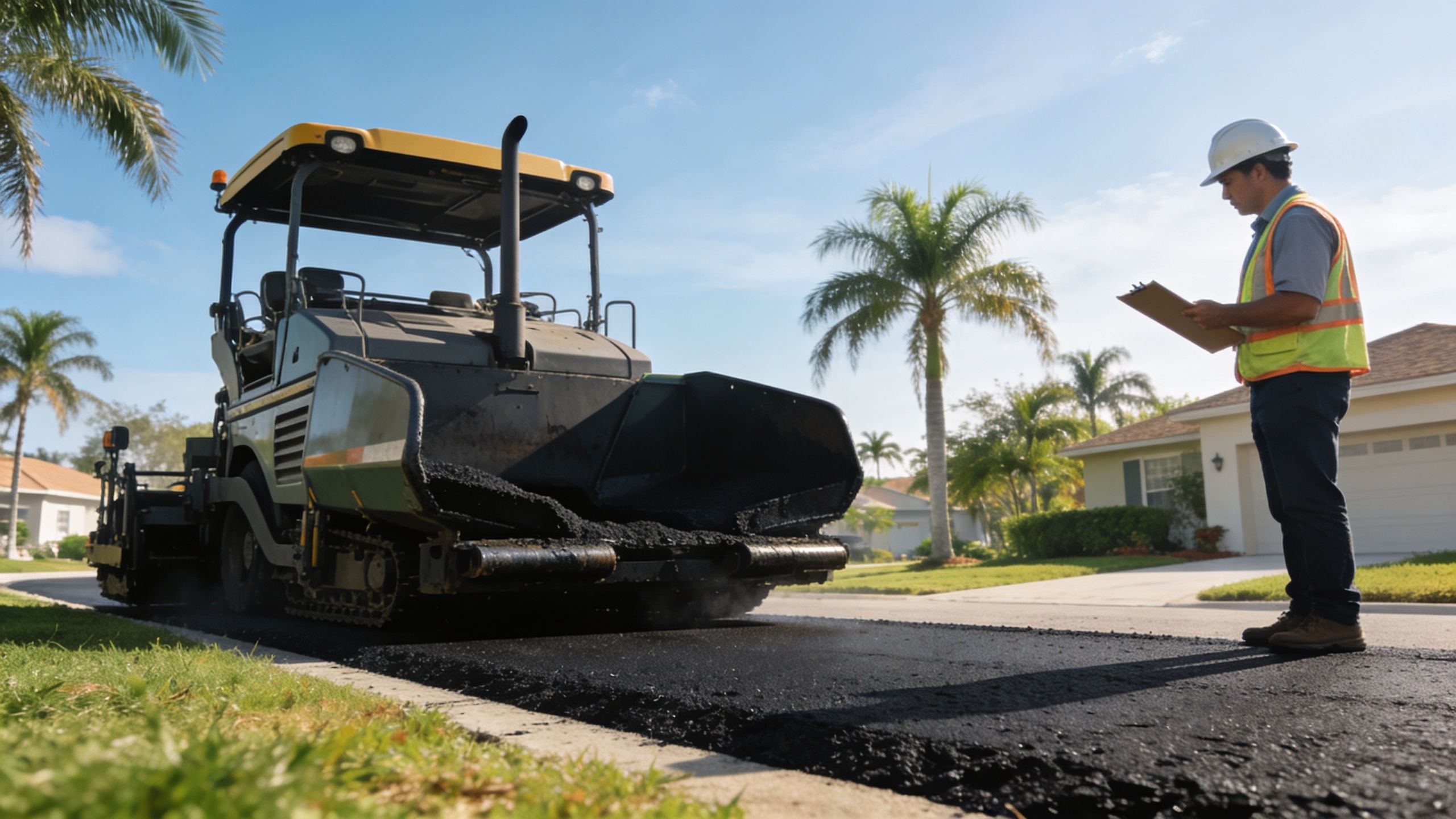
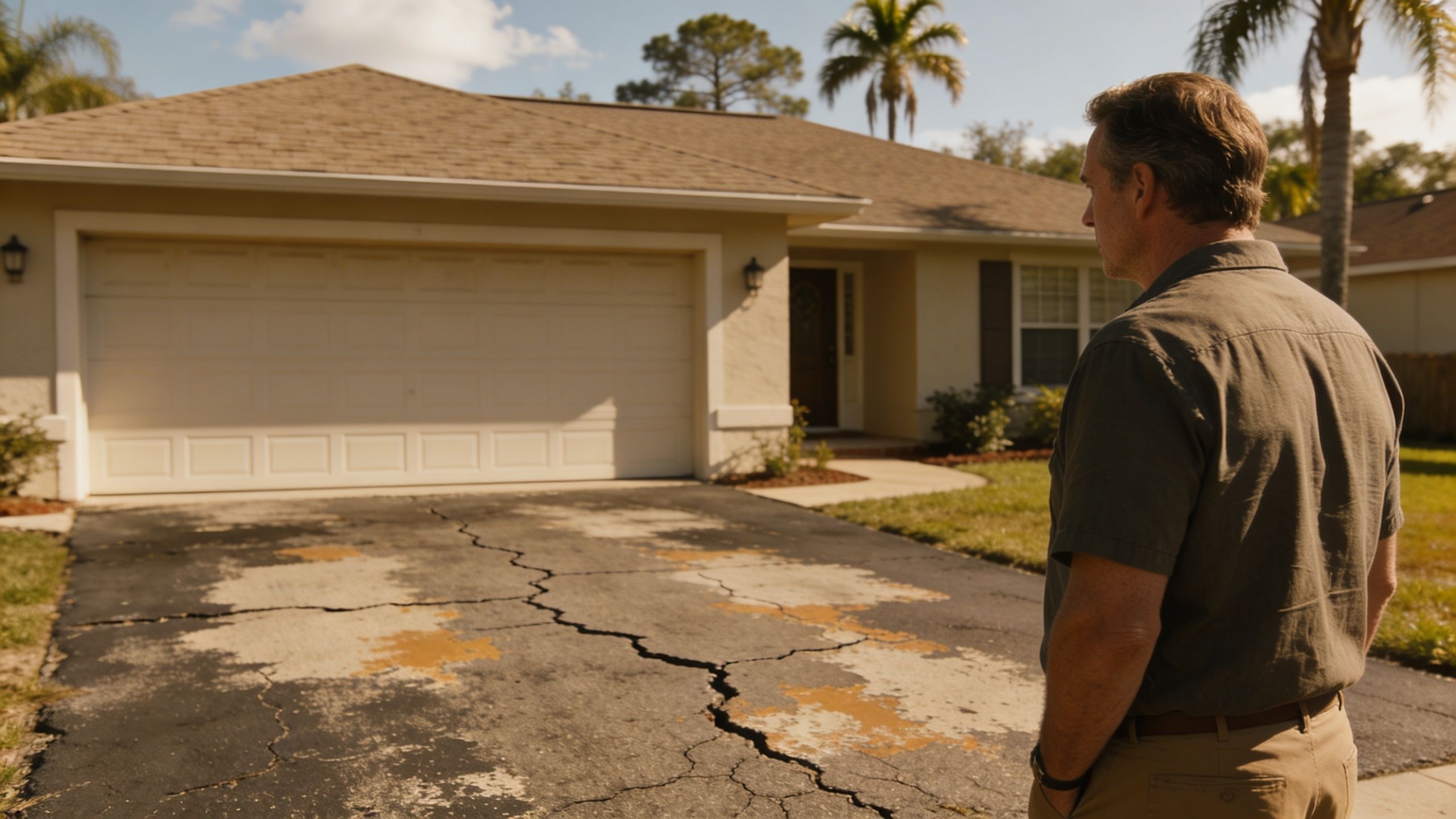
A lot of property owners in Ocala, Dunnellon, Crystal River, and Inverness end up at the same point. The driveway or parking lot starts with a little fading, then a few cracks, then standing water, then pieces begin to break loose at the edges. At that stage, the question usually isn't just "Who can pave this?" It's "What will hold up in Central Florida?"
That’s where florida asphalt paving becomes a local issue, not a generic one. In Marion County, FL and Citrus County, FL, pavement deals with intense sun, heavy rain, sandy subgrades, and traffic patterns that can punish weak installation. A cheap surface fix might look acceptable on day one, but it often fails early if the base, drainage, and compaction were wrong.
Property owners also need to think beyond asphalt alone. Some sites are better served with a combination of asphalt, concrete flatwork, curbs, sidewalks, ramps, or apron work. The best results usually come from Concrete and Asphalt Experts in Marion and Citrus County who understand how both materials perform on real sites in places like Belleview, Summerfield, Homosassa, Lecanto, Beverly Hills, Hernando, Silver Springs, and The Villages.
Your Guide to Asphalt Paving in Central Florida
A homeowner in Summerfield may be looking at a driveway that's cracked and washed out along the edges. A church in Inverness may be dealing with faded striping and low spots that hold water after every storm. A retail property in Crystal River may need more than a patch. It may need a real plan.
Florida uses asphalt heavily for a reason. The Florida Pavement Condition Survey history published by FDOT notes that 18,560.134 miles were rated as flexible pavement, which shows how central asphalt is to the state's road system. That matters to local owners because it means asphalt is not some niche choice here. It's a standard, proven pavement system when it's installed and maintained correctly.
What property owners usually get wrong
The biggest mistake is treating all paving bids as equal. They aren't.
Two contractors can quote the same square footage and propose completely different work quality. One may remove unstable material, correct grade, compact the base properly, apply the right mix, and finish the job with proper rolling. Another may pave over problems that are still underneath.
Practical rule: Asphalt doesn't fail only from the top down. In Florida, it often fails from the bottom up.
Why local conditions matter
In Marion County and Citrus County, every paving decision ties back to drainage, soil behavior, and heat. A driveway in Ocala isn't under the exact same conditions as a parking area near Homosassa or a service drive in Dunnellon. Water table, soil movement, shade, tree roots, and turning traffic all change the right approach.
That’s why a complete guide has to focus on what works here, what doesn't last here, and when asphalt should be paired with concrete work for a better long-term result.
Understanding Your Asphalt Options
Not every asphalt mix belongs on every property. The right choice depends on whether you're paving a residential driveway, a private road, a church lot, or a commercial parking area with repeated turning and stopping traffic.
Standard hot mix and where it fits
Most owners are familiar with hot mix asphalt because it's the common choice for driveways, parking lots, and general paving work. It gives a solid, smooth surface and works well when the site has proper base prep and drainage. If you want a good primer on the material itself, this overview of hot mix asphalt is useful.
Standard hot mix is often the practical option for many residential jobs in Belleview, Beverly Hills, and Silver Springs. But standard doesn't mean universal. On sites with tighter turning movements, stronger heat exposure, or more demanding traffic, a better-performing mix may make more sense.
Warm mix and polymer modified options
Warm mix asphalt can help with handling and placement conditions, and some contractors prefer it for certain jobs. The main point for owners is that mix choice should match site conditions, not just contractor convenience.
For more demanding surfaces, polymer-modified asphalt is often worth discussing. On Florida pavement, modified binders are chosen because heat and traffic can push ordinary surfaces harder than owners expect. A property in The Villages or Summerfield with frequent turning traffic may benefit from a mix built for more resistance to deformation and surface stress.
A good contractor should be able to explain why a specific mix is being recommended, in plain language, and how it fits your site.
Permeable and porous asphalt for stormwater
This is the option many local guides skip. On the right site, permeable or porous asphalt can help manage runoff rather than just shed it to another area. That's especially relevant in Central Florida, where heavy rain and stormwater rules can shape the whole job.
The Florida DEP Palatka permeable paving project page notes that permeable and porous asphalt options can reduce urban runoff by more than 50%. For some properties in Citrus County, FL and Marion County, FL, that can affect layout decisions, drainage design, and whether a conventional paving approach is still the best fit.
On sites with drainage headaches, the cheapest mix isn't always the lowest-cost solution over time.
How to choose the right option
A practical decision usually comes down to these questions:
- Traffic use: Is this a light residential driveway, or a lot with repeated turning, braking, and delivery traffic?
- Water management: Does the site drain cleanly, or does it already struggle after storms?
- Surface goals: Are you focused on appearance, load capacity, stormwater performance, or all three?
- Adjacent work: Will the project also need concrete sidewalks, curbs, pads, or ADA-related access improvements?
The right answer isn't always a single asphalt product. Sometimes the best result is a coordinated asphalt and concrete plan designed for the way the property functions.
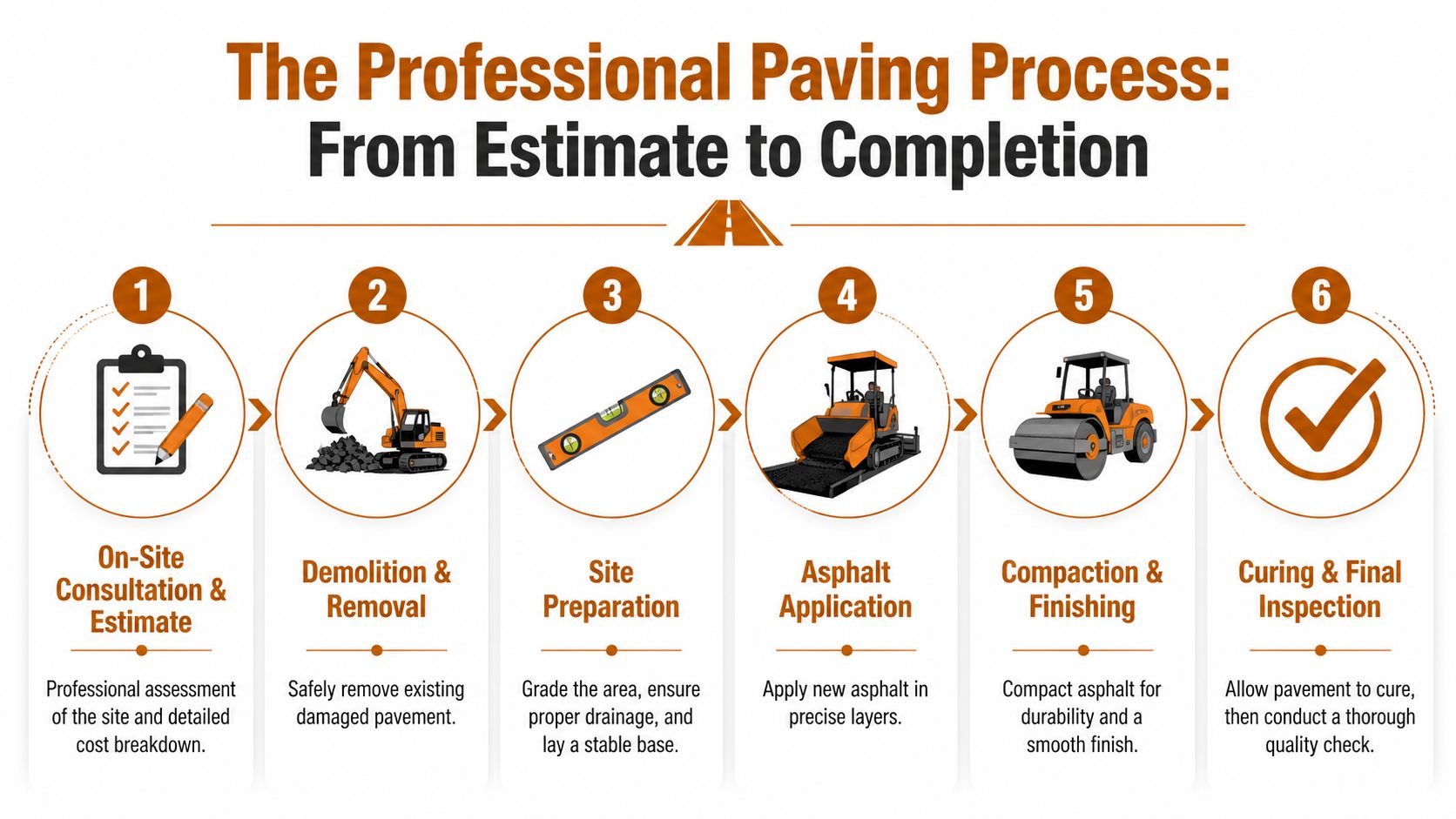
The Professional Paving Process from Estimate to Completion
Most pavement problems don't start when the asphalt truck leaves. They start earlier, during bidding, demolition, grading, or base preparation. A professional paving process is meant to catch problems before they get covered up.
The estimate should be specific
A useful estimate isn't just a price. It should tell you what happens to the existing pavement, whether removal is included, how the base will be handled, what drainage corrections are planned, and what paving depth is being proposed.
If the estimate is vague, the job usually gets vague too.
A contractor should be looking at edge failure, low areas, cracking pattern, water flow, tie-in points, and whether the subgrade is stable enough to support the new surface. That matters on residential work in Ocala just as much as it does on commercial paving in Lecanto or Hernando.
Demolition and site prep decide the life of the job
Old asphalt that's badly failed usually needs to come out. If the surface is only covered instead of properly addressed, the same weak spots often show back through.
Once removal is done, the next phase is grading and base preparation. During this phase, many shortcuts occur, and numerous failures often start. On Florida terrain, the base needs to support the pavement, shed water correctly, and stay stable through weather swings.
The Florida design criteria reference from UF's Public Works Center states that a proper asphalt installation for these conditions requires a minimum 8-inch base of compacted Florida Limerock topped with at least a 2-inch layer of Type S-I Asphaltic Concrete. That detail matters because the surface can only perform as well as the support under it.
What proper site preparation looks like
Good prep usually includes several separate tasks:
- Removal of weak material so unstable areas don't stay under the new pavement.
- Regrading to establish drainage and eliminate birdbaths or trapped runoff.
- Base installation using the specified limerock depth for the application.
- Mechanical compaction rather than relying on traffic to pack things down.
- Verification in the field when the site shows signs of soft or inconsistent support.
If a crew talks mostly about the top layer and barely discusses the base, that's a warning sign.
Asphalt placement and rolling
Once the base is ready, asphalt placement needs to happen in a controlled way. Temperature, lift thickness, timing, and equipment all affect the finished result. The asphalt has to be placed evenly, then compacted while it's still workable enough to achieve the intended density and smoothness.
That sounds straightforward, but it isn't basic labor. It takes coordination between trucking, paving, and roller operation. On narrower residential work in Dunnellon or wider commercial lanes near The Villages, the crew still has to keep the mat consistent and avoid cold joints, shoving, and weak edges.
Final details owners should expect
Before signoff, the contractor should review:
- Drainage flow
- Tie-ins at garage slabs, sidewalks, and existing pavement
- Edge quality
- Surface consistency
- Cure timing before regular use
Fresh asphalt needs time before full use, especially under turning tires, kickstands, or parked loads in concentrated spots. Owners should get clear instructions, not guesses, about when to drive on it, where to avoid sharp turns, and when to schedule follow-up items like striping or sealcoating.
Florida Climate and Soil The Toughest Pavement Opponents
Central Florida pavement takes a beating from conditions that don't show up on a bid sheet. Sun, rain, heat, and soil movement work together, and they expose weak workmanship fast.
Sun and heat dry out the surface
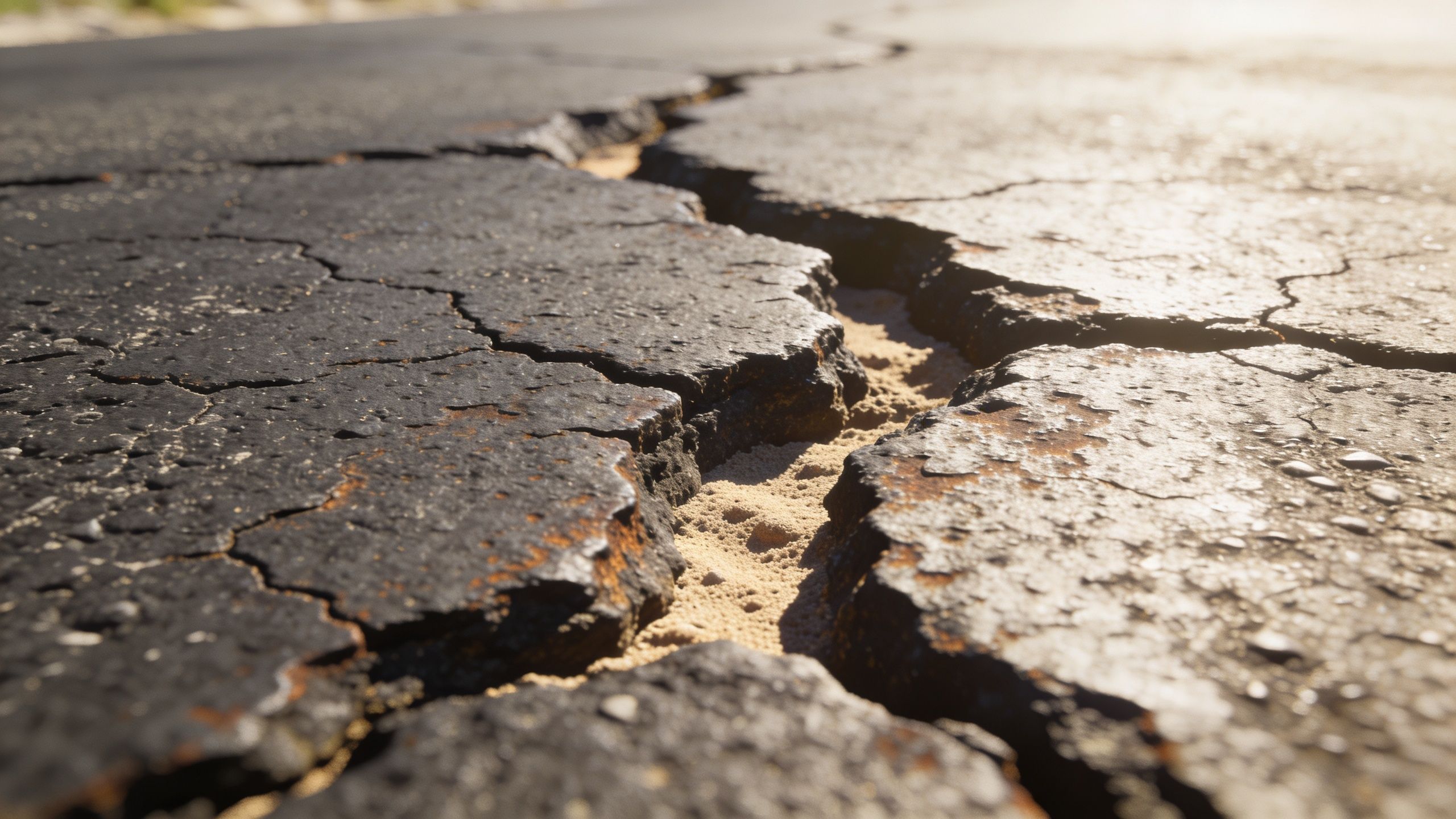
Long exposure to UV and heat gradually oxidizes asphalt. Owners usually notice that as fading first. Later, the surface gets more brittle, and small cracks begin to form.
Once that top layer loses flexibility, normal traffic stresses can start opening defects faster. Driveways in open sun near Ocala or parking lots with no shade in Crystal River often show this pattern clearly.
Rain finds every weakness
Heavy rain doesn't create every problem, but it makes existing problems worse. Water enters cracks, reaches weak spots in the pavement structure, and undermines support. If the base or subgrade was marginal to begin with, the surface starts telling on it.
That’s especially important in areas near water or with drainage challenges, including parts of Homosassa and Dunnellon. A pavement surface might look like the problem, but water movement underneath is often the underlying issue.
Good paving in Florida is really water management with asphalt on top.
Sandy soils change the rules
Marion County, FL and Citrus County, FL have many sites with sandy or variable soils. Those soils can work fine when the section is designed and compacted properly. They can also cause edge cracking, settlement, and low spots when they aren't.
Local experience proves critical. A contractor who understands Central Florida site prep will pay attention to support conditions before the mix ever arrives. A contractor who doesn't may leave the owner with a clean-looking surface over unstable ground.
For a quick look at how pavement distress develops under real-world conditions, this video is helpful:
What works better in this climate
A Florida-ready approach usually includes:
- Strong base preparation because the soil alone often isn't enough
- Accurate grading so runoff leaves the pavement instead of sitting on it
- Timely maintenance before cracks turn into base problems
- Material choice that matches use rather than a one-mix-fits-all mindset
That applies whether you're maintaining a driveway in Summerfield or planning a commercial lot in Inverness. Florida doesn't forgive weak prep.
A Maintenance Schedule to Protect Your Investment
New asphalt isn't a one-time decision. It needs routine attention if you want it to last and keep looking professional. In Florida, maintenance matters even more because sun, rain, and surface contamination keep working on the pavement after installation.
The business side of that demand is visible too. The IBISWorld overview of Florida's asphalt manufacturing industry projects average annual industry growth of 2.0% from 2021 to 2026, which reflects ongoing demand for paving and maintenance products, not just new construction.
What maintenance is really doing
Sealcoating helps protect the surface from weathering, UV exposure, and spills. Crack filling serves a different job. It helps stop water from entering through openings that can turn into larger failures.
Those are not cosmetic extras. They are part of preserving the pavement structure you already paid for.
If you're comparing maintenance timing, this guide on how often to seal coat asphalt is a useful companion for Florida conditions.
A practical schedule for local properties
The exact timing depends on traffic, drainage, and site exposure, but this is a solid working schedule for many residential and commercial properties in Central Florida.
| Timeframe | Action Item | Primary Purpose |
|---|---|---|
| After installation cure period | Monitor the surface and follow use instructions | Prevent early surface damage from sharp turning, concentrated loads, or premature use |
| Within the early life of the pavement | Evaluate whether the surface is ready for first sealcoating | Add a protective layer before oxidation and weathering accelerate |
| Annually | Inspect for cracks, edge wear, drainage issues, and isolated soft spots | Catch minor issues before water gets below the surface |
| After the rainy season | Review low areas and standing water locations | Identify drainage-related distress while signs are fresh |
| As needed | Fill cracks and repair localized failures promptly | Keep water out and avoid larger patch or replacement work |
| Ongoing for commercial sites | Refresh striping and traffic markings when visibility drops | Maintain appearance, safety, and site organization |
Residential and commercial priorities are different
A driveway owner in Belleview usually cares most about edge stability, appearance, and stopping minor cracks from spreading. A property manager in Lecanto or The Villages has additional concerns. They need parking layout visibility, customer safety, tenant impression, and ongoing upkeep without letting the lot deteriorate between budget cycles.
Owner reminder: Maintenance costs money. Deferred maintenance usually costs more.
What doesn't work
These approaches usually disappoint owners:
- Waiting for major cracking: By then, water may already be affecting the base.
- Treating sealcoat as structural repair: Sealcoat protects. It doesn't fix failed pavement.
- Ignoring drainage stains and ponding: Those are clues, not small cosmetic issues.
- Using the same plan for every property: A shaded driveway and a busy lot don't age the same way.
The most cost-effective maintenance plan is usually the one that starts early and stays consistent.
Special Considerations for Commercial Properties
Commercial paving has a different standard. A business owner in Crystal River or an HOA board in Inverness isn't just paying for asphalt. They're managing traffic flow, visitor safety, liability exposure, and the appearance of the entire property.
Striping and layout affect daily use
Parking lot striping isn't a final decoration. It's part of how the lot functions. Clear stalls, directional arrows, no-parking areas, and loading zones make the site easier to use and easier to control.
For shopping centers, churches, schools, and multi-tenant properties in Marion County, FL and Citrus County, FL, a clean layout also supports curb appeal. Faded markings make a lot look neglected even when the pavement itself is still serviceable.
Property managers who want a broader planning reference can review this parking lot maintenance checklist.
ADA access needs real coordination
ADA-related work is where asphalt-only thinking falls short. Commercial sites often need more than striping. They may need compliant access routes, concrete sidewalks, ramps, pads, or transitions that work together with the parking area.
That’s why full-service planning matters. If the striping crew paints compliant spaces onto a lot that still has access problems at the walkway or ramp, the site isn't fully solved.
Commercial owners should look at the whole system
A smart commercial pavement plan usually includes:
- Surface condition review for cracks, rutting, and drainage issues
- Marking visibility for stalls, fire lanes, and directional control
- Pedestrian access including sidewalks and transitions
- Concrete needs such as curbs, pads, ramps, and walkways
- Phasing so work can happen with minimal site disruption
For commercial properties, the best outcome often comes from treating asphalt, striping, and concrete access features as one coordinated project.
How to Choose a Reputable Central Florida Paving Contractor
A paving contractor shouldn't be chosen on price alone. In Central Florida, the gap between a quality job and a problem job often comes down to details the owner never sees until it's too late.
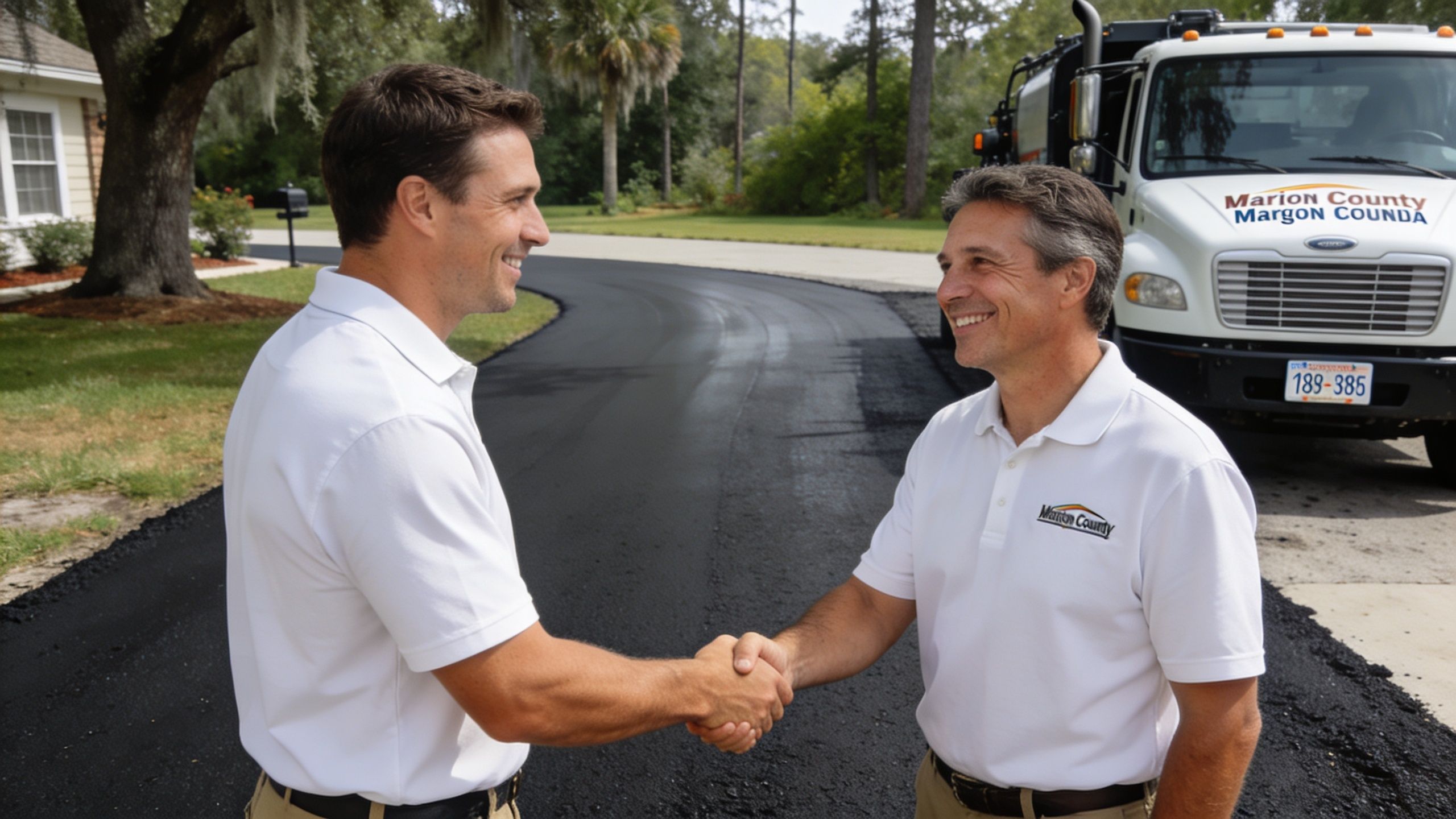
Questions worth asking before you sign
Start with the basics. Ask whether the company is licensed and insured, whether it has local experience in Marion County and Citrus County, and whether the estimate clearly explains removal, base work, paving depth, drainage handling, and finish work.
Then ask a more technical question. The FDOT Specification 334 document requires specific tack coat application rates, including 0.09 gal/yd² on milled surfaces. You don't need to become an engineer, but you do want to know whether the contractor understands interlayer bonding and can talk through why it matters.
If they dodge the question, that tells you something.
Red flags owners should take seriously
Some warning signs show up early:
- High-pressure sales tactics that push a same-day decision
- Vague scope descriptions with little detail about base or drainage
- Out-of-area crews who can't explain local soil or water issues
- Cash-focused pricing without clear paperwork
- No discussion of concrete work where sidewalks, aprons, or ramps are obviously part of the site
A good contractor should be calm, specific, and willing to explain the process without overselling it.
What reputable contractors do differently
Reliable paving contractors tend to do a few things consistently. They inspect the site in person. They give a written estimate. They explain what can be repaired and what should be replaced. They don't promise that every bad surface can be fixed with a thin overlay.
They also understand that many Florida projects involve both materials. A driveway replacement may need concrete tie-ins. A commercial lot may need asphalt maintenance plus ADA-related concrete improvements. That's why owners are usually better served by Concrete and Asphalt Experts in Marion and Citrus County, not a contractor who only handles one narrow part of the job.
The best estimate isn't always the lowest. It's the one that tells the truth about what your pavement actually needs.
Frequently Asked Questions About Florida Paving
Can asphalt go over existing concrete
Sometimes, but it depends on the condition of the concrete, the grade, drainage, and whether movement or cracking below will transfer through. On many properties, removal is the better long-term choice.
How long should I wait before driving on new asphalt
Follow the contractor’s job-specific guidance. Cure time depends on weather, site conditions, and traffic type. Even when driving is allowed, sharp turning and heavy parked loads should be handled carefully early on.
Is an overlay always cheaper than replacement
An overlay usually costs less upfront, but it isn't always the better value. If the base is failing or drainage is wrong, replacement often makes more sense than covering the problem.
Why is one new asphalt surface darker than another
Mix design, age, weather exposure, and production conditions can all affect appearance. Color difference by itself doesn't tell you whether the pavement is good or bad.
When should concrete be part of the project
When the site needs sidewalks, ramps, aprons, curbs, or slab work, concrete may be just as important as the asphalt. Many of the best Florida paving results come from solving both together.
If you're planning a driveway, parking lot, sidewalk, or site improvement project in Ocala, Dunnellon, Belleview, Summerfield, Crystal River, Homosassa, Inverness, Lecanto, Beverly Hills, Hernando, Silver Springs, The Villages, or nearby areas, Riverside Sealing & Striping, LLC offers free, no-pressure consultations for property owners who want durable results, reliable scheduling, and a contractor that understands both concrete and asphalt work in Central Florida.