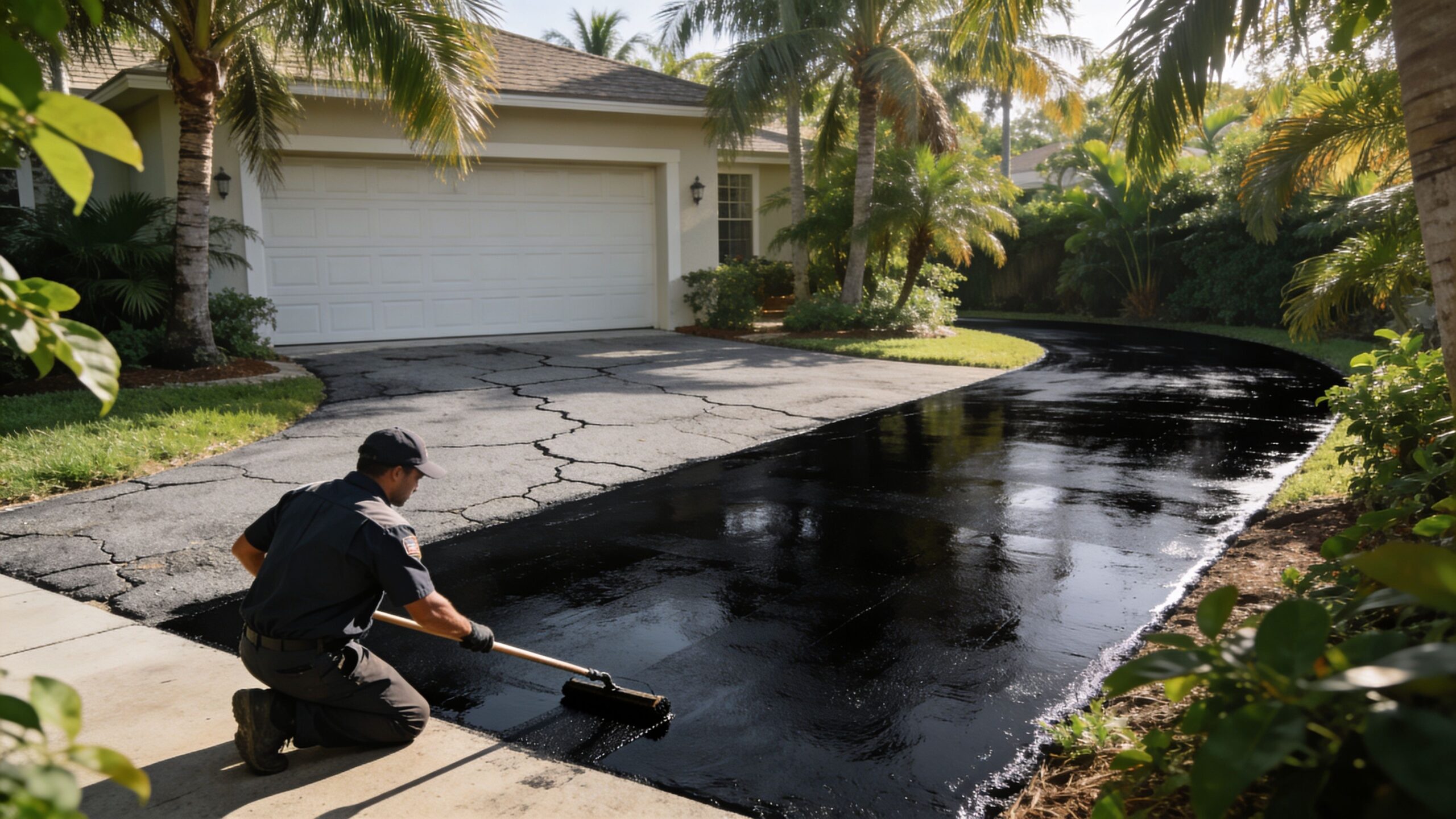
If you searched sealcoating near me, chances are your asphalt already told you something is wrong. In Central Florida, it usually starts with color loss. A black driveway or parking area turns dull gray, then small cracks show up, then rain starts working deeper into the surface.
That pattern is common across Marion County, FL and Citrus County, FL, from Ocala and Belleview to Crystal River, Homosassa, Inverness, and The Villages. Florida sun dries out asphalt binder. Afternoon storms push water into weak spots. Humidity makes timing and application more sensitive than a lot of national articles admit.
Good sealcoating isn't just about making pavement look dark again. It's preventative maintenance that helps protect the investment you already made. And in a region where both asphalt and concrete surfaces take a beating, property owners are better served by working with Concrete and Asphalt Experts in Marion and Citrus County who understand when to seal, when to repair, and when a surface has moved past maintenance and needs replacement instead.
Is Your Florida Driveway Fading and Cracking?
A typical call starts the same way. The driveway looked fine a year or two ago. Now the surface is lighter, rougher, and starting to split at the edges or around the turn where tires pivot every day.
That isn't cosmetic wear alone. It usually means the asphalt surface has started to oxidize and open up. Once that happens, water gets a path in. In places like Ocala, Dunnellon, Silver Springs, and Crystal River, regular rain speeds up what the sun already started.
For homeowners, the frustrating part is that the damage often feels sudden. It wasn't. Asphalt usually gives warning signs first:
- Faded color: Black turns gray as the surface loses protection.
- Hairline cracking: Small cracks start near edges, joints, or stressed turning areas.
- Rough texture: The top layer begins to lose its tight, smooth finish.
- Water holding longer: Moisture sits where the surface has weakened.
- Oil spots near parking areas: Vehicle drips soften isolated sections.
If your driveway already shows some of those signs, it helps to understand why driveways start cracking in the first place. Sealcoating won't fix structural failure, but it does play an important role when the asphalt is still sound.
Asphalt doesn't usually fail all at once. Property owners miss the early stage, then call when simple maintenance has turned into repair work.
Commercial lots in places like Lecanto, Beverly Hills, and Summerfield follow the same pattern. The difference is traffic loads make the wear show up faster around entrances, drive lanes, and parking stalls.
What Is Asphalt Sealcoating and Why You Need It
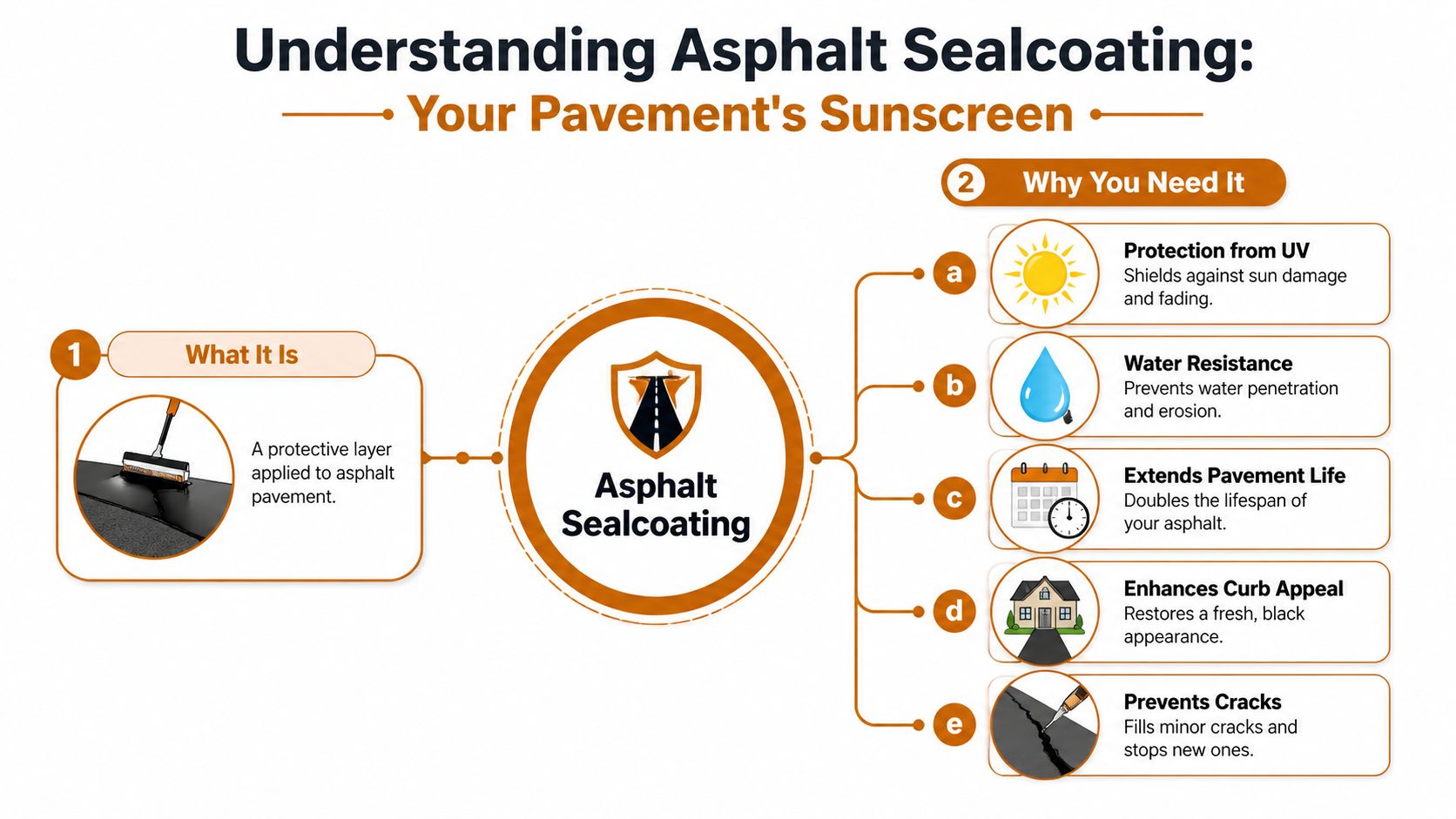
Asphalt sealcoating is a protective coating applied over asphalt pavement. The simplest way to think about it is sunscreen for your pavement. It helps shield the surface from sun exposure, water intrusion, and vehicle fluids that break asphalt down over time.
What sealcoating actually does
Sealcoating isn't a structural rebuild. It doesn't replace failed base material, and it doesn't solve deep alligator cracking by itself. What it does is protect a serviceable asphalt surface before bigger damage takes hold.
A properly maintained surface lasts longer. According to SealMaster's pavement maintenance guidance, sealcoating extends the lifespan of asphalt surfaces by up to 300%, and untreated asphalt lasts about 15 years on average, while professionally sealcoated surfaces can last 20 to 30 years or more.
Why that matters in Central Florida
In Marion County and Citrus County, the enemy isn't just traffic. It's weather exposure every day of the year. Sun bakes the oils out of asphalt. Rain looks for openings. Fuel and oil drips sit in the same spots and weaken the mat where vehicles park.
Sealcoating helps by creating a sacrificial wear layer over the asphalt surface. That gives owners three practical benefits:
| Benefit | What it means for the property owner |
|---|---|
| Protection | Helps reduce direct exposure to UV, rain, and vehicle fluids |
| Appearance | Restores a darker, cleaner look that improves curb appeal |
| Cost control | Helps delay larger repairs and premature replacement |
It's part of pavement planning, not a one-size-fits-all answer
This is where local judgment matters. Some properties need sealcoating. Some need crack repair first. Some need patching. And some surfaces are too far gone and should be replaced.
That's also why hiring a company with both concrete and asphalt experience matters. If a homeowner in Hernando or Inverness has an aging driveway apron, sidewalk edge, or adjacent concrete section failing along with the asphalt, the right answer may involve more than just coating the blacktop.
Practical rule: Sealcoat good asphalt before it becomes bad asphalt. Once the surface has major structural failure, coating alone won't save it.
The Professional Sealcoating Process From Start to Finish
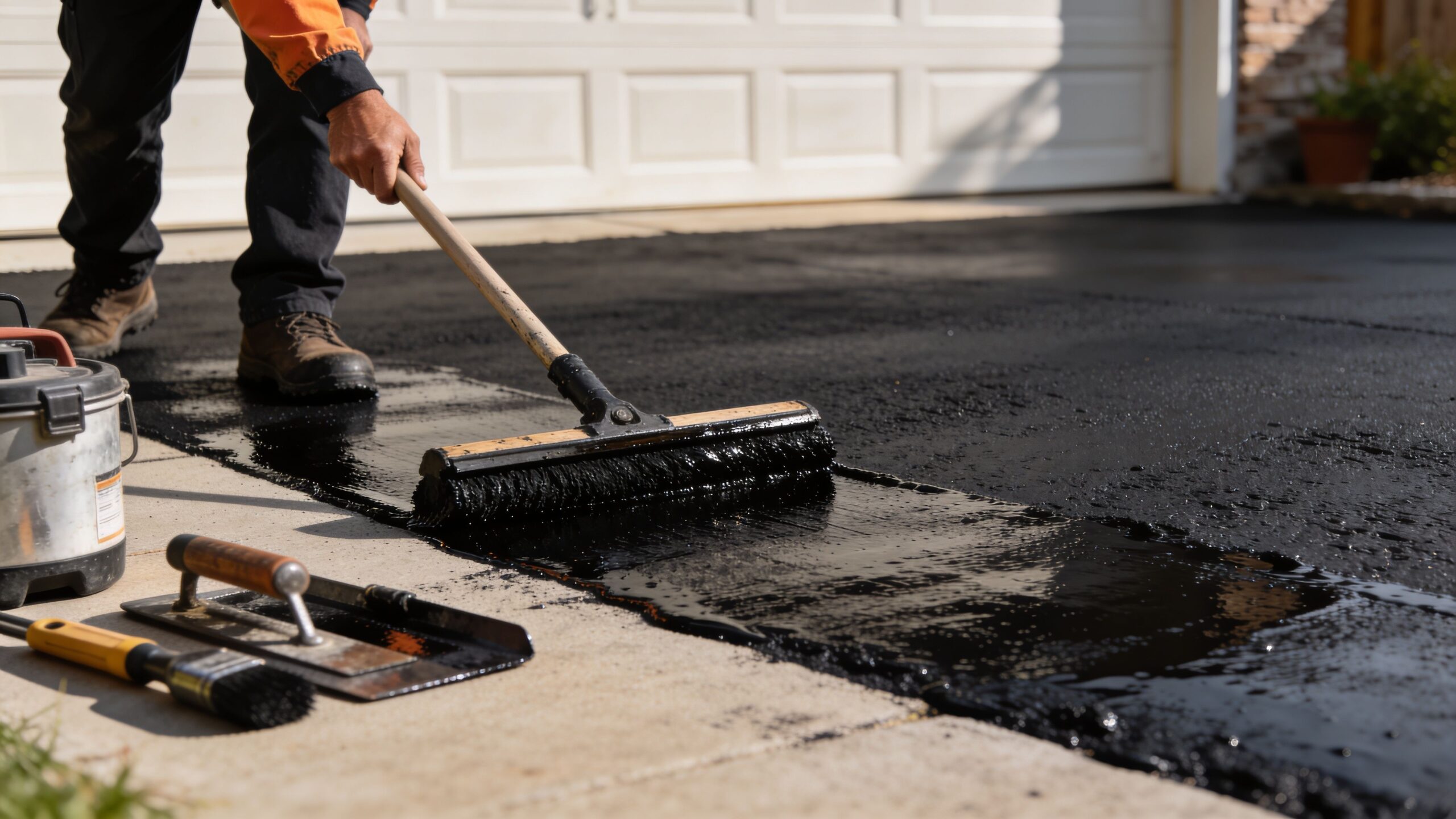
A proper sealcoating job is mostly prep. The coating itself matters, but the result depends on what happens before the first pass of material hits the pavement.
Surface prep comes first
Professionals start by cleaning the surface thoroughly. Dirt, loose debris, and contaminated spots interfere with adhesion. Oil areas need attention because sealer doesn't bond well over greasy pavement.
For homes in Dunnellon and Belleview, this stage often reveals the actual condition of the driveway. A surface that looked like it only needed freshening may also have crack edges, low spots, or stressed areas near the garage and street.
Typical prep includes:
- Cleaning the pavement so the coating bonds to asphalt, not dust.
- Treating problem spots such as oil-stained areas.
- Checking edges and transitions where deterioration often starts.
- Identifying cracks by size, because different repairs call for different materials.
Crack repair is where professional work separates itself
Crack filling isn't optional. It's one of the biggest differences between a durable job and a short-lived one. According to sealcoating specifications used for asphalt pavement repair, cracks up to ½ inch wide should be repaired with a flexible rubberized sealant, while cracks from ½ inch to 1 inch wide require a structural trowel-grade filler before sealcoat is applied.
That matters because these are not the same problem. A narrow moving crack needs flexibility. A wider opening needs build and support.
If a contractor wants to coat over open cracks, you're not getting maintenance. You're getting a temporary color change.
Application, cure, and final detailing
Once the surface is ready, the sealcoat is applied uniformly. On many jobs, pros use multiple coats because coverage and wear need to be consistent. Entrances, turning zones, and heavy-use areas often need extra attention.
This short video shows the kind of controlled application property owners should expect to see on a real job:
After application, the pavement needs time to cure properly before traffic returns. For commercial properties, this is also where striping comes back into play. Freshly sealed asphalt provides a clean base for parking lot markings, directional arrows, and ADA-related layout work.
Why Florida's Climate Demands Professional Sealcoating
National sealcoating advice often sounds simple. Pick a warm day, apply product, stay off it until dry. That approach misses what causes failures in Central Florida.
Heat, humidity, and storm patterns change the job
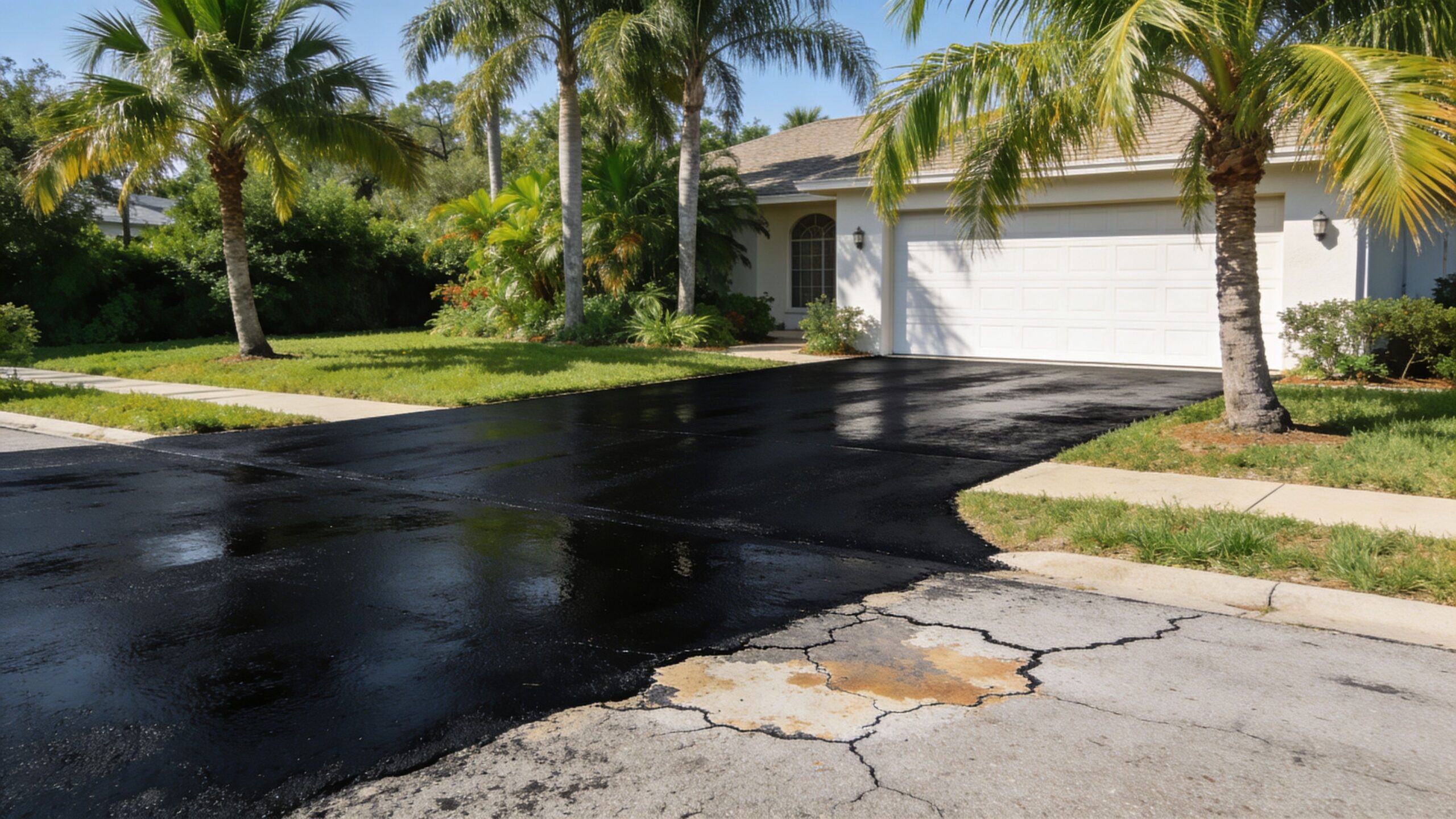
In Ocala, Summerfield, Homosassa, and The Villages, pavement heats up fast. Afternoon weather can shift fast too. That means application timing isn't a minor detail. It's the job.
According to best practices for sealcoat application in humid conditions, proper application in humid regions like Central Florida requires air temperatures over 70°F with no rain for 24 hours. The same guidance warns that high humidity can cause flash curing, which traps moisture and can reduce coating integrity by up to 60%.
What fails in Florida
The most common bad outcome isn't always immediate peeling across the whole driveway. More often, you see uneven wear, tire scuffing, weak film build in shaded or damp sections, or sections that age faster than others because the coating never cured correctly.
A good local contractor plans around conditions, not just calendar dates. That means watching weather windows, pavement condition, shade, drainage, and the way a particular site holds moisture after rain.
For property owners trying to figure out scheduling, this guide on how often to seal coat asphalt helps explain service timing in Florida conditions without using generic northern-state advice.
Florida doesn't give asphalt much of a break. If the prep is rushed or the weather window is wrong, the coating pays for it later.
Why DIY often falls short here
DIY kits make the work look straightforward. In a dry, stable climate, a homeowner might get an acceptable cosmetic result. In Central Florida, the margin for error is tighter. Material choice, mixing, spread rate, and cure conditions all matter more because humidity and rain can undo a job that looked fine on day one.
Hiring the Right Concrete and Asphalt Expert in Central Florida
A Central Florida driveway can look like a simple sealcoating job from the street. Up close, the actual problem is often water sitting along the edge, a soft apron, open cracks, or concrete transitions that are starting to fail. If a contractor only talks about putting black coating on top, the diagnosis is incomplete.
That is why a local search for sealcoating near me needs to lead to more than a low price and a fast start date. You want Concrete and Asphalt Experts in Marion and Citrus County who inspect the whole surface and explain whether sealcoating makes sense, what prep is required, and what should be left alone until it is repaired.
What to ask before you hire anyone
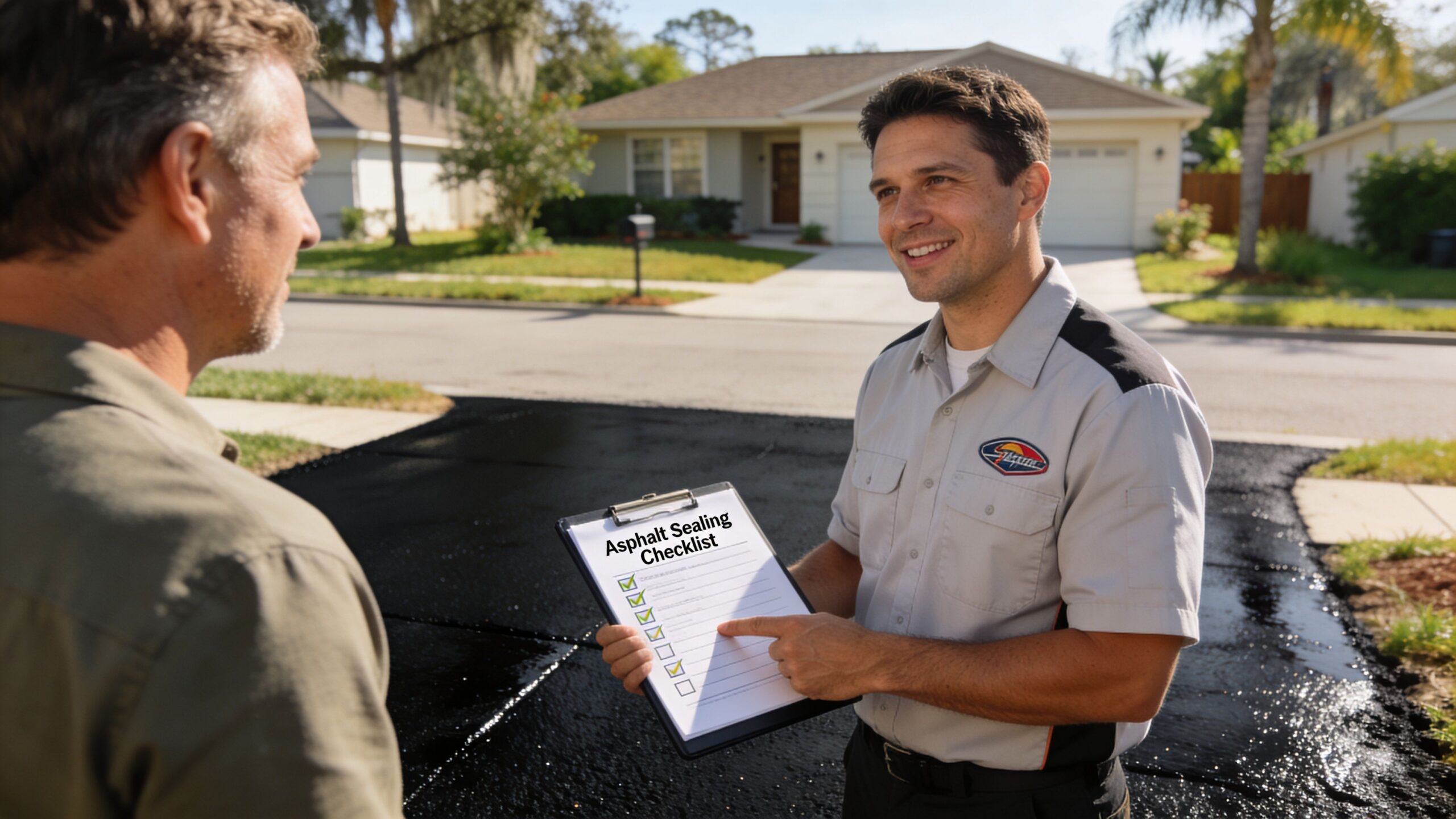
A short screening checklist saves money and frustration.
- Are you licensed and insured? Ask plainly. A professional should answer without dodging it.
- What prep is included? Cleaning, edge work, crack filling, and oil spot treatment should be spelled out.
- What material system do you use? The answer should match the age and condition of the pavement, not sound rehearsed.
- Do you handle concrete as well as asphalt? That matters when aprons, sidewalks, curbs, or transitions affect the job.
- Can you handle striping and ADA-related layout needs? Commercial owners should settle this before work is scheduled.
- How do you price the work? A clear proposal should explain scope, not just give a lump sum. This guide to asphalt sealcoating cost per square foot helps property owners compare bids with the right questions in mind.
What good answers sound like
Good contractors do not treat every faded driveway or parking lot the same. They explain whether the asphalt is still a good candidate for maintenance, whether crack repair needs to happen first, and whether drainage or edge failure will shorten the life of the coating.
They should also be specific about scheduling. In Central Florida, timing affects the result and the service life. A serious contractor will talk through cure time, rain risk, site shade, and how traffic will stay off the surface long enough for the coating to set properly.
Riverside Sealing & Striping, LLC is one local company that handles asphalt sealcoating, striping, and concrete work for residential and commercial properties in this region. That range matters because many properties in Ocala, Inverness, Lecanto, and nearby communities have more than one pavement issue at the same time.
Watch for these red flags
| Red flag | Why it matters |
|---|---|
| No discussion of crack repair | Coating over defects does not stop them from spreading |
| No weather planning | Florida humidity and rain can shorten the life of a fresh application |
| Cash-only, no paperwork | You may end up with no clear scope, no insurance record, and no accountability |
| Only talks about color and appearance | Sealcoating is maintenance work, not just a cosmetic cover-up |
| No knowledge of parking lot markings | Commercial sites often need striping coordinated with pavement work |
A contractor who tells you sealcoating is the wrong fix for failed asphalt is usually giving you the honest answer.
Frequently Asked Questions About Sealcoating in Florida
How long should you wait to sealcoat new asphalt in Florida
This is one of the biggest local misunderstandings. Generic advice often says 4 to 6 weeks, but in Florida that can be too soon. According to PaveMan Pro's sealcoating performance FAQ, heavy rainfall in Marion and Citrus counties can delay proper curing to 8 to 10 weeks, and rushing the process in humid conditions can cause the sealcoat to peel twice as fast as it would in drier climates.
That means new asphalt in Ocala, Beverly Hills, or Crystal River shouldn't be put on a generic schedule. It should be checked for readiness based on actual site conditions.
Is sealcoating worth it compared with full replacement
If the asphalt is structurally sound, sealcoating is usually the smarter first move. It protects the existing surface and helps delay more expensive work. If the base has failed, the pavement is badly alligatored, or water damage has already undermined the structure, replacement may be the honest answer.
The key is diagnosis. Coating good asphalt is maintenance. Coating failed asphalt is wasted money.
Does hurricane season affect sealcoating plans
Yes. Even without getting into a storm event, Florida's wet season affects timing, cure windows, and post-rain scheduling. For homes and commercial lots in Marion County, Citrus County, and surrounding areas, the safest plan is to schedule around a reliable dry window and inspect the pavement after major weather before applying fresh material.
A local contractor should be talking about site drainage, standing water, and whether storm debris or washout has changed surface condition.
Can you sealcoat over cracks and rough spots
Not correctly. Smaller cracks and wider cracks need different repair methods, and rough or broken areas may need patching before sealcoating makes sense. If a property owner gets a quote with no mention of prep, that's a warning sign.
If you're trying to budget the work, this page on asphalt sealcoating cost per square foot is a useful starting point because it shows why prep and condition change the scope.
Does sealcoating help commercial properties too
Absolutely. Commercial owners in places like The Villages, Ocala, and Inverness often get value from sealcoating because appearance, surface protection, and parking lot markings all matter at the same time. A freshly sealed lot also gives striping a better base, which is important for stall visibility, traffic flow, and ADA-related markings.
For HOAs, churches, shopping centers, and small office lots, the biggest advantage is usually planning maintenance before the lot starts chasing bigger repairs.
Protect Your Pavement with Riverside Sealing & Striping
Sealcoating makes sense when the asphalt is still worth protecting. In Central Florida, that decision comes down to timing, prep, and knowing how sun, rain, and humidity affect the surface before and after application.
Property owners in Marion County, FL and Citrus County, FL don't need generic advice written for some other climate. They need practical guidance based on what happens in Ocala, Dunnellon, Belleview, Silver Springs, Summerfield, Crystal River, Homosassa, Inverness, Lecanto, Hernando, Beverly Hills, and The Villages.
If your asphalt is fading, drying out, or starting to crack, it's worth getting it looked at now. And if the underlying issue turns out to involve both concrete and asphalt, working with a contractor who handles both sides of the property helps you make a better long-term decision.
If you want a no-pressure evaluation of your driveway, parking lot, striping layout, or adjacent concrete work, Riverside Sealing & Striping, LLC offers free on-site estimates across Central Florida.