You notice it backing out of the garage. One corner of the driveway drops, the tire thumps, and your eye goes straight to the crack that seems a little wider than it was last season. The same thing happens on front walks, pool decks, patios, and commercial sidewalks all over Central Florida. What starts as an eyesore quickly becomes a trip hazard, a drainage problem, and eventually a bigger repair bill.
In Marion County, FL and Citrus County, FL, uneven slabs are common because concrete sits on soil that shifts, washes out, and weakens over time. The good news is that a settled slab doesn't always need to be torn out. Modern concrete lifting solutions can often raise and stabilize existing concrete with less disruption than full replacement. That shift is happening across the industry, too. The global market for concrete repair systems, including lifting solutions, is projected to grow at a 5.0% CAGR from 2026 to 2035 as contractors and property owners favor faster, less disruptive repairs for aging concrete, according to IndexBox's concrete repair system market outlook.
If you're in Ocala, Dunnellon, Belleview, Crystal River, Inverness, or The Villages, the question usually isn't whether the slab looks bad. It's whether lifting will hold, or whether replacement is the smarter investment.
Table of Contents
- Your Sunken Driveway Is More Than an Eyesore
- Why Concrete Sinks in Central Florida
- Comparing the Top 4 Concrete Leveling Methods
- The Showdown Polyfoam Injection vs Mudjacking
- When Concrete Lifting Is the Wrong Choice
- Commercial Properties and ADA Compliance
- Choosing Your Concrete and Asphalt Experts in Marion County
- Frequently Asked Questions About Concrete Lifting
Your Sunken Driveway Is More Than an Eyesore
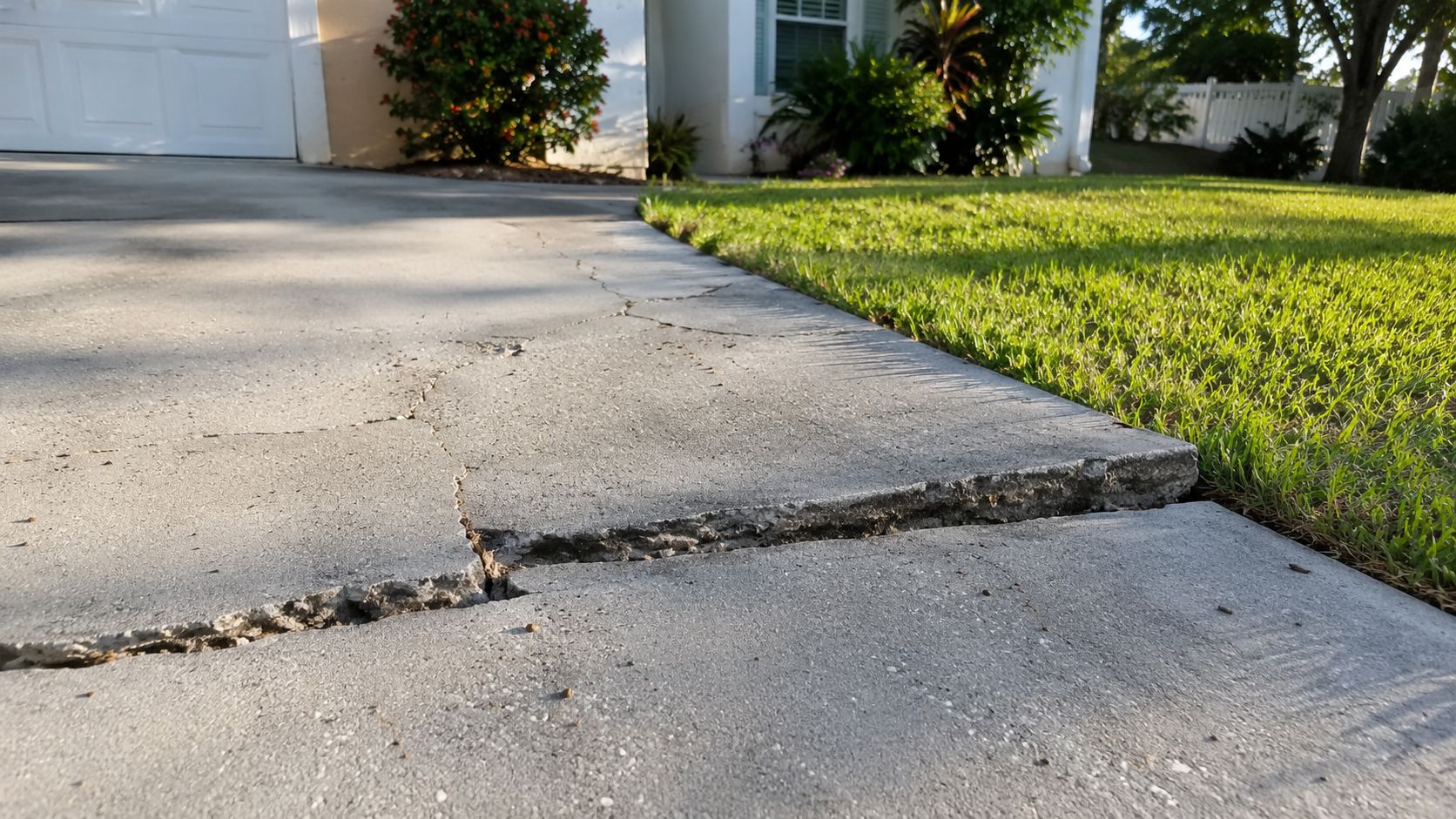
A dropped driveway panel in Ocala or a lifted sidewalk edge in The Villages isn't just cosmetic damage. It catches tires, holds water, creates a tripping point, and usually tells you the base under the slab has changed. If you ignore it, the movement often gets worse during heavy rain cycles and hot dry stretches.
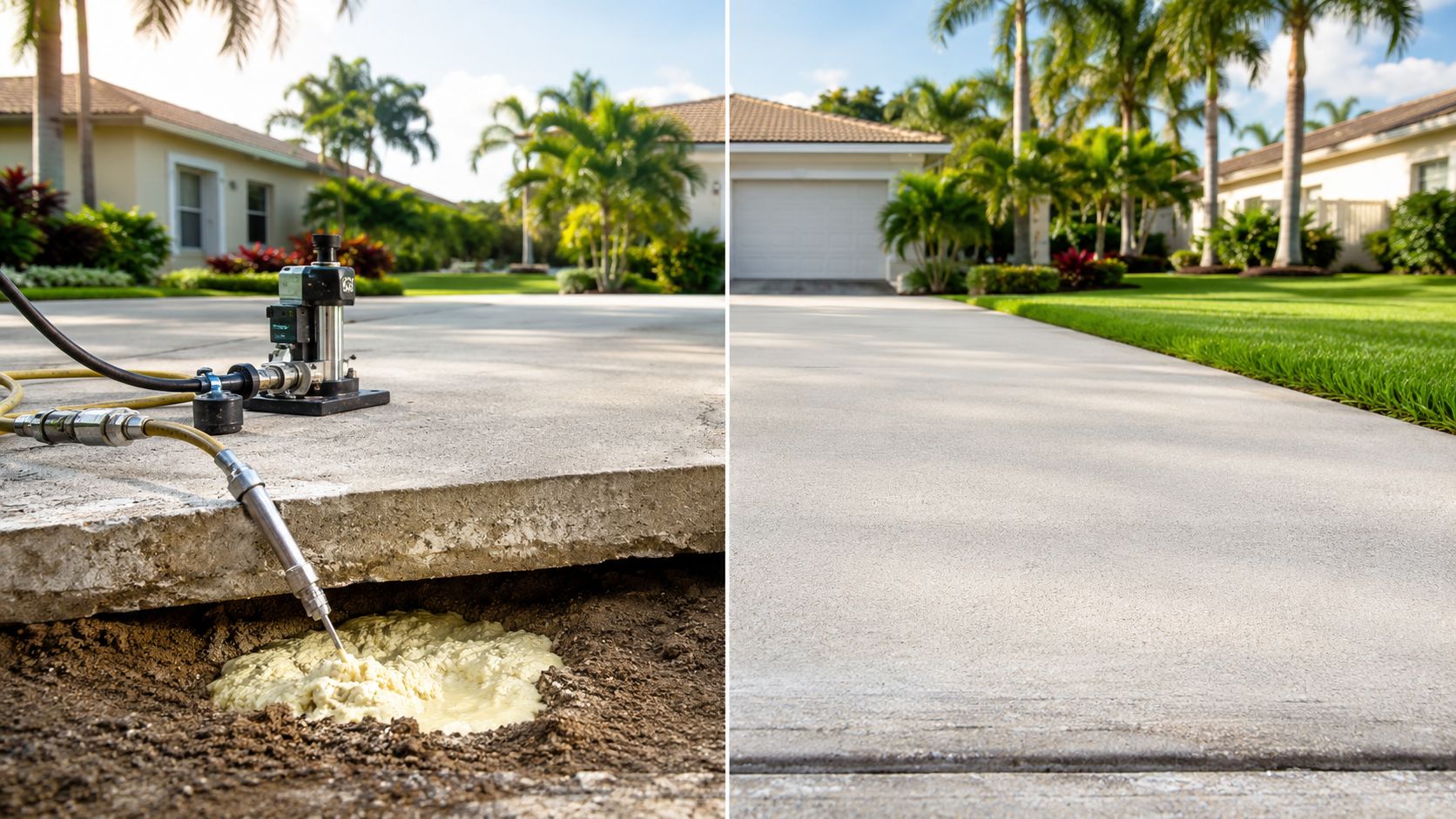
That doesn't mean you should jump straight to demolition. Many property owners are surprised to learn that settled concrete can sometimes be lifted back into position instead of removed. That's why concrete lifting solutions have become a practical option for homeowners and commercial owners who want a faster repair with less mess.
What lifting solves well
Concrete lifting is usually a good conversation when the slab is still largely intact but no longer sitting where it belongs. Common examples include:
- Sunken driveway sections that dip near the garage or apron
- Uneven sidewalks where one panel has dropped below the next
- Patios and pool decks that now slope wrong or collect water
- Entry paths and stoops that have settled and created a step
A lot of owners first start researching after searching for sunken driveway repair options because they want to know whether they can avoid a full tear-out. In many cases, they can. In other cases, they shouldn't.
Practical rule: If the concrete is mostly sound, lifting deserves a look. If the slab is badly broken, badly settled, or sitting on failed subsoil, replacement often saves money in the long run.
In places like Summerfield, Silver Springs, and Beverly Hills, the most cost-effective decision comes from diagnosing the cause first. The slab is the symptom. The soil, drainage, thickness, and load are the story.
Why Concrete Sinks in Central Florida
Across Central Florida, slabs move for local reasons, not random ones. The driveway in Belleview, the sidewalk in Homosassa, and the patio in Lecanto may all fail differently on the surface, but settlement usually starts below.
The soil under the slab matters more than the slab itself
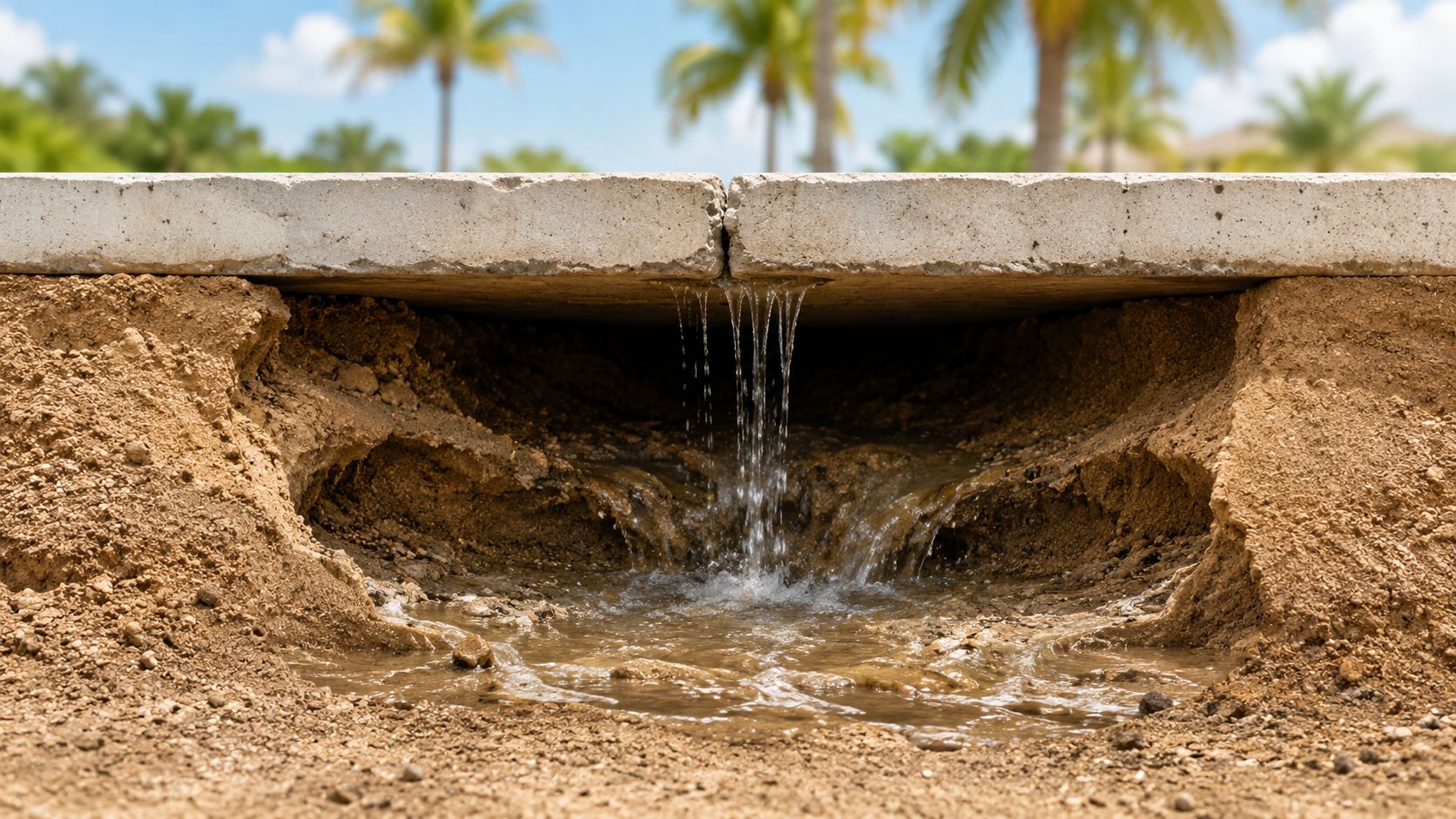
Much of Marion County, FL and Citrus County, FL sits on sandy, free-draining soil. That can be helpful for some site conditions, but it also means water can move through and around a slab base quickly. Once runoff starts carrying fines away or leaves a void beneath the concrete, the slab loses support and begins to settle.
Buried organic material can add to the problem. When roots, old debris, or poorly compacted fill break down, the volume under the slab changes. The concrete doesn't bend well, so it cracks, drops, or both.
A slab can also be structurally underbuilt for how it's being used. In Florida, a concrete driveway for standard passenger vehicles should be at least 4 inches thick, while driveways intended for heavier vehicles like RVs or work trucks should be 5 to 6 inches thick, according to this Florida driveway guidance. When a slab wasn't built for the load it carries, settlement and cracking tend to show up sooner.
Water, traffic, and bad original construction speed up settlement
Poor drainage is one of the biggest accelerators. Downspouts that dump next to the slab, low spots that hold water, and edges with no proper runoff path all increase the chance of washout. That's why one corner drops first while the rest of the driveway still looks fine.
Here's a quick visual on how washout under slabs develops in real conditions:
Heavy vehicles add stress, especially on residential driveways that regularly hold trailers, service trucks, or RVs. In places like Hernando, Inverness, and Crystal River, this is common. If the base wasn't compacted correctly during the original pour, repeated loading turns a small support problem into visible settlement.
Concrete rarely sinks because of one single issue. Most of the time, water, weak support, and repeated load are working together.
That matters because a lasting repair has to match the cause. If you only raise the slab and ignore the support conditions, the same section can move again.
Comparing the Top 4 Concrete Leveling Methods
A driveway can look fixable from the surface and still be a poor candidate for lifting. I see that a lot in Central Florida. One slab has a minor void under it and lifts well. Another has wide cracking, soft base material, and drainage problems that make replacement the cheaper long-term move.
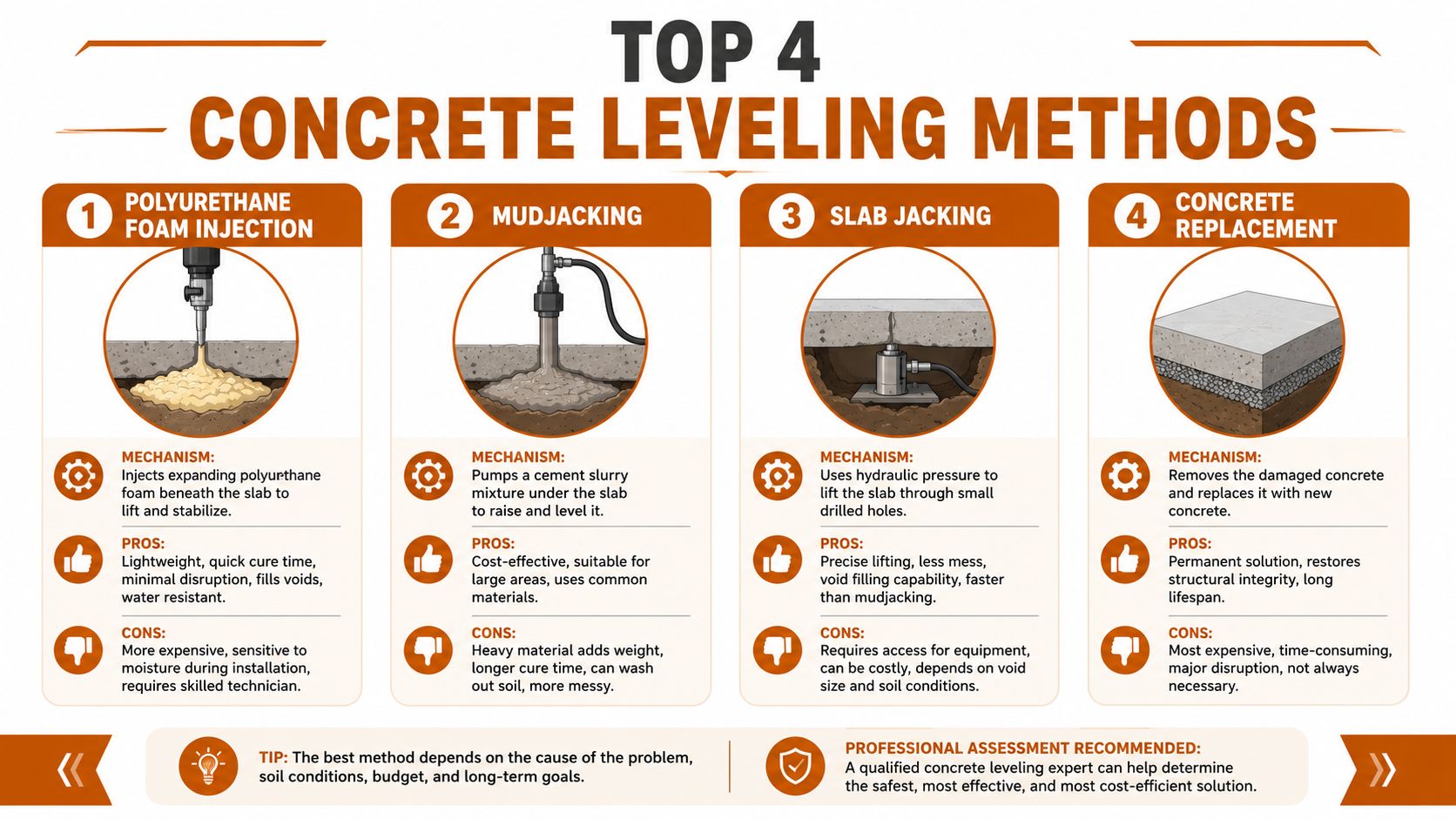
Quick comparison table
| Method | How it works | Best fit | Main upside | Main trade-off |
|---|---|---|---|---|
| Polyurethane foam injection | Expanding foam is injected beneath the slab to fill voids and lift | Driveways, sidewalks, patios, and slabs needing fast turnaround | Small injection holes and quick return to service | Costs more than mudjacking in many cases and will not fix badly broken slabs |
| Mudjacking | A slurry is pumped under the slab to raise it | Larger sections where extra material weight is acceptable | Lower upfront cost on some jobs and familiar process | Larger holes, more cleanup, heavier fill, and slower return to service |
| Mechanical slabjacking | Mechanical force or lifting equipment repositions a section | Select situations with accessible slab edges or specialty repair needs | Useful in unusual access conditions | Less common for routine residential settlement and often limited by site layout |
| Full concrete replacement | Damaged concrete is removed and repoured | Severe cracking, deep settlement, failed base, or wrong slab design | Resets the slab, base, and drainage details | Higher cost, more downtime, and more disruption |
Polyurethane foam injection
Foam injection is usually the best fit when the slab is still in one piece and the main problem is voids below it. Technicians drill small holes, inject two-part polyurethane, and lift the slab in controlled stages. Acme Concrete's material comparison notes that dense lifting foams reach compressive strengths in the range commonly used for slab support, which is why they perform well under residential flatwork.
Key advantages are control and speed. Foam works well on decorative concrete, front walks, pool decks, and driveways where appearance matters and downtime needs to stay short. If you want a closer look at repair options for uneven slabs, this guide on how to fix uneven concrete slabs gives a useful overview of the common approaches.
Foam is not the automatic winner. If the slab is shattered, rocking, or sitting on a base that has washed out across a wide area, lifting can turn into a short-lived repair.
Mudjacking
Mudjacking uses a cement-based or limestone slurry to fill voids and push the slab upward. It still has a place. On some larger slabs, especially where appearance is less important and budget drives the decision, mudjacking can be the practical choice.
The trade-off is weight. The slurry adds more load to already weak soils, and the drill holes are larger and more visible after patching. On a back pad or service area, that may be fine. On a front-entry walkway or a driveway you see every day, property owners often prefer a cleaner repair.
Mechanical slabjacking
Mechanical slabjacking is a specialty method, not the standard answer for a settled residential driveway. It uses lifting equipment to reposition concrete rather than relying mainly on injected material below the slab.
It can help in isolated cases where slab edges are accessible or where surrounding conditions make injection methods harder to use. It is less flexible on typical residential settlement, and many homes in Marion County will not have the access or slab condition that makes this method worthwhile.
Full concrete replacement
Replacement deserves more attention than it usually gets in articles about concrete lifting solutions. Sometimes it is the better value.
If the slab has multiple full-depth cracks, broken corners, pumping soil, drainage issues that were never corrected, or the wrong slab thickness for the traffic it carries, lifting only buys time. You still have the same weak support, the same water problem, or the same underbuilt slab. Paying for lifting first and replacement later often costs more than replacing it once and fixing the cause at the same time.
Replacement also lets a contractor correct the whole system. Broken concrete comes out. Weak base material can be reworked. Drainage can be improved. The new slab can be poured for the loads it will carry. For a badly failed driveway or commercial entrance, that is often the most cost-effective decision, even if the upfront price is higher.
The Showdown Polyfoam Injection vs Mudjacking
A homeowner in Ocala sees the same problem I see every week. The driveway dropped at the garage, water sits after rain, and one contractor recommends polyfoam while another pushes mudjacking because it costs less. Both methods can raise concrete. The better choice depends on what caused the slab to move, how visible the repair is, and how long you need the result to hold up.
Where polyfoam usually wins
Polyfoam is usually the better fit for residential driveways, sidewalks, and entry paths where clean finish and quick return to service matter. The drill holes are smaller than mudjacking holes, so the patched surface is less noticeable on front-facing concrete. That matters more than many owners expect once the repair is complete and the slab is back in full view.
It also puts less weight under a slab that already lost support. In Central Florida, that matters. Sandy soils, washout, and moisture changes are common here. Adding a heavy slurry under settled concrete can work, but it can also be the wrong call if the base is already weak or water movement is still active.
Polyfoam also gives crews better lift control on tighter corrections. That helps with sidewalk trip hazards, pool deck edges, and garage approaches where small height changes matter. If you're comparing options for how to fix uneven concrete slabs, that precision is one reason foam gets specified so often.
Another practical advantage is downtime. Foam sets fast, so owners can usually get back on the slab sooner. For a busy driveway or a storefront entrance, that shorter interruption has real value.
Where mudjacking still makes sense
Mudjacking still has a place on the right job. It can be a workable option on larger, plain concrete areas where appearance is less important and the slab has enough thickness and integrity to take the lift well. Some owners also choose it because the upfront price is lower.
The trade-off is straightforward. Mudjacking uses a heavier material and larger drill holes. The patching is more visible, and the added weight is not always ideal for slabs that settled because the support below changed in the first place. On utility slabs or lower-visibility areas, that may be acceptable. On a decorative driveway or front walk, many owners decide it is not.
I also look at what happens if the lift works but the slab is still near the end of its life. If the concrete already has broad cracking, broken edges, weak base support, or drainage problems that were never fixed, the cheapest lift method is not always the cheapest decision. In those cases, replacement can be the better investment because it lets you correct the base and the water issue at the same time instead of paying for a short-term lift and a later tear-out.
How I would choose between them
For a sound residential slab with moderate settlement, polyfoam usually gives the cleaner and more predictable repair.
For a basic slab in a less visible area, mudjacking can still be reasonable if the base conditions support it and the owner accepts the appearance and downtime trade-offs.
The slab decides. The soil decides. The cause of settlement decides. A good contractor should be willing to say when either lifting option makes sense, and when neither one is the smartest place to spend your money.
When Concrete Lifting Is the Wrong Choice
This is the part too many guides skip. Not every slab should be lifted. Some should be replaced, even if lifting sounds cheaper at first.
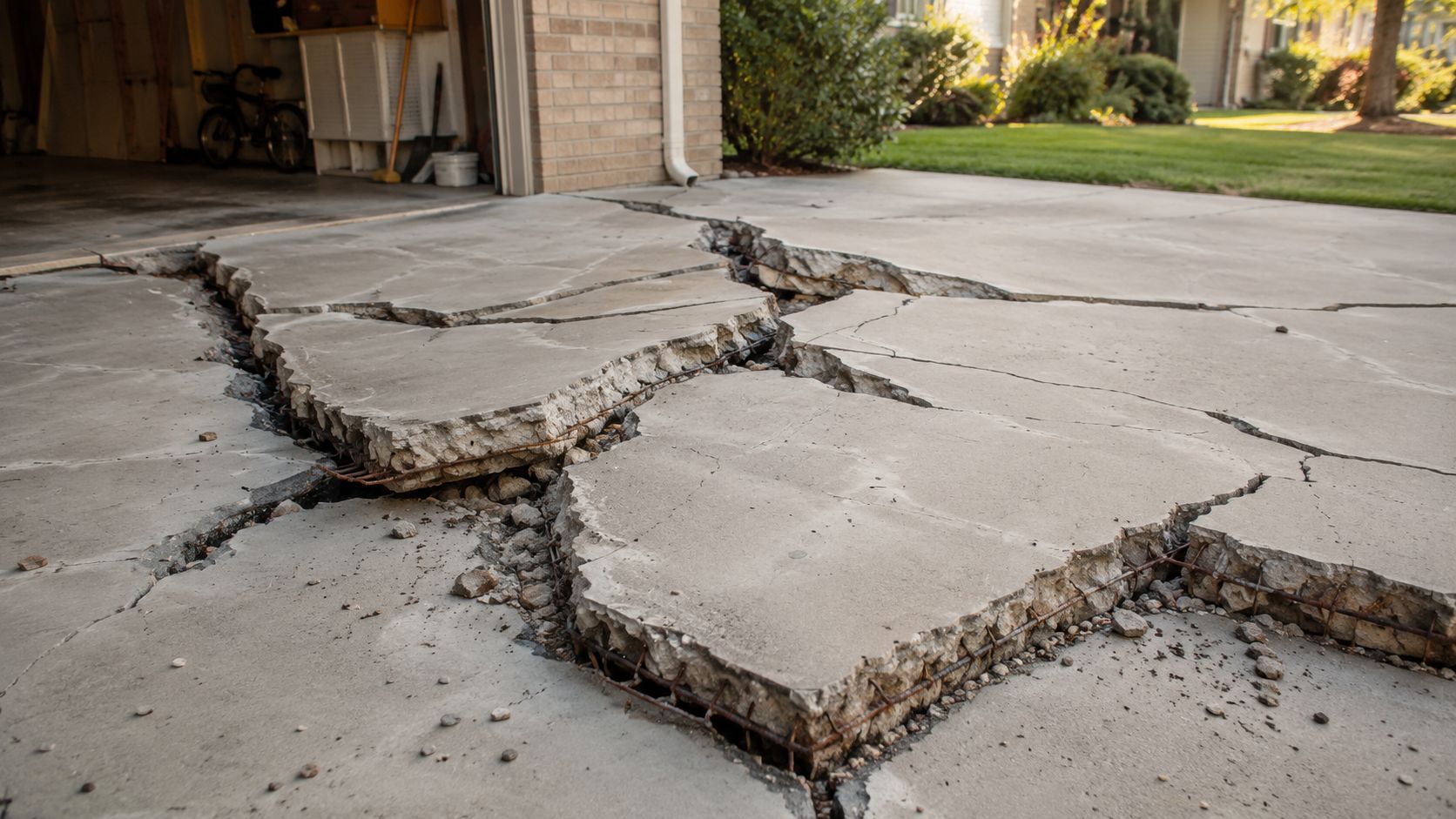
Signs replacement is the smarter investment
Industry guidance is fairly clear on a few red flags. Slabs with settlement exceeding 2 to 3 inches, widespread cracking greater than 1/4 inch, or compromised subsoil often require full replacement, according to this concrete lifting review that cites industry standards and IAFC case study findings.
That means lifting isn't a cure-all for:
- Dropped driveways where elevation loss is severe
- Broken slabs with multiple structural cracks across the panel
- Sections with pumping soil or chronic washout
- Concrete sitting on a failed base that no longer supports load consistently
If rebar is exposed, corners are shattered, or one panel has broken into several moving pieces, replacement is usually the more honest recommendation.
Why failed lifting jobs usually fail
A slab can be raised successfully and still be a bad repair choice. The biggest mistake is focusing only on the concrete surface and not the support conditions underneath. The same review notes that 18% of polyfoam lifting projects failed within 3 years due to unaddressed subgrade instability. That's the statistic property owners rarely hear, and it's the one that matters most before signing off on a lift.
A lift can look perfect on day one and still be the wrong repair if the soil problem wasn't solved.
Long-term value matters more than short-term price. If you're in Homosassa, Lecanto, or Hernando and the slab shows serious structural failure, replacement usually gives you a better path because the contractor can rebuild the base, correct drainage, and pour new concrete built for current use.
For homeowners, that can protect curb appeal and reduce repeat repairs. For commercial properties, it can reduce liability tied to recurring movement.
Commercial Properties and ADA Compliance
Uneven concrete on a commercial site isn't just a maintenance issue. It's a safety issue, an image issue, and sometimes a compliance issue. A raised sidewalk panel at a medical office in Ocala or a settled access route at a retail center in Crystal River can expose owners and managers to complaints long before the slab completely fails.
Trip hazards become liability issues fast
Commercial walkways, ramps, loading areas, dumpster pads, and storefront approaches take constant traffic. Once a slab drops or shifts, tenants and visitors notice immediately. So do insurers, facility managers, and HOA boards.
For many sites, lifting is attractive because it can restore a smoother walking surface without the disruption of a tear-out. That's especially useful when a business needs to stay open, a school campus needs predictable access, or an HOA in The Villages wants repairs handled with minimal disruption to residents.
Commercial owners usually aren't buying a repair method. They're buying safer access and less disruption.
ADA concerns add another layer. If a route of travel, curb transition, or accessible parking path has settlement, the concrete issue often overlaps with pavement markings and signage. That's why many property managers pair slab correction with ADA parking lot striping requirements and updates so the whole access area works together.
Why commercial owners often choose lifting first
Lifting can be the right first move when the concrete is still structurally serviceable and the goal is to remove trip edges quickly. It also helps preserve surrounding landscaping, curbs, and adjacent asphalt. On mixed-surface properties in Marion County, FL and Citrus County, FL, that matters because one bad slab often affects nearby pavement drainage and traffic flow.
This is also where a full-service mindset matters. Concrete and Asphalt Experts in Marion and Citrus County should be able to look beyond the slab itself and consider sealcoating, striping, directional markings, and overall site safety. For shopping centers in Inverness, churches in Silver Springs, and offices in Dunnellon, that broader view usually produces the most cost-effective plan.
Choosing Your Concrete and Asphalt Experts in Marion County
Hiring the right contractor is what separates a lasting repair from a lifted slab that drops again. In Central Florida, local knowledge matters because soil, drainage, and traffic patterns vary from one property to the next.
A practical hiring checklist
Use this checklist before approving any lifting or replacement work:
- Confirm licensing and insurance. You want a contractor who can document coverage and operate professionally on residential or commercial property.
- Ask about local experience. A company that works regularly in Marion County, FL, Citrus County, FL, Ocala, Dunnellon, and surrounding areas will usually diagnose local settlement patterns faster.
- Get a clear recommendation. If every slab gets the same answer, that's a warning sign. Good contractors explain why a slab should be lifted, replaced, or monitored.
- Review the project timeline. Reliable scheduling and clear expectations matter, especially for busy driveways and active commercial sites.
- Look for workmanship across both surfaces. If your property includes concrete and asphalt, it helps to hire a team that understands both.
For homeowners in Belleview or Summerfield, that might mean evaluating a driveway and adjacent walkway together. For commercial owners in Lecanto or Beverly Hills, it may include the concrete repair plus striping and surface maintenance around it.
A no-pressure consultation is usually the best next step. The right contractor should inspect the slab, explain the trade-offs plainly, and recommend the most cost-effective fix for your site, not just the easiest job to sell.
Frequently Asked Questions About Concrete Lifting
Can a lifted slab sink again
Yes, it can if the underlying cause is still active. Drainage problems, washout, and unstable subsoil are the usual reasons repairs don't hold. That's why diagnosis matters as much as the lift itself.
Is concrete lifting noisy or messy
It depends on the method and site access, but lifting is generally less disruptive than full tear-out and replacement. Most property owners care most about drilling, patching, and how quickly the area can be used again.
What types of concrete can usually be lifted
Driveways, sidewalks, patios, pool decks, garage floors, and some commercial walkways are common candidates. The deciding factors are slab condition, settlement pattern, and what's happening below the concrete.
Does homeowners insurance cover concrete lifting
Sometimes, but it depends on the policy and the cause of damage. Normal settling and wear often aren't treated the same as sudden covered events. Property owners should check directly with their insurer.
Is concrete always better than asphalt for a driveway
Not always. Concrete is durable and can improve curb appeal, while asphalt can be a practical surface in the right setting. The best choice depends on load, appearance goals, maintenance expectations, and how the property is used. A contractor who handles both surfaces can give a more balanced recommendation.
If you need an honest opinion on whether a slab should be lifted or replaced, Riverside Sealing & Striping, LLC offers free, no-pressure evaluations for homeowners and commercial properties across Central Florida. As Concrete and Asphalt Experts in Marion and Citrus County, the team handles concrete work, asphalt sealcoating, and parking lot striping with reliable scheduling, insured service, and practical recommendations that fit the property.