
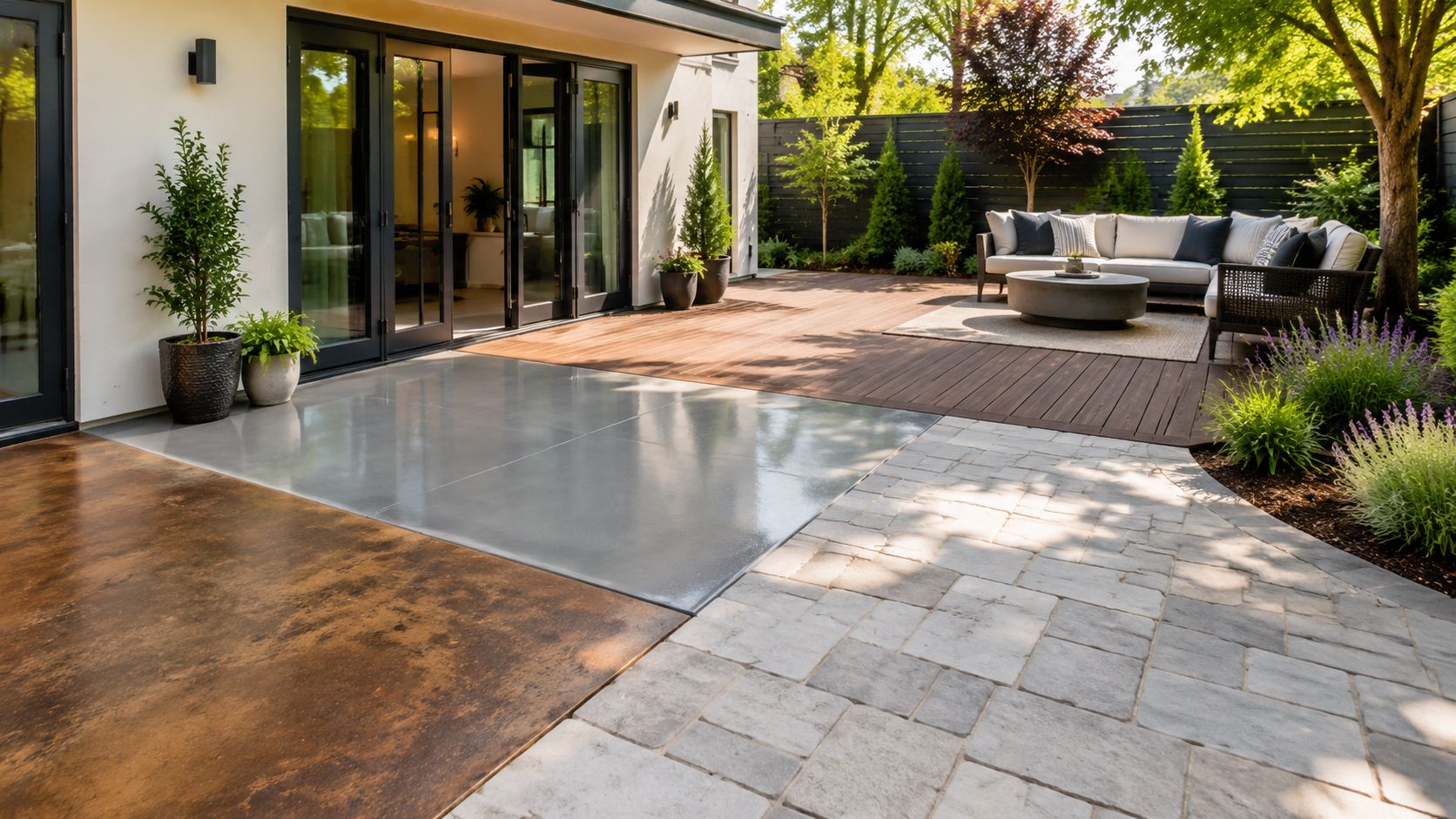
You step out back, look at the patio, and think the same thing a lot of homeowners around Ocala, Dunnellon, Belleview, Crystal River, and Inverness think. The slab is still there, but it's stained, plain, maybe cracked, and it doesn't feel like a place you want to use.
That's where the right concrete patio floor covering makes a difference. Not every patio needs to be torn out. In many cases, the slab is a solid base that can support a much better finish, as long as you choose a covering that fits both the condition of the concrete and the way Central Florida weather behaves.
In Marion County, FL and Citrus County, FL, that choice matters more than a lot of online lists admit. Heat, UV, heavy rain, humidity, mildew, and even pest pressure all affect what holds up outside. A pretty option that traps moisture or fails over a moving slab usually turns into a redo.
Table of Contents
- Transform Your Patio From Drab to Fab
- Comparing Your Concrete Patio Floor Covering Options
- Budget-Friendly Finishes Stains Paint and Rugs
- Durable Coatings and Overlays
- Premium Style With Pavers Tile and Decking
- When You Need a Concrete Expert in Marion or Citrus County
- Frequently Asked Questions About Patio Floor Coverings
Transform Your Patio From Drab to Fab
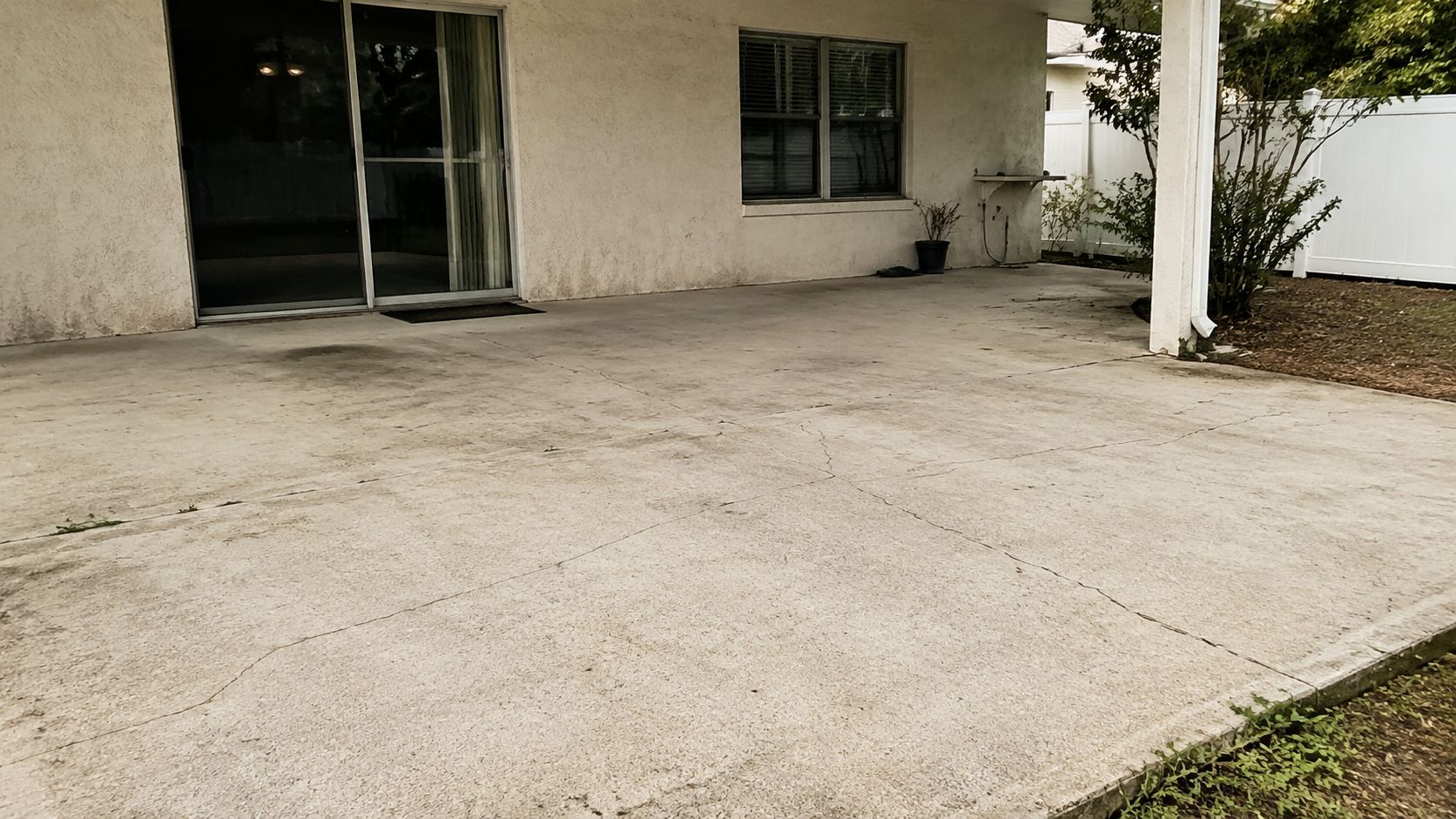
A worn patio doesn't always mean a failed patio. A lot of slabs around Summerfield, Silver Springs, Homosassa, and Lecanto are structurally useful even when they look rough. The surface may be faded, discolored, or patched, but that doesn't automatically mean replacement is the only answer.
Concrete is also a lot more proven than people give it credit for. Builders used hydraulic lime to create concrete floors as early as 700 BC, and Roman builders had widely adopted concrete by about 200 BC, which is part of why it's still one of the world's most established paving materials today, according to the history of concrete documented by InterNACHI.
That long track record matters for a backyard patio. You're not trying to hide some weak material. You're often working with a durable base that can be upgraded in a smart way.
Practical rule: Treat the slab as the foundation of the finish. If the base is sound, you have options. If the base is moving, the prettiest covering in the world won't save it.
The choices usually fall into a few groups:
- Low-cost cosmetic updates like stain, paint, or an outdoor rug
- Performance upgrades like coatings and resurfacing overlays
- Full visual transformations like pavers, tile, or decking installed over the slab
Homeowners in The Villages or Beverly Hills usually start by asking which one looks best. The better question is which one fits your slab, your budget, and your tolerance for upkeep in Florida weather.
Comparing Your Concrete Patio Floor Covering Options
Most homeowners don't need more ideas. They need a fast way to rule bad options out.
The table below is how I'd narrow it down if we were standing on your patio in Hernando or Crystal River, looking at the slab and talking practically about heat, rain, and maintenance.
Concrete Patio Covering Options at a Glance
| Covering Type | Cost Range (per sq. ft.) | Durability | DIY-Friendly? | Florida Climate Suitability |
|---|---|---|---|---|
| Stain | Varies by product and prep | Moderate | Yes, if surface prep is solid | Good on sound concrete, especially where you want low build-up |
| Paint | Varies by product and prep | Low to moderate | Yes | Fair at best outdoors, especially in strong sun and wet areas |
| Epoxy or similar coating | Varies by system | High when properly installed | Sometimes, but pros usually get better results | Good if the product is suited for outdoor use and the slab is dry enough |
| Overlay | Varies by repair level and finish | High | Usually no | Very good on stable slabs needing a fresh surface |
| Pavers over concrete | Varies by system | High | Sometimes, but layout and drainage matter | Very good if the slab is stable and drainage is handled |
| Tile or porcelain | Varies by material and install method | Moderate to high | Usually no | Good if slip resistance, movement, and drainage are addressed |
| Decking over concrete | Varies by framing and material | High | Sometimes | Very good for hiding ugly slabs and improving drainage |
| Artificial turf | Varies by base and drainage setup | Moderate | Sometimes | Mixed, depends heavily on drainage and heat buildup |
A table like this helps, but it doesn't choose for you. The big filter is the slab condition. The second filter is how much ongoing maintenance you'll tolerate. The third is whether you want a true floor system or just a cosmetic refresh.
If you're weighing hardscape options side by side, this comparison of concrete vs pavers for a patio is useful because it gets into how each surface behaves as an outdoor living area.
Cheap to install and cheap to keep looking good are not the same thing.
In Central Florida, that distinction shows up fast. A coating that looks sharp in a product photo can fail early if the slab stays damp, gets direct UV all day, or already has movement. That's why the next step isn't chasing style boards. It's matching the covering to real site conditions.
Budget-Friendly Finishes Stains Paint and Rugs
If your slab is basically sound and you want a lower-cost update, these are the options most homeowners try first. Some are worth it. Some are only worth it if you go in with the right expectations.
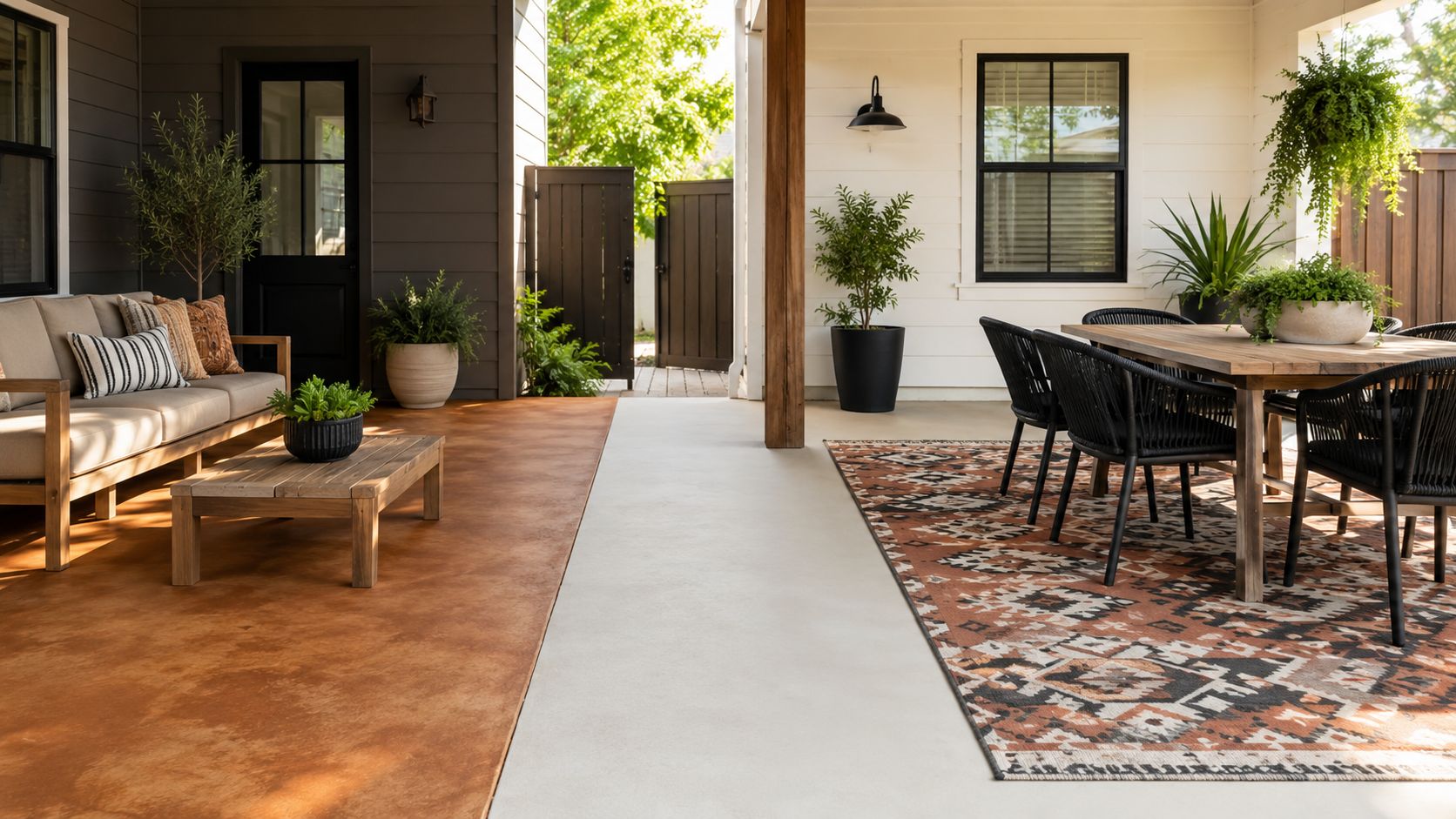
Stain works when you want color without a film on top
Concrete stain doesn't sit on the surface the same way paint does. It changes the appearance of the slab while still letting the texture and natural variation of the concrete show through.
That matters outside. In a humid place like Homosassa or near the water in Crystal River, finishes that don't create a thick skin on top of the slab often age more naturally. You still need proper cleaning and prep, and stain won't hide every blemish, but it usually looks better over time than bargain paint.
Stain makes sense when:
- The slab is mostly sound: Minor discoloration is fine. Active movement is not.
- You like a natural look: Stain won't give you a perfectly uniform painted floor.
- You can handle prep: Dirt, old sealer, and residue can ruin the result.
Paint gives fast color but needs realistic expectations
Paint is popular because it's simple to understand. Pick a color, roll it on, and the patio looks different by the weekend.
The problem is Florida. On patios that get strong sun, regular rain, and furniture dragged across them, paint is usually the option I'd trust the least for long-term satisfaction. It can fade, scuff, peel, or wear in traffic lanes, especially if the slab wasn't prepped correctly or has moisture coming through.
A painted patio can still make sense if you're refreshing a small covered area or trying to improve appearance before a larger remodel. It's just not the finish I'd choose for a long-term outdoor floor in places like Ocala, Belleview, or Summerfield unless the expectations are modest.
Here's a helpful look at a patio makeover approach before you commit to a finish:
Rugs are fine as an accent, not a fix
Outdoor rugs are the fastest way to break up a plain slab. They soften the look, add color, and don't require much skill to put down.
They also come with a Florida-specific warning. Rugs can trap moisture against the slab, especially in shady or humid spots. That can leave dark areas underneath, encourage mildew, and create a mess if the patio already drains poorly.
Use rugs for style, not for problem-solving.
- Good use: Defining a seating area on a dry, clean patio
- Bad use: Covering cracks, hiding standing water, or masking an uneven surface
- Smart habit: Lift and dry them regularly, especially during wet stretches
For pure budget value, stain is usually the strongest low-cost option on a sound slab. Paint is a short-term visual reset. Rugs are accessories, not a true concrete patio floor covering.
Durable Coatings and Overlays
When homeowners want a patio finish that does more than change color, coatings and overlays are where the conversation usually gets serious. These systems can create a more protective surface, improve appearance, and reduce day-to-day maintenance if the slab is right for them.
Why coatings stay popular
The market tells the story. The U.S. concrete floor coatings market was valued at USD 323.0 million in 2022 and is projected to grow at a 4.9% CAGR from 2023 to 2030, while the commercial application segment accounted for more than 53.0% of global revenue in 2022, according to Grand View Research's concrete floor coatings market analysis. That matters because commercial buyers usually choose surfaces that can take wear, cleaning, and regular use.
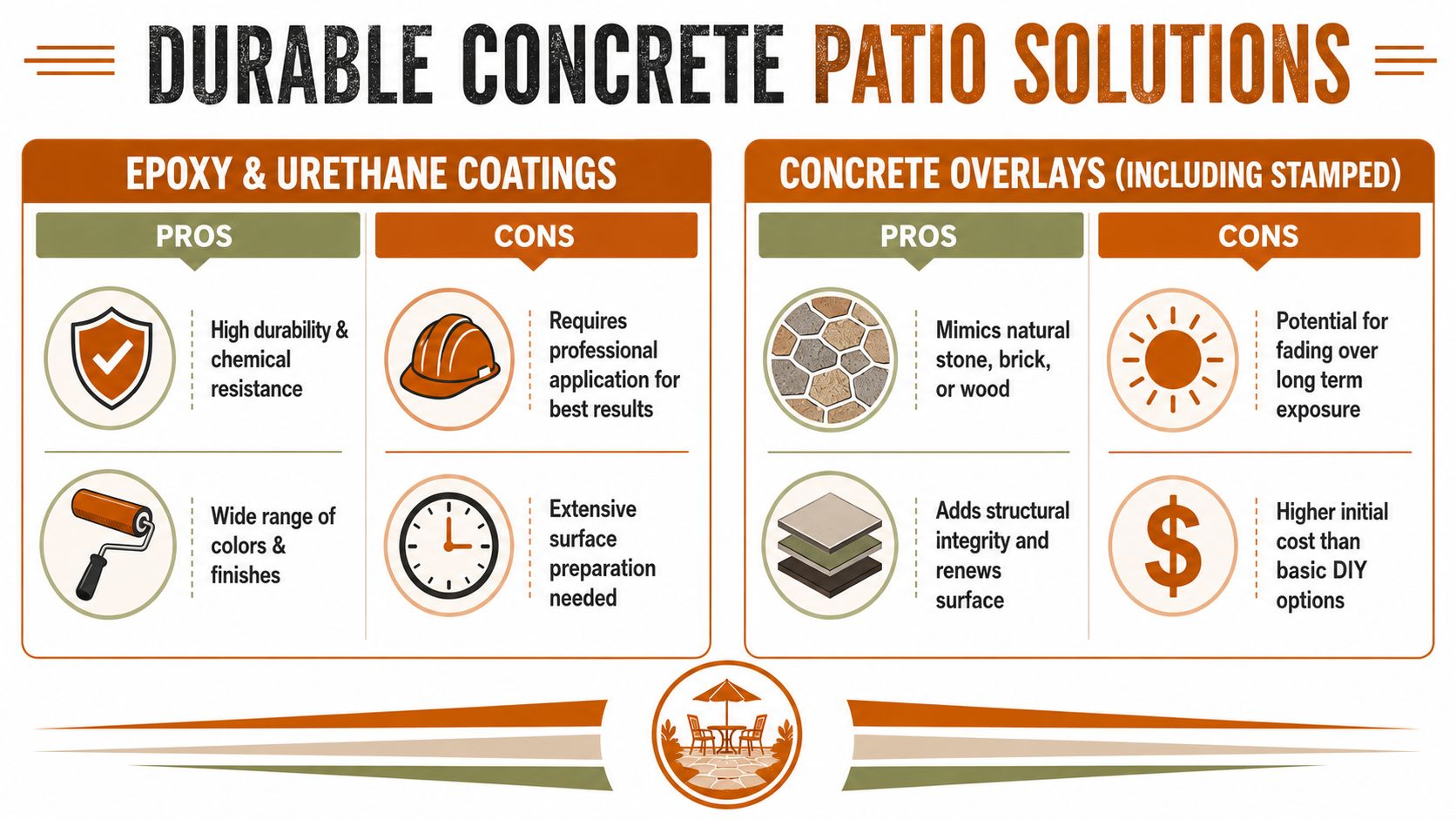
For patios, coatings work best when the slab is intact and the goal is a continuous, easier-to-clean finish. They can be a strong fit for covered lanais, screened patios, and outdoor entertainment areas where homeowners want something sharper than stain and tougher than paint.
Common trade-offs include:
- Better surface performance: Coatings can improve wear resistance and cleanup.
- More prep required: Surface prep usually decides whether the system lasts.
- Less forgiveness: If moisture or slab defects are present, failure shows up fast.
A coating is only as good as the concrete under it and the prep before it.
If you're considering a resurfacing route instead of a basic topcoat, this page on concrete patio resurfacing options helps sort out where each approach fits.
Where overlays make more sense
Overlays are a better answer when the slab is ugly but still stable. They can renew the surface, cover minor imperfections, and open the door to decorative finishes like stamped textures that mimic stone, brick, or wood.
That's a big advantage on older patios in Marion County and Citrus County where the slab may be structurally serviceable but visually tired. Overlays can make the patio feel new without building a whole separate structure over it.
Still, they're not miracle products. If the slab has active movement, moisture issues, or meaningful settlement, the same defects often telegraph back through. In those cases, an overlay becomes an expensive bandage.
Premium Style With Pavers Tile and Decking
If the goal is a full visual change, premium systems do more than refinish the slab. They change the whole patio experience. For homeowners in The Villages, Lecanto, and Beverly Hills, this usually means moving from “How do I cover this?” to “How do I make this feel like an outdoor room?”
Pavers over concrete
Pavers can work very well over an existing slab if the concrete is stable and drainage has been thought through. They bring texture, pattern, and a more architectural look than a coating or stain.
They also handle Florida style well. Pavers don't read as an afterthought. On the right house, they can make a plain rear patio feel intentional and upgraded.
What I like about pavers is their flexibility in design. What I don't like is when they get installed over a slab that's already moving or when height changes near doors aren't considered early.
If that's the direction you're leaning, this guide to paver patio installation near me is a practical starting point.
Tile and porcelain systems
Tile can look great outdoors, but it's a detail-sensitive choice. The wrong tile gets slick when wet, gets too hot in direct sun, or fails because movement and moisture weren't considered.
Porcelain pedestal systems are one of the more interesting options because they can sit above the slab and allow drainage below. That can help in humid areas or on patios where water management is a concern. They're not automatically the answer, but they solve different problems than direct-bond tile.
A few smart filters matter here:
- Surface temperature: Some materials get hotter than homeowners expect.
- Slip resistance: Poolside and rain-exposed patios need a grippier finish.
- Drainage path: Water has to go somewhere without getting trapped.
Decking over an old slab
Decking is often the cleanest way to hide a rough patio and create a fresh, level outdoor living surface. If the slab is ugly, patched, or unattractive but still suitable as a base for a low-profile system, decking can give you a completely different look from concrete.
This approach can also help with usability. Composite or wood-style surfaces feel different underfoot than hard masonry. Some homeowners prefer that around seating areas, outdoor kitchens, or covered patios in places like Inverness and Hernando.
If appearance is the main problem and slab movement is minor, a raised system can be smarter than trying to make old concrete look perfect.
The caution is hidden conditions. Decking can cover a lot visually, but it shouldn't be used to ignore drainage trouble, soft spots, or a slab that's actively shifting.
When You Need a Concrete Expert in Marion or Citrus County
A patio can look fine in January and start showing problems after one Florida summer. Rain finds the low spots, humidity feeds mildew, and strong sun cooks any finish that was put over a weak slab.
Coverings fail for predictable reasons here. The slab holds moisture. The surface does not drain well. One section has settled just enough to stress tile, coatings, or rigid finishes. A guide on covering an ugly concrete patio and why slab condition matters makes the same point. The condition under the finish usually decides how long that finish lasts.
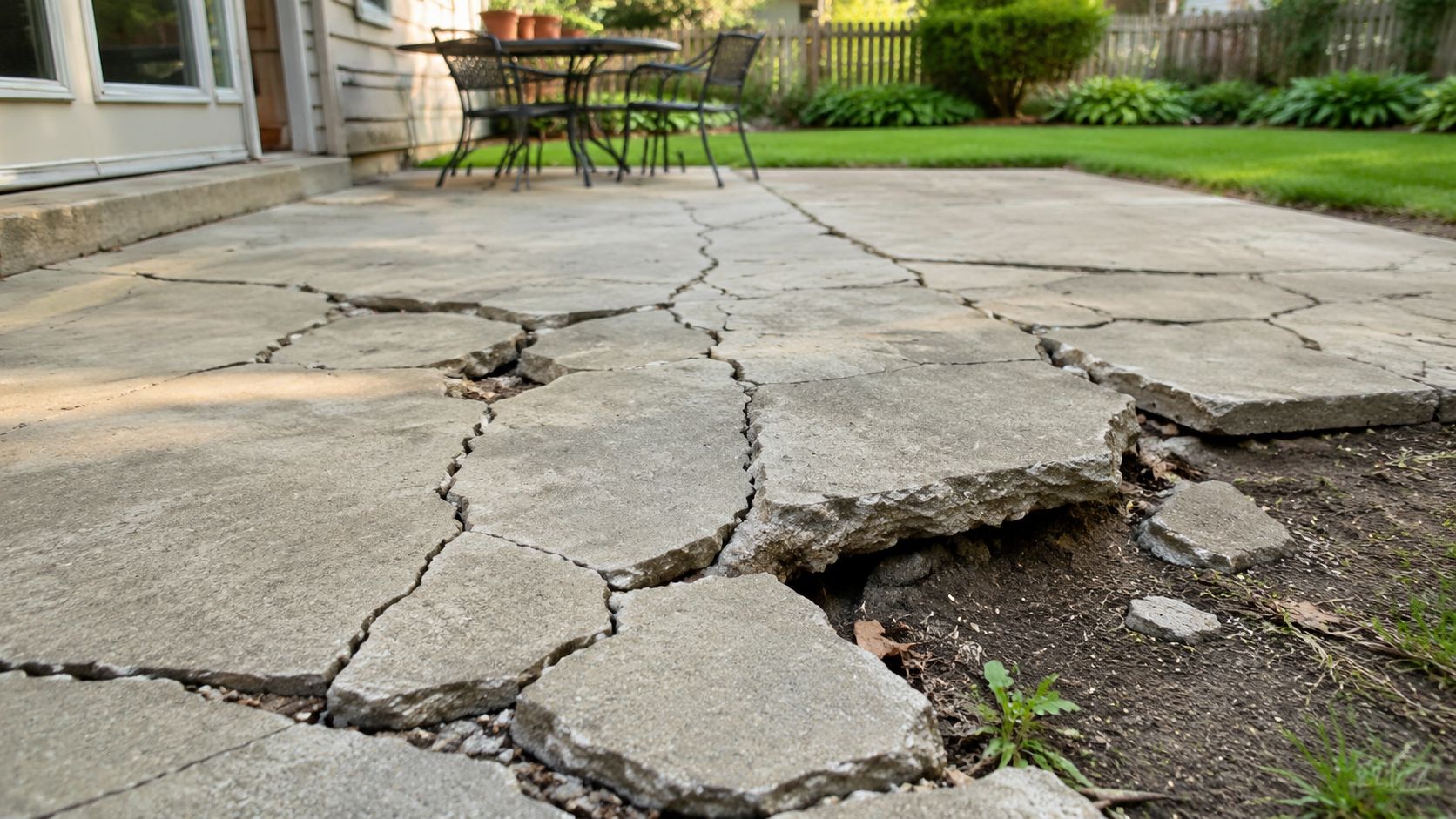
What Florida weather exposes fast
In Marion and Citrus County, I would rather know how the slab behaves after a hard rain than how it looks on a dry afternoon. That tells you more.
Patios in Ocala, Dunnellon, Homosassa, and Crystal River deal with heavy UV, frequent wet-dry cycling, and long humid stretches. Those conditions speed up problems that stay hidden in milder climates. Moisture under a coating can lead to peeling. Poor drainage can leave slick algae-prone areas. Small movement can turn into cracked grout, popped tile, or telegraphed cracks in an overlay.
Height matters too. If a new surface leaves too little clearance at the door, creates a trip edge, or blocks proper runoff, the prettier finish creates a more expensive problem.
Signs the slab needs expert attention first
Some existing patios are good candidates for a new finish. Others need repair before you spend money on surface materials.
Bring in a concrete pro if you see:
- Cracks with vertical displacement: One side sitting higher than the other points to movement, not just age
- Soft or rocking spots: That usually means the base or slab support is failing
- Persistent damp areas or mildew patterns: Moisture is moving through or collecting on the slab
- Water draining toward the house: The slope is wrong, and covering it will not fix that
- Repeated coating or paint failure: Florida moisture and heat are exposing an underlying prep or slab issue
For homeowners in Marion County and Citrus County, Riverside Sealing & Striping, LLC is one local licensed and insured contractor that handles concrete work along with asphalt maintenance. That broader field experience can help when the right answer is not a coating or cover at all, but a repair, resurfacing, slab replacement, or grading correction.
Local judgment matters here. A patio system that performs well in a dry region may struggle in Belleview, Silver Springs, or Summerfield if the concrete stays damp, the yard drains poorly, or the slab already has movement.
Frequently Asked Questions About Patio Floor Coverings
Can you put a concrete patio floor covering over cracked concrete
Sometimes, yes. It depends on the crack.
Hairline cosmetic cracking on an otherwise stable slab may still allow for certain finishes. A slab with active movement, settlement, or moisture issues is different. If the concrete is shifting, the new finish usually reflects that problem sooner or later. Covering damage doesn't correct the cause.
What's the most durable option for Florida weather
On a stable slab, professionally installed coatings, overlays, pavers, or raised systems can all perform well when they're matched to the site conditions. The wrong product on the wrong slab fails faster than a simpler option installed appropriately.
For exposed patios in Central Florida, I'd put more weight on drainage, UV exposure, and slab condition than on marketing claims about toughness.
What's the cheapest way to cover a concrete patio
Paint or an outdoor rug is usually the cheapest starting point. That doesn't make it the best value.
Paint can be fine for a quick refresh, but it often needs more upkeep outdoors. Rugs help visually, but they can trap moisture and don't solve surface defects. Stain is often the better low-cost option when the slab is in decent shape and you want something that looks more natural over time.
Does slab thickness matter before adding a patio covering
Yes, especially if the patio will carry more than normal foot traffic and furniture. For a standard residential patio, 4 inches is typical, while 6 to 8 inches is recommended when the slab needs to support heavier concentrated loads like a hot tub or large gazebo, according to this guidance on outdoor flooring ideas over concrete and slab thickness. If you're adding weight, don't assume every old slab is built for it.
Should you repair or replace the patio before covering it
If the slab is stable and the issues are mostly cosmetic, repair or resurfacing often makes sense. If the slab is settling, breaking apart, or holding moisture, replacement is often the cleaner long-term decision.
Homeowners usually save money by answering that question first instead of installing a decorative finish and then tearing it all back out later.
If your patio in Ocala, Dunnellon, Belleview, Crystal River, Homosassa, Inverness, Lecanto, Beverly Hills, Hernando, Silver Springs, Summerfield, or The Villages needs a second opinion, Riverside Sealing & Striping, LLC offers free, no-pressure consultations for homeowners and property owners across Central Florida. As Concrete and Asphalt Experts in Marion and Citrus County, the team can evaluate whether your existing slab is a good candidate for a concrete patio floor covering, needs repair, or should be replaced before you spend money on the finish.