
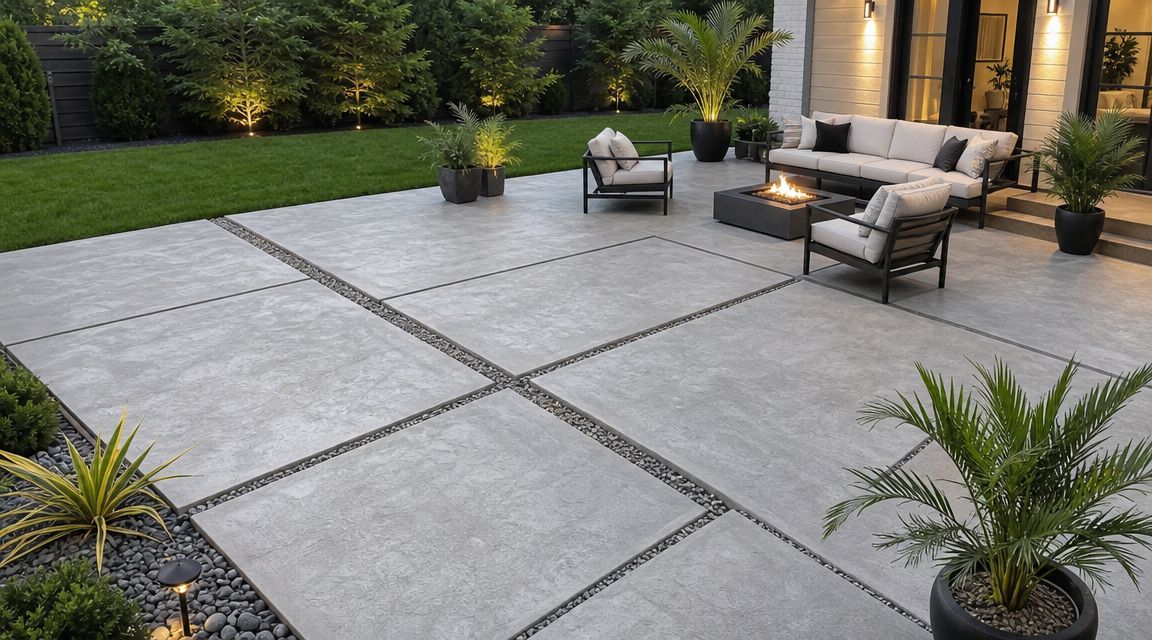
Transform Your Florida Backyard with a Durable Concrete Patio
You step out back after a summer storm, and the grass gives under your shoes. The grill sinks a little, the patio chairs wobble, and the yard you planned to use for dinner or a quiet evening turns into a muddy cleanup job. I see that problem all the time across Marion and Citrus County, especially on lots that hold water or get soft fast in the rainy season.
A concrete patio gives the yard a stable surface that holds up to daily use, handles outdoor furniture well, and cuts down on the mess that comes with bare soil or patchy grass. It also gives homeowners more design options than many expect. Concrete can be stamped, colored, saw-cut, exposed, stained, bordered, or built with features that make the space feel finished instead of temporary. If you want a quick look at how decorative flatwork performs over time, this breakdown of stamped concrete driveway pros and cons covers many of the same durability and maintenance issues that apply to patios.
In Ocala, Dunnellon, Belleview, Summerfield, Crystal River, Homosassa, Inverness, Lecanto, Beverly Hills, Hernando, Silver Springs, and The Villages, patio design has to do more than look good from the back door. The surface needs to handle hard sun, heavy rain, humidity, mildew pressure, and regular rinsing without turning slick, faded, or high-maintenance.
These 10 concrete patio ideas focus on what works in Central Florida. Each option comes with real trade-offs, where it fits best, and what kind of upkeep it needs in this climate, so you can choose a patio that matches your home, budget, and how you use the backyard.
Table of Contents
- 1. Stamped Concrete Patios
- 2. Polished Concrete Patios
- 3. Colored Concrete Patios
- 4. Exposed Aggregate Concrete Patios
- 5. Concrete Patio with Integrated Seating and Fire Features
- 6. Permeable Concrete Patios Pervious Concrete
- 7. Concrete Patios with Decorative Saw Cuts and Scoring
- 8. Large Format Concrete Pavers and Slab Patios
- 9. Concrete Patios with Decorative Borders and Transition Areas
- 10. Sealed and Stained Concrete Patios
- Backyard Concrete Patio Ideas, 10-Option Comparison
- Ready to Build Your Dream Backyard Patio?
1. Stamped Concrete Patios
A lot of Central Florida homeowners start here for a simple reason. They want the look of stone or brick without adding the maintenance that comes with weeds in joints, shifting pieces, or constant resetting. On homes in Ocala and The Villages, stamped concrete usually works best when the patio needs to feel tied to the house and pool deck instead of reading like a separate pad in the backyard.
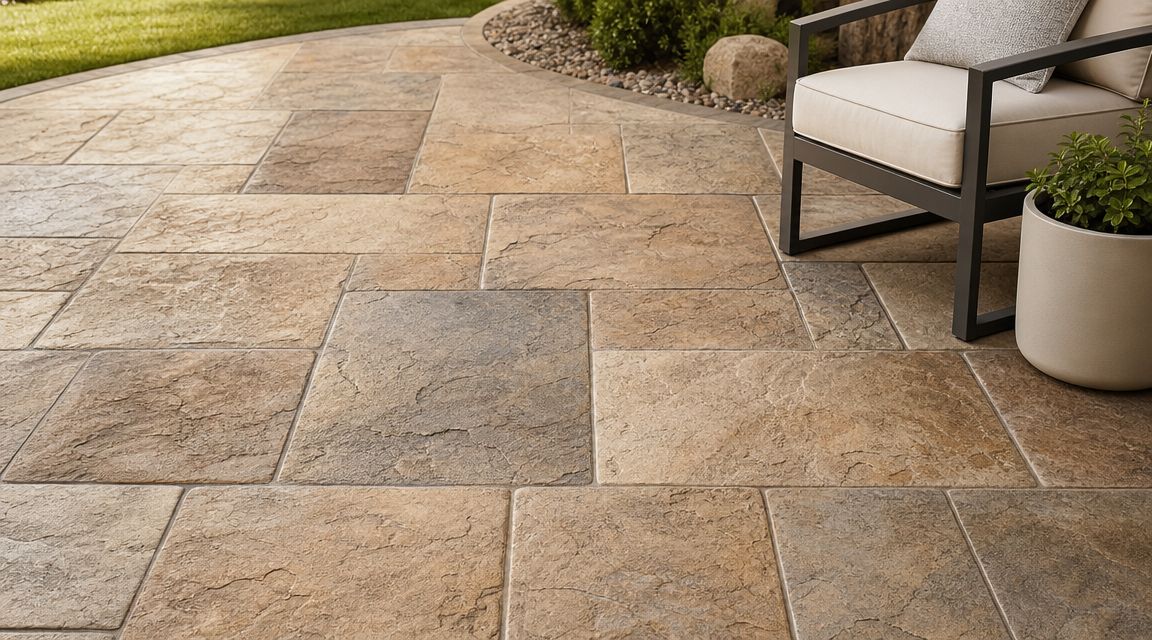
Stamped concrete can mimic stone, brick, or even wood grain. The trade-off is that the finish has to be chosen for Florida weather, not just for how it looks on a sample board. Summer rain, irrigation overspray, humidity, and pool traffic all change how that surface feels underfoot.
Choose the Pattern for Florida Conditions
In this climate, texture matters more than pattern name. A patio that looks great in a dry showroom can become slick fast after an afternoon storm. I usually steer homeowners toward patterns with enough relief to give traction without creating deep low spots that hold dirt and mildew.
These options tend to work well in Central Florida yards:
- Stone-look patterns: A strong fit for traditional and ranch-style homes in Belleview, Inverness, and Beverly Hills.
- Brick-style layouts: Good when the patio needs to connect visually with existing walkways, entry paths, or garden edging.
- Wood-look stamps: A practical choice for homeowners who like the deck look but do not want boards that cup, rot, or need repeated staining.
Practical rule: Approve stamped concrete only after seeing the pattern in full sun, shade, and with water on it.
Installation details matter just as much as appearance. Control joints need to be planned so they work with the stamp layout, and the slab needs proper drainage so water moves off the surface instead of sitting in textured areas. If you're comparing looks with long-term upkeep, this review of stamped concrete driveway pros and cons covers the same material realities homeowners should weigh for patios.
For homes near Crystal River or other damp areas, sealing schedule matters too. A stamped patio usually needs resealing on a regular cycle to help with color retention, stain resistance, and cleanup. Skip that maintenance, and the surface can start looking worn well before the concrete itself has any structural problem.
2. Polished Concrete Patios
Polished concrete patios look sharp. They fit modern homes, clean-lined pool areas, and outdoor seating spaces where the owner wants a sleek finish instead of visible texture. In the right setting, they look intentional and contemporary.
The problem is that polished concrete isn't automatically the best backyard choice in Florida. If the patio stays dry, covered, or partially screened, it can be a strong option. If it's exposed to frequent rain and tracked-in debris, a highly reflective finish often asks more of the owner than expected.
Where Polished Concrete Works Best
This finish works best when the design supports it. Think covered lanais in Summerfield, modern rear patios in Ocala, or homes near Crystal River where the patio transitions directly from indoor tile to outdoor concrete.
What usually works:
- Matte or satin sheen: Easier to live with than a high-gloss surface outdoors.
- Defined drainage: Water can't sit on polished concrete and still feel safe underfoot.
- Intentional furnishing: Modern furniture, planters, and simple lines make this finish look right.
What usually doesn't:
- Open patios under heavy tree cover: Leaves, dirt, and moisture make upkeep harder.
- Busy family yards: Toys, grills, pets, and regular movement can make a polished patio feel too precious.
A polished patio needs the right location. On an exposed backyard slab, traction and maintenance often matter more than shine.
If a homeowner wants a smooth, modern finish, I usually steer them toward lower-gloss outdoor systems instead of pushing for the slickest appearance possible.
3. Colored Concrete Patios
By late summer in Central Florida, a patio shows you whether the color choice was smart. Rain washes across it, oak leaves stain it, pollen settles into corners, and full sun fades anything that was too bold to begin with. Colored concrete can look excellent here, but only if the color fits the house, the exposure, and the amount of upkeep the owner is willing to handle.
For most homes in Ocala, The Villages, and Crystal River, I steer clients toward integral color or a muted stain instead of bright topical color alone. Integral color runs through the concrete, so small chips and wear marks are less obvious over time. Topical color can produce more variation and character, but it usually needs more attention in Florida sun and rain, especially on open patios without much cover.
The best-performing colors are usually the least flashy.
Sandy tan, warm gray, soft brown, and muted terracotta hold up visually in this climate because they work with dust, pollen, and damp conditions instead of highlighting every stain. They also fit a wide range of local home styles without making the patio feel disconnected from the rest of the property.
Here's where I see certain color families work best:
- Stucco and Mediterranean-style homes: Buff, tan, and soft terracotta usually look natural.
- Ranch, traditional, and suburban homes: Warm gray or brown-gray blends tend to age well.
- Backyards with heavy planting and palms: Natural, subdued tones keep the patio from competing with the surrounding greenery.
There is a trade-off. Lighter colors stay cooler in direct sun, which matters in Central Florida, but they can show mildew, red clay, and leaf staining sooner. Darker colors hide some dirt better, yet they absorb more heat and can fade unevenly if the slab gets harsh afternoon exposure. That balance matters more than picking the boldest sample on a showroom board.
If budget is part of the decision, price the color choice with the full finish plan, not as a last-minute add-on. Borders, scoring, sealing, and whether the color is integral or topical all affect the final number. Homeowners comparing options can get a clearer local baseline from this guide on how much a concrete patio costs.
A colored patio works best when the shade is practical first and decorative second. That approach usually gives Central Florida homeowners a patio that still looks right after a few rainy seasons, not just the week it was poured.
4. Exposed Aggregate Concrete Patios
If I had to name one finish that balances looks and traction well for Florida, exposed aggregate would be near the top of the list. It doesn't try too hard, and that's part of why it works. The surface has texture, visual depth, and a more finished appearance than plain broom concrete.
Why This Finish Performs in Wet Weather
Exposed aggregate is widely used because it leaves stone visible at the surface, which creates a coarse texture that improves grip in wet conditions while also giving the patio a more premium look than standard trowel or broom finishes, as noted in this decorative concrete video overview.
That matters in Central Florida, where a patio can go from dry to soaked in one storm.
Good uses include:
- Backyards with pools or splash zones: Better under wet feet than smoother finishes.
- Grill and dining areas: Durable enough for furniture movement and regular traffic.
- Side-yard patios: Useful where runoff and irrigation keep the surface damp.
The trade-off is cleanup. Textured concrete can hold onto debris more than a smooth slab, so occasional washing matters. If you like a natural, stone-forward look for homes in Homosassa, Lecanto, or Hernando, exposed aggregate usually feels more at home than a glossy decorative finish.
5. Concrete Patio with Integrated Seating and Fire Features
A patio changes fast once people start using it at night. The slab is no longer just a place for a table. It becomes the spot where guests gather, kids sit along the edge, and everyone ends up facing one focal point. That is why integrated seating and fire features work so well when they are planned from the start.
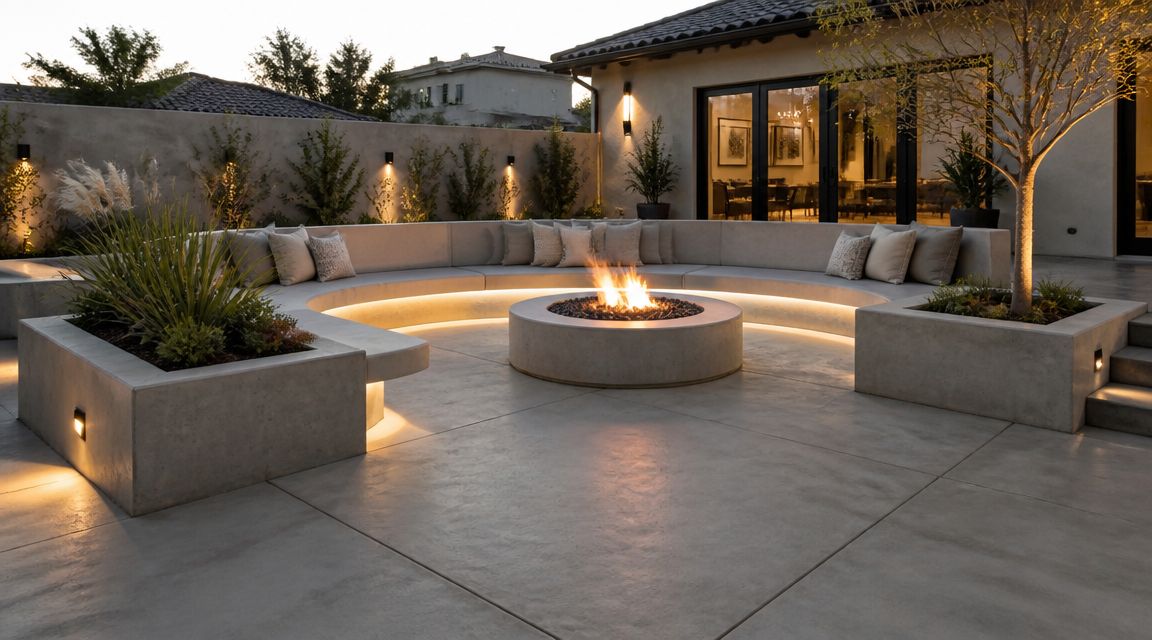
In Central Florida, this style needs more thought than it does in drier climates. Afternoon heat, summer rain, and humidity all affect how comfortable the space feels. A built-in bench that looks good on paper can become unusable if it faces harsh western sun. A fire feature can also sit untouched for months if the patio does not have enough open space around it for airflow, circulation, and furniture placement.
Plan Around Use, Not Just Looks
Integrated concrete seating makes the most sense on patios that host people regularly. I usually recommend it for larger backyards in Ocala, Dunnellon, or The Villages, where homeowners want one defined gathering area instead of a loose mix of chairs, planters, and portable fire pits.
The layout decisions matter more than the decorative finish here:
- Protect utility access: Gas lines, electrical runs, cleanouts, and irrigation controls should stay reachable after the concrete work is done.
- Watch sun exposure: In Central Florida, a bench in late-day sun can be too hot to use for much of the year.
- Leave room to move: Built-in features should frame the patio, not trap guests in a tight seating arrangement.
- Choose the right fire feature: Gas units are cleaner and easier to use in many neighborhoods. Wood-burning features bring more smoke, ash, and cleanup.
There is also a cost trade-off. Built-in benches and fire surrounds reduce the amount of loose furniture you need to buy, but they raise the installation cost and make later changes harder. Once these features are poured and finished, revising the layout usually means demolition, patching, and visible repair lines.
Maintenance is straightforward if the design is right. Keep seat walls slightly pitched so water does not sit on the surface after rain. Use a quality sealer where staining or smoke residue is likely. In humid areas near Crystal River, I also advise homeowners to expect periodic cleaning on shaded sections where mildew can show up faster.
Before committing to a fire feature or built-in wall, it helps to see a layout in action:
Done well, this is one of the strongest concrete patio ideas for backyard spaces because it gives the slab a clear purpose. Done poorly, it creates fixed obstacles that are expensive to correct. For Florida homes, the best results come from treating the patio like a real outdoor living area, with shade, drainage, circulation, and maintenance all figured out before the pour.
6. Permeable Concrete Patios Pervious Concrete
When drainage is the main issue, pervious concrete deserves a serious look. This isn't the right fit for every yard, but in low spots or storm-prone areas, it can solve a problem that decorative finishes alone won't fix.
When Drainage Is the Main Problem
A lot of patio inspiration skips the question homeowners care about most after a hard rain. Which design performs in this climate and budget? That gap matters in Florida-like conditions where surfaces must handle intense sun, frequent rain, and rapid wet-dry cycling, as discussed in this climate-focused patio planning video.
Pervious concrete is worth considering when:
- The yard holds water after storms: Especially on flatter lots.
- Runoff is affecting nearby planting beds: A draining surface can be part of the fix.
- The owner wants function first: It's a technical choice more than a decorative one.
In wet areas, drainage beats decoration. A beautiful patio that holds water is still a bad patio.
The catch is installation tolerance. Base prep, subgrade condition, and long-term maintenance matter more here than with a standard slab. Homeowners in Crystal River and Homosassa who deal with frequent moisture issues should ask for a design that addresses slope and water movement first, then appearance second.
7. Concrete Patios with Decorative Saw Cuts and Scoring
Decorative saw cuts are one of the most overlooked ways to make a patio look custom without relying on heavy stamping. Clean scoring lines can mimic large-format pavers, create geometric layouts, or frame seating zones with a more architectural look.
A Clean Look Without Heavy Texture
This approach works especially well on contemporary homes in Ocala, Inverness, and The Villages where the owner wants visual order instead of a rustic texture. It also pairs well with colored concrete because the lines help break up a large slab and make it feel intentional.
Saw-cut patios make sense when you want:
- A paver-inspired layout without separate units
- Less texture than stamped concrete
- A modern look that's easy to furnish
There's a practical side too. Decorative grooves should work with control joints, not compete with them. If the layout ignores how the slab needs to move, the patio may look good on day one and awkward later.
This style isn't flashy, but it often ages well. For homeowners who want concrete patio ideas for backyard spaces that stay clean-looking over time, saw cuts are one of the better low-drama options.
8. Large Format Concrete Pavers and Slab Patios
Some backyards need the look of concrete without committing to one monolithic slab. Large format concrete pavers and slab systems sit in that middle ground. They give you broad, modern surface lines while still allowing unit-by-unit replacement if needed.
Best Uses for Oversized Units
This style fits homes that lean modern or transitional. It also works on patios where the owner wants visible joint spacing as part of the design instead of trying to hide every seam.
Large units tend to look best when paired with:
- Simple planting beds: Ornamental grasses, gravel bands, or low shrubs.
- Straight edges: Curves usually fight the geometry.
- Minimal furniture clutter: Oversized slabs need breathing room.
The trade-off is base prep. If the foundation under the pavers isn't consistently compacted and graded, big units make unevenness obvious faster than small pavers do. In places like Lecanto, Belleview, and Beverly Hills, where homeowners often want a sharper backyard look without a full decorative slab treatment, this is a strong option.
9. Concrete Patios with Decorative Borders and Transition Areas
A plain slab can look too abrupt in a Central Florida backyard, especially when it runs straight into grass, a pool deck, or a walkway. Borders and transition areas solve that problem by giving the patio a clean edge and a logical connection to the rest of the yard.
I recommend this approach most often on patios that need to tie into more than one surface. In Ocala and The Villages, that usually means a rear lanai slab meeting a walkway, screen enclosure, grill pad, or pool deck. In Crystal River, it can also help break up a larger expanse of concrete so the space feels planned instead of poured all at once.
The key is to design the border before the concrete work starts. Decorative bands, texture changes, and transition panels look intentional when they are built into the layout. Retrofits are usually possible, but they rarely match as cleanly and they add cost fast.
A few border treatments work especially well here:
- Contrasting color bands: Good for outlining the patio and separating seating or dining zones.
- Broom-finish or textured perimeter strips: Useful around pools, outdoor kitchens, or any edge that gets slick during summer rains.
- Transition pads between spaces: A smart way to connect the main patio to a walkway, side yard gate, or grill station without making the whole area look like one large slab.
Material choice matters in this climate. Dark border colors can look sharp, but they also show more surface heat and fading in full sun. Heavier texture improves grip, but it can hold dirt and mildew longer in shaded, humid spots. That is the trade-off. A border has to look good and still be practical in August.
For the best result, match the border style to the house and to the other concrete already on site. A decorative edge that relates to the driveway, front walk, or pool deck usually makes the whole property feel more consistent. If you are updating an older slab and want to add definition without full replacement, this guide to concrete patio resurfacing options near you can help you see what is realistic before you commit.
10. Sealed and Stained Concrete Patios
Not every backyard needs a brand-new patio. Sometimes the slab is structurally usable, but the surface looks tired, blotchy, or dated. In those cases, staining and sealing can be the smarter move.
A Smart Upgrade for Existing Slabs
This option works best when the concrete is basically sound and the owner wants a visual reset instead of full replacement. It's especially common on older patios in Marion County and Citrus County where the backyard layout still works, but the finish no longer does.
One of the biggest missed topics in patio advice is long-term maintenance. Homeowners usually want answers about resealing, cracking, wet safety, freeze-thaw exposure, drainage, and whether resurfacing still makes sense, but many idea lists focus mostly on visuals as highlighted in this maintenance-focused patio overview.
That's why sealed and stained concrete should be approached with clear expectations:
- Good for appearance upgrades: Especially on older plain-gray slabs.
- Less ideal for major structural issues: Stain won't fix a failing base or serious cracking.
- Dependent on prep: Dirty, damp, or damaged concrete won't take color evenly.
If your slab is worn but not beyond saving, this page on concrete patio resurfacing near me is a useful starting point.
Backyard Concrete Patio Ideas, 10-Option Comparison
| Option | 🔄 Implementation Complexity | ⚡ Resource Requirements | ⭐ Expected Outcomes | 📊 Ideal Use Cases | 💡 Key Advantages / Tips |
|---|---|---|---|---|---|
| Stamped Concrete Patios | Moderate–High: skilled stamping, precise timing | Moderate: color additives, molds, sealing every 2–3 yrs | Decorative, durable finish; 25+ years with maintenance | Residential patios, HOA areas, aesthetic upgrades | Affordable vs natural stone; use slip-resistant texture; plan expansion joints |
| Polished Concrete Patios | High: multi-step grinding and sealing; professional expertise | High: specialized equipment, experienced crew, periodic reseal | Sleek, reflective modern surface; low dust, long life | Contemporary homes, luxury patios, commercial spaces | Extremely low maintenance; add non-slip aggregate; prefer satin for traction |
| Colored Concrete Patios | Moderate: integral mix or surface staining; consistent application needed | Moderate: colorants, sealers, careful mixing/application | Uniform color customization; may fade 5–10 yrs without reseal | Homeowners matching exterior palettes; coordinated HOA areas | Choose mid-tones to hide dirt; seal and reseal every 3–5 yrs; test samples |
| Exposed Aggregate Concrete Patios | Moderate–High: careful washing/exposure technique required | Moderate: decorative aggregates, sealing, skilled finishing | Textured, natural look with excellent slip resistance | Resort-style patios, safety-priority outdoor areas | Great non-slip surface; pick aggregate size for comfort; annual sealing |
| Concrete Patio with Integrated Seating & Fire Features | High: detailed design/planning before pour; structural reinforcement | High: custom forms, utilities, extra labor and engineering | Seamless multifunctional space; cost-effective vs separate installs | Outdoor entertaining areas, luxury backyards, HOA gathering zones | Plan layouts early; irreversible placement; ensure drainage and reinforcement |
| Permeable Concrete Patios (Pervious) | High: specialized mix, base design, possible permitting | High: permeable base materials, skilled installers, maintenance plan | Reduces runoff & standing water; supports groundwater recharge | Flood-prone sites, eco-conscious properties, green-certified spaces | Requires soil testing and periodic cleaning; may need permits |
| Decorative Saw Cuts and Scoring | Moderate: timing-critical precision cutting, skilled operator | Low–Moderate: cutting equipment and skilled labor | Clean geometric patterns; controlled cracking | Modern geometric designs; budget-friendly decorative option | Guides cracks aesthetically; cut timing is critical; clean grooves regularly |
| Large Format Concrete Pavers and Slab Patios | Moderate: precise base prep and leveling; heavier handling | High: large units, equipment for placement, proper base materials | Expansive minimalist look with replaceable units; flexible layout | Contemporary homes wanting reconfigurable surfaces | Ensure level compacted base; use polymeric sand; document paver specs |
| Concrete Patios with Decorative Borders & Transitions | Moderate: coordinated finishes and precise transitions | Moderate: additional materials for borders and edging | Enhanced visual hierarchy; defines functional zones | Homes seeking refined details; large patios needing separation | Keep border width proportional; review on-site samples; coordinate materials |
| Sealed and Stained Concrete Patios | Low–Moderate: surface prep and controlled application | Low–Moderate: stains, sealers, cleaning materials | Affordable aesthetic upgrade; UV protection; works on existing slabs | Patio refreshes, budget-conscious upgrades, HOA areas | Test colors first; clean thoroughly before staining; reseal every 2–3 yrs |
Ready to Build Your Dream Backyard Patio?
A lot of Central Florida backyards look fine from the back door and disappoint the moment you step into them. After a hard summer rain, the grass stays soggy, the furniture sinks, and the area that should be used for grilling, relaxing, or hosting friends turns into space you avoid. A well-built concrete patio fixes that, but only if the design matches the property, drainage, and the way the homeowner will use it.
The best concrete patio ideas for backyard projects need to do more than look good on installation day. They need to handle heat, humidity, runoff, mildew, foot traffic, and regular cleaning without becoming a headache. In places like Ocala and Summerfield, lighter colors and cooler-feeling finishes often make more sense. In Crystal River and Homosassa, water movement and drainage usually deserve more attention before decorative details are chosen.
Concrete remains a strong choice because it gives homeowners a lot of design range without giving up durability. It works well for everyday patio use, supports grills and outdoor furniture reliably, and can be finished in ways that fit anything from a simple ranch home in Belleview to a more formal outdoor living area in The Villages. The trade-off is that the slab has to be planned and poured correctly. Poor base prep, weak drainage, or the wrong finish will show up fast in Florida conditions.
Experienced layout planning matters most at this stage. Before choosing stamped patterns, stain colors, borders, or fire features, homeowners should answer three practical questions. How will the patio be used most often? How much upkeep is realistic? What does the site need to prevent standing water, premature wear, or surface slickness?
At Riverside Sealing & Striping, we approach patio work the same way we approach any exterior surface in Marion and Citrus County. Start with site conditions. Then match the finish to the home, budget, and maintenance expectations. That process helps homeowners avoid common mistakes, especially choosing a decorative option that looks great in a photo but performs poorly in a shaded, wet, or high-traffic backyard.
If you are planning a new patio, replacing an aging slab, or weighing resurfacing against full replacement, a professional site review can save time and money.
If you want a backyard patio that is built for Florida weather and installed by a team that understands both residential concrete and pavement performance, contact Riverside Sealing & Striping, LLC for a free estimate and no-pressure consultation. We serve homeowners and property owners across Marion County, Citrus County, and surrounding Central Florida communities with reliable scheduling, clear recommendations, and high-quality workmanship.