
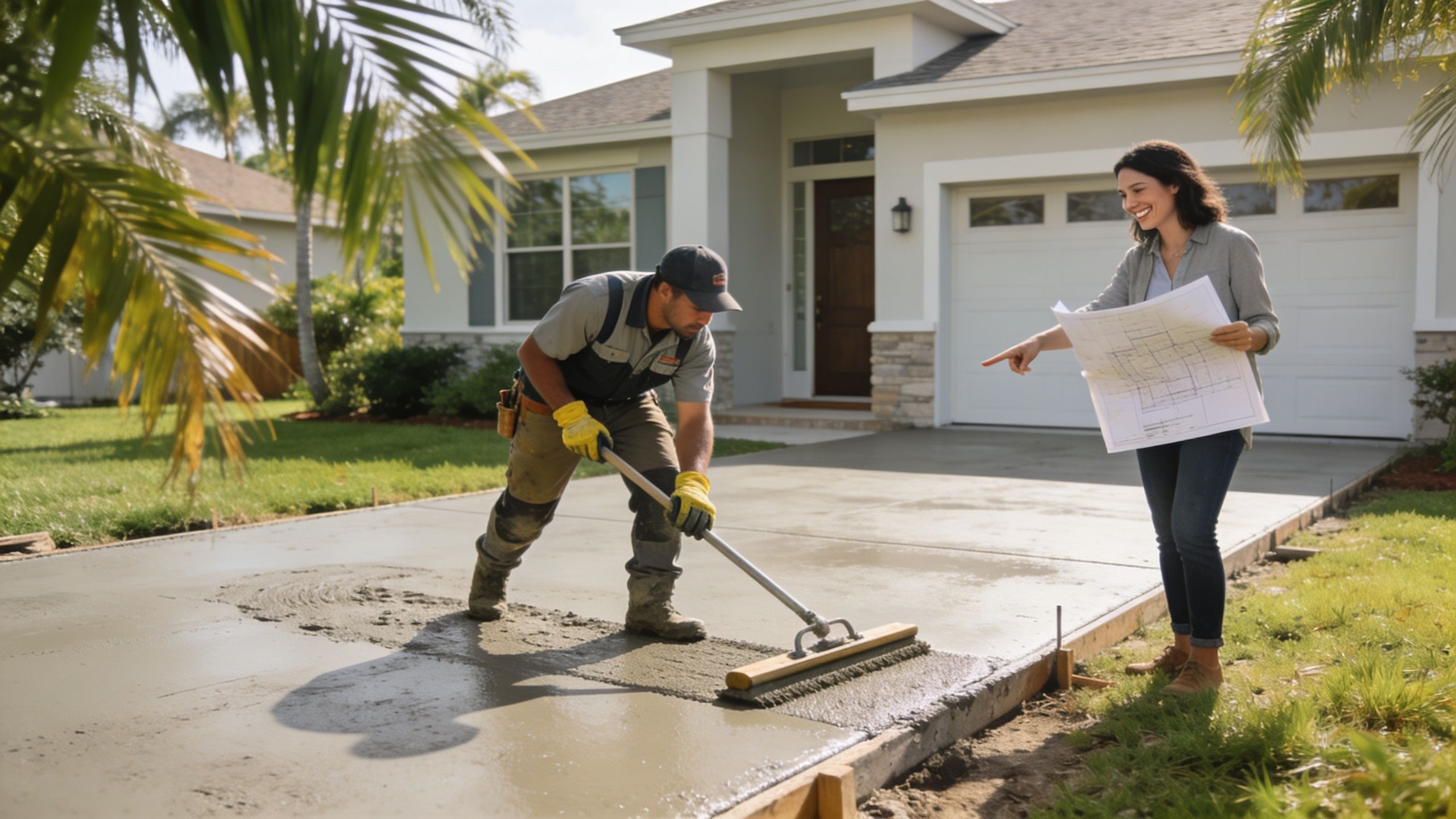
A lot of homeowners start the same way. They step out into the backyard after a rain in Ocala, Belleview, or The Villages, look at the patchy grass or worn dirt behind the house, and think, we need a real outdoor space back here.
That usually turns into a search for concrete patio installation near me.
If you're in Marion County, FL or Citrus County, FL, the answer isn't just finding someone who can pour concrete. The critical question is who understands Central Florida ground conditions, drainage, heat, and how those things affect the slab years after the crew leaves. A patio can look good on pour day and still fail early if the base, grade, and finish weren't chosen for places like Dunnellon, Inverness, Homosassa, Lecanto, Beverly Hills, Hernando, Crystal River, Silver Springs, or Summerfield.
Homeowners usually ask about price first. That's fair. But the longer-lasting patios are decided by what happens below the surface and how the slab is planned for Florida weather. That's where generic advice falls short.
Your Guide to Concrete Patio Installation in Central Florida
A patio project often starts with a simple goal. You want a clean place for a grill, a table, a couple of chairs, or a spot where the family can sit outside without tracking sand and mud back into the house.
In Central Florida, that simple project gets more technical fast. A patio behind a home in Ocala may deal with sandy soil and fast drainage. A yard closer to Inverness or Crystal River may need more attention to moisture movement and runoff. Around The Villages, a homeowner may care just as much about appearance and ease of maintenance as structural performance. The slab still has to handle all of it.
That’s why local patio work should be approached as a site-built slab, not a commodity purchase.
Practical rule: A patio is only as good as the grade, base, and water management underneath it.
A good install balances four things:
- Use of the space. Dining area, poolside sitting area, walkway connection, or screened patio extension.
- Site conditions. Soil behavior, drainage path, and how water moves during heavy rain.
- Finish selection. Texture, appearance, heat reflection, and slip resistance.
- Long-term upkeep. Sealing, crack repair, and whether the design makes future maintenance simple or expensive.
Most online guides talk about shape and color first. That’s backwards for this region. In Marion County, FL and Citrus County, FL, the first decisions should be where water goes, how the sub-base is built, and whether the slab layout fits the yard without trapping runoff near the house.
If you get those parts right, the patio becomes one of the more practical outdoor upgrades you can make.
Decoding Concrete Patio Costs in Central Florida
Homeowners usually want a straight answer on price. For 2026 projections, the average cost to install a concrete patio ranges from $10.30 to $12.64 per square foot for basic installation, and a 320-square-foot patio typically costs $1,900 to $5,100, while stamped finishes can add $5 to $15 per square foot. Labor often accounts for 50% of the total project cost, according to Homewyse concrete patio cost data.

What changes the final quote
The square-foot number helps, but it never tells the whole story. Two patios with the same footprint can price out differently if one yard needs removal work, more grading, or a stronger approach to drainage.
A quote usually moves based on a few practical conditions:
- Size and layout. A simple rectangle is easier to form and finish than a patio with curves, steps, or multiple connected sections.
- Access to the backyard. Tight gates, fencing, or limited truck access can slow labor.
- Site prep needs. Soft spots, uneven grade, existing concrete removal, and drainage corrections all affect labor time.
- Finish choice. Basic broom-finished concrete costs less than decorative work like stamping.
- Edge details and transitions. Tying the patio into a lanai, sidewalk, or doorway often adds labor.
Basic patio versus upgraded patio
For many homes in Summerfield, Beverly Hills, or Lecanto, a standard slab is the practical choice. It's clean, durable, and easier to maintain. If the goal is function first, a basic finish usually gives the best value.
A decorative patio can be the right move if appearance matters more and the maintenance plan is realistic. Stamped concrete looks great when it’s done well, but the upfront cost is higher and the finish choice matters more in full Florida sun.
A low quote can still be expensive if it leaves out site prep, reinforcement, or drainage corrections that should've been included from the start.
How to read a patio estimate
When reviewing an estimate, don't just compare the total. Compare the scope.
Look for whether the contractor explains excavation, base preparation, slab thickness, reinforcement, finish type, and cleanup. If a quote is vague, it becomes hard to tell the precise nature of your purchase. For homeowners trying to understand that scope in more detail, this breakdown of concrete patio cost factors is useful before signing anything.
A useful way to review bids is this:
| What to compare | Why it matters |
|---|---|
| Base prep included | This affects long-term slab stability |
| Slab thickness stated | Prevents vague pricing and shortcuts |
| Reinforcement specified | Helps separate durable work from bare-minimum work |
| Finish listed clearly | Avoids confusion about what “decorative” includes |
| Drainage work noted | Important in moisture-prone yards |
In short, cost matters. But in Central Florida, the cheapest patio often becomes the one that needs repair work first.
The Professional Installation Process Explained
A professional patio install should look organized before the concrete truck ever shows up. The crews that get the best results spend real time on layout, grade, and base work because that's what determines whether the slab stays stable.

The site visit and layout
The first step is walking the property and figuring out how the patio fits the house and yard. That includes measurements, elevations, door thresholds, water flow, and how people will use the space.
A solid layout answers practical questions early. Will runoff move away from the slab? Will the patio sit too high against the house? Is there enough room for furniture without crowding doors or walkways?
Excavation and base preparation
This is the part homeowners rarely see once the project is finished, but it's where patio quality is won or lost. For a durable patio, the slab needs excavation for a 4 to 6 inch compacted gravel subbase beneath a minimum 4 inch thick slab, and skipping that step leads to up to 50% higher failure rates according to QUIKRETE patio installation guidance.
In Central Florida, that matters because soil movement and drainage issues don't always show up immediately. A slab can look fine early on and then start showing settlement or cracking after repeated wet and dry cycles.
Common problems during this stage include:
- Loose soil left in place. That creates weak spots under the slab.
- Poor grading. Water sits where it shouldn't.
- Thin base material. The slab has less support than it needs.
- No real compaction. The gravel is there, but it isn't doing the job.
If a contractor talks mostly about finish color and barely mentions the sub-base, you're hearing the wrong priorities.
Forms, reinforcement, and the pour
Once the base is set, the crew builds forms to lock in the patio shape and final elevation. Then they place reinforcement based on the slab design. Reinforcement doesn't replace proper base prep, but it works with it.
The pour itself has to be timed and managed well. Crews need to place, level, and finish the concrete before the surface tightens too much in the heat. That matters in places like Ocala and Silver Springs where hot conditions can speed up the surface set.
A good crew also plans for:
- Control joints to help manage natural cracking
- Consistent slab thickness instead of thin edges or birdbaths
- Clean transitions at doors, walks, and existing concrete
- A finish matched to use, especially where rain and foot traffic combine
Here’s a quick look at the kind of field process homeowners should expect:
Finishing and curing
The last phase isn't just cosmetic. Finish texture affects traction, comfort, and maintenance. Curing affects strength development and long-term durability.
That’s why rushing the final stage causes trouble. Homeowners should expect clear guidance on when it’s okay to walk on the patio, place furniture, or start using it normally. The slab may look finished in a day, but performance depends on what happens after the pour too.
Choosing the Right Materials and Finishes for Florida Weather
The right patio finish in Florida needs to do more than look good. It has to handle sun, rain, foot traffic, and daily use without becoming slick, fading unevenly, or turning maintenance into a constant chore.
Modern concrete patios are designed to withstand 4,000+ PSI loads, and with proper installation plus UV-resistant finishes that reduce cracking by 40% in Florida-like climates, a concrete patio can reach a 30+ year lifespan, according to Angi's concrete patio cost and durability overview.
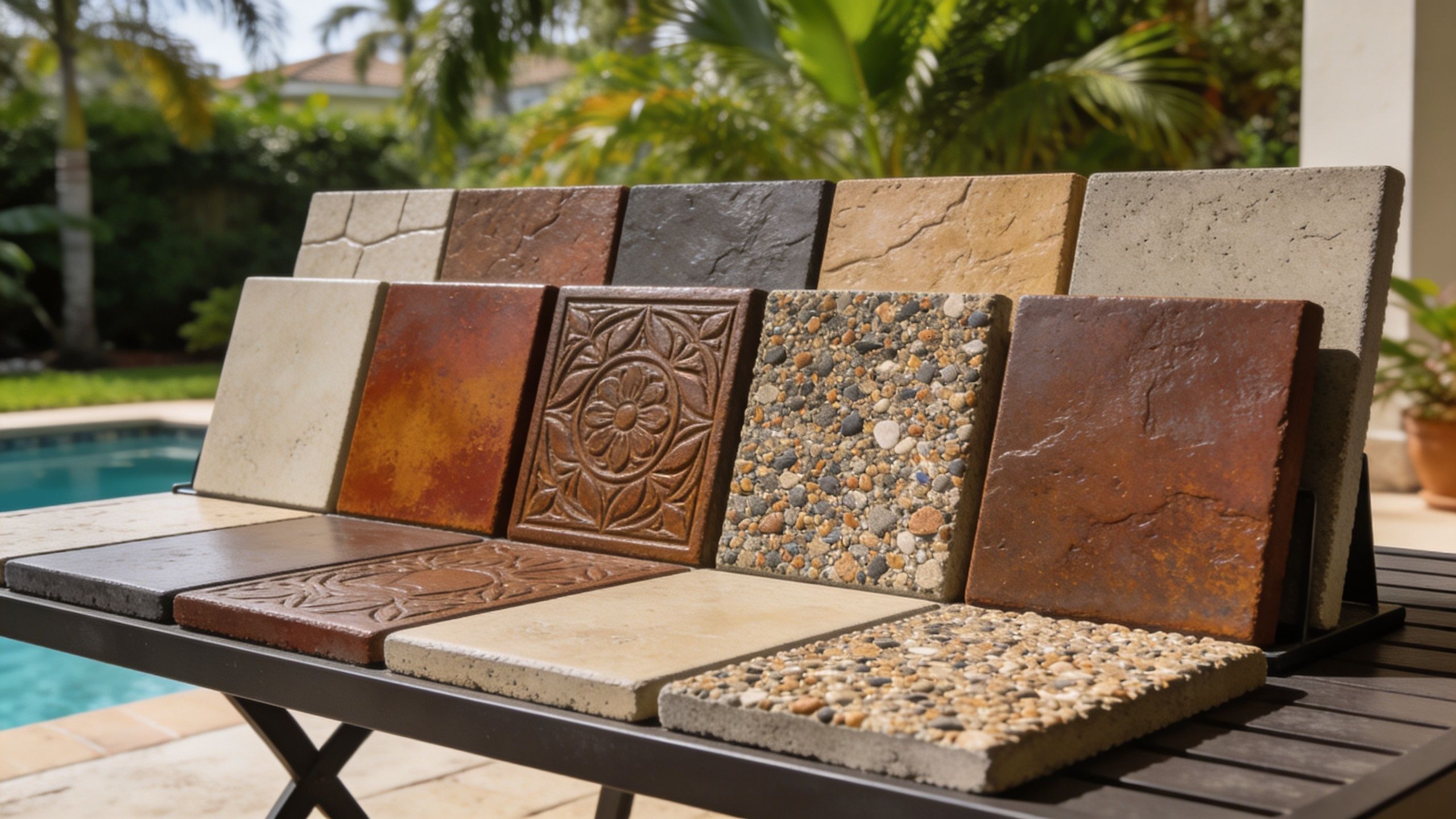
The finish that works best depends on how you use it
A broom finish is often the most practical choice for homes in Dunnellon, Homosassa, and Hernando. It gives traction, hides minor dust and wear well, and fits most backyard spaces without adding maintenance complexity.
A smooth trowel finish can look clean, but it isn't always the best fit outdoors in a rain-prone area. If the patio will see water often, many homeowners decide the cleaner look isn't worth the reduced grip.
Stamped concrete appeals to homeowners who want a more decorative result. It can mimic stone or brick patterns and can work well in visible outdoor living areas. The trade-off is simple. It costs more, and the finish quality has to be right from the start because decorative work shows mistakes more clearly than a standard slab.
A simple comparison
| Finish type | Best use | Main trade-off |
|---|---|---|
| Broom finish | Everyday patio use, grill areas, walkouts | More functional than decorative |
| Smooth finish | Covered areas with limited moisture exposure | Can be less forgiving when wet |
| Stamped finish | Higher-visibility entertaining spaces | Higher upfront cost and more finish sensitivity |
What works in Central Florida
For open patios in full sun, the safer choice is usually a finish with texture and a maintenance plan that includes sealing when needed. That's especially true in places like Crystal River and The Villages where outdoor spaces get used often and weather exposure is constant.
Decorative concrete should still be chosen like a working surface, not just a design feature.
Color selection matters too, but performance comes first. The slab needs to stay comfortable to use, manageable to clean, and stable through repeated weather cycles. A patio that looks sharp but becomes slick or hard to maintain usually ends up disappointing the homeowner.
Site Prep and Permitting in Marion and Citrus County
The local part of patio construction starts before the forms go down. A slab in Marion County, FL doesn't always behave like one in Citrus County, FL, even when the patios are similar in size.
In Central Florida, high water tables and sandy soils create unique drainage demands, and proper grading plus base preparation are critical to prevent settling and water damage in moisture-prone areas of Marion and Citrus County, as noted in this regional drainage and base prep discussion.
Why local soil and water conditions matter
Sandy ground can drain quickly, which sounds helpful until you get uneven support or erosion around the patio edges. In lower or wetter areas near Inverness, Dunnellon, and parts of Citrus County, water management can become the deciding factor in whether the slab stays level.
That’s why a one-size-fits-all install doesn’t work well here. A contractor should be checking slope, runoff direction, and where water leaves the property during a heavy storm.
Local site prep often includes attention to:
- Finished grade away from the house
- Patio elevation relative to doors and lanais
- Drainage path around slab edges
- Base stability in soft or moisture-prone areas
If you want to understand what proper prep should look like before concrete is poured, this guide on how to prepare ground for a concrete slab gives a practical overview.
Permitting and contractor responsibility
Permit requirements can vary based on scope, municipality, and exactly how the patio ties into the property. Some homeowners assume small flatwork never needs review. That's not always a safe assumption.
A licensed and insured contractor should be prepared to explain whether permitting applies, what local inspection expectations look like, and how the layout relates to code concerns such as drainage or proximity to structures. That’s especially important in growing areas like Ocala, Belleview, and surrounding communities where residential improvement activity is common.
What a homeowner should expect locally
A local contractor should be able to walk a property and talk plainly about what the site needs. Not just the slab size. The site itself.
That means they should discuss:
- Where water goes now
- What changes once the patio is added
- Whether adjacent sidewalks or driveways affect drainage
- How access and yard condition affect construction
The better patio projects in Marion and Citrus counties don't start with concrete. They start with reading the lot correctly.
Questions to Ask Your Concrete Contractor Before You Hire
A homeowner doesn't need to know how to finish concrete to spot whether a contractor knows what they're doing. The right questions reveal that fast.
Most contractors talk about installation price first. Fewer talk about lifecycle cost, sealing, or how repairs may develop over time. That's a mistake, because asking about total cost of ownership, including sealing frequency and repair trajectory, gives a clearer view of the return on your patio investment in Central Florida's climate, as discussed in this contractor content gap analysis on patio maintenance planning.
Ask questions that expose the process
Start with the basics, then move into the field details. If the answers stay vague, that's useful information.
Ask things like:
- Are you licensed and insured in Florida. This should be easy for them to answer clearly.
- How do you prepare the base for a patio in this area. Listen for excavation, compaction, grading, and support. Not just “we pour a solid slab.”
- How will you handle drainage on my property. The answer should relate to your specific lot.
- What type of reinforcement and control joint plan do you use. Good contractors can explain both without dancing around it.
- What finish makes sense for sun and rain exposure in my yard. A contractor should match the finish to use conditions, not just upsell decorative work.
- What maintenance should I expect after installation. Their response shows if they consider the project beyond the day of installation.
Watch how they answer
The content of the answer matters, but so does the tone. A qualified contractor should be able to explain technical decisions in plain language.
If you're building a shortlist, this checklist of questions to ask a concrete contractor is a good starting point. Companies like Riverside Sealing & Striping, LLC that handle both concrete work and asphalt maintenance in Central Florida should be able to discuss site prep, drainage, finishing, and long-term surface care without treating those topics like afterthoughts.
Good contractors don't get irritated by detailed questions. They expect them.
What separates a solid hire from a risky one
A risky contractor usually sounds confident but nonspecific. A solid one ties recommendations back to your yard, your drainage, and how you plan to use the patio.
That matters whether you're in Summerfield, Lecanto, Beverly Hills, or The Villages. The project may be residential, but the decision should still be made like an investment.
Frequently Asked Questions About Concrete Patios
How long can a concrete patio last in Florida
With proper installation, the right finish, and ongoing care, a concrete patio can last a long time in Florida conditions. The biggest factors are how well the base was prepared, whether drainage was handled correctly, and whether the surface gets maintained instead of ignored until damage spreads.
What maintenance does a new patio usually need
Most homeowners should expect periodic cleaning, monitoring for small cracks, and sealing when appropriate for the finish and exposure. The exact schedule depends on the patio design, sun exposure, and how much weather and traffic the slab sees. A patio that gets maintained early is usually easier and less expensive to keep in good condition than one that's neglected.
Can a new patio be poured over an old cracked slab
Sometimes homeowners ask for this to save time or avoid removal. In most cases, that's not the best approach if the existing slab has movement, cracking, or drainage issues. Covering an underlying problem usually doesn't solve it. It just hides it until the new surface starts showing the same failure pattern.
What finish is safest for rain-prone backyards
For many outdoor patios in Central Florida, a textured finish is the safer practical choice. That’s one reason broom-finished slabs remain common. They tend to provide better footing for everyday backyard use, especially where the surface gets wet often.
How soon can a new patio be used
That depends on curing conditions, weather, and the contractor's instructions. Walking on the slab may be allowed before full use, but furniture, grills, and heavy loading should wait until the concrete has had enough time to gain strength. Homeowners should always follow the installer’s timeline instead of assuming the slab is ready just because it looks dry.
If you're planning a patio in Ocala, Dunnellon, Crystal River, Inverness, Homosassa, or nearby communities in Marion and Citrus County, Riverside Sealing & Striping, LLC offers free, no-pressure consultations for concrete patio installation, slabs, and related site work. As Concrete and Asphalt Experts in Marion and Citrus County, the company helps homeowners evaluate drainage, base preparation, finish options, and long-term maintenance before the project starts.