
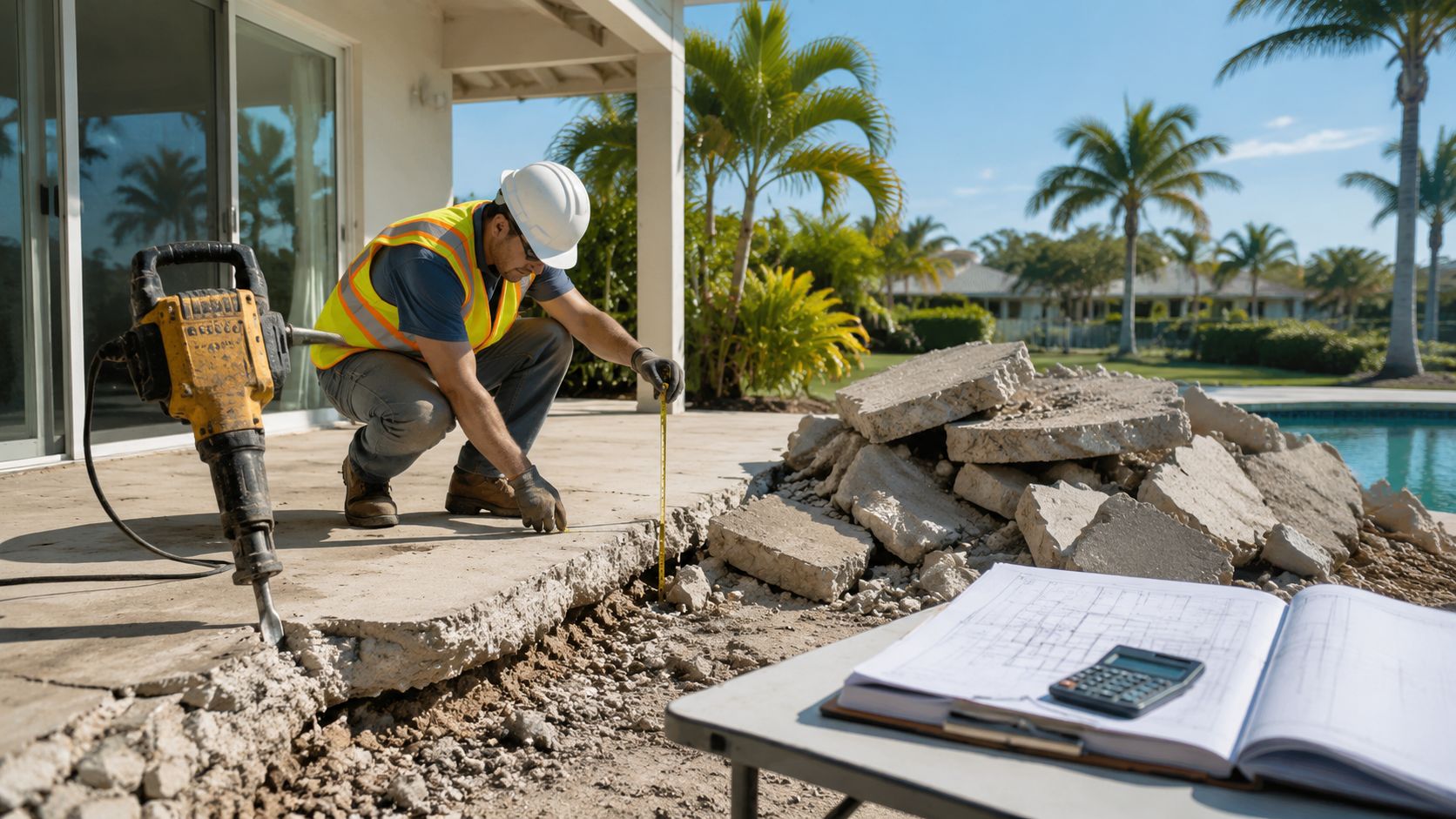
Concrete patio removal usually runs $2 to $8 per square foot, so if you're looking at an older slab in your backyard, that range gives you a practical place to start. For a typical 20' x 20' patio, removal often falls around $1,200 to $3,000, though the final number depends on the slab itself and how easy it is to get it out.
If you're in Ocala, Dunnellon, Crystal River, Inverness, or nearby parts of Marion County, FL and Citrus County, FL, you're probably dealing with one of the same issues we see all over Central Florida. A patio gets cracked, stained, uneven, or outdated, and the old slab has to go before anything better can replace it. That part sounds simple until you start asking what removal costs, whether permits are involved, and how the debris gets hauled off.
Many homeowners get stuck. One contractor gives a quick number over the phone. Another says they need to see it. Both can be right.
Concrete patio removal cost is mostly driven by square footage, but patio size is only the starting point. Thickness, steel reinforcement, access through side gates, trailer space, disposal logistics, and local permit rules in places like Belleview, Summerfield, Homosassa, Lecanto, Beverly Hills, Hernando, Silver Springs, and The Villages can all change the job.
Table of Contents
- Your Guide to Concrete Patio Removal Costs
- How Much Does Concrete Patio Removal Cost
- Key Factors That Influence Your Final Price
- DIY Demolition vs Hiring a Local Professional
- Local Considerations for Marion and Citrus County
- Getting an Accurate Estimate The Riverside Process
- Frequently Asked Questions About Patio Removal
- Ready to Reclaim Your Backyard
Your Guide to Concrete Patio Removal Costs
You walk into the backyard, see cracks spreading across the patio, and start doing the math. The new pavers or fresh slab are the fun part. The part that catches homeowners off guard is getting the old concrete out of the way.
In Marion and Citrus counties, patio removal prices often hinge less on the patio itself and more on how the crew can reach it, break it up, and haul it out without tearing up the rest of the yard. A slab tucked behind a screen enclosure or fenced gate usually costs more to remove than one with open access from the driveway. The same goes for patios poured thicker than expected or tied into nearby walkways.
That is why the first useful question is not “What is the average price?” It is “What is this specific patio going to take to remove?”
Florida conditions matter here. Around Ocala, Dunnellon, Inverness, and Crystal River, I regularly see patios shifted by sandy soil movement, tree roots, washout, and long-term drainage issues. Some come out in manageable sections. Others are tied together with mesh, rebar, or extra-thick edges that slow the job and add weight to every load going to disposal.
A real estimate should account for four practical things:
- how large the patio is
- how thick and reinforced the concrete is
- how easy it is to access the work area
- where the broken concrete is going after demolition
Permits and local disposal logistics can change the total too, especially if the removal is part of a larger backyard renovation. In this area, those details are not side issues. They are often the difference between a straightforward one-day job and a project that takes more labor, more hauling, and more coordination than the homeowner expected.
The next step is to break down the actual price range and show what tends to push a quote up or keep it under control.
How Much Does Concrete Patio Removal Cost
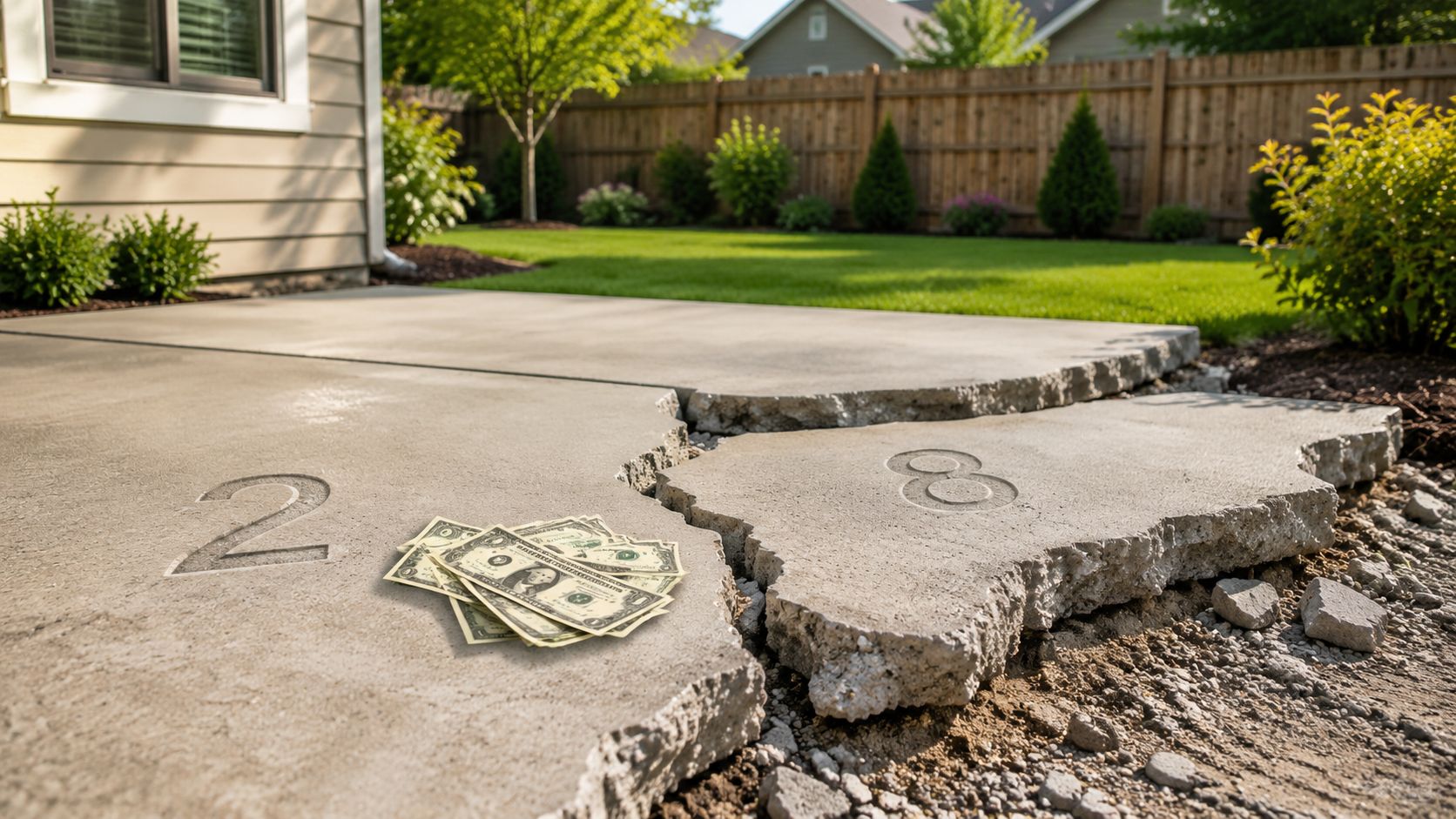
For budgeting, treat patio removal as a per-square-foot job first, then adjust for what the crew finds on site. In Marion and Citrus counties, that usually gives homeowners a usable starting point before access, disposal, or permit details are added.
Baseline budget by patio size
| Patio size | Square footage | Baseline removal range |
|---|---|---|
| Small patio | 100 sq ft | $200 to $800 |
| Medium patio | 200 sq ft | $400 to $1,600 |
| Large patio | 400 sq ft | $800 to $3,200 |
Those numbers are a starting range, not a final quote.
On a clean, open patio with standard concrete, the price often stays near the lower half of the range. Once the slab is thicker, reinforced, hard to reach, or tied into another surface, the job slows down and the cost climbs. That is why two patios with the same square footage can land far apart on price.
In this part of Central Florida, access changes quotes more than homeowners expect. A backyard with wide gate access and a short haul path is a different job than a patio boxed in by fencing, a pool screen, pavers, planters, or low tree limbs. If we have to use smaller equipment, protect nearby surfaces, or wheel debris out by hand for part of the job, labor goes up quickly.
Disposal is another swing factor. Concrete is heavy, and dump fees are usually charged by weight. A patio that breaks into clean pieces and loads directly into a trailer is more efficient than one mixed with soil, roots, old mesh, or demolition debris from a larger yard project.
Some patios also should not be removed at all. If the slab is structurally sound and the problem is mostly cosmetic, concrete patio resurfacing options may cost less than full demolition and replacement.
A solid estimate should show where the money is going: demolition labor, equipment, haul-off, disposal, and any site-specific work needed to protect the rest of the yard. That level of detail matters more here than a generic national average because local dump routes, neighborhood access, and county requirements can change the final number fast.
Key Factors That Influence Your Final Price
A patio removal quote can change fast once the crew sees what is in the backyard. Two slabs that look similar from the house can price very differently in Marion or Citrus County because the work is affected by what is under the concrete, how the debris gets out, and what the county or neighborhood requires on the way.
What changes the number fast
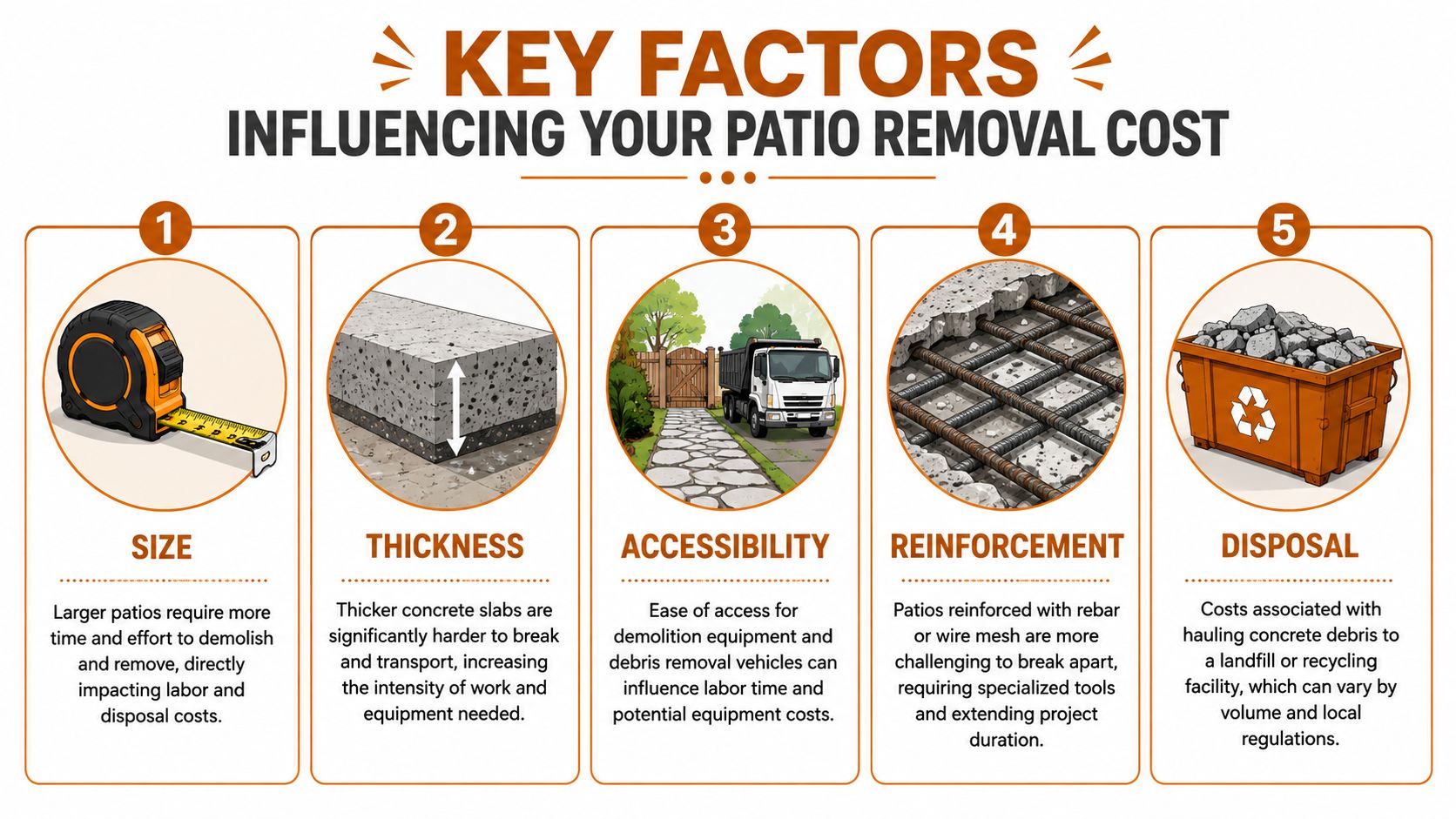
Industry pricing gives a useful starting point. Unreinforced concrete can fall near $2 to $4 per square foot, reinforced removal commonly climbs to $4 to $7 per square foot, thick concrete over 6 inches can roughly double labor and equipment needs, disposal fees are often cited at $51 to $100 per ton, and permit costs may add $38 to $300 depending on local rules, as outlined in LawnStarter's concrete removal price guide. Those numbers are only a baseline. Local access, haul distance, and disposal logistics often decide where a real quote lands in Central Florida.
On actual jobs, these are the cost drivers that move the total the most:
- Square footage: Bigger patios create more demolition time, more trailer loads, and more disposal weight. This part is straightforward.
- Slab thickness: A basic patio pours and breaks differently than a heavy slab that was built for a hot tub, enclosure, or future addition. Thickness affects production more than homeowners expect.
- Wire mesh or rebar: Reinforcement slows everything down. Breaking concrete is one step. Cutting and separating reinforced pieces is another.
- Access to the backyard: A clean path through a wide gate is cheaper than hand-carrying chunks through a narrow side yard in Ocala, Dunnellon, Beverly Hills, or Crystal River. Tight access can also force the use of smaller equipment.
- Disposal and haul-off: Concrete is heavy, and weight adds up quickly at the dump. Mixed debris, dirt stuck to the slab, or long haul routes can push the total higher than the break-out itself.
Permit and site conditions can also matter more here than a national average suggests. In Marion and Citrus counties, some properties have HOA rules, utility concerns, septic layouts, or drainage conditions that need to be checked before demolition starts. That does not affect every patio, but it can affect yours.
Why DIY often looks cheaper than it is
DIY removal looks affordable on paper because labor is missing from the math. The hard part is that homeowners still pay in tool rental, hauling, dump fees, time, and physical wear. If the slab is thicker than expected or tied into another surface, the savings can shrink fast.
I see the same sticking points over and over. The slab has hidden mesh. The debris route crosses lawn, pavers, or irrigation. The concrete gets broken up, but there is still a full day of loading and disposal left.
If the slab is still structurally sound and the issue is appearance rather than failure, concrete patio resurfacing options may make more financial sense than full removal. Demolition usually makes sense when the patio has major cracking, bad slope, settlement, drainage problems, or no longer works with the layout you want.
Removal is the right investment when the existing slab will cause problems for the next phase of the yard.
DIY Demolition vs Hiring a Local Professional
Homeowners often ask the same fair question. Can I remove this patio myself and save money, or is it smarter to hire it out?
The answer depends less on motivation and more on the slab. A small patio with no reinforcement and clear access is very different from a backyard slab tied into steps, footings, fencing, or tight side-yard access.

What a DIY removal really involves
DIY demolition usually means some combination of a sledgehammer, electric jackhammer, pry bar, wheelbarrow, heavy gloves, eye protection, and a hauling plan for every piece you break out. It also means you're responsible for protecting nearby irrigation lines, fences, AC pads, pool screens, and any finished surfaces along the route out.
A homeowner can absolutely do that. Many start the job with confidence.
Then they hit wire mesh. Or they realize the debris path runs through a narrow gate and across the lawn. Or they get the slab broken but still have a mountain of concrete sitting in the yard.
What a local pro handles for you
A professional crew comes at the project differently. They're evaluating access, slab condition, likely reinforcement, debris staging, and haul-out before the first tool starts. They also plan for where equipment can sit without tearing up more of the property than necessary.
That matters in Marion County and Citrus County because site conditions vary a lot. A patio in Ocala may have tighter neighborhood expectations and more formal permit steps. A job outside Dunnellon or near Homosassa may have easier staging but longer hauling routes and different disposal logistics.
A licensed and insured contractor also reduces your exposure if something goes wrong during demolition. If you're comparing bids, this guide on questions to ask a concrete contractor before hiring is a practical place to start.
Hiring a pro isn't only about convenience. It's often about avoiding hidden labor, disposal headaches, and damage to the property around the slab.
Local Considerations for Marion and Citrus County
Patio removal in Central Florida is never just about the slab. Local rules, hauling routes, and neighborhood layout can shape the job as much as the concrete itself.
Permit requirements can vary depending on where the property sits and what's being removed or replaced. In some areas around Ocala, there may be closer review of site access, debris handling, or follow-up work tied to a larger improvement. In smaller communities like Inverness or Dunnellon, the process may feel more straightforward, but homeowners still need to verify what's required before demolition starts.
What to expect during a local consultation
A local contractor usually looks at three things right away.
First, they check whether the patio stands alone or ties into something else, such as a screened enclosure, walkway, steps, or another slab. Second, they inspect the route for equipment and debris removal. Third, they flag anything that could complicate cleanup, including irrigation heads, septic components, fences, or soft ground after heavy rain.
That last point matters in Central Florida. Summer storms can change yard conditions fast. A property in Crystal River, Lecanto, or Beverly Hills might have easy access in dry weather and a much trickier haul path after rain.
For homeowners, the best consultation feels clear and practical. The contractor measures the patio, checks the edges, asks how the area will be used next, and explains whether the project needs hand demolition, machine assistance, or extra protection for nearby features. That's the kind of local knowledge that helps avoid surprises.
Getting an Accurate Estimate The Riverside Process
A good estimate should tell you more than a price. It should tell you what the crew expects to find, what's included, what could change the cost, and what the site will look like when they leave.
For homeowners replacing an old patio, this is also the right time to discuss what comes next. Removal is one part of the project. Base prep, grading, drainage, and the new surface matter just as much if you want the finished space to last in Florida conditions.

What should be included in a real estimate
When a contractor visits the property, the estimate should be built around the site, not just a rough guess by phone. That means checking slab size, visible thickness at edges, likely reinforcement, access points, debris staging, and whether nearby structures need protection.
A solid estimate should also address these basics:
- Scope of removal: What exactly is coming out, and what stays.
- Haul-off and disposal: Whether cleanup and debris removal are included.
- Site protection: How the crew will handle lawns, gates, irrigation, and nearby concrete.
- Permit discussion: Whether local approvals may be needed before work starts.
- Replacement planning: If the patio is being rebuilt, how removal ties into the next phase.
Riverside Sealing & Striping, LLC handles patio and slab removal as part of its broader concrete work in Central Florida. As Concrete and Asphalt Experts in Marion and Citrus County, the company can also discuss replacement options for the cleared area during the same visit.
Questions worth asking before you approve the job
If you're comparing contractors, ask direct questions and listen for direct answers.
- Are you licensed and insured: You want a clear yes, not a vague response.
- How will you access the patio: This reveals whether the crew has thought through the job.
- What happens if the slab is thicker or reinforced: A contractor should explain how that would be handled.
- Is disposal included in the quote: Don't assume.
- Will the site be left ready for the next step: That matters if you're planning a new pour, pavers, sod, or landscaping.
One more point matters in this area. Reliable scheduling counts. Homeowners in The Villages, Silver Springs, Hernando, and surrounding communities often coordinate patio removal with fence work, pool work, landscaping, or a new concrete install. A clear timeline helps the entire project move without unnecessary downtime.
Frequently Asked Questions About Patio Removal
How long does a typical patio removal take
That depends on the patio's size, thickness, reinforcement, and access. A smaller slab with open access can move quickly. A reinforced backyard patio with tight access and careful haul-out takes longer. The accurate answer comes from an on-site look, not a blanket promise.
What happens to the old concrete debris
The debris is usually hauled away for proper disposal or recycling, depending on the load and local handling options. Homeowners shouldn't assume broken concrete can be left curbside or stacked at the back of the lot without a plan.
Can new concrete be poured over the old patio
Usually, that's not the fix homeowners hope it will be. If the existing patio is cracked, moving, settling poorly, or draining the wrong way, pouring over it tends to carry the same problems into the new surface. In many cases, removal is the cleaner long-term solution.
Will removal equipment damage my lawn or sprinkler system
It can if the work is rushed or poorly planned. A careful crew checks access paths, identifies sprinkler heads and shallow lines where possible, and stages debris in a way that limits unnecessary damage. Some impact is possible on any demolition job, but planning reduces it.
Should I remove the patio or resurface it
That depends on the slab condition. If the concrete is basically sound and the issue is mostly appearance, resurfacing may be worth discussing. If the slab is unstable, heavily cracked, poorly sloped, or failing structurally, removal is usually the better path.
Ready to Reclaim Your Backyard
Old patios rarely get better with time. If the slab is cracked, uneven, stained beyond saving, or in the way of a better layout, removal is often the first smart move. The main thing to remember is that concrete patio removal cost starts with square footage, then shifts based on slab thickness, reinforcement, access, disposal, and local permit requirements.
For homeowners in Marion County, FL and Citrus County, FL, local conditions matter. A patio in Belleview isn't always the same kind of job as one in Homosassa or Crystal River, even if both look similar from the fence line. That's why an on-site visit matters more than a quick guess over the phone.
If you're still weighing options, it also helps to compare what a new concrete patio may cost after removal. Seeing the full picture makes budgeting easier.
The right contractor should give you a clear scope, explain the likely variables, and help you decide whether removal, replacement, or another concrete solution makes the most sense for your property.
If you need a clear, no-pressure quote for patio removal or replacement, Riverside Sealing & Striping, LLC offers free on-site estimates for homeowners and property managers across Marion County, Citrus County, and surrounding Central Florida areas.