
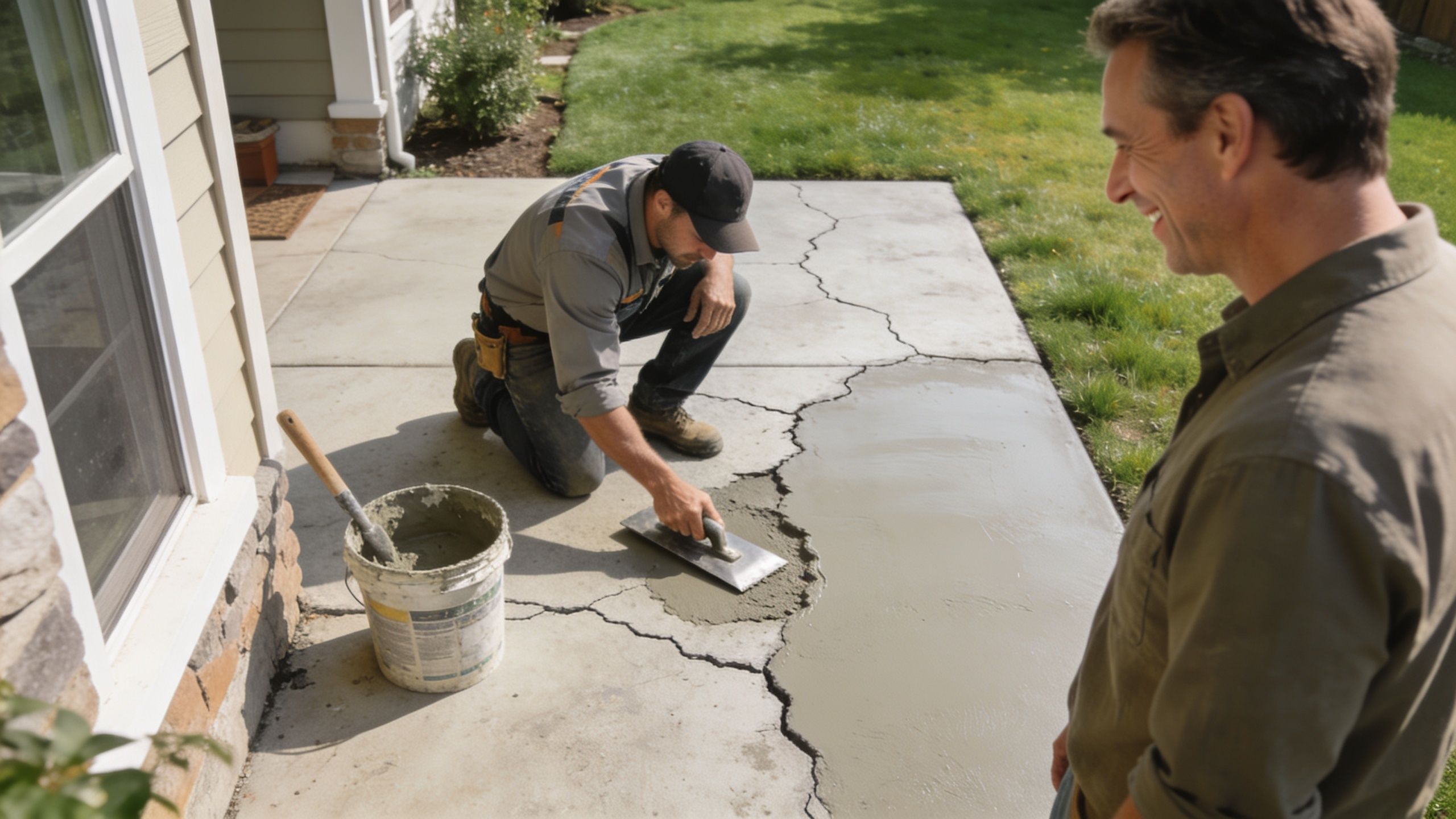
A lot of homeowners start the same way. They step onto the back patio in Ocala, Summerfield, or Crystal River, notice a crack that wasn't there last season, and type concrete patio repair near me into Google because they're not sure if it's cosmetic or the start of a bigger problem.
That concern is reasonable in Central Florida. Patios here take heat, UV exposure, heavy rain, humidity, and constant moisture swings. A small surface issue can stay minor, or it can turn into flaking, settling, and edge failure if the cause isn't addressed. The right fix depends on what kind of damage you're seeing, how deep it goes, and whether the slab is still structurally sound.
Your Guide to Concrete Patio Repair in Central Florida
If your patio has started cracking, flaking, sinking, or holding water, you're not alone. Homeowners across Marion County, FL and Citrus County, FL deal with the same issues, from older patios in Dunnellon and Belleview to newer slabs in Inverness, Lecanto, and The Villages.
Concrete is durable, but it doesn't stay perfect on its own. It can weaken over time from weather damage, poor installation, or normal wear and tear, and professional repair contractors commonly use patching, resurfacing, rebar replacement, and epoxy injections to restore damaged areas rather than replace the entire slab at the first sign of trouble, as noted by Today's Homeowner's concrete cost and repair overview.
Small cracks don't automatically mean you need a new patio. The real question is what caused them and whether the slab is still stable.
Around Silver Springs, Homosassa, and Beverly Hills, local conditions matter. A generic repair article won't tell you much about wet-season soil movement, nonstop sun exposure, or what happens when moisture gets into a weak surface layer and keeps breaking it down. Those details matter because they change which repair will last and which one will fail early.
Identifying Common Patio Problems in Florida
The first step is identifying the actual failure, not just the visible symptom. A patio with one hairline crack needs a different approach than a slab with loose surface paste, standing water, or one corner that has dropped.
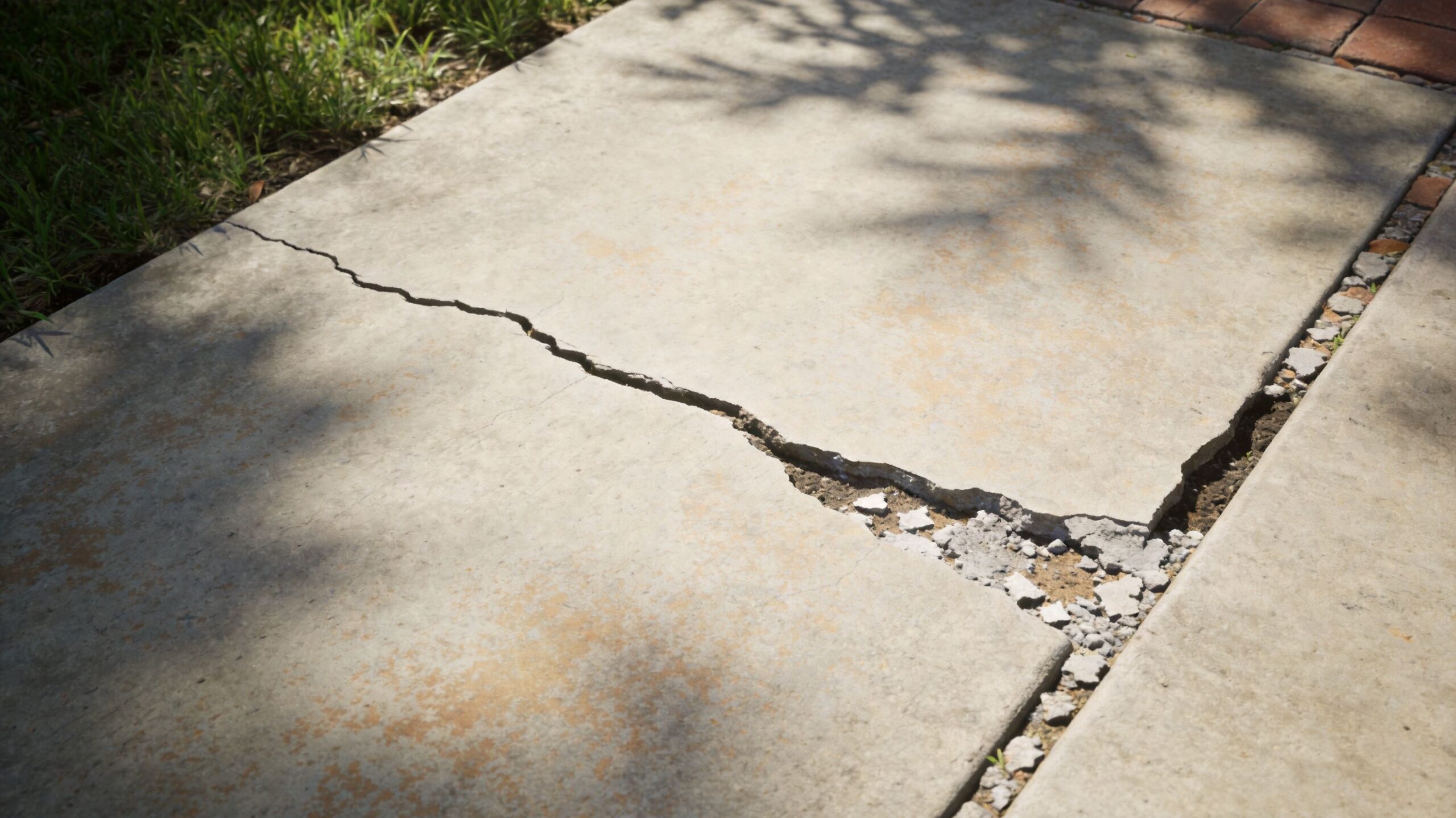
Cracks that stay small and cracks that keep moving
Hairline cracks are common in patios. Some are mostly cosmetic. Others tell you the slab is shifting, shrinking unevenly, or taking on water.
Look for these signs:
- Thin surface cracks: Often limited to the top layer and may be repairable with sealant or localized patching.
- Wider cracks with separation: These usually point to movement, settlement, or stress that simple filler won't solve.
- Cracks that change over time: If a crack widens, offsets, or keeps coming back, the problem is deeper than surface wear.
Surface flaking and spalling
Spalling is one of the most common complaints on Florida patios. The surface starts to pit, flake, chip, or peel away. That often happens when moisture gets into weak concrete, the surface was finished poorly, or the top layer breaks down under exposure.
If you're seeing that kind of damage, this guide to what concrete spalling looks like and why it happens will help you spot it early.
On-site clue: If the patio looks dusty, rough, or scaled off in patches after rain and sun cycles, the surface layer may be failing, not just dirty.
Sinking, uneven edges, and drainage problems
In places like Silver Springs and parts of Marion County where water movement affects soil conditions, slabs can settle unevenly. When that happens, you may see:
- One edge lower than the rest
- Trip hazards between sections
- Water collecting in low spots
- Gaps opening near the house or step-down areas
Humidity and heavy seasonal rain can also darken areas, feed mildew growth, and keep the slab wet longer than it should. Discoloration alone isn't always structural, but when it shows up with scaling or low spots, it usually means the patio needs more than cleaning.
Your Repair Options Patching Resurfacing and Leveling
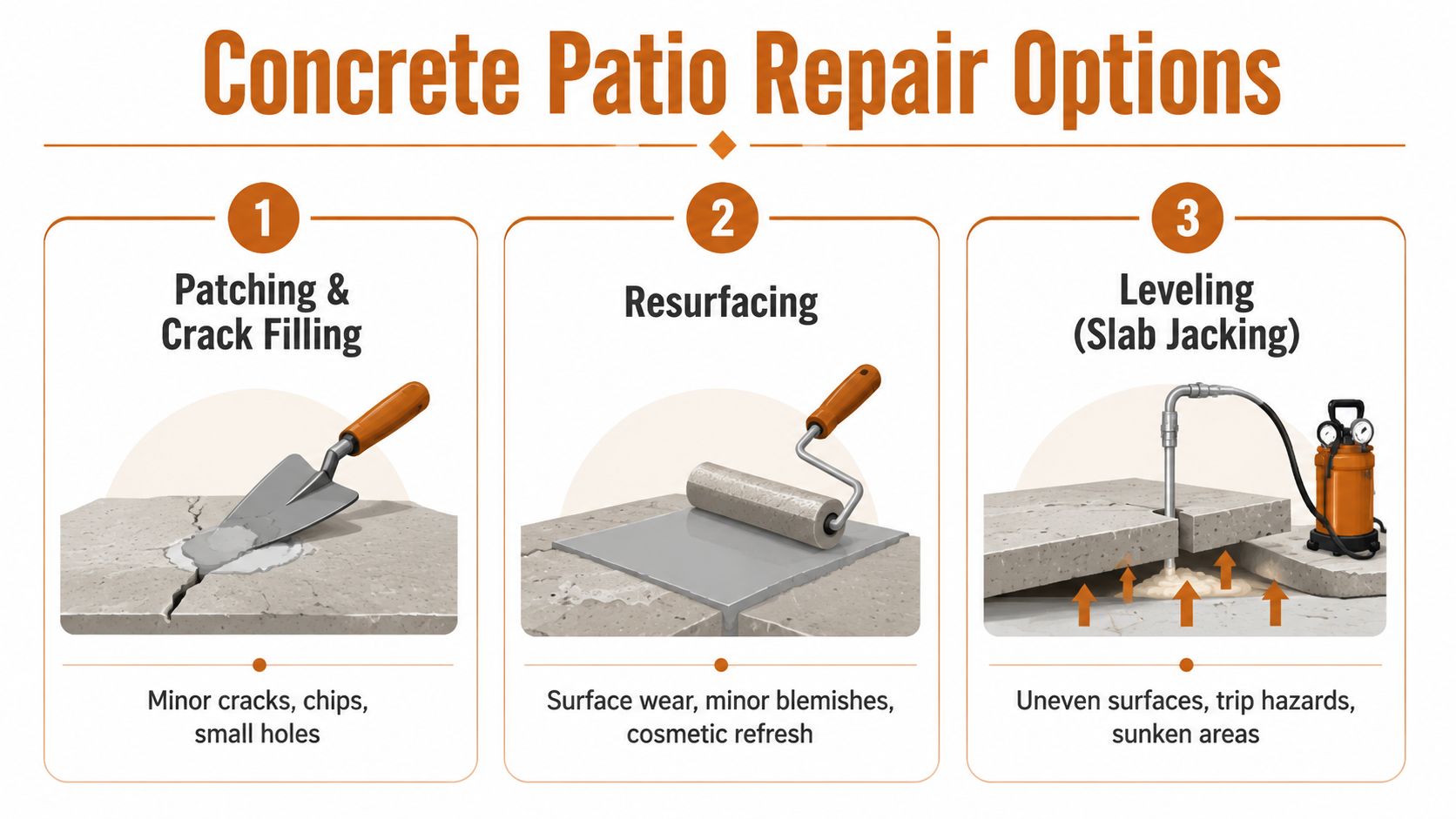
Most patio repairs fall into three categories. The mistake homeowners make is choosing based on appearance alone. A patio can look rough and still be a good resurfacing candidate, or it can have one “small” damaged area that requires removal because the depth is too severe.
Patching for localized damage
Patching works best when the damage is isolated. That includes small holes, edge chips, shallow spalled sections, and certain cracks after proper prep.
Engineering guidance summarized by the Association of State Dam Safety concrete repair techniques page says mortar patching is standard for damage between 1/2 to 6 inches deep, while replacement often becomes necessary when damaged areas exceed one-half to one square foot or when the depth exceeds 6 inches. That's the line many homeowners don't know.
A good patch isn't just material smeared over the top. The damaged concrete has to be cut back to sound material, cleaned properly, and shaped so the repair bonds and holds.
Resurfacing for widespread surface wear
If the slab is still stable but the top looks tired, worn, stained, or lightly pitted across a broad area, resurfacing can make sense. A resurfacer or overlay creates a new finish layer over sound concrete.
For homeowners researching concrete patio resurfacing near me, the key issue is substrate condition. Resurfacing works when the slab underneath is solid. It doesn't fix active movement or deep structural failure.
Many DIY jobs go awry here. People see flaking and assume they can coat over it. If the weak surface isn't removed and the slab isn't prepared correctly, the new layer won't last.
Before-and-after videos help make the differences easier to see in the field.
Leveling for settled slabs
When a patio has dropped or tilted, the repair isn't about the crack first. It's about the support under the slab. Leveling methods, often called slab jacking or lifting, address uneven sections by raising the concrete back toward its intended position.
Use this simple comparison:
| Repair type | Best fit | What it won't solve |
|---|---|---|
| Patching | Isolated chips, small voids, limited spalls | Ongoing slab movement |
| Resurfacing | Broad surface wear on a sound slab | Settlement, deep failure |
| Leveling | Sunken sections and trip hazards | Severe surface breakdown across the full slab |
Some contractors also handle full concrete demo and replacement when repair no longer makes sense. In Central Florida, companies such as Riverside Sealing & Striping work on both concrete and asphalt projects, which is useful when homeowners also need adjacent walkways, driveways, or surface transitions evaluated at the same time.
Repair vs Full Replacement When to Start Over
There's a point where repairing a patio stops being practical. Not because repair is bad, but because repeated repairs on a failing slab can cost more than starting over with a clean base and proper installation.
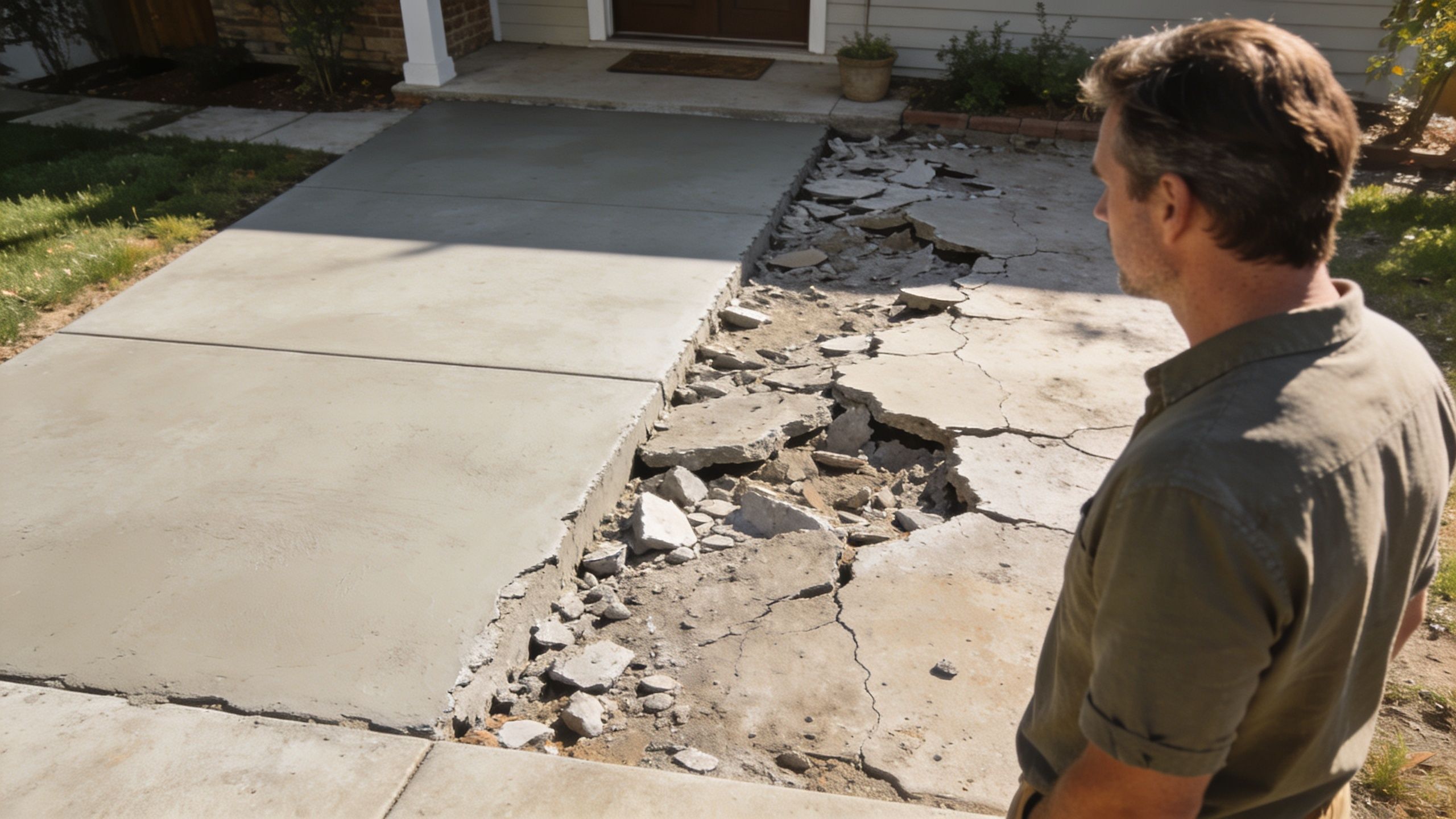
If the patio has widespread cracking, multiple low areas, broken edges, drainage problems, and recurring patches, replacement deserves a serious look. The same applies when the slab damage is too deep for a lasting patch, or when the base underneath has become unreliable.
A useful reality check comes from this repair versus replacement discussion, which states that 67% of homeowners regretted choosing a major repair over replacement due to cumulative costs over the next 5 to 10 years. That doesn't mean replacement is always right. It means short-term price shouldn't be the only decision point.
A repair should solve the problem you have now without setting you up for the same expense again in the near future.
For homeowners in The Villages, Belleview, or Hernando, the practical questions are straightforward:
- Is the slab structurally sound enough to invest in?
- Will the repair fix the cause, or just the appearance?
- Are you planning to stay in the home long enough to care about repeat repairs?
- Does the patio still drain correctly and sit on stable support?
If the answer to those questions keeps leaning no, replacement is usually the cleaner long-term decision.
DIY Repair vs Hiring a Professional Contractor
Some patio repairs are reasonable DIY jobs. Very small hairline crack sealing or minor cosmetic touch-ups can be handled by a careful homeowner using the right materials and realistic expectations.
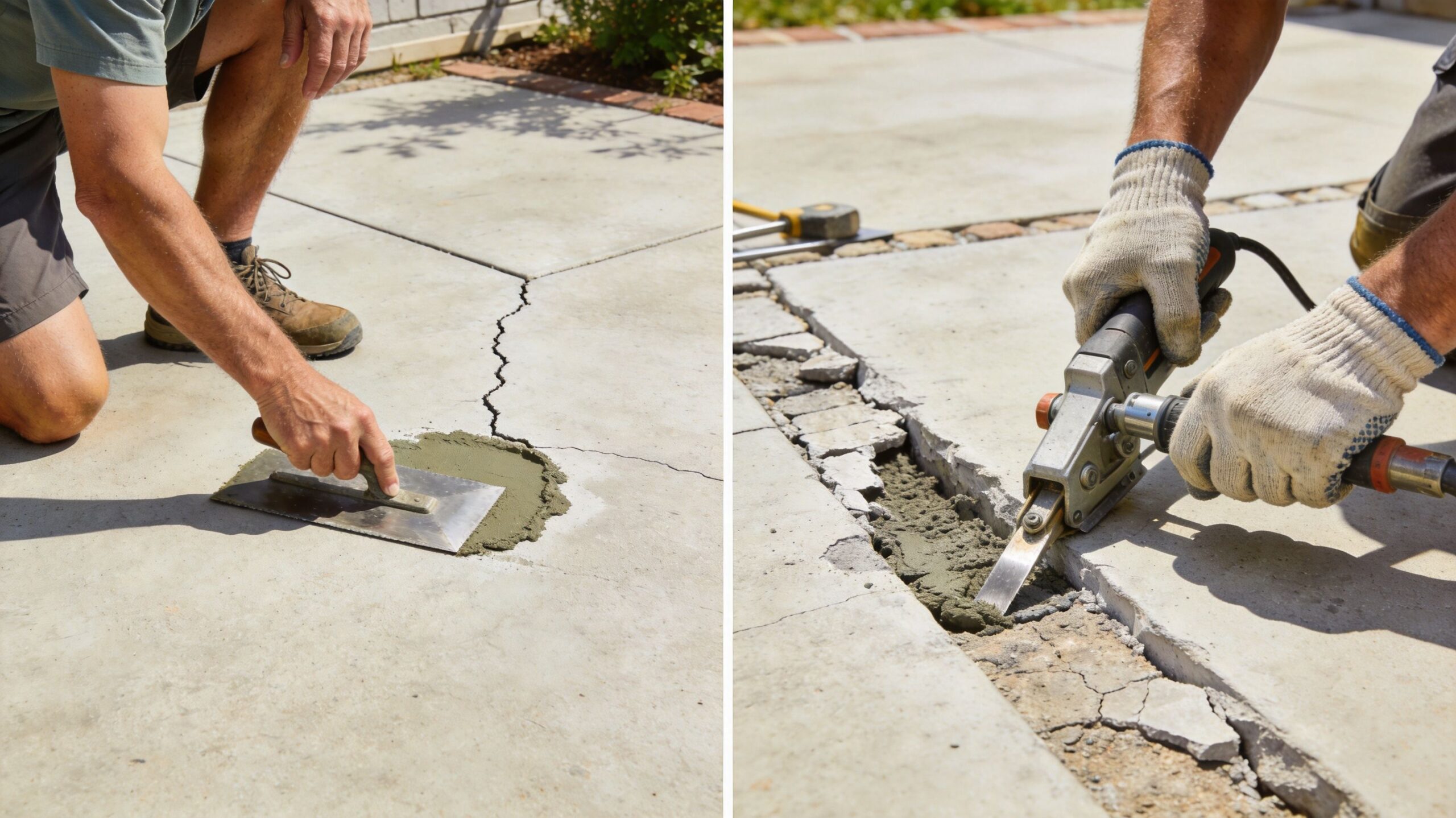
Most repairs that involve surface removal, bond prep, leveling, or full resurfacing are different. They fail when the prep is weak, the product is wrong for the conditions, or moisture gets trapped under the repair.
What homeowners can usually handle
DIY makes sense when the issue is small, clearly superficial, and not tied to movement. That might include cleaning out a narrow crack and applying a compatible sealant, or patching a very minor chip in a low-traffic area.
The key is knowing what not to attempt.
Where DIY usually breaks down in Florida
Central Florida adds moisture, heat, and fast weather swings to every outdoor repair. Those conditions expose weak prep fast.
Common failure points include:
- Poor surface preparation: Dust, laitance, mildew, or loose paste left in place will keep repair products from bonding.
- Wrong repair material: A rigid filler in a moving crack or a thin coat over unstable concrete won't last.
- Ignoring drainage: If water keeps sitting on the slab, the repair takes the hit first.
- Misreading settlement: Filling a crack in a sinking patio doesn't fix the soil support issue.
If the patio is uneven, actively flaking, or breaking deeper than the surface skin, a professional evaluation usually saves money compared with redoing a failed DIY repair.
Professional crews also bring saws, grinders, mixers, lifting equipment, and finishing tools that most homeowners don't own. Beyond the equipment, they know when a patio is repairable and when it isn't.
How to Choose a Contractor in Marion & Citrus County
Hiring the right contractor matters as much as choosing the right repair. A weak patch from the wrong crew can look fine for a short time and still fail once Florida rain and sun get to it.
The market has become more professional, and homeowners should expect that. According to Angi's concrete repair market overview, in many markets the average contractor holds a 4.3-star rating or higher based on hundreds of verified reviews, which reflects demand for reliable service, clear estimates, and quality guarantees.
What to check before you hire
Use this checklist when comparing patio contractors in Ocala, Dunnellon, Homosassa, Crystal River, and nearby communities:
- Licensing and insurance: Ask directly. A legitimate contractor should be able to explain coverage and job responsibility clearly.
- Local experience: Central Florida concrete work isn't the same as work in a dry climate. Ask how they handle drainage, soil concerns, and weather exposure.
- Written scope of work: You want a clear explanation of what will be repaired, removed, resurfaced, or replaced.
- Timeline and scheduling: Reliable crews give realistic windows instead of vague promises.
- Review quality: Read what customers say about communication, cleanup, durability, and whether the job matched the estimate.
A second helpful step is reviewing a contractor question list before you call. This set of questions to ask a concrete contractor helps homeowners compare proposals on more than price.
Signs of a solid estimate
A trustworthy estimate usually includes the repair method, prep steps, whether damaged concrete will be cut out, and how finish and curing will be handled. If leveling is involved, the contractor should explain why the slab settled in the first place.
Watch for vague phrases like “patch as needed” with no detail. That language leaves too much room for shortcuts.
A clear estimate protects both sides. It tells you what you're paying for and gives the contractor a standard to deliver against.
For Marion County, FL and Citrus County, FL homeowners, that level of clarity matters whether the project is a backyard patio in Summerfield or a slab beside a pool enclosure in Lecanto.
Frequently Asked Questions About Patio Repair
How do I know if my patio needs repair or full replacement
Look at the whole slab, not just the worst spot. If the damage is isolated and the slab is still stable, repair may be enough. If the patio is uneven, repeatedly cracking, draining poorly, and failing in multiple areas, replacement is often the better long-term move.
Can a repaired patio match the existing concrete color
It can get close, but it usually won't be an exact match. Older concrete has weathered, faded, and taken on stains over time. Localized patches often remain visible, while resurfacing creates a more uniform appearance across the whole patio.
Is a repaired patio as strong as a new patio
That depends on the repair type and the slab condition underneath. A well-executed repair on sound concrete can perform very well. A repair over unstable or deteriorated concrete won't give you the same confidence as a full replacement.
How long will my patio be out of service
That depends on the repair method, weather, and how extensive the work is. Simple crack repair may have a shorter turnaround than resurfacing or replacement. Your contractor should give you a practical use timeline based on the exact materials and site conditions.
What should I do before calling for an estimate
Sweep the patio off and take note of where you see cracks, flaking, low spots, or standing water after rain. If one area gets slippery, stays dark, or seems to move seasonally, mention that during the visit. Those details help the contractor identify the cause, not just the symptom.
Restore Your Patio with Confidence
A damaged patio doesn't always need to be torn out, but it does need the right diagnosis. In Central Florida, heat, UV, humidity, and heavy rain expose bad repairs fast. The fix has to match the problem, whether that means patching a small defect, resurfacing a worn slab, leveling settled concrete, or replacing a patio that's past the point of practical repair.
If you're in Marion County, FL, Citrus County, FL, or nearby areas like Ocala, Inverness, or Homosassa, a professional on-site evaluation can give you a clear answer without guesswork.
If your patio is cracking, flaking, or settling, Riverside Sealing & Striping, LLC offers free, no-pressure evaluations for homeowners across Central Florida. You can get a straightforward assessment of whether repair or replacement makes more sense, along with a written estimate from a local team that handles both concrete and asphalt work in Marion and Citrus County.