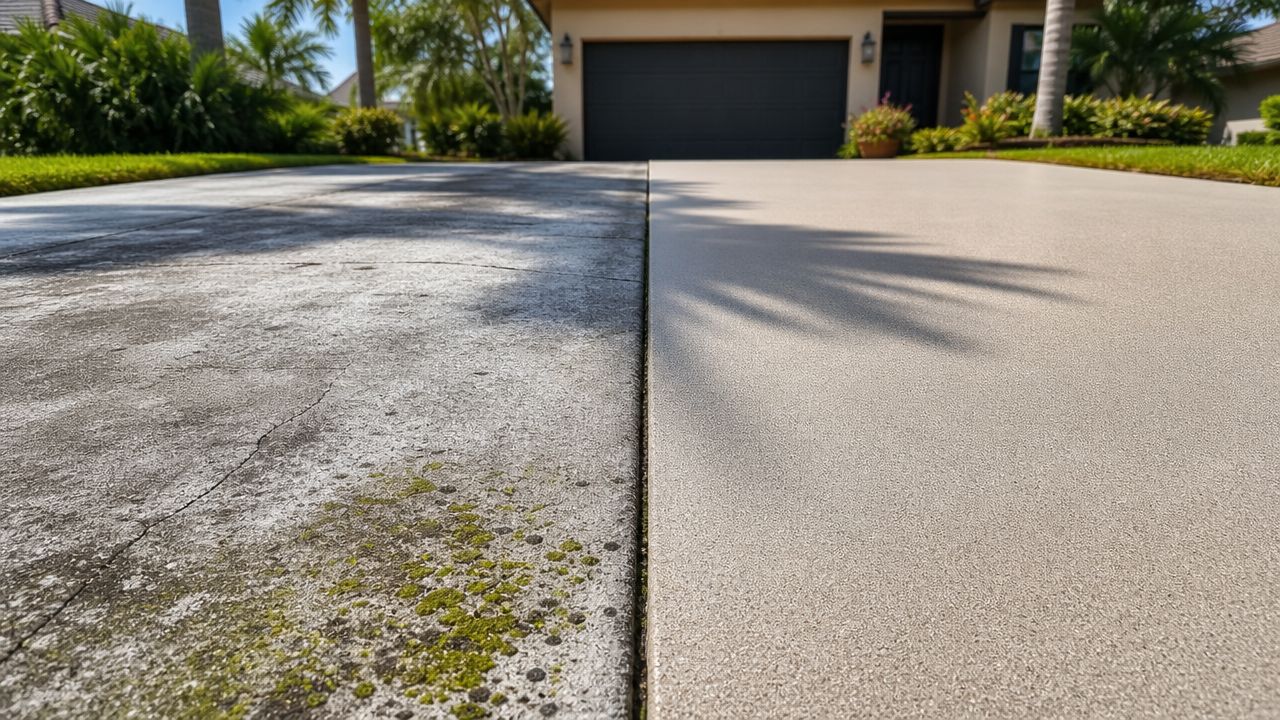
You pull into the driveway after another hard Florida rain and notice what wasn't there last season. A crack looks wider. The surface has dark stains that won't wash out. One section near the garage feels a little uneven underfoot. If you own property in Ocala, Belleview, Crystal River, Homosassa, or anywhere across Marion County, FL and Citrus County, FL, that moment usually leads to the same question. Is this a simple fix, or are you looking at a bigger problem?
That's where most property owners get stuck. A lot of concrete problems look cosmetic at first, but not every rough-looking slab needs replacement. On the other hand, not every worn driveway should be covered with a fresh surface and called done. The right move depends on what failed, why it failed, and whether the base concrete is still worth saving.
Concrete restoration is a major market, not a niche service. Fact.MR estimates the global concrete restoration services market at USD 11.3 billion in 2025, rising to a projected USD 21.4 billion by 2036, with concrete resurfacing projected to account for 32.4% of the market in 2026 according to Fact.MR's concrete restoration services market analysis. That tells you a lot of owners are making the same decision right now.
Table of Contents
- Is Your Concrete Driveway Telling a Story You Don't Like
- Concrete Repair vs Resurfacing Understanding the Difference
- Signs Your Concrete Needs Professional Attention
- The Professional Concrete Restoration Process
- Why Florida's Climate Is Concrete's Biggest Challenge
- DIY vs Hiring a Concrete Expert in Central Florida
- Your Concrete Restoration Questions Answered
Is Your Concrete Driveway Telling a Story You Don't Like
A driveway usually starts talking long before it fails. In Dunnellon or Inverness, it might show up as a patchy surface that always looks dirty. In Silver Springs or Lecanto, it might be shallow flaking where tires turn in the same spot. In The Villages or Summerfield, homeowners often notice the slab doesn't look worn out everywhere. Just in the traffic path, near the edge, or around a crack that keeps coming back.
That pattern matters. Cosmetic wear, weather staining, and light surface breakdown often have one solution. Movement, depth, and moisture problems usually have another.
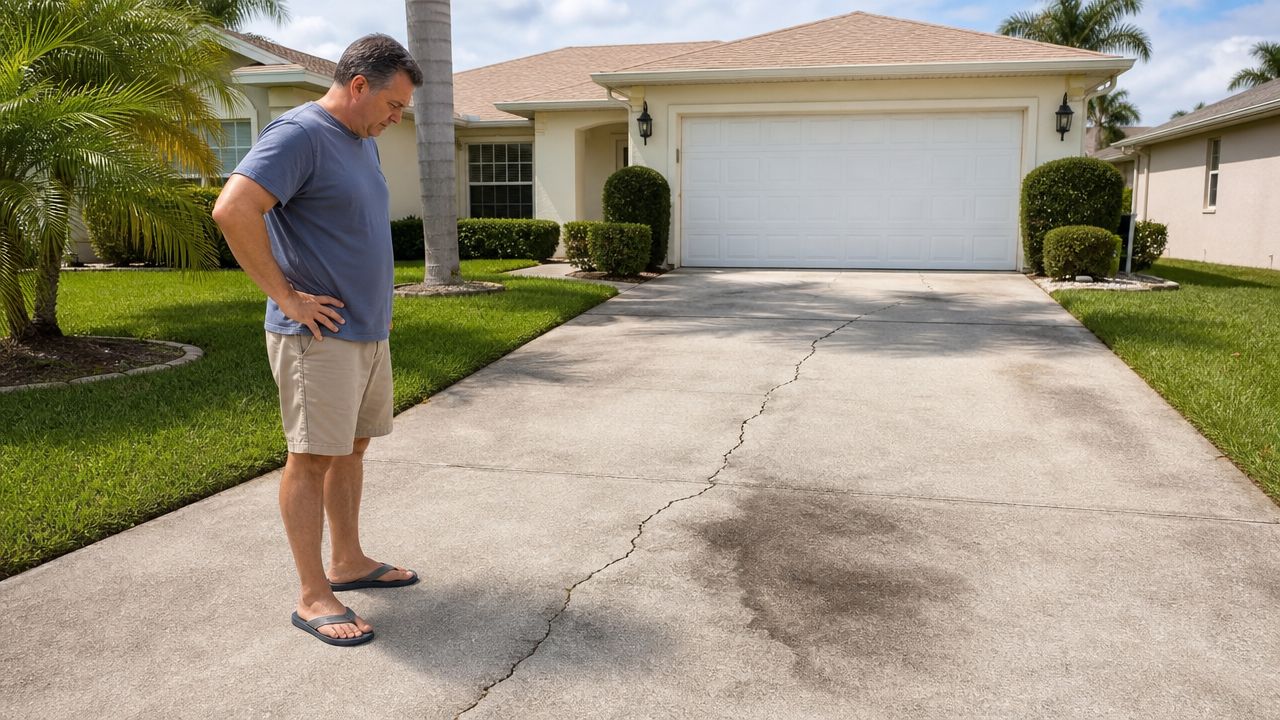
A homeowner in Marion County might look at a tired driveway and think resurfacing sounds like the obvious answer. A property owner in Citrus County might assume a crack automatically means replacement. Both can be wrong. Ultimately, the decision is whether you're patching a damaged section or renewing a sound surface.
Practical rule: If the slab is stable and the damage lives mostly at the surface, resurfacing may be worth it. If the slab is moving, separating, rocking, or breaking through its depth, the finish isn't the first problem.
That's the framework that saves money over time. Concrete repair and resurfacing aren't interchangeable services. They solve different kinds of failure, and choosing the wrong one can leave you paying twice.
Concrete Repair vs Resurfacing Understanding the Difference
Concrete repair and resurfacing sound similar because both deal with damaged slabs. In practice, they're different jobs with different goals.
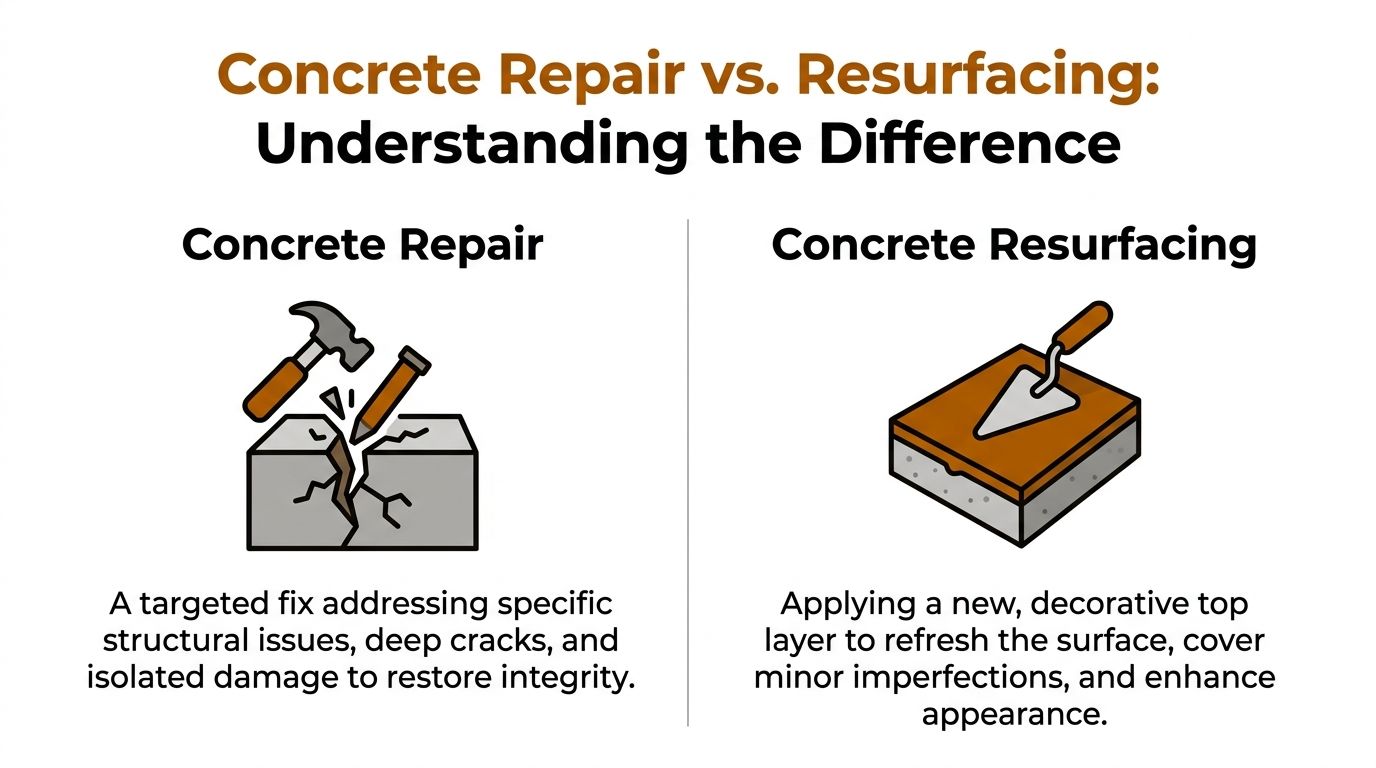
Concrete repair is targeted work. You fix the specific defect that's causing the trouble. That might mean addressing a deep crack, broken edge, isolated spall, settled section, or another localized failure.
Concrete resurfacing is a surface renewal method. It puts a new layer over concrete that is still basically sound but has cosmetic wear, shallow pitting, light scaling, or a tired appearance.
Repair fixes the problem area
Think of repair like fixing a damaged part on a truck. You don't repaint the whole vehicle because a suspension component failed. You fix the failed part first.
That same logic applies to concrete. If a driveway section is rocking, a patio has a deep structural crack, or a sidewalk panel has lost support, covering the top won't solve it. Industry guidance reflected in Caltrans construction manual materials makes the distinction clear. Resurfacing is for surface-level defects, not deep structural problems, and trying to cover major damage such as rocking slabs or rebar corrosion with a thin overlay is a common reason repairs fail.
Resurfacing renews the top layer
Resurfacing makes sense when the slab underneath still deserves to stay in service. The purpose is to refresh the worn face of the concrete, improve uniformity, and create a cleaner finished look.
This is why resurfacing often works well on older driveways, patios, walkways, and entry areas in places like Beverly Hills, Hernando, and Ocala where the slab is ugly but not structurally unsound. It can improve appearance and serviceability, but it isn't a substitute for structural correction.
Here's the simplest way to compare them:
| Criteria | Concrete Repair | Concrete Resurfacing |
|---|---|---|
| Primary purpose | Fix a specific damaged area or defect | Renew the surface across a larger area |
| Best fit | Deep cracks, isolated breakage, edge failure, uneven spots, localized distress | Worn finish, light scaling, shallow pits, hairline cracking, surface discoloration |
| What it addresses | Underlying defect in a defined location | Surface wear and overall appearance |
| What it does not do | It doesn't automatically make the whole slab look new | It doesn't correct structural movement or deep slab failure |
| Visual result | Often functional first, with patched areas visible | More uniform finished appearance |
| Decision test | Is there a failed section that needs correction? | Is the slab sound enough to bond a new top layer? |
If the slab has a bad foundation, a pretty overlay just hides the countdown.
For Florida property owners, that's the decision point that matters most. Don't ask which option sounds cheaper or faster first. Ask which option matches the condition of the concrete.
Signs Your Concrete Needs Professional Attention
Most owners notice symptoms before they understand the cause. That's normal. The mistake is treating every symptom as a surface problem.
Surface clues that usually point toward resurfacing
Some defects are mostly skin deep. They make the slab look old, rough, or neglected, but they don't automatically mean the concrete has lost structural integrity.
Look for these kinds of conditions:
- Light scaling: The surface is wearing away in thin layers, but the slab still feels solid.
- Shallow pitting: Small surface voids or rough spots appear across the top.
- Worn texture: The finish looks tired or polished down from foot or tire traffic.
- Hairline cracking: Fine cracking that doesn't show vertical separation can fit a resurfacing mindset if the slab remains stable.
- Patchy appearance: Stains, old repairs, and color inconsistency often point toward surface renewal rather than full replacement.
If you're seeing flaking or chipping and want a better sense of what that damage can mean, this guide on what concrete spalling looks like and why it happens helps clarify the issue.
Warning signs that usually call for repair or replacement
Other symptoms tell a different story. These are the ones that deserve a careful site inspection before anyone talks about overlays or cosmetic improvements.
Watch for:
- Wide cracks with one side higher than the other: That often suggests movement, not just shrinkage.
- Rocking sections: If a slab moves under load, the support below may be compromised.
- Hollow-sounding areas: Delamination can signal a weak bond or failing concrete below the surface.
- Standing water: Poor slope, settlement, or low spots usually need correction at the slab level.
- Persistent moisture intrusion: Water coming through joints or cracks can keep undermining the base.
- Rust staining or exposed steel: That can indicate internal deterioration that a surface coat won't fix.
A homeowner in Belleview may call about a stain that won't go away and learn the slab is still a strong resurfacing candidate. A property manager in Crystal River may think a rough loading area just needs a skim coat, then find active movement underneath. The visible damage matters, but the reason behind it matters more.
The Professional Concrete Restoration Process
The difference between a short-lived fix and a durable result usually shows up before any overlay or repair material is mixed. Good contractors spend more time diagnosing and preparing than most owners expect.
Diagnosis comes before materials
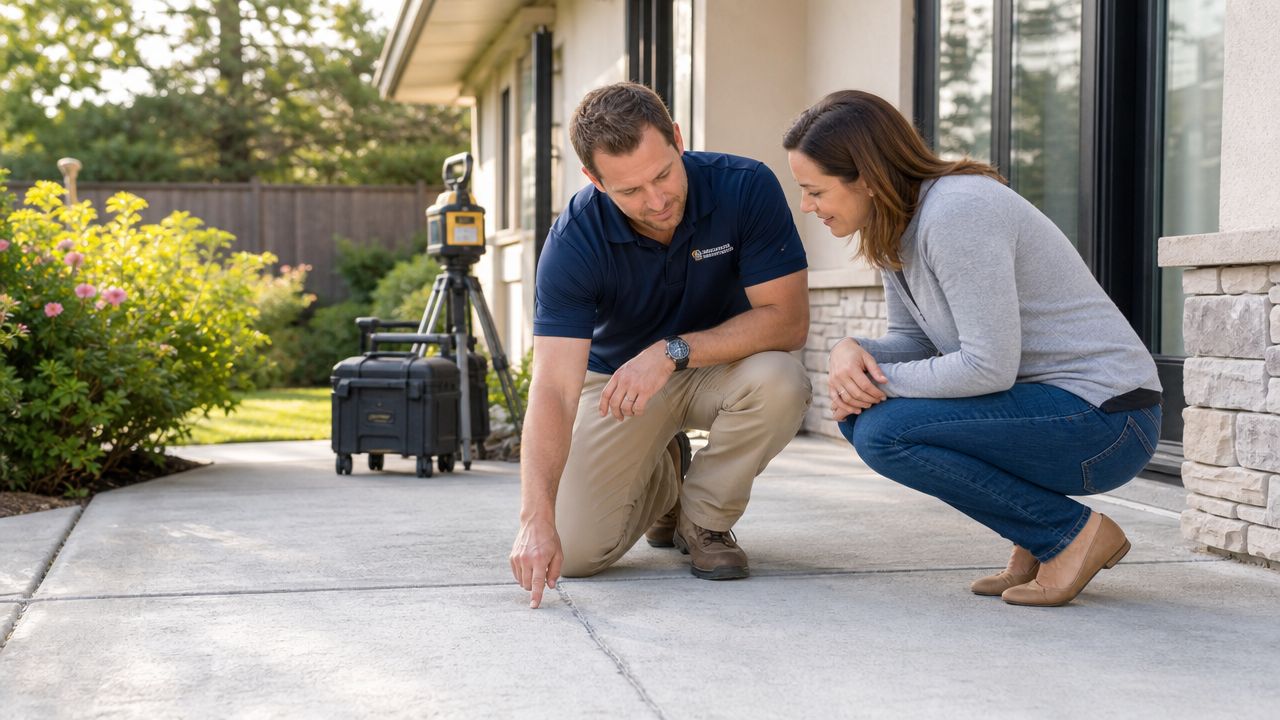
The first step is deciding whether the slab is a repair candidate, a resurfacing candidate, or too far gone for either. That means checking cracks, edges, drainage, movement, hollow spots, and signs of moisture.
An uneven panel is a good example. If the problem comes from settlement or slab movement, the contractor needs to address that condition first. A skim coat over an unstable section won't hold. This article on how uneven concrete slabs are evaluated and corrected shows why surface appearance and slab stability aren't the same thing.
Preparation decides whether the job lasts
This is the part many DIY attempts skip or rush. It's also where many failures start.
Industry guidance summarized by PROSOCO's concrete resurfacing guidance stresses a three-step sequence for durable resurfacing: thorough cleaning, targeted repairs, and surface profiling. The guidance also warns that even a thin film of dust can weaken adhesion and lead to debonding or failure.
That translates into real field work:
Cleaning the slab completely
Dirt, oil, organic growth, curing residue, and loose material have to go. A new layer only bonds to clean, sound concrete.Repairing defects first
Cracks, spalled spots, weak edges, and unsound sections get addressed before resurfacing begins. If the base is failing, the top will follow it.Mechanically profiling the surface
Grinding, scarifying, or shot blasting creates an anchor profile and exposes stronger concrete. This isn't cosmetic. It gives the new material something real to grip.
Surface prep isn't the boring part of concrete restoration. It is the job.
A quick look at how professionals approach this sequence helps make that clear.
Application and curing finish the job right
Once the slab is clean, sound, and properly profiled, the contractor applies the selected repair mortar or resurfacing product based on the condition and service use of the slab. A driveway in Ocala doesn't get treated exactly like a patio in Homosassa or a commercial walkway in Inverness. Traffic, drainage, shade, and moisture exposure all affect the recommendation.
Then comes curing and, where appropriate, sealing. This is another place where rushed work creates expensive callbacks. The material needs time and conditions that support bond development and uniform performance.
When owners in Marion County, FL or Citrus County, FL ask what separates a lasting concrete job from a temporary one, the answer is usually simple. The contractor respected the slab, diagnosed the right problem, and did the preparation no one sees after the truck leaves.
Why Florida's Climate Is Concrete's Biggest Challenge
Concrete in Central Florida doesn't live in gentle conditions. It deals with hard sun, heavy rain, heat buildup, long humid stretches, and regular traffic. A slab can look fine in the morning and still be headed toward failure because water and heat keep working on the same weak points.
Water finds every weak point
In Marion County, FL and Citrus County, FL, rain isn't just a cleaning event. It tests the slab. Water gets into hairline cracks, open joints, weak edges, and low spots. If the base support is already compromised, repeated wetting can keep the trouble active.
That's why pooling water on a driveway in Dunnellon or recurring moisture near a patio in Crystal River deserves attention. The water itself may not be the original cause, but it often keeps damage moving in the wrong direction.
Sun and humidity add a different kind of wear
Florida sun breaks down exposed surfaces over time, especially decorative finishes and older sealers. Humidity brings its own problem. Shaded concrete in places like Homosassa, Beverly Hills, and Hernando often grows mold or algae that makes the slab look dirty and can create a slick walking surface.
Local conditions also change material choice. A product that performs well in a dry, mild climate may not be the right fit for a driveway in Summerfield or a walkway near The Villages. Property owners need a contractor who understands local exposure, reliable scheduling, and the practical side of building for this region. That's part of what it means to work with Concrete and Asphalt Experts in Marion and Citrus County.
DIY vs Hiring a Concrete Expert in Central Florida
A driveway in Central Florida can fool you. The crack looks small, the surface wear looks cosmetic, and the bagged repair product at the store promises a quick fix. Then the patch loosens after a wet season, the color does not match, and the same area starts breaking down again because the underlying problem was never on the surface.
That is the decision point. DIY work can save money on a minor blemish. It can also hide a slab that is already losing value as a base for any future resurfacing.
Where DIY can make sense
DIY patching has a place when the problem is small, shallow, and clearly isolated. A tiny chip at a corner, light surface pitting, or a minor defect on a stable slab can be worth fixing as a short-term maintenance step.
The key is knowing what you are buying. You are not restoring the slab. You are buying time.
Homeowners usually run into trouble during prep, not product application. Surface contaminants, weak concrete, hidden moisture, and poor profiling all interfere with bond. That is why it helps to understand what resurfacing a concrete driveway involves before deciding a weekend repair is comparable to professional restoration.
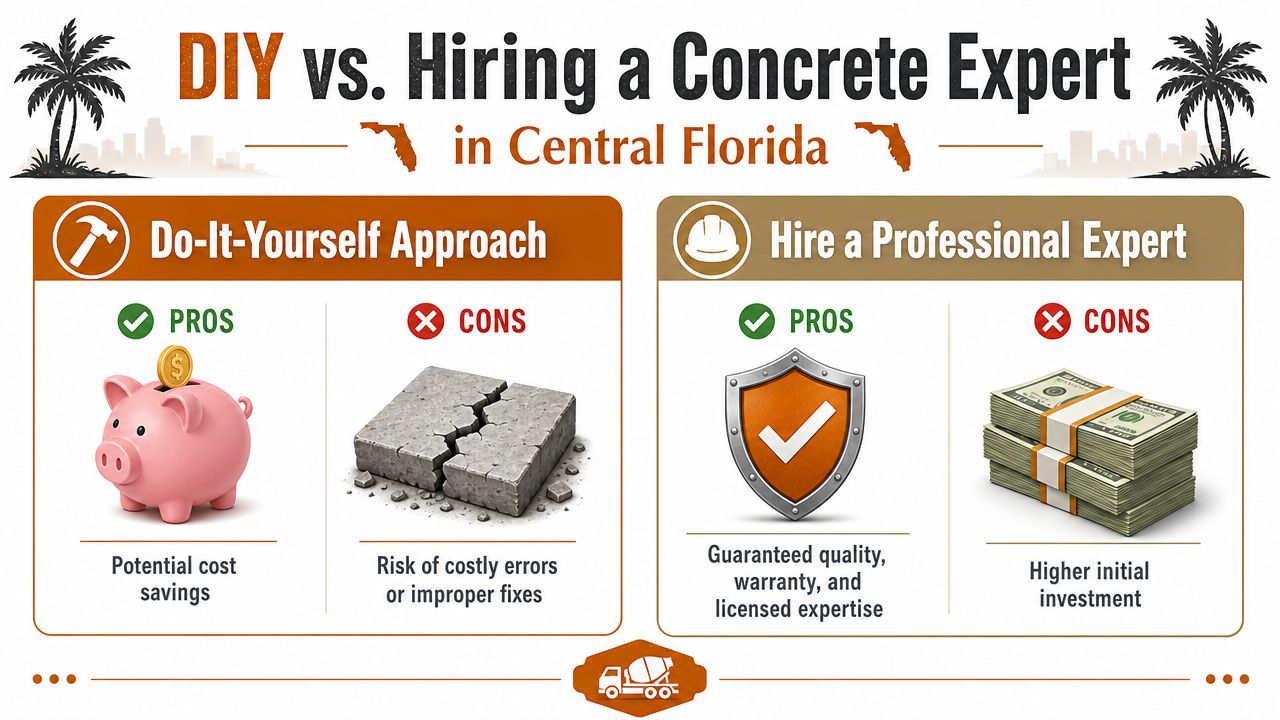
A practical comparison looks like this:
- DIY strength: Lower upfront cost for small cosmetic defects or temporary touch-ups.
- DIY weakness: Limited surface prep, uncertain material choice, and no reliable way to confirm whether the slab is still a good candidate for resurfacing.
- Professional strength: Better diagnosis, proper mechanical prep, and a repair plan based on traffic, moisture exposure, and bond life.
- Professional trade-off: Higher initial cost, especially when crack repair, grinding, or base-related correction has to happen before a finish layer goes down.
When hiring a pro saves money
Vehicle traffic changes the risk. So does slab movement, repeated cracking, drainage trouble, or any area where appearance matters across the whole surface. In those cases, the cheapest repair is often the one that avoids doing the job twice.
Research published by PubMed Central on concrete repair durability found that many repairs fail far sooner than owners expect, with a wide range of service life depending on diagnosis, materials, and workmanship, as explained in this review of concrete repair durability published on PubMed Central. That lines up with what contractors see in the field. Bad prep and wrong product selection do not always fail right away, but they usually fail early.
For owners in Ocala, Belleview, Lecanto, and Inverness, the primary question is not whether a product can be spread over old concrete. The crucial question is whether the slab is stable enough to justify repair or resurfacing in the first place. If the answer is no, a clean-looking finish can become an expensive delay before replacement.
Riverside Sealing & Striping, LLC is one local company handling concrete and asphalt work across Central Florida, including repair-related services for driveways, patios, sidewalks, sealcoating, and striping. The name matters less than the process. Hire a licensed and insured contractor who can explain why the slab should be patched, resurfaced, or left alone until replacement makes financial sense.
Your Concrete Restoration Questions Answered
Can resurfacing fix cracked concrete
Sometimes. Resurfacing can work when the cracking is light, shallow, and the slab is still stable. It is not the right answer for deep cracks, moving slabs, hollow areas, or moisture-driven failure.
When is replacement the smarter choice
Replacement usually enters the conversation when the slab has lost structural integrity, support, or long-term value as a base. If major areas are unstable, badly broken, or failing below the surface, repair and resurfacing may only delay the inevitable.
Will a repaired area match the rest of the driveway
Not always. Targeted repairs often solve the functional problem first, but the patched area can remain visible. If appearance across the whole slab matters, resurfacing may be considered after the base issues are properly handled.
What should a contractor check before recommending resurfacing
A good contractor should inspect for slab movement, crack behavior, hollow spots, drainage problems, moisture intrusion, and overall surface soundness. If that inspection is rushed, the recommendation probably is too.
Who should call for a professional evaluation
Homeowners, HOAs, churches, property managers, and commercial owners should call when they see recurring cracks, trip hazards, pooling water, surface breakdown, or uneven concrete. That applies whether the property is in Marion County, FL, Citrus County, FL, Ocala, Dunnellon, Crystal River, or nearby Central Florida communities.
If you want a clear answer on whether your slab needs repair, resurfacing, or replacement, Riverside Sealing & Striping, LLC offers free, no-pressure consultations for property owners across Central Florida. If the concrete is a good candidate for restoration, you'll know. If it isn't, you'll know that too, before spending money on a cosmetic fix that won't last.