
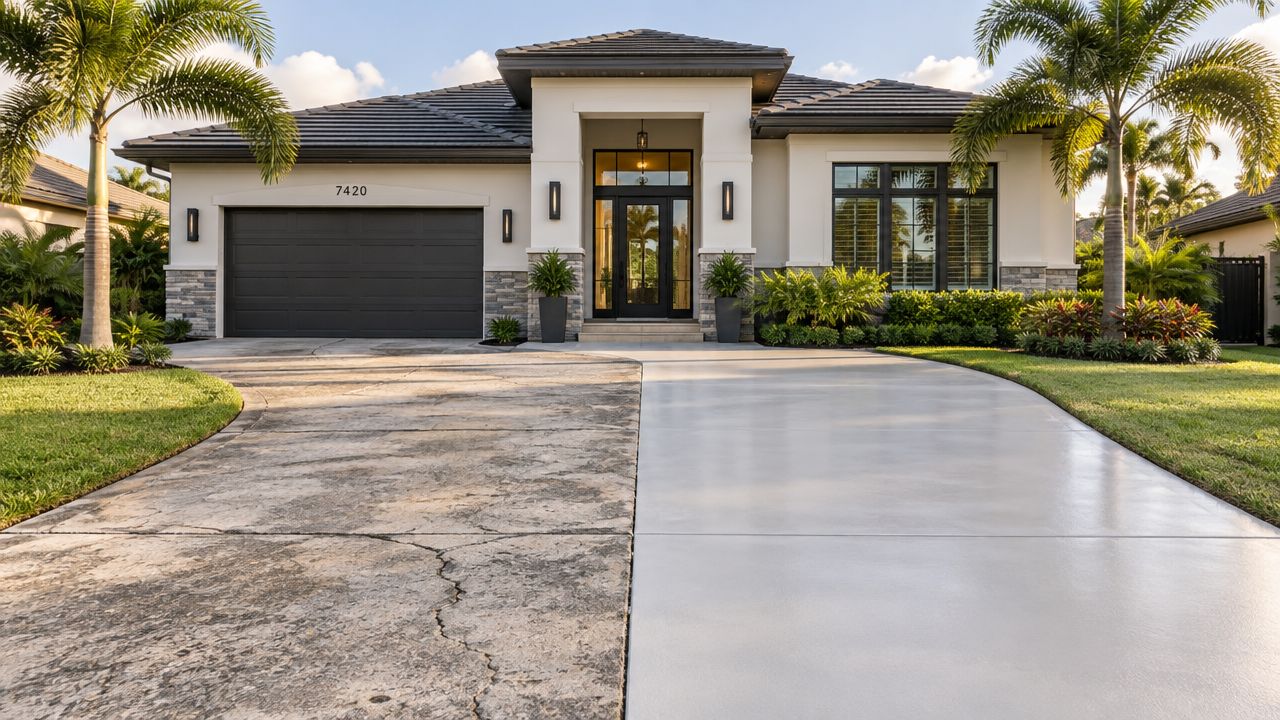
A new concrete driveway typically adds 5%–10% in perceived home value, or roughly $15,000–$30,000 on a $300,000 home, but an appraisal increase isn't guaranteed. The result depends on the driveway's prior condition, local market, curb appeal, and how well the improvement fits the property.
You pull into a home in Ocala or Crystal River and notice the driveway before you see the kitchen. It's cracked, stained, uneven, and holding rainwater near the garage. The house itself may be well maintained, but the entrance creates doubt. Buyers start wondering what else they'll need to repair after moving in.
That's why homeowners in Marion County, FL, Citrus County, FL, and surrounding Central Florida communities often ask, “Does a new concrete driveway increase home value?” The practical answer is yes, it can improve perceived value, marketability, and buyer confidence. It may also help a property avoid discounts associated with visible exterior defects. It still shouldn't be treated as a guaranteed appraisal premium.
This guide looks at the difference between buyer perception and formal appraised value, the cost-versus-value tradeoff, and the situations where replacement makes more sense than patching or resurfacing. It also considers concrete, asphalt, and pavers in Florida conditions, from Dunnellon and Belleview to Inverness and the surrounding communities.
Table of Contents
- Introduction Does a New Driveway Really Pay Off in Central Florida
- How Buyers and Appraisers Judge a New Concrete Driveway
- Cost vs Value and What ROI to Expect
- Concrete vs Asphalt vs Pavers for Home Value
- Key Factors That Determine How Much Value You Gain
- Local Insight for Marion and Citrus County Homeowners
- Making the Smart Choice and Next Steps for Your Home
Introduction Does a New Driveway Really Pay Off in Central Florida
A homeowner in Summerfield may plan to repaint the interior, update the kitchen, or refresh the landscaping before listing. Then the driveway comes into view. Widespread cracks, broken edges, and stormwater flowing toward the garage can make buyers question the property's upkeep before they reach the front door.
That reaction reflects how Central Florida buyers often judge a home. They do not separate the driveway from the rest of the property. The entrance works like a preview of future maintenance. A clean concrete surface supports confidence, while a failing one can make buyers estimate repair costs and adjust their offer accordingly.
Industry summaries commonly place a new concrete driveway at 5%–10% in perceived home value, or roughly $15,000–$30,000 on a $300,000 home, depending on the local market and the driveway's previous condition, according to Angi's analysis of concrete driveway value. This range describes buyer perception and market positioning. It does not guarantee that an appraiser will add the same amount to the property's report.
What replacement can and cannot do
Replacement has the clearest value when it removes a visible problem. Major cracking, settlement, drainage trouble, potholes, or trip hazards can give buyers a reason to negotiate. A properly installed driveway addresses that objection and helps the home compare more favorably with nearby properties.
A full replacement has less resale impact when the current driveway remains functional and presentable. Around Ocala, The Villages, and Beverly Hills, a driveway is usually an expected feature. Improving it may protect the home from a condition-based discount rather than create a large premium. The practical distinction is maintaining an acceptable standard versus adding an unusual feature.
Central Florida weather makes that condition especially important. Intense afternoon rain exposes drainage weaknesses, while heat and daily vehicle use reveal cracking and settlement. A replacement can strengthen first impressions and buyer confidence, but appraisal value still depends on the property's overall condition and comparable sales.
A new concrete driveway can protect value, improve marketability, and reduce repair concerns. It cannot automatically change an appraisal.
How Buyers and Appraisers Judge a New Concrete Driveway
A buyer pulling into an Ocala listing may photograph the approach before stepping inside, comparing the driveway with nearby homes. An appraiser examines the same surface differently, documenting its condition, function, and relationship to the property as part of the overall report. Those two perspectives explain why a new concrete driveway can improve marketability without producing the same increase in appraised value.
Concrete itself is not the value signal. The visible condition, edges, slope, drainage, parking function, and connection to the home communicate whether the property appears maintained or likely to require immediate spending.
The buyer's first filter
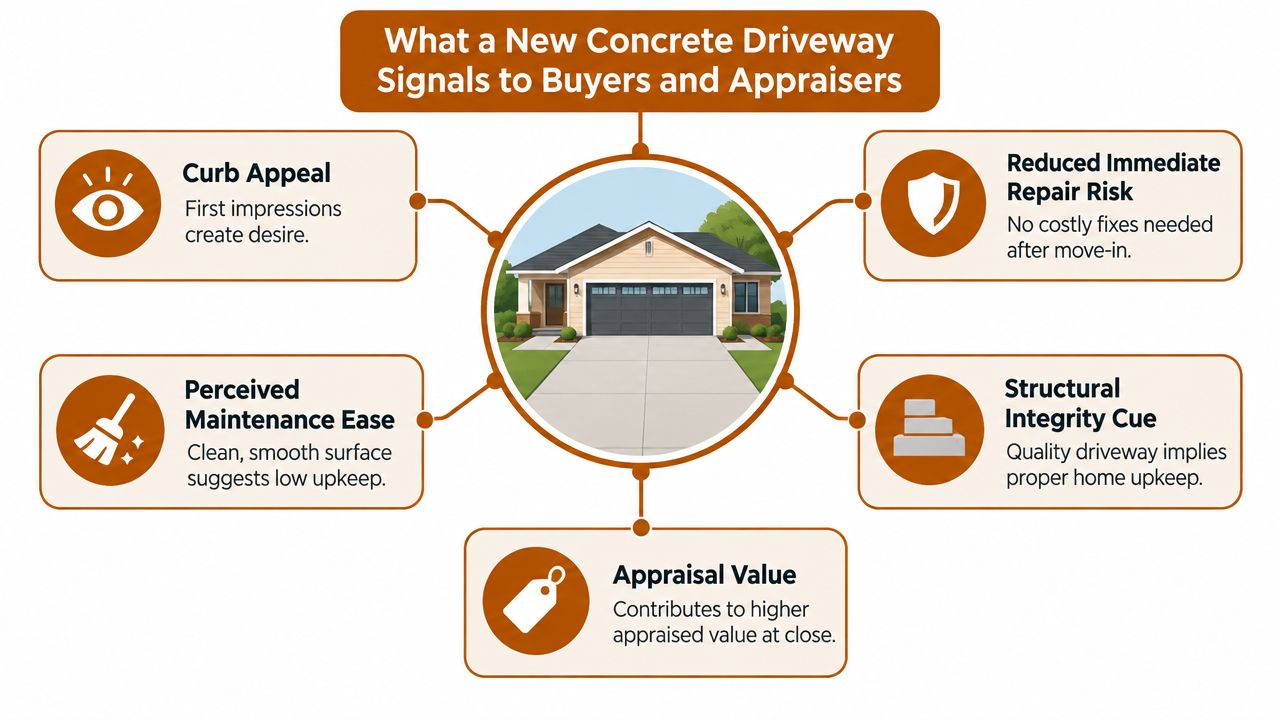
Buyers usually react to three practical signals:
- Curb appeal: A clean, even driveway makes the approach look cared for and ready for occupancy.
- Reduced immediate repair risk: New concrete suggests the buyer is less likely to face an obvious driveway project soon after closing.
- Exterior consistency: The driveway should fit the home, landscaping, walkways, and front entry instead of looking like an unrelated upgrade.
The strongest response occurs when replacement removes a problem buyers can see without an explanation. Deep cracks, uneven sections, poor drainage, or a damaged edge can create negotiation pressure before the buyer evaluates the interior. A home with a deteriorated driveway may compare less favorably with a similar property that has a well-maintained approach, particularly where parking is limited or the driveway is used every day, according to Realtor.com's driveway guidance.
Why the appraisal may tell a different story
An appraiser does not normally add the full construction cost to the property's value. The report considers comparable sales, location, overall condition, functional utility, and features that buyers in that market consistently support. The driveway can strengthen the condition assessment, but it is rarely treated as a simple dollar-for-dollar adjustment.
This creates two possible results:
- Perceived market value improves. Buyers may feel less concern about repairs and compare the home more comfortably with competing listings.
- Formal appraised value changes modestly or not at all. The appraiser still needs comparable market evidence to support the conclusion.
A new driveway can protect the sale price without producing a matching appraisal increase. In Marion and Citrus counties, the effect depends on neighborhood expectations. An off-street driveway may matter more where parking is limited. In areas where every comparable home already has one, replacement often prevents a condition-based discount rather than creates a premium.
Central Florida weather makes visible condition especially important. Heavy rain can expose drainage weaknesses, while heat and regular vehicle use reveal cracking or settlement. The clearest case for replacement is therefore practical: the existing driveway is hurting the home's presentation, and correcting it removes a reason for buyers to hesitate.
Cost vs Value and What ROI to Expect
A homeowner in Ocala may spend thousands replacing a driveway, then wonder why the appraisal does not rise by the same amount. That result is normal. A driveway contributes to the home's condition and buyer appeal, but it is not usually valued dollar for dollar like a room addition.
For a typical home, installed concrete driveway costs are commonly estimated at $4,000 to $10,000, with pricing often around $6 to $12 or more per square foot. The Costimates concrete driveway calculator provides a starting point for framing that budget. The actual quote depends on demolition, grading, drainage, access, reinforcement, finish, and total size.
Removing failed concrete and correcting water flow is a different project from replacing a sound driveway on a prepared base. In Central Florida, heavy rain, intense sun, and repeated vehicle use can make those site conditions especially important.
What the ROI range really means
Common estimates place concrete driveway replacement ROI around 50% to 80%, with another frequently cited range of 60% to 70%. Those figures describe a portion of the project cost recovered through resale value, not a guaranteed reimbursement.
The financial benefit may appear in several ways:
- Fewer buyer objections during showings.
- Less pressure for a repair-related price reduction.
- Better listing photographs and first impressions.
- Stronger competition with nearby homes.
- Safer, easier use while the owner remains in the property.
The return is usually more meaningful when the existing surface is visibly failing. A driveway with severe cracks, uneven sections, or poor function can act like a warning label on the rest of the property. Correcting it may protect the asking price even if the formal appraisal changes only modestly.
Minor discoloration or cosmetic wear calls for a different decision. Repair, resurfacing, or appearance-focused maintenance may preserve the driveway's contribution without the cost of total replacement.
A simple cost-versus-value framework
| Scenario | Typical Cost | Estimated ROI | Value Recaptured |
|---|---|---|---|
| Full replacement, typical home | $4,000–$10,000 | 50%–80% | A portion of the cost, depending on condition and market |
| Full replacement, strong curb-appeal need | $4,000–$10,000 | 60%–70% | A meaningful share of spending, with added marketability |
| Repair or resurfacing where the driveway functions | Varies by site and repair scope | Not reliably established | May preserve appearance without total replacement |
This table is a budgeting aid, not an appraisal formula. Buyers in Marion and Citrus counties may accept an ordinary driveway as part of the expected property package. A neglected or damaged one can create a discount, while a well-executed replacement may mainly prevent that loss rather than create a large premium.
Before accepting a quote, use this concrete driveway replacement cost guide to organize the questions. Request separate prices for removal, base preparation, drainage, concrete, finishing, and cleanup.
Practical rule: Replace the driveway first to correct a visible condition or function problem. Treat resale value as an important benefit, not a guaranteed repayment.
Concrete vs Asphalt vs Pavers for Home Value
The best driveway material depends on the home, budget, maintenance expectations, and time horizon. Central Florida homeowners shouldn't choose based on a national ranking. A material that works well for one property may be unnecessary for another.
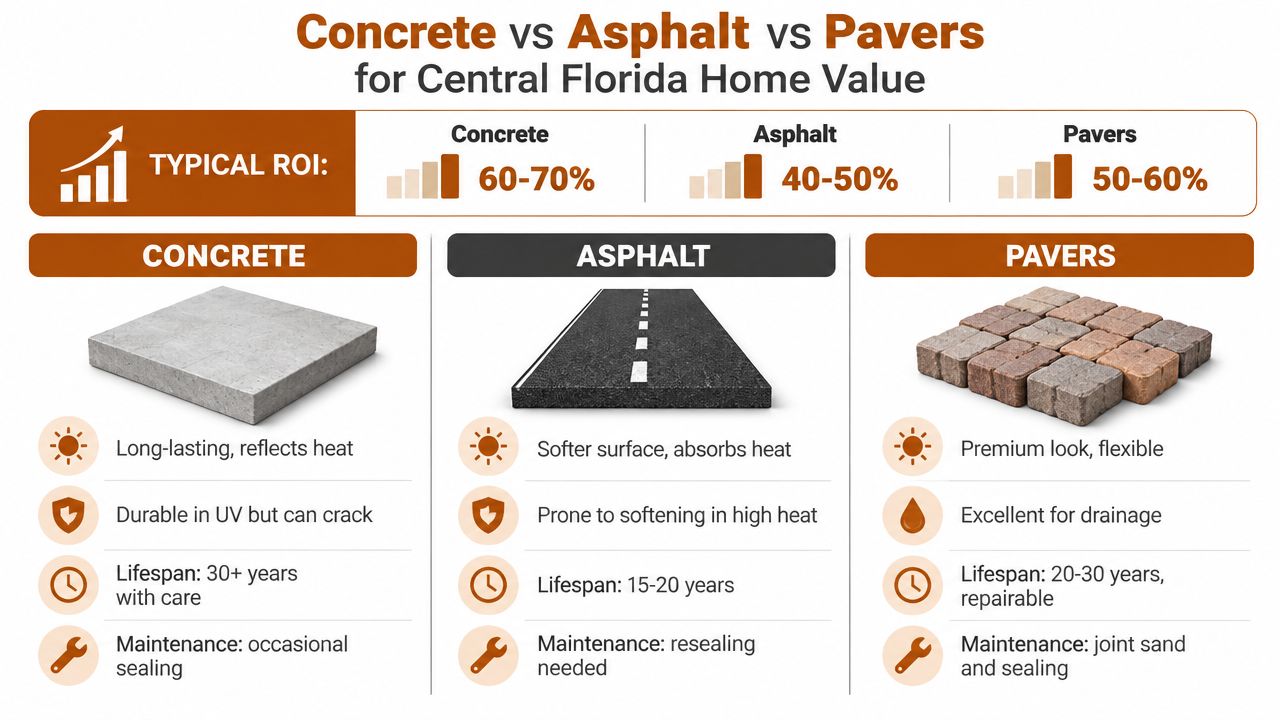
Concrete offers a clean, finished appearance and strong buyer familiarity. It can support a polished exterior around a home in Ocala, Summerfield, or The Villages, especially when the finish matches the entry walkway and landscaping. Concrete performs well under sun exposure when the installation includes appropriate preparation, joints, and drainage, but cracking can still occur if the base, grading, or construction quality is poor.
Asphalt often appeals to homeowners focused on a lower initial investment or a surface that can be maintained through ongoing treatments. It absorbs more heat and may soften under intense conditions, so maintenance matters. Sealcoating, crack work, and clear parking lot striping are particularly relevant for commercial properties, HOAs, churches, and shared driveways rather than only single-family homes.
Pavers create a distinctive, decorative appearance and can suit higher-design properties near Crystal River, Homosassa, or waterfront areas. Their segmented construction can make individual repairs easier, but the installation usually demands careful base work, joint maintenance, and attention to drainage. Their premium appearance doesn't automatically mean the market will repay the full installation cost.
Match the surface to the property
A practical comparison looks like this:
- Choose concrete when you want a durable, visually consistent driveway with limited routine upkeep and a conventional residential appearance.
- Choose asphalt when upfront budget and maintainability are priorities, or when the property includes larger paved areas requiring sealcoating and striping.
- Choose pavers when design impact, drainage flexibility, and a custom exterior are more important than minimizing installation expense.
Material alone won't determine value. Buyers notice workmanship, edges, transitions, drainage, and whether the driveway looks appropriate for the home. A plain, well-installed concrete driveway can support value better than a decorative surface with poor grading or uneven settlement.
A useful material comparison is available in this guide to concrete driveway versus asphalt driveway. The right choice should reflect how long you plan to stay, how much maintenance you'll accept, and what buyers in your neighborhood expect.
The following video offers another visual explanation of driveway material considerations:
Key Factors That Determine How Much Value You Gain
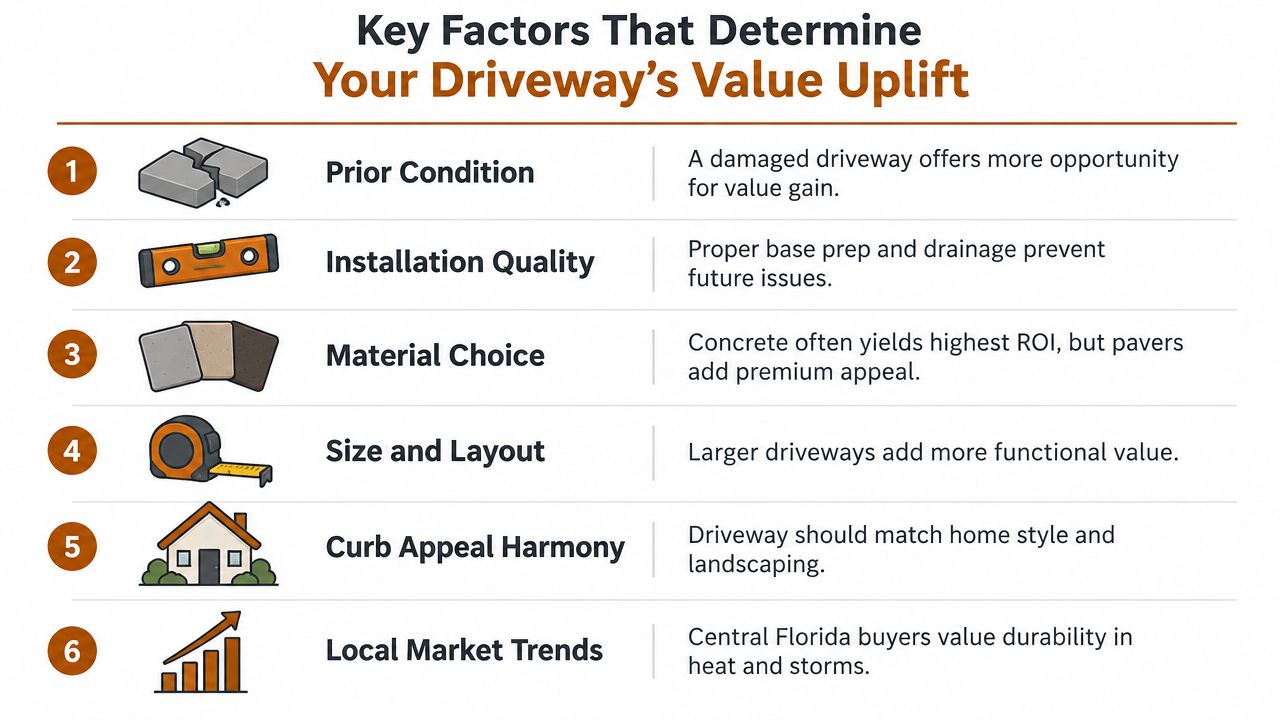
A new surface can underperform if the work beneath it is weak. Buyers may not identify the technical cause, but they'll notice ponding, edge failure, uneven transitions, or early cracking. Installation quality shapes both the driveway's appearance and the confidence it creates.
Start with the existing problem
Ask what the current driveway is doing wrong. Is it merely stained, or are sections broken? Does water sit near the garage? Has one side settled? Does the layout make parking difficult? Replacement has more value when it corrects a functional defect instead of changing a surface that already works.
The driveway's connection to the home also matters. A new slab that ends at a damaged sidewalk, awkward apron, or failing edge may leave the exterior looking unfinished.
Look beneath the slab
Good preparation includes a stable base, appropriate grading, and drainage that directs water away from the home. Central Florida rain can expose weak preparation quickly, especially where runoff concentrates along the driveway edge.
Before hiring a contractor, ask for clear answers about:
- Base preparation: What existing material will be removed, and how will the supporting ground be compacted?
- Drainage and grading: Where will stormwater go during heavy rain?
- Reinforcement and joints: How will the installation manage movement and help control cracking?
- Finish and transitions: Will the surface, walkway, apron, and landscaping work together visually?
- Permits and compliance: Does the project require local approval, and will walkway slopes or access routes create ADA concerns?
Homeowners planning related work can review this explanation of how to prepare ground for a concrete slab before requesting estimates.
Vet the contractor, not only the material
A professional proposal should describe the scope rather than present one unexplained total. Look for a licensed and insured contractor, reliable scheduling, a clear timeline, and high-quality workmanship. Ask how the crew handles weather delays, concrete finishing, cleanup, and unexpected site conditions.
The project should also include documentation you can retain for a future sale. Keep the signed proposal, scope of work, permits if applicable, product information, maintenance guidance, and completion records. Those documents won't guarantee an appraisal adjustment, but they help demonstrate that the improvement was planned and professionally completed.
Local Insight for Marion and Citrus County Homeowners
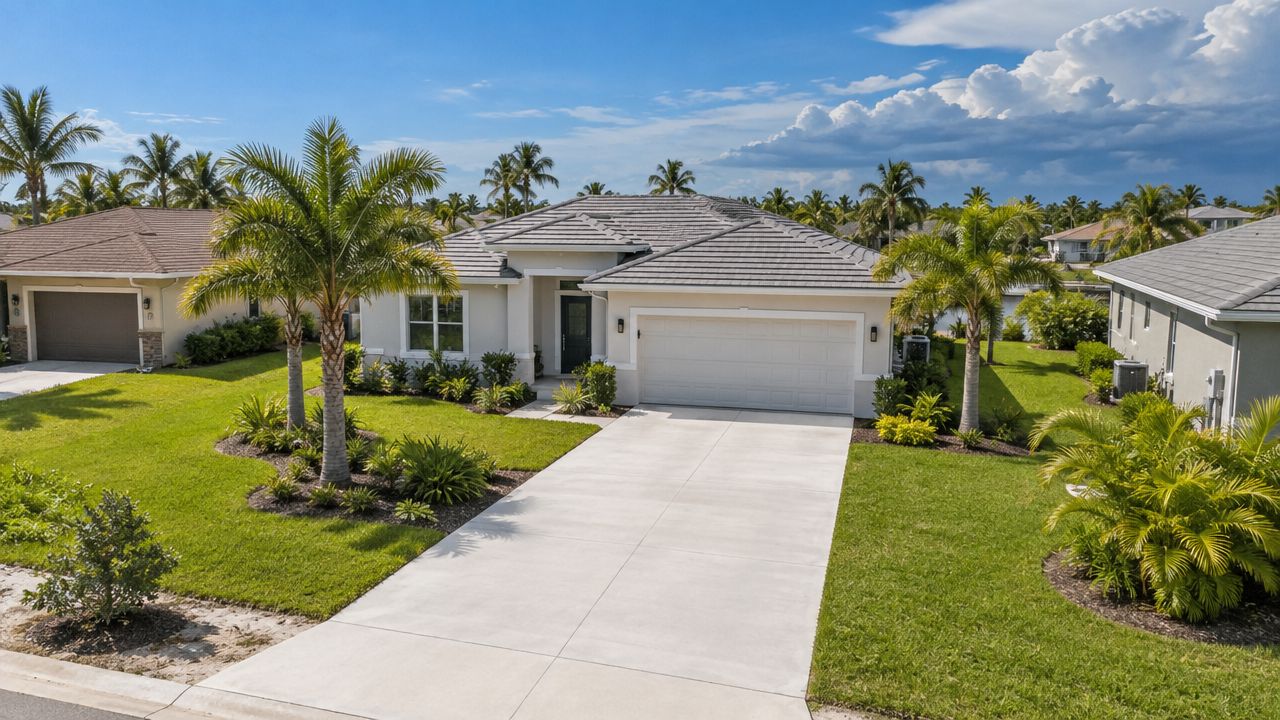
Central Florida gives driveway projects a specific set of conditions. Heat and ultraviolet exposure affect surface appearance. Heavy rain tests grading and drainage. Sandy or shifting soil can challenge the base if preparation is rushed. Daily vehicle use adds wear, while trees, landscaping, and narrow access can complicate installation.
Those conditions apply across communities with different housing patterns. A driveway in Ocala may serve a conventional suburban home, while one in Dunnellon or Silver Springs may connect to a more wooded property with drainage and access considerations. Belleview, Summerfield, and The Villages have their own buyer expectations around clean, usable approaches. In Crystal River, Homosassa, Inverness, Lecanto, Beverly Hills, and Hernando, the surrounding environment and rainfall patterns make the transition from driveway to yard especially important.
Climate changes the decision
Concrete can perform well in this region when the base, grading, drainage, and control joints are handled properly. A driveway that sheds water, maintains stable edges, and visually fits the home gives buyers a stronger sense of dependable ownership.
Asphalt can also be appropriate, particularly for larger paved areas and properties with a defined maintenance plan. Commercial owners, HOAs, and property managers may need regular asphalt sealcoating and parking lot striping to protect appearance, safety, and traffic organization. The material choice should follow the property's use, not a one-size-fits-all preference.
In suburban markets where a driveway is expected, buyers may not pay a large premium for having one. They may, however, react negatively when the existing surface looks unsafe or neglected. That makes replacement a value-protection decision in many neighborhoods.
For an on-site evaluation, Riverside Sealing & Striping, LLC works as a full-service contractor and Concrete and Asphalt Experts in Marion and Citrus County. The company provides concrete driveway installation and replacement, along with asphalt maintenance services, and offers free, no-pressure consultations from 7am to 7pm.
Making the Smart Choice and Next Steps for Your Home
A new concrete driveway is most defensible when the existing one has become a visible liability. Broken sections, settlement, drainage trouble, and safety concerns can interfere with showings and give buyers a reason to negotiate. Replacement can also make sense when you plan to enjoy the home for years and want a cleaner, more durable entrance.
Repair or resurfacing deserves serious consideration when the driveway still functions and the damage is limited. A professional can help distinguish surface wear from structural failure. Spending on a full replacement solely because you expect to recover the entire cost at closing is risky.
If you're preparing to sell, document the work carefully. Keep permits when required, retain the contractor agreement, photograph the finished driveway, and provide maintenance information to your agent. Good listing photographs should show the driveway in relation to the front entry, landscaping, and street, because buyers judge the whole arrival experience.
For homeowners, HOAs, and property managers, the decision comes down to condition, function, appearance, local expectations, and installation quality. A new driveway won't guarantee a higher appraisal, but it can remove a visible objection and strengthen the property's presentation.
Riverside Sealing & Striping, LLC can evaluate your existing driveway, explain whether repair or replacement makes more sense, and provide a free, no-pressure estimate with a clear timeline. Visit Riverside Sealing & Striping, LLC to request a professional consultation for concrete work, asphalt maintenance, or related Central Florida pavement needs.