
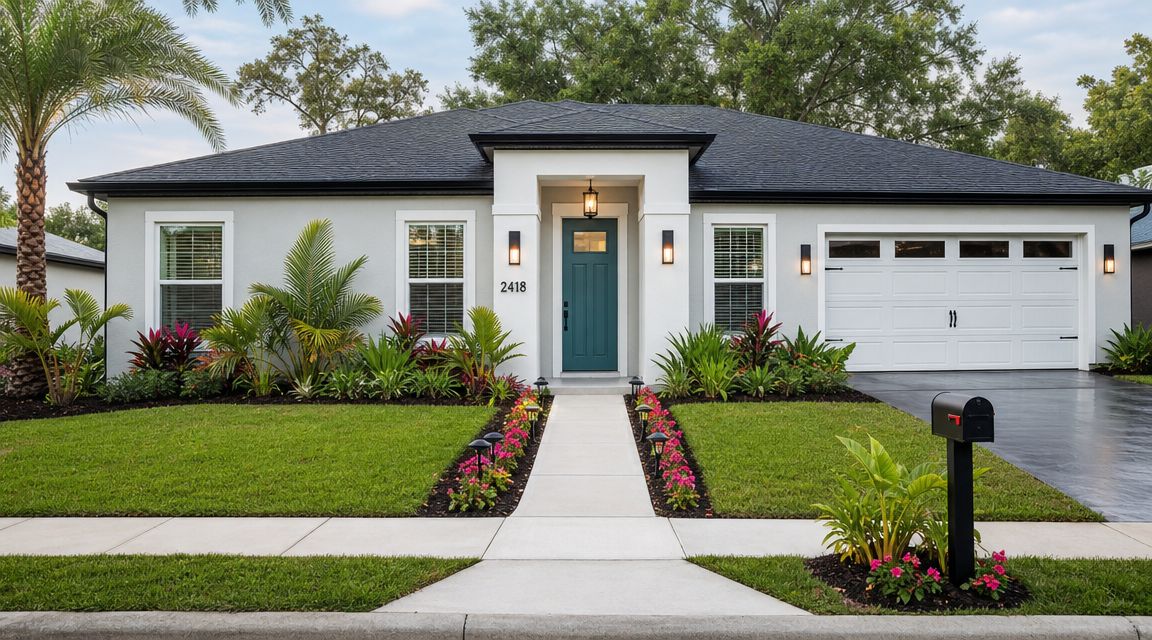
If you're standing at the street looking at your home or business and thinking, “Something feels off, but I don't want to waste money on the wrong upgrade,” that's a common spot to be in. Most curb appeal problems in Central Florida aren't caused by one big issue. They come from a mix of stained pavement, overgrown landscaping, faded entry details, and surfaces that look older than they really are.
The good news is that learning how to improve curb appeal usually starts with a simple rule. Fix what people see first, then spend money on what holds up. In Marion County, FL and Citrus County, FL, that matters even more because sun, rain, humidity, and daily traffic can make cheap cosmetic work fade fast. Whether you own a house in Ocala, a rental in Inverness, a storefront in Crystal River, or a small office in The Villages area, the best results usually come from combining quick cleanup with durable concrete and asphalt improvements.
Table of Contents
- High-Impact DIY Fixes to Boost Curb Appeal Now
- Upgrading Your Landscape and Hardscape for Lasting Value
- Revitalizing Your Driveway and Pavement
- Protecting Your Property from the Florida Climate
- When to Hire a Concrete and Asphalt Professional
- Frequently Asked Questions on Florida Curb Appeal
- What's the first thing I should do if my property looks tired from the street?
- Is a concrete driveway better for curb appeal than asphalt?
- What adds more value, landscaping or pavement work?
- How do I keep curb appeal improvements low maintenance in Florida?
- When should a business owner call a professional?
High-Impact DIY Fixes to Boost Curb Appeal Now
If you want visible improvement by the end of the weekend, start with cleaning and contrast. Don't start with decorative extras. Dirt, mildew, stains, and overgrowth will cancel out almost any new accent you add.
The first move is pressure washing. Focus on the driveway, front walk, porch slab, steps, and siding near the entry. Use the right tip, keep the wand moving, and avoid blasting too closely at painted wood, soft joints, or older concrete edges. The goal isn't to scar the surface. It's to remove the dull gray film and organic buildup that makes the property look ignored.
According to NAR's curb appeal coverage, 92% of REALTORS® recommend improving curb appeal before listing, and the first moves they most often point to are general landscaping maintenance, standard lawn care, and tree trimming.
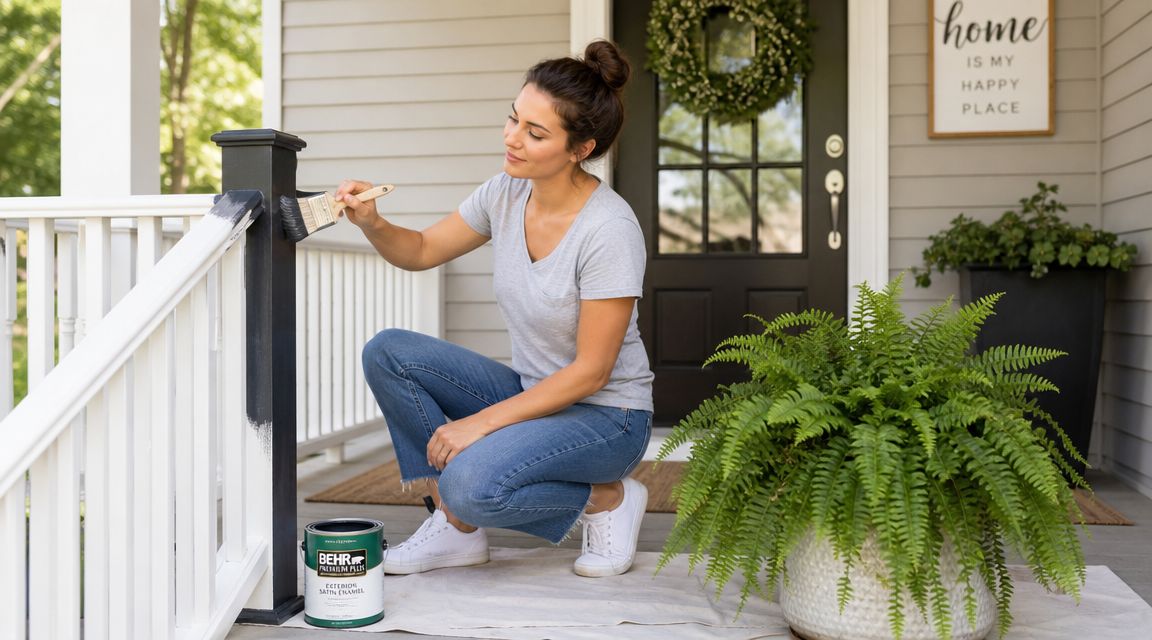
Clean first, then sharpen the edges
Once the surfaces are clean, tighten up the lines that frame the house.
- Edge the lawn along walks and driveways: Crisp borders make even an average yard look maintained.
- Trim shrubs away from windows and entry paths: If plants are covering the front elevation, the house looks smaller and darker.
- Clear porch clutter: Extra chairs, broken pots, storage bins, and old décor make the entry feel cramped.
- Refresh small hardware: Replace faded house numbers, a tired mailbox, or a rusting light fixture with simpler, cleaner versions.
Practical rule: If a project makes the property look cleaner, straighter, brighter, or easier to walk up to, it usually pays off faster than decorative add-ons.
A freshly painted front door also works well here. Pick a color that fits the house instead of trying to force a trend. In places like Belleview, Homosassa, and Lecanto, the homes that read best from the street usually aren't flashy. They're neat.
If you're already thinking beyond the front entry, these same principles also carry into backyard surfaces and entertaining spaces. This guide to concrete patio ideas for backyard upgrades is useful when the goal is better function without creating a high-maintenance layout.
Upgrading Your Landscape and Hardscape for Lasting Value
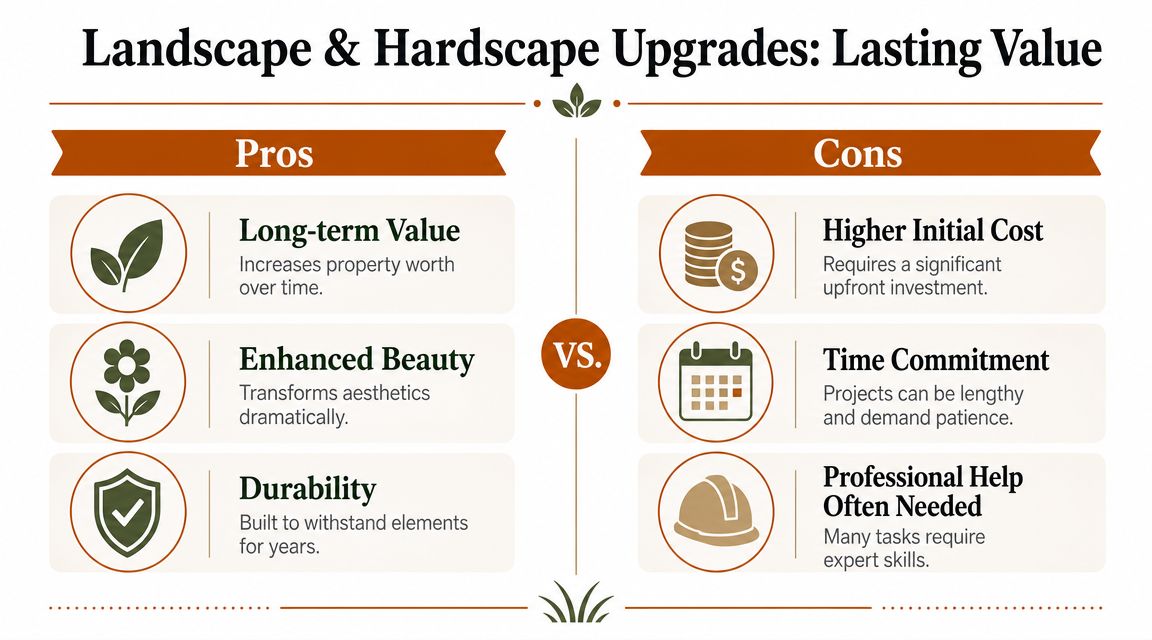
Quick fixes help, but they don't define a property. The upgrades that hold value are the ones that give the site structure. That usually means simpler planting, cleaner bed lines, and hardscape that looks intentional instead of improvised.
Earlier real estate guidance noted that homes with stronger curb appeal can sell for up to 7% more than comparable homes with weaker exteriors, and more recent advice says projected 2026 buyers are drawn to homes that feel “balanced, clean, and well cared for” with simplified landscaping and maintained paths, as discussed in Realtor.com's curb appeal guidance.
Keep planting simple and intentional
In Central Florida, overplanting is a common mistake. Beds look full on install day, then turn crowded, uneven, and expensive to maintain.
A better approach in places like Summerfield, Beverly Hills, and Hernando is to use fewer plants with better spacing. Native or durable low-maintenance choices usually age better than delicate, thirsty plantings that need constant replacement. The front yard should frame the house, not swallow it.
A few practical choices tend to outperform busy landscaping:
- Use repeated plant groupings: Repetition looks cleaner than a mix of unrelated shrubs.
- Leave visible mulch or stone between plants: That negative space keeps beds readable from the street.
- Keep mature height in mind: Don't install shrubs that will cover windows, signs, or walkway lighting a year later.
Let hardscape carry more of the visual load
Many generic curb appeal articles fall short. They talk about flowers and paint, but they ignore the surfaces people walk on.
A straight, well-built concrete walkway does more than connect the driveway to the front door. It creates order. A front patio, entry pad, border curb, or widened sidewalk can make the whole property look planned. On commercial sites in Dunnellon or near busy corridors in Ocala, the same principle applies to sidewalks, curbs, and entry approaches.
Maintained paths and visible usability make a property feel ready to occupy. That's a stronger signal than decoration by itself.
Here's the trade-off:
| Upgrade type | What works well | What often disappoints |
|---|---|---|
| Landscaping | Clean beds, clear sightlines, lower-maintenance plants | Dense plantings that need constant trimming |
| Hardscape | Concrete walks, patios, defined edges, useful entry areas | Decorative pieces added without fixing layout |
| Combined approach | Simple planting around strong paved lines | Spending on plants while cracked paths remain |
If the budget allows only one lasting upgrade, many owners get more visual return from solid hardscape than from adding more planting material.
Revitalizing Your Driveway and Pavement
The driveway or parking lot usually takes up more visible space than the lawn, front door, and porch combined. If it's cracked, oil-stained, faded, or uneven, people notice it before they notice the flowers.
Industry guidance highlighted by Pennymac's curb appeal article recommends a practical order for exterior improvements: cleaning first, then edge-defining and surface repair, then visual accents. The same guidance places driveway maintenance and pressure washing among the most visible improvements because those are the surfaces people see first.
Start with what pavement says about the property
Pavement sends a message fast. Clean, level pavement suggests upkeep. Broken pavement suggests delay.
That's why driveway work often gives better curb appeal return than cosmetic extras. A new fixture or potted plant can help, but neither one changes the impression of a failing surface. This is true for a house in Silver Springs, a church in Citrus County, or a storefront in Crystal River.
Look for these issues:
- Surface fading: Common on asphalt. It makes the pavement look dry and worn.
- Open cracks: Small cracks become visual noise and let water in.
- Edge breakdown: The perimeter starts to fray and makes the whole driveway look older.
- Settlement or lifted sections: This affects appearance and safety at the same time.
- Deep staining: Oil, rust, and organic discoloration stand out immediately on entry routes.
A short visual explanation helps when comparing options:
Choose repair, seal, or replacement based on the surface
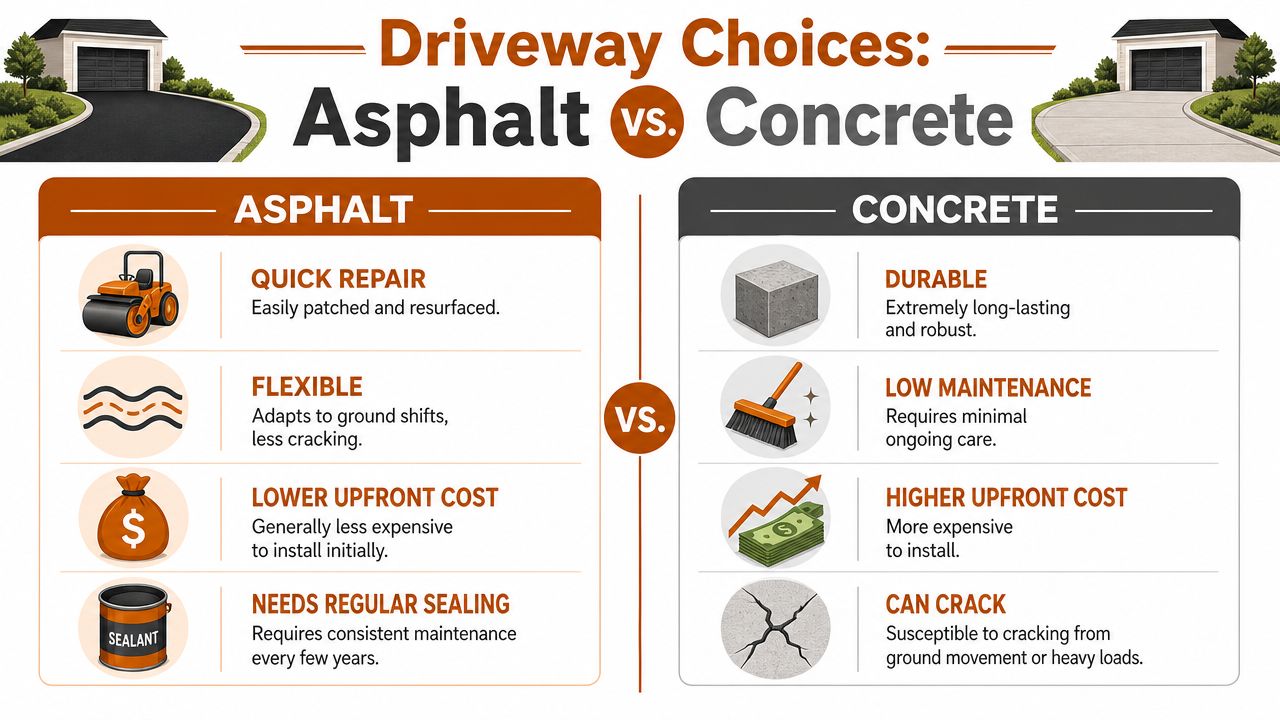
For asphalt, repair and maintenance usually make sense when the base is still sound. Crack filling, sealcoating, and fresh striping on commercial pavement can completely change how a property presents from the road. Business owners in Marion County, FL often overlook line striping, but clean parking stalls and clear directional markings make a lot look safer and more current.
For concrete, the decision is more binary. Minor cleaning and isolated repairs can help, but badly cracked, settled, or patchwork concrete rarely turns the corner with surface cosmetics alone. If the slab has structural problems, removal and replacement usually gives a better long-term result than chasing repairs.
Don't spend money decorating around failed pavement. Fix the surface first, or the rest of the project will always look unfinished.
If you're weighing whether an older slab can be renewed or needs more serious work, this article on how to resurface a concrete driveway helps clarify the difference between a surface refresh and full replacement.
For larger jobs, licensed and insured contractors matter because grade, drainage, compaction, thickness, and finish quality all affect how the pavement looks a year from now. In this part of Florida, a driveway that sheds water properly and holds its edge will usually outperform a cheaper install that looked fine only on day one.
Protecting Your Property from the Florida Climate
Central Florida exposes bad curb appeal decisions quickly. A pretty upgrade that can't handle heat, rain, runoff, and traffic won't stay pretty long.
That's why durability has to be part of the plan. Guidance aimed at professional-looking curb appeal notes that in hot or drought-prone markets like Central Florida, the better approach may be fewer, tougher, better-placed elements rather than more decoration, because maintenance burden affects appearance over time, as discussed in this curb appeal durability article.
Why generic curb appeal advice falls short here
What works in a mild climate doesn't always hold up in Ocala, Inverness, or Homosassa. UV exposure can wear out asphalt faster. Humidity encourages algae and mildew on shaded concrete. Heavy rain tests drainage around driveways, sidewalks, and parking areas.
That changes the order of priorities. A homeowner in Marion County, FL may be better off investing in a clean concrete walkway and manageable planting beds than in elaborate landscaping that needs constant trimming and watering. A business owner in Citrus County, FL may get more value from pavement maintenance and clear striping than from adding decorative site features that don't solve the worn-out look of the property.
Build around durability, not just appearance
Here's a practical screen for any exterior project:
- Will it still look clean after a rainy month?
- Will it stay safe when surfaces get slick?
- Can the owner realistically maintain it?
- Does it improve the pavement and walking path, not just the decoration around it?
For asphalt owners, timing matters too. This guide on the best time to seal an asphalt driveway is helpful if you're trying to line up maintenance around local weather instead of guessing.
Riverside Sealing & Striping, LLC handles both concrete construction and asphalt maintenance in this region, which matters for curb appeal projects because many properties need both. A clean entry path doesn't solve a failing driveway, and a freshly sealed parking lot won't fix broken concrete at the front walk.
When to Hire a Concrete and Asphalt Professional
Some curb appeal work is perfect for DIY. Some of it turns into wasted weekends, rental costs, and uneven results if you try to force it.
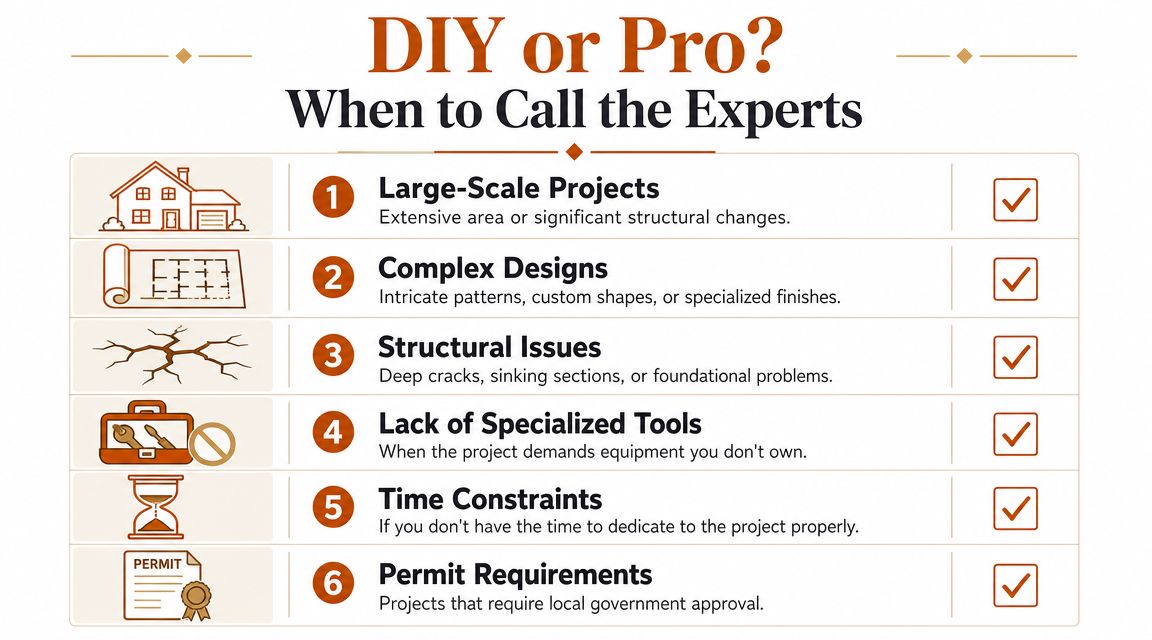
The dividing line is usually simple. If the job is cosmetic, low-risk, and easy to redo, you can often handle it yourself. If it affects drainage, structural performance, trip hazards, access, or long-term durability, bring in a professional.
Good DIY jobs
Most property owners can handle surface-level improvements with basic tools and some care.
- Pressure washing: Good for concrete walks, entry pads, curbs, and siding when done correctly.
- Shrub trimming and cleanup: Good if you're shaping growth, clearing views, and opening the façade.
- Door and hardware refreshes: Paint, house numbers, lighting, and mailbox updates are often manageable.
- Mulch and bed cleanup: Worth doing if the bed layout already makes sense and just needs tidying.
Jobs that need a contractor
Once the work involves layout, grade, structural repairs, or code-related items, it's no longer a casual weekend job.
A contractor should be your first call for new driveways, concrete replacement, sidewalk installation, drainage correction, parking lot sealcoating on larger commercial surfaces, striping, and ADA-related access upgrades. Property managers in places like Lecanto, Belleview, and The Villages area especially need to think beyond looks. A surface can be attractive and still be wrong if it ponds water, breaks down at the edges, or creates access issues.
Hiring a pro makes sense when failure costs more than the labor. Pavement and concrete usually fall into that category.
Use this quick filter:
| Situation | DIY or pro |
|---|---|
| Front door paint and light fixture swap | DIY |
| Overgrown shrubs blocking the entry | DIY |
| Hairline surface cleaning and stain removal | DIY |
| Sinking walkway panels | Pro |
| New concrete driveway or patio | Pro |
| Commercial lot striping and ADA markings | Pro |
Licensed and insured crews also matter because they bring the right saws, compactors, mixers, sealcoating equipment, layout tools, and traffic-control planning. That's not just about convenience. It's about getting a finished result that looks straight, drains properly, and lasts.
Frequently Asked Questions on Florida Curb Appeal
What's the first thing I should do if my property looks tired from the street?
Start with cleaning and vegetation control. Pressure wash the visible hard surfaces, trim back overgrowth, clear clutter from the porch or entry, and sharpen the lawn edges. Those steps usually reveal what needs repair instead of letting dirt hide the underlying problem.
Is a concrete driveway better for curb appeal than asphalt?
It depends on the property and the condition of the existing surface. Concrete often gives homes a brighter, more permanent look and works well when you want a crisp residential finish. Asphalt can also present very well, especially on long drives or commercial sites, but it needs routine maintenance to keep the color and surface looking fresh.
What adds more value, landscaping or pavement work?
If the pavement is badly worn, pavement work usually needs to come first. Nice landscaping beside cracked or stained pavement doesn't read as finished. Once the driveway, walkway, or parking area looks right, landscaping has a much stronger effect.
How do I keep curb appeal improvements low maintenance in Florida?
Use fewer elements and choose tougher ones. Keep planting beds simple, avoid overcrowding shrubs, maintain clear drainage paths, and invest in durable concrete and asphalt surfaces that are easier to clean and maintain through wet and hot conditions.
When should a business owner call a professional?
Call when the site has visible pavement wear, poor striping, trip hazards, drainage issues, or accessibility concerns. Commercial curb appeal isn't just about appearance. It also affects safety, traffic flow, and how customers judge the business before they walk inside.
If you need help sorting out which curb appeal upgrades are worth doing first, Riverside Sealing & Striping, LLC offers free, no-pressure consultations for property owners across Marion County, FL, Citrus County, FL, and nearby Central Florida communities. Whether you're looking at concrete driveway replacement, sidewalk work, asphalt sealcoating, or parking lot striping, a professional evaluation can help you prioritize the fixes that improve appearance, function, and long-term value.