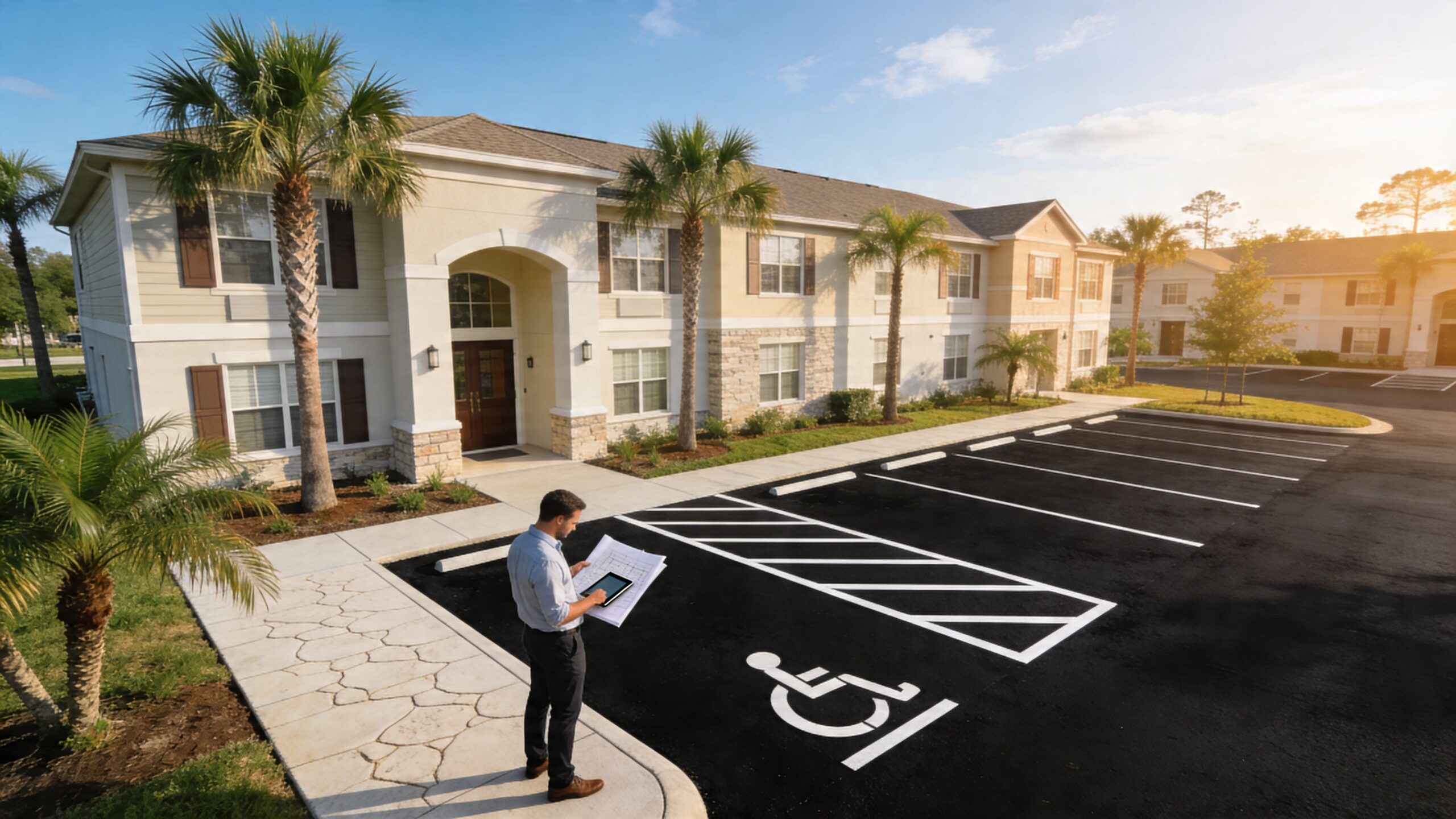
If you own rentals in Marion County or Citrus County, you’ve probably stood in the parking area or driveway and seen the same warning signs every investor sees sooner or later. Faded striping. Cracked asphalt. Spalled concrete. A walkway that looks tired before a tenant even reaches the front door.
That kind of wear doesn’t just hurt appearance. It affects how tenants, property managers, HOA boards, and appraisers judge the property. Owners who want to know how to increase rental property value often start with paint, fixtures, or landscaping. Those upgrades can help. But in Central Florida, the surface conditions people drive on, park on, and walk on usually have a bigger effect on first impressions, safety, maintenance costs, and rent justification than owners expect.
For rental houses, duplexes, retail centers, HOAs, churches, and mixed-use sites in Ocala, Dunnellon, Inverness, Crystal River, Homosassa, Belleview, Lecanto, and nearby areas, concrete and asphalt work is not cosmetic busywork. It’s asset protection. Done correctly, it supports stronger rents, fewer recurring repairs, and a cleaner path to long-term value.
Your Guide to Increasing Property Value in Central Florida
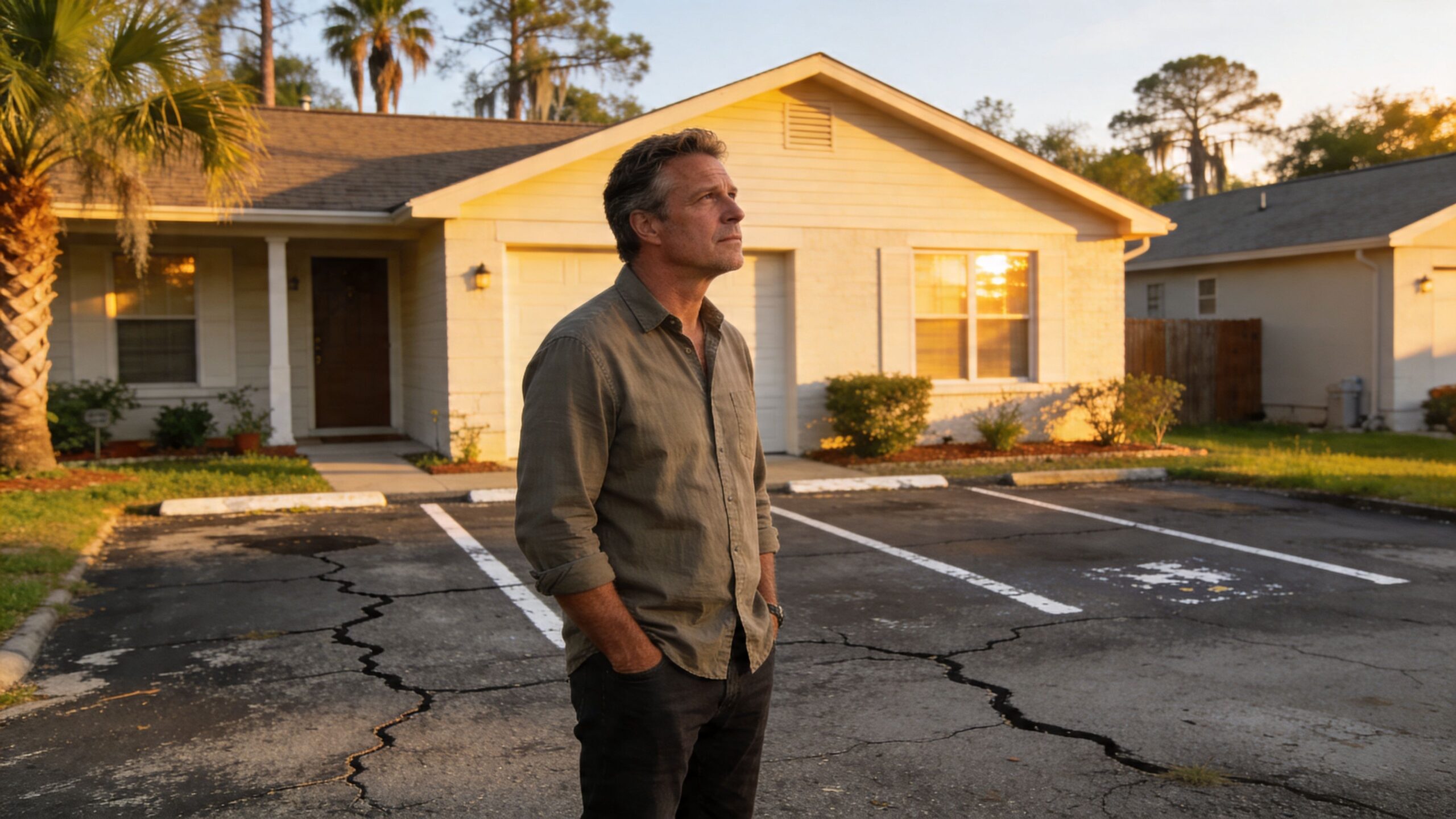
A lot of owners in Central Florida are dealing with the same question right now. The rents in their market may support an increase, but the property exterior doesn’t fully back it up. Tenants notice the lot before they notice the lease terms.
That matters because strategic rent increases to market levels are often the simplest way to raise value, and one analysis notes that 90% of acquired properties have rents below market, which creates room for adjustment when the property supports it, as discussed by Morris Invest on market-rate rent strategy. The catch is straightforward. If the exterior looks neglected, owners lose the visual and practical justification for that increase.
What owners get wrong
Many owners spend on upgrades that photograph well but don’t solve the hard problems. A fresh coat of paint won’t correct broken pavement edges. New shrubs won’t help an uneven walkway. Decorative touches can lift appearance for a while, but they don’t fix liability, drainage, access, or surface deterioration.
Concrete and asphalt do different jobs, and both affect value.
- Concrete work shapes the permanent parts of the property, including driveways, sidewalks, walkways, patios, and slabs.
- Asphalt maintenance protects traffic areas, improves presentation, and keeps parking lots usable and clearly organized.
- Striping and ADA markings affect accessibility, safety, and whether a commercial site feels professionally maintained.
Practical rule: If a tenant or visitor sees wear under their feet before they see the building’s best features, the surface work is overdue.
What holds value in Florida
Central Florida surfaces take a beating from heat, UV exposure, heavy rain, standing water, vehicle traffic, and oils. Cheap patchwork usually fails fast here. Owners who want durable returns should think in terms of replacement where structure is failing, and maintenance where the base is still sound.
That’s why the strongest exterior upgrades usually fall into two buckets:
| Surface condition | Smarter move |
|---|---|
| Asphalt is structurally intact but faded and exposed | Sealcoating and restriping |
| Parking layout is confusing or non-compliant | Re-stripe with ADA-compliant markings |
| Concrete is cracked, settled, or unsafe | Demolition and replacement |
| Property has underused outdoor space | Add functional concrete such as patios, sidewalks, or slabs |
Owners who treat pavement as a financial lever usually make better decisions than owners who treat it like an afterthought.
Boost Curb Appeal with Professional Asphalt Sealcoating and Striping
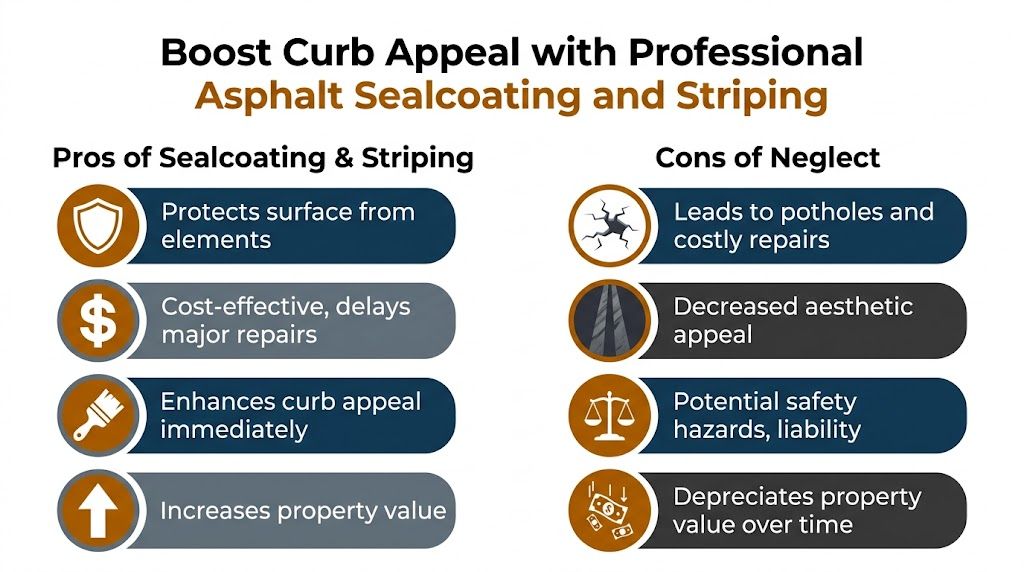
For many properties, asphalt maintenance is the fastest exterior upgrade with a visible payoff. A worn lot in Ocala or The Villages can make an otherwise solid property feel neglected. A freshly sealed and clearly striped lot changes that impression immediately.
Sealcoating is often misunderstood as a simple black finish. It’s really a protective layer. It helps shield asphalt from oil, fuel, weather, and surface breakdown that leads to cracking. According to Property Management Inc. on rental value upgrades, professional asphalt sealcoating can justify 5-15% higher rents in commercial or multi-family properties when paired with ADA-compliant striping, and it can extend surface life by 5-7 years.
Why sealcoating works in Central Florida
In Marion County and Citrus County, asphalt gets hit from several directions at once. Sun bakes the binder. Rain gets into weak spots. Tire traffic and parked vehicles stress the same areas over and over. Once cracks open up, the lot starts aging faster.
Sealcoating is the right move when the asphalt still has a workable base and the goal is to preserve it before repairs become larger and more expensive.
A good sealcoating plan helps with:
- Surface protection against UV, water, oil, and fuel exposure
- Visual reset that makes the property look actively managed
- Deferred replacement by slowing deterioration on serviceable pavement
- Tenant perception because the lot feels cleaner, safer, and better maintained
Owners comparing budgets often ask what this work typically costs. A practical overview is available in this guide on asphalt sealcoating cost per square foot.
Striping does more than make the lot look neat
Restriping is one of the simplest upgrades that managers delay too long. Faded lines create confusion. Confusion creates bad parking patterns, awkward circulation, and unnecessary complaints.
For retail centers, churches, schools, and HOA common areas in places like Homosassa, Inverness, and Crystal River, professional striping improves how the site functions day to day. That includes stall layout, directional arrows, fire lanes, no-parking zones, and accessible spaces.
A parking lot should tell drivers exactly where to go without making them guess.
ADA-compliant striping also matters. Commercial properties and community associations can’t afford to treat accessibility as optional. Proper markings improve usability and reduce avoidable exposure tied to non-compliant layouts or poor visibility.
When asphalt maintenance is worth doing
Not every lot needs full reconstruction. Some need preservation and organization.
Use this quick decision guide:
- If the asphalt is mostly intact, sealcoating is usually the first move.
- If the markings are faded, restriping should happen with the sealcoating cycle or as a stand-alone refresh.
- If the lot serves customers, residents, or members daily, ADA review should be part of the scope.
- If the lot has widespread structural failure, maintenance alone won’t solve it, and a larger repair plan may be needed.
For owners trying to increase value without tearing everything out, this is often the best first project.
Add Lasting Value with New and Replacement Concrete
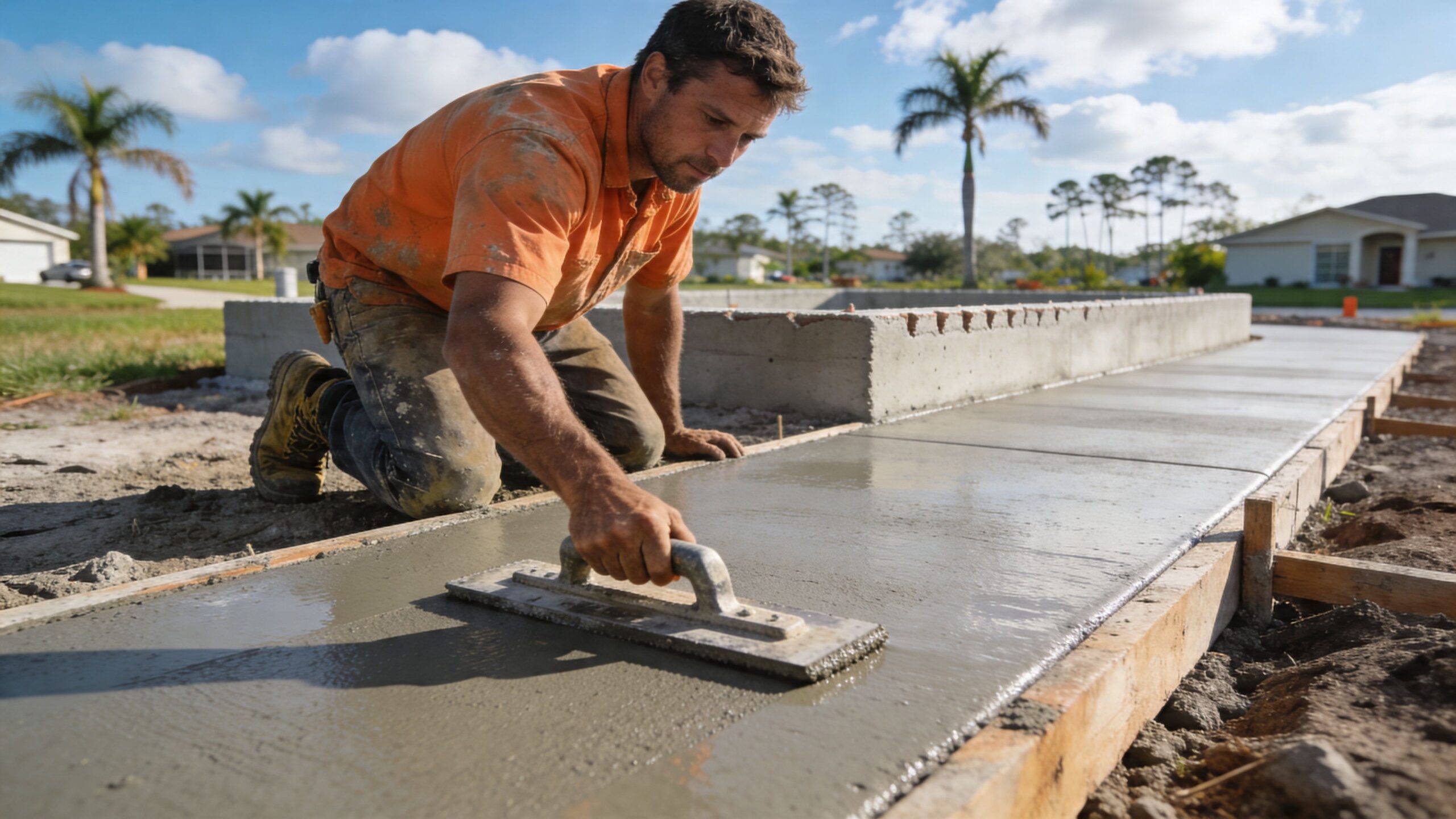
Concrete is where owners make permanent value gains. Asphalt maintenance protects and extends. Concrete construction creates or replaces the hardscape elements that define how the property works.
That includes driveways, sidewalks, walkways, patios, slabs, and demolition with replacement when the existing concrete has reached the point where repair doesn’t make sense anymore. In rentals across Summerfield, Belleview, Silver Springs, and Lecanto, these are the upgrades that remove visible age from the property instead of just covering it.
Replacement usually beats repeated patching
A cracked driveway or broken walkway often gets patched several times before the owner admits the obvious. The slab is done. It may have failed from age, settlement, poor base preparation, bad drainage, tree roots, or a combination of those issues.
Patching has a place. But if the concrete is uneven, crumbling, or unsafe, repeated repairs often cost more in the long run and still leave the property with an unfinished look. For rental properties, that’s a poor signal to send.
Common high-value concrete projects include:
- Driveway installation or replacement for single-family rentals and duplexes
- Sidewalk and walkway replacement for HOAs, churches, schools, and multi-unit properties
- Patios and slabs that create usable outdoor space
- Demolition and replacement where old concrete has become a safety issue
The numbers matter on driveways
Concrete replacement isn’t just about appearance. It can directly change income and value. According to Neighbor’s guide on increasing rental property value, a concrete driveway replacement costing $10,000-$20,000 can yield $200-$400 per month in additional rental income. The same source explains that with the Gross Rent Multiplier, a $2,400 annual rent increase multiplied by a GRM of 10 adds $24,000 to the property’s valuation.
That framework is useful because it forces owners to think like investors, not just shoppers. If a driveway replacement removes a major visual defect, improves drainage and parking function, and supports stronger rents, it isn’t just an expense line. It’s part of the valuation story.
Owners looking at outdoor living additions can also compare project scope in this guide on how much a concrete patio costs.
If a concrete surface is unsafe, visibly failing, and impossible to make uniform again, replacement is usually the cheaper decision over the life of the property.
What works in Florida and what doesn’t
Florida concrete work has to be built for weather and use, not just for handoff day. Thin shortcuts, poor compaction, weak finishing, and ignoring water movement almost always show up later.
What tends to hold up better:
| Upgrade type | Value impact |
|---|---|
| New driveway with proper prep and finish | Better curb appeal, parking function, and rent support |
| Replaced sidewalks and walkways | Safer access and cleaner presentation |
| New patio or slab | More usable space for residents |
| Decorative but durable finish | Better appearance without sacrificing utility |
What usually disappoints:
- Surface-only fixes on failing slabs
- Pouring over unresolved base issues
- Choosing looks over thickness and prep
- Ignoring how water moves around the slab
A rental in Inverness with a cracked front walk doesn’t need a decorative bandage. It needs a safe, level replacement. A house in Dunnellon with a failing driveway doesn’t gain value from another patch. It gains value from removing the defect and replacing it with a finished surface that looks intentional and lasts.
For owners serious about how to increase rental property value, concrete is often the long-term play.
Strategic Upgrades for Commercial Properties and HOAs
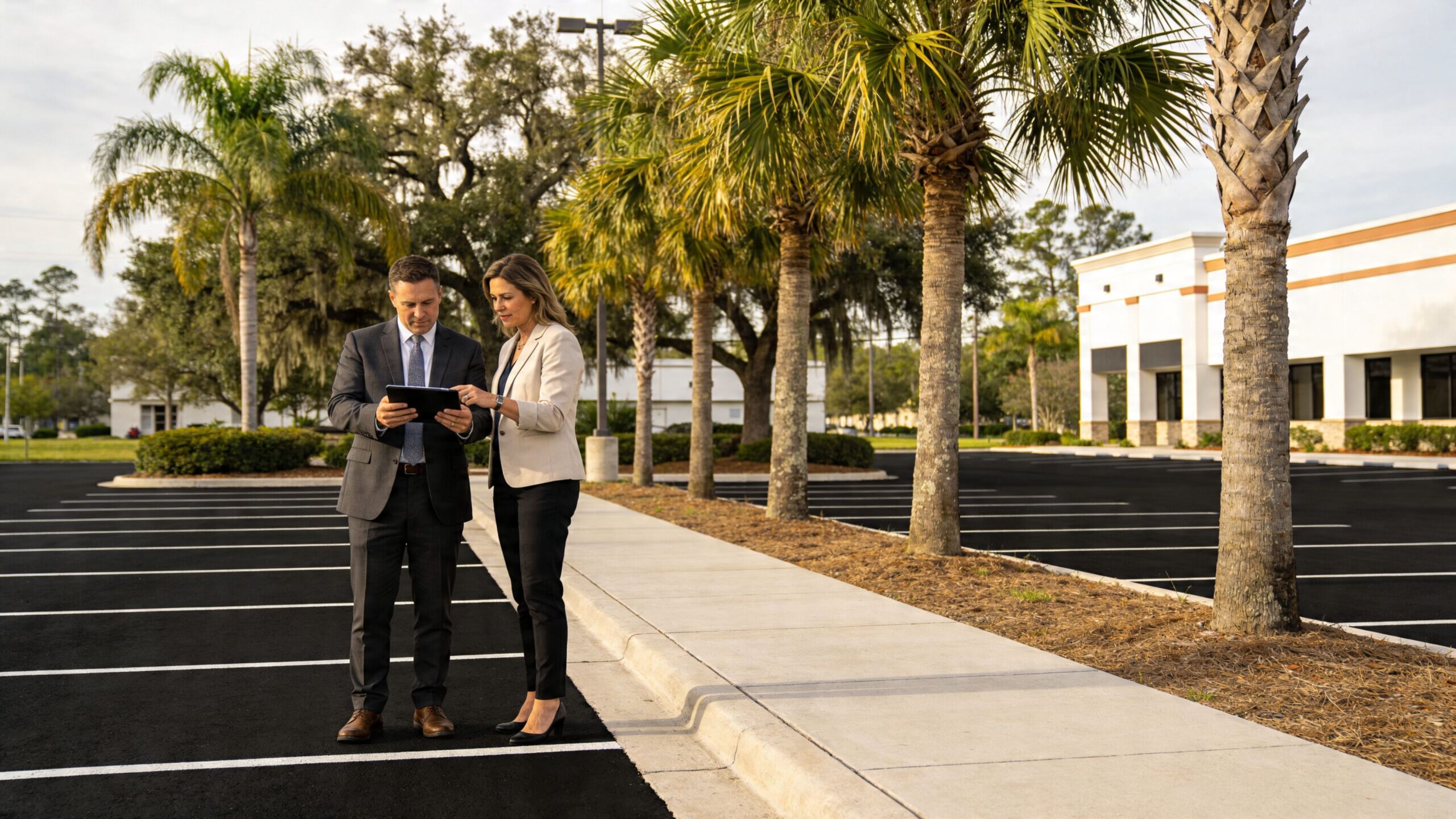
Commercial sites and HOA properties need a different mindset. The goal isn’t just to make the place look better. The goal is to improve function, reduce recurring expense, maintain accessibility, and schedule work without disrupting tenants, shoppers, residents, or members.
That usually means combining services instead of treating each problem separately. A retail plaza may need sealcoating and a full restripe. An HOA may need sidewalk replacement, accessible path corrections, and parking updates. A church may need a fresh layout with handicap spaces and directional markings before a major season of use.
Think in terms of NOI, not just repairs
For commercial owners and managers, the right exterior work affects operating performance. The useful framework here is the Income Capitalization Approach, where value is tied to net operating income.
According to Rent Seattle’s explanation of rental property valuation, professional asphalt sealcoating and ADA-compliant striping can reduce maintenance costs by 20-30% and enable 5-10% rent hikes. The same source notes that a $5,000 annual NOI increase on a property with a 6% cap rate adds over $83,000 in value.
That’s why experienced property managers stop looking at striping and pavement maintenance as line-item annoyances. They see them as part of revenue support and cost control.
What a coordinated site plan looks like
A smart upgrade plan usually includes a mix of priorities instead of one giant project done all at once.
- Safety first. Replace dangerous walks, trip points, and broken curb transitions.
- Protect what’s still healthy. Seal asphalt while it’s still worth preserving.
- Restore order. Re-stripe stalls, fire lanes, and directional flow so the property works cleanly.
- Handle compliance. Review ADA spaces, markings, and accessible routes together instead of piece by piece.
- Schedule around operations. Stage the work so tenants and visitors can still use the property.
If your team wants a practical look at layout considerations, this article on how to stripe a parking lot outlines the planning side clearly.
Commercial owners get the best results when they stop bidding each symptom separately and start managing the site as one asset.
One local option for this kind of combined work is Riverside Sealing & Striping, LLC, which handles concrete construction and asphalt maintenance for properties across Central Florida.
Where owners lose money
Commercial owners and HOAs usually run into trouble in three places:
- They wait until the asphalt is beyond preservation.
- They repaint lines without fixing layout or accessibility issues.
- They keep repairing broken concrete that should be removed and replaced.
Those are management mistakes, not just contractor issues. The value increase comes from timing, coordination, and choosing durable scopes of work.
Why Local Expertise Matters for Your Florida Property
A contractor can use the right words and still build the wrong solution for Florida. That happens more than owners realize. Surfaces that look fine at completion can break down early if the crew didn’t account for local soil movement, water behavior, traffic patterns, curing conditions, and the pace of weather changes in Central Florida.
That’s why local experience matters in Ocala, Dunnellon, Crystal River, Homosassa, Hernando, Beverly Hills, and the surrounding counties. Florida jobs aren’t won on paperwork alone. They’re won on preparation, scheduling discipline, and knowing when a repair is enough and when replacement is the only honest answer.
What to look for in a contractor
You want a contractor who can handle both concrete construction and asphalt maintenance, not a company that only knows one half of the site. Rental properties rarely have isolated needs. A property manager may need a new sidewalk at the front entry, sealcoating in the parking area, and ADA-compliant striping to finish the project correctly.
Use this checklist when you vet a contractor:
- Licensed and insured so the job is properly covered
- Clear timelines instead of vague scheduling promises
- Experience with ADA-related layout and access work
- Materials and methods suited to Florida sun and rain
- Ability to phase work for occupied commercial properties and HOAs
- Honest recommendations on repair versus replacement
Local judgment matters on newer value plays
This also applies to projects that go beyond basic repairs. According to RentRedi’s discussion of rental income upgrades, local experts are better positioned to respond to the projected post-2025 increase in ADU conversions, and pairing an ADU slab installation with ADA-accessible pavement upgrades can boost overall property value by an additional 10-20% compared with interior-only projects.
That kind of planning gets missed when a contractor only thinks in isolated trades. A local team sees the whole site. Slab placement, access routes, parking usability, drainage, and finish work all tie together.
A property owner doesn’t need the cheapest bid. They need a scope that holds up.
Your Questions Answered by Pavement Experts
Owners usually ask the same practical questions once they start comparing bids and deciding where to invest first. The answers below are the issues that most often affect value, safety, and project planning in Marion County, Citrus County, and nearby Central Florida communities.
Frequently Asked Questions
| Question | Answer |
|---|---|
| How long does concrete last in Florida? | A properly installed concrete driveway, patio, slab, or walkway can last for many years, but lifespan depends on site prep, drainage, traffic load, and maintenance. In Florida, poor water management and weak base preparation usually shorten performance faster than owners expect. |
| Can damaged concrete be repaired, or should it be replaced? | Minor defects can sometimes be repaired. If the slab is uneven, badly cracked, crumbling, or creating a trip hazard, replacement is often the better long-term decision. For rentals, appearance and safety both matter. |
| How often should asphalt be seal coated? | There isn’t one universal schedule for every property. Traffic volume, sun exposure, standing water, and current surface condition matter more than a generic calendar rule. In Central Florida, regular inspections help owners catch the right timing before the asphalt deteriorates too far. |
| Do you offer ADA-compliant striping? | ADA-compliant striping and accessible parking layouts are a standard need for many commercial properties, HOAs, churches, schools, and retail sites. The important part isn’t just painting symbols. It’s making sure the layout, markings, and access routes work together. |
| What areas do you serve in Marion and Citrus County? | Service typically includes Marion County and Citrus County, along with surrounding Central Florida communities such as Ocala, Dunnellon, Belleview, Silver Springs, Summerfield, Crystal River, Homosassa, Inverness, Lecanto, Beverly Hills, Hernando, and The Villages. |
| What adds more value first, asphalt work or concrete work? | It depends on the property’s weakest point. If the lot is faded but structurally sound, sealcoating and striping may be the quickest win. If broken driveways or walkways are the obvious issue, concrete replacement often delivers the stronger long-term result. |
| How disruptive are commercial projects? | Good scheduling reduces disruption. Work can often be phased so parts of the site remain usable while the project is completed. Property managers should ask about staging, access control, and communication before work begins. |
The right first project is usually the one tenants, residents, or visitors notice immediately and use every day.
When owners ask how to increase rental property value, the answer usually isn’t flashy. It’s practical. Fix the surfaces that shape the first impression, affect safety, and support rent justification. Protect the asphalt before it fails. Replace concrete when repair no longer makes sense. Make accessibility part of the plan, not an afterthought.
If you’re evaluating a rental house, shopping center, HOA, church, or mixed-use property in Central Florida, Riverside Sealing & Striping, LLC offers free, no-pressure consultations for concrete and asphalt projects across Marion County, Citrus County, and surrounding areas. If you want a practical scope, clear scheduling, and long-lasting work instead of temporary fixes, reach out for an estimate.