
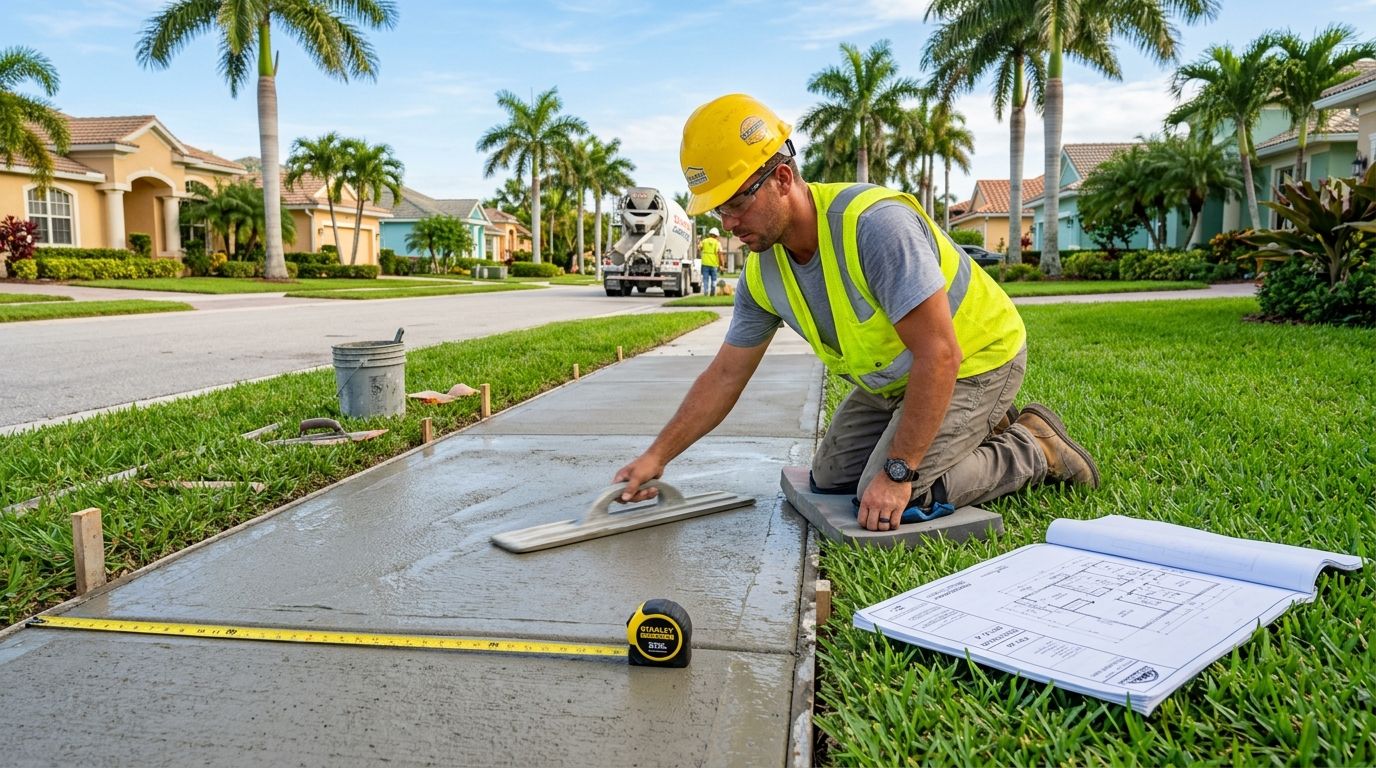
A standard concrete sidewalk in 2026 usually lands around $8 to $18 per square foot, with national benchmarks showing an average near $8.63 per square foot, a typical installed range of $5.89 to $12 per square foot, and many residential installs commonly quoted at $8 to $14 per square foot while commercial work often runs $10 to $18 per square foot. The final sidewalk installation cost depends heavily on the site, because grading, old concrete removal, thickness, reinforcement, layout, and local code requirements can change the number fast.
If you're pricing a new walkway in Ocala, replacing broken sections in Dunnellon, or budgeting an ADA-minded path for a property in Lecanto or Homosassa, that first number only gets you in the ballpark. Around Marion County, FL and Citrus County, FL, the primary work is figuring out what the ground, drainage, access, and finish are going to demand before the truck ever shows up.
That's where a lot of owners get tripped up. A sidewalk looks simple on paper. In the field, one straight residential path in Belleview is a very different job from a curved common-area walk in The Villages or a commercial entrance in Inverness that has to meet accessibility standards and tie into existing pavement cleanly.
Table of Contents
- Budgeting for a New Sidewalk in Central Florida
- Understanding Average Sidewalk Installation Costs
- The 5 Key Factors Driving Your Final Sidewalk Cost
- Sample Sidewalk Project Estimates in Central Florida
- Florida-Specific Challenges for Sidewalk Installation
- Your Partner for Concrete and Asphalt in Marion and Citrus County
- Frequently Asked Questions About Sidewalks
Budgeting for a New Sidewalk in Central Florida
A Dunnellon homeowner calls about a short walk to the front door. An HOA manager in Citrus County asks about replacing a path between the parking area and the clubhouse. On paper, both jobs are “just sidewalks.” In the field, they budget very differently.
The mistake I see most often is owners pricing the concrete and forgetting the work underneath it. In our part of Florida, a sidewalk budget can change fast once we check drainage, soft spots in the base, root lift, or the slope needed to keep water off the walking surface. A straight residential path on stable ground is one kind of project. A long shared-use walk with tie-ins, accessibility requirements, and traffic control is another.
Practical rule: If the job includes removal, grading, forming, and a proper finish, budget for a construction project, not a quick repair.
That matters in Marion and Citrus County because local conditions punish shortcuts. I've seen sidewalks poured over loose sandy soil without enough base prep. They looked fine at first, then settled, held water, and cracked earlier than they should have. Spending less up front can turn into demolition and replacement much sooner than the owner expected.
A better way to budget is to start with use, then site conditions, then finish level. Residential entry walks, HOA common-area paths, and commercial access routes each carry different labor, code, and durability demands. If you are also comparing this work to a slab project, our guide to concrete slab cost per square foot helps show why sidewalk pricing follows a different set of labor and prep requirements.
The numbers matter, but the scope matters more. A realistic budget in Central Florida starts with what the sidewalk needs to do and how well the ground, drainage, and layout will support it over time.
Understanding Average Sidewalk Installation Costs
What the national benchmarks really mean
Homeowners around Dunnellon usually ask the same question first. “What does a sidewalk cost per square foot?” It is a fair place to start, but it only gives you a rough baseline.
Across the market, standard concrete sidewalk pricing is often quoted in a mid-range per-square-foot band for basic installation on a straightforward site. That helps for early budgeting, especially if you are comparing a short front-entry walk to a longer path along a driveway or side yard. In Central Florida, though, that average can move fast once the layout, base condition, drainage, and county requirements are known.
Residential work is usually the lower end of the range. HOA and commercial jobs tend to run higher because they often involve longer runs, stricter layout control, ADA considerations, tie-ins to existing pavement, or more cleanup and traffic management. Replacement work also costs more than new installation on clean ground because demolition, haul-off, and base correction are part of the job.
Here's a visual many owners find useful while sorting through material choices and price tiers:
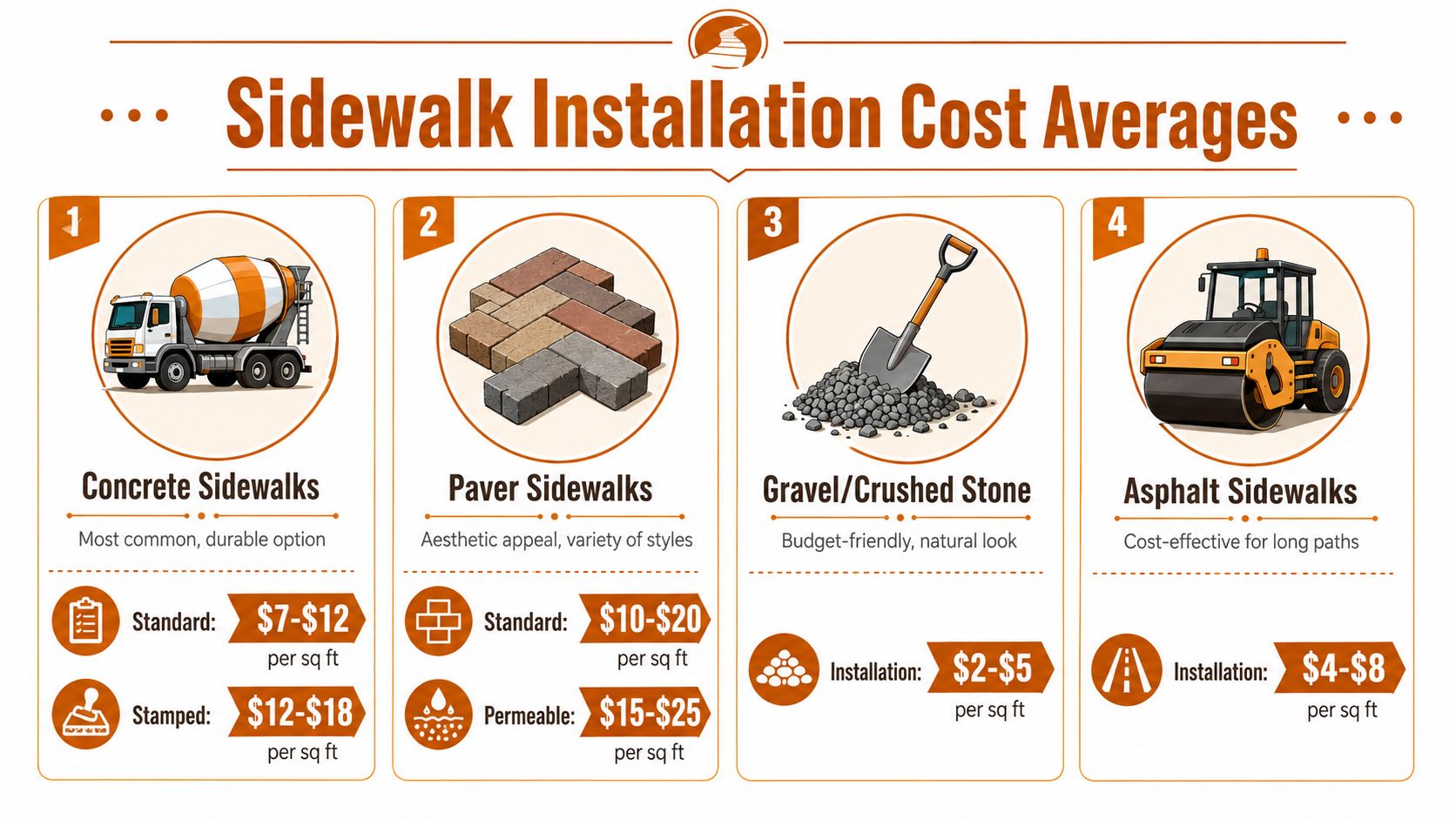
If you also want a broader cost framework for flatwork, this guide on concrete slab cost per square foot helps show how concrete pricing changes with thickness, prep, and scope.
Why square footage is only the starting point
Two sidewalks can measure the same and land at very different prices.
A short, straight path on stable ground is efficient to form, pour, and finish. A sidewalk with curves, tree roots, irrigation lines, soft sand, or tight access around a house takes more labor and more care. That difference matters in Marion and Citrus County, where sandy soils, heavy summer rain, and drainage issues can turn a simple-looking job into a base-prep job first.
I tell customers to use square-foot pricing as a screening tool, not a final answer. It helps you sort ballpark numbers. It does not tell you whether the quote includes excavation depth, compacted base, reinforcement where needed, proper slope, cleanup, and a finish that will hold up in Florida weather.
This video gives a practical look at how sidewalk work comes together in the field:
A fair sidewalk quote should show more than concrete. It should reflect prep, labor, cleanup, and the conditions on site.
The 5 Key Factors Driving Your Final Sidewalk Cost
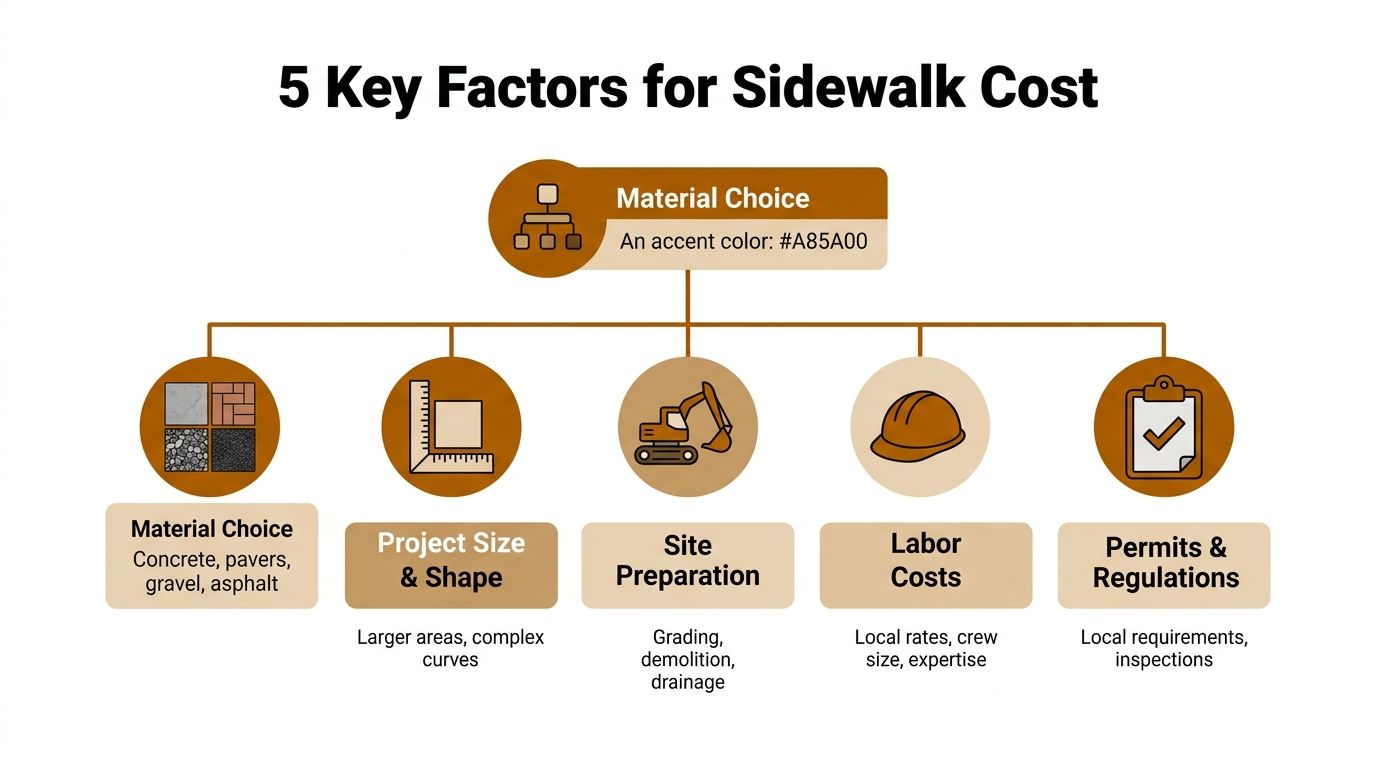
A sidewalk can look simple from the street. On the jobsite, the price usually changes because of labor, prep, access, and the way the walk has to perform once Florida weather gets on it.
In Dunnellon, Ocala, Beverly Hills, and nearby areas, I see five factors move a quote more than anything else.
Material choice and finish
Standard concrete with a broom finish is still the workhorse for residential sidewalks. It holds up well, gives you good traction in our wet season, and keeps maintenance straightforward.
Cost climbs when the finish asks for more handwork or more risk control. Colored concrete, decorative edges, exposed aggregate, stamped sections, and custom saw cuts all take extra time and tighter timing during the pour. If a front entry walk is part of the home's appearance, that added effort can make sense. If the goal is a durable path from driveway to porch, plain concrete is often the better value.
Site preparation and demolition
Good prep decides whether a sidewalk stays stable or starts moving, settling, and cracking early.
Sandy soil in Marion and Citrus County can be easy to excavate, but it also means the base has to be shaped and compacted correctly. Add summer rain, low spots, old root zones, or soft areas near downspouts, and prep turns into a bigger part of the job. Replacement work adds another layer because the old concrete has to be cut, broken out, hauled off, and tied back into the surrounding grade cleanly.
If you want a better sense of what proper base work involves, this guide on preparing the ground for a concrete slab covers the same field principles that apply to sidewalks.
Layout complexity and labor
Straight runs are faster to build. Curves and tight transitions are slower for a reason.
A curved sidewalk needs more layout time before any concrete arrives. Forms have to be bent and pinned accurately, widths need to stay consistent, and the finish crew has less room for error. The same goes for narrow side-yard access, gates, fencing, landscaping, irrigation lines, and AC pads that limit equipment movement. A path that wraps a clubhouse bed in an HOA or snakes through a front yard in Hernando may use the same concrete as a straight walk, but it takes more labor to get it right.
Permits and local requirements
Some sidewalks are private flatwork. Others involve county review, right-of-way limits, ADA-related slope concerns, or HOA standards.
That matters around Marion County and Citrus County, especially if the walk ties into a driveway, street edge, commercial entrance, or common area. A job can slow down fast if grades are wrong, drainage is ignored, or the planned location crosses into an area that needs approval first. The cheaper shortcut is often the expensive mistake.
Field note: A sidewalk that fails inspection or holds water after the first heavy rain costs more to fix than it would have cost to build correctly the first time.
Thickness, reinforcement, and intended use
Use drives structure.
A simple residential path for foot traffic is one thing. A section that crosses a driveway apron, serves an HOA common area, or handles commercial entry traffic is another. As use gets heavier, the sidewalk may need a thicker section, better base support, reinforcement in the right places, and more attention to joints and slope control. Commercial walks also bring stricter expectations for transitions and accessibility, which raises labor even if the footprint is not large.
Here is the practical breakdown:
- Basic residential path: Built for daily foot traffic and clean appearance.
- Driveway crossing: Built to handle vehicle loading without premature failure.
- HOA common-area sidewalk: Built with appearance, drainage, and repeat foot traffic in mind.
- Commercial entrance walk: Built with tighter tolerances for slope, transitions, and code compliance.
- Replacement section: Built with extra labor for demolition, disposal, and matching existing grades.
Sample Sidewalk Project Estimates in Central Florida
Three local-style budgeting examples
A homeowner in Dunnellon might need a short front walk to the driveway. An HOA in The Villages may be pricing a longer curved path through a common area. A small business in Homosassa could need an entry walk that has to meet tighter slope and access standards. Those jobs do not price the same, even when the square footage looks close on paper.
These are sample budgets, not fixed quotes. They are meant to help owners in Marion and Citrus County put real project totals to the cost ranges discussed earlier.
| Project Scenario | Description | Estimated Cost Range |
|---|---|---|
| Belleview residential walkway | New 4' x 25' straight sidewalk, about 100 square feet, standard broom finish, easy access, no demolition | About $800 to $1,400 for a straightforward install |
| The Villages HOA common-area sidewalk | New 5' x 60' curved walk, about 300 square feet, more layout work, longer forming, appearance matters | About $3,000 to $4,800 if access is decent and site prep stays simple |
| Homosassa commercial entrance walk | New 5' x 20' entry route, about 100 square feet, tighter slope control, cleaner transitions, heavier planning | About $1,000 to $1,800 for the walk itself, with costs rising if accessibility corrections or tie-ins are required |
The Belleview example is the one homeowners ask about most. If the route is straight, the crew can get materials in without trouble, and the grade is already close, the budget usually stays predictable. Once that same walk has to cross roots, match an existing porch elevation, or replace broken concrete, the number climbs because labor climbs.
The HOA example is different for a reason. Curves take more setup time, and common-area work usually comes with stricter expectations for appearance, drainage, and traffic control while the job is underway. Even with a basic finish, a longer path in The Villages, Inverness, or Ocala often carries more field time than a small residential pour.
Commercial entry work is where owners can get surprised. The square footage may be modest, but the tolerances are tighter, especially if the path connects to parking, storefront access, or an existing accessible route. If you are comparing options for slopes, width, and transitions, these ADA sidewalk requirements for commercial and public-facing walks are a good starting point before final pricing.
One more local point. In Central Florida, two projects with the same size can end up with different totals because one site has clean sandy subgrade and easy access, while the other needs grading corrections after summer rain or extra base work in a low spot. That is why I prefer giving customers a sample project total instead of throwing out a price per square foot and hoping it fits.
Florida-Specific Challenges for Sidewalk Installation
Heat rain and sandy subgrade matter here
Central Florida is hard on flatwork when the prep is rushed. Heat changes working conditions. Heavy rain exposes drainage mistakes. Sandy soil can perform well, but only if the base is shaped and compacted correctly.
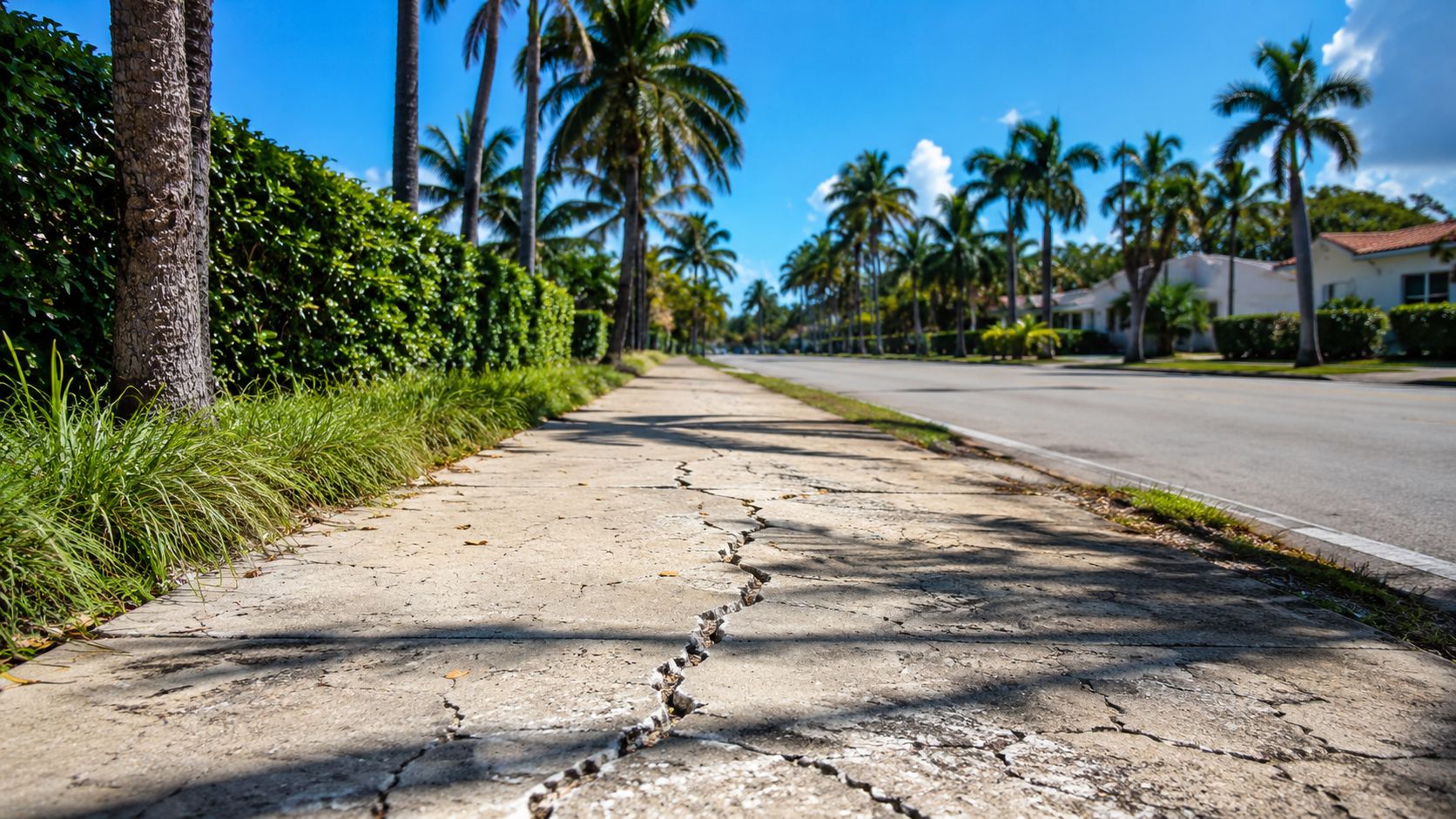
In places like Summerfield, Hernando, and Crystal River, I've seen the same pattern repeat. Water runs where the owner didn't expect it to run, the edge support weakens, and the sidewalk starts showing settlement or cracking earlier than it should.
That's why local grading matters so much. The concrete itself might be fine. The failure starts underneath it.
For commercial sites and public-facing properties, accessibility details matter too. If you're sorting through route width, transitions, slopes, and related planning issues, these ADA sidewalk requirements are worth reviewing before final layout decisions get made.
A contractor who works regularly across Marion County and Citrus County knows the local mix of rain, heat, and sandy subgrade isn't a small detail. It's the job.
Your Partner for Concrete and Asphalt in Marion and Citrus County
What professional planning changes
Good sidewalk work starts well before the pour. The contractor needs to read drainage, inspect access, understand the intended traffic, and decide whether the project is really a new install, a replacement, or a correction of an older site problem.
That's especially true when a property has more than one surface to maintain. A church in Ocala may need a new concrete sidewalk near the entrance, but it may also need asphalt sealcoating and fresh markings in the parking lot. An HOA in Citrus County might be dealing with walks, curbs, and lot striping as part of one maintenance cycle.
That broader view matters. You want a crew that understands both concrete construction and pavement upkeep, not someone who only sees one piece of the property. That's the value behind working with Concrete and Asphalt Experts in Marion and Citrus County.
For owners who want a site-based review, Riverside Sealing & Striping, LLC handles concrete walkways, replacement work, asphalt maintenance, and parking lot striping across Central Florida. The practical benefit is straightforward. One contractor can look at the sidewalk itself, the surrounding grade, and the adjacent paved areas together instead of treating them like unrelated problems.
Reliable scheduling and clear scope usually save more frustration than shaving a little off the first quote.
Frequently Asked Questions About Sidewalks
How long should a new concrete sidewalk last in Florida
A transportation policy review notes that sidewalks typically have about a 20-year average operating life, according to the Victoria Transport Policy Institute review on sidewalk costs and planning. In real life, the outcome depends on base preparation, drainage, thickness, and whether the sidewalk is used the way it was designed to be used.
A well-built sidewalk can serve for many years. A poorly supported one can start showing trouble much earlier.
Do I need a permit to replace my sidewalk in Marion County or Citrus County
Sometimes yes, sometimes no. It depends on where the sidewalk sits, whether it touches public right-of-way, and whether the project changes access, grade, or route conditions.
For a private residential walk on private property, the process is often simpler. For a sidewalk near the street, a commercial entrance, or anything tied to public access, it's smart to verify local requirements before work begins.
Is it cheaper to repair or replace a cracked sidewalk
If the damage is isolated and the slab is still stable, a repair may make sense. If the sidewalk is uneven, repeatedly cracking, settling, or failing because of base issues, replacement is often the better long-term decision.
The mistake is paying for surface-level fixes when the underlying problem is underneath. That usually turns into repeat spending.
What finish makes the most sense for a Florida sidewalk
For most homes and many commercial settings, a standard broom finish is the most practical choice. It provides traction, looks clean, and avoids paying extra for decorative work where design isn't the priority.
If appearance is a major part of the project, decorative concrete may be worth considering. Just make sure the finish choice comes after the drainage, layout, and structure are handled properly.
If you're planning a new sidewalk or replacing damaged concrete in Ocala, Dunnellon, Belleview, Silver Springs, Summerfield, Crystal River, Homosassa, Inverness, Lecanto, Beverly Hills, Hernando, or The Villages, Riverside Sealing & Striping, LLC offers free, no-pressure on-site consultations for property owners across Marion County, FL and Citrus County, FL. If you'd like a clear scope, realistic budget, and a practical recommendation for your site, it's a good place to start.