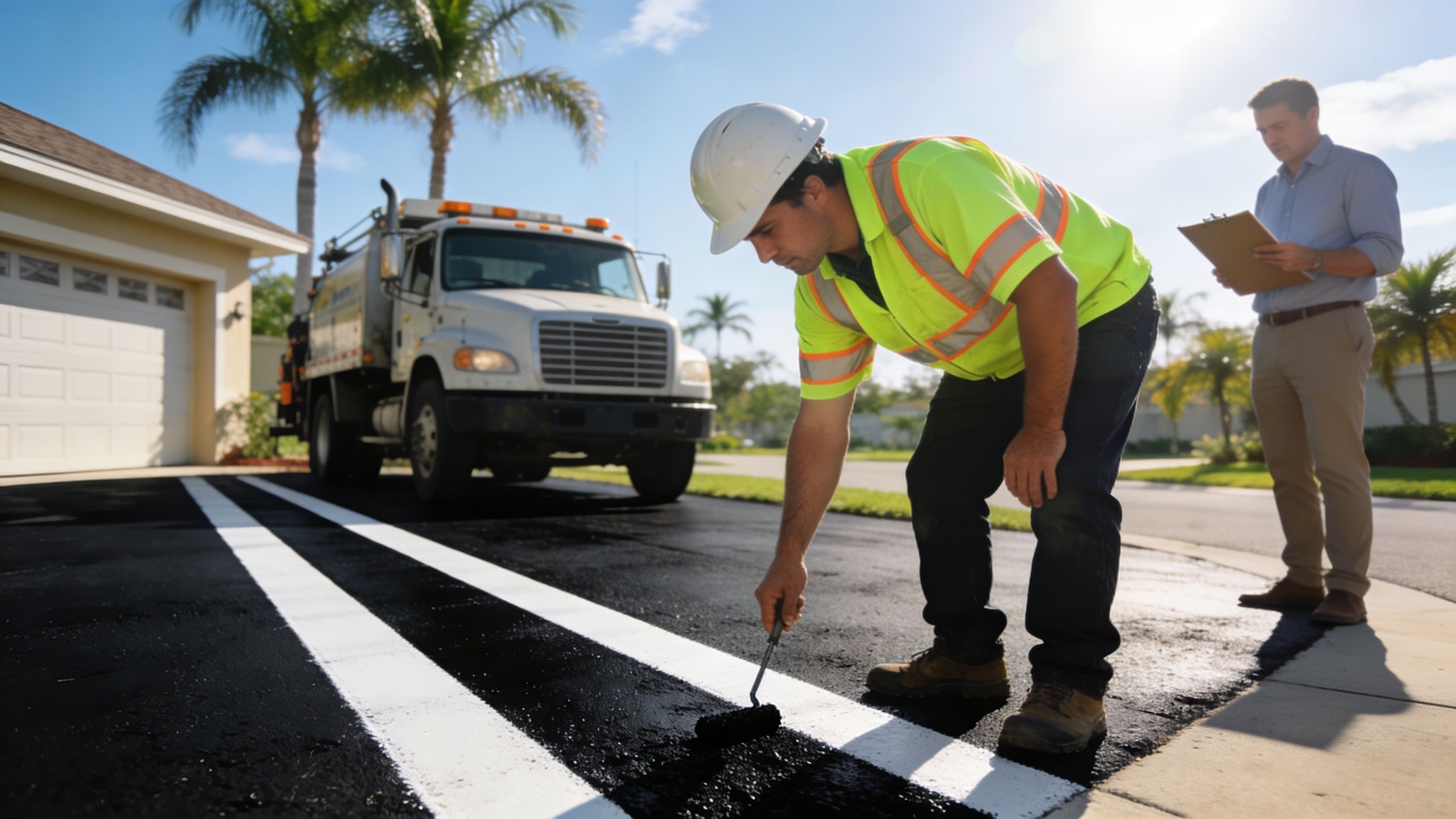
If you searched for southeastern sealcoating inc, you're probably not browsing out of curiosity. You've got a driveway going soft at the edges, a parking lot that looks worn out, or striping that's faded enough to create problems for tenants, customers, or an HOA board.
That search makes sense. Southeastern Sealcoating, Inc. is a family-owned company established in 1983 in Birmingham, Alabama, with over four decades of operation, according to its BBB business profile. A company with that kind of history gets attention across the Southeast.
But if you manage property in Ocala, Dunnellon, Belleview, Silver Springs, Summerfield, Crystal River, Homosassa, Inverness, Lecanto, Beverly Hills, Hernando, or The Villages, the key question isn't whether an Alabama contractor has a solid reputation. Instead, the crucial question is whether the company you hire in Marion County, FL or Citrus County, FL can hold up under Florida heat, rain, traffic, and scheduling pressure.
Poor prep shows up fast here. Wrong materials show up fast here. Weak striping, sloppy concrete finishing, and rushed sealcoating don't stay hidden for long in Central Florida.
Your Central Florida Paving Contractor Hiring Checklist
A lot of owners and property managers start with a name they recognize. That's how searches for southeastern sealcoating inc happen. You hear the company has been around for years, you look them up, and then you try to find someone with similar experience closer to home.
That's the smart move.
An established contractor matters. Local access matters more. If you're in Ocala managing a retail center, or in The Villages dealing with a tired residential drive, you need a crew that can inspect the site, explain the work clearly, and return when follow-up is needed. Out-of-state reputation doesn't replace local accountability.
What I'd check first in Central Florida
When I talk to property owners, I tell them to narrow the field quickly. Don't get distracted by a polished website or a low quote.
Look for these basics first:
- Local working knowledge: Florida sun, heavy rain, and daily traffic punish asphalt and concrete differently than other regions.
- Clear communication: If a contractor can't explain the process in plain English, don't trust the estimate.
- Commercial and residential capability: A solid contractor should understand parking lots, striping, sidewalks, driveways, patios, and site prep.
- Visible process: Good contractors don't hide prep steps, materials, or scheduling details.
Practical rule: If a contractor won't explain how they'll prep, what they'll apply, and how long the site will be affected, they're asking you to buy blind.
For property managers comparing firms, this is the same kind of screening logic you'd use when reviewing guidance on questions to ask a concrete contractor. The surface might be different, but the vetting standard should be just as strict.
The mistake I see most often
People hire the quote, not the contractor.
That usually ends with callbacks, patch jobs, striping failure, drainage complaints, or concrete cracking that should've been prevented during base prep. In Marion County, FL and Citrus County, FL, you want a contractor who treats asphalt maintenance and concrete construction like connected parts of the same property-protection plan.
That's the standard. Anything less costs more later.
Verify Licenses and Insurance The Non-Negotiable First Step
At this point, I'd disqualify most contractors.
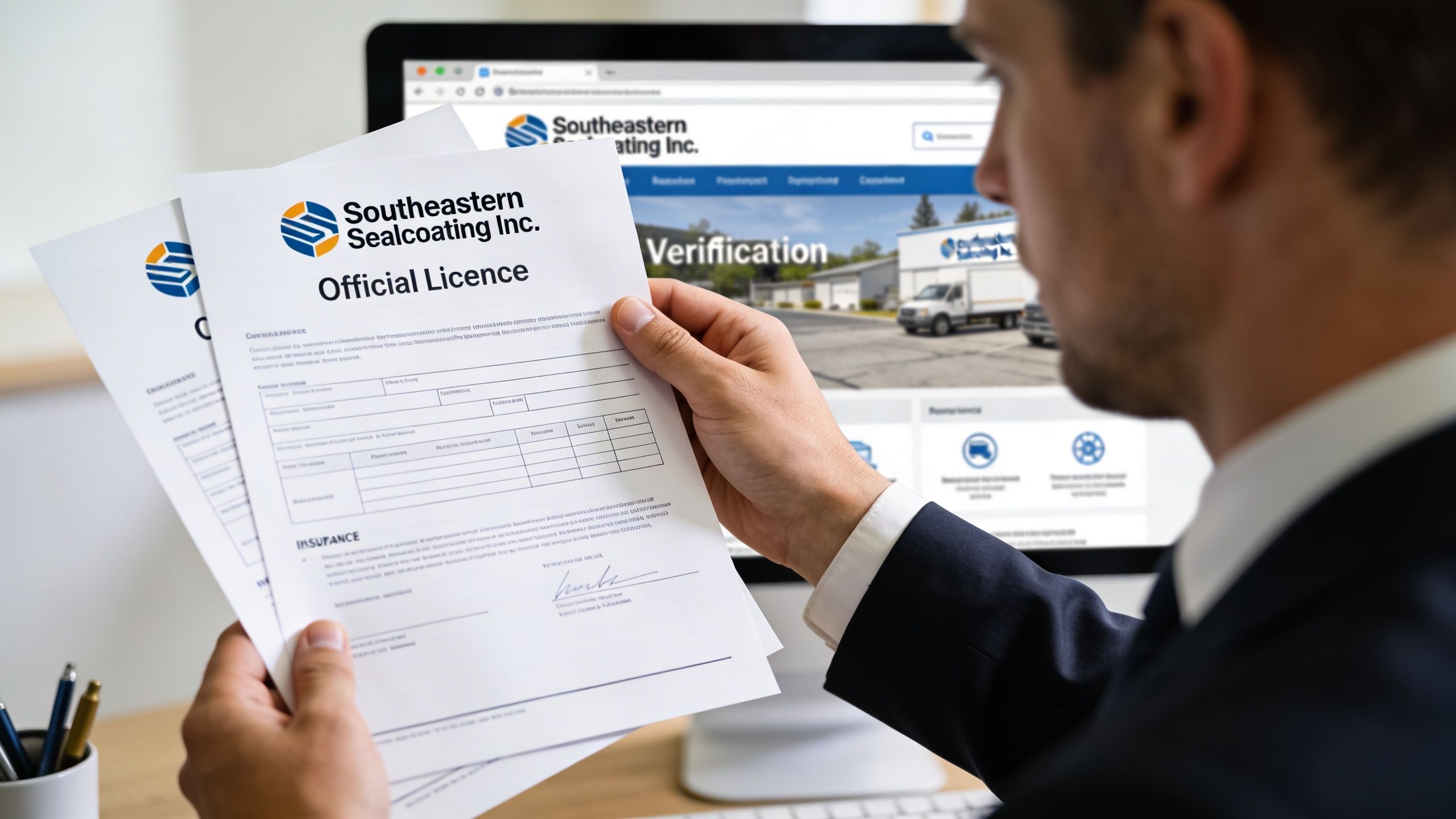
A lot of companies lean on words like “family-owned,” “trusted,” or “experienced.” That's fine, but it's not enough. Lack of transparency on licensing and insurance is a major red flag, and properly insured contractors can reduce a client's liability exposure in disputes by an average of 40%, based on the verified industry analysis cited in Southeastern's transparency-gap research reference.
What to ask for immediately
Don't ask vague questions. Request documents.
Ask for:
- Contractor license information
- General Liability insurance
- Worker's Compensation coverage
- Certificate of Insurance sent from the insurer
- Business name that matches the estimate and contract
If the company hesitates, gets defensive, or says “we've never had to provide that before,” move on.
Why both coverages matter
General Liability helps protect against property damage and certain claims tied to the work.
Worker's Compensation matters because if a worker gets hurt on your site, you don't want unclear responsibility landing on you.
That matters whether you own a shopping center in Ocala, manage an HOA in Summerfield, or oversee church property in Homosassa. If trucks, sealers, saws, compactors, or striping crews are on your site, paperwork needs to be clean before work starts.
Ask for the COI directly from the insurance agent or carrier, not just a phone photo from the contractor's truck. Real contractors won't fight you on that.
What a clean verification process looks like
A professional contractor should be able to provide credentials without drama. You shouldn't have to chase them.
Use this quick screen:
| Check | What you want to see |
|---|---|
| Business identity | Same company name on estimate, insurance, and invoice |
| Insurance proof | Current documents with active dates |
| Scope fit | Coverage appropriate for paving, sealcoating, striping, or concrete work |
| Responsiveness | Fast answers, no dodging basic questions |
If you're in Belleview, Lecanto, or Beverly Hills, this step protects you before anyone unloads equipment. Skip it, and you're trusting your property to a promise instead of a business.
Evaluate Materials and Methods for Florida's Climate
Most property owners never get a real explanation of materials. They get a price and a vague promise that the lot or driveway will “look great.”
That's not good enough in Central Florida.
The difference between a job that holds up and one that burns off, peels, or wears unevenly often comes down to the material choice and how the contractor applies it. Florida heat, UV exposure, hard rain, and standing water punish shortcuts fast.
Sealant type matters
Ask what sealer they're using. Ask for the product name. Ask why they chose it for your property.
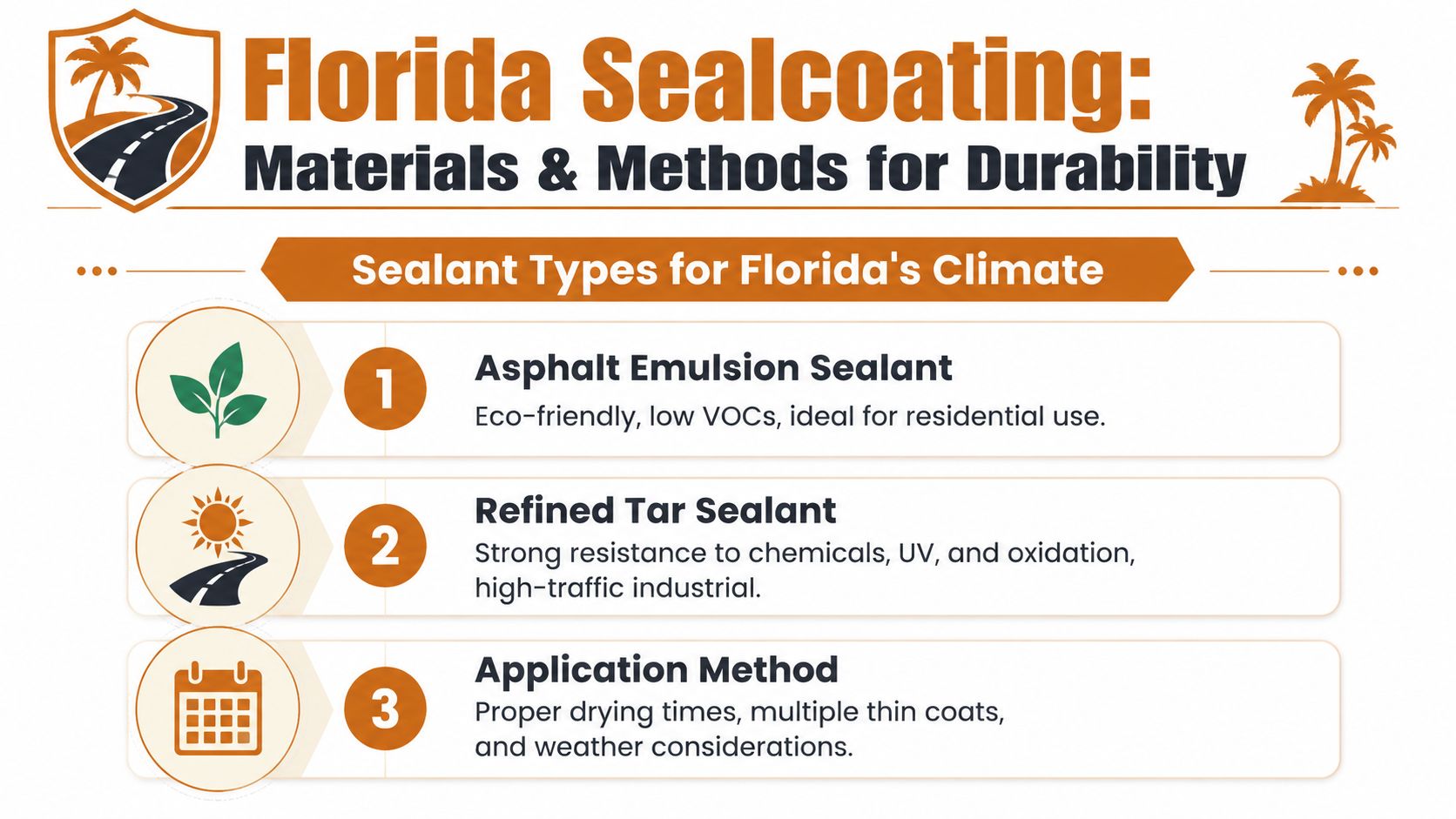
Some contractors use asphalt emulsion sealant. Others may use refined tar products for certain commercial conditions. The right answer depends on the site, traffic, exposure, and owner priorities. What matters is that the contractor can explain the tradeoffs instead of hiding behind generic language.
For parking lots in Ocala or Inverness, you also want to know whether oil-stained areas will be specially treated before sealing. A contractor who ignores contamination is setting the coating up for failure.
Application method matters just as much
One heavy coat can look good at first and still fail early.
Ask these questions:
- How many coats are included
- Will the material be sprayed, squeegeed, or both
- How long will curing take based on weather
- What conditions would delay the job
A professional answer should sound specific. Not rehearsed. Not vague.
For owners comparing local options, a contractor experienced in Florida asphalt paving should be able to explain how weather windows, surface temperature, and moisture affect the final result.
A contractor who can't explain materials in plain language probably doesn't control quality on the job.
Striping and concrete deserve the same scrutiny
A parking lot isn't finished when the sealer dries. Striping quality matters for safety, traffic flow, and appearance. Ask what paint or marking material they'll use, how layout will be handled, and whether ADA-related markings will be addressed clearly.
The same logic applies to concrete. If you're replacing a driveway in Dunnellon, adding a patio in Summerfield, or fixing sidewalk sections in Crystal River, ask about mix design, finish, base prep, and joint placement. Concrete and asphalt are different trades, but the hiring standard should be identical. Good materials, correct method, no guessing.
What I'd reject right away
I'd walk away from any estimate that says only:
- Sealcoat parking lot
- Repair driveway
- Stripe as needed
- Use commercial-grade materials
Those lines tell you almost nothing. If the company won't identify products and method, you can't fairly compare bids.
Demand Thorough Surface Preparation
If prep is weak, the whole job is weak. That's true for sealcoating, striping, patching, and new concrete.
A lot of paving failures start before the first coat goes down. Verified analysis tied to Southeastern's site notes that inadequate surface preparation is a leading cause of premature deterioration, and contractors who focus on detailed prep work, including proper crack filling and cleaning, report surfaces lasting up to 50% longer according to the cited analysis at Southeastern Sealcoating's website.
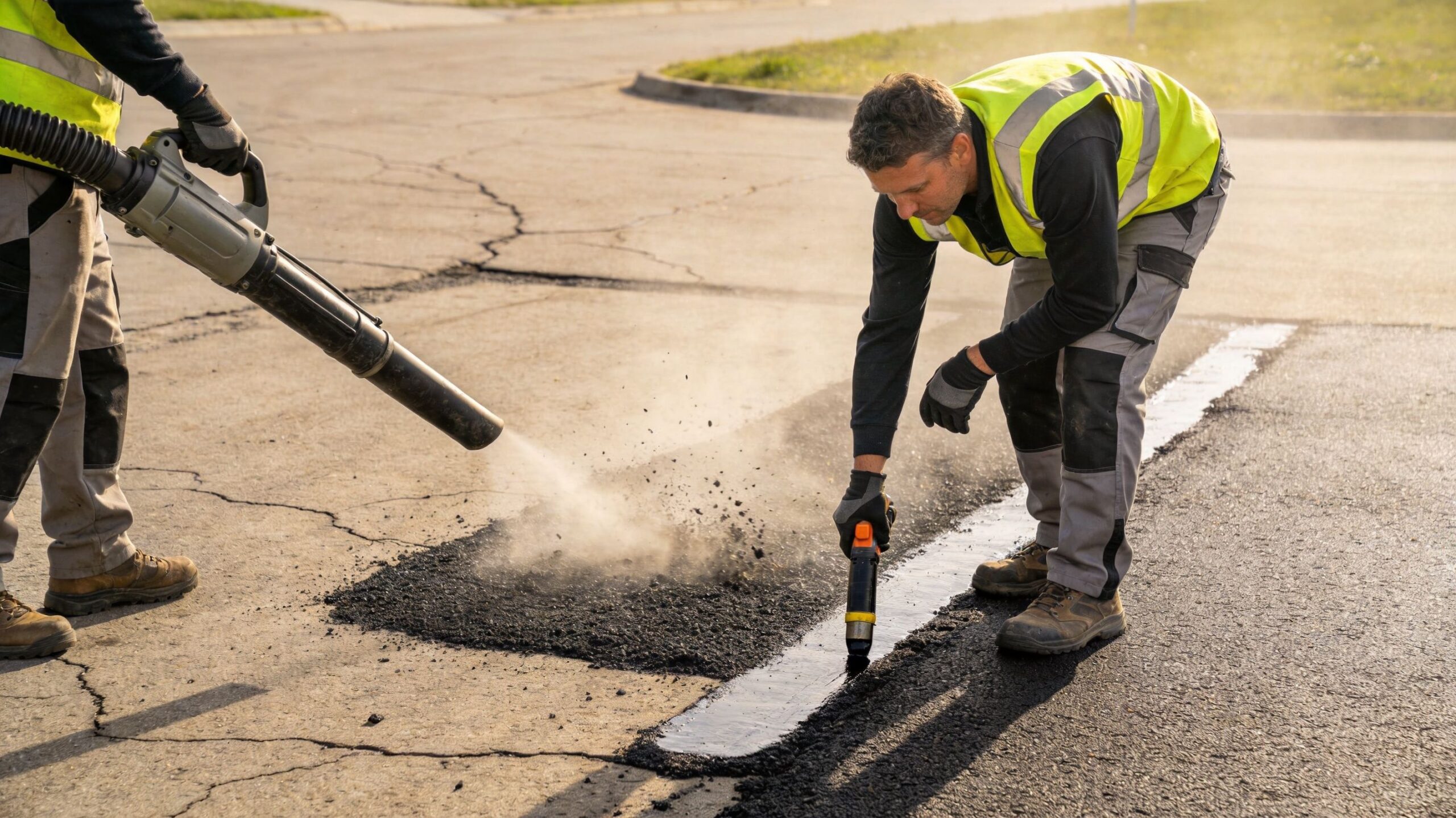
What proper asphalt prep actually looks like
A good crew doesn't just blow off loose dust and start spraying.
For asphalt, I expect to hear about:
- Cleaning: Power blowing, debris removal, and clearing loose material from cracks.
- Crack treatment: Proper filling of working cracks before sealcoating.
- Pothole repair: Failed sections should be repaired, not hidden under fresh black coating.
- Edge attention: Drive lane edges and weak transitions need inspection before coating.
- Oil spot treatment: Contaminated areas need extra attention or the sealer may not bond well.
If a contractor says prep is “included” but can't describe the steps, that's a problem.
Concrete prep is just as important
For concrete driveways, sidewalks, patios, and slabs in Marion County, FL and Citrus County, FL, the base under the slab matters as much as the finish you see on top.
A proper job should include discussion of:
| Concrete prep point | Why it matters |
|---|---|
| Sub-base condition | Poor support leads to settling and cracking |
| Compaction | Reduces movement under the slab |
| Drainage plan | Water causes long-term trouble fast |
| Thickness and finish | Affects durability and use |
That applies whether the project is in Silver Springs, Hernando, or The Villages.
A short video example helps show why crack repair and prep work can't be rushed:
The estimate should prove the prep is real
Owners get burned when the estimate says “prep included,” then the crew does the bare minimum because nothing was defined in writing.
If the proposal doesn't spell out cleaning, crack filling, repairs, and site-specific prep, assume those steps will be shortened or skipped.
In Dunnellon and Inverness, I'd rather see a contractor take time on the front end than rush to “finish” a job that starts failing early.
Decode Estimates Scope Pricing and Red Flags
The estimate tells you what kind of contractor you're dealing with.
A serious contractor writes a scope of work. A weak one writes a sales note. If you're comparing bids for a commercial lot in Ocala or sealcoating around an HOA in Citrus County, you need enough detail to judge value, not just price.
The ROI side matters too. Verified commercial sealcoating analysis shows a project may cost $0.15 to $0.35 per square foot, while a major mill-and-overlay can cost over $4.00 per square foot, and a 3-year ROI can exceed 100% through deferred capital expense and reduced liability, based on the methodology in the University of Texas CTR sealcoating analysis. That's why the cheapest estimate often isn't the cheapest decision.
Estimate comparison what to look for
| Item | Good Estimate (Green Flag) | Bad Estimate (Red Flag) |
|---|---|---|
| Site measurement | Lists square footage or clearly defined work area | No dimensions or vague property description |
| Prep work | Separates cleaning, crack repair, patching, or concrete removal | Says “prep included” with no detail |
| Materials | Names the sealer, filler, paint, or concrete approach | Says “commercial grade” and nothing else |
| Application | States coat count or work method | Doesn't say how work will be applied |
| Striping | Lists layout, stall count, ADA items, or repaint scope | Says “stripe parking lot” |
| Scheduling | Explains access limits, cure time, or staging | No mention of traffic flow or downtime |
| Warranty or follow-up | Explains what is and isn't covered | Makes verbal promises only |
If you want a practical reference point for pricing structure, review how contractors discuss asphalt sealcoating cost per square foot and compare that against the level of detail in your own bids.
Red flags that should end the conversation
Some warning signs are obvious. Some are subtle.
Watch for these:
- Pressure selling: “Sign today or the price disappears.”
- Vague scope: No written detail on prep, materials, or coat count.
- Cash-only language: That doesn't automatically mean fraud, but it deserves scrutiny.
- No site-specific notes: The estimate could be for anyone.
- No downtime discussion: A contractor who ignores traffic flow creates problems for tenants and customers.
- No mention of striping or ADA items on commercial work: That tells me they're not looking at the full property.
Cheap bids usually hide skipped work
If one number comes in far below the others, ask what was removed. It's usually prep, material quality, application thickness, or labor time.
That's where owners in Lecanto, Beverly Hills, and Belleview get fooled. The lot looks fresh for a short window, then the surface starts showing every shortcut that was buried in the bid.
The Riverside Advantage Your Local Concrete and Asphalt Experts
If you're searching for southeastern sealcoating inc because you want an established company, that instinct is right. The better move in Central Florida is hiring a contractor who brings that same seriousness to your property without the distance, the guesswork, or the access problem.
In Marion County, FL and Citrus County, FL, property owners need more than a sealcoating crew. They need Concrete and Asphalt Experts in Marion and Citrus County who understand driveway replacement, patios, sidewalks, slab work, parking lot maintenance, striping, ADA-related markings, and job sequencing on active properties.
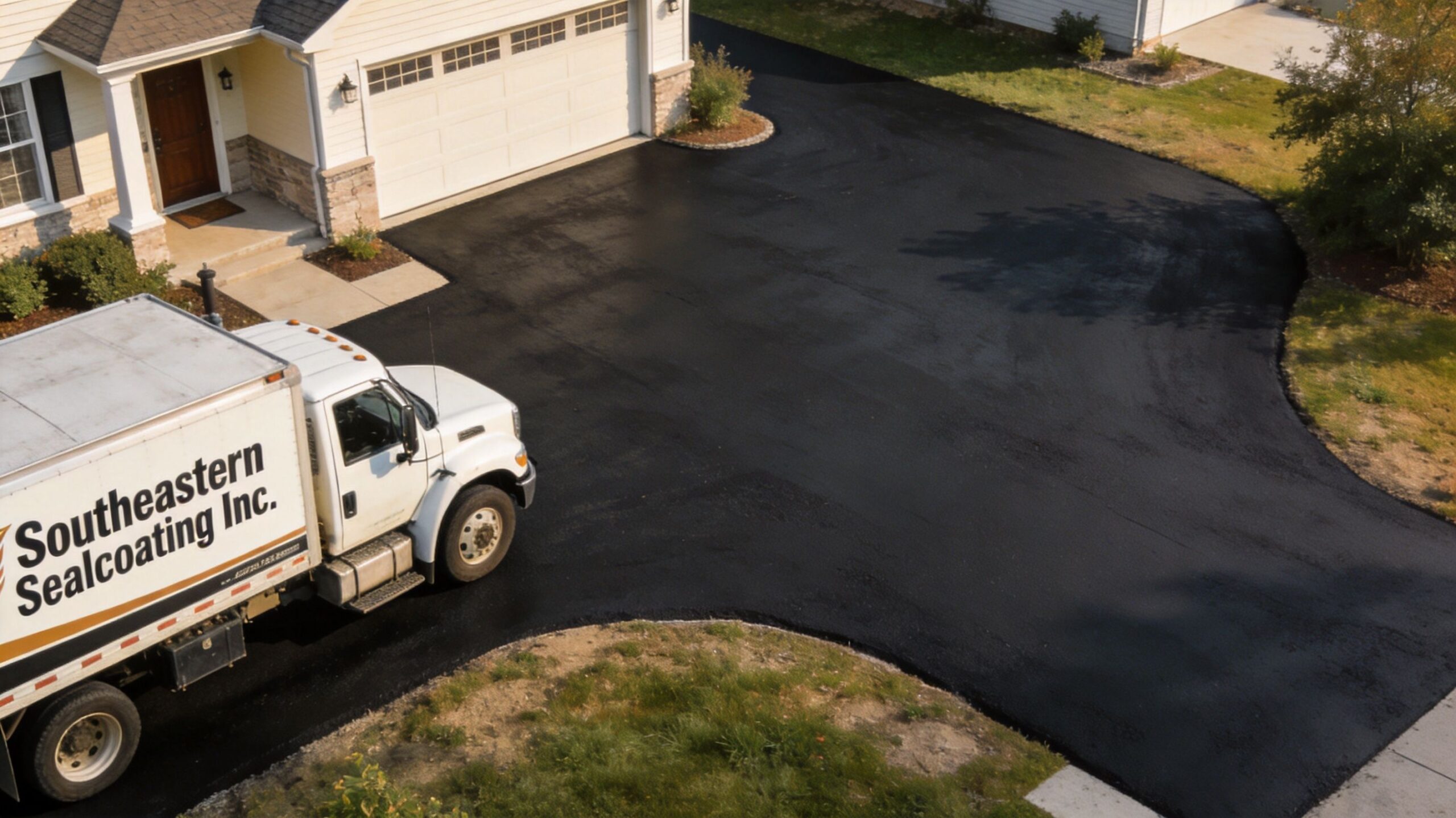
What local owners should expect
The standard should be simple:
- Licensed and insured
- Clear timelines
- Detailed prep
- Materials suited for Florida
- Reliable scheduling
- No-pressure estimate
- Real capability in both concrete and asphalt work
That matters whether the site is a residential driveway in Summerfield, a church lot in Ocala, retail parking in Crystal River, or an HOA common area in The Villages.
Hire the company that can explain the work before the job starts, manage the site while it's happening, and stand behind it after the crew leaves.
Why local beats long-distance
When weather changes, traffic patterns shift, or a property manager needs adjustments, local access matters. So does regional experience. A contractor working every week in Dunnellon, Homosassa, Inverness, and Silver Springs will understand local conditions better than a company you mainly know from another state's reputation.
For Central Florida owners, that's the distinct advantage. Not flashy branding. Not generic promises. Tight process, good communication, and workmanship built for this climate.
FAQs About Pavement Maintenance in Central Florida
Is sealcoating enough if my parking lot already has cracks?
No. Sealcoating is not a substitute for crack repair or patching. If the cracks are active or the surface has failed areas, a contractor needs to address those first. Fresh sealer over neglected damage is cosmetic, not maintenance.
What should I ask before approving a driveway replacement?
Ask about demolition, base condition, compaction, drainage, finish, and cleanup. If the contractor can't explain the process from removal through final curing, you don't have enough information to approve the job.
Does Florida weather change how asphalt and concrete should be installed?
Absolutely. Heat, UV, heavy rain, and moisture affect timing, curing, and surface performance. That's why local experience matters in Marion County, FL and Citrus County, FL. A method that sounds fine on paper can fail if it's scheduled or applied at the wrong time.
Do commercial estimates need to mention striping and ADA items?
Yes. If the project involves a parking lot, the estimate should clearly address striping scope and any ADA-related markings or layout concerns. A contractor who ignores that is only looking at part of the property.
How do I compare a concrete contractor and an asphalt contractor if I need both?
Begin with site prep, scheduling discipline, insurance verification, and estimate detail. Then confirm the company can handle both scopes well. A lot of owners in Ocala, Dunnellon, Crystal River, and The Villages need coordinated concrete and asphalt work, not separate crews pointing fingers at each other.
What's the biggest hiring mistake property managers make?
They accept a vague estimate because the price looks good. That usually means the contractor controls the details after the contract is signed. You want the details before you approve anything.
If you want a local, no-pressure evaluation from Riverside Sealing & Striping, LLC, ask for an on-site consultation. They serve Marion County, Citrus County, and surrounding Central Florida communities with concrete work, asphalt sealcoating, and parking lot striping, and they'll walk the property with you, explain the scope clearly, and give you a straightforward estimate.