
You see the storm coming before the first drop hits. The sky over Ocala or Crystal River turns dark, the wind starts pushing leaves across the driveway, and you realize the low spot near the curb is already holding water from the last rain. That's when storm drain maintenance stops feeling like a small chore and starts looking like flood prevention.
In Central Florida, clogged drains don't just leave puddles behind. They can push water toward garage slabs, soften the base under asphalt, wash out soil next to concrete, and turn a simple drainage issue into a larger repair on the surfaces you drive and walk on every day. For homeowners, HOAs, churches, schools, and commercial sites across Marion County, FL and Citrus County, FL, drain health is tied directly to pavement life.
If you manage property in Dunnellon, Belleview, Summerfield, Homosassa, Inverness, Lecanto, Beverly Hills, Hernando, Silver Springs, or The Villages, the best approach is practical. Inspect often, clear what you safely can, and know when the problem has moved past basic cleanup.
Table of Contents
- Why Storm Drain Maintenance Is Critical in Central Florida
- Your Routine Storm Drain Inspection Checklist
- Safe and Effective Storm Drain Cleaning You Can Do Yourself
- Essential Tools and Safety Protocols
- A Maintenance Schedule for Florida's Unique Climate
- Signs You Need Professional Concrete and Asphalt Experts
- Frequently Asked Questions for Florida Property Owners
- How often should a storm drain be checked on a home or small property?
- What's the average cost for professional storm drain cleaning in the Ocala area?
- Do I need a permit to repair a storm drain on commercial property in Marion County or Citrus County?
- Who is responsible for storm drain maintenance in an HOA community?
- When should I call a contractor instead of cleaning it myself?
Why Storm Drain Maintenance Is Critical in Central Florida
A common Central Florida failure looks simple at first. A grate gets buried under oak leaves, palm fronds, mulch, and roadside grit. The next hard rain hits. Water bypasses the drain, runs across the lot, and starts pooling where concrete meets asphalt or where the driveway pitches back toward the house.
That's why storm drain maintenance matters so much in places like Marion County, FL and Citrus County, FL. The problem usually doesn't stay inside the drain. It spreads outward into pavement edges, subgrade stability, sidewalk joints, and low-lying parking areas.
The scale of the system is enormous. The United States has an estimated 270 million storm drains, and flood-related events accounted for 31% of all global economic losses between 1970 and 2019, according to the ASCE stormwater infrastructure report card. On a local property, that same lesson applies in smaller form. Ignored drainage creates expensive damage.
Practical rule: If water can't enter the drain fast enough, it will find another route. Usually that route is across concrete, under asphalt, or toward a building.
In this climate, it's also smart to think about runoff control as part of the same conversation. Owners dealing with repeated washouts or slope issues often need broader erosion control measures for vulnerable paved areas so the drain isn't fighting a constant stream of loose sediment.
For Concrete and Asphalt Experts in Marion and Citrus County, this is a practical connection most generic maintenance guides miss. A healthy drain protects more than drainage. It helps protect the surface investment around it.
Your Routine Storm Drain Inspection Checklist
A good inspection doesn't require specialty equipment. It requires consistency and a sharp eye. If you walk a property in Ocala or Belleview before the rainy stretch starts, you can usually spot warning signs before they become a flooded driveway or a slick parking lot complaint.
Start at the surface
Begin with what you can see without opening anything or reaching into a confined space.
- Check for debris buildup: Look for leaves, pine needles, wrappers, grass clippings, and sediment covering the grate or piled along the approach path.
- Inspect the grate or lid: It should sit flat, stay secure, and show no obvious breakage, severe rust, or rocking when stepped near.
- Watch for standing water: If the area still holds water well after a storm has passed, the drain may be partially blocked or the pipe may not be carrying flow away properly.
- Follow the water path: Make sure water can reach the drain. Edging, mulch berms, settled asphalt, and lifted concrete can redirect runoff away from the opening.
For larger sites, property managers can pair this walk-through with a broader parking lot maintenance checklist for drainage and pavement trouble spots so drain issues don't get treated in isolation.
Check the pavement around the drain
The drain opening is only part of the story. The surrounding concrete or asphalt often tells you more.
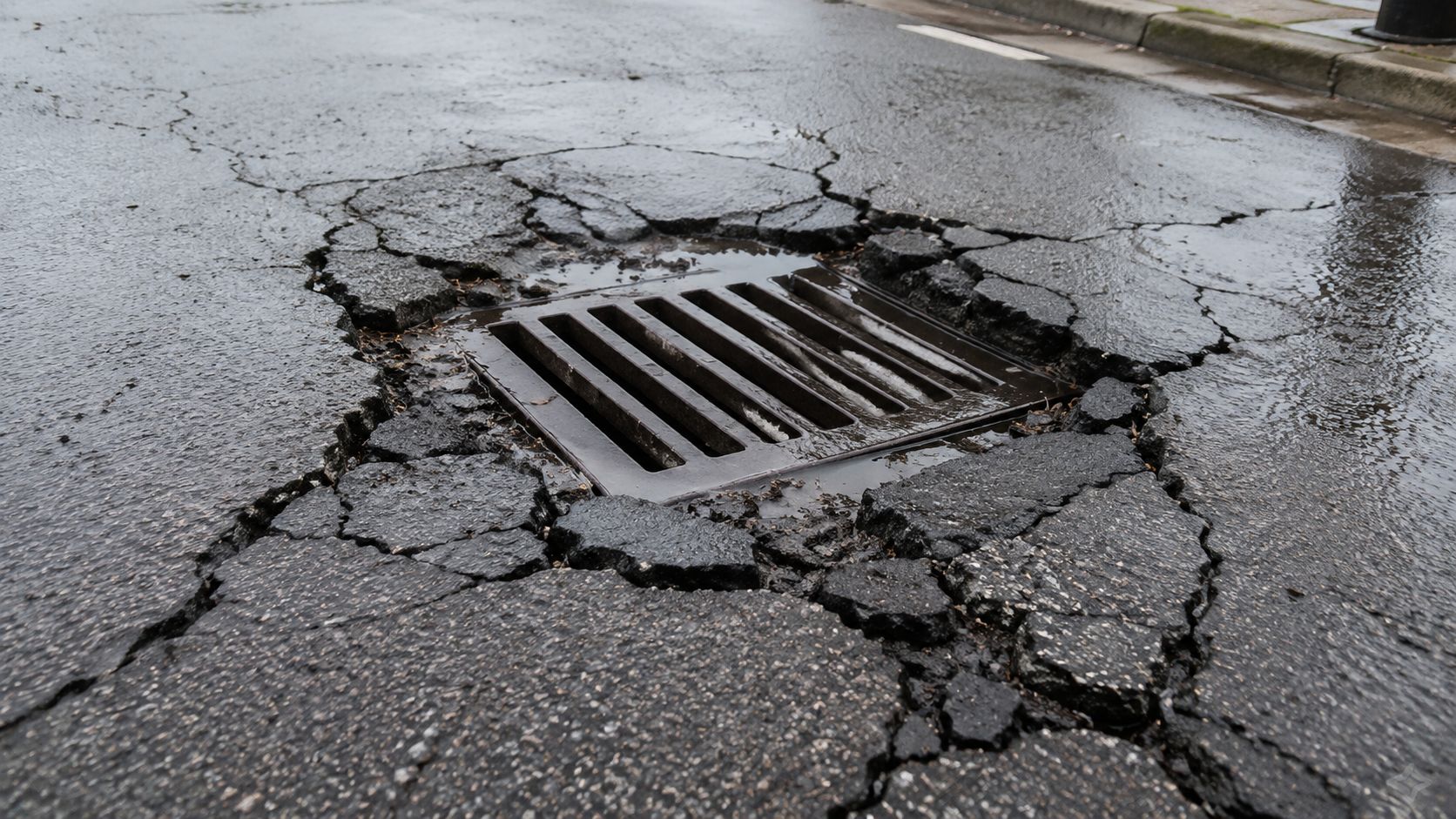
- Look for cracking: Hairline cracks near a basin aren't always urgent, but widening cracks or broken corners can signal water intrusion below the surface.
- Notice sinking or settlement: If the area around the drain dips, pumps water, or feels uneven underfoot, the base may be softening.
- Check for erosion: Missing soil, washed-out mulch, and exposed edges near inlets are signs that runoff is moving too fast or entering in the wrong place.
- Pay attention to staining or trash lines: Dark sediment marks and stuck debris show you where water traveled during the last storm.
A drain can appear open from above and still be failing. Slow movement, recurring puddles, and pavement movement around the structure usually mean the problem is deeper than surface debris.
If the basin interior is visible from above, take a cautious look with a flashlight from a safe standing position. Excess sediment, trapped trash, or a water line that stays unusually high are all reasons to monitor the area more closely or schedule professional review.
Safe and Effective Storm Drain Cleaning You Can Do Yourself
Some maintenance is straightforward. If the issue is surface debris, a property owner or manager in Homosassa or Summerfield can usually improve drainage with basic cleanup before the next storm.

What you can safely clean
Focus on material that's loose, visible, and reachable from the surface.
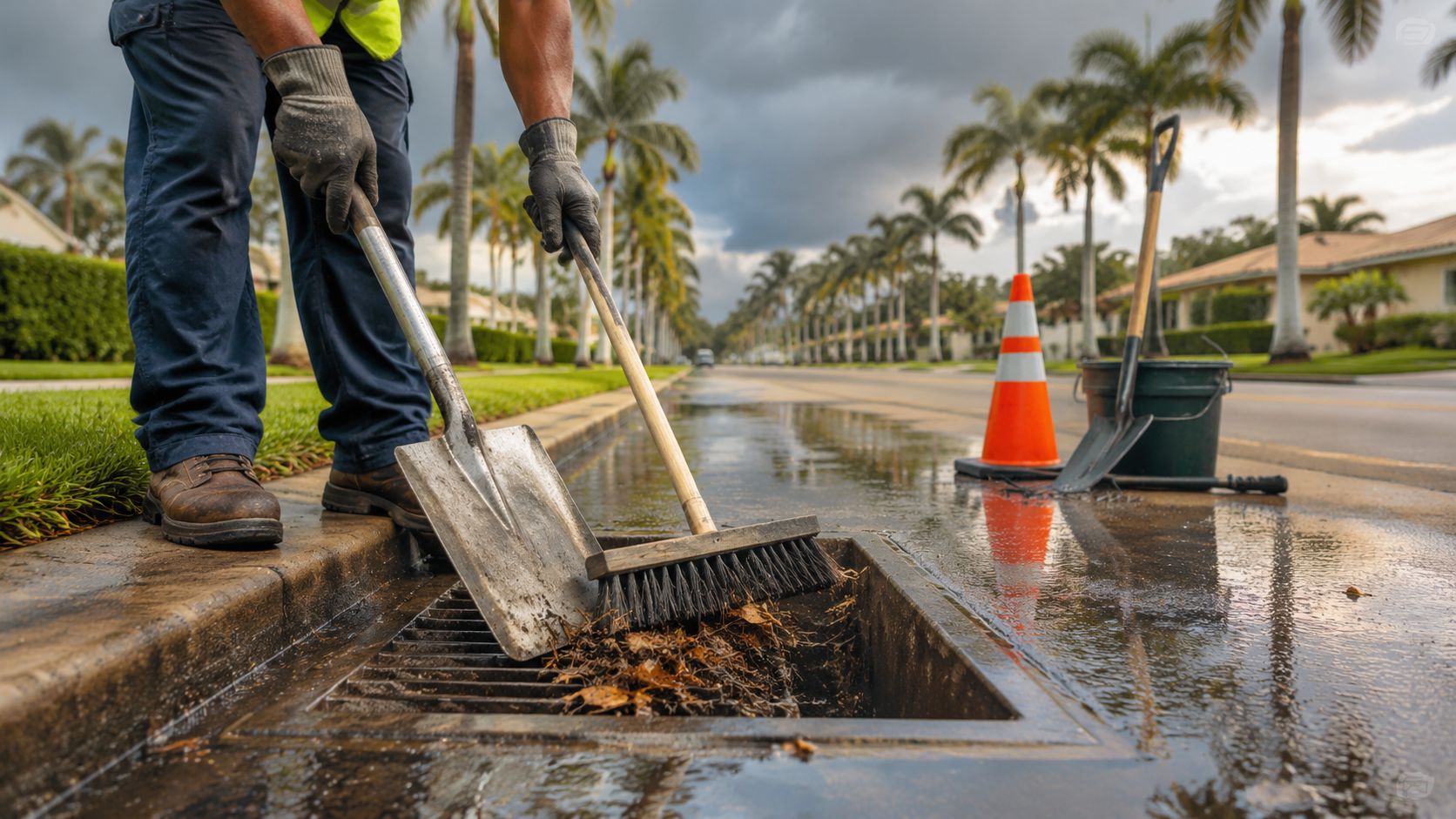
- Clear the grate face: Use gloves and a rake or stiff broom to remove leaves, palm debris, litter, and grass buildup.
- Sweep the approach area: Sediment and loose sand beside the drain often wash straight back in during the next rain if you leave them in place.
- Open the flow path: Remove small obstructions that prevent runoff from reaching the drain, such as piled mulch or compacted yard debris.
- Bag and dispose of debris properly: Don't push material into the street or another inlet. Move it off the drainage path.
That same habit applies to paved surfaces too. If you already maintain a driveway, many of the same preventive steps used to maintain an asphalt driveway in Florida conditions also help reduce the debris and sediment load that ends up at the drain.
A simple rule works well on homes and smaller commercial sites. If you can remove it safely from above grade with hand tools, it's usually fair DIY territory.
What should never be a DIY job
Problems start when people treat a storm system like a yard drain and get too aggressive.
- Don't lift heavy grates without proper equipment: Cast components can be awkward, unstable, and dangerous.
- Don't enter a drain or basin: Confined spaces can contain hazardous atmospheres, hidden drops, and unstable footing.
- Don't flush debris farther into the system with a garden hose: That often moves the blockage downstream and makes later cleaning harder.
- Don't pour chemicals into the drain: Harsh cleaners can damage components and create environmental problems without fixing the actual blockage.
- Don't ignore repeat clogging: If the same drain blocks over and over, the issue may be root intrusion, pipe damage, sagging line, or heavy internal sediment.
This short video gives a useful visual of surface-level drain clearing and why regular attention matters before a storm cycle ramps up.
Clean what's accessible. Stop when the work requires force, entry, or guesswork.
That line keeps a basic maintenance task from turning into an injury or a damaged system.
Essential Tools and Safety Protocols
Storm drain cleaning goes wrong for two reasons. People use the wrong tools, or they rush through obvious safety risks. The cleanup itself usually isn't the most dangerous part. Traffic, slippery surfaces, insects, unstable grates, and poor visibility are.
Basic tools that make the job easier
You don't need a truck full of equipment for surface-level maintenance. You do need tools that let you work without using your hands as the primary cleanup method.
A practical kit includes:
- Heavy-duty gloves: Wet debris can hide sharp metal, glass, fishing line, and hooks.
- Stiff push broom: Good for sweeping sand and loose grit away from the drain opening.
- Leaf rake: Useful for pine needles, oak leaves, and palm debris.
- Flat shovel or square shovel: Helps remove compacted sediment from around the approach area.
- Contractor trash bags or a debris bucket: Makes cleanup easier and keeps removed material from washing back.
- Flashlight: Useful for a surface look into the basin from a safe standing position.
- High-visibility vest: Important for drains near streets, parking lot lanes, church entrances, or school drop-off paths.
Safety rules that matter more than speed
The fastest cleanup in the world isn't worth a trip to the emergency room.
- Work in daylight when possible: Shadows around curbs and grates hide gaps, broken edges, and standing water.
- Set up visible warning if you're near traffic: Cones or temporary markers help in commercial lots and roadside areas in Dunnellon or Crystal River.
- Watch for Florida wildlife: Fire ants, wasps, spiders, and snakes use damp sheltered areas. Don't reach where you can't see.
- Treat standing water carefully: You can't judge depth, soft edges, or hidden debris by color alone.
- Use a second person on larger properties: One person cleans. The other watches traffic and helps if something shifts or slips.
Safety is the first filter. If the site feels unstable, too deep, too busy, or too damaged, stop and hand it off.
That's the professional mindset. Licensed and insured contractors earn their keep by handling the riskier side of drainage, concrete, and asphalt work with the right equipment and scheduling discipline.
A Maintenance Schedule for Florida's Unique Climate
A once-a-year check sounds reasonable on paper. In Central Florida, it usually isn't enough. Rain comes hard, vegetation grows fast, and debris loads build quickly in shaded neighborhoods, commercial lots with planted islands, and properties with long curb lines.
Why annual cleaning usually isn't enough here
The biggest issue isn't one dramatic storm. It's repeated loading. Pine needles mat together, oak leaves hold moisture, sand and silt wash off shoulders and beds, and then one downpour packs all of it against the inlet.
For Florida properties, drainage is also a code matter in some settings. Driveway storm drain design often involves a trench drain system built to handle a minimum 1-inch rainfall event over the impervious surface, as outlined in the Florida driveway drainage requirement. If the drain is designed to capture runoff and the opening is choked with debris, the system can't perform the way it was intended to.
That matters whether you're looking after a residential drive in Lecanto or a larger parking area in The Villages. Surface type changes the maintenance style. Concrete often shows cracking and edge spalling sooner around drains, while asphalt may telegraph soft spots, rutting, or breakup where water keeps sitting.
In this region, the best schedule follows the weather, the tree cover, and the amount of pavement draining into the inlet.
Central Florida Storm Drain Maintenance Schedule
| Timing | Task | Focus Area |
|---|---|---|
| Before the rainy season | Full visual inspection and surface debris removal | Grates, trench drains, curb inlets, flow paths from driveway or parking lot |
| After any major storm | Quick walk-through for blockage and standing water | Low spots, basin entrances, overflow patterns, washed sediment |
| Monthly during heavy leaf or needle drop | Light cleanup and approach sweeping | Tree-covered residential drives, HOA streets, church lots, retail edges |
| When landscaping is refreshed | Confirm mulch, sod, and edging aren't blocking runoff | Beds near drains, swales, hardscape transitions |
| Before guests or peak business periods | Spot-check visible drains and surrounding pavement | Entry drives, ADA routes, storefront fronts, loading zones |
| When puddling starts repeating | Escalate to deeper evaluation | Possible internal clog, settlement, damaged pipe, failing pavement around inlet |
Different properties need different levels of attention.
- Residential driveway in Citrus County, FL: Usually needs routine grate clearing, edge cleanup, and post-storm checks if the home sits low or has heavy tree cover.
- Commercial lot in Marion County, FL: Needs a more disciplined schedule because traffic carries sediment, trash, and oil residue toward drains and standing water affects safety and appearance.
- HOA common areas: Need documented inspections so boards can justify maintenance before visible flooding turns into emergency work.
The value of local experience is clear. Concrete and Asphalt Experts in Marion and Citrus County understand that drain maintenance isn't separate from pavement maintenance. It's part of protecting the slab, the base, the striping, and the day-to-day usability of the property.
Signs You Need Professional Concrete and Asphalt Experts
Most owners wait too long because they treat every drainage issue like a simple clog. Sometimes it is. Often it isn't. The warning signs usually show up in the pavement first, then in the drain performance.
Drain problems often point to surface problems
If you keep clearing the top and the problem keeps returning, look wider.
Common red flags include:
- Standing water that returns after cleaning: That usually suggests the blockage is deeper or the pipe grade and structure need review.
- A drain that gurgles but doesn't empty well: Flow may be partially restricted downstream.
- Cracks or crumbling around the basin: The concrete structure may be failing, or runoff may be undermining the surrounding support.
- Sinking asphalt near the edge: Repeated saturation can weaken the base and start a larger pavement repair cycle.
- Foul odors or visible pest activity: Stagnant water and trapped organic matter often signal a chronic drainage problem rather than a one-time blockage.
For property owners in Inverness, Silver Springs, and nearby communities, that's the point where the issue shifts from cleaning to diagnosis. A drainage structure can fail at the inlet, inside the basin, in the connected pipe, or in the pavement around all of it.
When video inspection and jetting make sense
One of the biggest gaps in homeowner and HOA guidance is knowing when to stop doing it yourself. The better practice is to escalate before minor internal damage or buildup turns into a major obstruction. That recommendation is noted in this storm drain maintenance guide discussing professional video inspection and jetting in debris-heavy climates.
Professional work is especially appropriate when:
- The clog keeps coming back
- The drain is slow even after visible debris is removed
- The pavement around the structure is breaking apart
- A property manager needs documentation for maintenance decisions
- You suspect internal sediment, root intrusion, separation, or collapse
There's also a technical side to flushing that many owners don't realize. For storm drain conveyance systems, recommended flushing length per operation should not exceed 700 feet, with organics removal efficiency of 65 to 75% and dry-weather grit and inorganic removal of 55 to 65% at that maximum length, according to the CASQA storm drain system maintenance guidance. Go beyond that limit and efficiency drops quickly.
That matters because professional cleaning isn't just “spray water and hope.” Good crews isolate the problem reach, clean in controlled sections, and connect the drainage issue back to any needed concrete replacement, asphalt patching, or surface correction around the structure. That dual view is why Concrete and Asphalt Experts in Marion and Citrus County are better positioned to solve the full problem, not just the symptom.
Frequently Asked Questions for Florida Property Owners
How often should a storm drain be checked on a home or small property?
In Central Florida, inspect before the rainy season, after major storms, and more often if the property has heavy tree cover or recurring debris. Homes in shaded parts of Beverly Hills, Hernando, or Summerfield usually need more attention than open lots with minimal landscaping.
What's the average cost for professional storm drain cleaning in the Ocala area?
The price depends on access, drain type, blockage severity, and whether the issue is only cleaning or also involves concrete or asphalt repair. It's better to get a site-specific evaluation than trust a generic number online. The broader market is substantial, with storm water cleaning services valued at approximately USD 3.8 billion in 2026, and commercial and industrial properties holding a 57.4% market share, according to the storm water cleaning services market outlook. That tells you professional maintenance is a serious specialty, especially where compliance and runoff concerns are involved.
Do I need a permit to repair a storm drain on commercial property in Marion County or Citrus County?
Sometimes yes, especially if the work changes drainage structures, ties into existing systems, or affects paved access and site flow. Permit rules can vary by location and scope. The safest move is to verify requirements with the local building or public works authority before starting structural repairs.
Who is responsible for storm drain maintenance in an HOA community?
That depends on ownership and maintenance obligations in the governing documents. Some drains serve private lots, some serve common areas, and some may tie into systems with separate public responsibility. HOA boards should document what belongs to the association and what belongs to owners, then schedule inspections before the first heavy storm cycle.
When should I call a contractor instead of cleaning it myself?
Call when water keeps ponding, the clog returns after cleanup, the grate or basin looks damaged, or the surrounding pavement is cracking or sinking. If the problem affects both drainage and surface condition, you want a contractor who understands concrete work, asphalt sealcoating, and parking lot striping as connected parts of the same property system.
If you need help from Riverside Sealing & Striping, LLC, you can request a free estimate or a no-pressure consultation for drainage-related concrete and asphalt issues in Marion County, FL, Citrus County, FL, and surrounding Central Florida communities. As Concrete and Asphalt Experts in Marion and Citrus County, the team handles the bigger picture, from damaged pavement around storm drains to long-term surface protection with reliable scheduling and high-quality workmanship.