
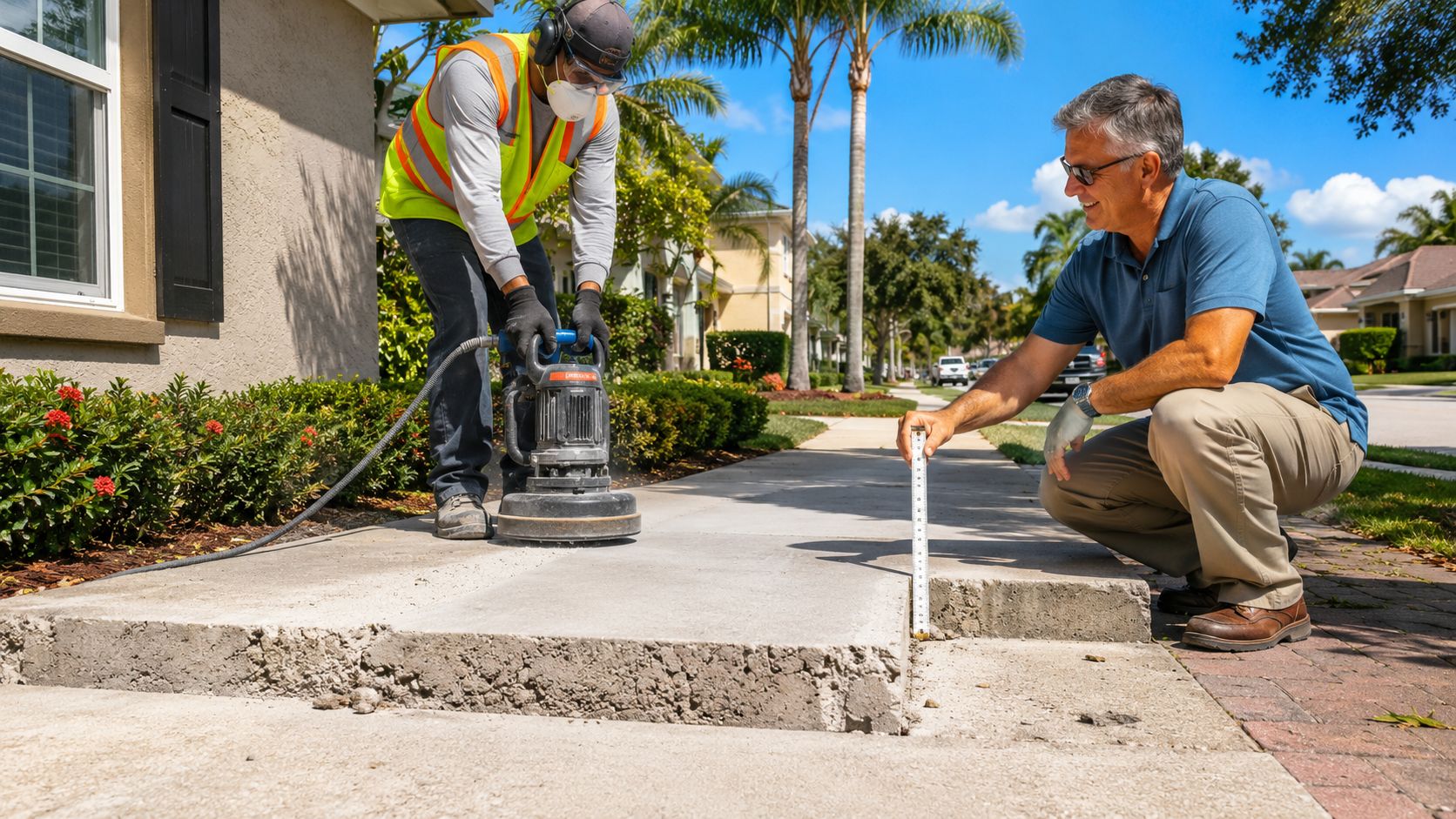
If you've ever watched a lifted sidewalk slab catch a boot toe in Ocala, or seen a customer in Crystal River slow down at a rough parking lot edge, you already know the problem isn't cosmetic. Uneven pavement turns into a real safety issue fast, especially in Central Florida where heat, rain, traffic, and shifting soils keep working on concrete and asphalt year after year. For property owners in Marion County, FL and Citrus County, FL, the right fix is usually less about patching a blemish and more about removing a hazard before somebody gets hurt.
The best trip hazard removal starts with a simple idea, eliminate the danger at the source. That approach lines up with safety guidance that favors permanent controls like better lighting, slip-resistant surfaces, handrails, and marking elevation changes, while also keeping walkways clear and hazards visible early enough to correct them (OSHA-oriented prevention guidance). It also matches fall-prevention evidence from a randomized trial of a home-hazard removal program, which found that proactive removal reduced the rate of falls by 38% even though it didn't eliminate every risk (trial data).
For homeowners in Dunnellon, Belleview, Silver Springs, or Summerfield, that might mean one lifted panel at the front walk. For commercial properties in Inverness, Lecanto, Beverly Hills, Hernando, or The Villages, it might mean a pattern of uneven joints, root lift, and drainage damage across a bigger walking route. Either way, the repair choices are usually clearer than they first appear, and the trade-offs matter.
Table of Contents
- The Hidden Dangers of Uneven Pavement in Central Florida
- How to Identify and Assess Trip Hazards on Your Property
- Comparing Your Trip Hazard Removal Options
- DIY Repair vs Hiring a Professional Contractor
- Special Considerations for Central Florida's Climate and Soil
- Your Partner for Safe and Compliant Surfaces in Marion and Citrus County
- Frequently Asked Questions About Trip Hazard Removal
The Hidden Dangers of Uneven Pavement in Central Florida
A homeowner in Ocala spots a sidewalk slab that's lifted just enough to snag a shoe. A week later, a visitor in Crystal River hesitates at the same spot, and that hesitation is the warning sign most property owners ignore until someone falls. Uneven pavement looks minor from a distance, but it changes how people step, especially when they're carrying packages, watching traffic, or walking at dusk.
Why a Small Lip Creates a Big Problem
The issue is the abrupt change in level. A toe catches the edge, weight shifts forward, and balance goes away faster than anyone expects. That's why safety guidance keeps returning to the same theme, remove the hazard instead of hoping a warning sign will make people safer (OSHA-oriented prevention guidance).
A strong data point comes from a randomized clinical trial of a home-hazard removal program for community-dwelling older adults. The intervention didn't remove every risk, but it reduced the rate of falls by 38% (trial data). That matters for property owners because it shows hazard removal isn't just a visual upgrade, it's a direct injury-prevention measure.
What it looks like on real properties
On residential properties, trip hazards often show up where sidewalks meet driveways, or where a patio edge has settled unevenly. On commercial sites, they often show up at storefront entrances, accessible routes, and crosswalk paths where foot traffic is heavy and people don't have room to look down every second. In places like Marion County, FL and Citrus County, FL, that's a constant safety concern because people move from pavement to parking areas, curbs, and entries all day long.
Practical rule: if someone has to “notice” the hazard before stepping, the surface is already too risky.
The safest response is usually a permanent repair, not a temporary one. That's the standard that keeps properties in Ocala, Dunnellon, Belleview, and the surrounding Central Florida area safer over the long haul.
How to Identify and Assess Trip Hazards on Your Property
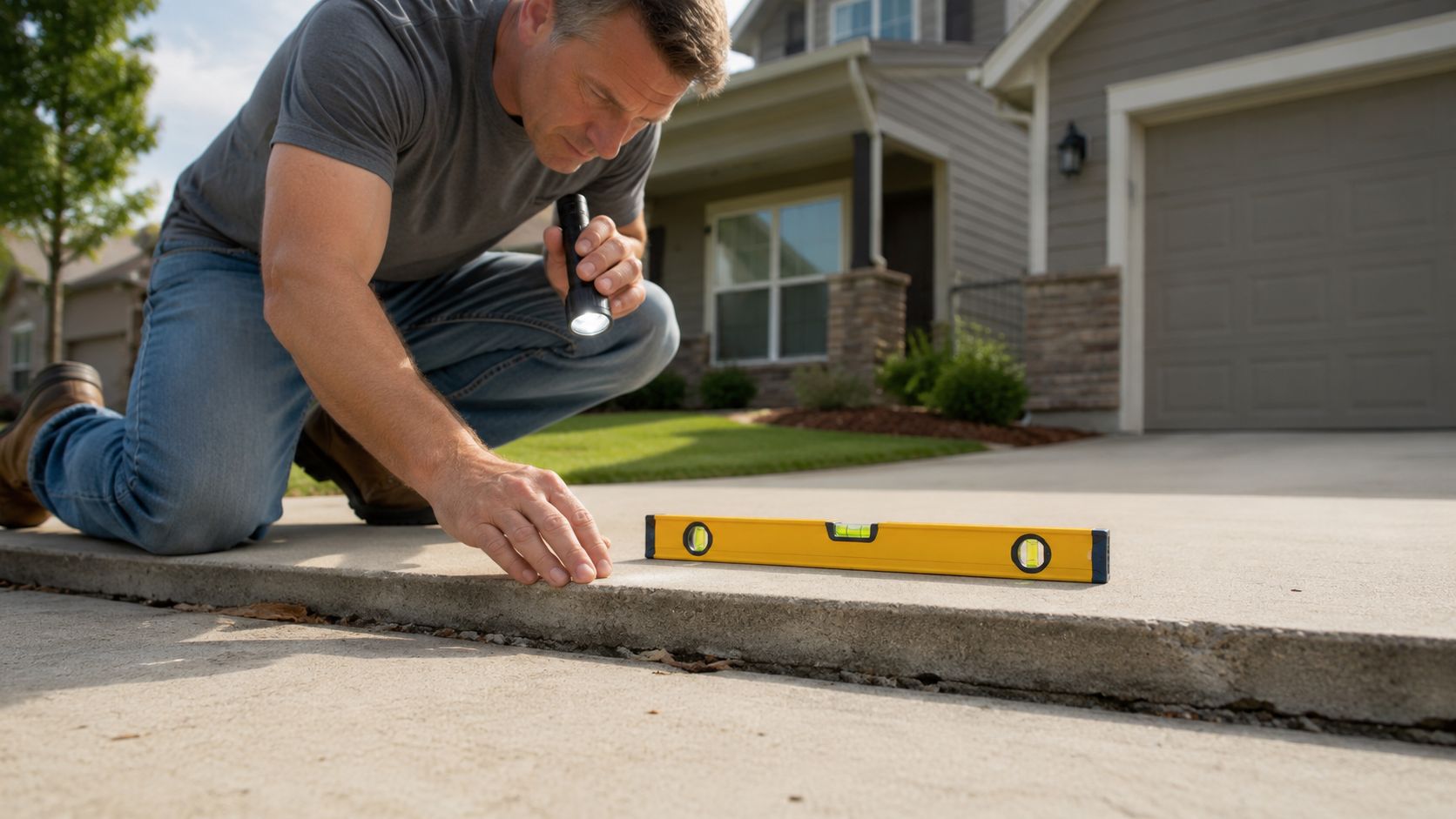
Start with the edges people walk on. Front walks, drive lanes, sidewalk panels near tree roots, pool decks, patio transitions, and the route from parking spaces to the door all deserve a slow walkthrough. The most useful field check is simple, look for any vertical change in level, because a 1/4-inch difference is the benchmark used in common safety guidance for repair (OSHAcademy guidance).
Measuring the problem the right way
A straightedge and tape measure are enough for a basic check. Lay the straightedge across the joint, then measure the gap or lip at the highest point. If the rise falls between 1/4 inch and 1/2 inch, the edge should be beveled, and if it's greater than 1/2 inch, the walking surface needs a ramped solution rather than a rough patch (same guidance).
Commercial owners in Belleview or Summerfield should treat the measurement as only part of the decision. A low lip at the side yard may be less urgent than the same lip at the main entrance, because foot traffic and expected access are different. Accessibility routes deserve the fastest attention, especially when customers, tenants, or delivery traffic use them daily.
What to look for beyond the height difference
A raised corner from tree roots is only one pattern. Sunken slabs at garage aprons, cracked patio pavers, and uneven sidewalk transitions after drainage problems can all create the same type of hazard. The repair method changes depending on whether the slab is still structurally sound or has started to crumble.
A hazard that's near a doorway, gate, or parking entry is a priority, even if it doesn't look dramatic.
For commercial properties, keep the assessment tied to compliance as well as safety. A surface can look usable to a casual observer and still fail the trip-hazard threshold used in common accessibility guidance. That's why owners in The Villages, Inverness, and Hernando should document what they find and move quickly on the highest-risk areas.
Comparing Your Trip Hazard Removal Options
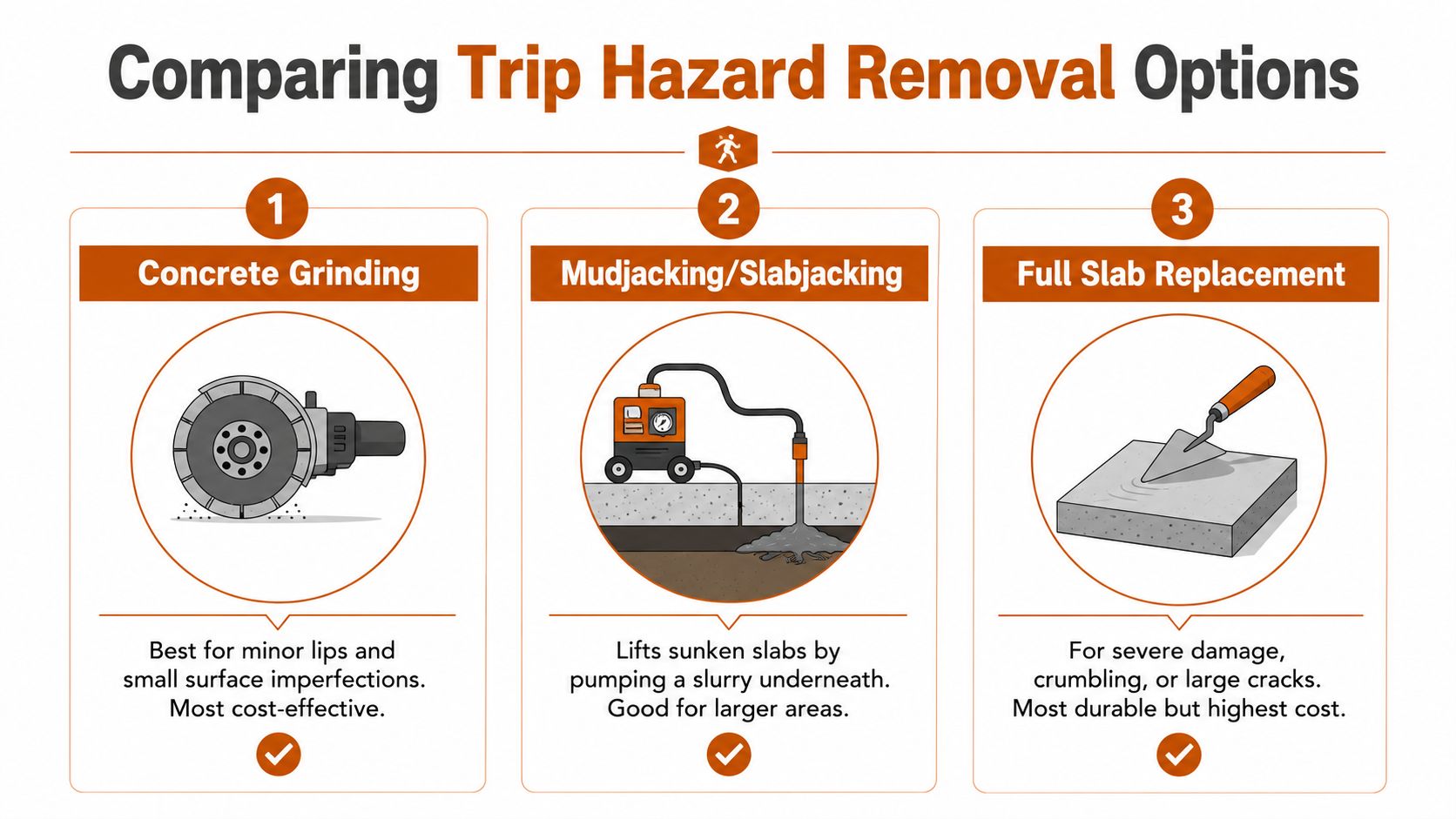
A raised sidewalk edge after root growth, a settled corner near a driveway apron, or a broken slab at a storefront all call for different repairs. In Central Florida, the right choice depends on more than the visible lip. Soil movement, drainage, traffic load, and how much life is left in the slab all affect the final call. Grinding, slabjacking, and full replacement are the three practical options most property owners end up comparing.
OSHA-oriented safety guidance favors removing the hazard at the source, since warning signs alone do not fix the walking surface (OSHA guidance). For property owners who want a plain-language overview of uneven slab repair, this uneven concrete repair guide at Riverside Sealing & Striping is a useful technical reference.
Trip Hazard Repair Method Comparison
| Method | Best For | Average Cost | Longevity |
|---|---|---|---|
| Concrete Grinding | Minor lips and small surface imperfections | Lower than replacement | Good when the slab is otherwise stable |
| Mudjacking or Slabjacking | Sunken slabs with voids underneath | Mid-range | Useful, but depends on soil conditions and slab condition |
| Full Slab Replacement | Severe damage, crumbling concrete, or large cracks | Highest | Most durable when the old slab is beyond repair |
Where each method makes sense
Concrete grinding is the fastest fix when the slab is still structurally sound and the height difference is small. The process removes the high edge and leaves the rest of the slab in place, which can make sense for sidewalks, walkways, and storefront approaches that just need the walking surface brought back into line. In Marion and Citrus County, I look closely at drainage and root pressure before recommending it, because grinding alone will not help if the slab keeps moving.
Mudjacking or slabjacking fits a slab that has dropped because the support beneath it has settled or washed out. It lifts the concrete instead of replacing it, which can save material and time when the slab is still in good shape. The trade-off is that the result depends on what is happening under the concrete, so this method works best when the surrounding slab has not started to break down.
Full replacement is the better choice when the concrete has failed as a structure. If the slab is heavily cracked, broken, or crumbling at the edges, grinding will only shave the problem down and lifting will not restore strength. In those cases, tearing out the damaged section and rebuilding it gives the property a safer long-term result.
The right repair is usually the one that matches the slab's condition, the soil beneath it, and the way the area gets used. On a commercial site, that means looking at foot traffic, delivery access, and whether the surface needs to hold up under repeated use. A contractor who works these jobs every week will judge the slab, the base, and the surrounding drainage before choosing the fix that makes sense for the property.
DIY Repair vs Hiring a Professional Contractor
A handy homeowner can inspect a walkway, measure a lip, and even do some temporary cleanup around the edge. That's where DIY should usually stop. Once the repair affects the structure, the slope, or the accessibility of a route, the risk shifts from maintenance to liability.
Why temporary fixes don't go far enough
Paint, tape, and barriers can reduce immediate injury risk, but they don't make the hazard disappear. For property managers, that difference matters because temporary measures are not the same thing as ADA compliance, and only permanent removal satisfies the compliance obligation (ADA compliance guidance). That's especially important on commercial sites in Lecanto or Beverly Hills, where customer access and liability are part of daily operations.
Bottom line: a visible warning can help for a day, but it doesn't solve a permanent trip point.
DIY grinding also carries a second problem, bad geometry. If the slope is wrong, the repair can create a new edge or an awkward walking transition. On a commercial property, that can leave the owner with the original hazard plus a compliance issue that's harder to defend later.
What a professional brings to the job
A licensed and insured contractor brings the right tools, proper lifting or cutting methods, and the experience to judge whether the slab should be ground, lifted, or replaced. That matters in Central Florida because the soil and drainage conditions can change the repair strategy from one property to the next. It also matters because a professional can document the work, which is part of a smart maintenance record for managers who need to show due diligence.
For more on vetting the right crew, these questions to ask a concrete contractor are worth reviewing before you sign anything. The best outcome usually comes from a repair that's safe, permanent, and matched to the actual condition of the pavement, not a quick guess with a rented tool.
Special Considerations for Central Florida's Climate and Soil
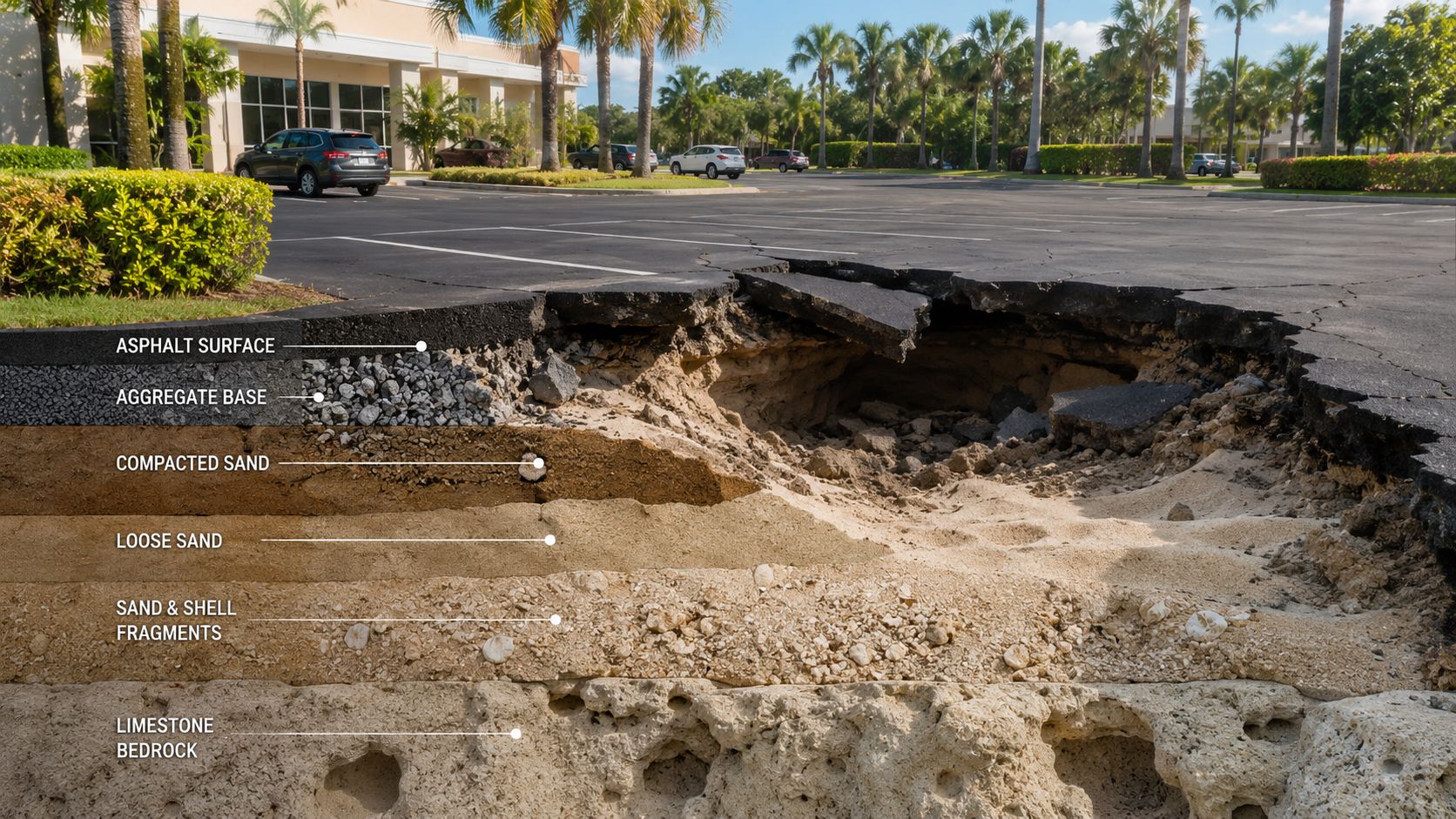
A sidewalk, driveway, or parking lot in Central Florida can look stable and still be on borrowed time. Heat, UV exposure, and heavy summer rain work on concrete and asphalt at the same time, and properties in Marion County, FL and Citrus County, FL feel that pressure differently depending on traffic, drainage, and the soil under the slab. The mistake I see most often is treating one repair as permanent when the base below it is still shifting.
Soil movement and water are the primary drivers
Sandy ground does not behave like a rigid base. It can move, wash out, and settle unevenly, especially where water runs along the edge of a driveway, parking stall, or sidewalk line. A slab can look fine one season and come back uneven after a wet stretch.
That is why weather-related maintenance has to stay active, not one-and-done. Guidance from safe-work resources recommends a continuous inspection-and-remediation loop, with regular inspections and prompt repairs so hazards do not build up (SafeWork NSW guidance). That approach fits Florida conditions well because rain events and drainage problems keep creating new trouble spots.
Why local experience changes the repair plan
A repair in Ocala may need a different drainage check than one in Crystal River or Homosassa. The slab's condition, the route of runoff, and the history of root intrusion all affect whether grinding, lifting, or replacement makes sense. On a larger property, repeated problems near the same path often point to an underlying layout issue, not just a bad piece of concrete.
For raised-root areas, this sidewalk root repair reference shows why the tree itself and the slab edge have to be considered together. For Central Florida pavement work, the fix has to address the cause, not just the symptom.
Your Partner for Safe and Compliant Surfaces in Marion and Citrus County
Safe pavement starts with the right diagnosis. A raised slab in Dunnellon, a sunken edge in Inverness, or a cracked approach in The Villages doesn't need a generic answer, it needs the right fix for the slab, the soil, and the level of traffic. That's where experienced local concrete and asphalt contractors earn their keep.
Riverside Sealing & Striping, LLC serves Marion County, FL, Citrus County, FL, and surrounding Central Florida areas with concrete repair, replacement, asphalt maintenance, and striping work that supports safer access and better curb appeal. They're licensed and insured, family-owned, and known for clear scheduling, reliable timelines, and free, no-pressure on-site consultations and estimates from 7am to 7pm. For property owners who need a professional evaluation before a small hazard turns into a bigger claim, that kind of local support matters.
If your sidewalks, driveways, or parking areas are starting to show uneven joints, settlement, or root lift, a site visit is the smartest next step. A good contractor will tell you whether the hazard needs grinding, lifting, replacement, sealcoating, or striping, and then lay out the repair in plain language.
Frequently Asked Questions About Trip Hazard Removal
Can I fix a trip hazard with a self-leveling compound
Usually not for a true height difference. Self-leveling products may help with minor surface irregularities, but they don't solve a structural lip between slabs or a sunken panel that needs to be lifted or replaced.
Is a single crack in my driveway automatically a trip hazard
Not always. A crack becomes a trip hazard when it creates a measurable vertical change, a broken edge, or a void that changes how people step. A flat crack may still need repair, but it isn't the same thing as a raised edge.
How long does a grinding repair last
When the slab underneath is stable, grinding can be a lasting solution. Its durability depends on whether the underlying concrete keeps moving, so the question is what caused the unevenness in the first place.
Should a commercial property use temporary barricades while waiting for repair
Yes, if the hazard can't be fixed right away. Temporary controls can help reduce immediate risk, but they're only an interim step until the permanent repair is completed.
What matters most when choosing a repair method
Start with the slab's condition, then look at safety, accessibility, and how much movement is happening under the surface. The best repair is the one that removes the hazard without creating a new one.
If you're dealing with uneven concrete, raised roots, or a parking area that's starting to become a safety concern, Riverside Sealing & Striping, LLC can help you sort out the right fix for your property. Visit Riverside Sealing & Striping, LLC to request a free, no-pressure estimate and get a professional evaluation for trip hazard removal, concrete repair, or pavement maintenance in Marion and Citrus County.