
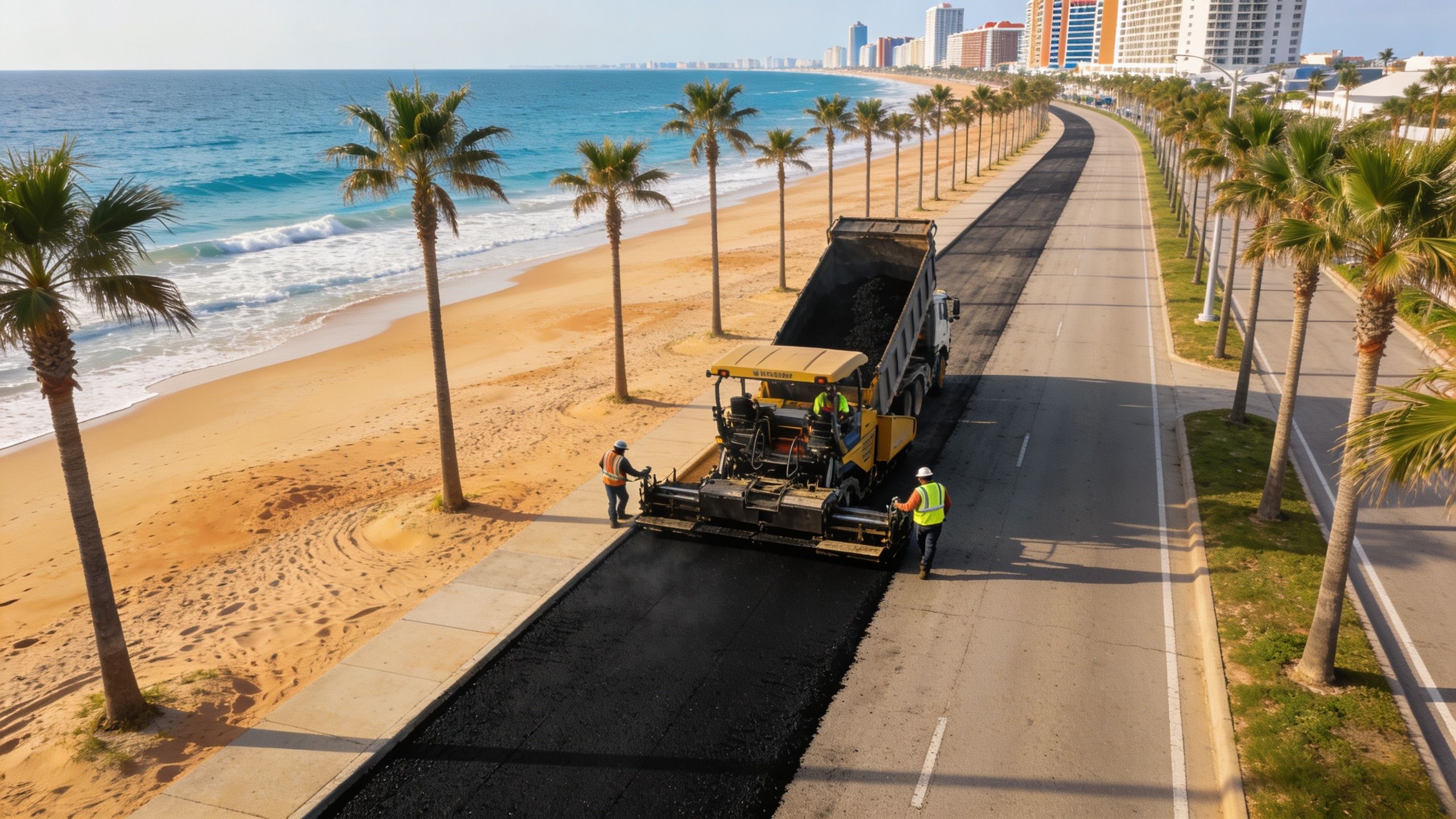
If you're looking at a worn driveway, a parking lot that holds water after every storm, or pavement that already shows cracking before it should, the problem usually isn't just the top layer. In Daytona Beach, asphalt has to handle humidity, salt air, hard sun, and heavy traffic. Those same lessons matter for property owners across Central Florida.
That’s why asphalt paving daytona beach isn’t just a local search phrase. It’s a useful standard for what durable paving should look like in Florida. A surface that survives near the coast is usually built with the right mindset for Ocala, Dunnellon, Belleview, Silver Springs, Summerfield, Crystal River, Homosassa, Inverness, Lecanto, Beverly Hills, Hernando, and The Villages too.
Property owners in Marion County, FL and Citrus County, FL often deal with a different mix of conditions than Daytona Beach, but the core rules stay the same. Good paving starts below the surface, drainage matters as much as mix design, and maintenance is what separates a long-lasting surface from an early replacement.
Asphalt 101 Types and Construction Basics
Asphalt is basically a recipe. Stone and sand provide structure, and the binder works like the glue that locks the mix together. When the mix is right for the site and it's placed over a stable base, you get a surface that can handle Florida heat and daily traffic.
The term asphalt concrete throws some people off. It doesn’t mean cement concrete. It means mineral aggregate mixed with asphalt binder into a dense, compacted pavement surface.

The main mix types property owners should know
For most driveways, private roads, and commercial lots in Florida, contractors use dense-graded hot-mix asphalt. It packs tightly, sheds water well when graded correctly, and holds up under regular traffic. If you want a practical overview of how this material works, this guide on hot-mix asphalt basics is a good place to start.
Some sites call for more specialized choices. A property with drainage concerns may need a different design approach. A truck yard or loading area may need a heavier-duty section, not just a different top layer.
A simple way to think about it:
| Surface type | Best use | Main benefit | Main caution |
|---|---|---|---|
| Dense-graded hot-mix | Driveways, roads, parking lots | Durable, common, versatile | Still fails early if base or drainage is poor |
| Heavy-duty commercial mix | Fleet areas, loading zones | Better load handling | Costs more because the structure is stronger |
| Drainage-focused designs | Water-sensitive sites | Helps manage runoff | Must match site conditions and grading |
A Daytona example that still matters
The most famous local proof of asphalt’s performance is Daytona International Speedway. The 1959 construction of the track on a 447-acre parcel required crews to excavate over a million square yards of soil and place 22 tons of lime mortar as a base before asphalt paving, according to the Daytona International Speedway history. That project became a landmark in asphalt engineering because the material had to perform on steep, high-speed banking, not just a flat roadway.
Practical rule: The surface you see is only as good as the support and design underneath it.
That lesson applies whether you’re paving a retail lot in Inverness or replacing a driveway in Ocala. The mix matters, but base prep, drainage, and traffic expectations matter just as much.
Your Paving Project Timeline From Start to Finish
Most paving jobs look simple from the street. They aren't. A solid project follows a sequence, and skipping steps is where trouble starts.
Site review and planning
The first visit should answer basic questions. What is the pavement used for. Where does water go. Is the existing surface failing because of age, poor drainage, base movement, or all three.
For a homeowner in Belleview or a property manager in Dunnellon, this is when expectations should get clear. If a surface has widespread base failure, overlaying it won’t solve much. If the problem is isolated, targeted repair may make more sense than full replacement.
Removal, grading, and base work
If old pavement is badly broken, crews usually remove it. On some projects, milling or partial removal is enough. The right choice depends on whether the structure underneath still has value.
Once the area is open, the base gets shaped and compacted. This is the part many property owners don’t see as important enough, but it controls how the finished pavement drains and how evenly it carries weight.
Typical visible phases on site include:
Demolition or surface prep
Old asphalt, damaged concrete, loose edges, or unstable sections get removed.Base correction and grading
The crew adjusts elevation and slope so water leaves the pavement instead of sitting on it.Edge control and tie-ins
Transitions at sidewalks, curbs, garages, and entrances are set before the top goes down.
If water has nowhere to go, new asphalt just gives it a cleaner place to sit.
Paving day and final compaction
Once the base is ready, trucks bring in the mix and the paving crew places it while it’s still workable. The mat is spread, shaped, and compacted in sequence. Timing matters here. If rolling is late or inconsistent, the surface can lose density and smoothness.
A property owner will usually notice three things on paving day. The pace is fast, the crew watches temperature and timing closely, and everyone is trying to keep the surface uniform from one pass to the next.
After placement, the pavement needs time before full use. The exact window depends on conditions and project type, but fresh asphalt always benefits from a little patience. That matters in Summerfield, Lecanto, and The Villages just as much as it does in Daytona Beach.
Budgeting for Asphalt Paving Costs and Drivers
The biggest mistake in budgeting is treating all asphalt as the same product. It isn’t. A simple residential driveway and a commercial lot that sees trucks are two different structural jobs.
That’s why the best estimate isn’t the cheapest number. It’s the one that matches the site, the traffic, and the long-term use.

What moves the budget up or down
The first cost driver is site condition. If an old lot has deep failures, soft spots, edge breakdown, or drainage problems, repair work adds labor and material before new asphalt even starts.
The second is thickness and design strength. In heavy fleet areas, asphalt must handle loads up to 80,000 pounds, while residential driveways are typically built for vehicles around 6,000 pounds or less. That’s why commercial paving often needs FDOT-specified aggregate mixes and thicker layers, which helps prevent rutting and can extend service life in commercial lots by 50-100%, according to FDOT-related specifications summarized here.
A third factor is the amount of edge detail and tie-in work. A wide-open rectangle is simpler than a site with islands, sidewalks, ramps, drain structures, and multiple transitions.
Driveway versus commercial lot
A homeowner in Beverly Hills or Silver Springs may need a straightforward replacement over a stable footprint. That’s usually a cleaner scope. A shopping center lot in The Villages or a church parking area in Homosassa often needs a more careful plan because traffic patterns, dumpster pads, delivery lanes, and ADA areas all affect the job.
Here’s the trade-off in plain terms:
- Smaller residential work often has less complexity, but access can be tighter and edge detail matters more.
- Large commercial work can spread mobilization cost over more area, but it usually requires stronger pavement design and more striping, drainage, and compliance coordination.
- Patchwork pricing can look cheaper upfront, but if the base is failing across the site, piecemeal repair usually turns into repeated repair.
Paying for thickness where traffic demands it is cheaper than paying for premature rutting later.
What a useful estimate should include
A serious quote should describe scope, not just price. Look for clear language about removal, base repair, final surface, drainage adjustments, and what happens at transitions.
If you’re comparing proposals in Marion County, FL or Citrus County, FL, ask each contractor the same question. Are they pricing a cosmetic surface, or are they pricing a pavement structure that fits how the property is used? That answer matters more than a low number on page one.
The Florida Difference Weather Permits and Salt Air
Florida pavement ages differently. Daytona Beach makes that obvious because coastal exposure speeds up the failure cycle. The same causes show up inland too, just with a different pace and pattern.
In Daytona Beach, humidity runs about 75-85% year-round, and salt spray can accelerate asphalt oxidation and pothole formation by 20-30% compared with inland Florida areas, according to this Daytona Beach paving discussion. That’s why coastal paving needs more than a standard approach.
What coastal exposure actually does
Salt air doesn’t usually destroy a lot in one dramatic event. It works more subtly than that. Binder ages faster, the surface dries out sooner, and cracks let water into the structure.
Then summer rain does the rest. Once water gets under the mat, weak spots start moving. That’s when potholes, raveling, and edge failure show up.
For Daytona projects, two practices matter a lot:
- Polymer-modified binders help resist tougher coastal exposure.
- Better sub-base drainage helps move water out before it weakens the structure.
Those same ideas help inland properties in Ocala, Inverness, and Crystal River. Even away from the beach, Central Florida still brings intense UV, frequent rain, and long wet periods.
What property owners in Marion and Citrus should take from Daytona
Marion County, FL and Citrus County, FL don’t get the same salt spray as oceanfront property, but they still punish weak pavement design. Heat oxidizes the surface. Stormwater finds low spots. Soft edges break where vehicles cut corners.
That’s why durable Florida paving usually comes down to a few essential factors:
| Challenge | What fails | What works better |
|---|---|---|
| Intense sun | Dry, brittle surface | Mix design and maintenance built for UV exposure |
| Frequent rain | Ponding and base weakening | Proper slope and drainage planning |
| High humidity | Slower drying and trapped moisture issues | Careful scheduling and base evaluation |
| Coastal salt air | Faster oxidation near the beach | Binder upgrades and drainage-focused construction |
Coastal projects teach the same lesson every Florida property owner should remember. Drainage isn't an accessory. It's part of the pavement system.
Permits and local requirements
Paving also has an administrative side. Depending on the job, local review may involve access, drainage, ADA layout, or site changes beyond the asphalt itself. Daytona Beach and Volusia County have their own procedures, and cities such as Lecanto, Inverness, and Homosassa may require similar attention for commercial work.
That’s especially true when a project changes striping layout, accessible parking, curb ramps, sidewalks, or stormwater flow. If the scope touches both pavement and pedestrian access, asphalt and concrete planning often need to happen together.
Beyond Paving ADA Compliance and Parking Lot Striping
Fresh asphalt isn’t finished when the roller leaves. A commercial lot still needs traffic direction, parking layout, fire lanes where required, and accessible spaces that are easy to read and easy to use.
Poor striping causes daily problems. Drivers park crooked, circulation gets messy, and accessible areas become a liability instead of a service.
What the current ADA conversation looks like
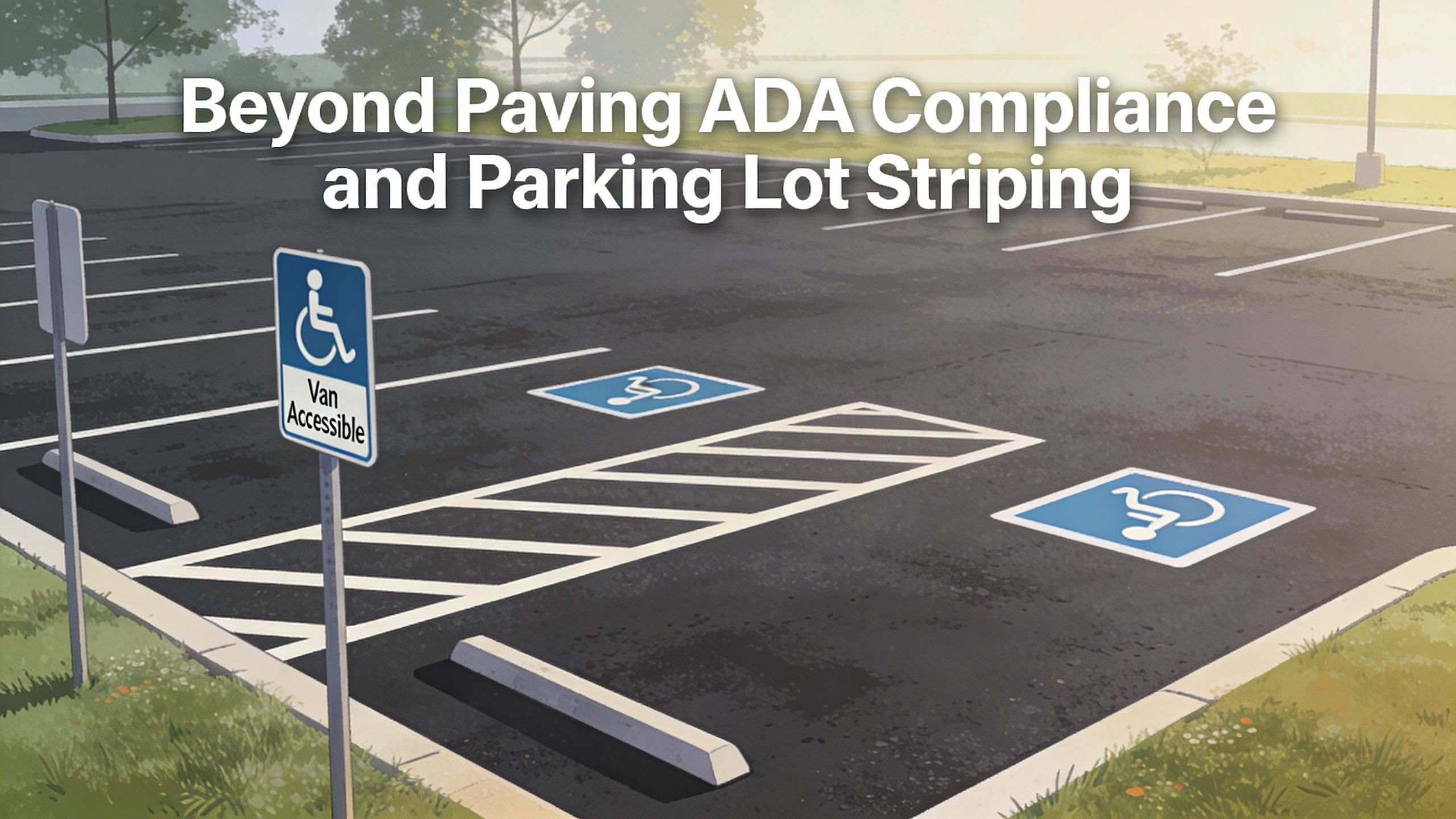
For high-traffic tourist zones like Daytona Beach, 2025 FDOT mandate updates call for enhanced ADA parking markings, including blue reflective paint and 4-inch minimum line widths, and that push has been tied to a 22% rise in accessibility lawsuits in Volusia County, according to this Florida paving FAQ. Even if your site is outside Daytona, that direction matters because many owners across Central Florida are reviewing layout and marking quality more carefully.
If you manage a church in Summerfield, an HOA in Belleview, or a retail property in The Villages, ADA compliance isn’t just about the stall itself. It includes the access aisle, route of travel, signage, and how the paved area connects to sidewalks or ramps.
A practical reference for layout details is this guide on how to stripe a parking lot.
What works and what usually causes trouble
Good striping starts before paint hits the ground. The layout has to fit real vehicle movement, not just maximize stall count on paper.
Common priorities for commercial lots include:
- Accessible spaces placed logically so users aren't crossing active traffic more than necessary.
- Clear directional markings at entrances, exits, and internal lanes.
- Consistent stall geometry so the lot looks organized and functions predictably.
- Coordination with concrete features such as sidewalks, curbs, and ramps.
A parking lot can be newly paved and still feel unfinished if the striping is weak or the ADA layout is off.
For many Central Florida properties, asphalt and concrete work frequently overlap. A lot may need restriping, but it may also need sidewalk repair, ramp correction, or a new concrete connection to create a proper accessible route. That’s why property owners should think in terms of the whole site, not just the blacktop.
Protecting Your Investment With Sealcoating and Maintenance
New asphalt starts aging the day it goes into service. Florida sun, water, and vehicle fluids go to work immediately. If you wait until the surface looks rough, maintenance gets more expensive.
Sealcoating is one of the few maintenance steps that directly protects the pavement surface instead of just reacting to damage after it appears.
Why sealcoating matters in Florida
In Daytona’s climate, sealcoating reduces pavement oxidation rates by 60-75% and can extend service life by 5-7 years when a high-solids asphalt emulsion sealer is applied every 2-3 years, according to this Daytona asphalt paving article. The same source notes that without that protection, asphalt can lose 20-30% of its flexibility within 3 years.
That matters in Daytona Beach, but it also matters in inland communities like Ocala, Dunnellon, Hernando, and Crystal River. The exact wear pattern may differ, yet UV exposure and rain still shorten pavement life when the surface is left unprotected.
What a maintenance-minded owner does differently
A good maintenance plan is simple. Watch the surface early, seal on schedule, and repair isolated trouble before it spreads.
The usual pattern looks like this:
Inspect the lot or driveway regularly
Look for fading, early cracking, water retention, and edge breakdown.Sealcoat on a planned cycle
A scheduled application is better than waiting for visible deterioration to become severe. For timing guidance, this article on how often to seal coat asphalt gives a practical overview.Handle crack repair and striping together when needed
It’s often smarter to group maintenance items so the surface stays protected and functional.
What doesn't work
What fails most often is delay. Owners see small cracks, faded striping, or minor oxidation and assume they have plenty of time. Then one rainy season or one stretch of heavy use turns a maintenance item into patching, overlay, or reconstruction.
For commercial properties in Marion County, FL and Citrus County, FL, preventive maintenance usually protects both appearance and operations. For homeowners, it helps preserve curb appeal and avoids replacing a driveway sooner than necessary.
Choosing Your Central Florida Concrete and Asphalt Partner
The contractor you choose affects more than finish quality. They affect drainage, schedule, communication, compliance, and how long the work lasts.
A good Florida contractor should understand both asphalt performance and the concrete elements that connect to it. That includes sidewalks, curbs, ramps, aprons, and transitions. On many real projects, asphalt and concrete can't be treated as separate worlds.
What to look for
Start with the basics. The company should be licensed and insured, know local conditions, and explain scope in plain language. If they can’t describe the base work, drainage plan, or traffic needs clearly, that’s a warning sign.
Long-term stability matters too. The trajectory of P&S Paving, which grew from one employee in 1993 to over 250 people in the Daytona Beach market, reflects how reliable project delivery and steady workforce growth create the kind of stability property owners value, as noted in this company history video.
Why dual expertise matters
For property owners in Marion County, FL and Citrus County, FL, the best fit is often a contractor who can think beyond a single trade. A driveway replacement may include concrete apron work. A commercial lot may need sealcoating and striping now, then sidewalk or slab improvements later.
That broader view helps in Ocala, Inverness, Lecanto, Beverly Hills, and Hernando because most properties age as systems. Water movement, pedestrian routes, parking layout, and pavement wear all affect one another.
A reliable Central Florida partner should offer clear timelines, realistic recommendations, and honest pushback when a quick fix won’t hold. That’s what protects the property owner, not just the contractor’s schedule.
Frequently Asked Questions About Paving Projects
Is asphalt or concrete better for a driveway in Central Florida
It depends on use, appearance goals, and maintenance expectations. Asphalt is often a strong choice when you want a flexible surface and a faster paving process. Concrete can be a better fit when you want a different finish, a brighter surface, or a full driveway replacement that also changes shape or layout.
For many homes in Ocala, Belleview, or Citrus County, the answer comes down to drainage, subgrade condition, and how the driveway ties into the house, garage, or sidewalk.
Can new asphalt go over old asphalt
Sometimes, yes. But only when the existing pavement and base are still structurally sound enough to support an overlay. If the lot has widespread cracking, movement, or drainage failure, paving over it usually hides the problem for a short time instead of fixing it.
How soon can you drive on fresh asphalt
Fresh asphalt needs time before normal use. The exact timing depends on weather, thickness, and site conditions. In hot Florida weather, caution matters even more because asphalt stays impressionable longer than many owners expect.
What are the biggest red flags in a paving proposal
Watch for vague scope, no mention of drainage, no discussion of base repair, and pricing that treats every area of the site the same. A serious proposal should explain what gets removed, what gets repaired, and how the final surface will perform.
When should striping and sealcoating be part of the same plan
Commercial owners should usually think about them together. If a lot needs surface protection and the markings are already faded, bundling the work makes the site look finished and keeps traffic flow clear. That’s especially important for HOAs, churches, schools, and retail properties across Marion and Citrus.
If you need help with a driveway, parking lot, sidewalk connection, ADA upgrades, or long-term pavement maintenance, Riverside Sealing & Striping, LLC provides no-pressure consultations for property owners across Central Florida. As Concrete and Asphalt Experts in Marion and Citrus County, the team handles concrete construction, asphalt sealcoating, and professional striping with reliable scheduling, clear communication, and practical recommendations built for Florida conditions.