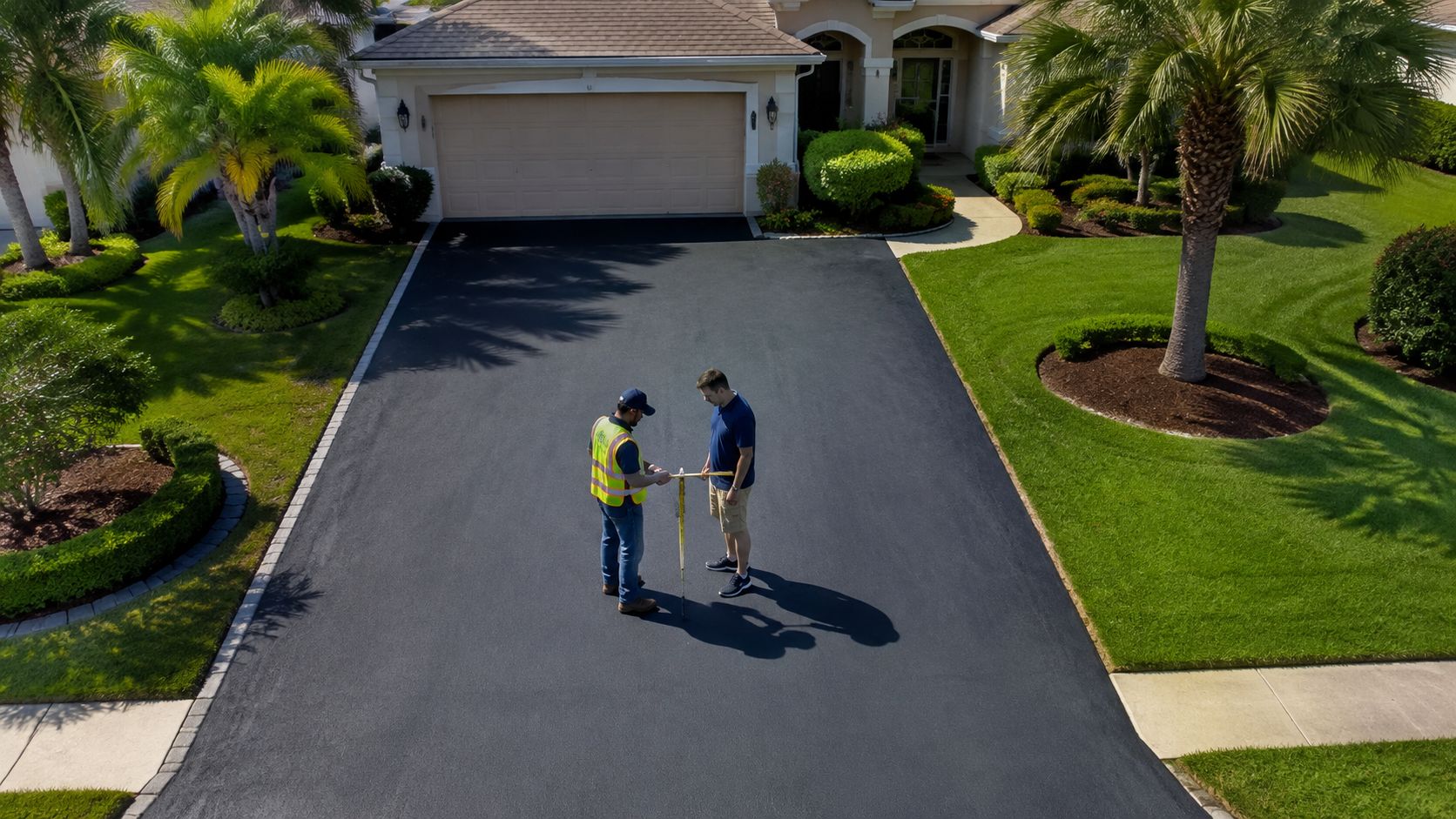
You're standing in the driveway or looking across a parking lot, and the surface tells you the same thing it tells every owner sooner or later, it's tired. The color is washed out, the cracks are multiplying, and you're trying to figure out whether asphalt resurfacing near me is the right search or just the wrong fix for the problem in front of you. In Central Florida, that question matters because a fresh top layer can save a sound pavement, but it can also hide a base failure for a while and make a bad decision more expensive.
Table of Contents
- What Asphalt Resurfacing Near You Really Means
- Signs Your Pavement Needs Resurfacing Instead of Repair
- Resurfacing Options From Light Touch to Full Rebuild
- How the Overlay Process Actually Works
- Cost and Timeline Expectations in Central Florida
- How Central Florida Climate Changes the Resurfacing Decision
- How to Vet Local Resurfacing Contractors Near You
- Maintenance After Resurfacing and Choosing a Provider
What Asphalt Resurfacing Near You Really Means
A lot of people search for asphalt resurfacing near me when the pavement looks rough, but surface wear alone does not tell you whether the lot or driveway needs a new top layer. Resurfacing means placing a new asphalt layer over the existing pavement, also called an overlay. A proper overlay adds material and restores the riding surface, while full replacement tears out the old pavement and starts over.
The real job of an overlay
A good overlay restores smoothness, improves function, and extends service life when the pavement underneath is still carrying the load. One industry source says that kind of work can add up to 10 to 15 years of life when the base pavement is still structurally suitable, which is why pre-inspection matters more than curb appeal alone (PonyUp Parking Lots). If the base is failing, a new top layer only delays the bigger bill.
Practical rule: If the pavement is only ugly, resurfacing may be right. If the pavement is moving, sinking, or pumping water, start thinking deeper than the surface.
Sealcoating protects the top and helps block sun and water, but it does not add structure. Full replacement removes the old pavement and rebuilds it from the ground up. Resurfacing sits in the middle, and that middle is where a lot of driveways and parking lots in Marion County, FL and Citrus County, FL end up.
Why the condition check comes first
Start with the pavement, not the contractor search. Overlay performance depends on adequate load-carrying capacity, surface regularity, and a solid bond or key between old and new layers, and the substrate also has to make sense for thickness, drainage, and skid resistance (MPA asphalt guidance). That is the part many asphalt repair near me searches skip, even though it decides whether resurfacing will hold or fail early.
A faded lot in Ocala, a worn driveway in Dunnellon, or an aging surface in Crystal River can all be resurfacing candidates, but only after someone checks what is underneath. The contractor you hire should look at the base condition, drainage, ADA slope issues, and striping needs, then tell you plainly whether an overlay makes sense or whether the pavement needs more than a new surface.
Signs Your Pavement Needs Resurfacing Instead of Repair
A lot of owners waste money. They see cracks and assume patching, or they see a dull surface and assume sealcoating will fix everything. The better move is to read the pavement like a mechanic reads an engine, then match the fix to the failure.
Surface wear that usually points to an overlay
When the damage is widespread but shallow, resurfacing often makes sense. Look for raveling, fine cracking across broad areas, oxidation that has turned the pavement gray, faded striping, and minor depressions that haven't turned into major settlement. Those symptoms usually mean the top is spent, but the pavement underneath may still support a new layer.
If you're walking a driveway in Belleview or a commercial lot in Inverness, check whether the damage is everywhere or just in isolated spots. Isolated potholes can be patched. Wide surface wear across most of the lane usually pushes you toward resurfacing rather than spot repair.
Red flags that say stop and inspect deeper
Alligator cracking, soft spots, drainage failures, and base movement are different animals. That kind of damage usually means the problem is not just on top. A new overlay on a moving base is a gamble, and I wouldn't call that a smart one.
If water sits after rain, the pavement tells on itself. Standing water near cracks or low spots means the base and drainage need attention before anyone talks about a new top layer.
Here's the simplest filter I use. If the pavement is mostly sound but tired, resurface it. If it flexes, sinks, or breaks apart under light pressure, you're past the point where an overlay is the right answer.
For a nearby repair baseline, you can compare scope with this guide to asphalt repair near me, because patching and resurfacing are not the same job.
Resurfacing Options From Light Touch to Full Rebuild
Contractors throw around a lot of terms, and most owners do not need the jargon. They need a straight answer on which fix fits the pavement in front of them. Price matters, but the pavement condition decides the scope.
Match the fix to the failure
Sealcoat shields asphalt from sun, water, and staining without adding structural support. It helps preserve sound pavement, but it does not correct deeper damage. Overlay is the standard resurfacing move for pavement that is worn but still stable. Mill-and-fill makes more sense when you need to remove the top layer to correct elevations or handle deeper ruts while keeping curbs and transitions intact. Full replacement is for failed bases and pavement that cannot support another layer.
| Option | Best Pavement Condition | Typical Lifespan Gain | Wrong Choice When |
|---|---|---|---|
| Sealcoat | Sound surface with light oxidation | Protection, not structural life | Cracks, ruts, or base failure are present |
| Overlay | Stable pavement with widespread surface wear | Service-life extension from resurfacing | The base is moving, soft, or breaking apart |
| Mill-and-fill | Deeper surface problems, elevation issues, curb transitions | Restores ride and levels surface | Base is already failed |
| Full replacement | Structural failure and base damage | New pavement structure | The existing base is still sound |
A resurfacing job is still a field process, not a cosmetic treatment. The crew inspects the pavement, repairs defects, prepares the surface, applies a bond coat, places the new material, and compacts it so the new layer locks in. That sequence is what separates a sound overlay from a rushed top dressing.
What an overlay actually does
An overlay gives you a new wearing surface over pavement that still has enough strength underneath to carry traffic. It is the right call when the top is tired, the structure is still working, and you want to restore ride quality without tearing out good material. For a closer look at that scope, see this guide to mill and overlay asphalt.
That choice is only smart if the base is stable. If the pavement moves, sinks, or keeps breaking apart, an overlay only hides the problem for a short time.
When reconstruction is the only honest answer
Reconstruction means the old pavement comes out. You are not buying a prettier surface, you are rebuilding the structure. If the lot in The Villages has base movement or a driveway in Homosassa keeps sinking after rain, no overlay can fix that for long.
I would rather tell an owner to spend more once than watch them spend twice.
How the Overlay Process Actually Works
A proper resurfacing project starts before any asphalt arrives. The contractor should inspect the pavement, measure problem areas, and look for drainage issues, soft spots, and failed joints. If they skip that walk-through and jump straight to pricing, they're selling a layer, not solving a pavement problem.
What good prep looks like
Surface repairs come first. That usually means crack filling, patching, and cleaning out loose material so the new layer has something solid to bond to. Sometimes milling is used to remove the top layer and preserve elevations, especially around curbs, garage thresholds, or transitions to sidewalks and concrete aprons.
Then comes the bond step. The existing surface needs a tack coat or equivalent bonding layer so the new material doesn't just sit on top like frosting on cardboard. Hot mix asphalt is then placed in a controlled lift, and one repair product used for resurfacing allows placement from 1/8 inch to 2 inches with a working time of about 20 minutes and drive-on strength in about 2 hours (CTS Cement resurfacer datasheet). That's useful because fast early strength reduces closure time, but thin lifts still demand a stable, properly prepared substrate.
What to watch for when you're hiring
The biggest mistake is paying for a fresh top layer over a failing base. I see that risk every time someone shops only by price. If the contractor won't explain how they verified load-carrying capacity, surface regularity, drainage, skid resistance, and bond, they're asking you to trust appearance over performance.
A resurfacing project fails fast when the base was never fit for it. Two winters can expose what a rushed estimate was trying to hide.
At-home checks help, too. Watch where water goes after a storm in Ocala or Silver Springs. Tap soft-looking areas with a screwdriver handle, and pay attention if the surface gives or sounds hollow. If those signs show up, a professional core sample or deflection test is worth paying for before you approve the work.
For larger transitions or partial rebuilds, a contractor should be able to explain whether a mill and overlay asphalt approach makes more sense than a simple overlay.
Cost and Timeline Expectations in Central Florida
Most bad quotes are confusing because they mix scope, speed, and assumptions. A good quote should tell you what's being repaired, what's being resurfaced, and what's being left alone. Without that, you're comparing apples to truckloads of aggregate.
What the numbers usually tell you
A national repair marketplace says asphalt driveway installation averages about $7 to $15 per square foot, with a national average total installation cost of about $4,740 (Angi). That gives you a sanity check, even if your project is a resurfacing job rather than a full install. A stable base usually costs less to resurface than to tear out and replace, because the crew isn't hauling off the entire structure.
Price swings with surface area, milling, thickness, prep, restriping, ADA upgrades, and site access. A small residential driveway in Summerfield doesn't create the same traffic-control burden as a retail lot in Citrus County, and that changes labor planning fast.
Timeline from quote to reopen
A straightforward job starts with the site visit and estimate, then moves into scheduling, prep, paving, striping if needed, and cure time. Homes usually have a shorter disruption window than commercial properties, but business sites need coordination with tenants, deliveries, and customer access.
The cheapest quote often leaves out the parts that keep the pavement from failing again.
If the estimate doesn't name surface prep, thickness, striping, or ADA-related details, it isn't a serious resurfacing proposal. It's a rough number dressed up like a plan.
How Central Florida Climate Changes the Resurfacing Decision
Central Florida is hard on pavement in ways people from cooler regions don't always respect. Heat ages asphalt, UV exposure dries it out, and summer rain tests every low spot and weak edge. In places like Ocala, Dunnellon, and Homosassa, the weather doesn't just affect when you pave, it affects how long the work survives.
Sun, rain, and drainage all matter
UV exposure oxidizes the surface faster, which is why faded pavement and brittleness show up sooner here than in milder climates. Rain is the other test. A lot of lots look fine until the afternoon storm arrives and water starts pooling at the low points, which usually tells you where the base or slope is wrong.
Sandy soils in areas around Citrus County and Marion County can also change how well the base stays supportive over time. That doesn't automatically mean failure, but it does mean the contractor has to look harder at support, edge conditions, and drainage before recommending an overlay.
Residential and commercial timing aren't the same
A residential driveway in Beverly Hills or Hernando can often wait for the right weather window. A commercial lot near Crystal River or Inverness may need maintenance more often because traffic, turning tires, and parking loads work the surface harder. Sealcoating can help protect the top, but it isn't a substitute for resurfacing when the pavement has already worn out.
If you treat climate as a maintenance input instead of a footnote, you make better decisions. That usually means pairing surface protection with a real resurfacing plan, not hoping one treatment does both jobs.
How to Vet Local Resurfacing Contractors Near You
A pretty quote isn't enough. If you're hiring in Marion County, FL or Citrus County, FL, you need a contractor who can prove they understand pavement condition, not just sell proximity and star ratings.
Ask for proof, not promises
Start with the basics, licensing and insurance. Then ask for project photos from similar work in Central Florida, not just stock images or generic before-and-afters. A written scope should name the surface area, thickness, prep steps, materials, and striping so there's no confusion once the crew shows up.
You also want to know whether they handle ADA-compliant upgrades as part of the same project. That matters because resurfacing can trigger access ramp work, and the local road guidance in Los Angeles explicitly notes resurfacing as an ADA-triggering alteration that requires access ramps before work proceeds (City of Los Angeles current statistics and data). If your contractor can't speak clearly about access ramps, handicap spaces, and directional markings, they're not ready for commercial or institutional work.
What to ask during the estimate
- License and insurance: Ask for current documentation before you talk price.
- Similar local jobs: Request photos or addresses from Marion or Citrus County work.
- Written scope: Surface prep, thickness, striping, and cleanup should all be listed.
- ADA capability: Confirm they can handle ramps, markings, and compliance-related layout.
- Scheduling: Ask how they protect access for homes, tenants, or customers during work.
One more thing. The best time to talk about striping is before the asphalt goes down, not after the crew has packed up.
Maintenance After Resurfacing and Choosing a Provider
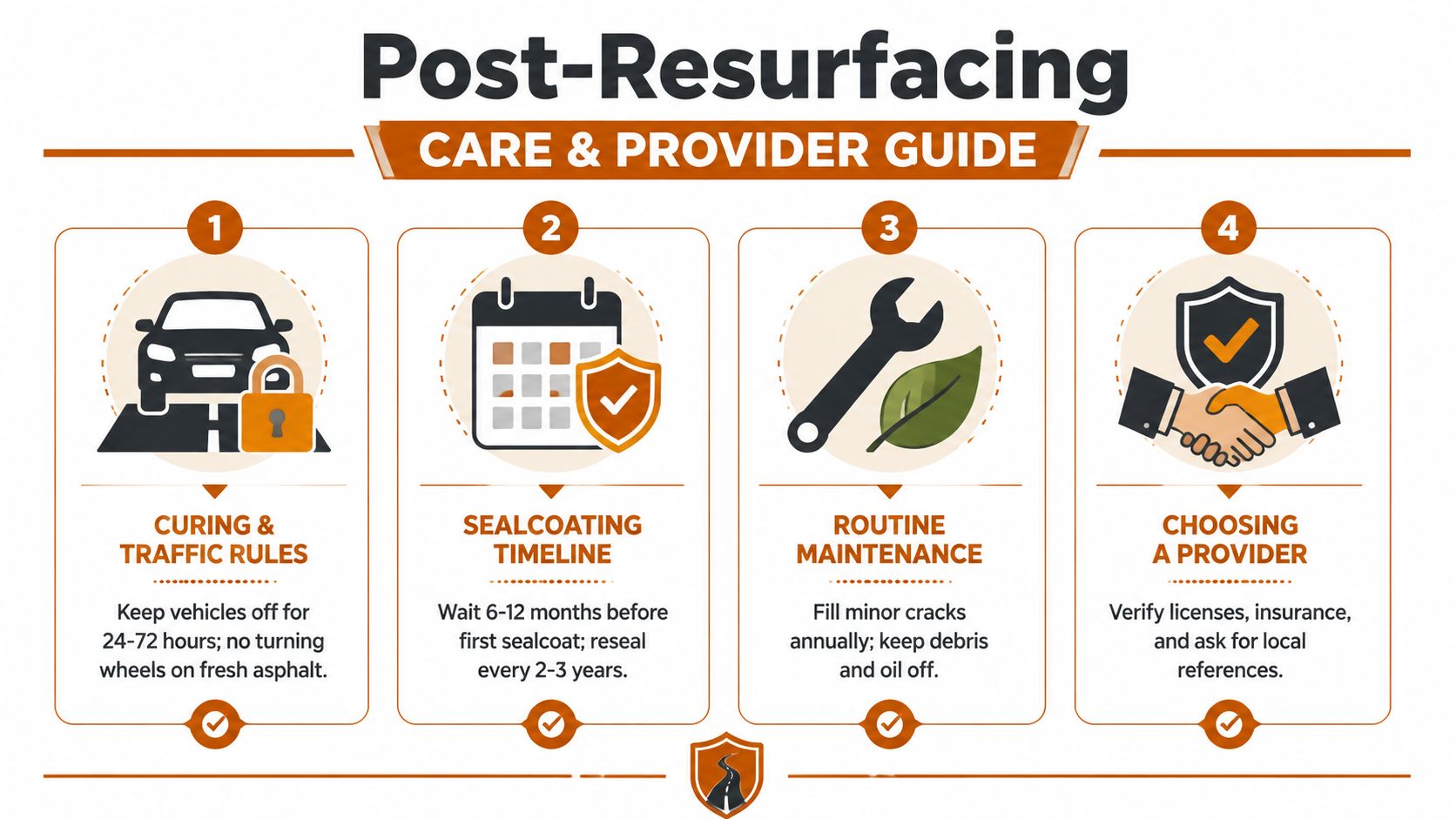
A resurfaced lot or driveway still needs discipline if you want it to hold up. Keep vehicles off the surface until the contractor says it is ready, avoid sharp wheel turns on fresh asphalt, and deal with small cracks as soon as they show up again. Sealcoating usually comes later, not right away. If you want the timing and application sequence laid out clearly, read sealcoating near me before you schedule that next step.
A resurfacing job only pays off if the contractor treats the pavement like a system, not just a blacktop sale. I want one crew that can handle concrete work, asphalt maintenance, sealcoating, striping, and ADA-related upgrades under one roof, because that cuts down on handoff mistakes and makes the scope harder to dodge later. In this area, Riverside Sealing & Striping, LLC is a family-owned concrete and asphalt maintenance company based in Dunnellon that serves Marion County, Citrus County, and surrounding Central Florida areas, including Ocala, Belleview, Silver Springs, Summerfield, Crystal River, Homosassa, Inverness, Lecanto, Beverly Hills, Hernando, and The Villages.
The company is licensed and insured, offers free no-pressure on-site estimates from 7am to 7pm, and handles concrete work, sealcoating, striping, and ADA upgrades under one roof. That matters because a contractor who understands striping layout, access needs, and surface prep is much more useful than one who only wants to talk price per square foot.
A fresh overlay can be the right fix, but only when the base is sound and the scope is honest. If the foundation is broken, the edges are failing, or the lot needs more than a surface reset, resurfacing is the wrong spend. If you want a no-pressure evaluation for a driveway, parking lot, or commercial property, visit Riverside Sealing & Striping, LLC and ask for a professional look at what your pavement needs.