A lot of property managers in Central Florida reach the same point at about the same time. The parking lot still functions, but it looks tired. The striping has faded, the surface has started to roughen up, and every rainstorm seems to make the low spots more obvious. In Ocala, Dunnellon, Belleview, and The Villages, that usually leads to the same question. Is this a sealcoating job, or is it time for something bigger?
For many sites, mill and overlay asphalt is the middle-ground fix that makes the most sense. It goes further than surface maintenance, but it doesn't jump straight to full reconstruction. That matters for retail centers, HOAs, churches, offices, and mixed-use properties that need a safer, cleaner-looking surface without shutting down operations longer than necessary.
In Marion County, FL and Citrus County, FL, that decision also has to account for Florida weather. Heat, UV exposure, heavy rain, and daily traffic wear down pavement differently than in cooler climates. A repair that looks good on paper can fail early if the base is unstable or drainage is poor. That's why the smart move isn't just choosing a service. It's choosing the right diagnosis first.
For owners who want practical answers instead of a sales pitch, the issue is simple. Does the pavement have good bones, or is the trouble deeper?
Table of Contents
- Introduction A Smart Fix for Aging Florida Pavement
- What Exactly Is Mill and Overlay Asphalt
- Key Benefits for Your Commercial Property or HOA
- Is Mill and Overlay the Right Choice for Your Pavement
- The Mill and Overlay Process Step by Step
- How Mill and Overlay Compares to Other Solutions
- Protecting Your Investment in Florida's Climate
- Get a Professional Pavement Evaluation for Your Property
Introduction A Smart Fix for Aging Florida Pavement
A worn parking lot doesn't always need to be ripped out and rebuilt. In many cases, the top layer has taken the abuse while the underlying structure is still doing its job. That's where mill and overlay asphalt earns its place. It removes the damaged surface and replaces it with fresh hot mix, giving the pavement a reset without starting from zero.
That makes it especially useful for commercial properties and HOA roads across Central Florida. In places like Silver Springs, Summerfield, Crystal River, Homosassa, and Inverness, owners often need a fix that improves appearance, restores ride quality, and controls cost at the same time. A lot that looks neglected can affect first impressions, tenant satisfaction, and day-to-day safety long before it becomes a complete failure.
Practical rule: If the pavement is ugly but still structurally sound, a mill and overlay is often worth serious consideration. If the base is moving, it isn't.
For a company that serves as Concrete and Asphalt Experts in Marion and Citrus County, this is also where a broader construction perspective matters. Not every site needs the same answer. Some properties need pavement rehab. Others need curb, sidewalk, apron, or concrete work tied into the asphalt repair so drainage and transitions are handled properly.
In Florida, the smartest money usually goes to the repair that matches the condition below the surface, not just the one that makes the top look new.
What Exactly Is Mill and Overlay Asphalt
Mill and overlay asphalt is a pavement rehabilitation method used when the top portion has worn out but the underlying structure still has enough strength to stay in service. The crew mills off a controlled depth of existing asphalt, corrects surface profile issues, and installs a new layer of hot mix on top.
The key word is rehabilitation. For an Ocala commercial property, that distinction matters because the right repair depends less on how rough the surface looks and more on what is happening below it.
Refinishing the surface while keeping the structure
A hardwood floor is a fair comparison. If the finish is worn but the boards underneath are still sound, refinishing makes sense. Asphalt works the same way when the distress is limited to the upper layer.
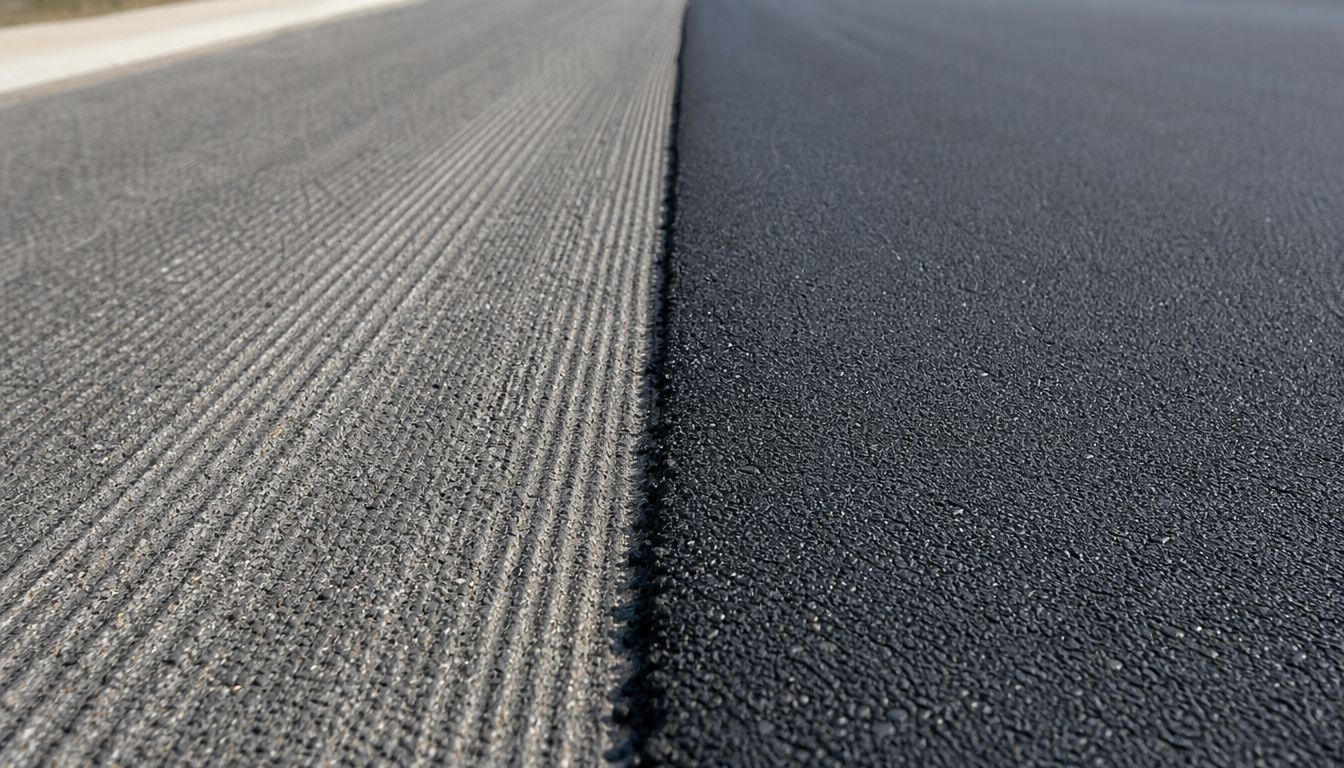
Typical milling depths often fall between 0.5 inches and 2 inches, as noted in this pavement milling overview. The purpose is to remove oxidized asphalt, shallow rutting, minor surface cracking, and other wear that has developed in the riding surface without tearing out pavement that still has service life left.
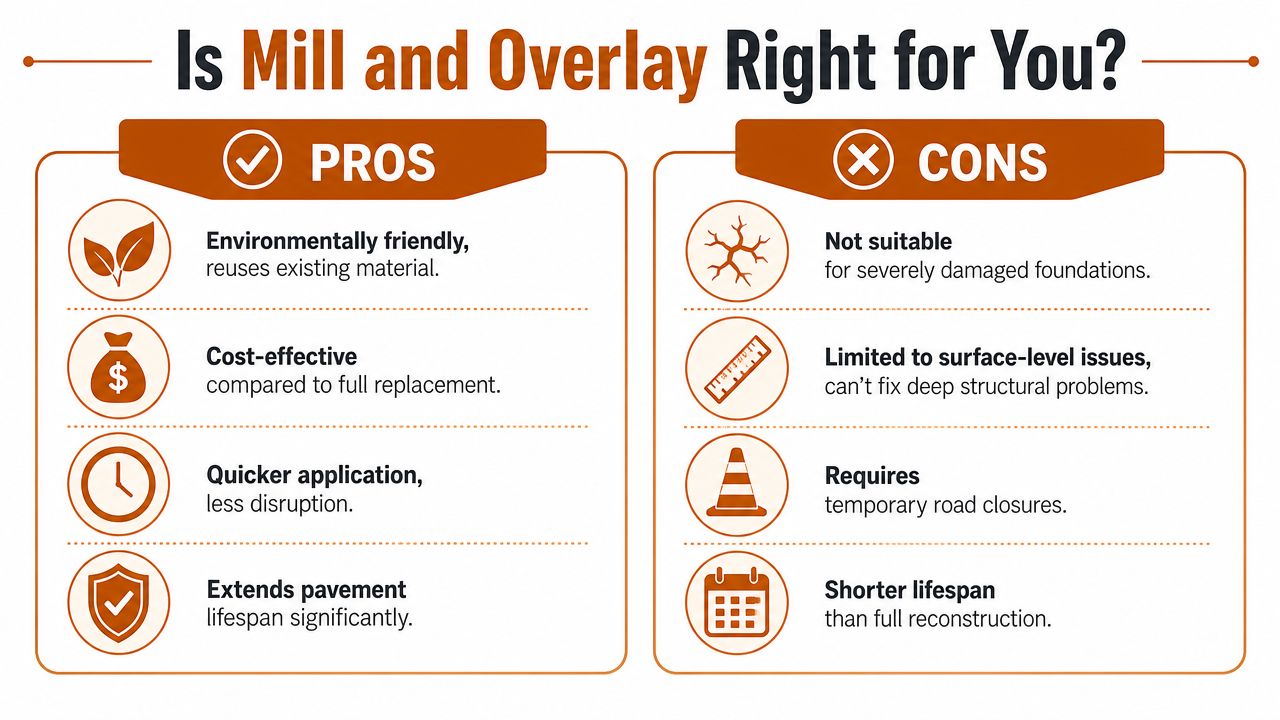
That is also where owners can make an expensive mistake. A fresh overlay can improve a tired surface, but it will not fix a weak base, pumping subgrade, or widespread structural movement. If the pavement is flexing, dropping, or breaking apart from the bottom up, milling and overlaying the top only hides the failure for a short time.
What the crew is doing on site
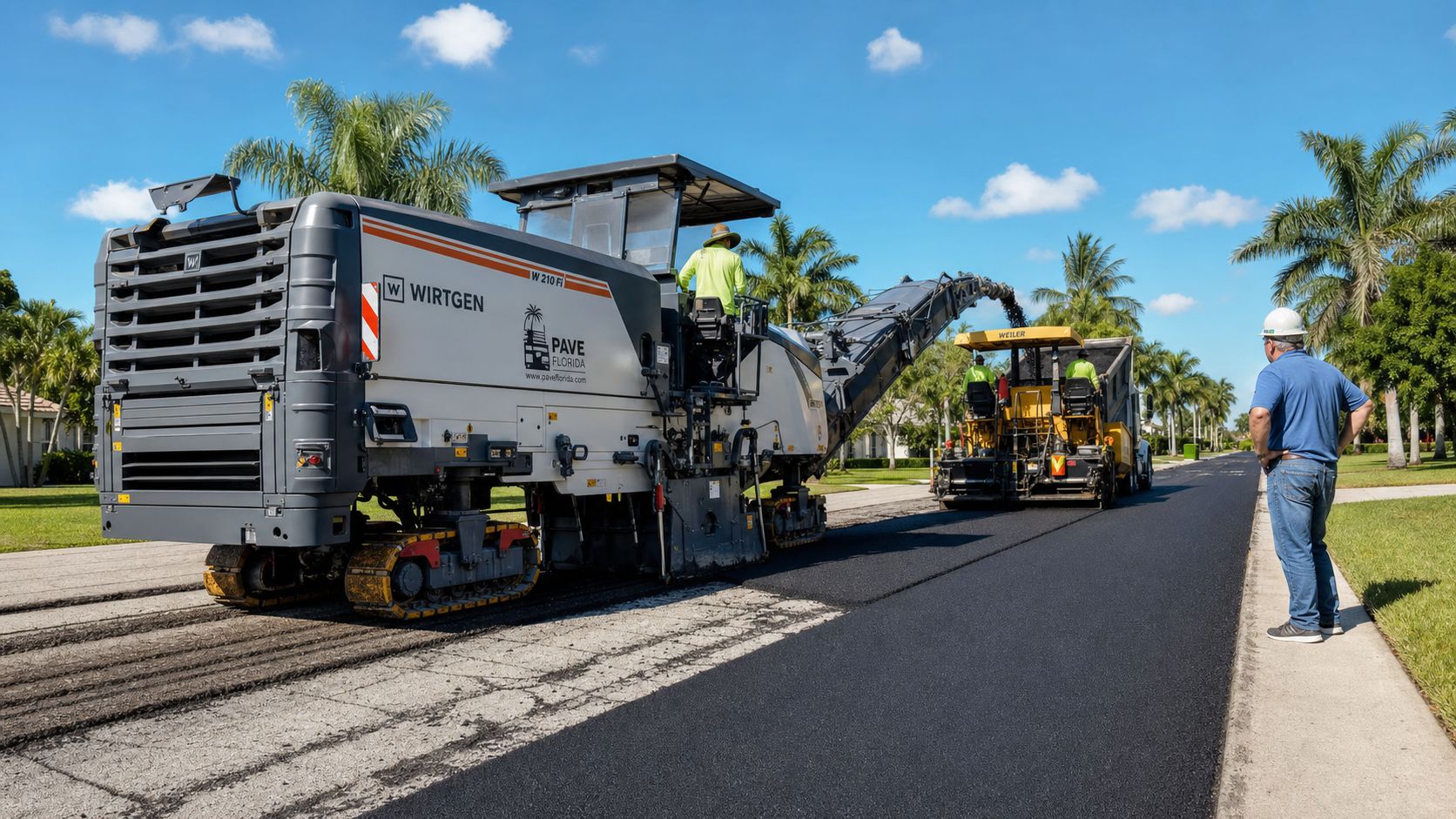
The milling machine removes the worn surface at a set depth. That cut can restore grades, clean up surface defects, and create the texture needed for the new asphalt layer to bond properly. The contractor then places fresh hot mix over the prepared surface. If you want a plain-language breakdown of the material itself, this guide on what hot mix asphalt is is a useful companion.
Good contractors do more than grind and pave. They check drainage, tie-in elevations at curbs and entrances, and whether cracking patterns suggest surface aging or deeper failure. In Florida, that diagnosis matters because water intrusion and heat speed up pavement damage. A lot can look like a simple resurfacing job from the street and still need localized base repair, or full reconstruction in the worst sections.
Mill and overlay also makes practical sense because the milled asphalt can be recycled into new mix production, as described in overlay construction documentation from Iowa State's InTrans program. That helps control material waste while preserving pavement that still has value.
Done on the right pavement, mill and overlay is one of the most cost-effective ways to extend service life. Done on the wrong pavement, it becomes a short-term cosmetic fix.
Key Benefits for Your Commercial Property or HOA
Owners usually look at three things first. Cost, downtime, and how long the result will hold up. Mill and overlay asphalt lands in a strong position on all three when the pavement is a good candidate.
Why owners choose it
A properly selected mill and overlay can deliver a long service window without the price tag and disruption of rebuilding the whole section. A municipal reference notes that this treatment can extend service life by up to 15 years, and streets can reopen the same day or within 24 hours, which is a major advantage when access matters, as outlined by the City of Richmond mill and fill hot mix asphalt overlay page.
That fast return to service matters on busy properties in Ocala, The Villages, and Lecanto. Tenants still need access. Deliveries still have to happen. Residents still expect usable roads and parking.
Here's where the value shows up in the field:
- Lower overall investment than reconstruction: You're replacing the worn surface layer, not rebuilding the entire pavement structure.
- Cleaner appearance: Fresh asphalt and new striping make a property look maintained instead of deferred.
- Better safety: A smoother surface helps reduce trip points, rough transitions, and standing-water trouble spots when they're tied to surface profile rather than base failure.
- Less operational disruption: Many owners can phase work to keep portions of the property open.
A tired parking lot affects perception before it affects function. Mill and overlay improves both when the pavement still has a stable foundation.
Where it fits best
This method tends to make sense for shopping centers, HOA streets, office complexes, schools, churches, and multi-building commercial sites where the pavement has aged but hasn't structurally collapsed. It's especially practical when the striping layout also needs to be refreshed after paving.
From a budgeting standpoint, there are also published cost benchmarks for larger rehabilitation planning. A federal operations study lists about $8.00 per square yard for a 1.5-inch mill and overlay system and between $11 and $12 per square yard for 2-inch to 2.5-inch overlays, with milling alone averaging $1.65 per square yard, as summarized in this FHWA technical report on pavement cost analysis.
For a property manager trying to preserve asphalt before it becomes a reconstruction project, that middle lane is often where the savings are.
Is Mill and Overlay the Right Choice for Your Pavement
Depending on the pavement treatment, owners can save money or waste it. Mill and overlay is excellent for the right pavement. It's the wrong answer for a failing base.
Surface distress versus structural failure
Surface distress shows up in ways you'd expect from age and exposure. The top looks oxidized. There may be raveling, shallow cracking, worn aggregate, rough texture, and a generally weathered appearance. The pavement may look bad but still feel stable under traffic.
Structural failure looks different. Alligator cracking, repeated potholes in the same area, sloughing at edges, pumping, movement, and dips that come back after repairs usually point to trouble below the surface. One industry guide makes the key point clearly. The most overlooked issue is the difference between surface distress and subgrade failure, and applying an overlay to a moving subgrade is a short-term fix that can crack again within 1 to 2 years, as noted in this guide on pavement milling and overlays.
That distinction matters in Florida because water exposure, drainage issues, and soft spots can turn a surface problem into a base problem fast. In places like Homosassa, Hernando, and Beverly Hills, low areas and drainage patterns often tell you as much as the cracks do.
What to look for before you approve the job
A contractor should look beyond the surface before recommending a mill and overlay. At minimum, the question is whether the existing pavement has enough structural integrity to support a new wearing course.
A few practical screening points:
- Check the cracking pattern: Long, isolated cracks and top-down aging are very different from widespread alligator cracking.
- Watch for movement: If the surface rocks, shifts, or settles under load, milling the top won't fix the problem.
- Study drainage: Water that ponds or runs back toward buildings often points to profile or structural issues that need more than resurfacing.
- Look at repeated repair spots: If the same area keeps breaking down, the weakness is usually deeper than the surface.
If the problem starts below the asphalt, a prettier top layer won't change the outcome.
There's also a structural rule of thumb worth knowing. Mill and overlay is most suitable when the pavement has a sufficient stone base, no major structural issues, and proper drainage. Pavements with bottom-up cracking or moving subgrades should be rebuilt instead, according to this contractor guidance on when to mill and overlay asphalt pavement.
For property managers in Marion County, FL and Citrus County, FL, this is the step that separates a cost-effective rehab from paying twice.
The Mill and Overlay Process Step by Step
A good mill and overlay job starts before the milling machine arrives. For a commercial property in Ocala, the first question is whether the pavement is a candidate for resurfacing at all. If the surface is worn but the base is stable, this process can restore ride quality and appearance at a much lower cost than reconstruction. If the lot has movement, pumping water, or repeated failures in the same areas, the right answer is usually selective base repair or full rebuild before any overlay goes down.

What happens before the paving starts
The field work begins with layout, grade checks, and a close look at transitions. Crews mark the limits of milling, check tie-ins at sidewalks and building entrances, identify valves and utility castings, and set a traffic-control plan that fits the property. On occupied sites, staging matters as much as paving. Delivery trucks, tenant parking, and emergency access still have to work during the job.
Then the milling crew removes the worn surface to the specified depth. The goal is not just to shave off old asphalt. The crew is correcting the profile, removing oxidized material, and creating a clean surface that will bond to the new lift. If the milled surface exposes soft spots, broken edges, or unstable patches, that is useful information. It confirms where the problem is deeper than surface wear and where repairs need to happen before paving continues.
After milling, the surface gets cleaned thoroughly. Dust, loose millings, and debris left behind will weaken the bond between old and new asphalt. In Florida, afternoon rain can create another problem. If the surface is damp at paving time, the crew needs to wait until conditions are right.
What happens during paving day
The step owners rarely notice is the tack coat. It is the bond between the milled pavement and the new asphalt layer. If it is skipped, applied unevenly, or tracked over until it is contaminated, the overlay can separate long before the surface should fail.
Field warning: A clean, dry milled surface and uniform tack application are what keep the new mat tied to the old pavement.
Next, the paver places fresh hot mix at the designed thickness and the rollers compact it while the material is still in the right temperature range. That part looks simple from a distance, but it takes coordination. Mat thickness, joint construction, rolling pattern, and temperature control affect how well the pavement holds up through Florida heat, heavy rain, and turning traffic in drive lanes and loading areas.
On many commercial jobs, the schedule is short enough to limit disruption if the site has been planned properly. Owners comparing rehab to rebuild can review the cost and disruption differences in this guide to asphalt overlay vs replacement.
For a visual look at paving in action, this short embed helps show the sequence on site:
The last step is restriping and detail work. Once the new mat has cooled enough, the crew restores parking stalls, ADA markings, arrows, stop bars, and fire lane markings. This is also the right time to correct layout issues that caused circulation problems before. A well-run mill and overlay job does more than give the property a new surface. It fixes the wear layer while confirming that deeper failures are addressed where they exist, instead of covering them up and paying for the same problem twice.
How Mill and Overlay Compares to Other Solutions
The mistake many owners make is comparing every pavement fix as if they do the same job. They don't. Sealcoating, pothole repair, mill and overlay, and full-depth replacement each belong in a different part of the maintenance cycle.

A side by side view
| Solution | Best use | Relative cost | Typical durability | Disruption level |
|---|---|---|---|---|
| Sealcoating | Protecting asphalt that's still in decent condition | Lower | Short-term maintenance tool | Low |
| Pothole repair | Isolated failures and immediate hazard correction | Very low | Short-term localized fix | Very low |
| Mill and overlay asphalt | Surface wear and moderate distress on structurally sound pavement | Middle | 10 to 15 years in the right application, as covered earlier in the article | Lower than reconstruction |
| Full-depth replacement | Severe structural issues, failed base, bottom-up cracking | Highest | 20 to 30 years for reconstruction in the Richmond reference discussed earlier | Highest |
If you're weighing rehab versus rebuild, this guide on asphalt overlay vs replacement is a good practical reference.
What this means for Central Florida properties
Mill and overlay sits in the sweet spot when the pavement has enough structure to keep, but too much wear to justify a lighter treatment. It restores the driving surface and profile in a way that patching or sealcoating can't.
For shopping centers in Ocala, community roads in The Villages, and commercial sites in Citrus County, FL, that often makes it the most balanced option. It addresses more than appearance, but it avoids the cost and disruption of rebuilding when rebuilding isn't necessary.
What it won't do is fix structural instability. If the subgrade is moving, if drainage has undermined the section, or if bottom-up cracking is active, full-depth repair is the honest answer. That's true even when the lower-cost option sounds more attractive upfront.
Protecting Your Investment in Florida's Climate
Fresh asphalt needs follow-through. Florida sun hardens the surface over time, UV exposure dries out the binder, and heavy rains find weak points quickly if drainage or maintenance gets ignored.
A few habits make a difference after a mill and overlay:
- Protect the surface early: Follow your contractor's traffic guidance so the new mat can finish cooling and stabilizing.
- Stay ahead of water: Keep drainage paths clear and address standing water before it starts softening edges or joints.
- Repair small issues promptly: Early crack repair is much cheaper than letting water work down into the pavement structure.
- Plan future maintenance: A long-term approach usually includes routine inspection, crack sealing, and later asphalt sealcoating timing in Florida.
For owners who manage both pavement and flatwork, it also helps to think beyond asphalt alone. Sidewalks, curbs, dumpster pads, and concrete aprons all affect drainage and traffic flow. That's why the most reliable results usually come from Concrete and Asphalt Experts in Marion and Citrus County who look at the whole site, not one trade in isolation.
Get a Professional Pavement Evaluation for Your Property
Mill and overlay asphalt is one of the best tools available for aging pavement with a sound foundation. It improves appearance, restores ride quality, and controls cost better than full reconstruction in the right conditions. For many commercial properties and HOA roads in Marion County, FL, Citrus County, FL, and nearby areas like Dunnellon, Belleview, Summerfield, Crystal River, Homosassa, Lecanto, and Hernando, it's a practical answer.
But the success of the project depends on the first call being the right one. Surface wear can be milled and replaced. Structural failure has to be rebuilt. If you mix those up, the pavement will tell you soon enough.
A professional evaluation helps you sort that out before money is committed. It also helps identify whether your property needs asphalt rehab, striping updates, drainage corrections, or related concrete improvements to sidewalks, aprons, or access points.
If you need a no-pressure pavement review, Riverside Sealing & Striping, LLC provides free estimates and on-site consultations for commercial and residential properties across Central Florida. As Concrete and Asphalt Experts in Marion and Citrus County, the team handles asphalt maintenance, parking lot striping, ADA-focused pavement improvements, and concrete work with reliable scheduling, licensed and insured service, and practical recommendations based on what your property needs.