You're probably looking at asphalt that's gone gray, dusty, or patchy, and wondering if sealcoating will fix it or just hide a bigger problem. That's the right question to ask before you hire anyone. In Marion County, FL and Citrus County, FL, the difference between a smart maintenance move and a wasted spend usually comes down to whether the pavement is a candidate for sealcoat, or whether it needs crack repair, patching, or a different type of work first. That's where asphalt seal coat contractors separate themselves, not by how fast they can spray, but by how well they diagnose the surface.
Table of Contents
- What Sealcoating Actually Does for Your Asphalt
- Why Top Contractors Offer More Than Just Sealcoating
- Pre-Job Preparation That Separates Pros From Amateurs
- Your Contractor Vetting Checklist
- Red Flags and Common Sealcoating Scams
- Local Considerations and How Riverside Sealing and Striping Helps
What Sealcoating Actually Does for Your Asphalt
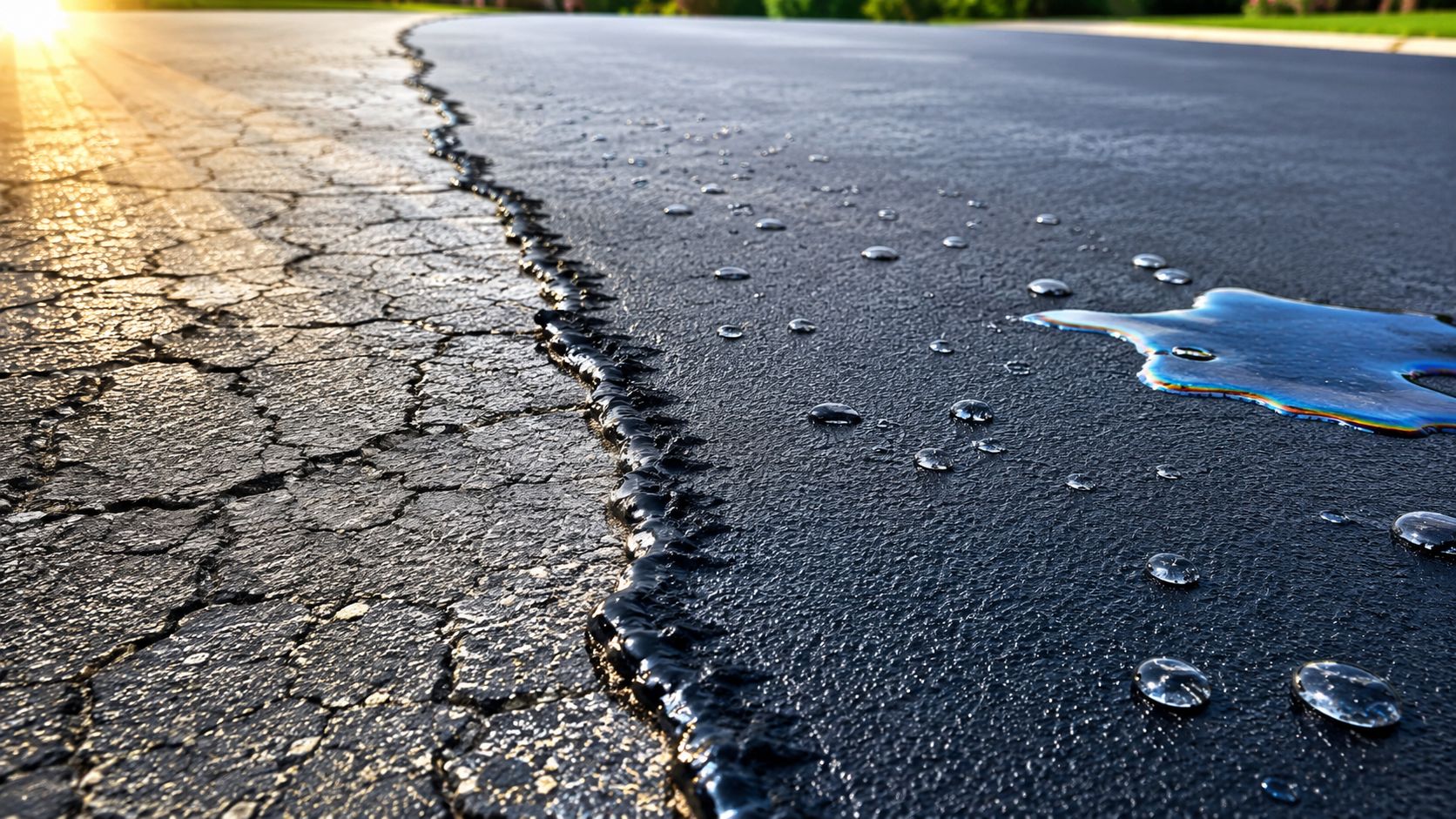
A faded driveway or parking lot often makes property owners think the asphalt is failing. Sometimes it is. Other times the surface just needs protection before more wear sets in. Sealcoating is a surface treatment that helps shield asphalt from UV exposure, oxidation, fuel spills, water intrusion, and day-to-day traffic wear, but it does not rebuild broken pavement or stabilize a failing base. Good contractors also know that sealcoat is only appropriate after the pavement is ready for it. New asphalt needs time to cure, loose debris has to come off, and repairs need to be finished before the coating goes down. A best-practices guidance document recommends a curing window of 30 to 90 days after placement at about 70°F daytime temperatures and dry conditions before sealcoat is applied.
A property manager asking sealcoating near me should first ask a harder question, is sealcoating the right fix at all?
When sealcoating makes sense
If the pavement is still structurally sound, sealcoating can be the right move. Look for a surface that is generally intact but showing wear, oxidation, minor raveling, or light cracking that has already been addressed. County specifications describe seal coating as a protective treatment for existing asphalt surfaces that helps guard against weather, moisture, oxidation, fuel spillage, and contaminants county specification.
That is the job it does best. It protects serviceable asphalt so it lasts longer and looks better, but only after the underlying problems have been handled.
When sealcoating is the wrong fix
If you are seeing potholes, base failure, or alligator cracking, a sealer will not solve that. It can darken the surface for a while, but it will not stop movement underneath. A contractor who jumps straight to coating without talking about crack filling, patching, or asphalt repair is skipping the part that protects the property.
The practical test is simple. If the damage is shallow and the structure is stable, sealing may help. If the surface moves when you walk it, flexes under traffic, or keeps breaking back through after temporary patching, the problem is deeper than sealcoat. That distinction matters in Ocala, Dunnellon, Belleview, Summerfield, and nearby communities because the wrong recommendation usually means paying twice.
A good contractor should explain whether your lot needs maintenance, repair, or a larger fix before talking about a coating. That answer tells you more than a glossy estimate ever will.
Why Top Contractors Offer More Than Just Sealcoating
The best asphalt seal coat contractors rarely stay in one lane. That's not a marketing gimmick, it's how the market works. In 2015, only 1 of the Sealcoating 75 generated 100% of sales from sealcoating, while 85% also did striping, 84% did paving, and 76% handled pavement repair Sealcoating 75 report. That tells you something important about hiring. The companies worth your time usually understand the whole pavement system, not just the black coating that goes on top.
Why bundled services matter
A sealcoat-only operator can be fine if your pavement is already in good shape and all you need is a surface treatment. The problem starts when the job needs more. Parking lots often need crack repair, patching, striping, or ADA-marked updates after the seal goes down. A contractor with paving, striping, and repair capability can solve those issues without handing you off to three different crews. That usually means fewer delays, cleaner scheduling, and a better end result for HOA boards, retail properties, churches, and apartment sites in Crystal River, Homosassa, Inverness, Lecanto, and The Villages.
Bundling also points to business stability. Contractors don't typically expand into other pavement services unless they've built enough operational discipline to manage them. That matters because sealcoating is cyclical, and the industry has grown and shrunk within broader pavement-maintenance revenue mixes over time. In other words, a company that only sells sealcoat may not be the same company six months later.
Sealcoating Industry Revenue Trends
| Year | Sealcoat-Only Sales | Total Revenue | Sealcoat as % of Total |
|---|---|---|---|
| 2017 | $112 million | not provided | not provided |
| 2019 | about $137 million | not provided | not provided |
| 2020 | $161.0 million | $1.271 billion | 13% |
| 2023 | $186.1 million | $1.590 billion | 22% |
| 2024 | $152.8 million | $1.44 billion | not provided |
Those figures show a familiar pattern in the trade. Sealcoating brings in real revenue, but it's often one piece of a broader maintenance business industry report market report. For a property manager, that usually means the right contractor isn't the one who only knows how to spray. It's the one who can tell you what the surface needs before, during, and after the coating.
Pre-Job Preparation That Separates Pros From Amateurs
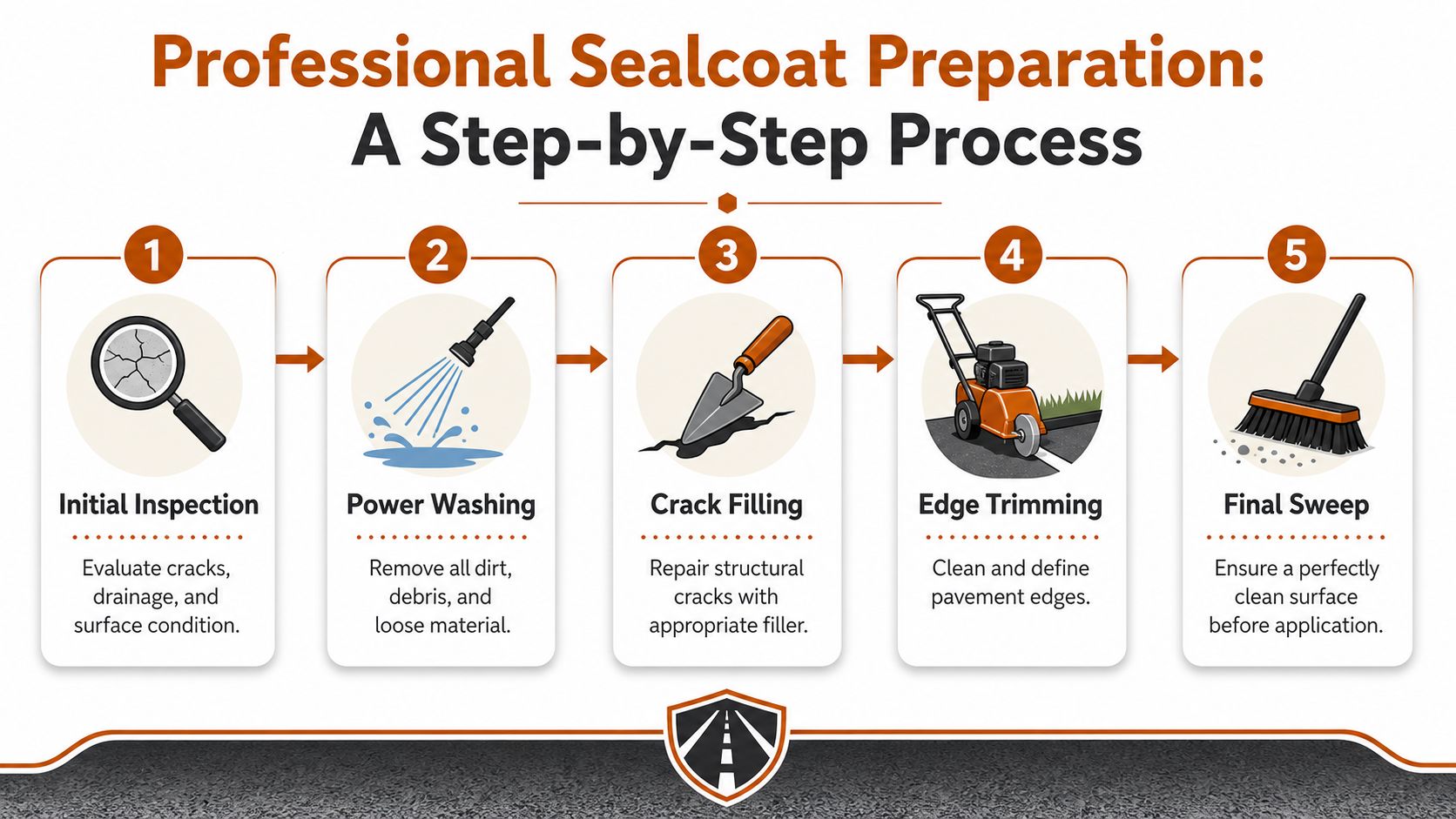
The first question is whether sealcoating belongs on the job at all. A solid contractor will look at drainage, cracking, patch failure, and surface wear before promising a coating. If the pavement is already breaking apart, sealcoat may improve appearance for a while, but it will not fix structural problems. Reputable crews start with inspection, then cleanup, then repair, then weather review, then calibration, because that order determines whether the coating bonds or peels early. One industry manual notes that quality seal coat work depends on hot, dry, low-wind conditions and no rain forecast, while humidity above about 50% raises adhesion risk seal coat best practices.
The sequence that should happen
A proper crew does not start by opening the tank. It starts by making the pavement ready, and that means deciding whether the surface needs repair, striping, or even a different scope before any sealer goes down. Top contractors often bundle those services because sealcoating alone is only part of the answer when lots need layout correction, crack work, or minor patching.
- Initial inspection. The crew checks drainage, cracks, failed patches, and weak spots.
- Power washing or thorough cleaning. Dirt, dust, leaves, and loose stone have to go.
- Crack filling and patching. Broken areas need repair before any coating is applied.
- Underground utility location. If the job includes drilling, coring, or other intrusive work, the area should be marked through underground utility location before anyone starts cutting or patching.
- Edge cleanup. Clean edges help the treatment look uniform and prevent sloppy overspray.
- Final sweep and calibration. Equipment gets checked so the application rate stays consistent.
That sequence sounds basic, but shortcuts are common. Applying sealcoat over damp pavement, dirty aggregate, or unrepaired cracks is one of the fastest ways to waste the product. The same guidance also says new asphalt should be fully cured first, and that final traffic opening should wait at least 8 hours, with some conditions calling for 24 to 48 hours or longer. Those limits are there for a reason, because traffic too soon can track material, damage the finish, and leave the lot looking worse than before seal coat best practices.
Weather and timing aren't optional
In Central Florida, timing matters because the surface can feel dry while the pavement still holds moisture. That is why the better questions are about how the contractor checks the pavement, not just whether they checked the forecast. If the answer is vague, they are guessing. If they talk about surface dryness, humidity, cure time, and traffic reopening, they are working from a real process.
Dry pavement is not enough. The surface has to be clean, sound, and ready to bond, or the sealer becomes a short-term cosmetic fix.
For property managers in Belleview, Summerfield, Inverness, and The Villages, the prep conversation is where you learn whether the contractor respects the job. If they are careful here, the rest usually follows.
Your Contractor Vetting Checklist
A sealcoat bid should start with a diagnosis, not a sales pitch. If the pavement is cracked, oxidized, raveling, or holding water, sealcoating may be part of the answer, but it may not be the whole answer. A contractor worth hiring will say that plainly and will explain whether the lot needs crack repair, patching, striping, or even paving before coating makes sense. That kind of judgment matters more than a low number on paper.
Hiring should be a paperwork and process check, not a charm contest. A credible contractor gives you a written scope, clear prep details, and proof they can stand behind the work. Indiana's standard for seal coats requires a Quality Control Plan at least 15 days before work begins, approved surface prep, and the use of specified emulsions for Type 1 seal coats, with application avoided when pavement is wet or temperatures are below the stated minimums Indiana DOT standard. That kind of discipline should show up in the bid, even if your project is not in Indiana.
What to verify before you sign
A professional bid should answer these questions without hesitation.
- Is the contractor licensed and insured? Ask for proof, not promises.
- What prep work is included? Crack filling, patching, sweeping, and cleaning should be spelled out.
- What material is being used? The contractor should name the product and explain the application plan.
- What warranty is written down? It should say what's covered and what isn't.
- What similar jobs have they completed nearby? Local references matter more than polished sales talk.
- Can they show proof of coverage from a bonded and insured contractor? That belongs in the conversation before anyone starts work.
The county specification for seal coating also calls for ASTM-compliant materials, including ASTM D140, D466, D529, and D2939 county specification. A contractor who can speak to those material standards is usually more comfortable defending the quality of the work, and just as important, explaining where sealcoating stops and other repairs begin.
A quick way to compare bids
Do not compare only the bottom line. Compare the scope of preparation, traffic control, repair allowances, and cleanup. A low bid that leaves out prep is usually the expensive bid. A fair bid describes the whole job, from inspection through reopening, and it does not bury the messy parts in fine print.
Practical rule: the cleanest proposal is the one that tells you what happens before the coating goes down, not just what color the surface will be afterward.
For property managers and HOA boards, a free on-site estimate should feel like a field evaluation, not a sales pitch. If the contractor is checking pavement condition, drainage, wear patterns, and repair needs, you are probably talking to someone who knows how to protect the asset instead of just collecting a check.
Red Flags and Common Sealcoating Scams
The fastest way to get burned is to treat sealcoating like a commodity. It isn't. Two crews can arrive with spray equipment, but one is selling a maintenance service and the other is moving diluted product as fast as possible. The difference shows up later in flaking, premature wear, and rework.
The warning signs that should stop the conversation
- Too-cheap pricing. If a quote is far below the others, ask what got left out.
- No written contract. If they want to start on a handshake, walk away.
- No proof of insurance. That's a risk you don't want on your property.
- No local address. A verifiable business location matters if something goes wrong.
- Skipped prep work. If they're not talking about cleaning and crack repair, they're cutting corners.
The contractor also should not be vague about where they've worked. Ask for recent local references in Homosassa, Lecanto, Beverly Hills, Hernando, and Silver Springs. A real crew won't hesitate to name properties, explain the scope, and describe what was done. Fly-by-night operators avoid those details because they don't have much of a track record to show.
Why the lowest bid often costs more
When a contractor rushes, the failure usually doesn't show up immediately. The coating may darken the pavement for a while, then wear unevenly or break down around repaired areas. That leaves you paying again sooner than you planned, sometimes with extra patching and striping required to fix what the first crew missed. General consumer guidance also shows that the buying decision often comes down to what prep work is included, whether cracks are filled first, and what the warranty covers, which is a sign that diagnosis matters more than price alone consumer contractor guidance.
If someone claims leftover material is a bargain, be careful. Material that's left over after another job isn't a value if it isn't the right product, the right mix, or the right application for your site. A cleaner question is whether the contractor can explain why the product they use matches your pavement condition and traffic load.
Local Considerations and How Riverside Sealing and Striping Helps
Florida pavement doesn't age politely. Strong UV, frequent rain, and heat all push asphalt toward oxidation and surface wear, and that makes timing and maintenance planning more important in Marion County, FL and Citrus County, FL. On top of that, MoDOT's engineering guidance shows how traffic volume can shape seal coat suitability, with seal coats restricted to lower-volume roadways in its standards, which is a reminder that traffic load matters as much as appearance MoDOT seal coat guidance. Even when a property isn't a roadway, the same idea holds, heavy use changes how a surface should be maintained.
What Central Florida properties usually need
Commercial properties in Ocala, Dunnellon, Crystal River, and Inverness often benefit from a coordinated maintenance plan that includes sealcoating plus parking lot striping and, when needed, repair work. That's especially true for shopping centers, churches, and community associations that need clear traffic flow and visible markings. If the striping is faded, the coating job shouldn't be treated as complete until those markings are addressed too.
Season matters as well. Hot, dry conditions are favorable for sealcoat work, while wet weather, damp pavement, and high humidity create problems during application and cure. That's why property owners in Citrus Springs, Homosassa, and surrounding Central Florida areas often get better results by scheduling around weather windows instead of trying to force the job into a bad week.
Where a full-service contractor fits
A full-service contractor can look at sealcoating, striping, and associated concrete or asphalt issues together instead of as separate emergencies. Riverside Sealing & Striping, LLC offers asphalt seal coating, parking lot striping, and concrete services for properties in Marion and Citrus counties, and that matters when one project touches several parts of the site. A contractor who can evaluate the pavement, the markings, and the concrete edges in one visit usually gives you a more usable plan.
When you're ready to make a decision, ask for a no-pressure on-site evaluation and get the scope in writing. A real maintenance plan should protect the pavement, keep the site readable for drivers and pedestrians, and reduce the chance you'll have to redo work next season.
If you need a practical evaluation of your driveway, lot, or community pavement, Riverside Sealing & Striping, LLC can assess whether sealcoating is the right fix or whether repair should come first. Visit Riverside Sealing & Striping, LLC to request a free estimate and talk through concrete and asphalt options for Marion County, Citrus County, and the surrounding Central Florida area.