

You're probably looking at a backyard that's usable, but not doing much for you. Maybe it's patchy grass behind the house in Ocala. Maybe it's an aging slab in Summerfield that puddles every time it rains. Maybe you already know you want a patio, but every quote sounds different and every contractor says they “do concrete,” which doesn't tell you much.
That's where most homeowners in Marion County, FL and Citrus County, FL get stuck. The patio itself is easy to picture. Grilling on weekends, space for a table, room for the kids, cleaner access from the back door. The hard part is knowing which concrete patio contractors build for long-term performance in Central Florida, and which ones are just pricing a pour.
A homeowner in the Ocala to The Villages corridor might get three bids that look similar on paper. Then one patio stays level and drains well, while another starts showing edge wear, standing water, or random cracking much sooner than expected. The difference usually isn't the sales pitch. It's the prep work, the mix, the joints, and whether the contractor understands Florida soil and rain patterns.
Table of Contents
- Your Guide to Building the Perfect Florida Patio
- What Quality Installation Looks Like
- Popular Concrete Patio Finishes for Florida Homes
- Understanding Concrete Patio Costs and Timelines
- Your Contractor Hiring Checklist and Red Flags
- Florida-Specific Patio Concerns You Cannot Ignore
- The Riverside Difference Built for Central Florida
- Frequently Asked Questions About Concrete Patios
Your Guide to Building the Perfect Florida Patio
A good patio project starts before anyone unloads forms or backs in a truck. It starts with the homeowner asking better questions.
In places like Belleview, Dunnellon, and Homosassa, I've seen people focus first on shape and color because that's the visible part. That's understandable. But the patio you enjoy for years is usually the one built on solid prep, proper grading, and a layout that fits how you live. A grill pad has different needs than a screened sitting area. A back door landing in Lecanto may need clean drainage more than decorative patterning.
Practical rule: If a contractor wants to talk finish before slope, drainage, and subgrade, the conversation is out of order.
A well-built concrete patio can last 30 years or more, and total project costs typically fall between $1,600 and $4,000+, depending on slab thickness, reinforcement, and finish complexity, according to Angi's concrete patio cost overview for Phoenix. That same source notes the result is tied directly to contractor experience and installation quality. That's the part many low bids leave out.
For homeowners in Silver Springs, Beverly Hills, Inverness, and Crystal River, the smartest approach is to treat hiring as part of the build itself. You're not only buying concrete. You're hiring judgment about grade, base condition, reinforcement, joints, finish selection, cleanup, and how the slab will behave after a wet summer.
The right patio should look good on day one. It should also make sense after repeated rain, heat, foot traffic, furniture movement, and normal expansion and shrinkage.
What Quality Installation Looks Like
A professional patio installation follows a process. It doesn't jump straight to the pour because that's the fastest way to create hidden problems.
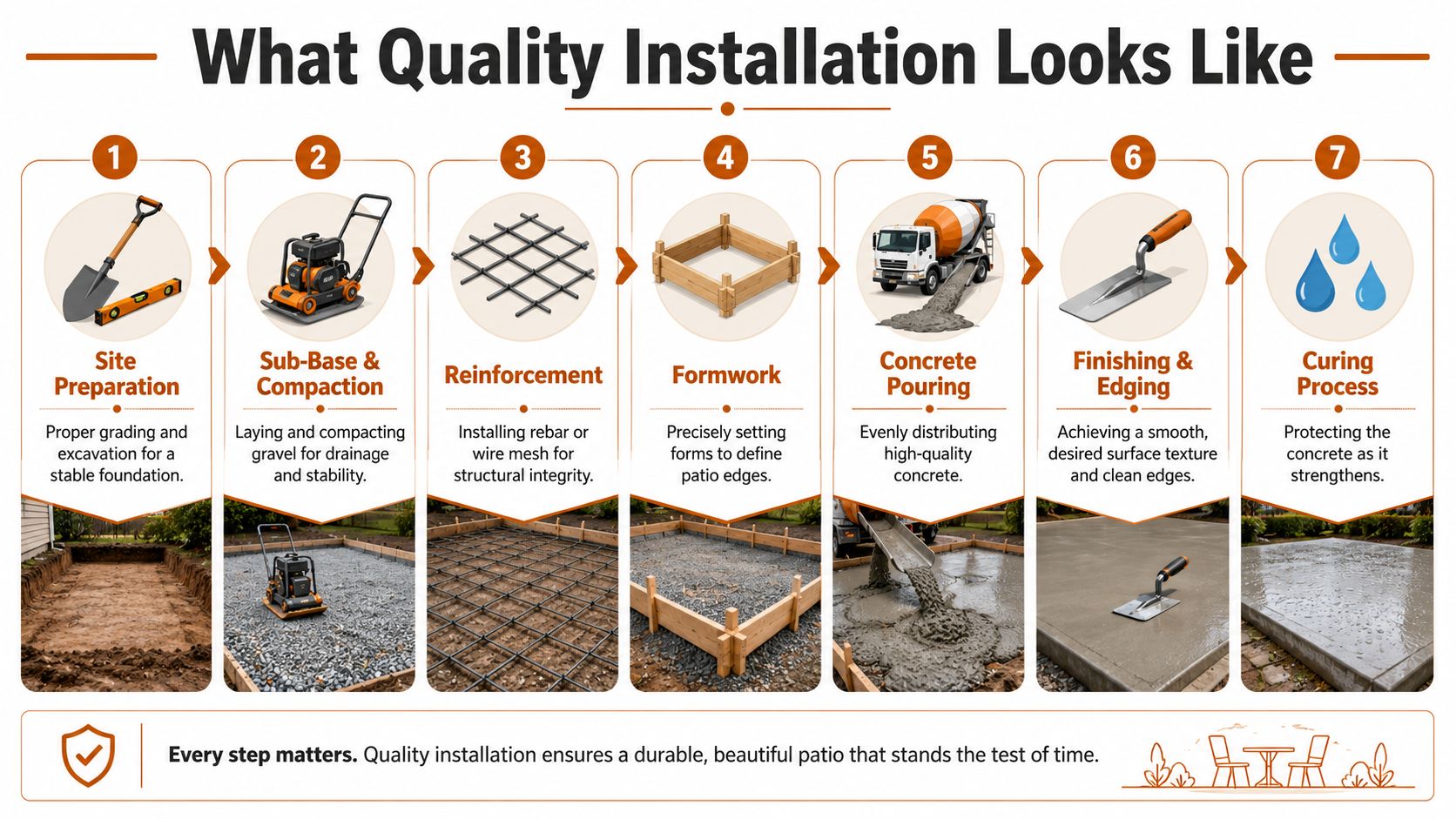
The steps that matter before the pour
First comes layout and site review. The contractor should check access, grade, how water moves off the house, nearby structures, and any existing slab or root issues. In Central Florida, that early look matters because one backyard in Hernando can drain completely differently from another a few streets away.
Then comes excavation and base prep. Experienced concrete patio contractors distinguish themselves from weekend operators at this stage. Loose organic material, soft spots, or poorly supported edges don't fix themselves later. The slab will tell the truth.
A quality crew then installs and compacts the sub-base, sets forms accurately, and confirms slope before concrete arrives. If the form lines are sloppy, the finished patio usually follows.
The technical details homeowners should ask about
For residential concrete patios, a common technical baseline is a 3,500 psi mix with fiber or rebar reinforcement, and control joints cut at intervals no greater than 2 to 3 times the slab thickness, as outlined by the National Patio Construction Authority patio construction methods overview. That matters because shrinkage and thermal movement need planned weak points, so the slab is more likely to crack at the joints instead of randomly across the field.
That's the kind of detail worth asking about in Ocala, Summerfield, or The Villages. Not because homeowners need to manage the crew, but because you should know whether the contractor has a real method.
Here's what quality usually includes:
- Accurate grading: Water should move away from the house and not sit on the slab.
- Stable edge support: Patio edges fail early when the perimeter isn't built on firm support.
- Reinforcement matched to the job: Fiber and rebar each have a role depending on slab design and site conditions.
- Joint planning: Joints should be intentional, clean, and placed with purpose.
- Finishing discipline: Overworking the surface can create trouble later, especially in Florida heat.
Good concrete work is often judged by what you don't notice later. No standing water, no surprise settlement, no rough transitions at the door, no random crack running right through the center.
The final step is curing and protection. A slab isn't “done” when the crew leaves. Early traffic, poor curing habits, and rushed use can compromise a good pour. Homeowners should get clear instructions for when to walk on it, place furniture, and start normal use.
Popular Concrete Patio Finishes for Florida Homes
The best finish depends on how the patio will be used, how exposed it is, and how much maintenance you're willing to take on. Homeowners in Marion County and Citrus County often start with looks, but a finish should also match slip resistance, sun exposure, and how visible dirt and wear will be over time.
How each finish performs
A broom finish is the workhorse choice. It gives the slab light texture, decent traction, and a simple appearance that fits most homes in places like Dunnellon, Belleview, and Lecanto. It's a practical option for open patios, walkouts, pool-adjacent hardscapes, and backyard seating areas where function matters as much as style.
A stamped finish is for homeowners who want decorative value. It can imitate stone, brick, or other textured surfaces while keeping the structural base of a concrete slab. The trade-off is that finish quality becomes even more dependent on crew timing, surface prep, and sealing. Stamped work that's rushed can look uneven fast.
A smooth or steel-trowel style finish creates a cleaner, more contemporary look. It can work well in covered patios or areas where you want a sharper visual line, but it needs to be used carefully outdoors because surface slickness can become a concern when rain hits.
If you're comparing appearance and maintenance options, this guide to concrete finishing techniques is a useful companion to the contractor conversation.
Comparing Concrete Patio Finishes
| Finish Type | Appearance | Cost | Best For |
|---|---|---|---|
| Broom Finish | Clean, classic, lightly textured | Generally lower than decorative options | Everyday patios, back door landings, outdoor dining areas |
| Stamped Concrete | Decorative, patterned, more customized | Higher because of added labor and finish complexity | Entertainment areas, homes prioritizing curb appeal |
| Smooth or Trowel Finish | Sleek, modern, refined | Varies with design and edge detail | Covered patios, modern home styles, lower-exposure areas |
| Exposed aggregate style surfaces | Textured, natural, more visual depth | Varies by material and finish method | Homeowners wanting traction and a less plain appearance |
A few practical considerations matter more than brochures:
- For families with kids or frequent guests: Texture usually wins over shine.
- For patios in full sun: Choose a finish and color approach that won't make surface wear look worse over time.
- For furniture-heavy layouts: A flatter, more uniform finish can make table and chair placement easier.
- For decorative projects: Ask to see local work, not just a catalog.
The right finish isn't the one that looks best in a sample board. It's the one that still makes sense after rain, grill grease, chair movement, and Florida sun.
For many homes in Crystal River, Homosassa, and Inverness, the safest long-term choice is the finish that balances appearance with predictable maintenance.
Understanding Concrete Patio Costs and Timelines
Homeowners usually want two answers first. What will it cost, and how long will it take?
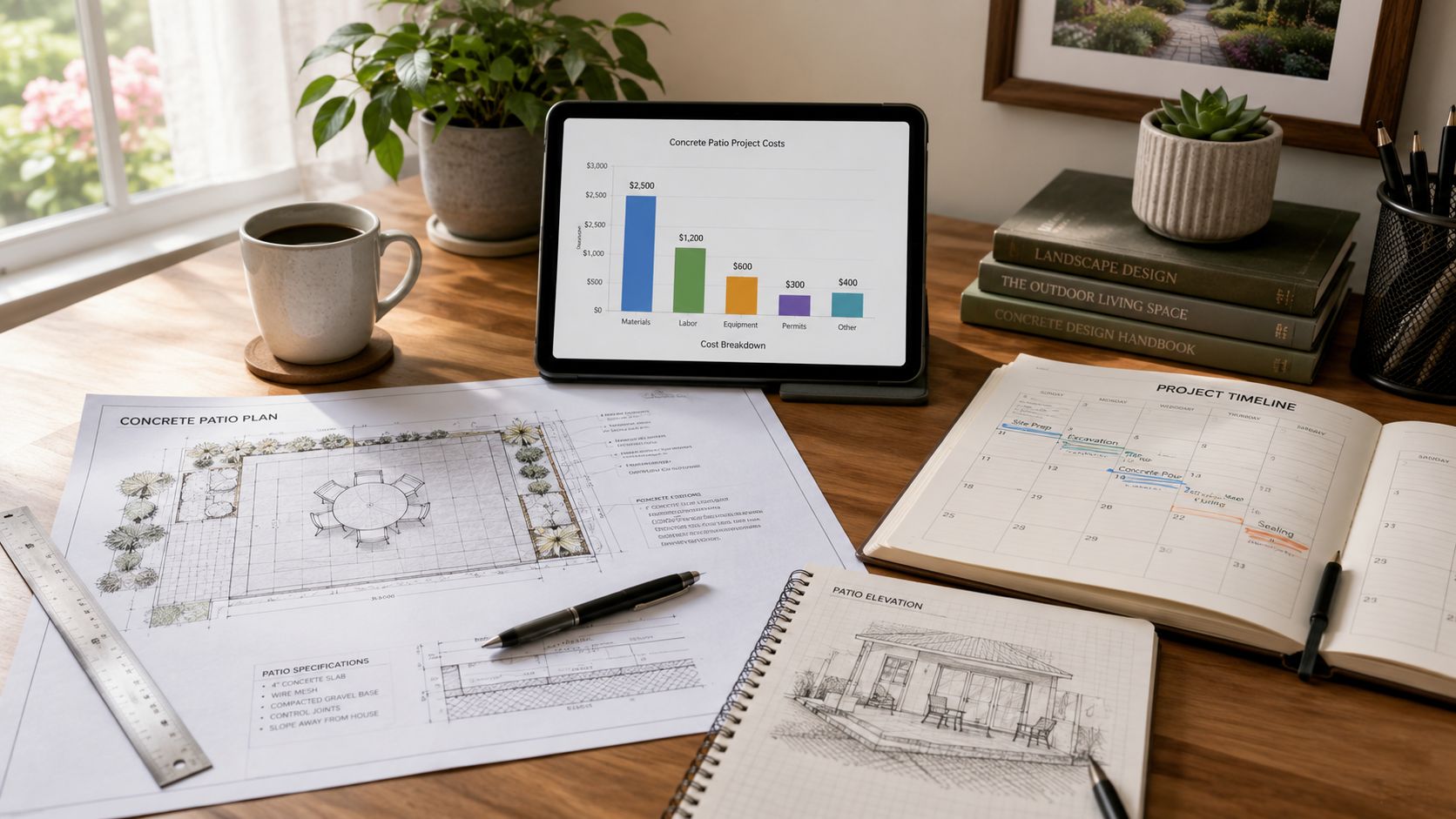
The honest answer is that price moves with conditions, not just square footage. Industry cost benchmarks show average labor rates for hiring a concrete patio contractor range from $3 to $6 per square foot, with total project costs commonly between $1,600 and $4,000+, depending on thickness, reinforcement, and finish complexity, according to Angi's patio cost guide. The same benchmark also notes an 8.1% additional tax consideration for homeowners in Phoenix, AZ in that local example, which shows why region-specific planning matters when comparing quotes.
What drives the price
A plain rectangular patio is usually easier to build than a layout with curves, steps, thickened edges, drains, demolition, tight backyard access, or decorative finish work. The more labor and coordination involved, the more the estimate reflects that.
Material choices matter too. Thumbtack's market overview notes that the average cost to install a concrete patio ranges from $2,500 to $7,000, and typical patio thickness falls between 4 to 8 inches depending on the job, as described in its Phoenix concrete patio contractors market page. That same source also highlights the importance of verifying licenses, insurance, and credentials when hiring.
Those numbers are benchmarks, not a substitute for an on-site review in Ocala, Silver Springs, or Beverly Hills. Existing site conditions can shift the scope quickly.
For a visual overview of how planning affects scope, this video does a good job showing what homeowners should think through before work starts.
What a realistic schedule looks like
Most patio jobs move through a few predictable stages:
- Site visit and measuring
- Quote review and scope confirmation
- Scheduling and material coordination
- Prep, formwork, reinforcement, and pour
- Finishing and cleanup
- Curing and delayed full use
Weather can change the pace in Central Florida. Heavy rain, saturated ground, and access issues can all affect scheduling. Good contractors explain that upfront instead of promising a perfect calendar and then disappearing for days.
The key is not the fastest promise. It's a clear schedule with realistic milestones.
Your Contractor Hiring Checklist and Red Flags
Hiring the right crew has more impact on the patio than the color, shape, or surface pattern. A polished estimate means very little if the contractor cuts corners on prep or disappears after the pour.

Questions worth asking
You don't need to interrogate anyone. You do need clear answers.
A strong starting point is a practical list of questions to ask a concrete contractor before you sign anything. Then listen for whether the contractor answers directly or starts dodging specifics.
Questions that matter:
- Are you licensed and insured: This should be easy to answer and easy to document.
- Who handles the work: Some companies sell the job, then subcontract everything without saying so.
- How do you handle drainage and slope: In Central Florida, this is one of the most important answers.
- What reinforcement and joint plan do you use: You want method, not vague reassurance.
- Can you show local work: A patio in The Villages, Inverness, or Crystal River says more than stock photos.
- What does the written contract include: Scope, finish, prep, cleanup, schedule, and payment terms should all be spelled out.
Warning signs that should slow you down
The most common red flags are usually obvious once you know what to watch for.
- Full payment up front: A serious contractor shouldn't need the entire project paid before work begins.
- Verbal-only pricing: If the quote isn't written down, scope disputes are almost guaranteed.
- Cash-only pressure: That often goes hand in hand with weak documentation.
- No discussion of base prep: If all the talk is about the visible finish, be cautious.
- A bid far below the others: Lower isn't always smarter. It can mean less prep, less reinforcement, or rushed labor.
- No local references: Established crews should be able to point to nearby work.
If a contractor can't explain how they'll build the slab, they probably shouldn't be hired to pour it.
Homeowners in Marion County, FL and Citrus County, FL are usually best served by slowing down, comparing scope line by line, and choosing the contractor whose process makes sense, not just the one with the cheapest total.
Florida-Specific Patio Concerns You Cannot Ignore
A patio in Central Florida has to handle conditions that generic online advice doesn't always respect. Heat changes curing behavior. Rain punishes weak drainage. Soil movement exposes every shortcut under the slab.
Drainage is not optional
Patio performance in hot, wet climates depends heavily on base prep and drainage, and poor drainage plus inadequate subbase are common drivers of cracking, settling, and surface wear, as noted in this discussion of patio performance in wet climates. That point matters in Florida because patios are impervious surfaces. If water has nowhere to go, it will find the edges, work into weak spots, and start showing the problem through movement or deterioration.
That's why experienced concrete patio contractors pay attention to more than the slab itself. They look at where downspouts discharge, whether the yard holds water, what the existing grade does after a storm, and whether the patio edge will stay supported.
In places like Homosassa and Crystal River, where moisture conditions can shift quickly, drainage mistakes don't stay cosmetic for long.
Heat rain and soil movement change the job
Florida sun affects finishing and curing. A surface can tighten up quickly, and timing mistakes show later in texture inconsistency or reduced surface durability. Seasonal rain adds another layer. If the subgrade is soft or unevenly compacted, the slab may settle differently across its footprint.
Sandy ground can be forgiving in some ways and tricky in others. It may drain faster than heavier soils, but that doesn't help if erosion undermines an edge or washout develops under a section of slab. Expansive or unstable pockets can also create movement that looks like “bad concrete” when the problem originated below it.
A few local habits make a difference:
- Plan water direction before layout
- Compact the base for actual site conditions
- Avoid treating every yard the same
- Choose finishes with use and exposure in mind
- Seal and maintain joints when needed
Homeowners usually notice the crack. The cause often started with water and support underneath.
That's why local experience matters so much from Ocala to Lecanto. The patio isn't just a flat surface. It's a slab that has to live through Florida weather year after year.
The Riverside Difference Built for Central Florida
A patio can look good on pour day and still fail early in this part of Florida. I have seen slabs stay clean and tight for years in Ocala and Dunnellon, and I have seen others start showing edge erosion, surface wear, or joint trouble much sooner because the contractor built to a generic template instead of the site in front of them.
Riverside Sealing & Striping, LLC handles concrete patios, slabs, driveways, sidewalk work, asphalt sealcoating, and parking lot striping in Marion and Citrus County. That range matters for one reason. A contractor who works on flatwork across different property types usually has a better eye for drainage patterns, grade transitions, base preparation, and how Florida weather affects long-term performance.

Homeowners should expect a few basics every time. A written scope. Clear scheduling. Proof of license and insurance. Straight answers about finish options, drainage, joint layout, and what conditions on the property could affect the slab later.
That is the difference between hiring someone to place concrete and hiring someone to build a patio that has a fair chance of holding up in Central Florida heat, rain, and shifting soil.
For homeowners in Summerfield, Beverly Hills, Silver Springs, and nearby communities, the goal is simple. Get a contractor who shows up, prepares the job correctly, communicates well, and does not cut corners where you cannot see them. Price matters, but long-term value usually comes from the work below the surface and the decisions made before the truck ever arrives.
Frequently Asked Questions About Concrete Patios
Can a cracked patio be repaired instead of replaced
Sometimes yes, sometimes no. The decision between repair, resurfacing, and full replacement should be based on the extent of cracking, movement, and structural deterioration, not surface appearance alone, according to this explanation of repair versus replacement decisions for concrete.
If the slab is still stable and the issue is mostly surface wear, a repair or resurfacing approach may make sense. If the patio has settlement, ongoing movement, poor drainage, or major cracking patterns, replacement is often the more durable long-term choice.
Do I need a permit for a patio in Marion or Citrus County
Permit needs depend on local jurisdiction, patio size, location, setbacks, and whether the work connects to other structural features. A contractor should help you identify what applies in your area, but homeowners should still verify requirements with the local building department in Marion County or Citrus County before work starts.
That's especially important in places like Ocala, Inverness, and The Villages where local review standards can differ.
How do I keep a new patio in good shape
Good maintenance is simple, but it matters.
- Keep water moving away: Don't let downspouts dump onto the slab edge.
- Clean the surface regularly: Dirt, organic buildup, and standing debris hold moisture.
- Use the patio as intended: Heavy point loads can stress areas not designed for them.
- Watch the joints: If joint material wears out, address it before water intrusion creates bigger issues.
- Ask about sealing: The right sealer depends on the finish and exposure.
How do I compare bids from different concrete patio contractors
Compare scope, not just total price. Make sure each estimate addresses demolition if needed, grading, base prep, reinforcement, joints, finish type, cleanup, and timeline. If one bid is vague, you're not comparing the same job.
Is concrete a practical option for Central Florida backyards
Yes, when it's installed correctly for local conditions. Concrete gives homeowners a durable, low-maintenance outdoor surface that can work well for dining areas, grill spaces, walkouts, and backyard living areas across Marion and Citrus County.
If you're planning a new patio or replacing an older slab, Riverside Sealing & Striping, LLC offers free, no-pressure consultations for homeowners in Marion County, FL, Citrus County, FL, and surrounding Central Florida communities. If you want a clear opinion on layout, drainage, finish options, or whether repair makes sense, it's a straightforward way to get professional evaluation before you commit.