
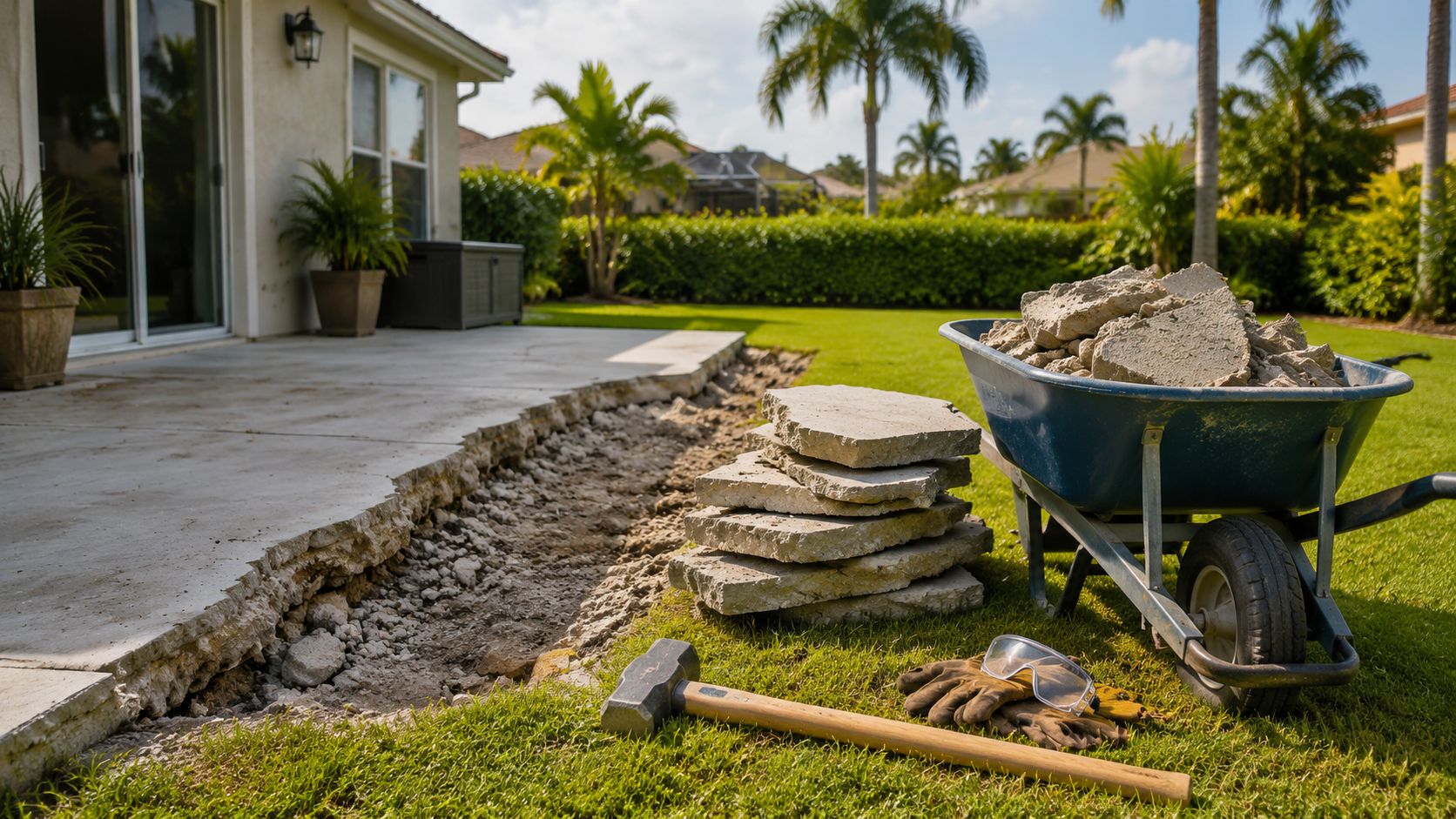
If you're staring at a cracked, uneven patio in Ocala, Dunnellon, Crystal River, or anywhere across Marion County, FL and Citrus County, FL, the first question usually isn't about design. It's simpler than that. How hard is this concrete patio removal job really going to be?
The honest answer is that patio demolition looks easier online than it feels in a Central Florida backyard. Heat wears people down fast. Sandy soil near the slab can shift underfoot. Attached patios near the house can transfer force where you don't want it. And the part most homeowners underestimate isn't the first swing. It's the planning, the debris, and the cleanup.
For homeowners in Belleview, Summerfield, Inverness, Homosassa, Lecanto, Beverly Hills, Hernando, Silver Springs, and The Villages, the job can be manageable in the right conditions. But it only goes smoothly when you size up the slab correctly, use the right tools, and respect what Florida conditions do to concrete and the ground under it. That's where practical local knowledge matters.
Table of Contents
- Planning and Preparation for Your Patio Removal
- Essential Tools and Equipment for Demolition
- Your Step-by-Step Concrete Patio Demolition Process
- Managing and Disposing of Concrete Debris
- Why Patio Removal Is Different in Central Florida
- DIY vs Hiring a Pro in Marion and Citrus County
- Frequently Asked Questions About Patio Removal
Planning and Preparation for Your Patio Removal
A patio demo can look simple at 8 a.m. In Central Florida, it gets harder fast once you hit dense, older concrete, humid air, and loose sandy soil that starts shifting around the slab edge.
Check the slab before you commit
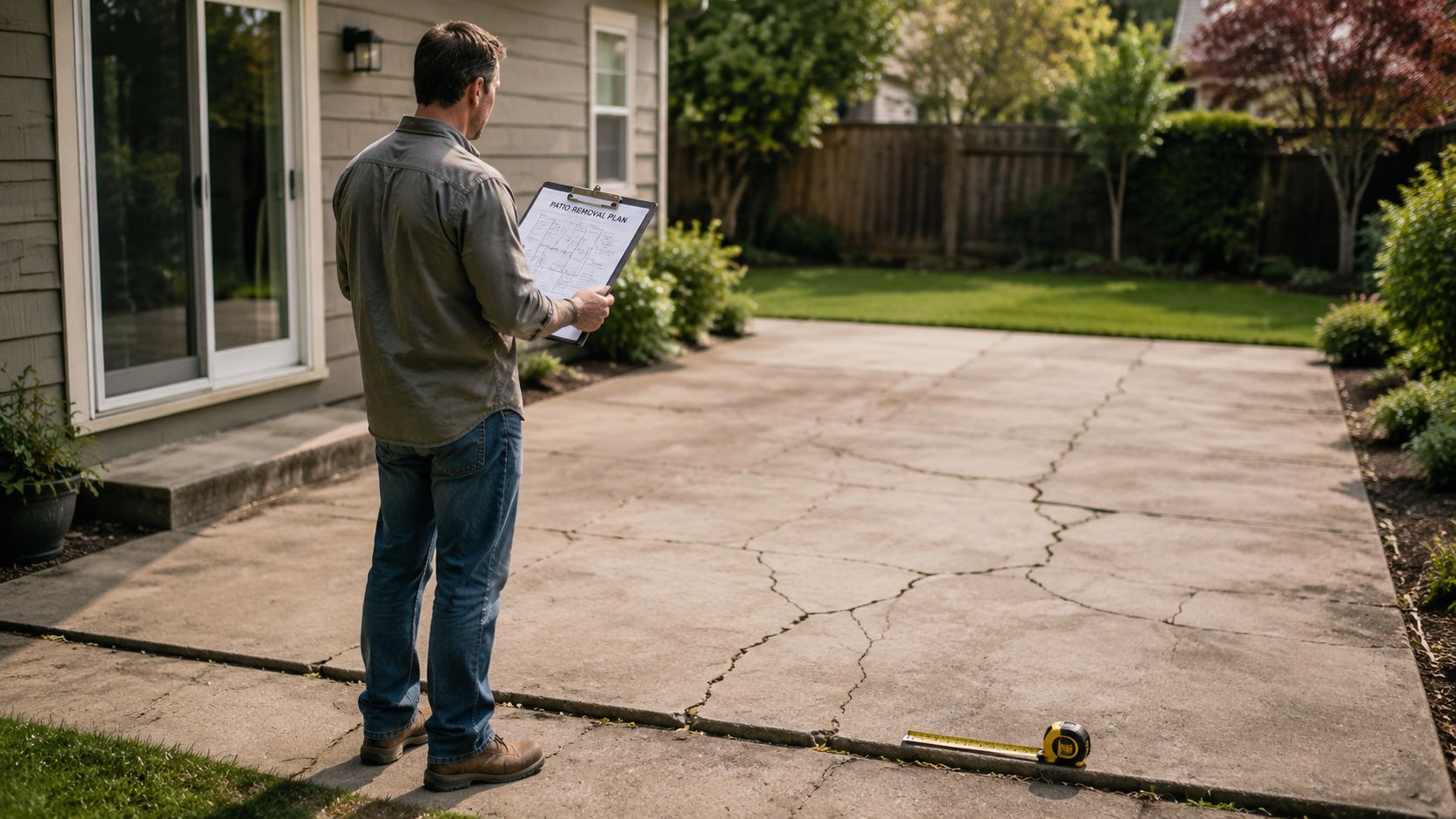
Start with the slab itself. Find an exposed edge, a cracked corner, or any safe spot where you can measure depth and inspect the inside. What matters is not just square footage. Thickness, wire mesh, rebar, and how the patio meets the house will decide whether this is manageable DIY work or a job that turns into saw cutting, heavy hauling, and possible repair around the foundation.
In Central Florida, I also look at the soil before I look at the tool pile. Sandy ground around homes in Ocala, Inverness, and nearby areas can wash out or loosen once the slab is broken and removed. If the patio sits tight against the house, rough demolition can leave you with edge erosion, low spots, or drainage that starts pushing water back toward the foundation.
Check these conditions before you choose your approach:
- Visible steel at cracks: Wire mesh or rebar means slower demolition and extra cutting.
- Patio attached to the house or steps: You need a clean separation plan so you do not chip the foundation, porch, or stem wall.
- Low or soft soil at the slab edge: Sandy soil can fall away once concrete weight is gone, especially after rain.
- Tight access paths: Narrow side yards can limit equipment and make debris removal much harder than the breaking itself.
- Drainage patterns: If the patio currently sheds water away from the home, removal can change that immediately.
One practical rule stays the same. If you do not know the slab thickness or whether it is reinforced, you are not ready to start demolition.
If the plan is full replacement, budget the removal and new install together. This guide on how much a concrete patio costs helps set expectations before you tear out a surface you still need to rebuild.
Handle permits and site safety before demolition starts
Local rules matter more than national DIY articles admit. In Marion County and Citrus County, disposal requirements, haul-off options, and permit questions can vary by city, transfer station, and the scope of the project. If the patio ties into drainage, a sidewalk, a screen enclosure, or another structure, call the local building office before demo day. That is especially true in places like Belleview, Homosassa, and Inverness.
Humidity changes the work conditions too. Dust can hang low in still air, gloves get slick, and fatigue shows up earlier than people expect, especially on enclosed back patios with little airflow.
At minimum, have these ready before the first strike:
- Eye protection: Concrete chips travel fast and bounce unpredictably.
- Heavy gloves: Broken edges and exposed steel will cut hands quickly.
- Hearing protection: Jackhammers and saws are hard on your ears, especially near walls and fences.
- Sturdy boots: You will be walking over sharp rubble and unstable chunks.
- Dust protection: Dry concrete dust is still a problem, even on small residential patios.
Clear the area completely. Move grills, furniture, planters, and anything fragile. Cover nearby windows, doors, screens, and AC equipment if they sit close to the slab. In Florida, one bad bounce off hard concrete can crack more than the patio.
Essential Tools and Equipment for Demolition
A lot of failed patio demo jobs don't fail because the homeowner lacked effort. They fail because the tool choice didn't match the slab. A sledgehammer is useful. It isn't magic.
What belongs in every basic setup
For a smaller unreinforced patio, the basic manual setup usually includes a sledgehammer, pry bar, wheelbarrow, shovel, and bolt cutters if mesh appears. Those are the tools that let you break, lift, move, and separate material without turning every piece into loose rubble.
Rent power equipment only when the slab calls for it. If the concrete is thicker, reinforced, or hard to fracture, an electric jackhammer and sometimes a concrete saw become the practical choice. Around Ocala, Summerfield, and nearby Central Florida rental yards, these are common rentals for weekend demolition jobs.
The right tool doesn't just save time. It changes whether the slab breaks cleanly or fights you all day.
Tool and Equipment Guide for Concrete Removal
Tool and Equipment Guide for Concrete Removal
| Tool | Primary Use | Recommendation |
|---|---|---|
| Sledgehammer | Breaking thinner slab sections | Best for lighter, unreinforced patio sections |
| Pry bar | Lifting cracked sections to help them fracture | Must-have for nearly every manual demo job |
| Bolt cutters | Cutting exposed wire mesh | Keep on hand if reinforcement is possible |
| Wheelbarrow | Moving broken concrete out of the work area | Essential for cleanup and loading |
| Shovel | Gathering loose debris and base material | Helpful after larger chunks are removed |
| Electric jackhammer | Breaking thicker or stubborn concrete | Rent if hand tools stop making progress |
| Concrete saw | Creating separation cuts and controlled break lines | Rent when you need cleaner control near structures |
| Drop cloths | Catching and deadening flying fragments | Use around windows, doors, and nearby finishes |
A common waste of money is renting too much equipment too early. Start with what matches the slab you have. If the first few controlled strikes don't produce useful cracks, reassess before you keep burning energy.
Your Step-by-Step Concrete Patio Demolition Process
By midmorning in Central Florida, a simple patio demo can turn into a slippery, exhausting job. Humidity soaks your gloves, dust clings to everything, and sandy soil at the slab edge starts loosening as soon as you begin prying. Good demolition work comes from controlling the break, protecting the house, and keeping the ground stable while the patio comes apart.
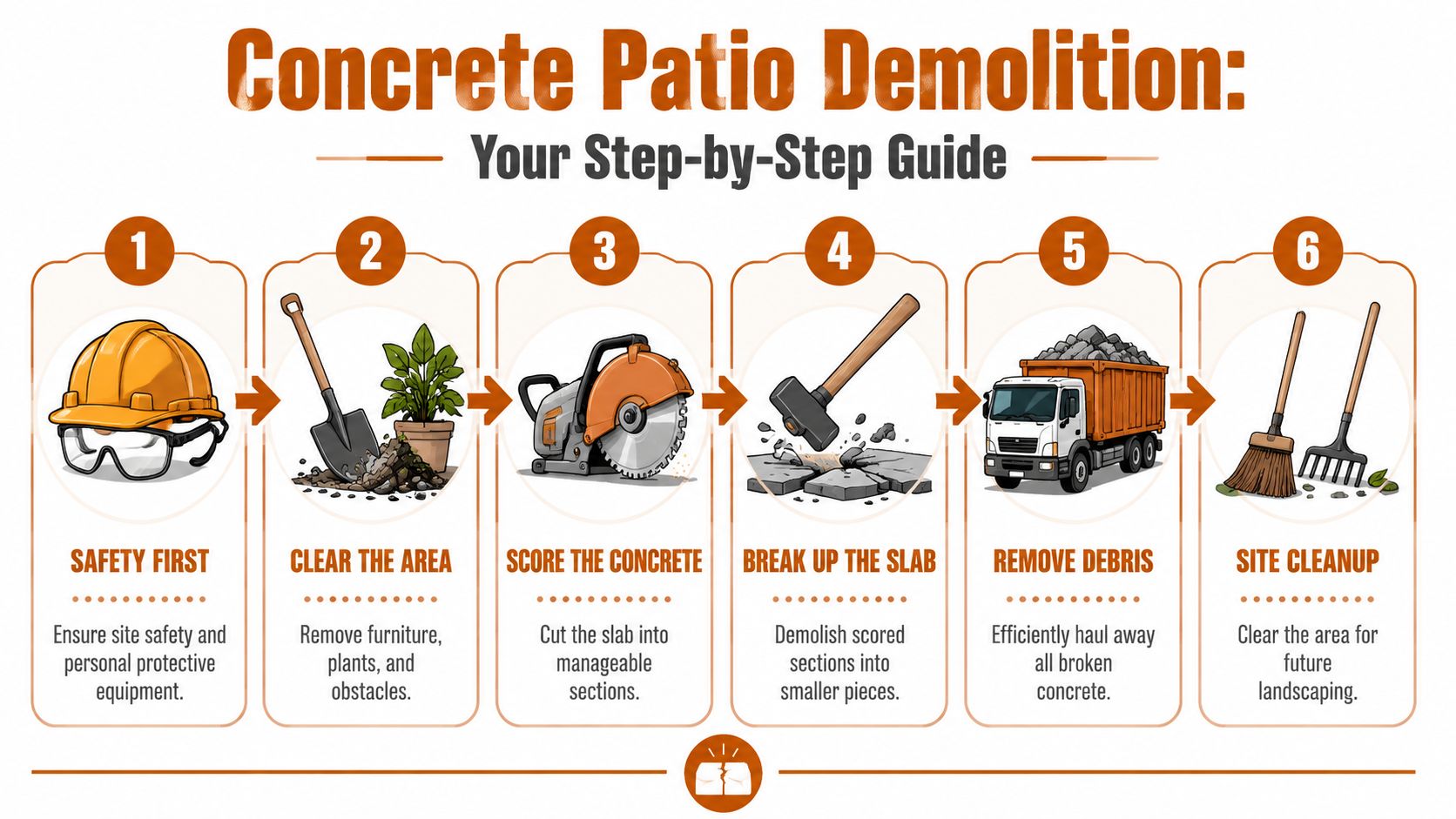
Start at an edge and open the slab
Begin at a corner, an exposed edge, or an existing crack. That gives the concrete somewhere to release. Starting in the middle usually wastes energy and creates a crater instead of a clean break.
Before the first strike, clear the perimeter fully. Move furniture, pots, hoses, grills, and anything else that will get in your way or catch flying chips. In Central Florida, I also watch for wet mulch, soft planting beds, and sprinkler heads near the slab because they disappear fast once dust and debris start covering the ground.
Use a controlled sequence:
- Clear the work zone: Open up enough space to swing safely and step back cleanly.
- Protect nearby surfaces: Cover windows, doors, screens, siding, and fence panels with drop cloths or padded barriers.
- Test the first weak point: Hit near the edge or crack to see how the slab responds.
- Pry as soon as it opens: A small lift under a fresh crack often breaks the section faster than repeated heavy blows.
Small pieces are better. They load easier, they are safer to carry, and they do less damage if one drops near the house.
Break one section at a time
Once the slab starts cracking, keep the pattern simple. Break a section. Lift it. Move it out of the way. Then attack the next section.
That rhythm matters more in Florida heat than many DIY guides admit. A patio covered in loose chunks becomes a tripping hazard fast, and humid conditions make footing worse. Dust also settles into wet surfaces and can make the work area slick around lanais, pool decks, and back door thresholds.
Stay deliberate while you work:
- Keep one walking lane clear: Give yourself a clean path for carrying debris out.
- Work from the outside inward: Open edges break more predictably than boxed-in sections.
- Stop if hits stop producing cracks: At that point, the slab may need a saw cut or jackhammer instead of more force.
- Watch the soil line: If sandy base material starts sloughing away near the foundation, avoid aggressive prying in that spot.
Flying fragments are a real issue, especially around glass, pool enclosures, vinyl fencing, and AC equipment. Set barriers before you start, and keep bystanders well back from the patio.
Cut reinforcement instead of fighting it
Wire mesh and light reinforcement change the job immediately. Once steel is exposed, stop swinging blindly. The hammer can glance off, the metal can catch the tool, and half-broken sections can twist in a way that pulls against surrounding soil or nearby finishes.
Cut exposed mesh or wire, then separate the piece and remove it. That keeps the chunk manageable and prevents you from dragging jagged concrete across grass, pavers, or stucco.
If you are removing a patio next to a home in Marion or Citrus County, pay attention to what happens along the house side. Sandy soil can fall away from the slab edge as pieces come up, especially after rain or irrigation. Do not undercut that area trying to free one stubborn section. Make a cleaner break, reduce the piece size, and keep the base near the foundation as undisturbed as possible.
Know when to change methods
Some slabs come apart with hand tools. Others do not.
If controlled strikes at the edge are only bruising the surface, or if the concrete is thicker than expected, switch methods before fatigue takes over. A concrete saw can create a controlled break line near the house, and a jackhammer makes more sense once progress slows to a crawl. That is usually the turning point between a productive day and a long, frustrating one.
Managing and Disposing of Concrete Debris
Breaking the patio is only half the project. Disposal is where many DIY jobs stall out in the driveway.
Why debris is the part that surprises people
Concrete is heavy enough to punish bad planning. Concrete weighs approximately 150 lbs per cubic foot, and a standard 10x10x4 ft patio generates over 2,400 lbs (1.2 tons) of debris. Underestimating that is a common pitfall.
That weight changes every decision after demolition. It affects how much you can load into a wheelbarrow, what kind of trailer you can use, and whether your disposal plan works at all.
Here's the practical problem most homeowners run into:
- Wheelbarrow loads add up fast: A few trips can feel manageable, then fatigue sets in.
- Pickup beds can get overloaded quickly: Concrete reaches weight limits long before it fills visible space.
- The pile spreads: Broken pieces take up more room than people expect once they're stacked.
Debris removal isn't cleanup. It's a separate labor job with its own risks.
Choose the disposal method before demo day
Most homeowners in Marion County, FL and Citrus County, FL end up choosing between a dumpster and self-hauling. The better choice depends on access, distance to a recycling or disposal site, and how much hand-loading you're willing to do more than once.
A dumpster is usually simpler when the patio sits in a fenced backyard and the debris path is long. Self-hauling can work if access is easy and you already have a suitable trailer and a local disposal plan. Either way, decide first. Don't break the slab and then figure it out later.
A few habits help:
- Load in manageable amounts: Smaller trips are slower, but they're safer and easier on your back.
- Stage debris near the exit path: Don't carry chunks across the whole yard twice.
- Keep concrete separate from mixed trash: Clean loads are easier to handle at disposal sites.
If disposal logistics already sound worse than the demolition itself, that's often a sign the whole job may be better handled by a contractor.
Why Patio Removal Is Different in Central Florida
By 10 a.m. in Central Florida, a patio removal can already feel heavier than it did at sunrise. The slab may look straightforward, then the first broken section exposes loose sand on one side, damp soil on the other, and a house foundation a few feet away that leaves no room for sloppy demolition.
Florida soil changes the job
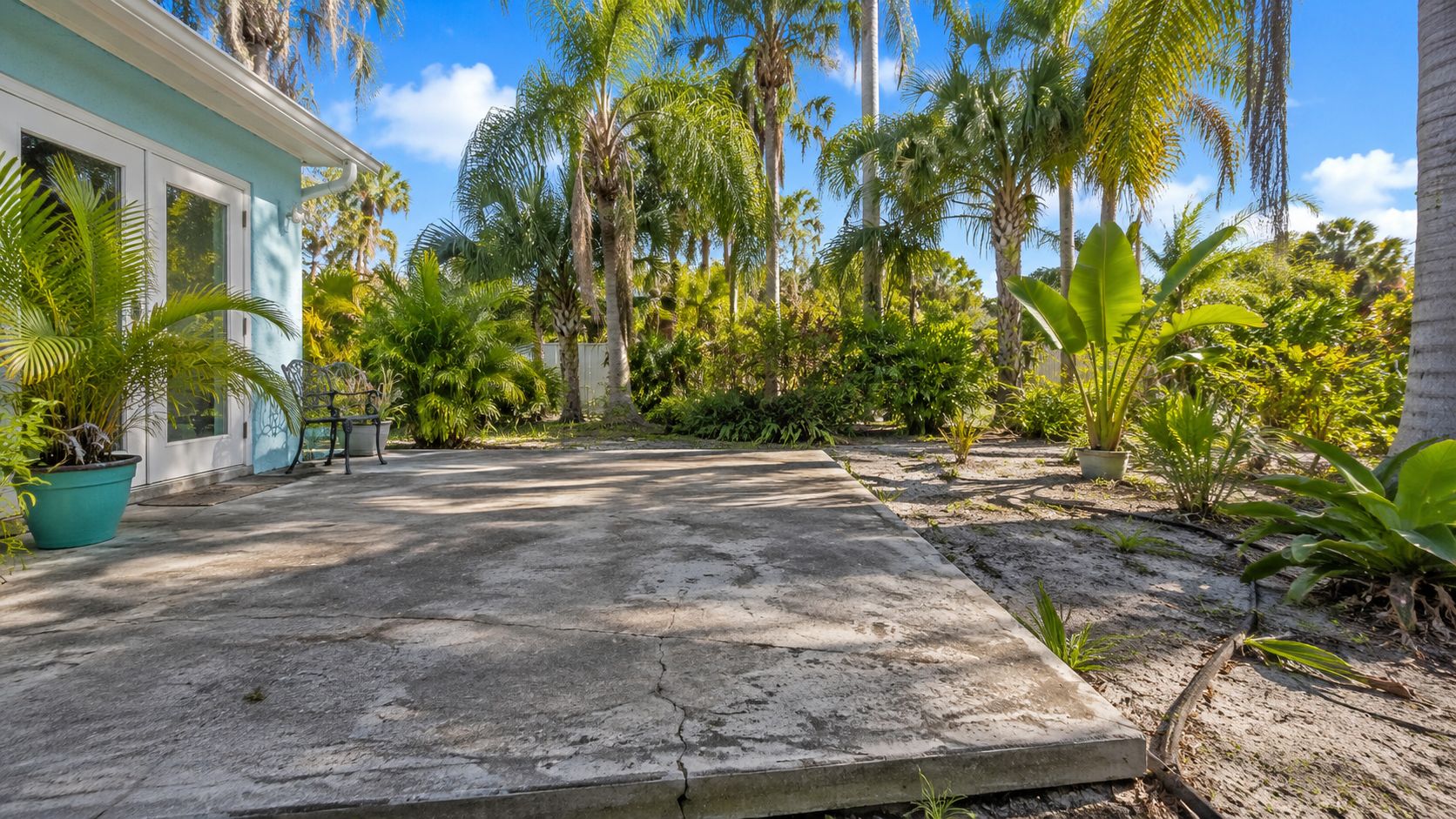
In Marion County and Citrus County, patio slabs often sit over sandy, porous soil that shifts more than national DIY articles assume. Once you start breaking concrete, support under the slab can change fast. One section stays tight while the next drops, tilts, or cracks wider than expected.
I see this most often on older patios where water has been moving under the slab for years. Sandy soil drains quickly, but it also washes out and settles. Near the house, that matters. A slab edge can break free unevenly and leave the surrounding ground looser than it looked from the surface.
That changes how you work. Bigger hits are not always better. On unstable base material, aggressive demolition can cause unpredictable breaks, tool bounce, and crumbling along the perimeter.
Humidity, rain, and attached slabs add risk
Central Florida weather affects removal more than people expect. High humidity wears you down sooner, and summer storms can turn a dusty demo area into a slick work zone in one afternoon. Wet concrete dust sticks to everything. Wet soil near the patio edge gets soft fast, especially where downspouts or poor drainage have been feeding the area.
Attached patios need even more care. If the concrete ties into the home, porch, steps, or another poured section, you need a clean separation before heavy breaking starts. Otherwise, force can travel into nearby concrete or stress a weak edge at the structure.
Local rules matter too. Disposal options and site expectations can vary between Marion and Citrus counties, especially if you are hauling broken concrete yourself and trying to sort clean material from mixed debris. That is one more reason Central Florida patio removal is usually more of a site-management job than a simple demolition job.
If replacement is part of the plan, this guide on how long concrete takes to cure will help you set a realistic schedule after the old patio is out.
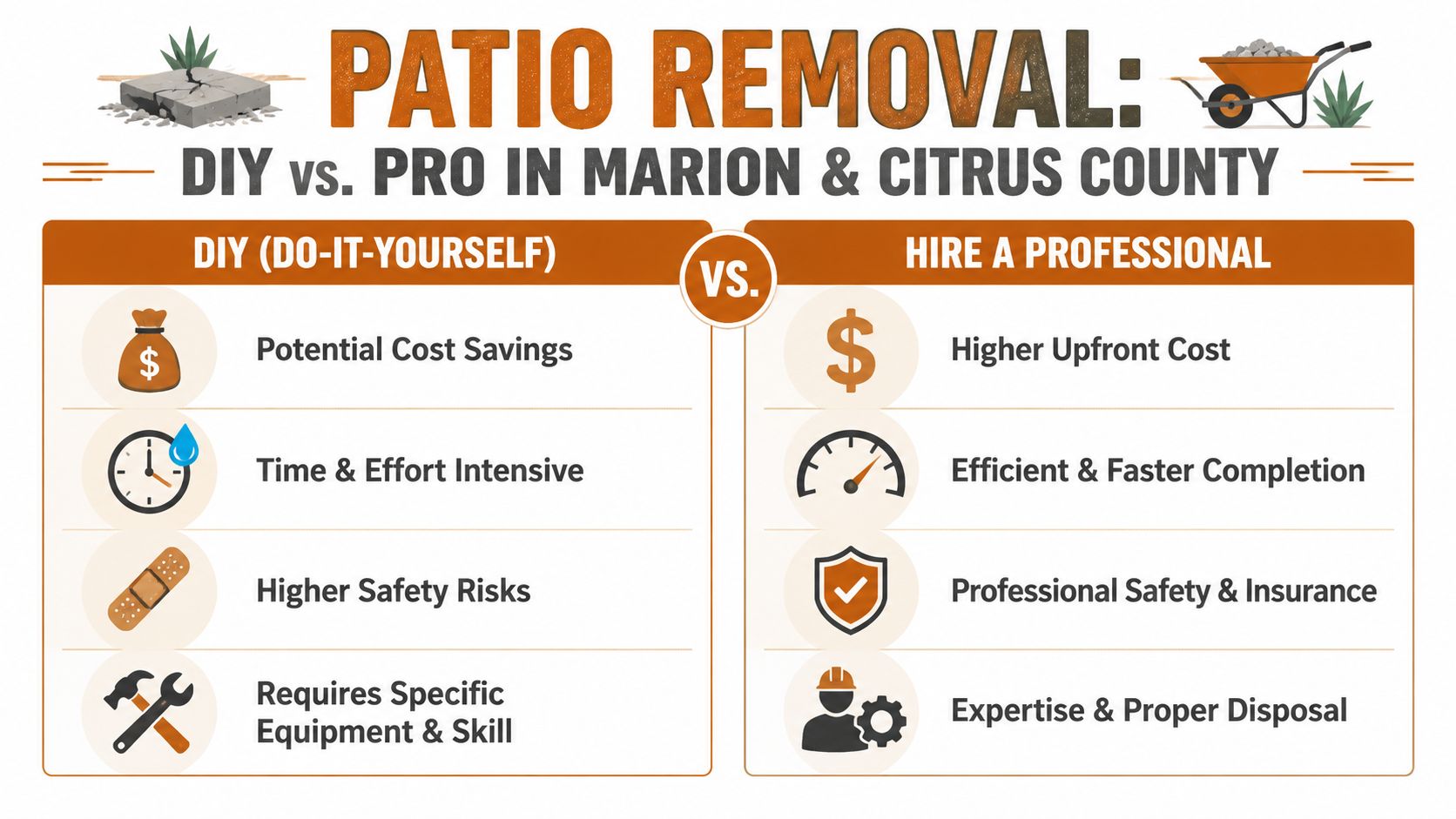
DIY vs Hiring a Pro in Marion and Citrus County
For some homeowners, DIY concrete patio removal is reasonable. For others, it turns into two hard days of demolition, several more days of hauling, and a surprise repair issue near the house.
When DIY makes sense
DIY usually makes the most sense when the slab is small, unreinforced, easy to access, and clearly separated from the foundation. If you've got room to work, a clean exit path for debris, and realistic expectations about the labor, it can be done.
That said, cost should be compared accurately. Thumbtack's concrete removal cost guide puts professional concrete removal at about $1,137 to $1,961 on average, with typical pricing of roughly $2 to $7 per square foot. For heavier or more complex jobs, disposal alone is often estimated at $51 to $100 per ton, and urban projects can rise to $6 to $14 per square foot because labor, access, and hauling costs increase.
Those numbers matter because homeowners often compare DIY only against labor, not against tool rental, hauling time, disposal, site protection, and the physical risk.
When hiring a contractor is the smarter move
Hire a pro when the patio is thick, reinforced, attached to the home, or located in a backyard with awkward access. That's also the right move if you need a fast turnaround before a new patio, sidewalk, or driveway installation.
A contractor is also the better option when the primary goal isn't just demolition. It's a clean, ready-for-next-step site. That matters for homeowners in Lecanto, Silver Springs, and The Villages, and it matters just as much for property owners managing wider concrete and asphalt upgrades across Central Florida.
If you're comparing companies, this checklist of questions to ask a concrete contractor helps you screen for experience, insurance, and job planning.
Frequently Asked Questions About Patio Removal
Can I remove a concrete patio with just a sledgehammer
Sometimes, yes. It depends on slab thickness and whether there's reinforcement inside the concrete. Thin, unreinforced patios are the best candidates for manual demolition. Once steel or extra thickness enters the picture, the job usually stops being a simple hand-tool project.
What's the biggest mistake homeowners make
Underestimating disposal is common. The focus tends to be on breaking the patio, neglecting plans for moving and getting rid of the debris. That's where projects often bog down.
Is patio removal risky near the house
Yes, especially when the patio is tied into the foundation, steps, or other hardscape. Controlled separation matters. Random heavy impacts near the structure can cause damage you won't see until later.
Does Florida weather really affect demolition that much
It does. In Central Florida, heat, humidity, sudden rain, and sandy soil all change job conditions. The slab, the footing under you, and your energy level can all shift faster than they would in a cooler, drier climate.
Should I remove and replace the patio at the same time
Often, yes. If the old patio is failing and you already know you want a new surface, combining planning for removal and replacement usually leads to a cleaner schedule and fewer surprises.
If you need help with concrete patio removal or replacement work in Ocala, Dunnellon, Belleview, Summerfield, Crystal River, Homosassa, Inverness, Lecanto, Beverly Hills, Hernando, Silver Springs, or The Villages, Riverside Sealing & Striping, LLC offers free, no-pressure consultations across Marion County, FL and Citrus County, FL. As Concrete and Asphalt Experts in Marion and Citrus County, the team handles concrete removal, new patios, sidewalks, driveways, asphalt sealcoating, and parking lot striping with reliable scheduling and local experience built for Central Florida conditions.