
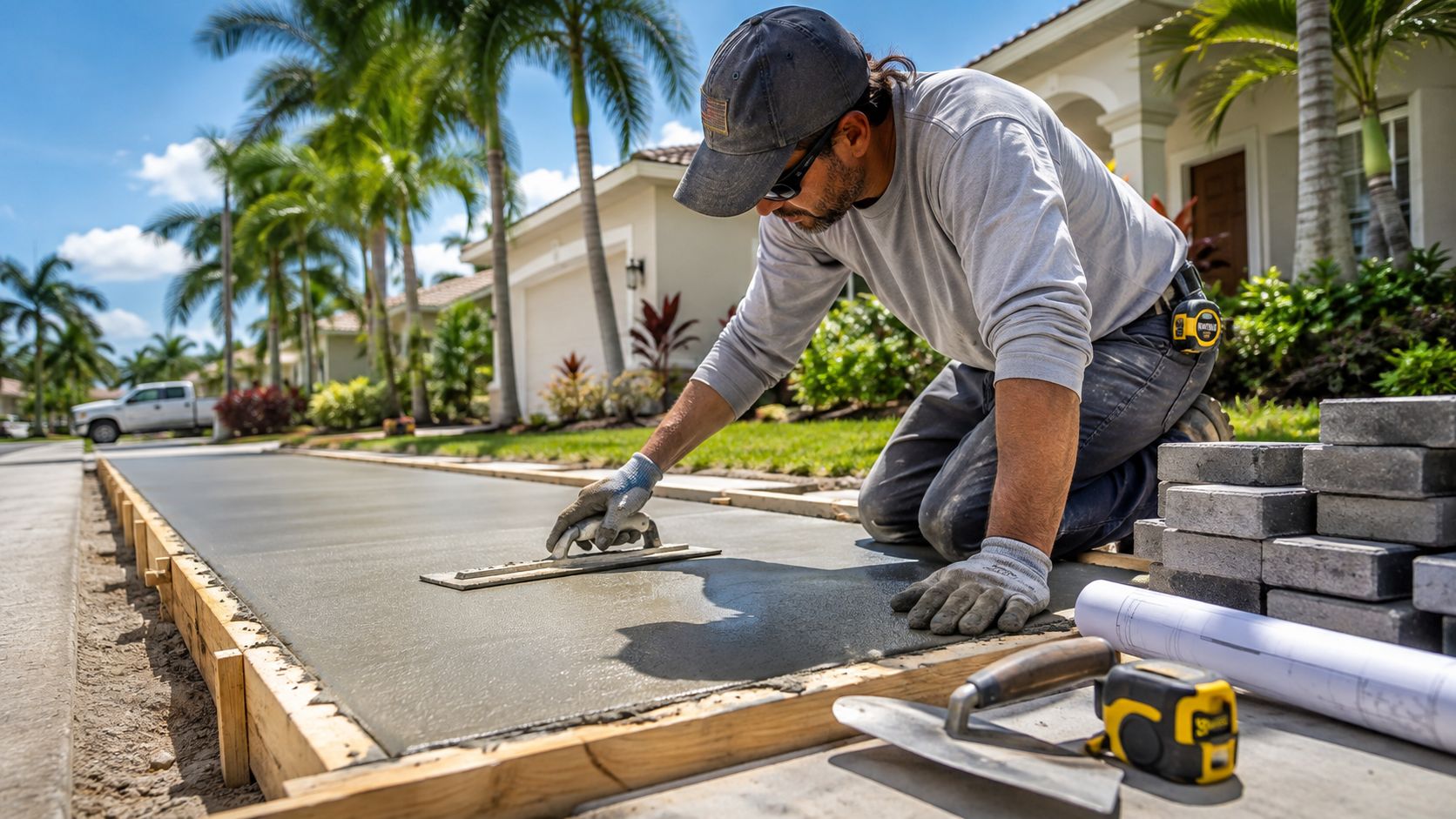
Concrete sidewalk replacement in Central Florida typically costs $12 to $22 per square foot, with most mid-size residential projects landing between $4,000 and $7,000 total. Your actual concrete sidewalk replacement cost will depend on demolition, access, soil conditions, drainage, thickness, finish, and whether the walkway must meet accessibility requirements.
You may be looking at a cracked path between the driveway and front door, a section lifted by an oak root, or an uneven walkway that has become a trip hazard. In Ocala, Dunnellon, The Villages, Crystal River, and surrounding communities, replacing the concrete isn't priced like pouring a new sidewalk on untouched ground. The old slab has to be cut, broken, loaded, hauled away, and replaced with a stable base and properly finished concrete.
That difference explains why a quick online estimate can feel far removed from a contractor's site-specific proposal. The figures below are useful budgeting ranges for homeowners, HOAs, property managers, churches, and commercial owners in Marion County, FL and Citrus County, FL, but the site itself determines where your project lands.
Table of Contents
- Understanding Concrete Sidewalk Replacement Cost Breakdown
- Real Project Cost Ranges by Size and Complexity
- Key Factors That Drive Your Final Price Up or Down
- Central Florida Climate and Local Conditions Impact
- When Full Replacement Makes More Sense Than Repair
- Getting Accurate Estimates and Choosing the Right Contractor
- Planning Your Central Florida Sidewalk Project with Riverside Sealing and Striping
Understanding Concrete Sidewalk Replacement Cost Breakdown
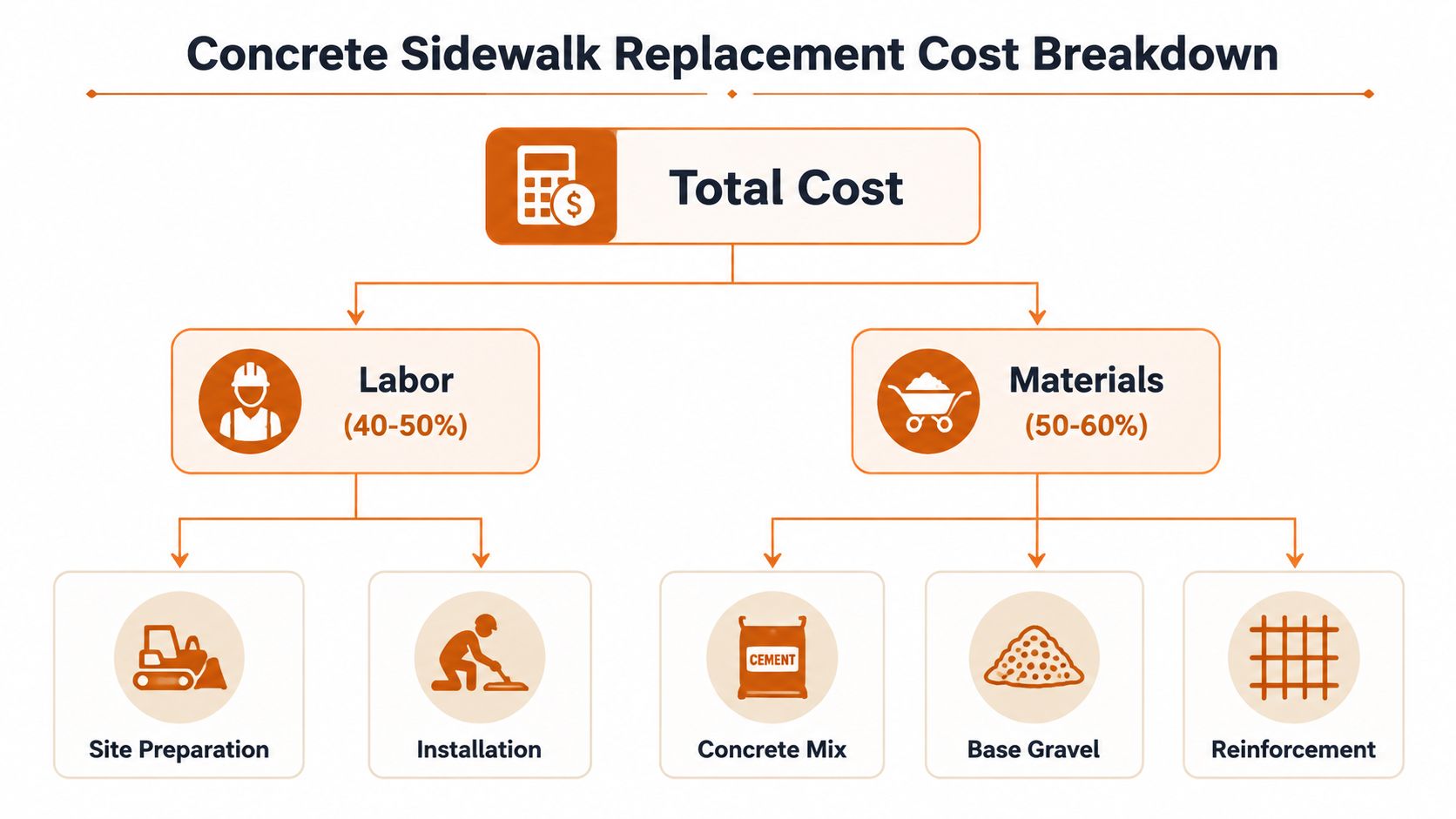
A replacement quote includes much more than the concrete truck. A new sidewalk without demolition commonly falls around $8 to $14 per square foot, while complete replacement typically runs about $12 to $22 per square foot because the contractor must remove the existing surface first. These benchmarks are outlined in this sidewalk replacement price guide, but Central Florida access and soil conditions can move a local estimate within that range.
Demolition and hauling
The first cost component is removing what already exists. Crews may need to saw-cut clean edges, break the slab with a demolition hammer or skid-steer attachment, load the debris, and transport it for disposal. Removal alone is often quoted at approximately $3 to $8 per square foot, while other replacement estimates place demolition and removal closer to $5 to $8 per square foot, depending on thickness, reinforcement, access, and disposal requirements (removal and replacement cost benchmarks).
A narrow side yard, locked gate, landscaping, or a long haul from the sidewalk to the truck can make this phase more expensive than the concrete placement itself. Small jobs also carry mobilization costs that don't disappear just because the walkway is short.
Base preparation and new placement
Once the old slab is gone, the crew evaluates the exposed soil. They may need to remove loose material, fill voids, correct grade, compact the subgrade, and install or adjust a gravel base before forming the new walkway. Roots, settlement, poor drainage, and soft areas can require more excavation and equipment.
The final phase includes forms, reinforcement where specified, concrete placement, screeding, edging, control joints, and the chosen finish. A standard broom finish is generally the practical choice for traction and budget control. Colored, exposed aggregate, or stamped work requires more labor and materials.
A professional estimate should separate these items rather than show one unexplained square-foot price. For additional context on how slab size, materials, and labor affect concrete pricing, review this guide to concrete slab cost per square foot.
Practical rule: Compare the scope behind each bid, not just the number at the bottom. A low quote may exclude disposal, base correction, permits, reinforcement, or final grading.
Real Project Cost Ranges by Size and Complexity
Square footage gives you a starting point, but project size changes the economics. A small replacement still requires travel, setup, saw cutting, cleanup, and equipment, so the contractor spreads those fixed efforts over fewer square feet. Larger runs can use labor and equipment more efficiently, although commercial specifications, access controls, and compliance work may add requirements.
A single standard 5-foot by 5-foot sidewalk slab covers 25 square feet and is frequently estimated at approximately $130 to $380 for replacement, according to published slab replacement benchmarks. That range shows why a small repair can look expensive on a per-square-foot basis.
Sidewalk replacement cost by project size
| Project Size | Square Footage | Total Cost Range | Cost Per Sq Ft |
|---|---|---|---|
| Single slab replacement | 25 sq. ft. | $130 to $380 | Varies because of mobilization |
| Mid-size residential project | 150 sq. ft. | $1,200 to $2,700 | Varies by site and finish |
| Larger residential or HOA run | 300 sq. ft. | $2,400 to $5,400 | Varies by access and demolition |
| Commercial or community section | 500 sq. ft. | $4,000 to $9,000 | Varies by specifications |
These project brackets come from sidewalk replacement estimates by area. The ranges aren't promises for every property. A straight, open walkway on a stable base may stay toward the lower side, while a curved path beside mature landscaping can rise substantially.
Linear-foot budgeting
For a common 4-foot-wide walkway, published pricing converts to roughly $25 to $55 per linear foot. A 50-foot residential sidewalk may total approximately $1,200 to $2,750, depending on thickness, finish, demolition, and site conditions (Central Florida sidewalk pricing ranges).
Use linear feet only for a rough conversation with a contractor. A four-foot-wide path with several panels, steps, a driveway crossing, or difficult wheelbarrow access isn't equivalent to a straight run beside an open parking area. Width, thickness, layout, and the condition beneath the slab still control the estimate.
Key Factors That Drive Your Final Price Up or Down
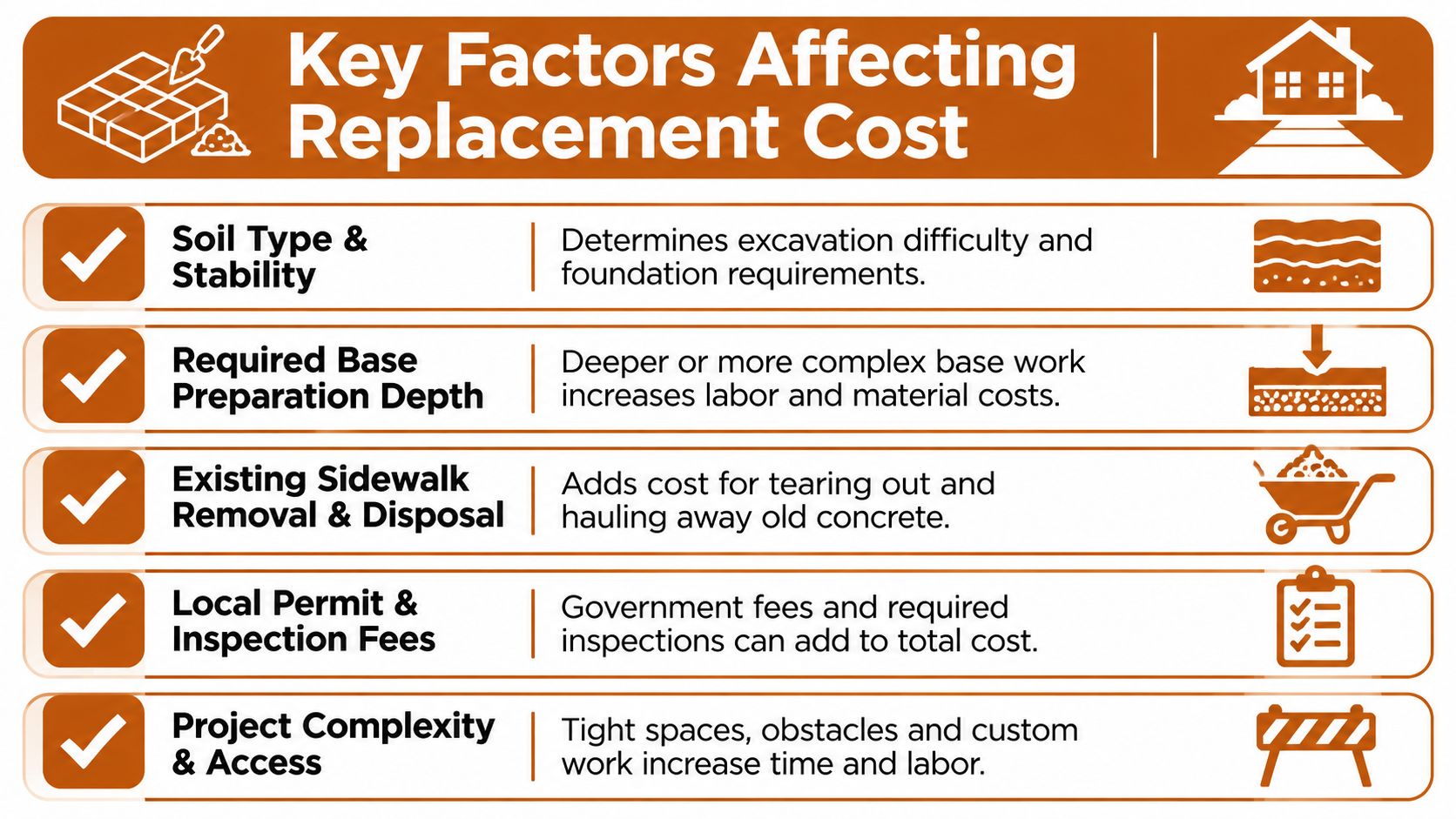
The most useful way to evaluate a concrete sidewalk replacement estimate is to identify the conditions that affect production time and material use. Contractors aren't pricing only the visible crack. They're pricing the work required to create a stable, safe surface that drains correctly and remains usable.
Soil, roots, and base preparation
Central Florida properties can have voids, loose fill, settlement, or root activity beneath an otherwise ordinary-looking sidewalk. When the crew finds unstable subgrade, root damage, or areas requiring additional fill, preparation takes longer and may require more aggregate and compaction.
A quote should state whether the contractor is including ordinary grading and base work or allowing for unknown conditions. Don't assume every contractor has inspected the same thing because each has measured the same walkway.
Access and demolition complexity
A sidewalk beside a driveway may allow equipment and debris handling close to the work area. A path behind a home, through a narrow gate, or around landscaping may require hand demolition, wheelbarrows, additional labor, or staged hauling. Thick concrete and embedded reinforcement also slow removal.
Finish selection matters, too. Broom-finished concrete is usually the sensible baseline for a walkway. Exposed aggregate, stamped patterns, or decorative coloring adds finishing labor and material coordination. Choose decorative work because it suits the property, not because a generic estimate makes it sound inexpensive.
Thickness, permits, and accessibility
Many residential walkways use a 4-inch thickness, while commercial applications may call for 5-inch or 6-inch construction, reinforcement, or more demanding subgrade specifications. The proper specification depends on use, local requirements, and whether vehicles may cross the path. Thicker work means more concrete and can require more preparation.
Public right-of-way work may require permits or inspections. Commercial sidewalks, HOA common areas, and paths serving businesses may also need accessibility review for running slope, cross slope, transitions, and surface condition. Requirements vary by jurisdiction, so confirm them with the permitting authority and contractor before demolition.
Central Florida Climate and Local Conditions Impact
A sidewalk in Central Florida faces a different set of stresses than one in a mild, dry region. Strong sun and heat repeatedly warm the surface, while evening cooling and rain change moisture conditions around the slab. Concrete needs properly located control joints, sound support, and drainage planning so ordinary movement doesn't turn into random cracking or settlement.
A walkway in Dunnellon may encounter drainage or groundwater concerns that differ from a site in Crystal River or Inverness. Properties near lower-lying areas can require careful attention to runoff and grade. The issue isn't just whether the sidewalk looks level on installation day. Water must move away without washing out the supporting material or ponding along the walking surface.
Roots and changing subgrade
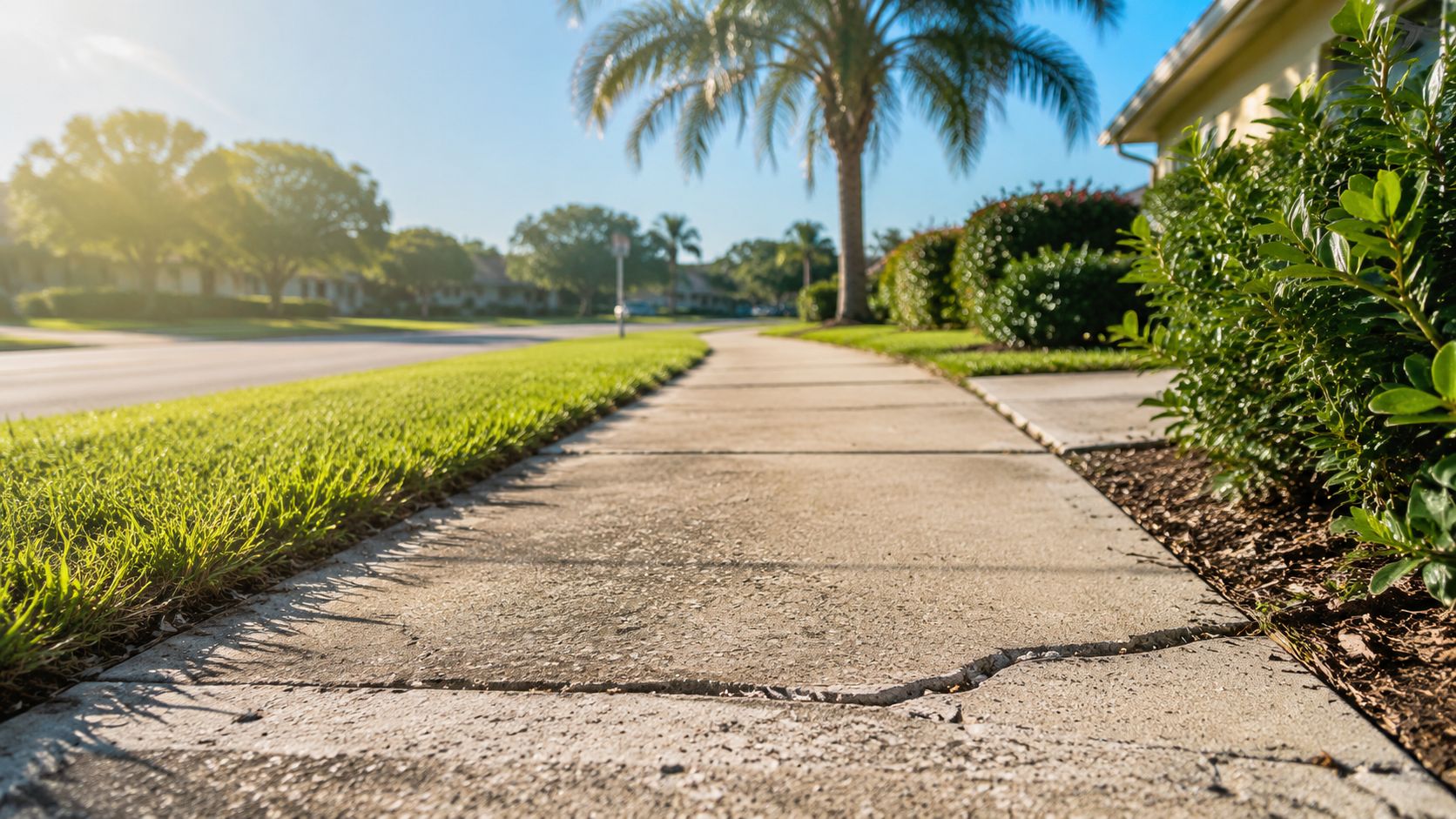
Mature oaks and other established trees around Ocala, Belleview, Silver Springs, Summerfield, and The Villages can lift panels as roots expand beneath the path. Removing only the visibly raised section may not solve the cause if the surrounding root zone continues to move. The contractor may need to excavate carefully, adjust the alignment, or coordinate a root-management approach that protects the tree and the walkway.
Soil varies across Marion County, FL and Citrus County, FL. Sandy conditions near coastal areas around Homosassa and Crystal River behave differently from denser or clay-heavy soils farther inland. That variation affects compaction, drainage, and the amount of base correction a responsible contractor includes.
Generic national guides often assume straightforward access and predictable soil. Local pricing has to account for the ground beneath the slab, the weather exposure above it, and the practical route for equipment and debris.
When Full Replacement Makes More Sense Than Repair
Repair is appropriate when damage is isolated and the surrounding concrete remains stable. A localized crack, small area of spalling, or single defective panel may not justify removing an otherwise sound walkway. The right repair depends on whether the slab is level, supported, and free from a continuing drainage or root problem.
Full replacement becomes more defensible when the same failure appears across multiple sections. Widespread cracking, repeated settlement, exposed aggregate from surface failure, and panels moving at different elevations usually point to a problem larger than one bad spot.
A practical repair decision
Use these questions before choosing a scope:
- Is the damage isolated? One failed panel with stable neighbors may be a repair candidate.
- Is the slab moving? Settlement, heaving, or a void beneath the concrete can cause a patch to fail.
- Will the repair match? New material may differ in color, texture, and joint layout from older concrete.
- Does the route serve the public? Commercial properties, HOA common areas, and facilities in Ocala, Summerfield, or Citrus County may need accessibility corrections that a patch won't provide.
- Is the walkway near the end of its useful planning life? HOA reserve studies commonly assign sidewalks a 25 to 40 year life, making full replacement easier to justify when age and repeated failures combine (sidewalk repair and replacement planning guidance).
A repair can be cheaper today and still be the wrong value if the base remains unstable. Conversely, replacing an entire walkway because of one cosmetic crack wastes usable concrete and budget.
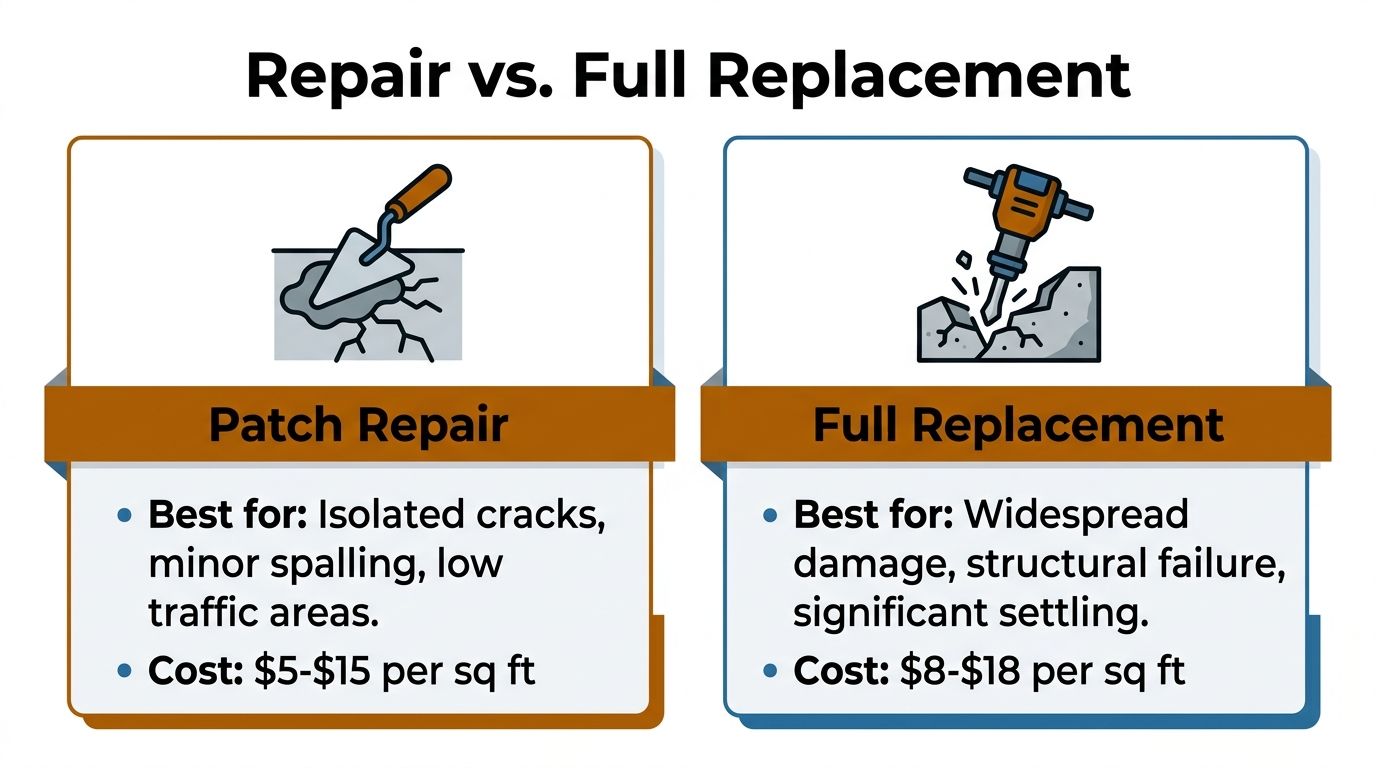
For a closer look at localized work, compare the scope described in this sidewalk concrete repair cost guide. The estimate should explain why repair is expected to last, not just show a lower number.
A sound repair addresses the cause of failure. Covering a moving slab with surface material only postpones the decision.
Getting Accurate Estimates and Choosing the Right Contractor
A reliable estimate starts with an on-site inspection. Phone measurements rarely reveal soft subgrade, roots, drainage paths, demolition access, or whether the sidewalk sits in a right-of-way. Ask each contractor to inspect the same area and describe the same replacement limits so you can compare bids fairly.
What a complete quote should show
Look for these line items in writing:
- Demolition scope: Identify what gets saw-cut, removed, loaded, and hauled away.
- Base preparation: State whether excavation, grading, fill, and compaction are included.
- Concrete specification: Confirm thickness, mix, reinforcement, joints, and finish.
- Access assumptions: Note gates, landscaping protection, equipment staging, and cleanup.
- Compliance work: Clarify permits, inspections, transitions, slopes, and accessible markings where applicable.
- Schedule terms: Include expected start timing, site closure details, and communication responsibilities.
Ask whether the contractor is licensed and insured, who will perform the work, how weather affects scheduling, and what warranty terms apply. A qualified local crew should be comfortable explaining why the proposed scope fits your property instead of pressuring you into the most expensive option.
Red flags include a quote that contains only a single square-foot number, no disposal language, no thickness specification, or no explanation of what happens if unstable soil appears. Commercial owners should also ask how pedestrian access will be managed while the work proceeds.
For local selection criteria and consultation questions, review this guide to sidewalk replacement contractors. A contractor who also understands concrete work, asphalt sealcoating, and parking lot striping can help property managers coordinate related maintenance without treating each surface as an isolated task.
Planning Your Central Florida Sidewalk Project with Riverside Sealing and Striping
A realistic budget starts with the replacement range, then adjusts for the actual site. Use $12 to $22 per square foot as a planning benchmark for complete replacement, recognize that mid-size residential work may reach $4,000 to $7,000, and reserve room for demolition access, roots, drainage, base correction, finish choices, and compliance requirements. The most accurate number comes from an on-site evaluation, not a national calculator.
Riverside Sealing & Striping, LLC is a third- and fourth-generation family-owned contractor based in Dunnellon, serving Marion County, FL, Citrus County, FL, and nearby Central Florida communities including Ocala, Beverly Hills, Hernando, Lecanto, Inverness, Homosassa, Crystal River, and The Villages. Owner Bert Counts brings hands-on experience in site preparation, concrete replacement, finishing, asphalt sealcoating, and parking lot striping, with reliable scheduling and clear project communication for homes, HOAs, churches, commercial properties, and investment properties.
The company provides free, no-pressure on-site consultations and estimates from 7am to 7pm, helping owners determine whether a partial repair, full sidewalk replacement, new concrete work, or coordinated asphalt maintenance makes practical sense. Its broader service model includes driveway and patio concrete, asphalt sealcoating, and ADA-compliant parking lot striping.
Riverside Sealing & Striping, LLC can evaluate your damaged sidewalk, explain the work behind the concrete sidewalk replacement cost, and provide a clear estimate for your Central Florida property. Visit Riverside Sealing & Striping, LLC to request a free, no-pressure consultation for sidewalk replacement, concrete work, sealcoating, or parking lot striping.