
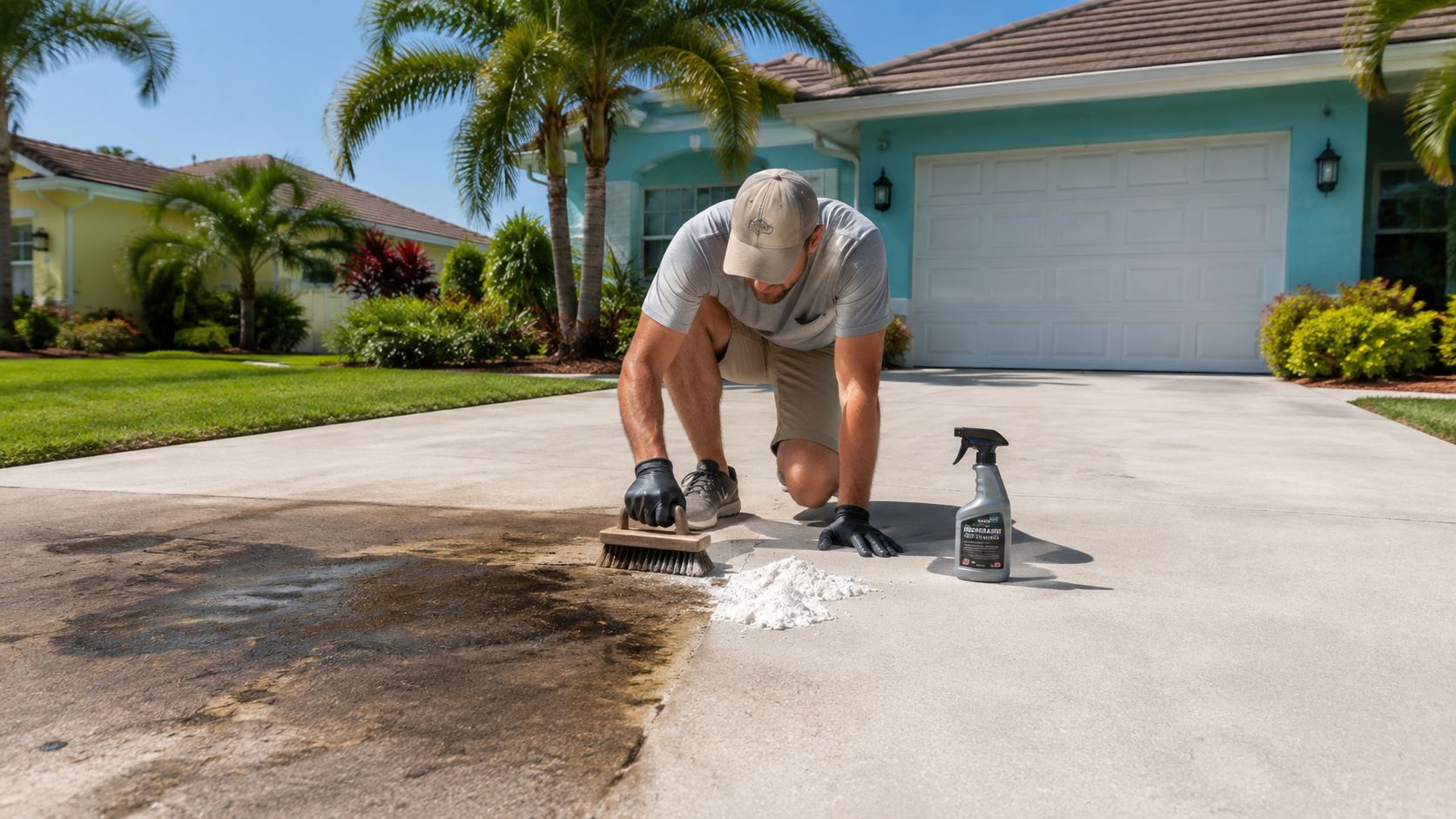
A fresh oil spot on concrete or asphalt is a timing problem first. In driveway oil stain removal, the first hour can decide whether you're cleaning a surface stain or fighting oil that has already moved into the pores, and one guide says quick action in that first hour can remove up to 80% of surface oil, while stains left 1 to 30 days often drop to 60 to 80% removal even after repeated cleaning cycles. For homeowners in Marion County, FL and Citrus County, FL, that's the difference between a simple Saturday cleanup in places like Ocala, Dunnellon, Belleview, Crystal River, or Inverness, and a stain that keeps coming back in the heat.
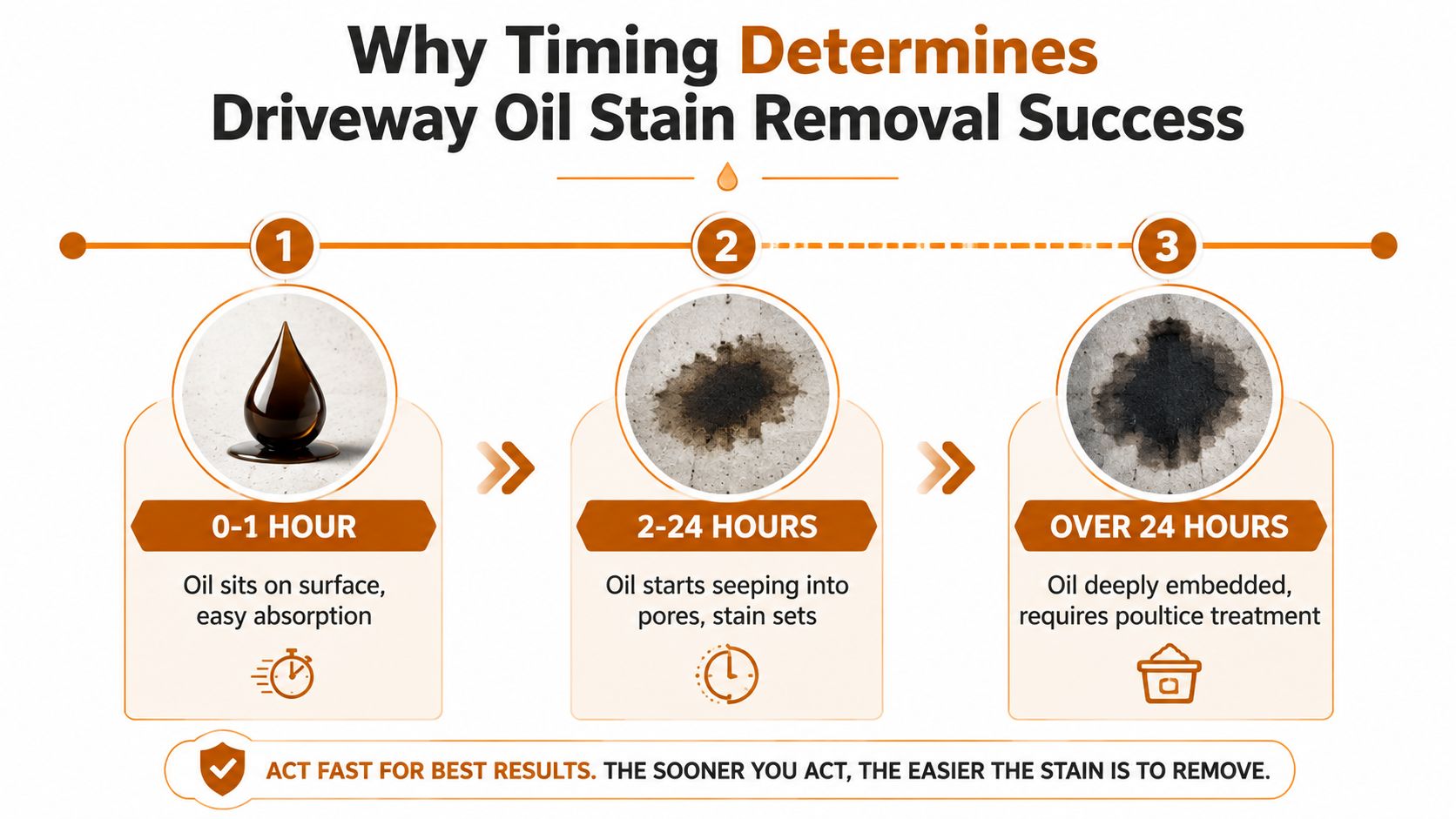
Table of Contents
- Why Timing Determines Driveway Oil Stain Removal Success
- Fresh Spill Cleanup Using the Absorption Method
- Removing Set-In Stains with Poultice Treatment
- Choosing the Right Method for Your Stain and Surface
- Preventing Future Stains Through Sealcoating
- When to Call Professional Concrete and Asphalt Experts
Why Timing Determines Driveway Oil Stain Removal Success
A fresh oil spot can shift from easy cleanup to stubborn stain in a very short window. In driveway oil stain removal, the first 15 to 60 minutes matter most, because oil starts moving into the pores of concrete and asphalt before the surface ever looks badly marked. One guide says quick action in that first hour can remove up to 80% of surface oil Driveway oil stain prevention techniques, while stains left 1 to 30 days often drop to 60 to 80% removal even after repeated cleaning cycles Driveway oil stain prevention techniques. In Central Florida heat, that window closes even faster on driveways that sit in full sun.
Practical rule: absorb first, wash second. If you add water too early, you can spread the stain and push oil deeper into the slab.
Concrete and asphalt both absorb oil, but they do it differently. Sealed surfaces hold up better, while unsealed driveways in Summerfield, Lecanto, Beverly Hills, Hernando, and The Villages take in oil much faster when the surface is warm. A prevention guide reports that sealed concrete resisted 60 to 70% more oil penetration than unsealed samples, which is why the best cleanup results usually come from handling the spill quickly and protecting the surface later. Driveway oil stain prevention techniques
The first move is simple. Put down absorbent material right away, then come back with a cleaner after the excess oil is lifted. That order matters more than scrubbing hard, because scrubbing an unabsorbed spill just spreads the mess across more square feet.
For fresh spills, I tell property owners to think in minutes, not days. If the oil is still glossy, treat it like a live spill, not a stain. Once the sheen dulls and the spot darkens, the stain has already started setting into the driveway surface.
Fresh Spill Cleanup Using the Absorption Method
A fresh driveway spill gives you a short window to keep the oil near the surface. Once it starts soaking in, cleanup gets harder on both concrete and asphalt, especially in Central Florida heat where warm pavement opens up fast and lets the stain travel deeper.
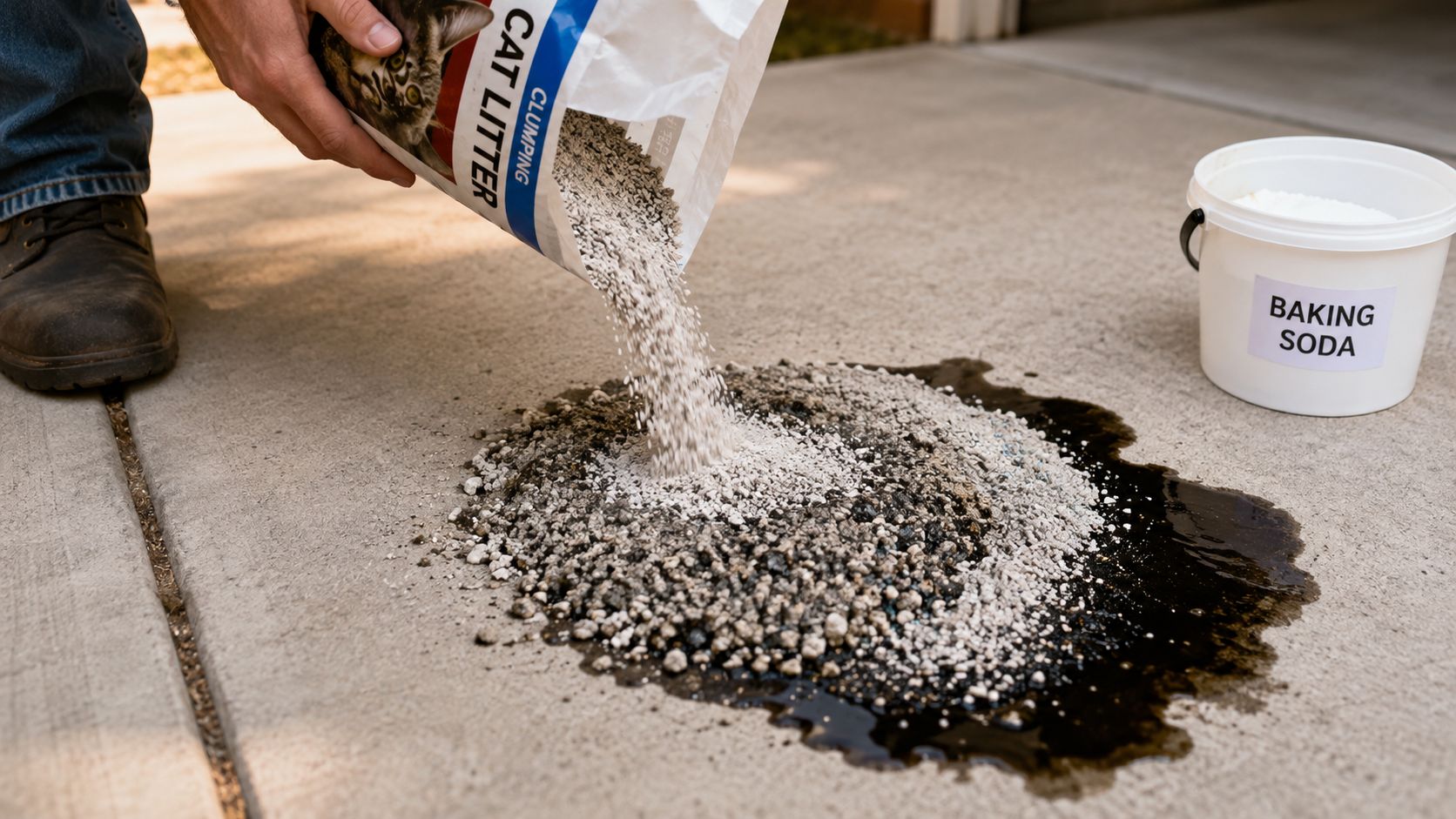
Cat litter, baking soda, sawdust, or a commercial absorbent all work because they pull oil out before a cleaner touches the spot. Put the absorbent down as soon as you see the spill, then leave it long enough to draw up the surface oil. For a small spill, that usually means at least 30 minutes. If the spill is larger or the driveway is hot from the sun, overnight is the safer choice.
A lot of homeowners want to hose the stain right away. That usually spreads the oil instead of containing it, especially on smooth concrete pads in neighborhoods around Ocala and Silver Springs, where runoff can travel farther than people expect. On asphalt, water can also push the oil into soft binder areas and leave a wider dark mark.
Once the absorbent comes up, use a concentrated degreaser or detergent and a stiff nylon brush. Let the cleaner sit long enough to break the bond with the driveway surface before rinsing. A practical Concrete degreaser and pressure washing guidance notes that hotter water helps the cleaner work faster, and that moderate pressure is enough for oil removal when the surface has already been treated. The point is not to blast the stain. It is to lift what the absorbent did not catch.
If the stain is still visible after the first rinse, repeat the process instead of turning up the pressure. Too much pressure can drive oil deeper into porous concrete, and it can rough up asphalt if the surface is already aging or softened by heat. On newer stains, a second round often does more than a harsher first pass.
After absorption, the cleaner should do the work.
Removing Set-In Stains with Poultice Treatment
Older stains need a different approach because the oil has already migrated into the concrete. A poultice works better than surface scrubbing because it doesn't just dissolve the contamination, it helps draw it back out of the slab. That's why stubborn driveway oil stain removal on old spots often looks more like stain extraction than washing.
What the paste is doing
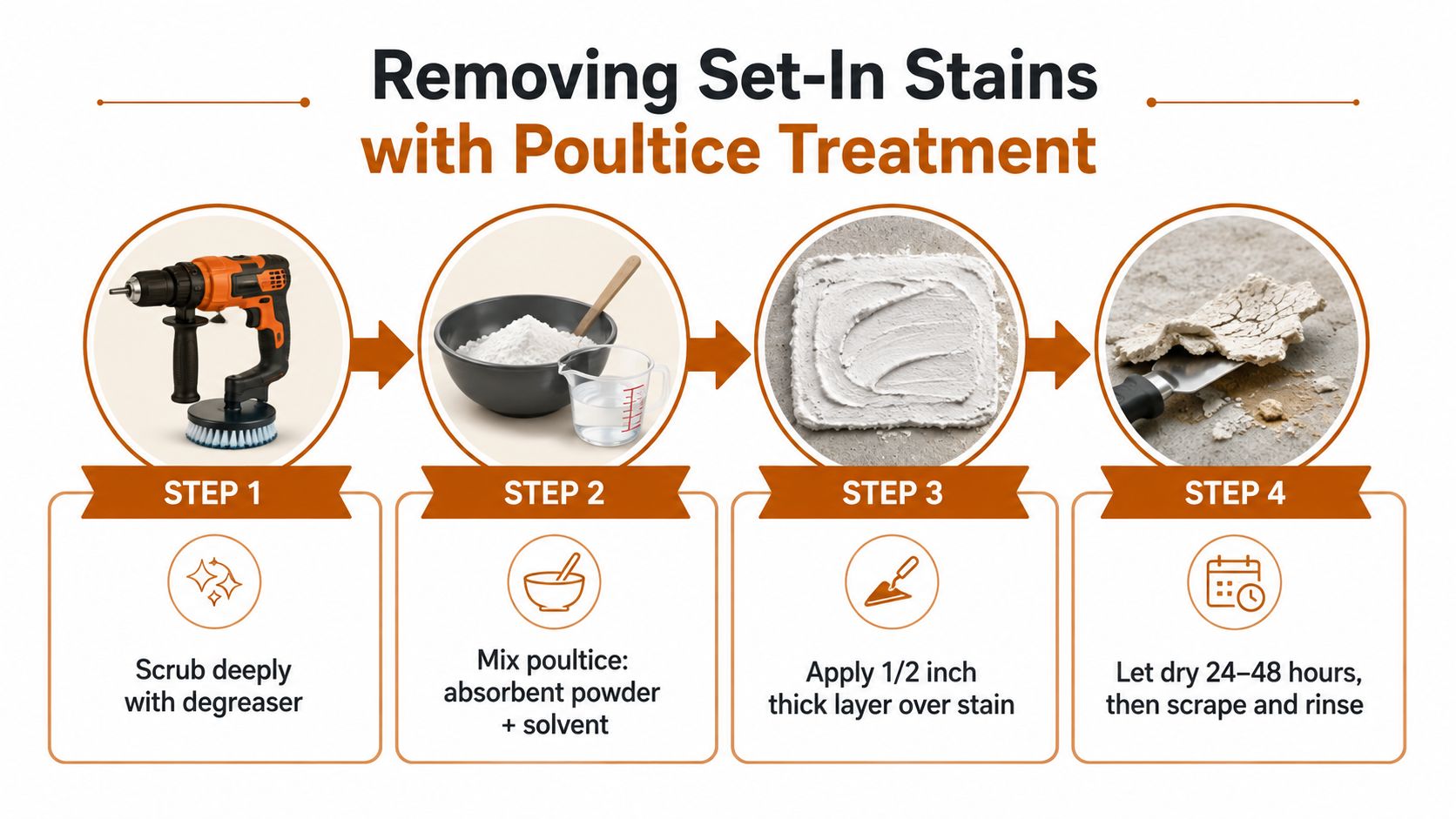
A practical poultice often uses corn starch or diatomaceous earth mixed with a liquid cleaner, then spread in a thick layer over the stain. Bob Vila describes this as a paste made with an absorbent material and liquid TSP, worked into the concrete, allowed to dry completely, then scraped and rinsed away. The drying step can take anywhere from 30 minutes to a couple of hours, depending on temperature and humidity. Bob Vila driveway cleaning method
Let it dry fully. If the paste is still damp when you remove it, it hasn't finished pulling contamination out.
How long to leave it on
For set-in stains, a poultice-style treatment usually needs 5 to 12 hours of dwell time, and stubborn spots may take 2 to 3 treatment cycles before the discoloration fades. One technical guide also recommends hot water, plastic covering to slow evaporation, and extended dwell times of 45 to 60 minutes to help the cleaner penetrate deeper. Prosoco driveway oil stain removal
Humidity matters in Florida because slow drying can delay the cleanup cycle. In Homosassa, Crystal River, or Dunnellon, a thick paste may stay damp longer than expected, so it's worth checking that it has cracked and cured before scraping. Once it's dry, remove it mechanically, rinse, and inspect the spot in daylight.
Pressure washing without making it worse
A pressure washer can help, but only after the stain has been lifted as much as the surface will allow. Stronger pressure isn't always better, and high force can force oil deeper into porous concrete. The right blend is dwell time, extraction, and a controlled rinse.
Choosing the Right Method for Your Stain and Surface
The method should match the stain, not just the driveway. Fresh spills respond best to absorption first, while older stains often need a poultice or repeated degreasing. Sealed concrete, unsealed concrete, asphalt, and pavers all behave differently, and treating them the same is where DIY cleanup usually goes sideways.
| Stain Age | Surface Type | Recommended Method | Expected Results |
|---|---|---|---|
| Fresh spill | Unsealed concrete | Absorb immediately, then degrease and scrub | Best chance at near-complete cleanup if handled fast |
| Fresh spill | Sealed concrete | Absorb first, then mild cleaning | Usually easier cleanup because oil doesn't bite in as fast |
| Older stain | Unsealed concrete | Poultice treatment with repeat cycles | Better than scrubbing alone, but stains may not fully vanish |
| Older stain | Asphalt | Gentle degreasing and careful rinse | Works only if the surface binder isn't already damaged |
| Decorative pavers | Pavers with joints | Spot-clean carefully around joints and sand | Needs caution so the cleaner doesn't disturb joint material |
A practical decision point is whether the stain is only cosmetic or tied to surface breakdown. If the driveway is already pitted, cracking, or soft at the edges, cleanup alone won't solve the underlying issue. For asphalt owners who also want long-term maintenance context, this asphalt driveway maintenance guide is useful background.
Sealed surfaces buy you time. Unsealed surfaces demand faster action and more patience with repeat treatment. Pavers need the most care because the cleaner can wander into joints and leave the area looking patchy even after the oil is gone.
In Marion County, FL and Citrus County, FL, that decision tree matters because many driveways mix surface types, especially in newer subdivisions and older ranch properties alike.
Preventing Future Stains Through Sealcoating
The best oil stain removal starts before the spill happens. A sealed driveway gives oil less room to soak in, so cleanup is faster and the chance of a permanent dark patch drops. Sealers also help limit the wear that comes with repeated leaks and hot Central Florida sun, which matters on driveways that already see daily traffic and long bake times.
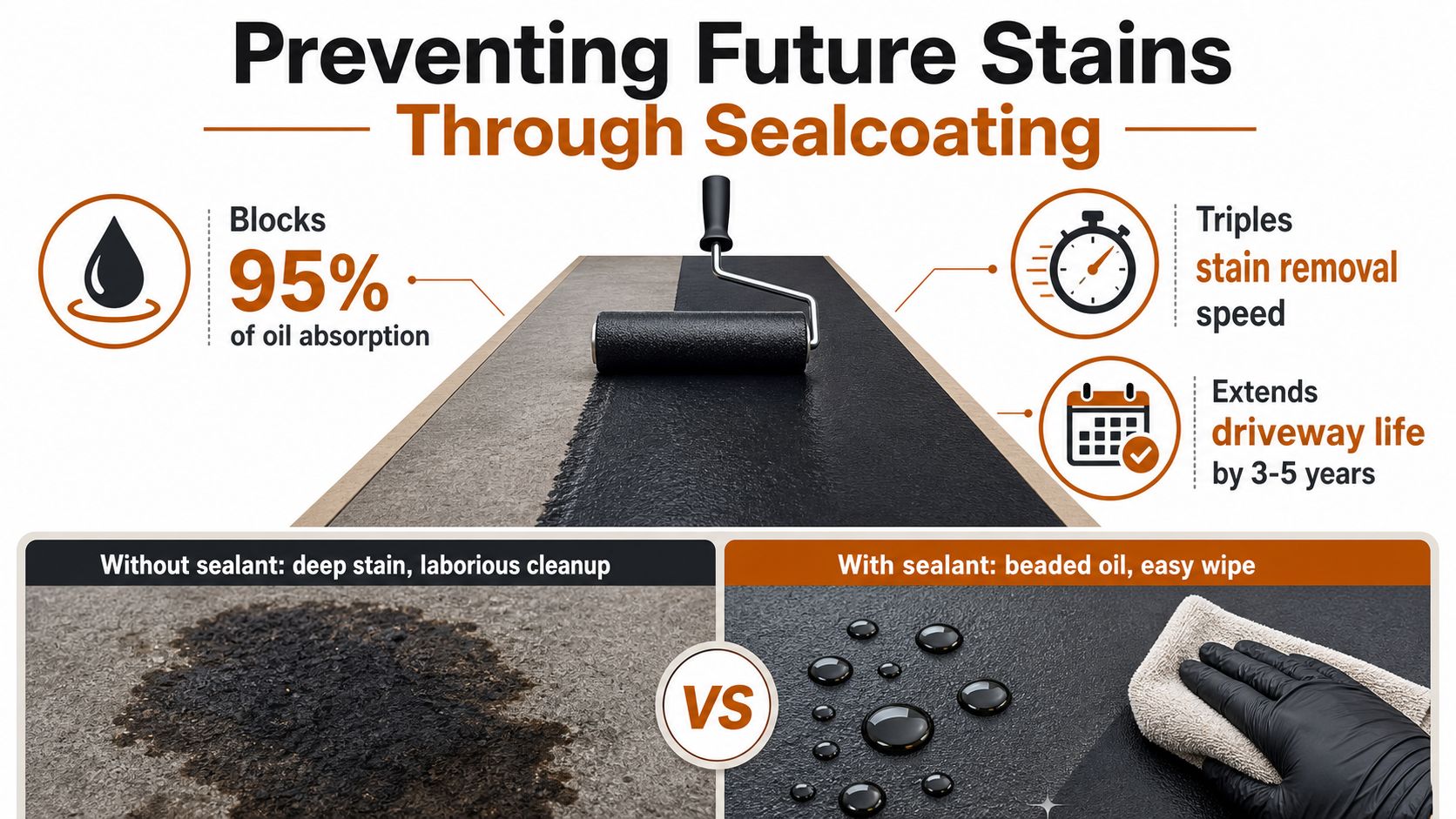
Why sealed driveways clean up faster
Sealer creates a barrier between the oil and the pores underneath. That gives you more time to blot a spill, more forgiveness if a vehicle leaks overnight, and a better chance of washing off residue without grinding it into the slab. For driveways in Belleview, Ocala, and The Villages, that extra buffer matters because sun and traffic keep working on the surface all year.
The practical window is short. If you catch a leak early and keep an eye on parked vehicles every few weeks, you stand a much better chance of avoiding a stain that sinks in and becomes part of the surface. The point is simple, inspect leak points regularly and clean up fast when you see fresh drips. As noted earlier, prevention works best before oil has time to bond with the driveway.
For anyone managing a residential drive or a commercial lot, the maintenance logic stays the same. Keep the surface protected, catch leaks early, and do not wait for a stain to become a restoration project.
If you are weighing sealcoating for asphalt or protective maintenance for concrete, this sealcoating service overview is a useful place to start.
When to Call Professional Concrete and Asphalt Experts
Some stains stop being a cleaning problem and start being a surface problem. If oil keeps reappearing after repeated treatment, if the concrete is already breaking down, or if the asphalt binder looks soft and damaged, professional evaluation usually saves time and money. That's especially true on driveways that have both cosmetic staining and structural wear.
Best trigger for help: when the stain and the surface damage show up together.
A contractor can look at whether the spot needs deeper extraction, sealcoating, resurfacing, or replacement. That distinction matters in Citrus County, FL and Marion County, FL, where heat, rain, and daily vehicle traffic can accelerate wear on both concrete and asphalt. On properties in Lecanto, Hernando, or Summerfield, the right fix is often less about another round of scrubbing and more about preserving the surface that's left.
If you're unsure whether the driveway is salvageable, a professional inspection is the cleanest next step. A company that handles both concrete and asphalt can judge whether you're looking at spot cleanup, sealcoating, or a larger repair, and that's where a trained eye beats guesswork. For asphalt-specific help, this asphalt sealing company resource gives a good sense of what a maintenance-first approach looks like.
If your driveway in Marion County or Citrus County has an oil stain that won't lift, Riverside Sealing & Striping, LLC can help assess whether cleaning, sealcoating, or repair is the smarter move. Visit Riverside Sealing & Striping, LLC for a free, no-pressure consultation and get a local opinion on what your concrete or asphalt surface needs next.