
You probably noticed it on a morning walk in Dunnellon or Ocala, a sidewalk panel with a thin crack that's been getting darker after every rain, or a corner that feels just a little higher under your shoe. That's usually where the decision starts, not with a bucket of filler, but with a hard look at what kind of failure you're dealing with. In Central Florida, hairline shrinkage cracks, spalling, and settlement cracks don't behave the same way, and the repair that works on one can fail fast on another.
A crack that starts cosmetic can become a trip hazard once heavy rain, heat, and root pressure keep working on it. That matters for homeowners, HOAs, and business owners in Marion County, FL and Citrus County, FL, because uneven walk areas can create liability exposure and mobility problems long before they look dramatic. If you want to understand how to repair sidewalk cracks the right way, start by identifying the crack family first, then match the repair depth to the damage instead of buying the cheapest tube on the shelf.
Table of Contents
- What Florida Sidewalk Cracks Are Telling You
- Inspecting the Crack and Setting Up a Safe Work Zone
- Matching the Repair Method to the Crack Type
- Cleaning, Filling, and Finishing the Repair
- When Filling Is Not Enough and Replacement Makes Sense
- How Riverside Sealing and Striping Handles Sidewalk Repairs
- Sidewalk Crack Repair Questions Homeowners Ask Most
What Florida Sidewalk Cracks Are Telling You
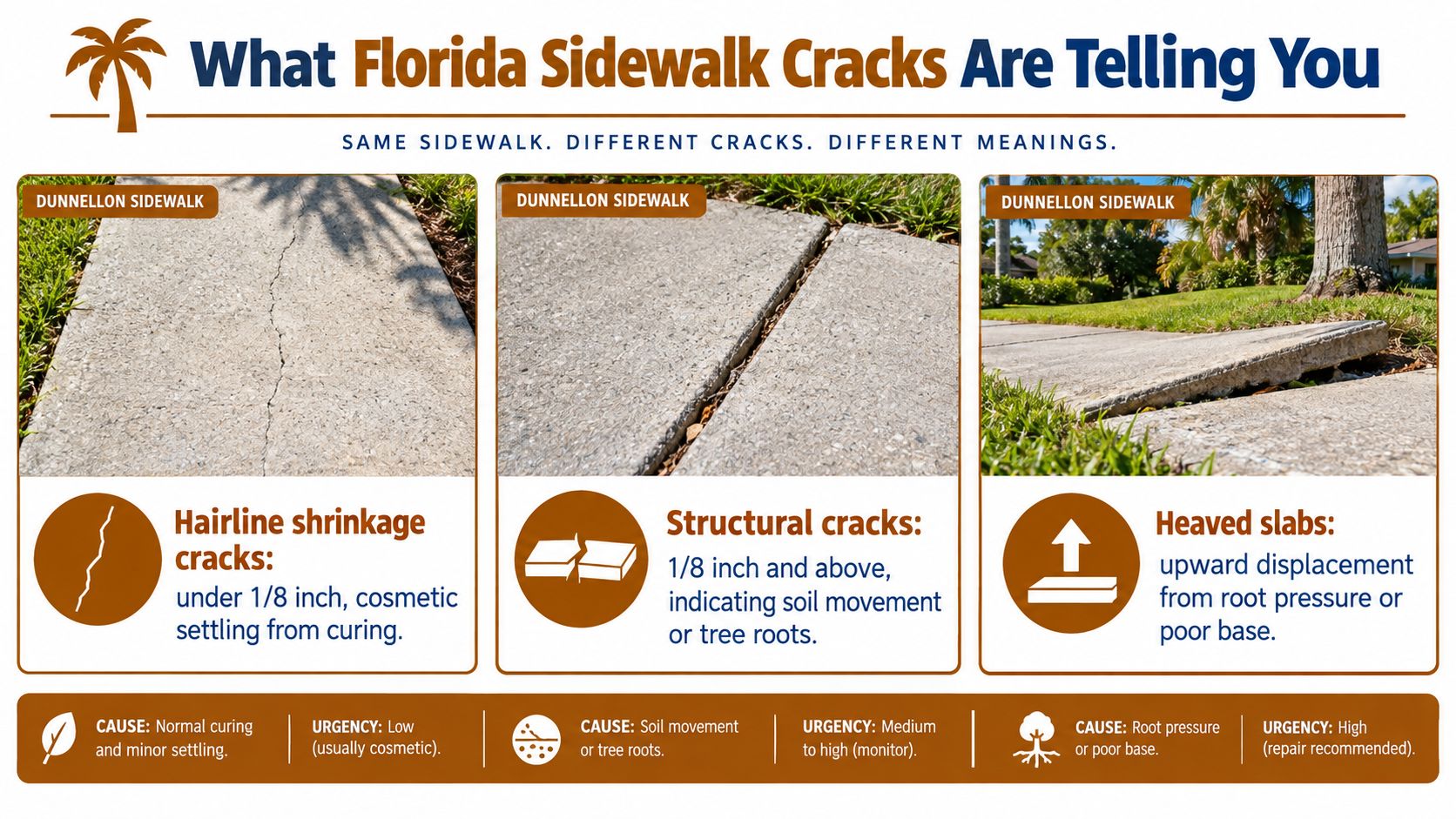
After a summer storm, a Dunnellon sidewalk can show three different problems within a few panels. One slab may have a fine surface line, another may be losing its top layer, and a third may have dropped or tilted because the supporting soil shifted. Those conditions need different repair depths. The first decision is triage, not which tube of filler to buy.
Three crack families, three different responses
A hairline shrinkage crack is generally narrow and shallow, so cleaning and sealing may be enough. Spalling means the concrete surface has broken away, often after weather exposure or because the original top layer was weak. Settlement cracks involve movement, with a panel that has dropped, tilted, or separated enough to create a raised edge or lip.
Practical rule: if your shoe catches on the edge, treat the slab as a movement problem rather than a cosmetic crack.
Central Florida conditions speed up that change. Heavy rain can wash fines from a sandy sub-base, intense heat dries and stresses the surface, and oak or palm roots can push against the slab from below or beside it. Across Marion and Citrus counties, from Ocala to The Villages, a small defect can become a trip point during a single rainy season.
When one corner has been pushed upward, review our guide to repairing sidewalk panels raised by tree roots before filling the joint.
A filler can close a gap while leaving the failed support underneath untouched. It may hold on a stable, shallow crack, but it will usually split again when the slab keeps moving. For a home walkway, HOA common path, or commercial entrance, identify the failure first, then choose between a patch, flexible sealant, deeper base work, or replacement. The cheapest material is rarely the cheapest repair when water and roots are still working below the surface.
Inspecting the Crack and Setting Up a Safe Work Zone
Inspection starts before any product comes out of the truck or the tube. Use a six-inch ruler to check width, then probe the opening with a screwdriver to gauge depth and find loose edges. Tap around the area as well. A hollow sound, standing water after rain, or visible vertical displacement points to a support or movement problem rather than a simple surface repair.
What to look for before you repair anything
Inspect the surrounding concrete, not just the line in front of you. Exposed rebar, a sunken panel near a utility cut, roots lifting one corner, or water ponding against a foundation can make the crack only one symptom. Driveways and entrances deserve extra attention because repeated foot traffic loads the weakened area throughout the day.
A clean repair starts with a clean decision. If the slab is moving, the filler is not the main fix.
Set up the work zone as a small jobsite. Cones, caution tape, or a closed-sidewalk sign keep pedestrians away while the repair cures. Cover nearby landscaping before pressure washing or grinding, and wear eye protection, gloves, a dust mask for cutting or grinding, and closed-toe footwear. Call 811 before making saw cuts near a driveway or utility edge.
Keep water and weather in mind during the setup. Florida rain can refill an opening you just cleaned, while heat can shorten working time for sealants and make the surface too hot to judge by touch. Choose a dry work window, remove loose material completely, and do not reopen the walkway until the repair has set according to the product directions.
On an HOA path or commercial entrance, traffic control is part of the repair plan. If one side of the walkway must remain open, set the pedestrian route before work begins instead of working around people. A practical site walk often saves more time than a rushed patch, which is why crews that follow a formal traffic management plan usually identify the main hazard before the quote is written.
A five-minute pre-repair check should answer four questions. Is the crack dry? Do the panels move against each other? Are the edges sound enough to hold the selected repair? Can the area be worked on and reopened safely? If any answer is no, change the plan before opening the first product.
Matching the Repair Method to the Crack Type
Repair selection starts with triage. Measure the opening, check whether the panels have shifted, and test the surrounding concrete for solid edges. Central Florida sidewalks face heavy rain, intense heat, sandy sub-bases, and oak-root movement, so the cheapest caulk is not always the right depth of repair. A narrow, stable crack may need only flexible sealant. A displaced slab needs a different plan.
For cracks wider than 1/2 inch and deeper than 1 inch, install backer rod before caulking. It controls sealant depth and shape, helping the material stretch instead of sinking into the full void, as explained in this sidewalk crack repair guidance.
Method choice by crack behavior
| Crack condition | What to use | When it fits | Typical cure or service expectation |
|---|---|---|---|
| Hairline, stable opening | Flexible masonry crack filler or sealant | Edges remain sound and panels do not move | Follow the product label before foot traffic. A stable repair can last several years when water stays out. |
| Spalled edge or shallow surface loss | Cementitious patching compound or epoxy mortar | Chipped concrete has been removed back to firm material | Allow the labeled cure period before reopening. Service life depends on bond, drainage, and edge stability. |
| Wider crack with minor movement | Backer rod and self-leveling polyurethane or polyurea sealant | The opening is deep enough for controlled sealant depth and the slab remains supported | Polyurethane commonly needs about 24 hours before foot traffic and up to 7 days for full cure, depending on conditions and product directions. |
| Repeated movement or vertical displacement | Structural repair, lifting, or panel replacement | Roots, settlement, or a failed sub-base keeps reopening the crack | This is a longer project, but restoring support provides the most durable result. |
A hairline crack with no displacement is a reasonable filler repair. A spalled edge needs a bonded patch, not a thin coating over loose concrete. A settlement crack with a vertical lip points to movement below the slab, so filling alone may only postpone replacement.
The repair profile matters as much as the product. Home repair guidance recommends preparing the opening to about 3/8 inch wide and at least 1 inch deep where the material requires that geometry. Undercutting to a minimum depth of 1 inch can give a cementitious patch a mechanical lock Lowe's concrete repair guidance. A surface skim often fails when rain enters the joint, heat expands the slab, or sandy soil lets the panel settle again.
Practical rule: if the repair material is fighting active movement, the slab needs attention before another filling attempt.
Wet conditions change the material choice. For an active leak or a crack that stays damp near irrigation overspray, downspouts, or a low spot, a moisture-tolerant flexible system is usually more suitable than a rigid patch. The Quikrete FAQ identifies hydraulic water-stop cement for active leaks wider than 1/4 inch. Use that guidance for water control, then address the drainage or movement causing the recurring failure.
Cleaning, Filling, and Finishing the Repair
A repair that looks clean usually begins with aggressive preparation. Brush out dust, weeds, old filler, and loose concrete with a stiff wire brush, then vacuum the opening. Hairline cracks often need to be widened slightly with a diamond blade or cold chisel so the new material bonds to sound concrete instead of resting on the surface skin.
On a dry Florida sidewalk, establish firm edges before choosing the filler. If the opening is deeper than about 1/2 inch, install the correct-size backer rod so sealant does not drop too far into the joint. For spalled areas, chip back to solid concrete and use a concrete patch compound or epoxy mortar. Applying material over crumbly edges leaves a repair with nothing dependable to hold onto.
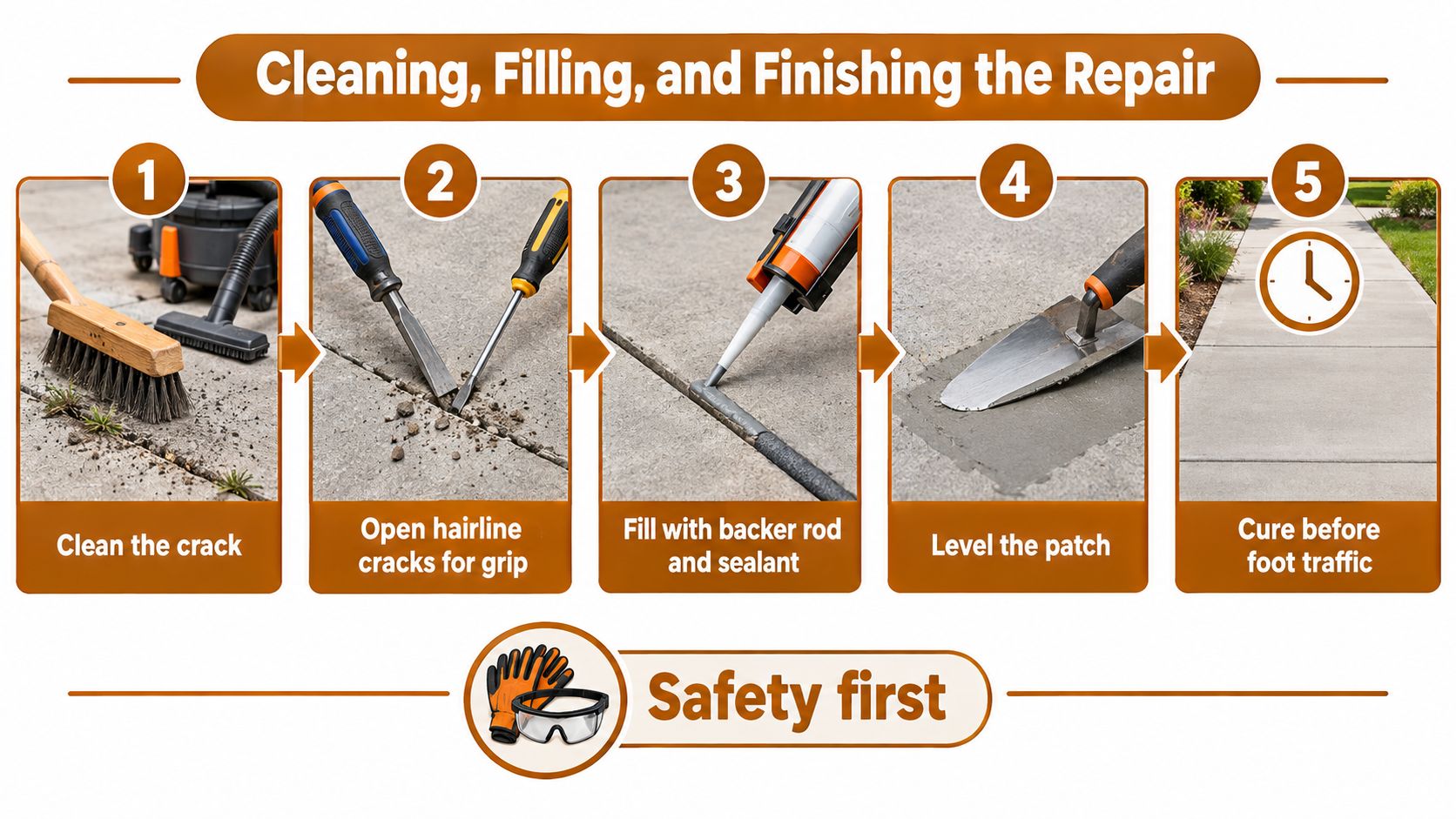
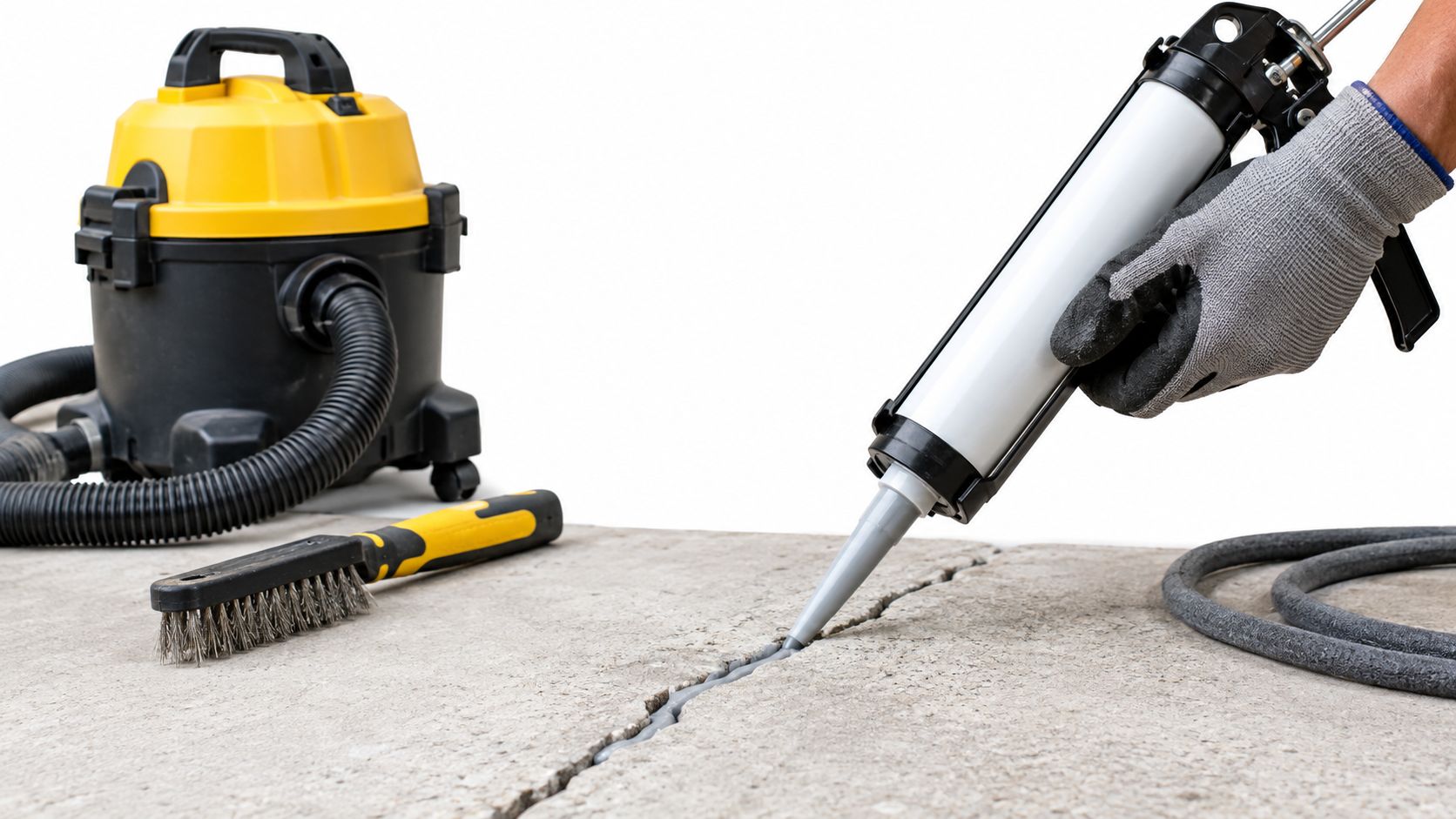
For narrow, stable joints, a caulk gun works well with flexible polyurethane or epoxy products. The concrete driveway crack filler comparison explains the trade-offs between those options, including where flexibility matters in Florida heat. The crack must be clean and dry before application. Trowel patch material flush with the slab so the finished surface does not create an edge that catches a shoe, wheelchair, or mower wheel.
Deeper mortar repairs need more mechanical grip. Undercut the sides or shape the opening into an inverted V before filling, following the preparation approach described in Oregon sidewalk repair guidance. A shallow skim coat can separate when rain enters the opening or when heat and a shifting sandy base move the slab.
Keep moisture out of the repair process. Remove loose material, work only on dry concrete, place the mortar-epoxy mix with a trowel, and finish it flush. Moisture trapped beneath a patch shortens its service life, so dry conditions matter more than choosing the cheapest tube.
Practical rule: don't seal over damp concrete and expect a permanent fix.
Curing deserves the same attention as filling. Keep foot traffic off the slab for at least 24 hours in Florida heat, and shield the repair from weather while it sets. Some patch systems benefit from mist curing and temporary cover. Wait until the full cure cycle is complete before applying seal coat or paint. A peer-reviewed review found that crack or defect filling alone had only a 30% success factor, compared with 50% when combined with a surface protective coating.
Sealing and finishing protect more than appearance. On sidewalks exposed to Marion County or Citrus County heat, heavy rain, and recurring moisture, they determine whether a sound patch remains bonded or opens again.
When Filling Is Not Enough and Replacement Makes Sense
A crack that reopens after each heavy rain is a triage signal, not an invitation to buy another tube of caulk. In Central Florida, sandy sub-base washout, summer heat, downpours, and laurel or live oak roots can keep a slab moving after the surface looks repaired. If the support has failed, filler only delays removal.
Signs the slab has crossed the repair line
A vertical lip above 1/4 inch is a trip hazard under ADA-related sidewalk guidance. Running slope should stay within 1:20 (5%), and cross slope under 1:48 (about 2%) ADA sidewalk requirements. These grades matter on routes to entrances, parking areas, and shared walks used by people with mobility devices.
Watch for several parallel cracks, a hollow sound beneath the panel, or water and fine soil pumping through joints. Those symptoms show lost support. Sealant cannot stabilize a slab that is shifting over a soft or washed-out base.
If the concrete moves, levels unevenly, or pumps fines, repair the base before repairing the crack.
Root-lifted panels and slabs that settle into a low, wet spot also belong in the replacement category. Grinding a lip can remove one immediate trip point, but it will not stop continued movement. Removal, root management where appropriate, base correction, and replacement restore the walking grade.
A full replacement often makes more sense on older sidewalks in Ocala, Summerfield, Inverness, and The Villages, especially where repeated patching has already failed. The right choice depends on the panel's movement and support, not the price of the smallest repair.
That decision saves labor and disruption. A professional assessment can identify whether the slab needs a surface repair, deeper base work, or removal before repeated DIY patches consume the budget.
How Riverside Sealing and Striping Handles Sidewalk Repairs
A sidewalk in Dunnellon can look like a simple caulk job until heavy rain washes fines from the sandy sub-base or oak roots lift the panel. Riverside Sealing & Striping starts with triage: determine whether the slab is stable enough for filling, needs deeper support work, or should come out entirely. That choice controls the repair depth, cost, and expected service life.
During a site walk in Marion County and Citrus County, the crew checks crack movement, root intrusion, settlement, drainage, surface edges, and the surrounding grade. A narrow, dry, stable crack may receive concrete patching or compatible sealant. A shifted or poorly supported panel requires removal, base correction, re-grading, and replacement. The team also identifies conditions that could cause a repaired crack to open again.
Riverside Sealing & Striping, LLC handles sidewalk replacement, concrete work, and pavement maintenance. An HOA or property manager can arrange one assessment rather than coordinate separate vendors. If asphalt patching or sealcoating is also scheduled, combining the sidewalk and lot work can reduce scheduling conflicts and limit disruption.
The contractor's job is to explain the trade-off plainly. A filler can suit a sound slab, while a moving panel will usually consume repeated patch budgets. Decades of patch jobs, full replacements, and repair walks across Central Florida homes, HOAs, and commercial properties have reinforced that distinction.
Sidewalk Crack Repair Questions Homeowners Ask Most
How long should I stay off the repair?
Keep foot traffic off the repair through the product's early cure period. Florida heat and humidity can make the surface feel firm before the material has bonded and hardened fully. Follow the label, and protect fresh work from afternoon rain that could wash out the joint or weaken the bond.
Can I paint or seal the patch afterward?
Yes, after the patch or sealant has cured completely. Coating too soon can trap moisture and shorten the repair's service life. Seal or paint only when the surface is hard, dry, and stable enough to accept the coating without peeling or blistering.
Why does the crack keep opening?
Recurring cracks usually point to movement below or within the slab. Heavy rain can wash fines from a sandy sub-base, while oak roots can lift a panel. Water entering the same weak point adds more stress. A filler may hold on a stable slab, but repeated reopening calls for an inspection of support, drainage, and panel alignment.
Is this a DIY job or a contractor job?
A homeowner can often handle a narrow, dry, non-moving crack with careful cleaning and a compatible filler. Stop treating it as a filler job if the concrete is displaced, sounds hollow, has root lift, or keeps cracking after repair. Accessibility also matters. HOA walks, business entrances, and other public paths need a repair that addresses trip risk, not just appearance.
Riverside Sealing & Striping, LLC can assess sidewalks in Marion County and Citrus County and explain whether filling, deeper base work, or replacement fits the slab's condition. Riverside Sealing & Striping, LLC can also coordinate the sidewalk work with related concrete or pavement maintenance.