
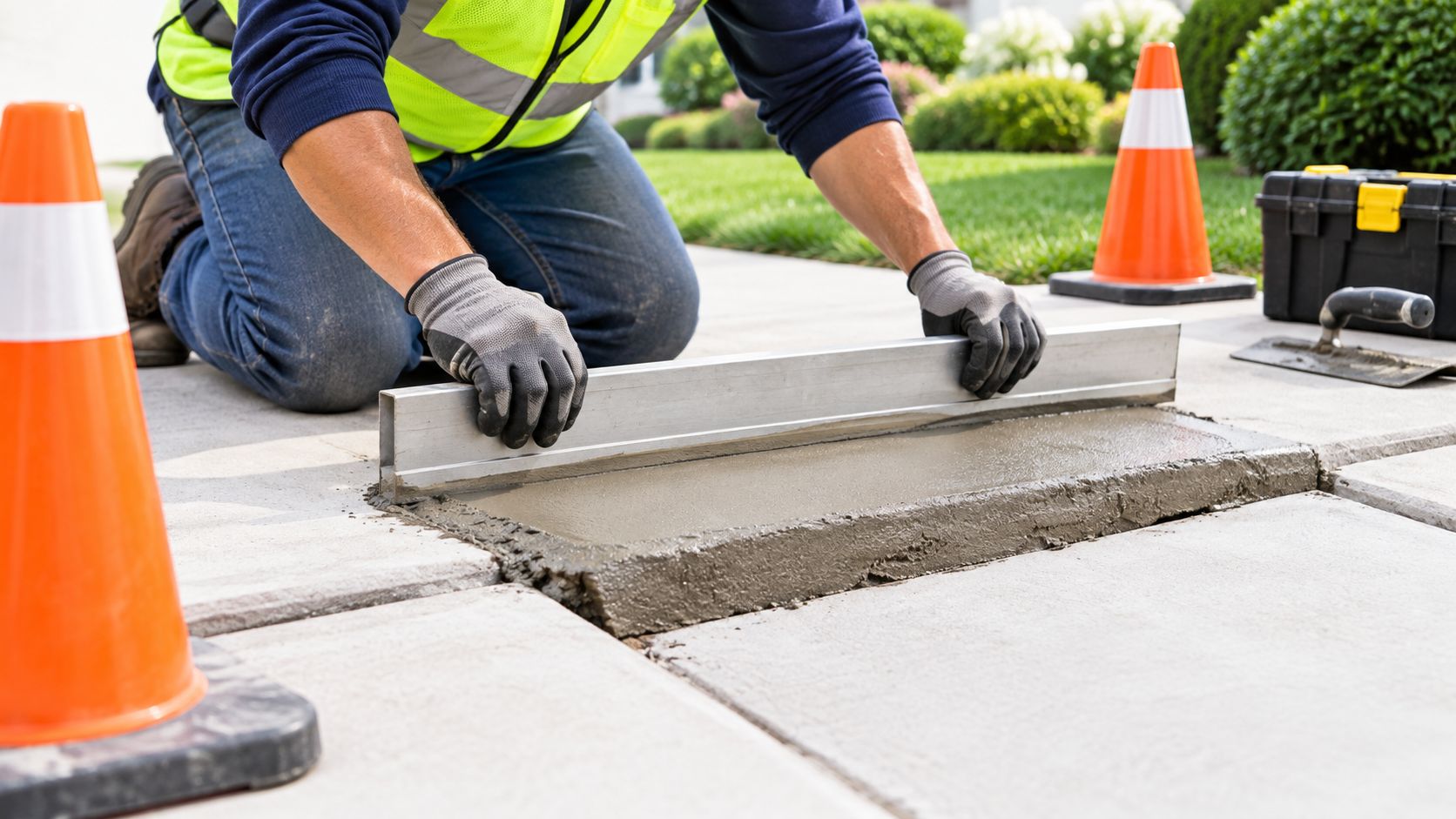
You notice it while carrying groceries across the front walk. One concrete panel sits higher than the next, the edge catches your toe, and suddenly a small crack becomes a fall risk. In Central Florida, heat, heavy rain, tree roots, and changing soil support can turn that seemingly minor defect into a recurring problem for a home, HOA, church, or commercial property.
Learning how to repair sidewalk trip hazard conditions starts with diagnosis, not a grinder or patch bucket. The right remedy depends on whether the slab is raised, settled, cracked, or losing support. It also depends on slope, drainage, accessibility, ownership, and local approval requirements in Marion County, FL, Citrus County, FL, and nearby communities such as Ocala, Dunnellon, Belleview, Crystal River, Inverness, and The Villages.
Table of Contents
- Understanding the Risks of Sidewalk Trip Hazards
- How to Diagnose the Root Cause of Movement
- DIY vs Professional Repair Methods Explained
- Navigating ADA Standards and Local Permits
- When to Call Concrete Experts in Central Florida
- Frequently Asked Questions About Sidewalk Repair
Understanding the Risks of Sidewalk Trip Hazards
A raised sidewalk panel rarely stays a small problem for long. One owner sees a lip at the edge of a driveway and plans to grind it down on Saturday. Another gets a complaint from a resident or visitor and looks for the fastest patch. In Central Florida, that approach misses the bigger issue. The visible edge matters, but the safer repair depends on why the slab moved, whether the walking route still works for all users, and whether the fix will hold through heavy rain, root pressure, and shifting support.
Injury data shows why these defects deserve attention. A national analysis of 2019 Emergency Medical Services data identified 118,520 pedestrian injuries from falls on streets or sidewalks, compared with 33,915 pedestrian injuries from motor-vehicle collisions. The same study also reported earlier survey findings of approximately 518,000 outdoor fall injuries requiring medical attention annually on streets, sidewalks, or related pedestrian areas, and found that 38.4% of pedestrian falls occurred on sidewalks, 21.4% at curbs, and 40.2% in streets (national analysis of pedestrian fall injuries).
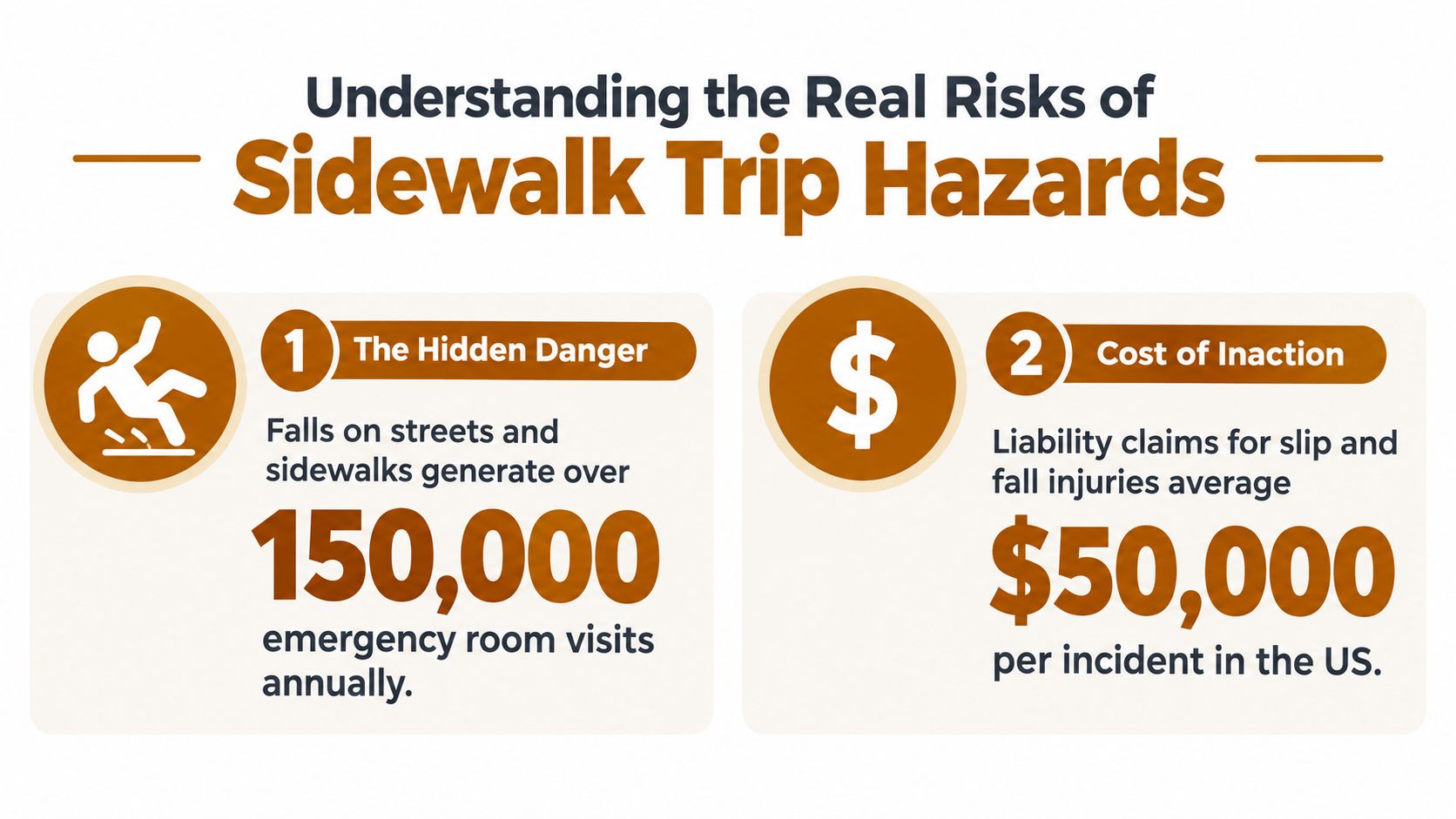
Those numbers do not mean every uneven joint causes a fall. They do show that sidewalk hazards belong on a maintenance and risk-reduction list, not a cosmetic to-do list.
Why Florida conditions keep hazards active
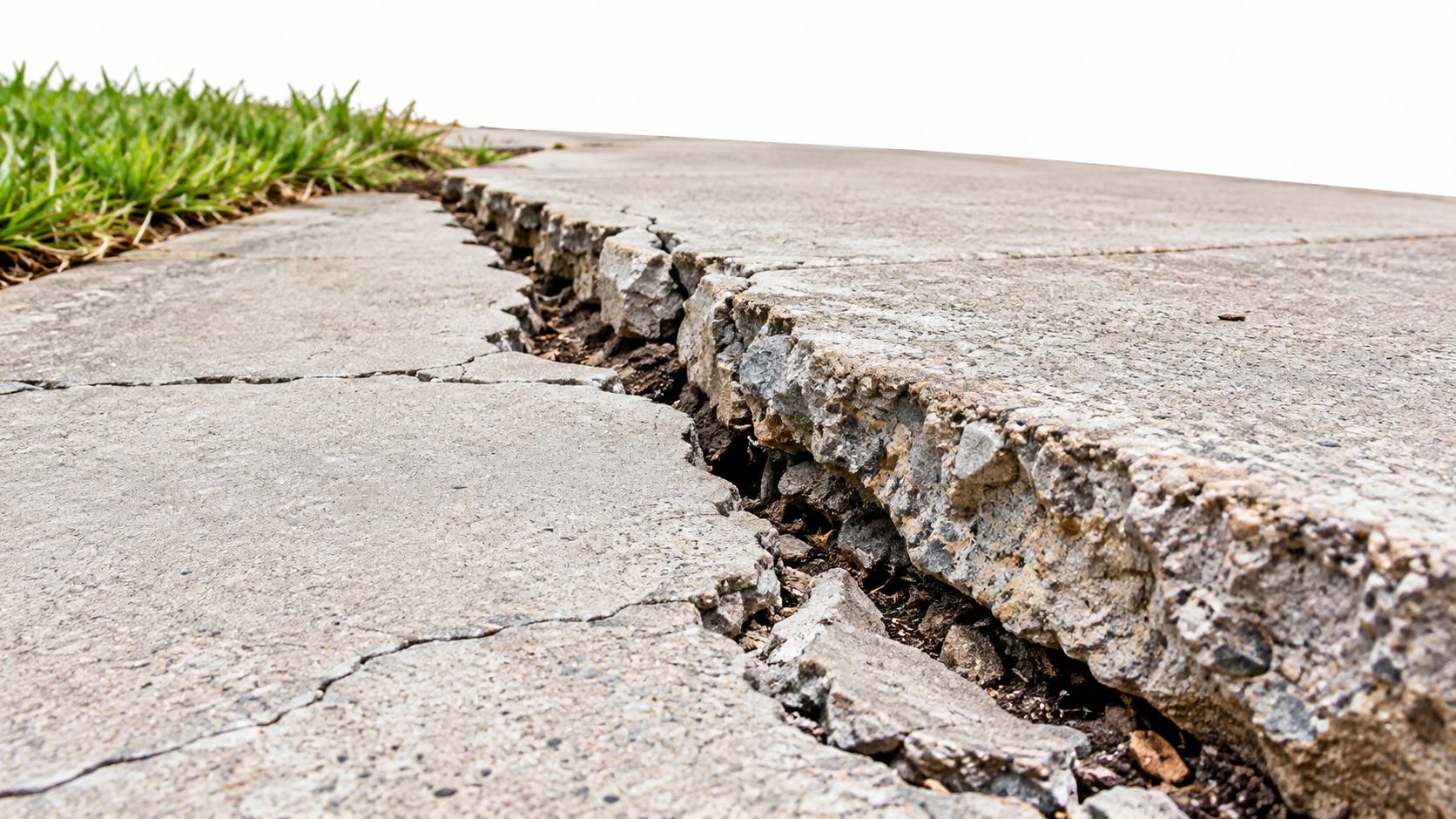
Concrete follows the support under it. If water washes out base material, a panel can settle. If roots grow under the slab, it can lift. If the joint keeps taking water, the edge may reappear even after a quick surface fix. That is why the right method is often dictated less by the crack you see and more by drainage, subgrade condition, tree activity, and slope requirements.
The Federal Highway Administration reported that, among qualifying pedestrian and bicyclist non-collision events, 78% of pedestrian events occurred off the roadway and 58% occurred on sidewalks (Federal Highway Administration pedestrian safety research). For owners in Marion County, Citrus County, and nearby Central Florida communities, that means a lifted or settled panel deserves prompt attention whether it sits at a home entrance or along a busier shared route.
If a walkway needs immediate attention before the permanent repair is scheduled, secure the area, document the condition, and set up clear pedestrian protection. For urgent access issues, property owners can review emergency sidewalk repair services while arranging a lasting fix.
How to Diagnose the Root Cause of Movement
Don't choose a repair method by looking only at the highest corner. Start by recording the defect so the repair addresses the failure rather than its symptom.
Measure the transition first
Lay a straightedge across the two panels. Use a depth gauge or another reliable measuring method to determine the vertical displacement at the worst point. Record the horizontal opening, surface condition, slope, and whether water collects near the joint.
Then walk the surrounding area carefully. A single high edge may be local, but several panels moving in the same direction often point to drainage, roots, settlement, or a weak base.
Check whether the concrete is stable
Press or step near each side of the joint, where safe, and look for rocking or looseness. Inspect cracks for widening, broken corners, exposed aggregate, and loss of section. A sound slab with a limited raised edge may be a candidate for grinding or another controlled edge correction. A cracked or moving panel usually needs more than surface treatment.
Look beneath nearby trees and along downspouts. Roots can push a panel upward, while concentrated runoff can remove supporting material. In Central Florida, the repair team should also consider soil conditions and recent rainfall, especially where a settled slab has dropped beside a stable one.
Practical rule: If the panel still moves after a visible edge is corrected, the hazard wasn't repaired. It was relocated or temporarily concealed.
Match the failure to the remedy
Use the inspection to sort the defect into one of three broad categories:
- Raised and structurally sound: A controlled grinding or cutting method may create a smooth transition if enough slab thickness remains.
- Settled but largely intact: Stabilization or lifting may be considered, but only after checking why the support failed.
- Cracked, displaced, or repeatedly shifting: Removal and replacement is often the more defensible long-term option.
For movement caused by roots, property owners can review sidewalk repair for raised tree roots as a specialized starting point. The important point is that grinding a raised lip won't stop an active root from lifting the panel again, and lifting a settled slab won't correct drainage or subgrade instability by itself.
DIY vs Professional Repair Methods Explained
A homeowner sees a lifted edge and reaches for a grinder or a bag of patch mix. In Central Florida, that shortcut often misses the underlying issue. The visible lip matters, but the repair method should be driven by why the panel moved, whether the slab is still sound, and whether the finished walk can stay safe through heat, rain, roots, and daily foot traffic.
Temporary measures and surface patches
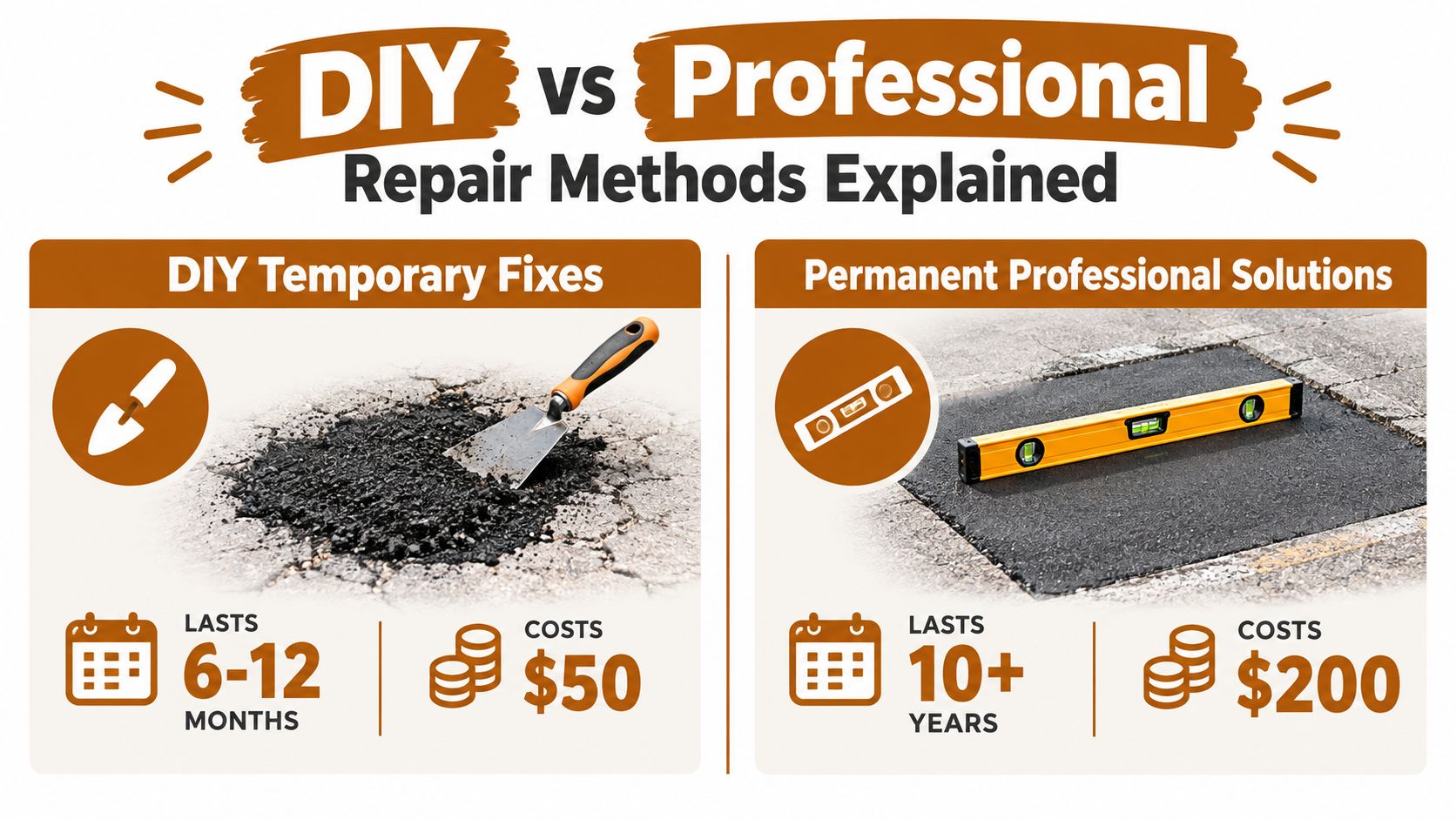
Temporary wedges have their place. If a walkway needs a quick hazard reduction before a scheduled repair, an asphalt or cement ramp can soften the edge for a short period. It is still a stopgap. Sun, runoff, foot traffic, and weak bonding can loosen the material, and once the edge breaks back out, the trip point usually comes right back.
Thin surface patches fail for the same reason. They cover the symptom without giving the concrete enough depth to hold. Federal guidance notes that surface-only patching does not provide a substantial repair and points toward full-depth removal and replacement for failed sections (Federal Highway Administration maintenance guidance). A municipal repair standard is more specific. It requires at least 1 inch of thickness where patching is used, and unsound concrete has to be removed until sound material is exposed (municipal engineering standard for grinding).
Grinding and controlled edge correction
Grinding works on the right slab. It makes sense when one panel has raised slightly, the concrete is still structurally sound, and the height difference is not being driven by active root growth or ongoing displacement. If the slab is cracked through, rocking underfoot, or continuing to move, grinding usually changes the profile without solving the failure.
One municipal engineering standard allows grinding a raised edge up to 1.5 inches if the finished surface is smooth and level and the slab left in place remains at least 2 inches thick. It also prohibits chipping or chiseling the raised edge (municipal engineering standard for grinding). In practice, the finish matters as much as the cut. Too much taper can weaken the edge, and a slick surface can become a slip issue after a Florida rain.
A controlled saw cut or horizontal correction can work in some cases. It still depends on slab thickness, cracking, the cause of movement, and the transition you need to leave behind.
Lifting and full-depth replacement
Settled panels call for a different fix. If the slab is intact and the base failure can be corrected, concrete lifting solutions may restore alignment without removing the whole panel. That said, lifting does not repair broken concrete, and it does not stop recurring settlement if water keeps washing out support below.
Full-depth replacement is the better choice when panels are broken, badly cracked, displaced, or shifting again after prior repairs. The work usually includes removing failed concrete, rebuilding and compacting the base, placing new concrete, finishing the transition correctly, and keeping the area protected during curing.
Professional repair becomes the safer call near public walkways, around active roots, and anywhere the finished surface has to meet accessibility requirements without guesswork.
Navigating ADA Standards and Local Permits
A sidewalk repair can flatten the obvious lip and still leave the walk out of compliance. On Central Florida jobs, that usually happens when someone focuses on the crack or offset and ignores the finished route, especially where rain runoff, root pressure, or driveway tie-ins affect the final slope.
The ADA breaks surface changes into clear categories. A vertical change of 1/4 inch or less may stay vertical. A change greater than 1/4 inch but no more than 1/2 inch must be beveled, with a bevel no steeper than 1:2. The total vertical and beveled change cannot exceed 1/2 inch. Anything greater than 1/2 inch calls for ramp or curb-ramp treatment under the applicable requirements (2010 ADA Standards).
Measure both directions of travel
Visible height difference is only part of the check.
Running slope follows the direction people walk, and accessible routes are limited to 1:20, or 5%. Cross slope runs perpendicular to travel and is limited to 1:48, approximately 2%. The U.S. Access Board also recommends checking cross slope between the outside edges at 10-foot intervals, which matters because a repair that fixes one edge can still leave the panel twisting across the width of the walk (U.S. Access Board slope guidance).
In the field, this is the point where the repair method gets chosen. Grinding may reduce a lip but can leave too much running slope if the panel was heaved by roots. A patch may close a gap and still trap water or create cross-slope problems after the next storm. Measure the whole path of travel, including the transition into a ramp, driveway, landing, or marked crossing, not just the original defect.
Confirm ownership and approval
Before concrete gets cut, confirm who controls the sidewalk. A walk on private property can fall under a different approval process than one in a public right-of-way or easement. Florida law sets minimum standards for public sidewalks, curbs, curb ramps, and related pedestrian facilities, including permanent curb ramps at applicable intersections for wheelchair access (Florida sidewalk and accessibility statute).
Ask the local jurisdiction about permits, pedestrian control, inspection steps, mix and finish requirements, restoration details, and who is responsible for adjacent driveway transitions. Keep photographs, measurements, approvals, invoices, and completion records together.
A quarter-inch reading is not automatic permission for a quick patch. The finished surface still has to be smooth, stable, properly sloped, and accepted by the authority that has jurisdiction over that route.
When to Call Concrete Experts in Central Florida
DIY repair becomes a poor choice when the defect is moving, structurally damaged, or connected to an accessible route. It also becomes risky when the property owner can't verify who controls the sidewalk or what local approval requires.
Use this decision point
Call for a professional evaluation if you see:
- Active movement: The slab rocks, the gap returns, or the height changes after rain.
- Structural damage: Cracks cross the panel, corners are broken, or the concrete is crumbling.
- Environmental pressure: Tree roots, drainage runoff, erosion, or washed-out base material sits below the defect.
- Route sensitivity: The hazard is near a curb ramp, driveway crossing, commercial entrance, bus stop, or other accessible path.
- Repeat repairs: A previous patch or grind failed and the same location is becoming uneven again.
Riverside Sealing & Striping, LLC is a local example of a contractor serving Marion County, Citrus County, and surrounding Central Florida communities. Its concrete work includes sidewalk and walkway repair, full-depth replacement, ADA-related upgrades, and anti-slip surfaces. The same company also handles asphalt sealcoating and parking lot striping, which can help property managers coordinate concrete safety work with broader pavement maintenance.
A sound professional process should include measurements, photographs, cause assessment, base preparation where needed, and a finished-surface check. For a property in Beverly Hills, Hernando, Ocala, or The Villages, that documentation can help an owner or association show what was found, what remedy was selected, and how the pedestrian route was protected during construction.
The cheapest visible treatment isn't always the lowest-cost lifecycle repair. A professional may recommend a localized correction for a stable slab, stabilization for suitable settlement, or removal and replacement when the panel has lost structural integrity. That decision protects the investment by addressing the reason the movement occurred.
Frequently Asked Questions About Sidewalk Repair
How long should a sidewalk repair last in Florida?
There isn't one reliable lifespan for every repair. A stable slab with a correctly prepared surface can perform well, while a patch over active settlement, root pressure, or drainage failure may deteriorate quickly. The cause, material, thickness, base condition, curing, and finished drainage all matter.
Will insurance cover a sidewalk trip-and-fall claim?
Coverage depends on the policy, ownership, circumstances, exclusions, and applicable liability terms. Don't assume insurance will eliminate responsibility for maintenance. Photograph the defect, record the inspection date and measurements, notify the appropriate property manager or owner, and consult an insurance professional about the specific policy.
How should I document the hazard?
Take overview and close-up photographs, include a measurement scale, note the location, record nearby roots or drainage conditions, and document whether adjacent panels rock or show cracking. Keep contractor proposals, permits, repair photographs, and completion records with the property file.
Is grinding cheaper than replacing the panel?
Grinding or controlled edge correction can require less disruption when the slab is sound and the displacement is limited. Replacement is more involved but may be the better value when the panel is cracked, unstable, repeatedly displaced, or losing base support. A price comparison without a condition assessment can lead to repeat work.
Can a homeowner repair a sidewalk in a public easement?
Not necessarily. Confirm ownership and local requirements first. Public-right-of-way work may require approval, pedestrian protection, inspection, and restoration to jurisdiction-specific details, even when the visible defect appears small.
Riverside Sealing & Striping, LLC provides sidewalk evaluations, concrete repair and replacement, ADA-conscious walkway improvements, and related asphalt maintenance for properties in Marion County, FL, Citrus County, FL, and surrounding Central Florida areas. Visit Riverside Sealing & Striping, LLC to request a free, no-pressure consultation and estimate for a durable sidewalk trip-hazard repair.