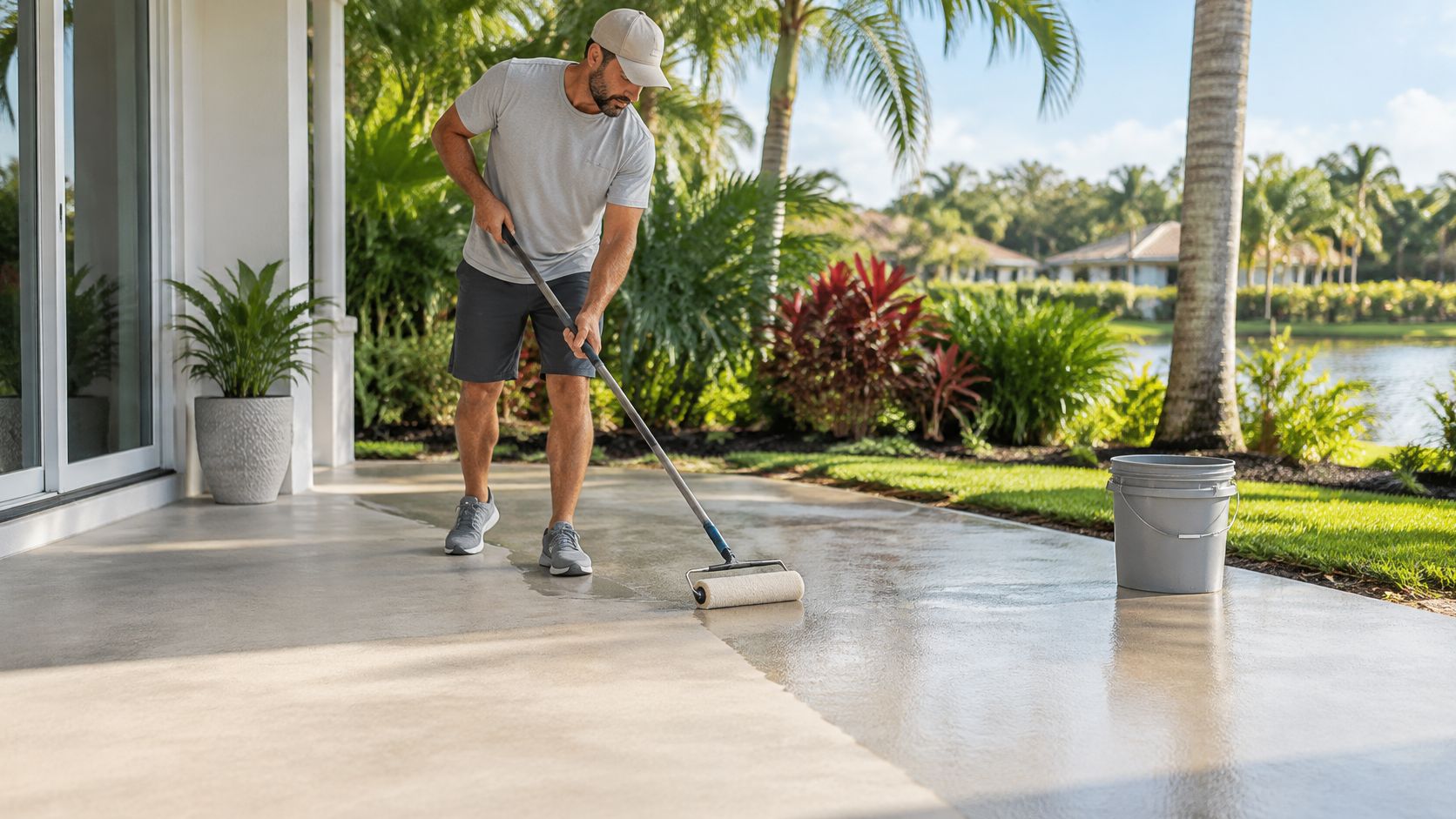
You poured or cleaned your patio, the surface looks pale and dry by noon, and you're ready to roll on sealer this weekend. That's exactly where many Central Florida jobs go wrong. A slab can look dry on top while it's still holding moisture below, and sealing over that moisture is a common cause of whitening, peeling, and blotchy gloss.
Learning how to seal a concrete patio in Marion County, FL and Citrus County, FL starts with readiness, not product shopping. Heat, humidity, afternoon storms, irrigation, and strong UV all change the timing. As Concrete and Asphalt Experts in Marion and Citrus County, we take an informational approach here. Check the slab first, choose the right sealer class second, and apply only inside a workable weather window.
Table of Contents
- Check Your Patio Is Ready Before You Seal
- Choosing Between Penetrating and Film-Forming Sealers
- How to Seal a Concrete Patio Step by Step
- Florida Conditions and Why Sealers Fail
- Maintenance Schedule for a Sealed Florida Patio
- When to Hire a Professional to Seal Your Patio
- Schedule Your Patio Sealing and Get a Free Estimate
Check Your Patio Is Ready Before You Seal
Say a homeowner in Ocala or Summerfield pours a slab in spring and wants to seal it after two weeks because it looks dry. Visual dryness isn't enough. New concrete needs time to cure and release internal moisture, and shaded edges and joints hold dampness longer than the open center. Our guide to how long concrete takes to cure explains that waiting period in more detail.
| Condition | Minimum requirement | How to verify |
|---|---|---|
| New concrete poured recently | At least 28-day cure before sealing | Check the pour date and any curing records |
| Cleaning or rain before sealing | 24 to 48 hours of drying; about 72 hours after heavy rain or washing | Look for dark, damp patches in the shade and along joints |
| Moisture in the slab | No moisture beneath the sheet; don't seal if any appears | Tape 2-mil plastic to the slab on all sides for about 24 hours |
| Air and concrete temperature | Water-based sealers, 45°F to 90°F and rising; some products need 50°F with no drop for 24 hours | Check the patio surface with a thermometer in the morning |
| Relative humidity | Below 70% for proper drying; higher humidity can leave a white or chalky look | Use a hygrometer or check the local forecast |
| Rain and condensation | No rain forecast for about six hours after sealing and no dew forming on the slab | Check the forecast and watch for dew on the slab in the morning |
How to Run the Plastic Test
Tape clear 2-mil plastic tightly on all sides over a representative area, including a shaded spot if you can, and leave it for about 24 hours. Moisture, fogging, or a darkened patch under the sheet means the slab isn't ready.
Temperature matters just as much. The industry application guide for water-based sealers recommends applying when both air and concrete temperatures are at least 45°F and rising, but no higher than 90°F, and notes that relative humidity above 70% can substantially lengthen drying and may leave a white or chalky appearance. That same guidance shows product limits vary, with one sealer requiring at least 50°F and no expected drop below that for 24 hours.
After a summer storm in Dunnellon or Inverness, expect to wait longer than the label's best case. If all six checks pass, move to preparation. If any one fails, wait and recheck in a few days.
Practical rule: Don't seal because the top looks dry. Seal because the plastic test, temperature, humidity, and forecast all pass on the same day.
Choosing Between Penetrating and Film-Forming Sealers
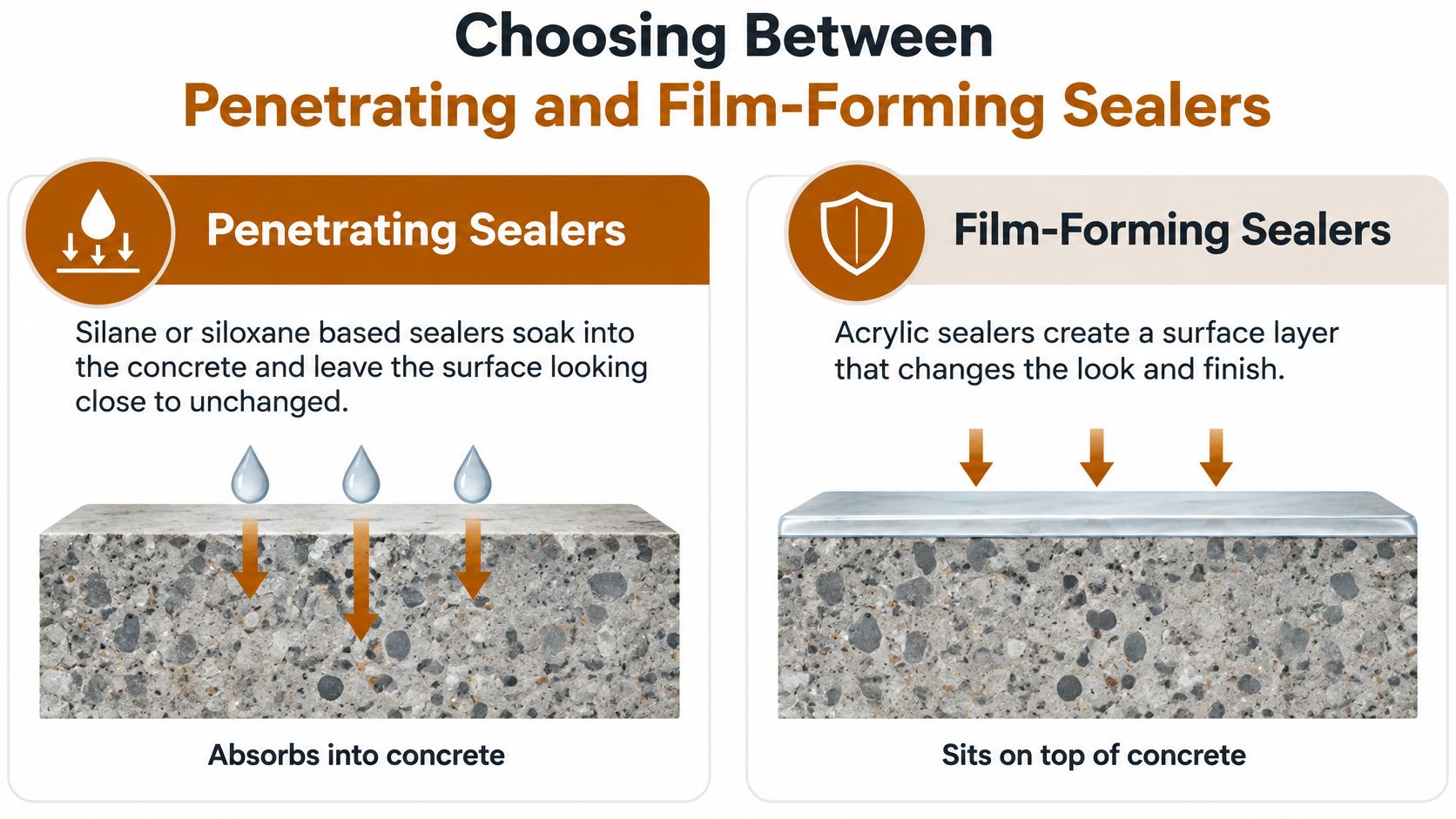
A patio can pass a visual check and still hold moisture. That matters when choosing a sealer: a film-forming product can trap moisture beneath its surface, while a penetrating product leaves the concrete's appearance largely unchanged.
Penetrating sealers, often silane- or siloxane-based, enter the concrete pores. Film-forming sealers, such as acrylic, polyurethane, or epoxy, create a surface layer that can add sheen or color depth.
| Sealer type | Appearance | Moisture vapor handling | Best fit | Maintenance |
|---|---|---|---|---|
| Silane or siloxane penetrating | Nearly invisible, no added sheen | Allows vapor to escape | Exposed patios with rain and irrigation exposure | Follow product guidance |
| Acrylic film-forming | Glossy or satin; can add color depth | Less vapor-permeable than penetrating sealers | Decorative or colored patios with light traffic | Recoat as wear shows; follow product guidance |
| Polyurethane or epoxy film | High gloss, hard surface | Very low; can trap moisture | Covered or high-wear areas where moisture is controlled | Follow product guidance; may be unsuitable for exposed slabs |
What the Testing Means for a Patio
A Washington State University study of five film-forming sealers tested concrete through 15 freeze-thaw and wet-dry cycles in chloride solutions. Treated concrete had an initial water-absorption rate at least 68% lower than untreated concrete. These results show that sealers can slow water entry, but they do not establish how long a patio will last. Concrete condition, product chemistry, and application all affect performance.
For an exposed patio in Central Florida, rain, irrigation, and humidity make breathability an important consideration. A penetrating sealer is a practical starting point if the slab is ready and the goal is to keep its natural appearance. An acrylic film may suit decorative or colored concrete with light traffic. A harder film system may suit a covered, high-wear area, provided moisture is controlled.
This video shows how sealer choice and surface condition relate.
How to Seal a Concrete Patio Step by Step
Good sealing is mostly preparation. The application itself is straightforward if the slab is clean, sound, porous, and dry.
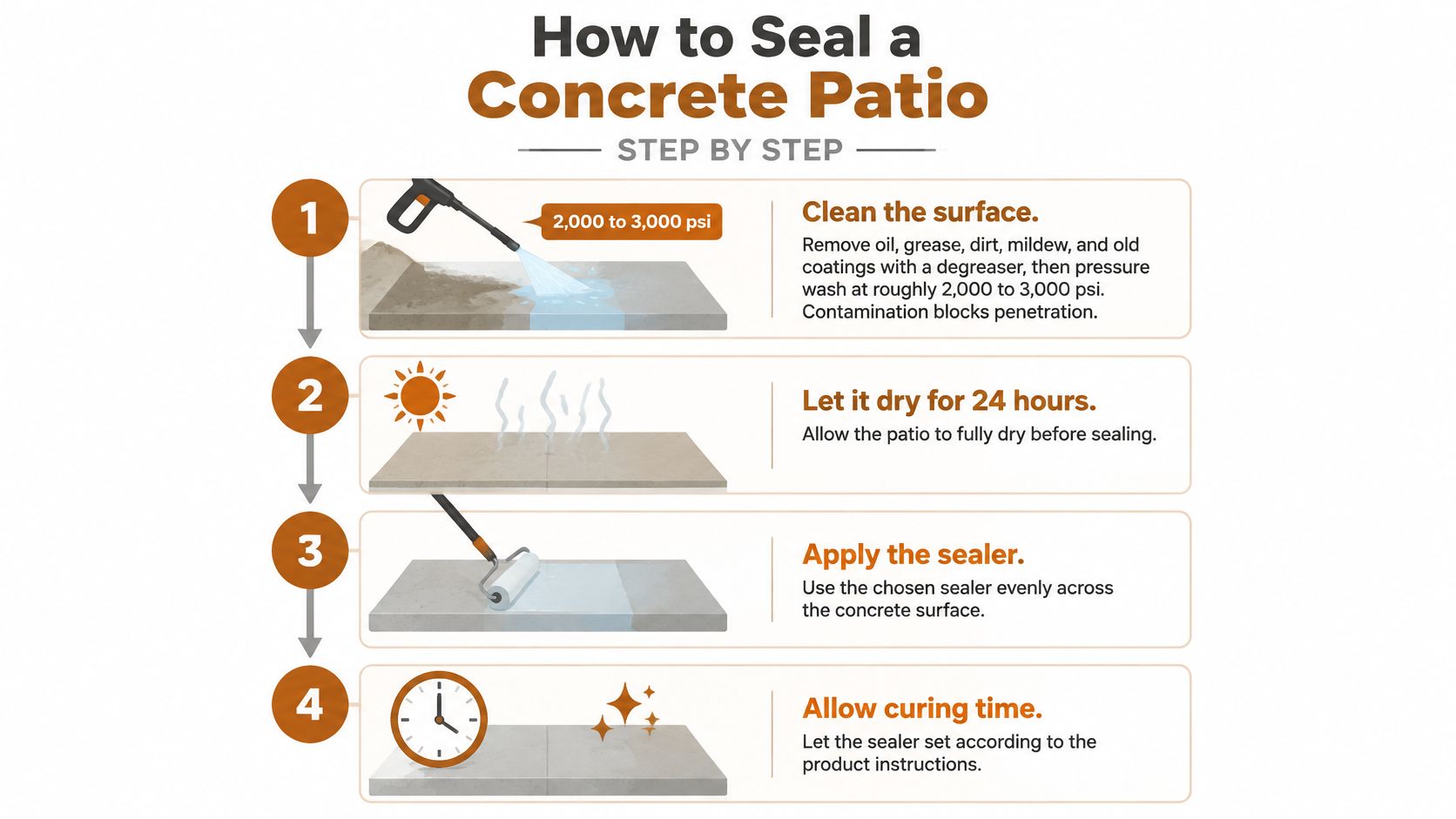
This process graphic summarizes the order before you work through the detailed steps.
Preparation Steps
Clean the surface thoroughly. Remove oil, grease, dirt, mildew, curing compounds, and old coatings with a degreaser and scrub brush, then rinse. The transportation research guidance on concrete sealer preparation describes pressure washing at approximately 2,000 to 3,000 psi, followed by thorough drying, with at least 24 to 48 hours of air drying after cleaning. Contamination blocks penetration, so don't rush this step.
Let the patio dry completely. Use the longer drying period after pressure washing or rain. Shaded edges, joints, and porous repair areas can stay damp after the center looks ready.
Repair cracks and spalls. Fill defects with a compatible patching material and let repairs cure as directed. Then blow or vacuum cracks and pores clean. Sealing over dust weakens adhesion and leaves loose particles trapped under a film.
Run a small absorption test. Apply water or test sealer in an inconspicuous corner. If it beads and won't absorb, the concrete may be dense, sealed already, or still contaminated. Don't cover the whole patio until you know why.
Confirm dryness again. Repeat the plastic test if rain, washing, irrigation, or heavy dew occurred after your first check. A passed test from several days ago doesn't prove today's slab is dry.
Application and Cure
Apply in manageable sections. Use a low-pressure pump sprayer or a roller suited to the product, and keep a wet edge to avoid lap marks. Apply thin, even coverage at the rate on the data sheet. Different areas of the same patio can absorb at different rates, so don't force one heavy coat everywhere.
Redistribute puddles right away. Excess material can create blotchy gloss, slippery spots, or a weak surface film. Back-roll pooled areas and remove material the concrete can't absorb.
Keep everything off the surface. Keep furniture, pets, irrigation, and foot traffic off the patio until the sealer has penetrated or cured according to its data sheet. Surface dry doesn't always mean fully cured, so use the product instructions to set the return-to-use time.
Record the job. Write down the weather, product name and batch, dilution if any, coverage rate, start time, and date. Those notes make the next recoat decision much easier.
Thin, even coats beat one heavy coat. If the sealer is puddling, you've already applied more than that section can use.
A good result looks even, with no glossy patches, sticky areas, or white haze. A penetrating sealer may leave the color nearly unchanged, while a film-forming product can darken the surface and add sheen. After curing, water should sheet or bead more consistently instead of soaking in and darkening the concrete right away.
Florida Conditions and Why Sealers Fail
Central Florida timing is tight. Summer surface temperatures in Ocala, Belleview, or The Villages can pass the ceiling listed for many water-based products, so early morning is usually safer than midday. Humidity slows drying, afternoon storms in Silver Springs and Summerfield reload the slab with moisture, and nighttime condensation can undo a dry afternoon.
Coastal humidity in Crystal River and Homosassa adds moisture and salt exposure, which favors a breathable system. UV fades stamped and colored patios, so choose a UV-resistant product where appearance matters. Pool decks and busy patios in Lecanto, Beverly Hills, and Hernando also wear faster at doors, steps, and grill areas.
The Moisture Problem Under the Film
The New York State DOT penetrating sealer specification commonly requires at least 50°F during application and drying, prohibits application during wet weather, and requires no adverse weather for roughly six hours after placement. It also identifies low-pressure spraying at about 10 to 25 psi or roller application for horizontal concrete, with puddling redistributed or removed.
The ASCC sealer selection and application guide identifies moisture-vapor transmission as a failure mechanism and recommends considering vapor-permeable or penetrating systems when moisture cannot escape elsewhere. That matters because an impermeable film over damp concrete can trap moisture and cause blistering, whitening, peeling, or delamination.
| Symptom | Likely cause | Fix |
|---|---|---|
| Whitening, haze or chalky look | Sealing in high humidity or on a damp slab | Let the surface dry, check conditions, and reapply under the readiness limits |
| Peeling, flaking or blistering | Trapped moisture or contamination under a film | Remove loose film, correct the water source, then use a breathable penetrating sealer |
| Blotchy or uneven gloss | Puddling or uneven absorption across the slab | Redistribute with a roller and apply in thinner, even coats |
| Slippery surface | Excess film left on the surface | Remove the excess as the product directs and reduce the application rate |
| Water stops beading quickly | Under-application, dust, or a dirty surface | Clean the patio thoroughly and reapply to the product's coverage rate |
Surface dampness from a rinse usually clears with sun and air movement. Internal moisture keeps returning under the plastic test. If peeling recurs, remove loose film, fix the water source, such as a downspout, poor grade, or irrigation spray, and switch to a penetrating sealer next time.
Maintenance Schedule for a Sealed Florida Patio
Once the sealer has fully cured, keep maintenance simple and consistent. Our notes on concrete patio maintenance fit the same rhythm described here.
- Monthly rinse and clear. Hose off grit and remove leaves, since trapped debris holds moisture against the surface.
- Yearly inspection. Check the door threshold, grill area, pool edge, and shaded joints that stay damp longer than the open center.
- After the rainy season. Inspect for whitening, peeling, dark damp patches, and new cracks after repeated afternoon storms.
Test beading after rain. If water still beads or sheets, protection remains. If it soaks in and darkens the surface quickly, protection is fading.
Recoat only when wear shows or water stops beading, and follow the product data sheet. Confirm moisture and weather again before every recoat. Note any new irrigation line or downspout change, since a new moisture source can cause failures months later. Record each recoat date, product, and weather so decisions rest on evidence, not memory.
When to Hire a Professional to Seal Your Patio
A patio that still holds moisture can shed a new sealer, so check readiness before choosing a product or booking an application. Hire a professional if moisture tests keep failing and the source is unclear, or if heaving, wide cracks, or spalling may need repair first. Peeling from an earlier sealer can also require stripping. Stamped or decorative concrete calls for care because the wrong product may change its color, gloss, or slip resistance.
Large patios, narrow weather windows, and grading or drainage problems can make professional help worthwhile. Use a concrete patio contractor when you need help assessing the slab, preparing its surface, or selecting a suitable sealer.
On a site visit, ask specific questions:
- Moisture testing: How will the slab be tested, and which areas will be checked?
- Product choice: Which sealer type suits the patio, and why?
- Weather window: What temperature, humidity, and rain limits will guide the application?
- Repairs and access: What needs attention before sealing, and when can furniture return?
Riverside Sealing & Striping, LLC provides concrete and asphalt services, including patios, driveways, sidewalks, asphalt sealcoating, and striping. A property owner can review both needs with one local team. A professional is worth considering when diagnosing the moisture, arranging repairs, or choosing a product carries more risk than applying the sealer itself.
Schedule Your Patio Sealing and Get a Free Estimate
A patio that still holds moisture is a common cause of sealer failure. If the slab fails a readiness check or the moisture source is unclear, resolve that problem before sealing. A coating will not fix poor drainage or an irrigation leak.
Riverside Sealing & Striping, LLC offers a free consultation and estimate for concrete, asphalt sealcoating, or striping projects. The family-owned company is made up of 3rd- and 4th-generation professionals and serves Dunnellon, Ocala, Crystal River, and surrounding Central Florida areas. A no-pressure consultation can help determine whether the patio is ready for sealer or needs repairs first.
Riverside also handles concrete patios, driveways, and sidewalks, along with asphalt sealcoating and parking lot striping. That means one contractor can review the whole property and explain the work with reliable scheduling and clear timelines.
Ready to discuss your patio? Riverside offers free, no-pressure consultations and professional evaluations across Marion and Citrus counties. Visit Riverside Sealing & Striping, LLC to request an estimate.