
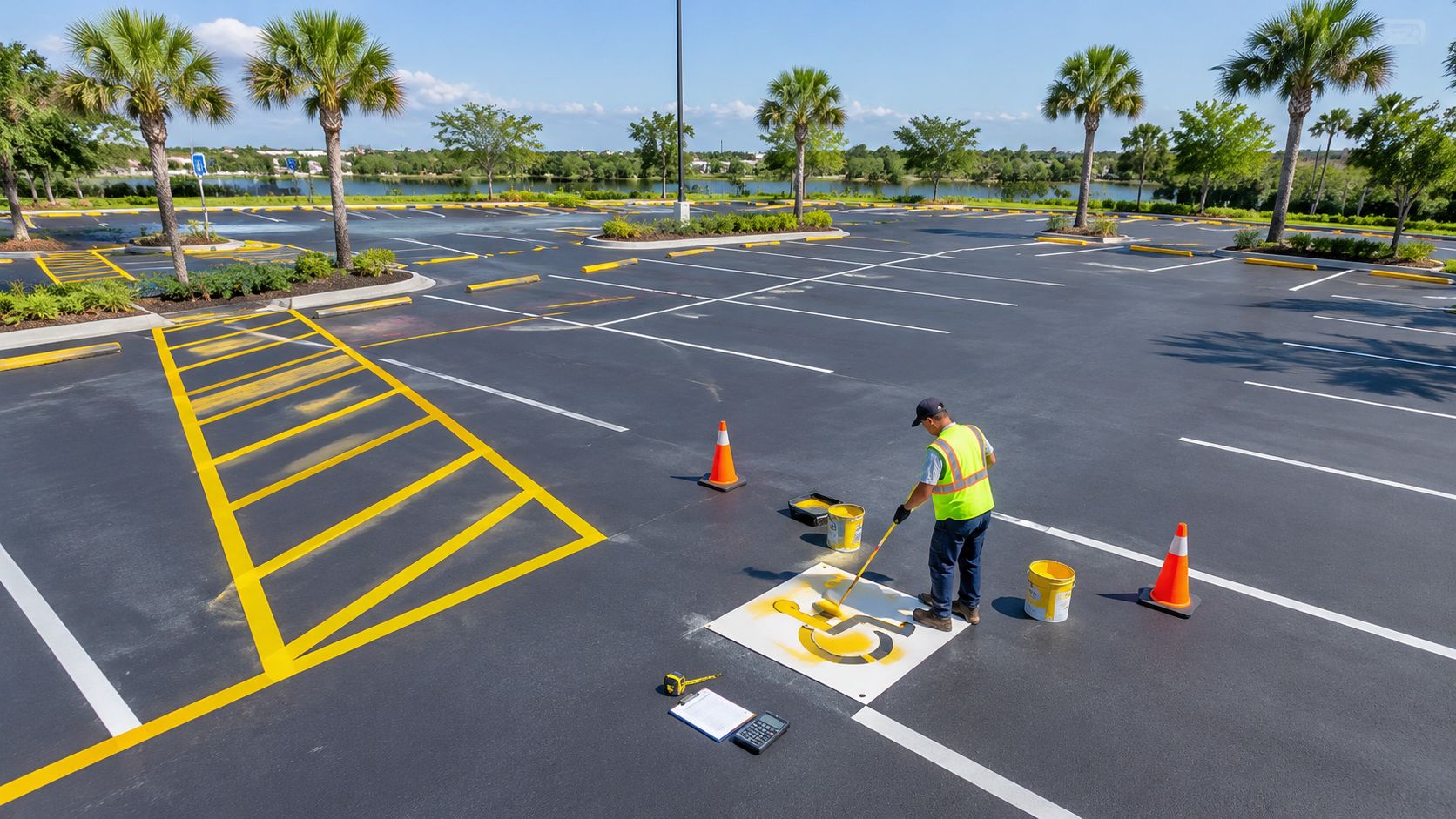
For small-to-mid parking lot restriping in Central Florida, budget $500 to $1,200 total, with straightforward work commonly priced at $0.20 to $0.50 per linear foot and $5 to $20 per stall. The final line striping cost depends less on raw footage than many owners expect, because preparation, mobilization, traffic control, layout complexity, and specialty markings can dominate a small project.
A property manager in Ocala can request a simple repaint and still receive a quote that feels surprisingly high. The lot may have only a modest number of spaces, but the contractor still needs to dispatch a crew, transport equipment, prepare the pavement, protect pedestrians and vehicles, and lay out every marking accurately. That's why comparing only the per-stall rate often produces the wrong conclusion.
For properties in Marion County, FL, Citrus County, FL, and surrounding Central Florida communities, a transparent estimate should show what you're paying for and which choices affect durability. This guide explains the practical drivers behind parking lot striping cost, including the tradeoffs between standard paint and thermoplastic, the impact of Florida weather, and the questions to ask before approving a proposal.
Table of Contents
- Introduction to Line Striping Cost
- Understanding Cost Factors
- Pricing Benchmarks for Line Striping Cost
- Local Pricing Examples and Climate Considerations
- Budgeting Strategies and Lifecycle Tradeoffs
- Getting Accurate Quotes from Central Florida Contractors
- Service Connection and Conclusion
- FAQ
Introduction to Line Striping Cost
An Ocala property manager recently reviewing a parking lot refresh may start with a straightforward question: how much should repainting the lines cost? The existing layout appears usable, the stalls are already marked, and the work seems limited to spraying over faded paint. Then the proposal arrives with separate charges for mobilization, cleaning, old-line removal, accessible markings, and traffic control.
That sticker shock usually comes from treating the project as paint only. A contractor is pricing the complete operation, not just the visible stripe. Even a small lot can require careful measurements, pavement preparation, equipment setup, and scheduling around tenants, customers, residents, or church activities.
Practical rule: A useful quote explains the scope behind the price, not just the final total.
Central Florida conditions make this especially important. Strong sun, UV exposure, heavy rain, vehicle traffic, and surface contamination all affect how well markings adhere and how long they remain visible. A low initial bid may not be the lowest long-term cost if the markings fade quickly or need frequent disruption for repainting.
Whether the property is in Ocala, Dunnellon, Belleview, Silver Springs, Summerfield, or The Villages, the budgeting process should begin with a site-specific breakdown. The same approach applies in Citrus County, including Crystal River, Homosassa, Inverness, Lecanto, Beverly Hills, and Hernando.
Understanding Cost Factors
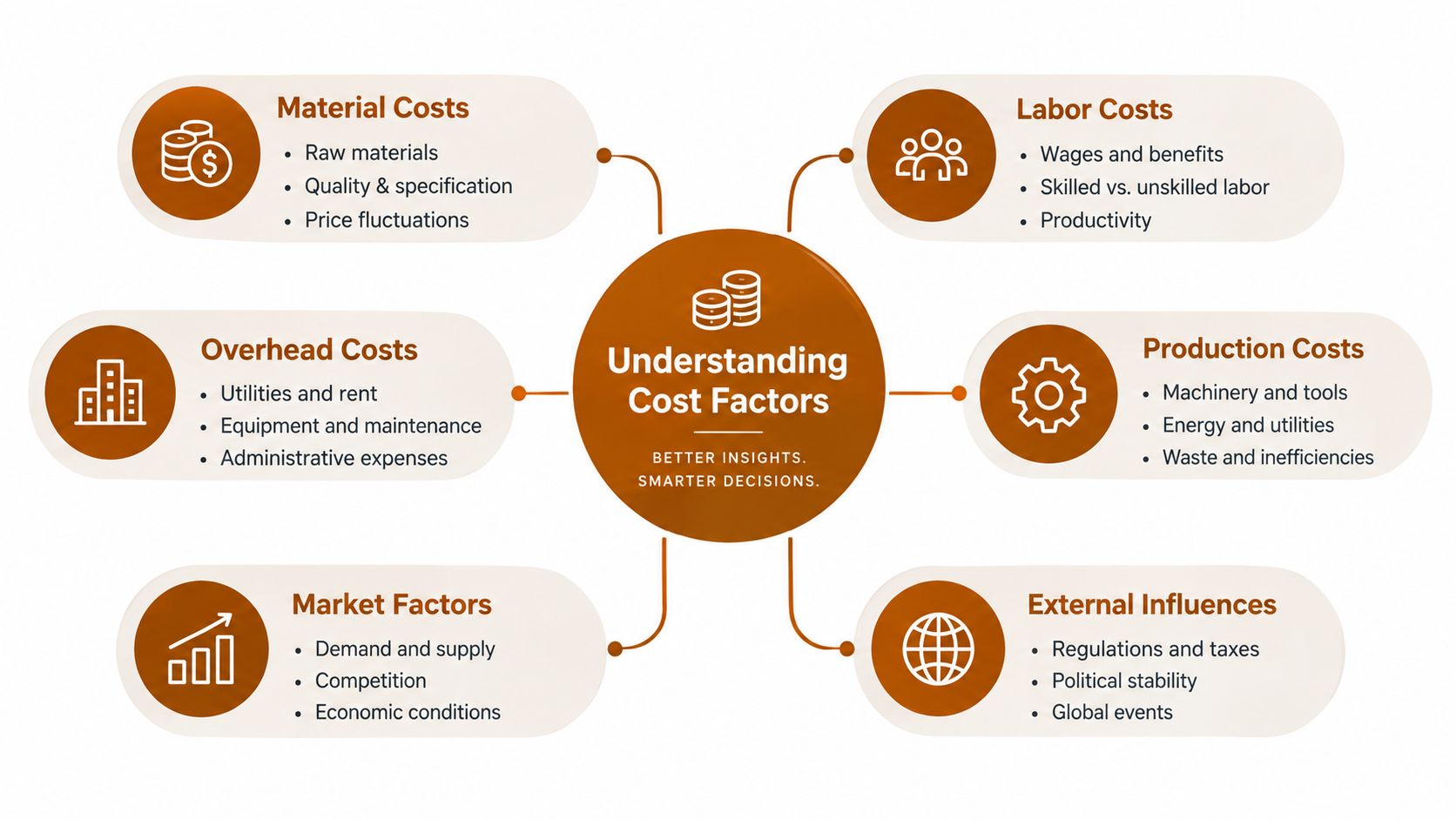
Line striping cost comes from several distinct work items. The most important are material selection, surface preparation, coat requirements, layout complexity, and specialty markings, particularly accessible stalls and access aisles.
Material and pavement preparation
Independent cost guides place standard 4-inch waterborne paint at about $0.15 to $0.60 per linear foot, while thermoplastic can run about $0.60 to $2.50 per linear foot before traffic control or removal costs, as detailed in this comparison of striping costs by surface and material. Thermoplastic costs more because it's intended for demanding applications where durability, visibility, or service life matters.
The pavement itself also changes the estimate. Clean, sound asphalt may need only basic sweeping and preparation. Oil contamination, dirt, loose aggregate, or failing paint can require more labor before new markings will bond properly. Painting over flaking lines doesn't solve the underlying problem. It creates a weak surface that can make the new stripe look uneven and fail prematurely.
Coats and layout complexity
A straightforward restripe usually follows the existing layout. A new layout requires measurement, chalking, alignment checks, and decisions about stall geometry, travel lanes, arrows, stop bars, and fire-lane markings. Angled stalls and irregular drive aisles take more planning than a uniform row of standard spaces.
The number of coats depends on the material, pavement condition, color, and required visibility. A contractor should identify the specified material and application method rather than promising that the lines will be “fresh.”
ADA and specialty markings
Accessible parking requires more than a standard stall line. The scope may include an accessible symbol, access aisle, directional signage coordination, and other layout details. Pricing guides commonly separate these items from ordinary striping, and new-layout work with ADA markings, arrows, and stencils can run about $25 to $35 or more per stall, according to ADA parking lot striping guidance.
Accessible spaces, crosswalks, arrows, curb markings, and custom stencils increase labor because each requires positioning and masking or stencil work. A reliable quote lists these elements separately so the owner can see whether the total reflects necessary compliance work or optional appearance upgrades.
Pricing Benchmarks for Line Striping Cost
Contractors commonly use three pricing methods: per linear foot, per stall, or a flat project minimum. Each method can be reasonable, but each tells you something different about the scope.
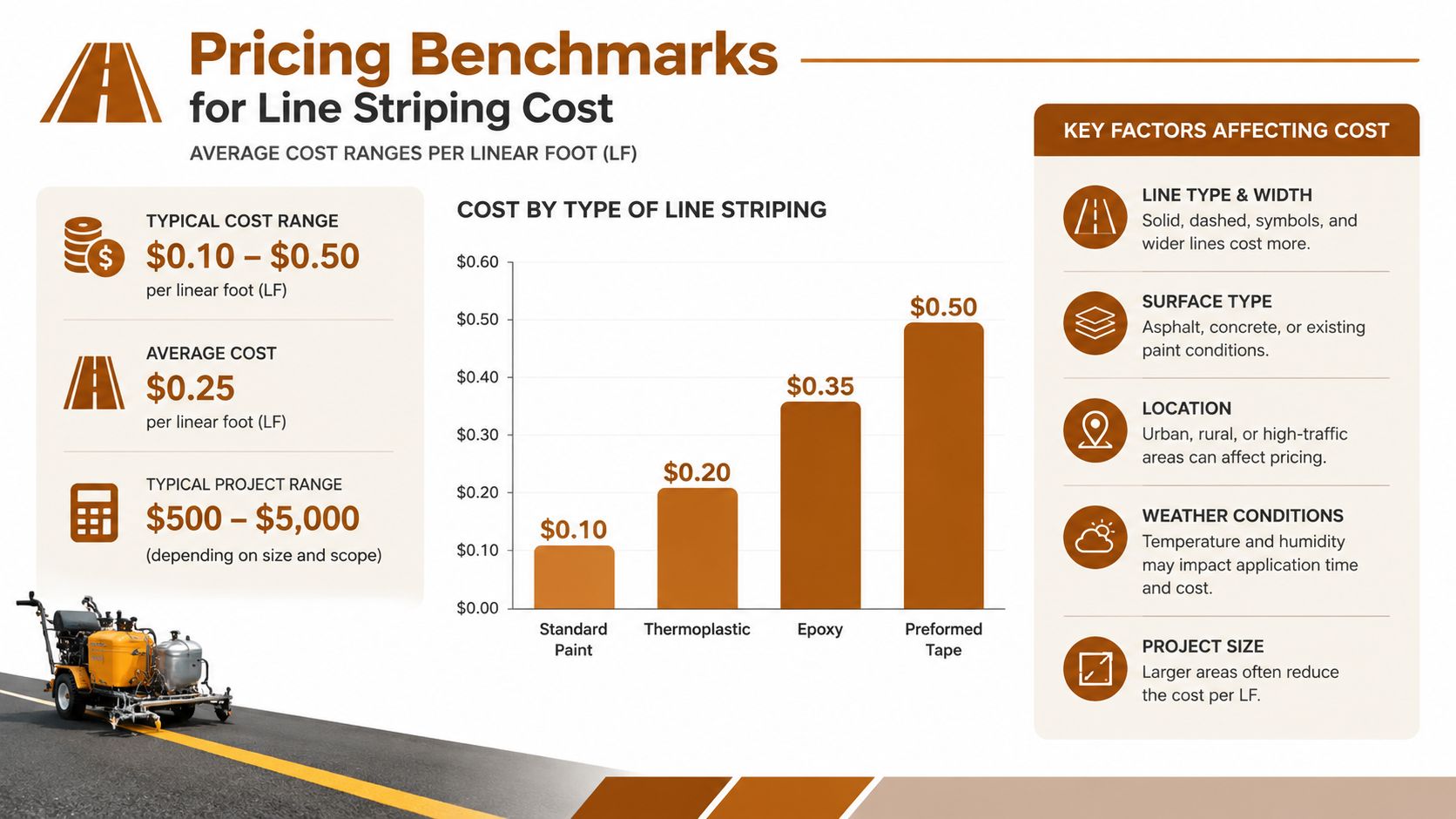
Standard jobs generally fall between $500 and $1,000, with straightforward 4-inch line work at $0.20 to $0.50 per linear foot and complex scopes reaching about $1.00 per linear foot, based on this 2026 line striping pricing benchmark. The broader planning range for a small-to-mid lot can reach $1,200 when preparation, access, traffic control, or specialty work is included.
Typical Line Striping Rates
| Service | Rate |
|---|---|
| Standard 4-inch line work | $0.20 to $0.50 per linear foot |
| Complex or specialty line work | Up to about $1.00 per linear foot |
| Standard waterborne paint | $0.15 to $0.60 per linear foot |
| Thermoplastic | $0.60 to $2.50 per linear foot |
| Parking lot restriping | $500 to $1,000 for standard jobs |
| Small-to-mid project planning range | $500 to $1,200 |
| Standard striping by stall | $5 to $20 per stall |
Per-linear-foot pricing works well when the plan includes long lane lines, unusual geometry, or a new layout. It accounts for the actual amount of marking material and labor. Per-stall pricing is easier for a conventional restripe, but it can hide the cost of arrows, accessible spaces, crosswalks, curbs, or removal work.
Flat pricing becomes common when the job falls below a contractor's practical minimum. A crew still has to travel, load equipment, set up, and coordinate access, whether the lot has a few spaces or a much larger number. On a larger project, fixed costs spread across more markings. On a small project, they weigh heavily against each stall.
That difference explains why two properties with similar-looking layouts can receive different quotes. One may be ready for a quick restripe during an open work window. The other may require pressure washing, removal of old lines, tenant coordination, and controlled access during business hours.
Local Pricing Examples and Climate Considerations
A property manager in Dunnellon may see a compact commercial lot where faded lines are still visible but access aisles and directional markings have nearly disappeared. In Summerfield, an HOA may need a refresh that coordinates with resident traffic and common-area access. In The Villages, a retail or community property may require clear markings without disrupting a steady flow of vehicles.
Those projects look different on paper, but the same cost lesson applies: the visible line footage isn't the entire job. A contractor must evaluate pavement condition, existing paint, drainage, traffic patterns, and the work window before giving a dependable price. A site with clean asphalt and a simple existing layout can be efficient. A site with oil stains, faded overlapping layouts, or difficult access needs more preparation.
Why Florida weather changes the decision
Central Florida's heat and UV exposure can weaken painted visibility over time. Sudden rain can interfere with application timing and contribute to surface contamination. Repeated vehicle movement adds abrasion, especially at entrances, stop bars, loading areas, and turning zones.
A cost guide reports that local property managers often find repaint cycles shorten by 20% to 30% when striping isn't specified to handle UV and rain load, as noted in this parking lot striping cost guide. The practical implication is simple. A bid should identify the product and application conditions rather than treating every paint option as interchangeable.
Florida-specific observation: A stripe that looks sharp on completion day still needs the right pavement temperature, a clean surface, and enough dry time to perform properly.
Timing and access
Weather affects scheduling, but so does property use. A contractor may need to phase work around shoppers, residents, employees, deliveries, or weekend events. Night work, cones, temporary closures, and return trips can increase the total even when the marking plan itself is uncomplicated.
Owners should ask whether the quote assumes unrestricted access. If vehicles remain in the lot, the crew may need to protect wet markings, adjust the work sequence, or return for missed areas. Those operational details matter in Ocala and throughout Marion County, just as they do in Crystal River, Inverness, and other Citrus County communities.
The most accurate local budget includes both the physical scope and the conditions under which the crew must complete it. That's the difference between a useful estimate and a low number that changes after work begins.
Budgeting Strategies and Lifecycle Tradeoffs
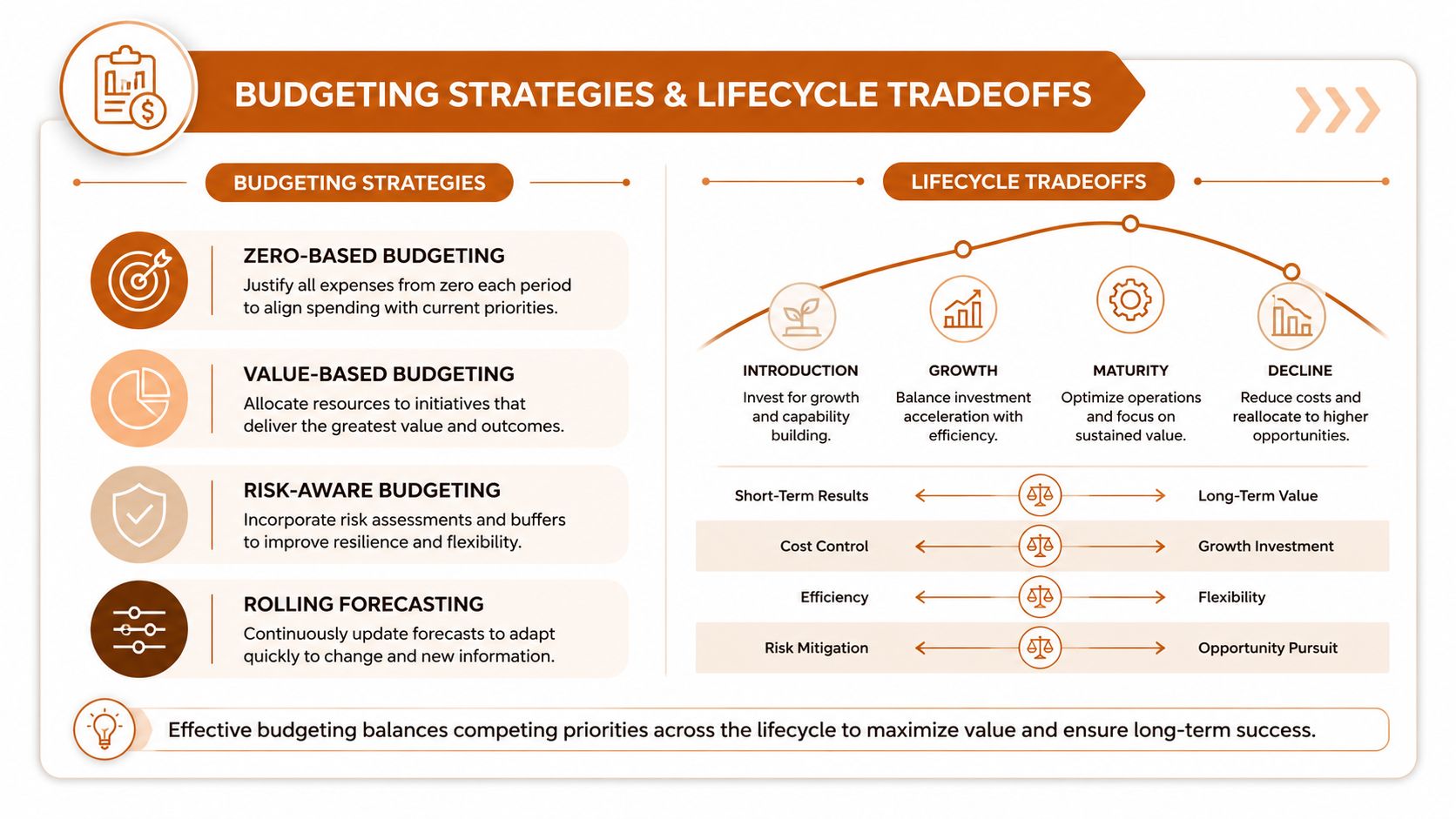
The cheapest material is not automatically the cheapest ownership decision. Paint usually offers the lower starting price, while thermoplastic carries a much higher unit cost but may reduce how often the property needs another striping operation.
Thermoplastic markings can cost 4 to 10 times more per linear foot than paint, but they often last 3 to 7 years, which can reduce repaint cycles and overall lifecycle expense, according to this transportation research on pavement-marking costs. The right choice depends on traffic, marking purpose, pavement condition, appearance expectations, and how disruptive future work will be.
A practical five-year comparison
Suppose an owner is choosing between a lower-cost paint system and thermoplastic for a busy entrance, loading area, or highly visible commercial section. The paint option may require more frequent repainting during a five-year planning period, while thermoplastic may require fewer interventions.
The comparison should include more than material:
- Installation: Compare the complete installed price, including preparation and mobilization.
- Repainting: Estimate how often the selected material may need renewed under the site's traffic and weather exposure.
- Downtime: Account for closures, cones, customer inconvenience, and coordination with tenants.
- Visibility: Consider whether worn markings create confusion or weaken pedestrian and vehicle guidance.
- Compliance: Give accessible spaces, access aisles, and safety markings priority over decorative upgrades.
Public-sector life-cycle analysis also shows that marking cost changes with type and film thickness. One NCDOT analysis listed a 4-inch, 90-mil marking at about $0.61 in a specific analysis, illustrating why a material specification can change bids, as discussed in this private-road striping cost analysis.
A durable material can make sense in high-traffic areas, but it isn't a universal answer. Applying a premium system to failing asphalt won't repair the pavement beneath it. If the surface needs asphalt maintenance, crack treatment, or reconstruction, those needs should be addressed before the final markings are installed.
Budgeting principle: Compare cost per service period, not just cost on the day the crew arrives.
For a lightly used private lot, quality waterborne paint may be sensible. For a commercial entrance, truck path, or marking that must remain highly visible, a higher initial investment may be easier to justify when future disruption carries a real operational cost.
Getting Accurate Quotes from Central Florida Contractors
A useful quote should let you compare contractors on the same scope. If one proposal includes cleaning and traffic control while another lists only paint and labor, the lower total doesn't represent a true bargain.
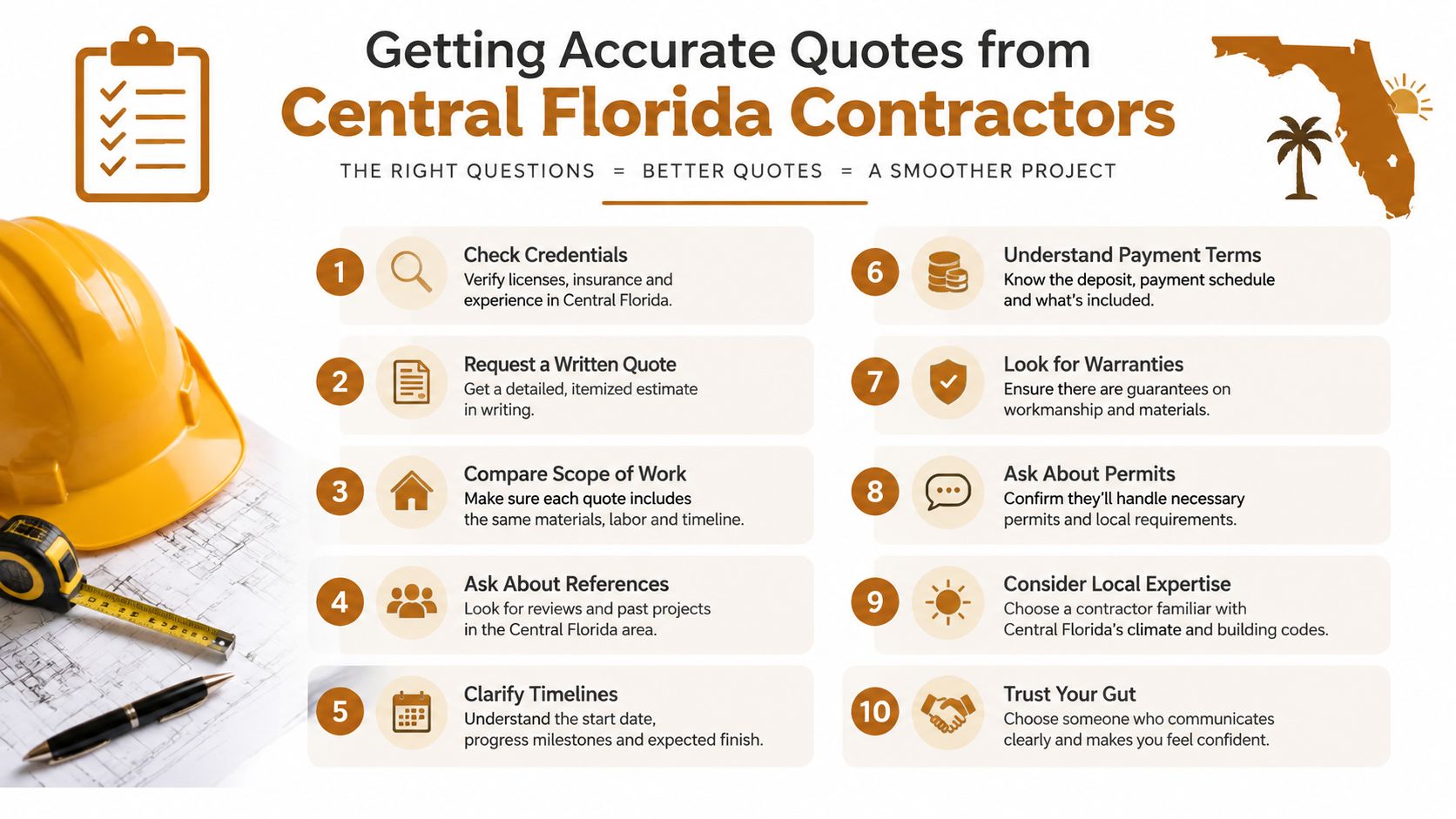
Ask for a written scope
Start by giving each contractor the same information:
- Identify the work type. State whether the project is a restripe of the existing layout or a new layout.
- Confirm the material. Ask for the paint or thermoplastic specification, color, line width, and application method.
- List specialty items. Count accessible spaces, access aisles, arrows, crosswalks, fire-lane markings, curb paint, and custom stencils.
- Describe pavement preparation. Ask whether sweeping, pressure washing, oil treatment, grinding, or old-line removal is included.
- Clarify mobilization. Find out whether the estimate includes the trip, equipment setup, minimum charge, and return visits.
- Discuss traffic control. Confirm who supplies cones, barricades, attendants, closures, and phasing.
- Set the work window. Daytime, nighttime, weekends, and occupied properties can require different coordination.
- Request a completion plan. Ask how the crew will protect wet markings and reopen the lot.
- Confirm documentation. Request marked-up photos or an as-built plan when the layout is complex.
- Ask about workmanship coverage. The proposal should state what happens if adhesion, visibility, or workmanship problems appear.
The parking lot striping process guide can help owners understand why measurement, surface preparation, layout control, and application sequence belong in the conversation.
Watch for small-job minimums
Small lots often carry a disproportionate share of fixed costs. One cost guide notes that hidden mobilization, preparation, and traffic-control charges can push a 10-stall job well over $1,200, even when its raw line footage is modest, as explained in this parking lot striping cost breakdown.
That doesn't automatically mean the contractor is overcharging. It means the owner should see the components. Ask whether the price includes pavement cleaning, old-line removal, access coordination, and specialty markings. A detailed proposal protects both sides because the contractor can price the actual conditions and the owner can compare equivalent work.
A site visit is more valuable than a guess based on stall count alone. Photos, measurements, pavement observations, and a discussion of access can reveal issues that satellite images or a short phone description miss.
Service Connection and Conclusion
Professional striping makes sense when the lot serves customers, residents, employees, students, worshippers, or pedestrians and the markings affect safe movement. It's especially important when the project includes accessible spaces, access aisles, crosswalks, fire lanes, directional arrows, or a layout change.
For properties in Marion County, FL and Citrus County, FL, Riverside Sealing & Striping, LLC provides a local option for parking lot striping, ADA-related markings, asphalt sealcoating, and concrete work. The company is licensed and insured, offers reliable scheduling, and evaluates the pavement and layout before preparing a proposal. Its broader work includes concrete driveways, patios, slabs, sidewalks, and asphalt maintenance, so owners can address related surface issues instead of treating striping as an isolated cosmetic task.
A professional evaluation should answer practical questions: Is the existing pavement ready for paint? Do old markings need removal? Which accessible markings belong in the scope? Can the crew complete the work without creating an unsafe traffic pattern? What material fits the site's traffic and weather exposure?
The Southern striping solutions service can be considered alongside other local bids, provided each contractor receives the same project information. Requesting a free, no-pressure consultation helps property managers budget more accurately and avoid approving a quote that leaves critical work as an unexpected extra.
The central lesson is straightforward. Line striping cost reflects preparation, access, layout, compliance, and durability, not paint alone. A clear scope and a lifecycle-minded material choice usually produce a better result than selecting the lowest headline rate.
FAQ
Why do small lots cost more per stall?
Fixed costs such as dispatch, equipment setup, mobilization, preparation, and traffic control are spread across fewer spaces. That can make the total seem high even when the actual line footage is modest.
How often should Florida lots be restriped?
The schedule depends on traffic, UV exposure, rain, pavement condition, and material specification. Ask the contractor to recommend a maintenance interval based on the site rather than using a universal calendar.
Does DIY striping make sense for an HOA?
DIY work may suit a very simple private area, but inaccurate measurements, poor surface preparation, or incomplete accessible markings can create safety and compliance problems. A professional evaluation is usually prudent for shared facilities.
What happens during an on-site consultation?
The contractor reviews pavement condition, existing lines, layout changes, specialty markings, access restrictions, preparation needs, and the preferred work window. That information supports a more complete estimate than stall count alone.
Riverside Sealing & Striping, LLC offers free, no-pressure on-site estimates for parking lot striping, asphalt maintenance, and concrete improvements across Marion County, Citrus County, and surrounding Central Florida. Visit Riverside Sealing & Striping, LLC to request a professional evaluation and build a clear scope for your next project.