
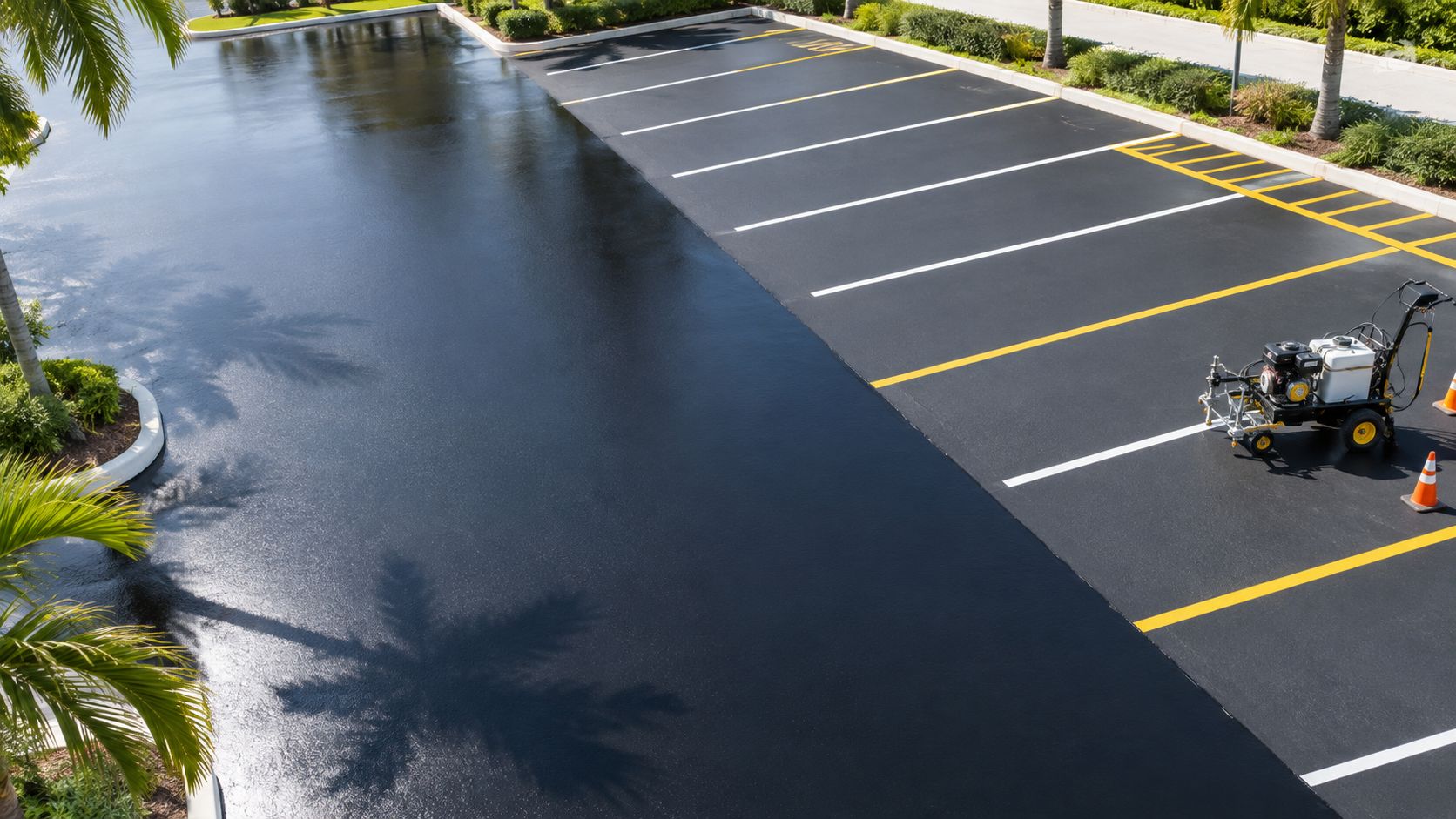
A parking lot can look serviceable from the office window, yet still need attention. The asphalt may be gray and oxidized, the parking lines may have faded into the surface, and a summer rain can expose drainage or access problems that weren't obvious in dry weather. For property owners in Marion County, FL, Citrus County, FL, and nearby Central Florida communities, the key question isn't whether to paint. It's whether the lot needs sealcoating, striping, accessibility corrections, or a carefully sequenced combination of all three.
Seal and stripe services pair asphalt protection with clear traffic control. The right plan depends on pavement condition, recent maintenance, temperature, humidity, traffic, and the layout's compliance needs. A low-traffic driveway near Silver Springs may need a different schedule than a commercial lot in Ocala, while an HOA in The Villages may need restriping that also addresses accessible parking and walkways.
Table of Contents
- What Seal and Stripe Services Actually Include
- The Seal and Stripe Process From Start to Finish
- Measurable Benefits of Sealcoating and Striping
- When You Need Both Services Versus Striping Alone
- ADA Compliance Requirements for Parking Lot Striping
- How Florida Climate Affects Sealcoat and Striping Performance
- Choosing a Trusted Seal and Stripe Contractor in Central Florida
What Seal and Stripe Services Actually Include
A faded parking lot often tells a familiar story. The asphalt has lost its deep color, small cracks are visible near the edges, oil spots mark busy areas, and the lines no longer guide drivers cleanly into each space. A property manager may request “fresh paint,” but the pavement may need more than striping alone.
Sealcoating places a protective surface treatment over sound asphalt. It helps limit exposure to ultraviolet radiation, rain, and chemical contamination from oil and fuel. Sealcoating won't rebuild failed pavement, fill deep structural breaks, or correct standing water, but it can be a sensible maintenance layer when the asphalt still has a stable base.
Parking lot striping restores the visual instructions that drivers, pedestrians, and emergency vehicles rely on. Depending on the property, that can include:
- Parking stalls: Clear lines help organize vehicle placement and reduce inefficient use of available space.
- Traffic markings: Arrows, stop bars, fire-lane markings, and directional lines help separate vehicle movement from parking.
- Accessibility markings: Accessible spaces, access aisles, symbols, and signs must work together as part of an accessible route.
- Driveway and pavement markings: Residential properties may need simpler markings, while churches, schools, HOAs, and retail sites often need a coordinated layout.
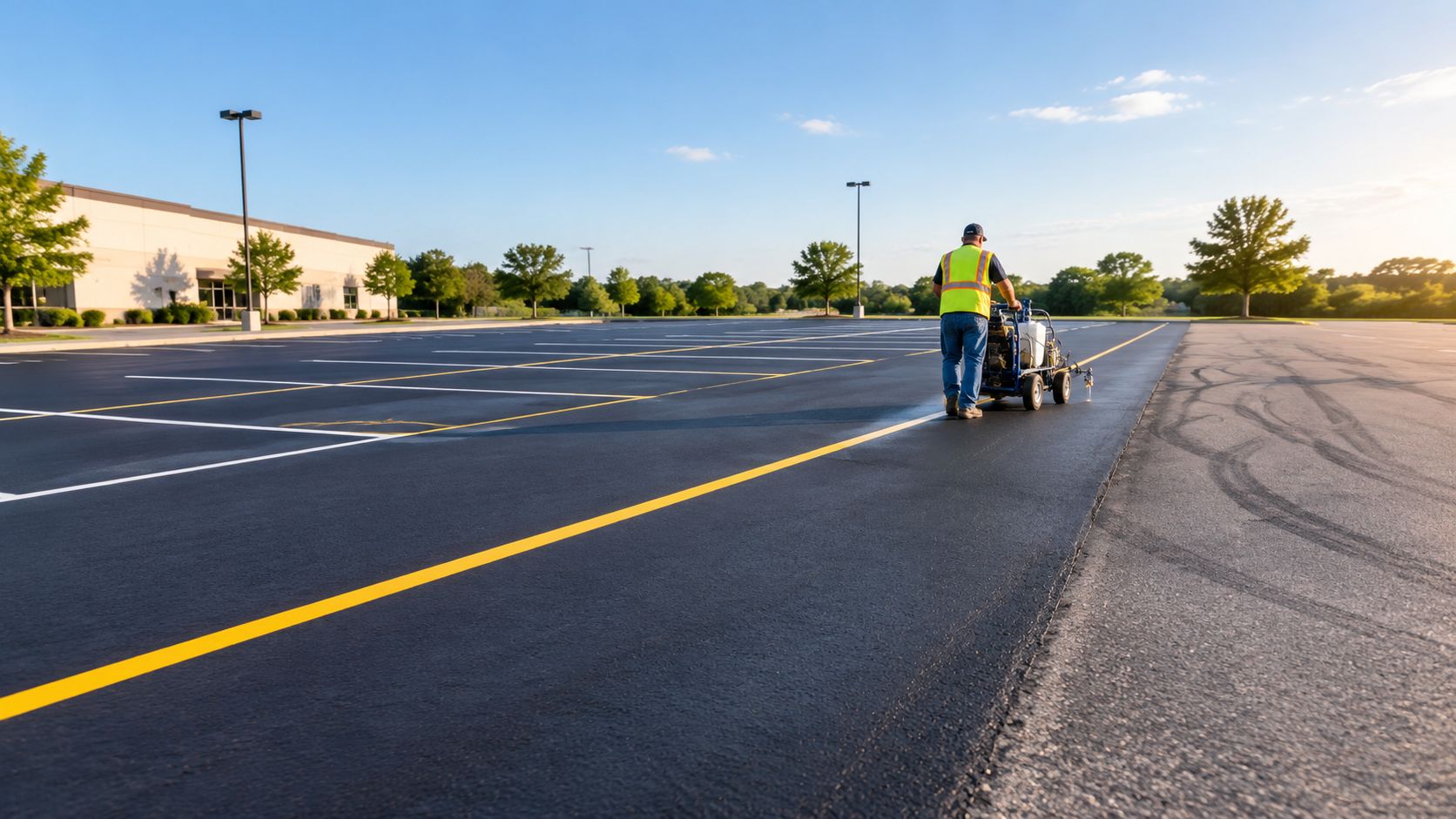
The two services are often scheduled together because a fresh sealcoat creates a clean, uniform background for new markings. That doesn't mean they always belong together. If the pavement remains sound and has been sealcoated recently, striping alone may be the more responsible recommendation.
Practical rule: Sealcoat for pavement protection. Stripe for traffic organization, visibility, and accessibility. Don't use one service as a substitute for the other.
A proper evaluation also identifies work that seal and stripe can't solve. Deep failures, severe rutting, drainage problems, or damaged concrete sidewalks may require concrete repair, driveway replacement, asphalt repair, or site preparation before the maintenance coating is considered.
The Seal and Stripe Process From Start to Finish
A reliable project starts with preparation, not a spray rig. Applying coating over dirt, loose aggregate, oil, or unaddressed cracks can produce an attractive surface that fails early.
Preparation determines the result
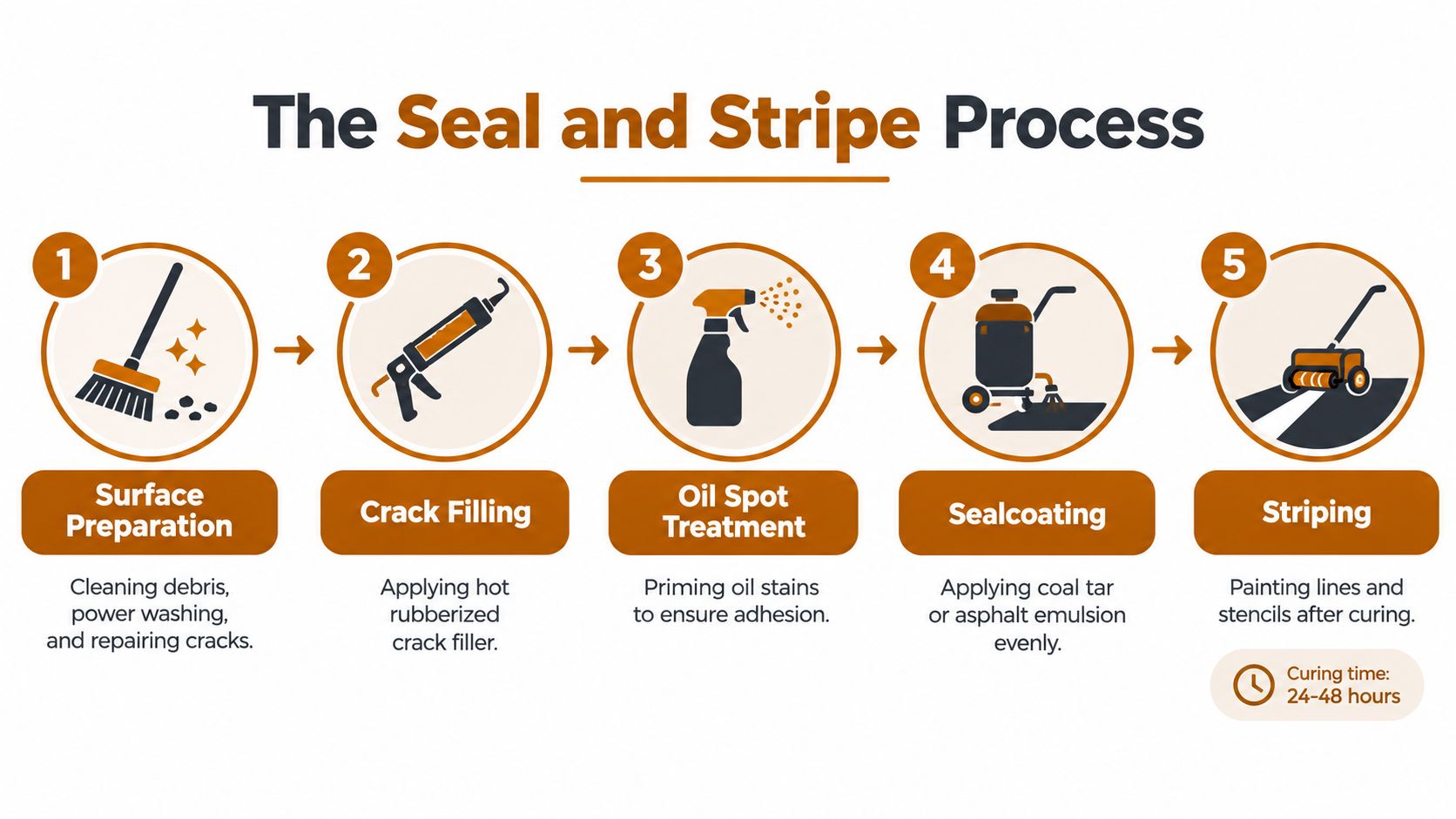
The crew first clears debris and cleans the asphalt. Sweeping, power washing where appropriate, and treating contaminated areas give the coating a better chance to bond. Cracks should be evaluated and filled with a compatible material, while oil spots may need separate priming because petroleum contamination can interfere with adhesion.
The surface also needs to be dry enough for the selected product. A Florida lot can appear dry while moisture remains in shaded areas, joints, or surface texture. A careful contractor checks the pavement and the forecast rather than treating every calendar day as equally suitable.
Sealcoat first, then allow the surface to cure
Sealcoating follows preparation. Depending on the specification and site, the material may be applied with a squeegee, spray equipment, or a combination of methods. The objective is an even application that suits the asphalt condition and expected traffic, not just the darkest possible finish.
The sequence matters. Striping should follow the sealcoat after adequate curing, because traffic paint placed on a soft or damp coating can smear, lose adhesion, or become embedded in the surface. Cure time varies by temperature, humidity, and product type. Under ideal conditions, striping may be possible after 24 hours, while cooler or more humid conditions may require 48 to 72 hours or more; some specifications still call for at least 24 hours before striping, as outlined in this sealcoating and striping timing guidance.
Scheduling has to account for Florida weather
Heat can help a surface dry, but high humidity can slow evaporation. Afternoon storms can interrupt a schedule even after a morning application. A professional plan leaves room for weather changes and doesn't promise a paint window based only on the temperature at the start of the day.
This process video provides a visual look at pavement maintenance techniques:
After curing, the crew measures and lays out the markings. Lines, stencils, arrows, accessible symbols, and access aisles should be positioned before paint is applied. That layout stage is where a maintenance project can reveal a larger compliance or traffic-flow issue.
Measurable Benefits of Sealcoating and Striping
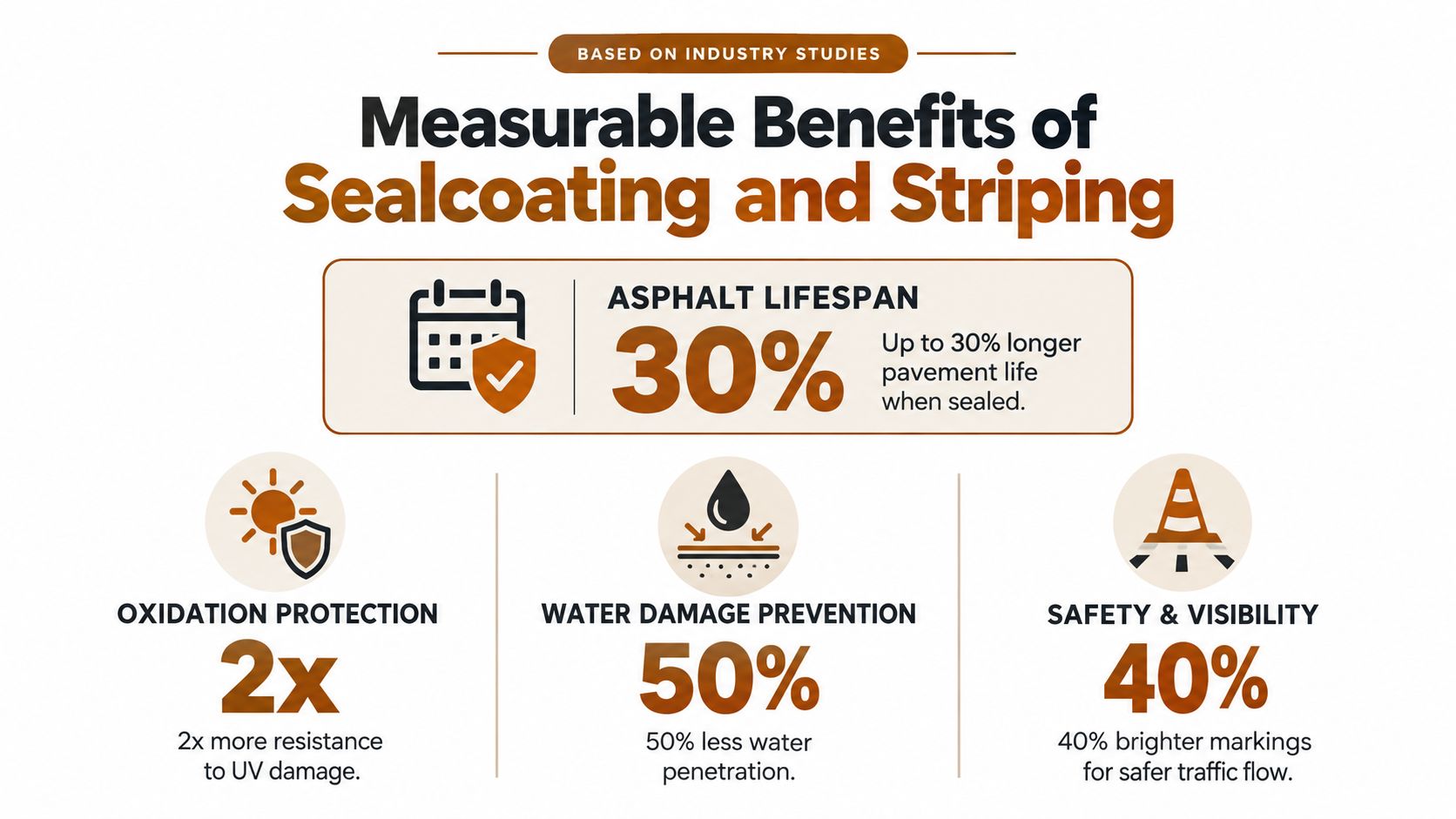
Sealcoating and striping aren't merely cosmetic improvements. They address different parts of pavement performance, and transportation agencies have treated pavement markings as safety infrastructure for decades. Federal Highway Administration material discusses a research network of about 370,000 miles of paved roads and cites 9,500 fatalities in the context of visibility and marking performance, demonstrating the scale of the safety problem addressed by marking quality in the United States. See the FHWA synthesis of pavement-marking research for that historical and infrastructure context.
Protection depends on pavement condition
A sealcoat can reduce the direct exposure of asphalt to sun, water, oil, and fuel. It works best as preventive maintenance on pavement that still has structural integrity. It won't reverse base failure, and coating a severely damaged lot can hide defects without correcting them.
The maintenance value also depends on the material specification. Binder behavior changes with climate and traffic, so adhesion, durability, tracking resistance, and resistance to stripping all matter in the selection process. The FHWA and Texas seal-coat binder research explains why a single formula isn't appropriate for every traffic and climate zone.
Visibility can be measured, not guessed
Striping quality matters most when drivers need guidance in low-light or wet conditions. Retroreflectivity measures pavement-marking visibility in millicandelas per square meter per lux, or mcd/m²/lux. FHWA research identifies common maintained levels of roughly 150 mcd/m²/lux for white markings and 100 mcd/m²/lux for yellow markings on freeways without lighting or raised pavement markers, according to this FHWA pavement-marking visibility research.
Those figures aren't a promise that every private parking lot must use the same design or threshold. They show why material choice, application quality, and maintenance timing affect nighttime visibility. Fresh-looking paint isn't automatically durable paint, especially where rain, tire wear, and repeated turning movements are common.
For commercial owners and HOA boards, the practical benefits include clearer vehicle movement, better-defined pedestrian areas, stronger curb appeal, and a more defensible maintenance record. Preventive work can also help owners address small defects before they demand disruptive reconstruction, although the exact savings depend on condition, drainage, traffic, and the maintenance decisions made over time.
When You Need Both Services Versus Striping Alone
A retail lot may have faded lines but sound asphalt, while a residential driveway may show weathering before its markings become difficult to see. Those sites need different scopes. Striping alone may be enough when the pavement remains cohesive, has no widespread oxidation or cracking, and the previous sealcoat still appears to be protecting the surface.
Start with a pavement inspection, not the paint color. If the asphalt is reasonably uniform and free of significant surface deterioration, the work may involve cleaning, confirming the layout, and restriping. That avoids applying a new coating solely because the property is already scheduled for line work.
Signs that both services may be appropriate
A combined project makes sense when surface wear and faded markings occur together:
- Widespread gray oxidation: The asphalt looks dry, weathered, and exposed instead of dark and cohesive.
- Minor surface cracking: Small cracks are visible but have not progressed into broad structural failure.
- Chemical staining: Oil or fuel contamination may need treatment before a protective coating can bond and perform properly.
- Faded layout: Parking stalls, arrows, fire lanes, and accessible markings no longer provide clear guidance.
The sequence matters in Florida. Sealcoat must cure before paint is applied, and high humidity or an approaching rain event can extend that window. Striping too soon can cause poor adhesion or blurred lines, while delaying the markings leaves the lot without a finished layout. A contractor should set the schedule around pavement temperature, humidity, forecast conditions, and access to the property.
Maintenance frequency also depends on exposure. Light residential use may allow a longer interval between sealcoats, while busy commercial lots with constant turning, standing water, and surface contamination usually need earlier inspections. A property in Dunnellon or Beverly Hills should not automatically follow the same schedule as a retail lot in Ocala. The same judgment applies to heavily used entrances in Crystal River or Inverness.
ADA requirements can also change the scope when a lot is restriped. Repainting an old layout may not be appropriate if parking counts, access aisles, routes, or other site conditions have changed. Confirm the layout before pricing striping alone.
Striping over failing asphalt will not stabilize it. Sealcoating a structurally failed area can postpone repair without correcting the underlying problem. Condition assessment should come before the estimate.
ADA Compliance Requirements for Parking Lot Striping
Restriping can make routine maintenance a compliance event. At a covered property, repainting may require the parking layout to meet the ADA Standards for Accessible Design, rather than reproducing faded or outdated lines. Before scheduling work, review the ADA parking lot striping requirements that apply to restriping projects.
Accessible parking involves more than a blue pavement symbol. Spaces need properly sized access aisles, a usable connection to the building, and placement along the shortest accessible route to the entrance. The ADA Standards for Accessible Design also require at least 1 in every 6 accessible spaces to be van-accessible. A contractor guide on ADA parking lot striping requirements can serve as supplementary planning material, but the ADA standards govern the requirement.
Accessible space counts by lot size
Property managers can use the following table as a planning reference for the stated lot-size ranges. The final layout still requires a site review because accessible routes, signs, curb ramps, property configuration, and local requirements can affect the work.
| Total Spaces | Minimum Accessible Spaces | Van-Accessible Minimum |
|---|---|---|
| 1–25 | 1 | At least 1 in every 6 accessible spaces |
| 26–50 | 2 | At least 1 in every 6 accessible spaces |
| 51–75 | 3 | At least 1 in every 6 accessible spaces |
| 76–100 | 4 | At least 1 in every 6 accessible spaces |
| 101–150 | 5 | At least 1 in every 6 accessible spaces |
| 151–200 | 6 | At least 1 in every 6 accessible spaces |
The minimum accessible-space count is based on the total number of parking spaces. The ranges above call for 1 accessible space for a lot with 1–25 spaces, 2 for 26–50, 3 for 51–75, 4 for 76–100, 5 for 101–150, and 6 for 151–200.
Maintenance can expose old layout problems
An older lot may have been striped before the current owner evaluated accessible routes or van-accessible spaces. Once worn lines are removed or the layout is changed, copying the old arrangement can preserve an error instead of correcting it.
This affects HOAs, churches, schools, nonprofits, and commercial properties in Ocala, Dunnellon, Crystal River, Inverness, and The Villages. Damaged sidewalks, ramps, curb transitions, or concrete approaches can also limit access. A full-service contractor can coordinate parking lot striping with concrete walkway and access improvements, rather than treating each feature as an isolated paint task.
How Florida Climate Affects Sealcoat and Striping Performance
A summer application can look dry by late morning and still be vulnerable to an afternoon storm. Central Florida's strong sun speeds asphalt oxidation, while rain moves into cracks and surface defects. High humidity can also slow sealcoat and pavement-marking cure time, even when the thermometer suggests ideal conditions.
Heat does not guarantee a faster, stronger result. Materials can soften and move, and heavy traffic adds turning and braking stress before the coating has developed enough strength. Binder selection affects adhesion, durability, tracking, and resistance to stripping, so the material should match the site's climate, traffic, and exposure.
Questions to ask before work begins
A contractor should explain the material and scheduling choices in plain language:
- What condition is the asphalt in? Sealcoating cannot correct structural failure.
- How will oil spots and cracks be prepared? Contamination and untreated cracks can weaken the finished surface.
- What weather window is required? Ask how humidity, shade, rain, and overnight moisture affect curing.
- Which binder and marking material fit the site? Traffic intensity and sun exposure should guide the specification.
- How will accessible spaces and routes be handled? Repainting may require a layout review, not only replacement of faded lines.
Sealcoat and striping should also be sequenced correctly. Striping over uncured sealer can produce soft edges, tracking, or poor paint adhesion. A contractor should allow the sealcoat to cure under the actual site conditions before applying markings, then protect the lot from traffic for the period required by the materials.
Exposure differs across Marion and Citrus counties. A sunny commercial lot in Summerfield will not behave like a shaded residential driveway in Homosassa. Properties near Lecanto, Hernando, or Belleview may also have different drainage and traffic patterns from coastal sites or larger retail corridors.
For general scheduling guidance, property owners can review how often Florida asphalt should be sealcoated. In summer, afternoon storm risk often makes a morning application window the safer choice, provided the pavement is dry and the forecast leaves enough time for curing. Shade, overnight humidity, and vehicle access should shape the schedule just as much as the calendar.
Choosing a Trusted Seal and Stripe Contractor in Central Florida
A qualified contractor should explain what the pavement needs, what it doesn't need, and how the schedule changes if weather interrupts curing. Look for licensing and insurance, Central Florida experience, reliable scheduling, clear written scope, and a willingness to discuss preparation instead of focusing only on the finished color.
A full-service company is especially useful when the project includes more than asphalt. A property may need a damaged concrete driveway replaced, a sidewalk repaired, an accessible route improved, or a parking lot redesigned before striping. Working with a contractor that handles both concrete and asphalt can reduce coordination problems between separate crews.
Riverside Sealing & Striping, LLC is a third- and fourth-generation family-owned contractor based in Dunnellon, serving Marion County, Citrus County, and surrounding Central Florida areas. Its work includes asphalt sealcoating, parking lot striping, ADA-related markings, concrete driveways, patios, slabs, and sidewalks. Property owners can learn more about asphalt sealcoat contractors serving Central Florida and ask for a no-pressure site evaluation before deciding whether the property needs both services or only restriping.
Riverside Sealing & Striping, LLC offers asphalt sealcoating, professional parking lot striping, ADA marking upgrades, and concrete repairs for properties across Marion and Citrus counties. Request a free, no-pressure consultation through Riverside Sealing & Striping, LLC to review pavement condition, cure-time planning, accessibility needs, and the most practical maintenance sequence for your property.